Personne
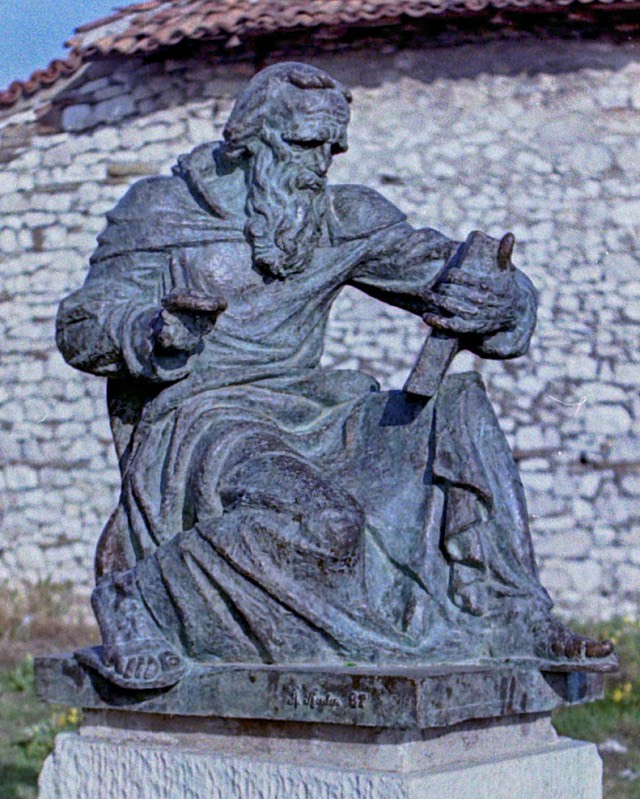
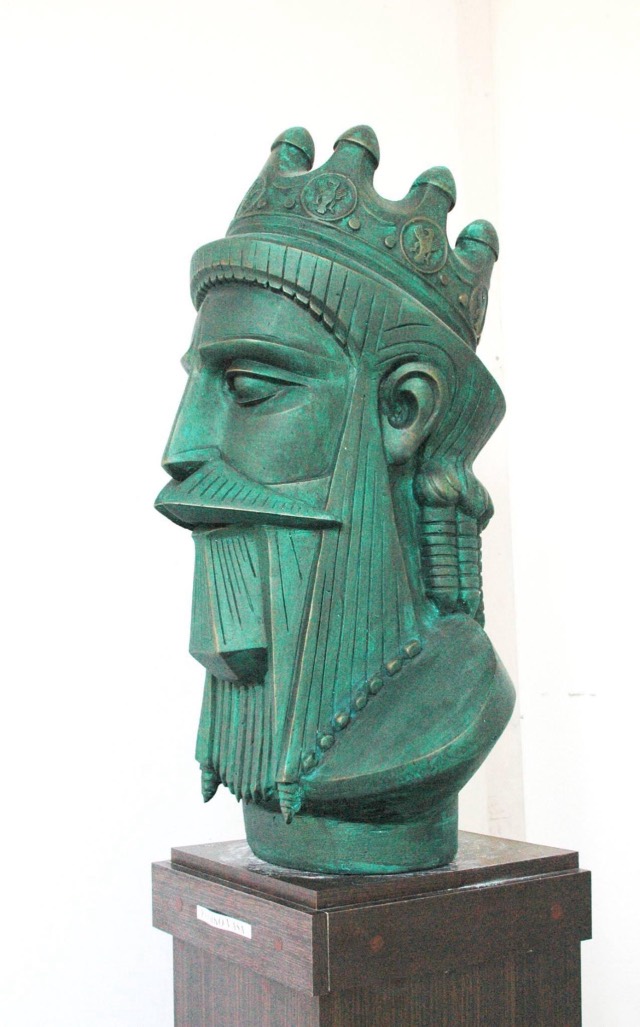
Skanderbeg
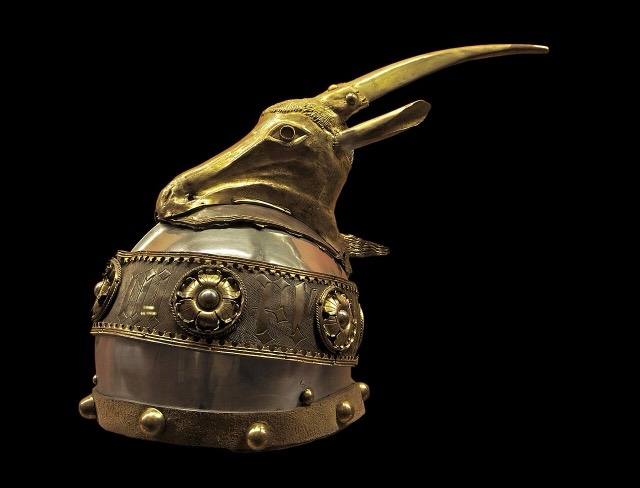
Gjergj Kastrioti: an Ottoman commander who changed sides and held Albania against the empire for twenty-five years.
Chaque comté, chaque côte, chaque siècle
Vue guidée
Nouveau en Albanie ? Chaque page s'ouvre sur une explication en langage clair, accessible à un enfant de dix ans, avant d'entrer dans le détail.
Vue expert
Vous connaissez déjà les bases. Directement à l'essentiel, les explications simples étant masquées. Il s'agit du réglage par défaut.
From the Illyrians to the European Union, in eighteen periods and eleven lives.
This section tells Albania's story from the very beginning to now, split into time periods, with pages about the most important people.
Palaeolithic – c. 1100 BC
Cave settlement at Konispol, and one of Europe's oldest lakeside pile villages under Lake Ohrid.
c. 1100 BC – AD 168
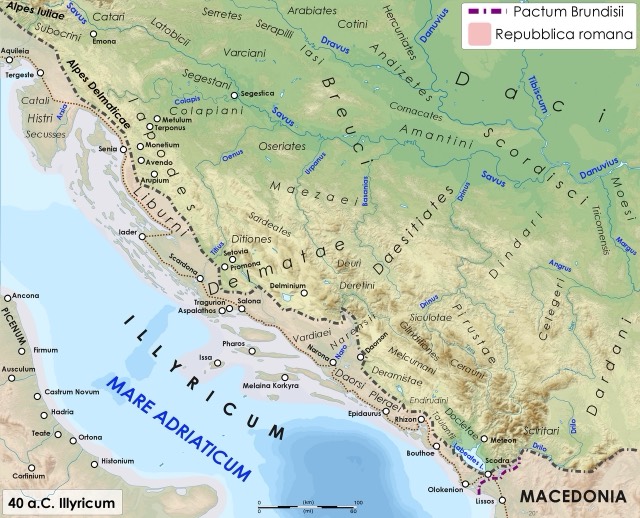
The Indo-European tribes of the western Balkans, and the ancestors most Albanians claim.
7th – 4th century BC
Corinthian and Corcyraean foundations at Epidamnos, Apollonia and Orikum along the coast.
168 BC – AD 395
The Via Egnatia crossed here, making the coast Rome's gateway to Greece and the East.
AD 395 – 1385
Nine centuries of eastern Roman rule, interrupted by Bulgarians, Normans, Serbs and Angevins.
1190 – 1444
Arbanon, then the Angevin Kingdom of Albania, then the great noble houses — Thopia, Balsha, Kastrioti, Arianiti.
1443 – 1479
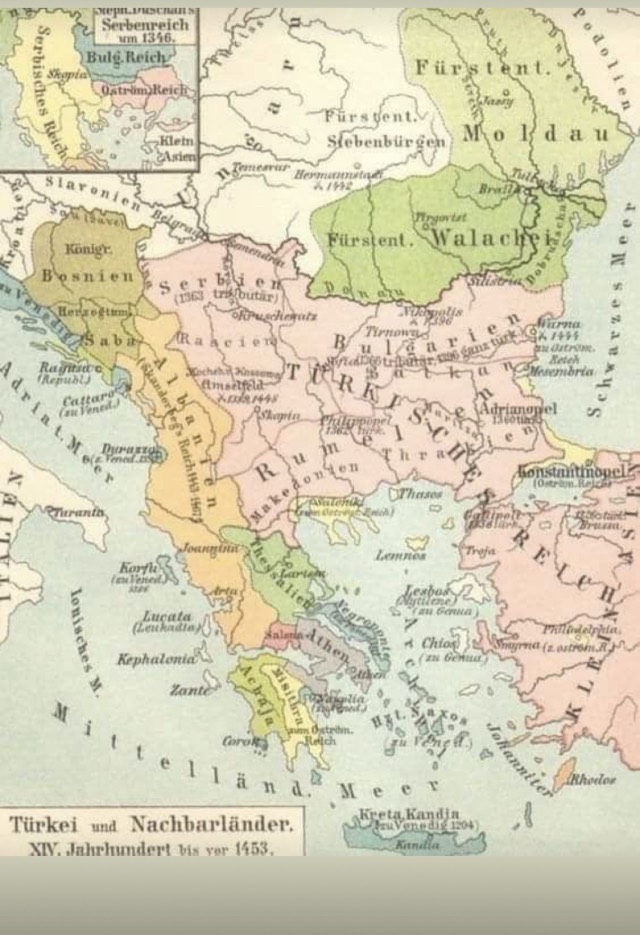
Twenty-five years in which a coalition of Albanian nobles held off the Ottoman Empire at its height.
1479 – 1912
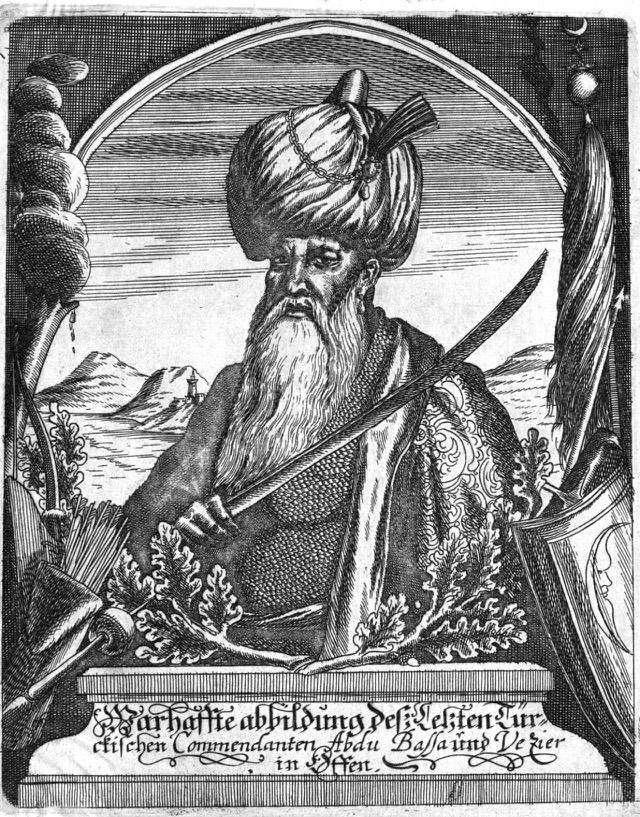
Four and a half centuries in the empire — mass conversion to Islam, powerful local pashas, and eventually a national movement.
1831 – 1912
The Rilindja: the League of Prizren, the fight for an alphabet, and the first Albanian-language school.
1912 – 1914
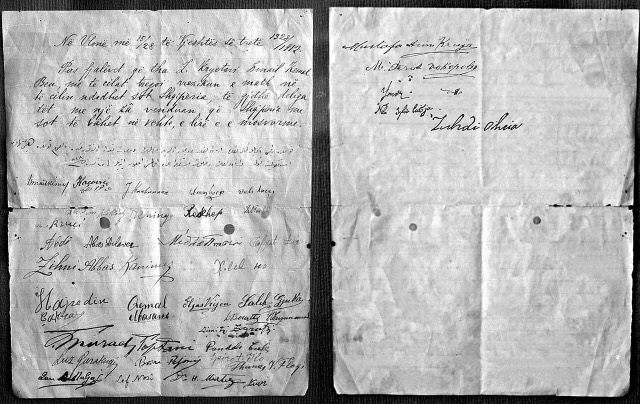
Declared at Vlorë on 28 November 1912 as the Ottoman Empire collapsed in the Balkan Wars.
1920 – 1939
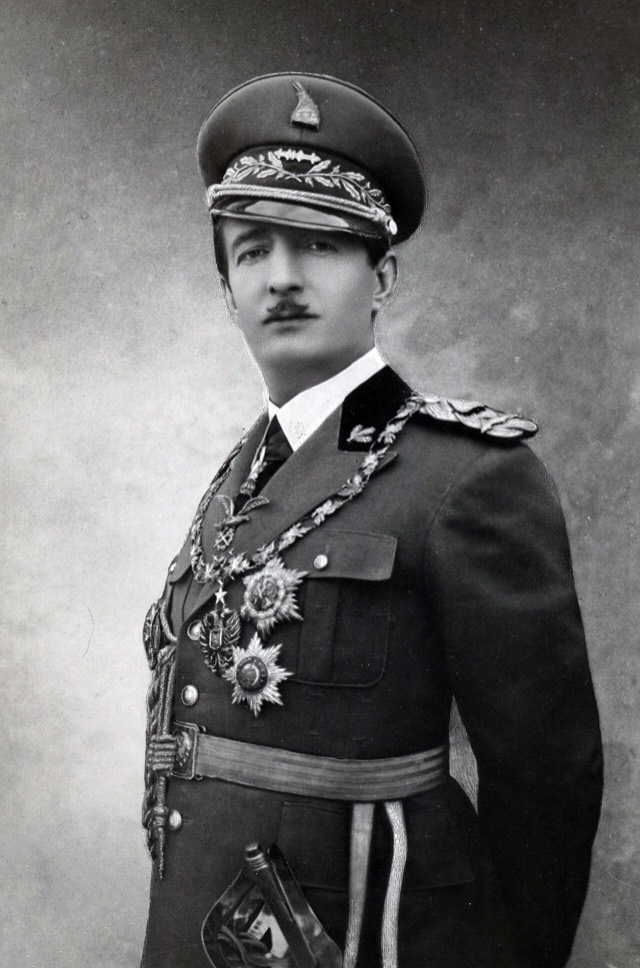
From the Congress of Lushnjë to a republic, then a monarchy, under Ahmet Zogu.
1939 – 1943
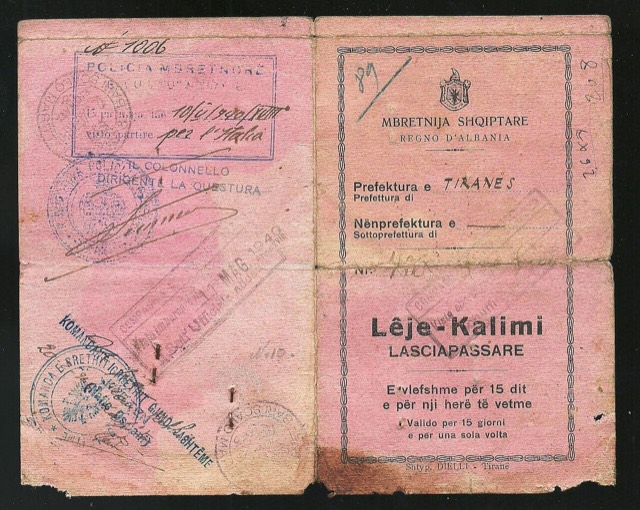
Italy invaded on 7 April 1939; Albania was annexed under the Italian crown until Italy's surrender.
1939 – 1944
Occupation, a three-way resistance, and the sheltering of Jewish refugees under besa.
1944 – 1991
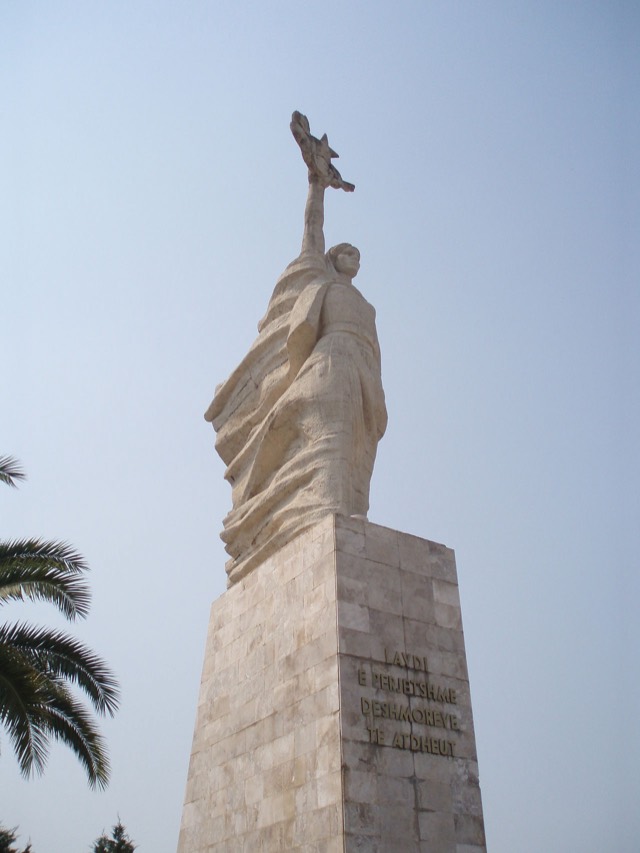
Forty-six years under Enver Hoxha and his successor: total collectivisation, the banning of religion, successive breaks with Yugoslavia, the USSR and…
1990 – 2000
The fall of the regime, mass emigration, and the 1997 collapse of the pyramid schemes.
2000 – present
NATO membership in 2009, EU candidate status in 2014, and tourism growing into a central industry.
Personne
Gjergj Kastrioti: an Ottoman commander who changed sides and held Albania against the empire for twenty-five years.
Personne
Born in Skopje to an Albanian family from Prizren and Shkodër; canonised in 2016 and now a national symbol.
Personne
The Ottoman statesman who raised the flag at Vlorë and led Albania's first provisional government.
Personne
The 'Lion of Ioannina': an Ottoman governor who built his own state, courted Britain and France, and was finally killed for it.
Personne
The leader who took Albania out of the Soviet bloc, then out of the Chinese one, and banned religion outright.
Personne
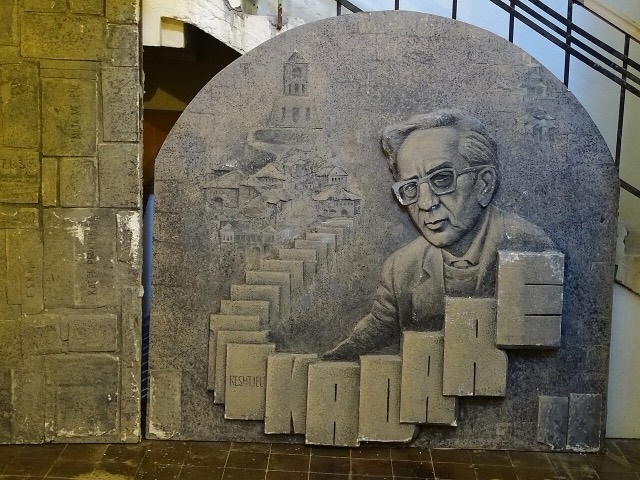
The writer who found ways to describe a totalitarian state from inside it, in novels read worldwide.
Personne
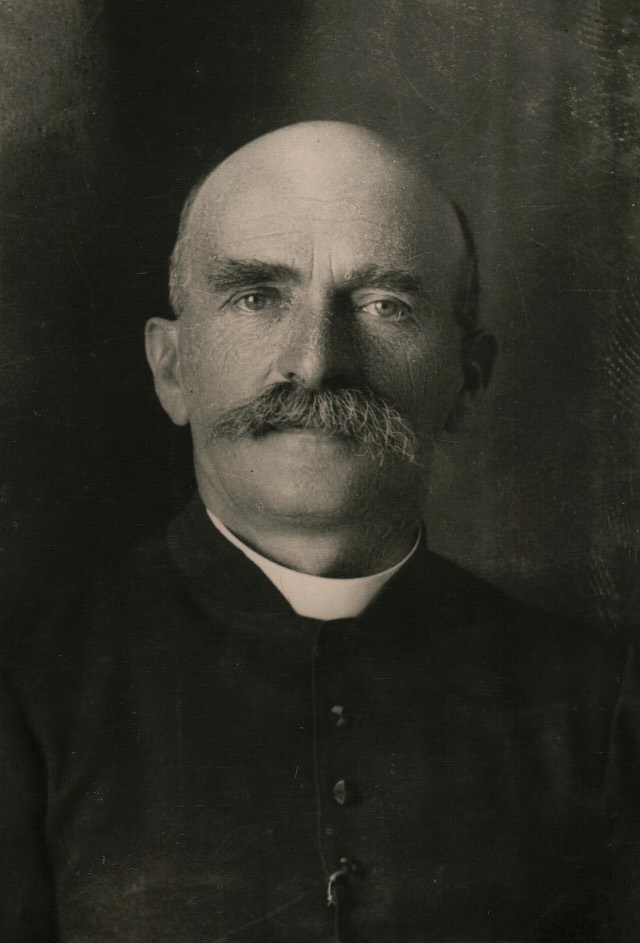
The Orthodox bishop who translated Shakespeare into Albanian and led a government for six months.
Personne
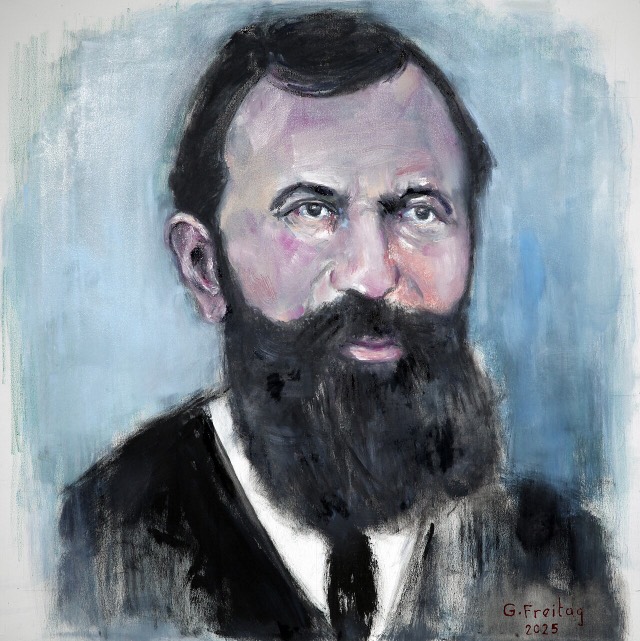
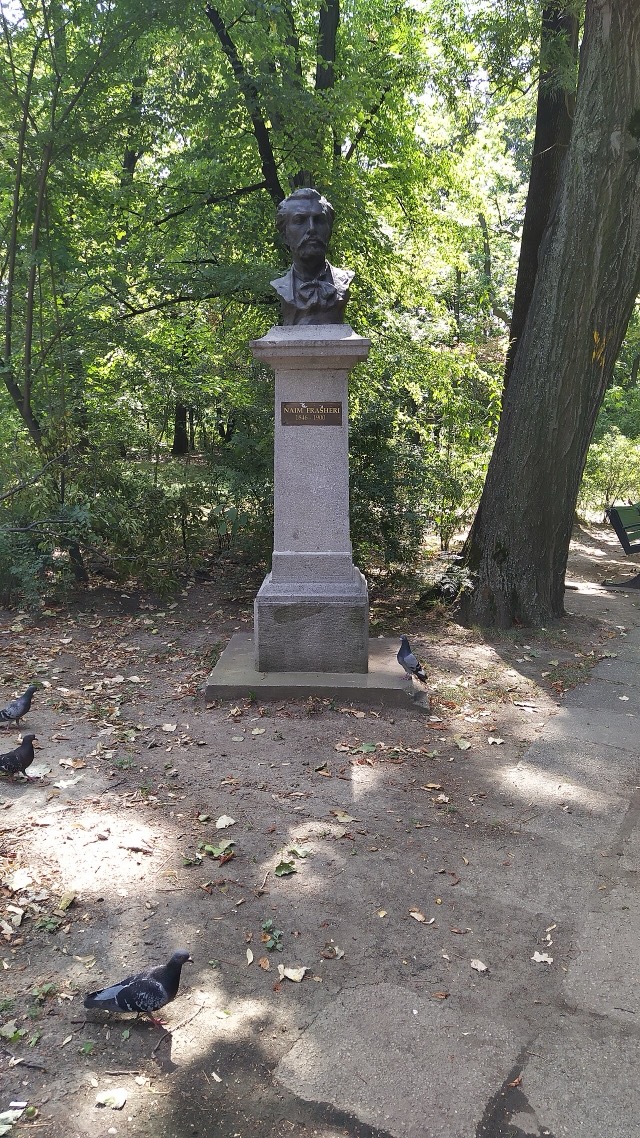
The most influential writer of the Rilindja, and one of three brothers central to the national movement.
Personne
The 16th-century painter whose red pigment and expressive faces defined Albanian icon painting.
Site historique · Tiranë
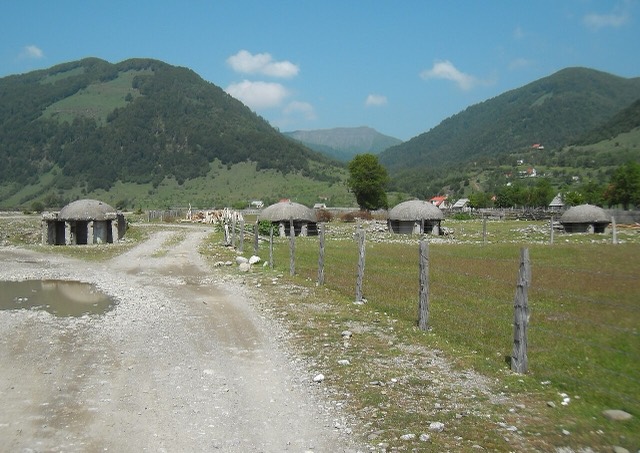
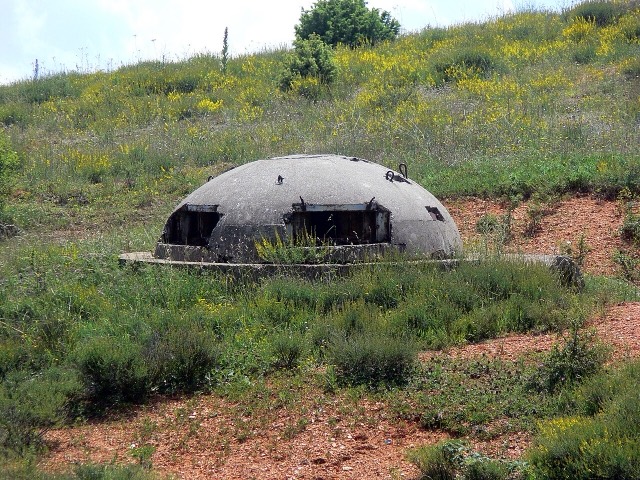
Roughly 170,000 concrete pillboxes built under Enver Hoxha — the most visible physical legacy of the communist state.
Site historique · Gjirokastër
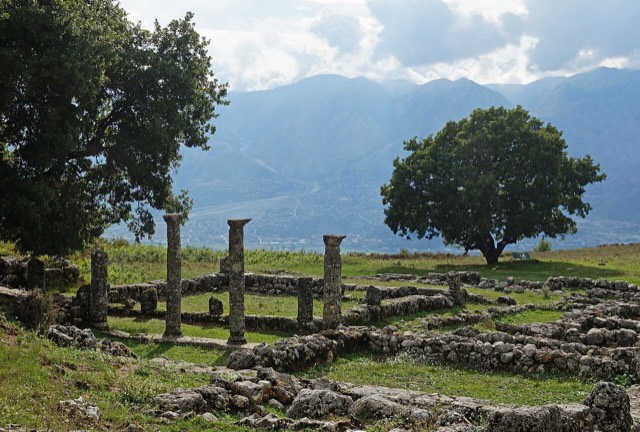
A short-lived Epirote city founded by King Pyrrhus and burned by Rome in 167 BC.
Site historique · Fier
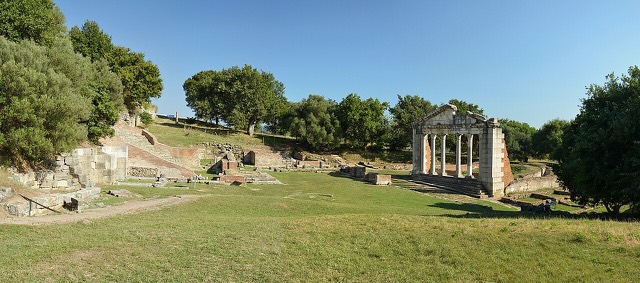
A Corinthian colony that became a Roman university town — Octavian was studying here when Caesar was killed.
Site historique · Fier
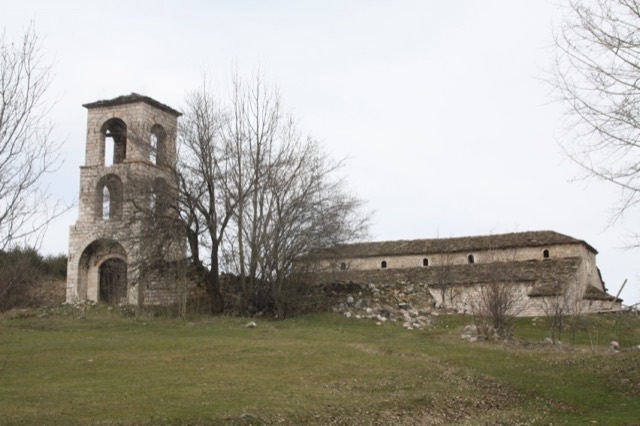
A hilltop monastery on the Myzeqe plain where, by tradition, Skanderbeg was married in 1451.
Site historique · Berat
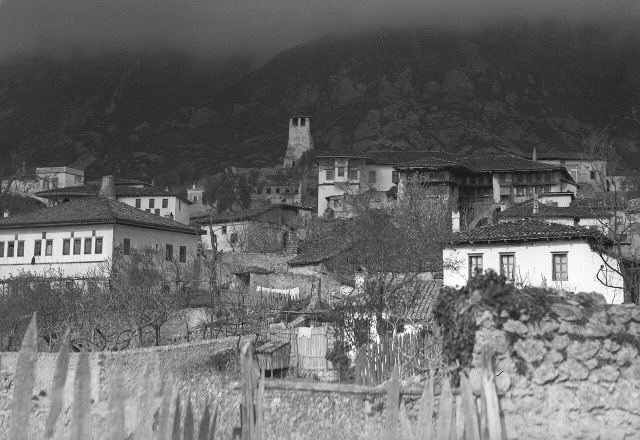
A fortress people still live inside, holding some twenty churches and the Onufri icon museum.
Site historique · Vlorë
A Greek, Roman, Byzantine, Venetian and Ottoman city layered on one wooded peninsula — Albania's first UNESCO site.
Site historique · Fier
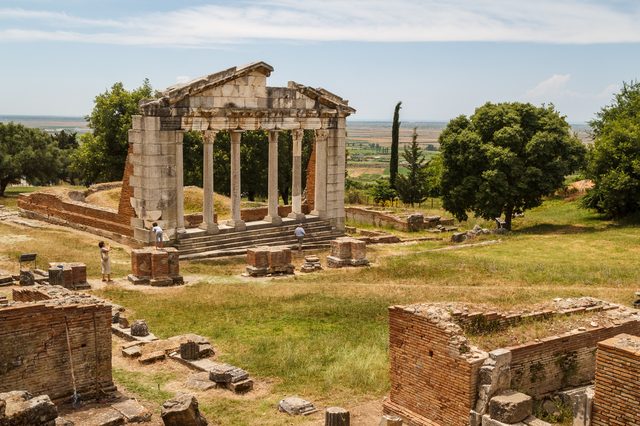
The largest Illyrian city yet excavated, on a plateau above the Vjosa with five early Christian basilicas.
Site historique · Durrës
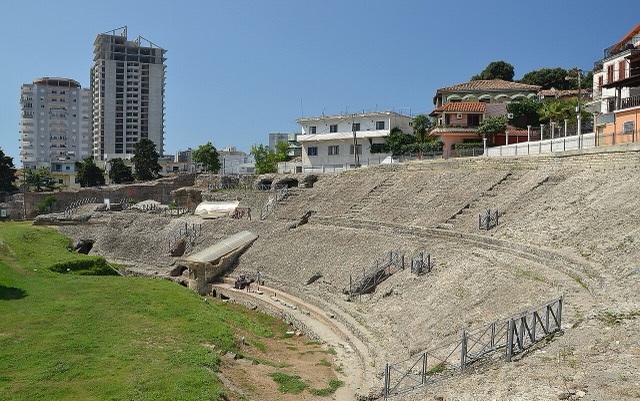
The largest Roman amphitheatre in the Balkans, found by accident in 1966 under the modern city.
Site historique · Tiranë
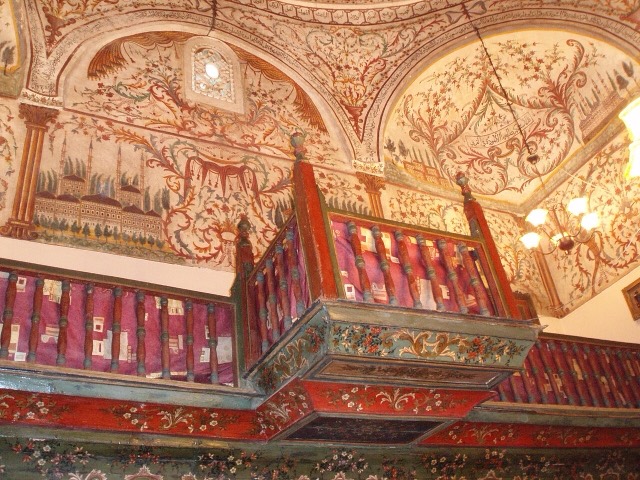
The small mosque on Skanderbeg Square whose frescoes of trees and waterfalls are unusual in Islamic art.
Site historique · Gjirokastër
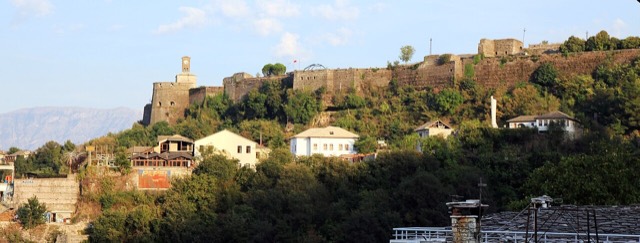
One of the largest castles in the Balkans, holding an artillery gallery and a captured US aircraft.
Site historique · Durrës
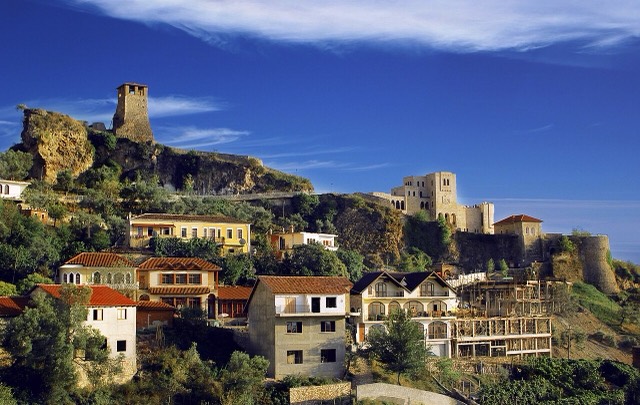
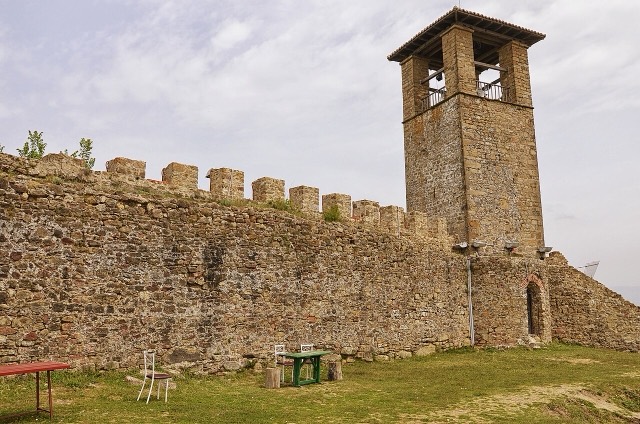
Skanderbeg's base, which held out against three Ottoman sieges and now houses the national museum of the resistance.
Site historique · Shkodër
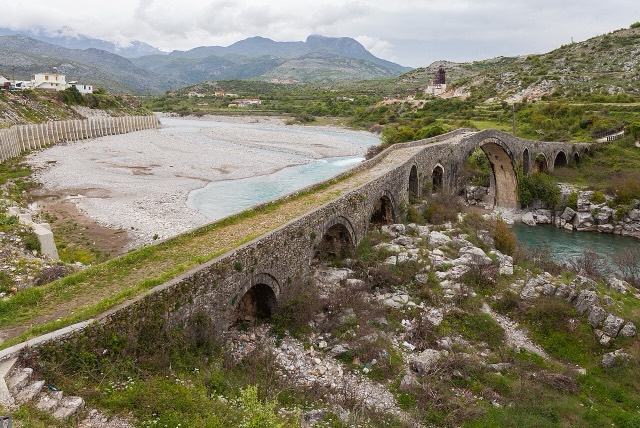
A 108 m, thirteen-arch packhorse bridge over the Kir north-east of Shkodër.
Site historique · Durrës
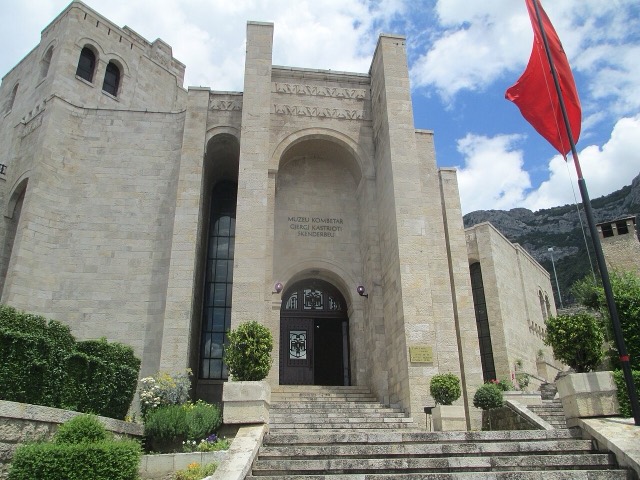
The museum of the 15th-century resistance, built inside Krujë Castle by Enver Hoxha's daughter and son-in-law.
Site historique · Korçë
Six surviving basilicas of a town that once rivalled any city in the Balkans, covered inside with frescoes.
Site historique · Tiranë
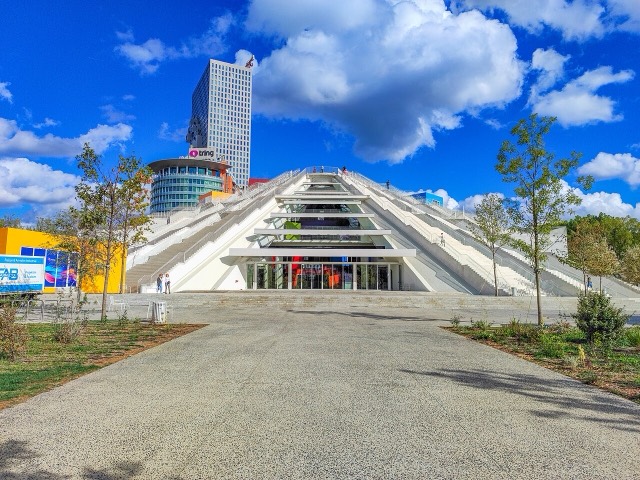
Built as Enver Hoxha's mausoleum-museum, later a nightclub and NATO base, reopened in 2023 as a youth technology centre.
Site historique · Shkodër
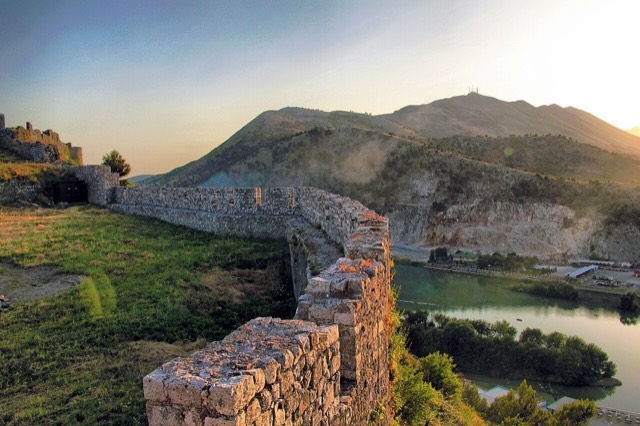
The rock fortress above the meeting of three rivers, and the setting of Albania's best-known legend.
Site historique · Tiranë
A rare rectangular lowland fortress built by Venice to guard a river port on the Shkumbin.
Site historique · Tiranë
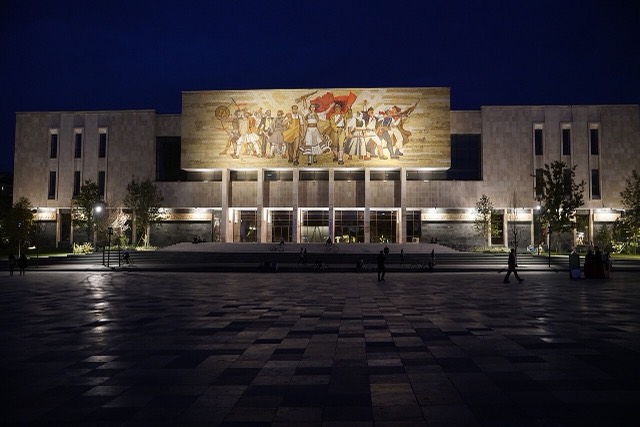
Albania's principal museum, under the Skanderbeg Square mosaic mural known as 'The Albanians'.
Site historique · Vlorë
An Illyrian hill city whose stadium — cut into the slope — is among the best preserved in the region.
Site historique · Elbasan
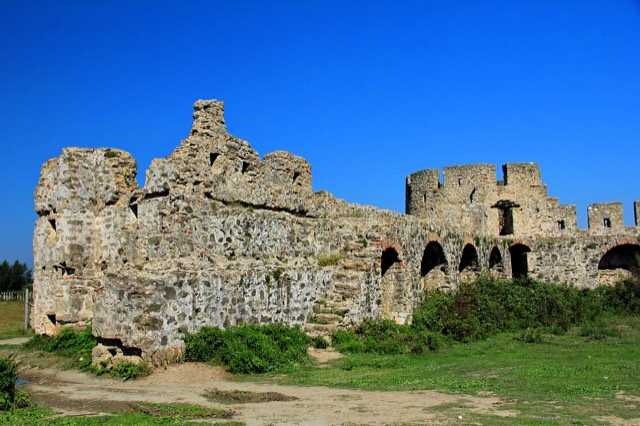
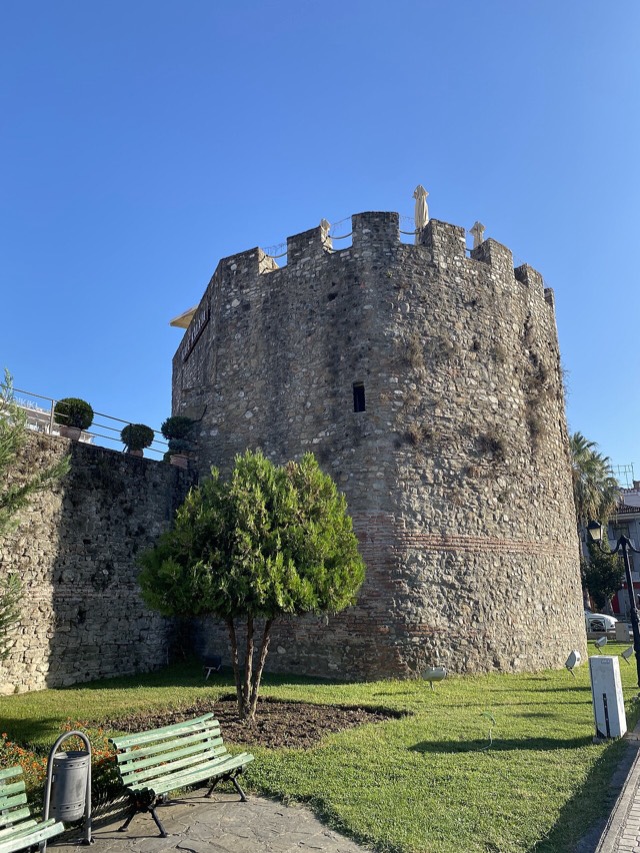
An Ottoman fortress built on a Roman site, with a living town inside its walls.
Site historique · Vlorë
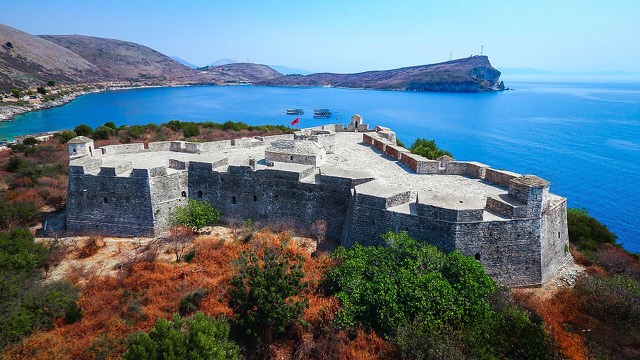
A triangular fortress on a causeway peninsula, built for Ali Pasha of Tepelena.
Site historique · Durrës
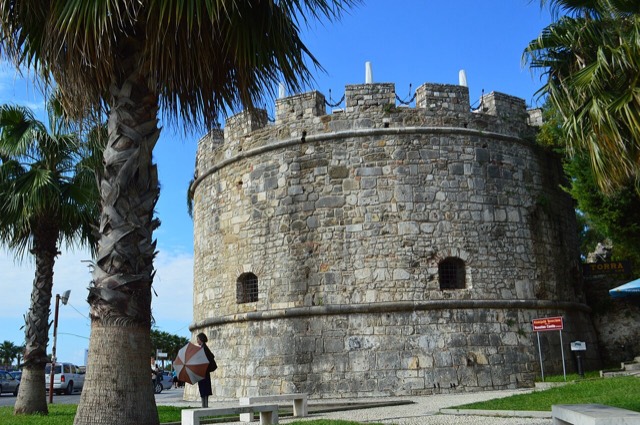
Byzantine sea walls raised under Anastasius I, later strengthened by Venice and the Ottomans.
Site historique · Tiranë
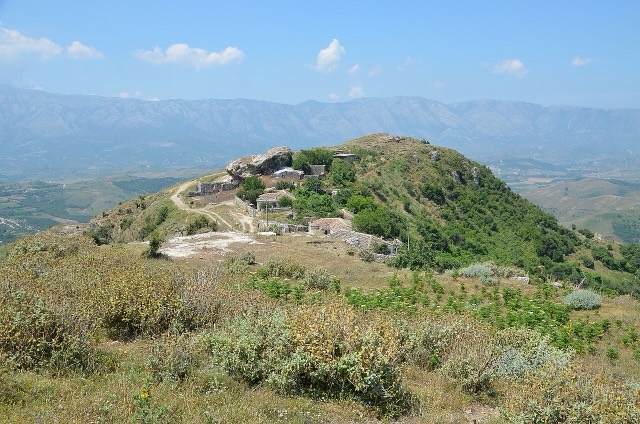
A compact hill castle between Tirana and the airport, with a view over the whole plain.
Site historique · Shkodër
The archive of the Balkans' oldest photographic studio — about 500,000 negatives from 1858 onward.
Site historique · Tiranë
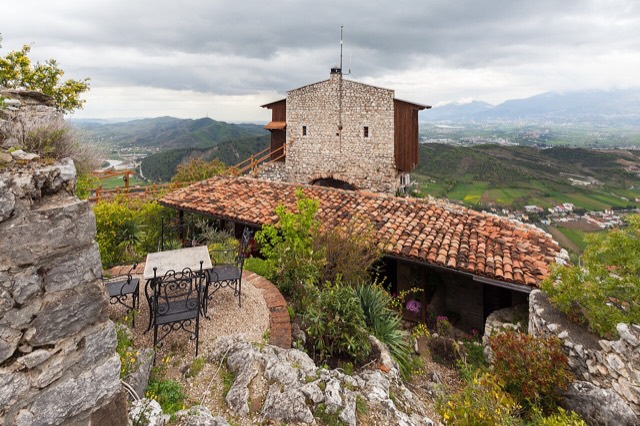
A small triangular castle on a wooded crag above the Erzen, half an hour from Tirana.
Site historique · Tiranë
A five-storey anti-nuclear bunker built for the communist leadership, opened to the public in 2014.
Site historique · Tiranë
The former headquarters of the Sigurimi's technical surveillance branch, kept as it was found.