City · Vlorë
Vlorë
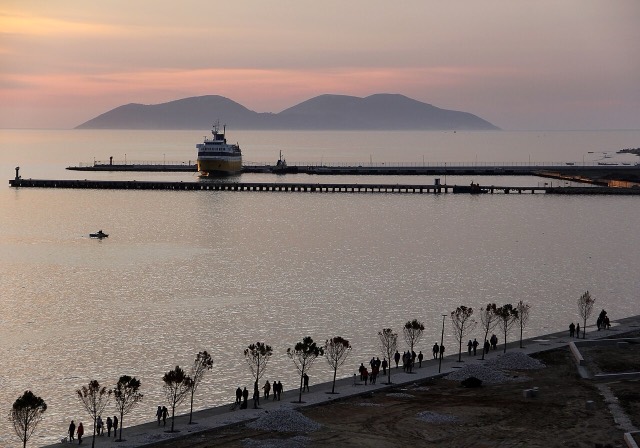
Where the Adriatic meets the Ionian, and where Albanian independence was declared in 1912.
Every county, coast and century
Guided view
New to Albania? Every page opens with a plain-language explanation you could read to a ten-year-old, before the detail begins.
Expert view
You already know the basics. Straight to the substance, with the simple explanations hidden. This is the default.
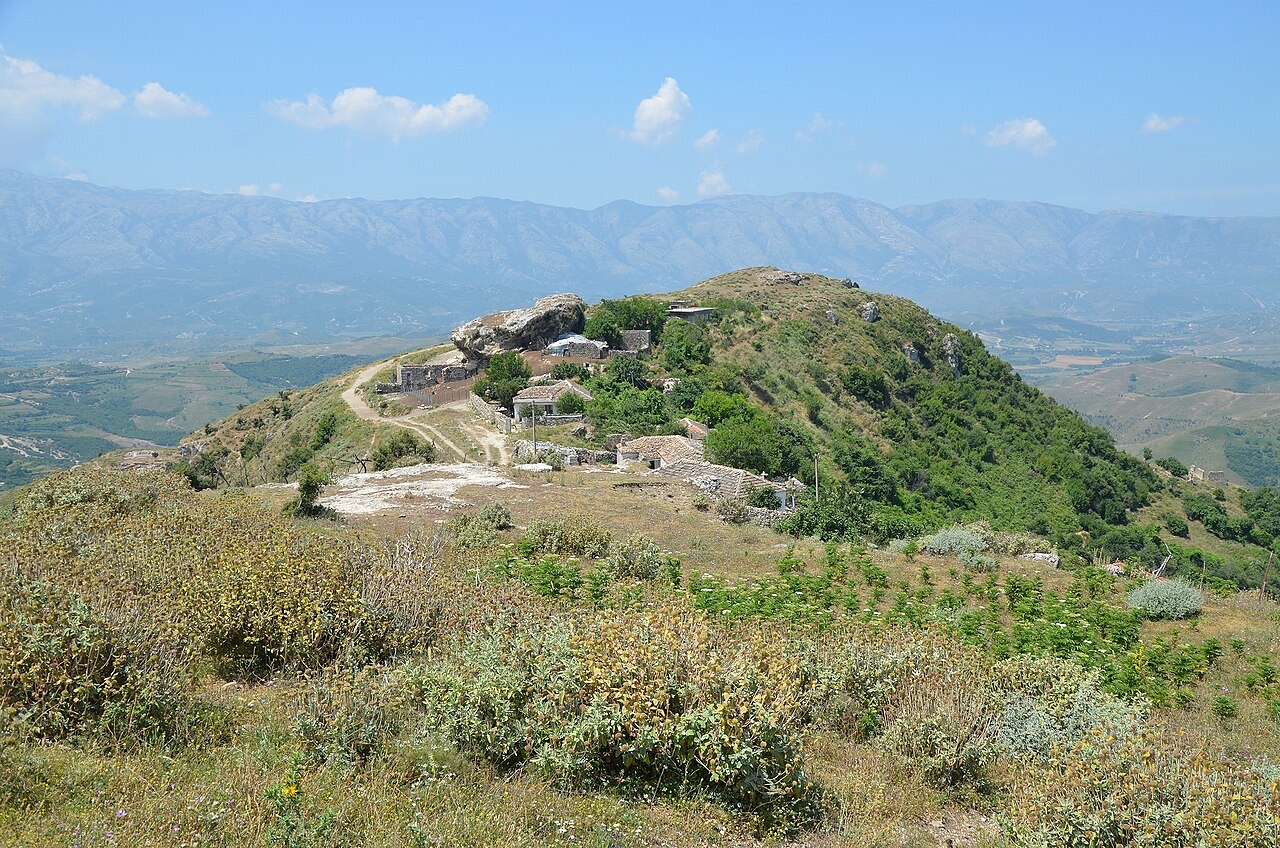
Historic site · Vlorë County
An Illyrian hill city whose stadium — cut into the slope — is among the best preserved in the region.
Save
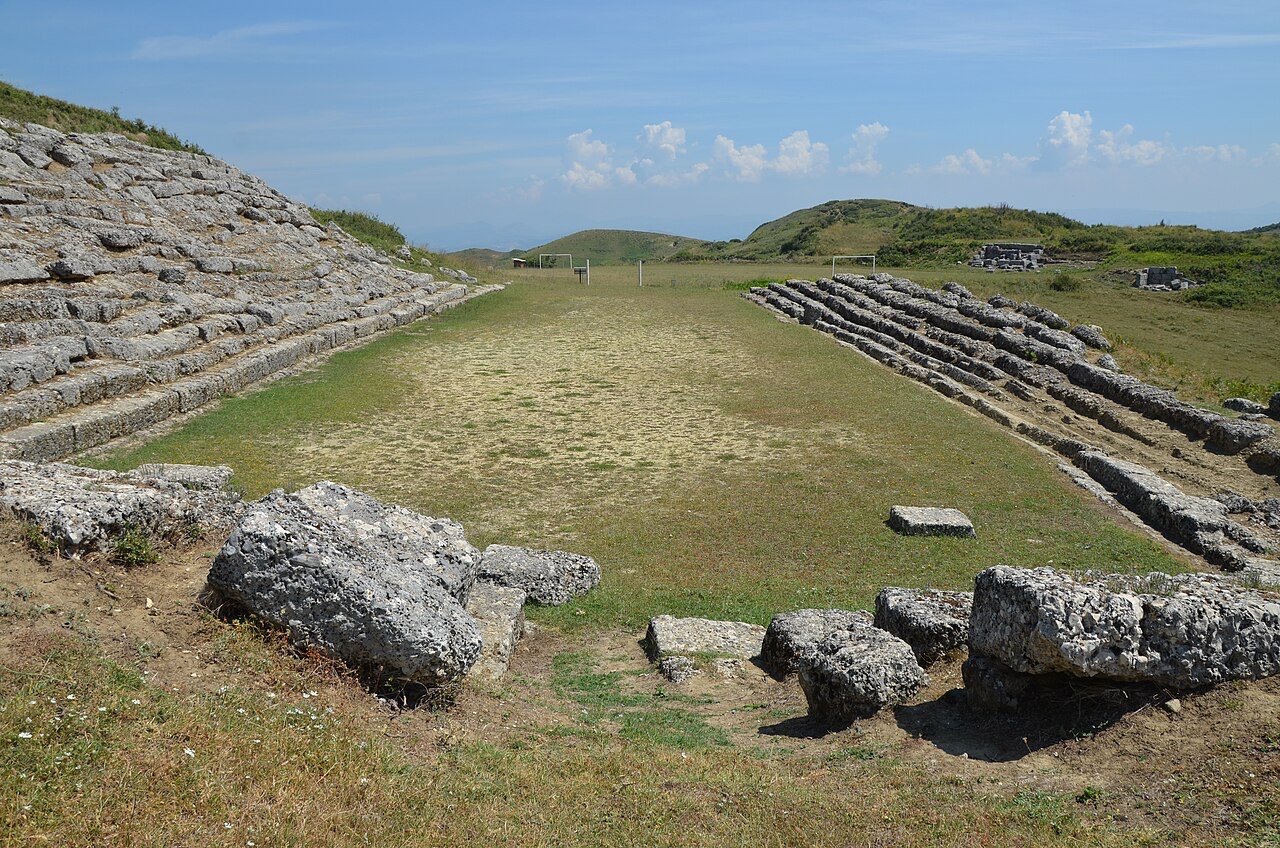
Amantia was an Illyrian town on a hill. Its stone stadium, where athletes competed, is still there, dug into the hillside.
Amantia was an Illyrian town on a hill. Its stone stadium, where athletes competed, is still there, dug into the hillside.
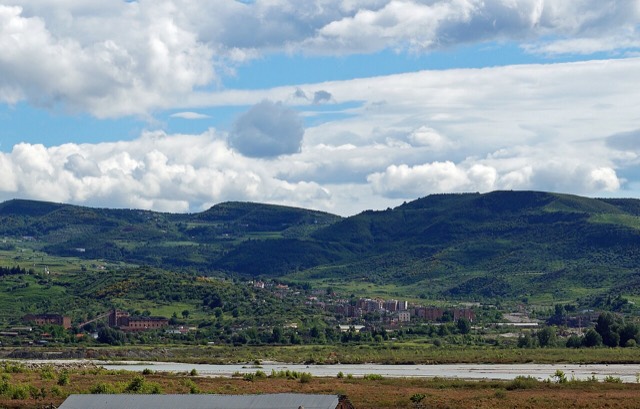
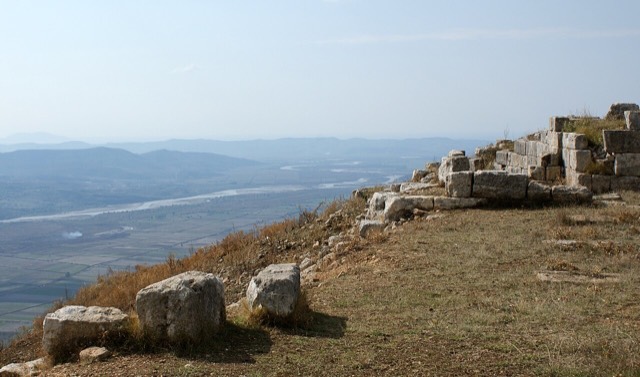
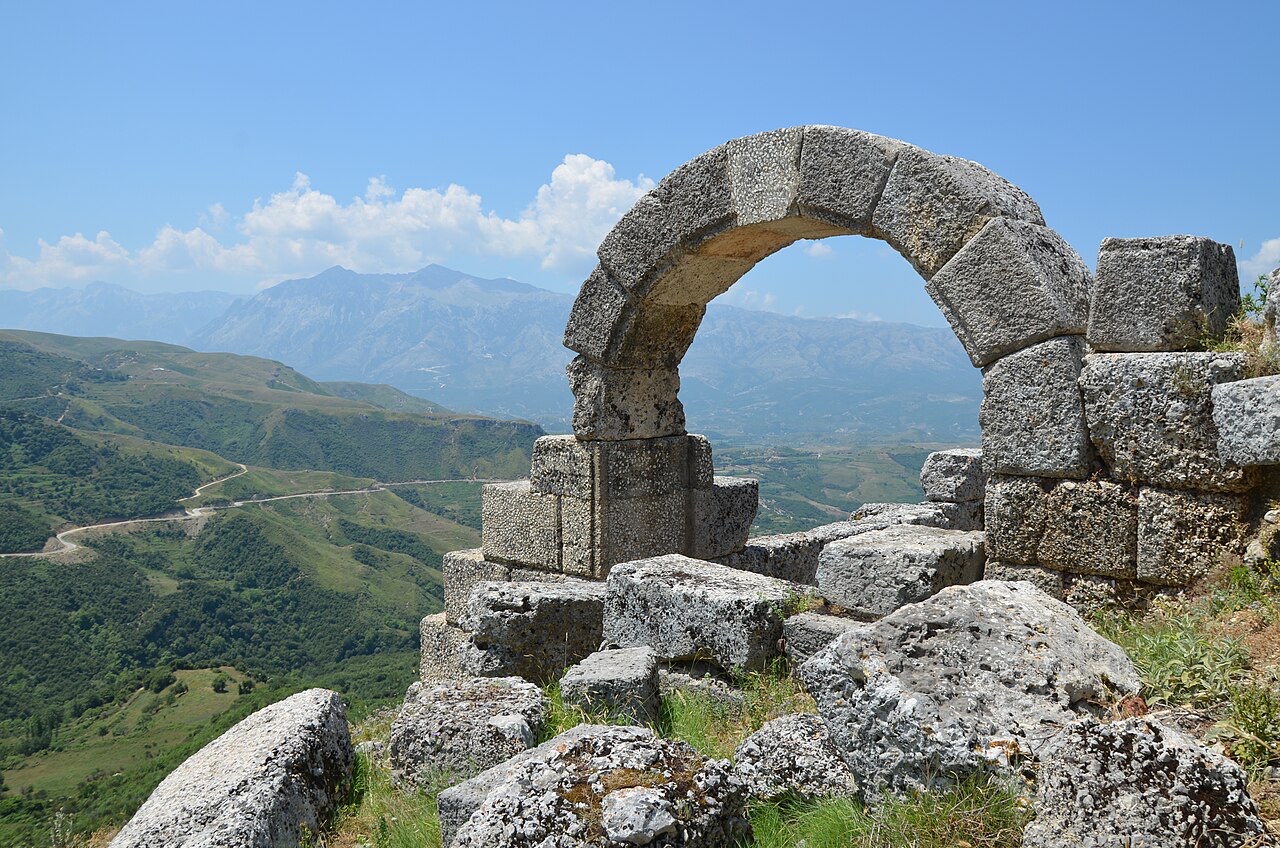
Amantia has been identified with the archaeological site at the village of Ploçë, in Vlorë County, southern Albania. The site sits on the slope of a high hill and occupies a strategically important position above the Aoos/Vjosë river valley to the east, while also commanding the road to the coast and the Bay of Aulon. Only the acropolis was originally fortified; a lower town developed alongside it.
The site's elevated position gave it clear control over movement through one of the main river corridors of the region, and its relationship to the coast meant it sat on routes connecting the Illyrian interior to the Adriatic. A temple dedicated to Aphrodite, a theatre, and a stadium have been identified within the archaeological remains.
The toponym appears in ancient sources in two forms: Ἀμάντια (Amantia), recorded by Pseudo-Skylax and Lycophron, and Ἀβάντια (Abantia), which appears in the Delphic list of theorodokoi. The city-ethnic is Ἀμάντιεύς (Amantieus), also attested in Pseudo-Skylax. The name Amantia is generally accepted as Illyrian.
The name Amantia and the associated tribal name Amantes have been connected by scholars with the Albanian term amë/ãmë, meaning 'river-bed, fountain, spring'. One proposal suggests that the root morpheme *Amant- may be a 'barbarized' form of *Abant-, linking the name to the Abantes. A toponym corresponding to Amantia also exists in southern Italy, which scholars associate with Illyrian movements across the Adriatic via the Iapygians in antiquity. A homonymous Illyrian tribe also lived in eastern Slavonia.
The earliest written record of the toponym Amantia is in the Periplus of Pseudo-Skylax, a 4th-century BC text that lists the city within Illyria. By naming it as the only site between the poleis of Apollonia and Orikos, Pseudo-Skylax implies that Amantia held some regional importance. Scholars have suggested that in this text the toponym refers to a territory rather than strictly an urban centre. Lycophron's Alexandra, from the 3rd century BC, attests Amantia as a polis in the more specific urban sense.
Pausanias, writing in the 2nd century AD, reports a tradition that the settlement was founded by Locrians from Thronium and Abantes from Euboea. Stephanus Byzantius, drawing on Pausanias, states that it was founded on Illyrian territory by the Euboean Abantes 'returning from the Trojan war'. A separate legend in Lycophron's Alexandra holds that Elpenor—said to have died at Troy—and the Abantes from Euboea reached the island Othronos, were driven by swarms of snakes, and settled near the land of the Atintanes toward the city of Amantia.
Scholars have queried the geographical accuracy of the Pausanias tradition, suggesting his account corresponds better to a Euboean colony at Thronion on the coastal site of Triport, northwest of Aulon, rather than to Amantia at Ploçë, which lies south of the Aoos valley in the hinterland. The Amantes themselves were described as Illyrian by Pseudo-Scylax in the mid-4th century BC, as Epirotes by Proxenos in the 3rd century BC and by Hesychius, and as barbarians by Pliny the Elder.
The city was built around 450 BC on the site of a proto-urban settlement. From its earliest phase it had a fortified acropolis enclosed by a wall approximately 2.1 kilometres (1.3 mi) long, alongside a lower town. The original walls were constructed of irregularly placed limestone; these were renewed in the 4th century BC using isodomic ashlar layers.
Literary sources characterise the massive walls as an Illyrian rather than an Epirote or Macedonian foundation. By the 4th century BC or later, the settlement developed into a town organised largely on a Greek model, acquiring Hellenistic urban features in its architecture, institutions, and religious life. The town's walled enclosure measured roughly 2,100 metres (6,900 ft) in total. A large fort was built with two gates and two defensive towers in the north.
Scholarly opinion on the city's character is divided. Historians including N.G.L. Hammond, Šašel Kos, Hatzopoulos, and Rudolf Haensch have described Amantia as a Greek city. Fanula Papazoglou characterised it as a Greek city in southern Illyria, situated in the territory of the Illyrian tribe of the Amantes. Others, including Eckstein and Lasagni, have described it as a Hellenized Illyrian city-state. Olgita Ceka and Jaupaj have described it as an Illyrian city, while Mesihović characterised it as an Illyrian city built and governed according to the Greek model. Lippert and Matzinger concluded that, like other Illyrian cities, Amantia was not a polis of the Greek type.
In the second half of the 4th century BC, Amantia received sacred theoroi ambassadors from Argos, in southern Greece—a recognition that implied its inhabitants were treated as Greek. By the 3rd century BC the town had strengthened economically and was minting its own coins. In 230 BC Amantia joined the Koinon of the Epirotes.
The bronze coins of Amantia that began to be struck from 230 BC carried symbols drawn from the Epirote tradition: Zeus and thunderbolt, Dione and trident, and Artemis and spearhead. The principal change from earlier coinage was the replacement of the legend ΑΠΕΙΡΩΤΑΝ ('of the Epirotes') with ΑΜΑΝΤΩΝ ('of the Amantes'), both inscribed in Greek letters. The Amantes had seceded from the Epirote state at the moment of the fall of the Epirote monarchy; before that, during the reigns of Pyrrhus, his son Alexander II, and their descendants, Greater Epirus had controlled both southern Illyria to the north and part of Acarnania to the south. The predominance among excavated coins of republican Epirote issues over locally struck coins reflects the city's proximity to and integration with the Epirote koinon.
The fact that Amantia received theoroi from Delphi during the early 2nd century BC indicates that it was listed among the Greek cities in the area north of the Acroceraunian mountains. Only cities considered Greek were eligible to receive such sacred envoys. Scholars note that the time elapsed before Illyrian cities appeared on the list of theorodokoi shows that cultural acculturation in southern Illyria was real but gradual.
In 168 BC, during the Third Illyrian-Roman War, Amantia supported the Roman side. In the mid-2nd century BC it was in alliance with Apollonia, most probably as part of a coordinated pro-Roman policy against various Illyrian states. Following Roman annexation of the region in 148 BC, the city became part of the Roman province of Macedonia and subsequently of Epirus Novus. Throughout the Roman period Amantia held the status of a civitas libera, a free city.
A bilingual inscription in Greek and Latin, dated to the 2nd century AD, was found above the fountain of Ploça village. Scholars interpret this inscription as evidence that the establishment of the Roman province of Macedonia in 148 BC eventually led to the installation of Latin-speaking populations in the area of Amantia, and that there may have been a Latin enclave at the site. The inscription also suggests the city was still prospering around 200 AD.
During the early 4th century a basilica was erected at the site. Eulalius, one of the Eastern bishops at the Council of Sardica who refused to recognise the council's authority to revoke the condemnation of Athanasius of Alexandria and withdrew to Philippopolis, was probably bishop of Amantia, though some scholars believe he was instead bishop of Amasea. Amantia is today listed by the Catholic Church as a titular see; it is no longer a residential bishopric.
The language of the region is not well known, and the local culture appears not to have had its own writing system. The first inscriptions at Amantia appear in the 4th century BC and are in Greek. The onomastic record is mainly Greek, with some non-Greek names. A 2nd-century AD bilingual Greek and Latin inscription found above the village fountain at Ploça is the most notable later epigraphic evidence from the site.
The political organisation of Amantia closely resembles that of a polis rather than a federal state. Official titles and institutions recorded at the site include the prytanis (the presiding official), the grammateus (secretary), the toxarchis, the agonothetes, and the boule. These are standard institutional terms of the Greek civic world of that period.
Amantia's urban organisation developed during a period of wider evolution among settlements across the broader area of Epirus, which scholars link to prior development among Molossian cities. The use of Greek by the Romans when addressing the city's inhabitants is interpreted not only as a gesture of goodwill but as an effort to foster relations between communities.
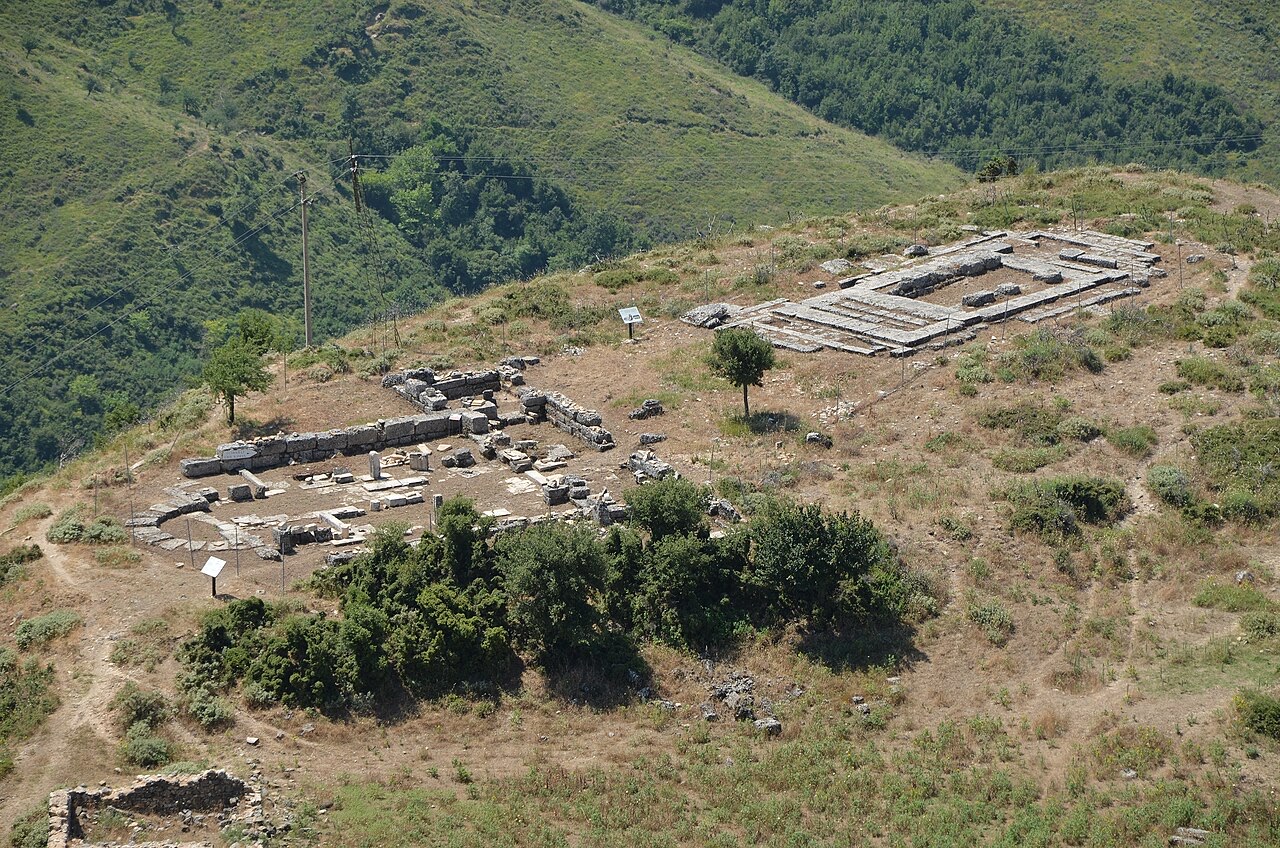
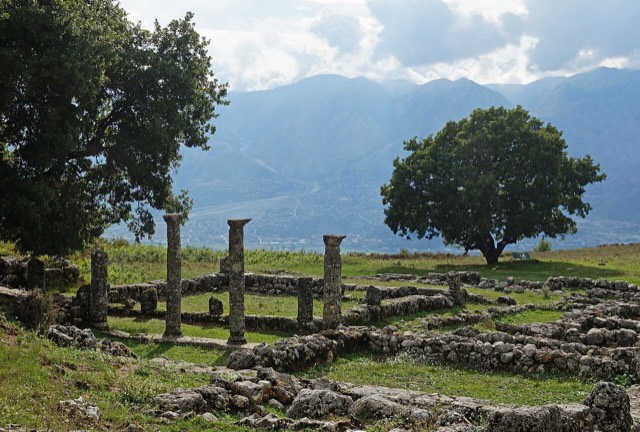
Many of the cults attested at Amantia belong to the standard Greek pantheon, including Zeus, Aphrodite Pandemos, Pan, Athena, Heracles, and Apollo. The cult of Aphrodite may date from the archaic era—which would make Amantia one of the earliest settlements in the region to worship the goddess—or alternatively from the Hellenistic era, alongside the cult of Athena. The temple of Aphrodite at the site is regarded as an example of Hellenistic influence transmitted to the area through contact with nearby Greek colonies. Apollo was also a prominent deity, as in the nearby Corinthian colonies and surrounding settlements in northwestern Greece and southern Albania, and in nearby Molossian towns.
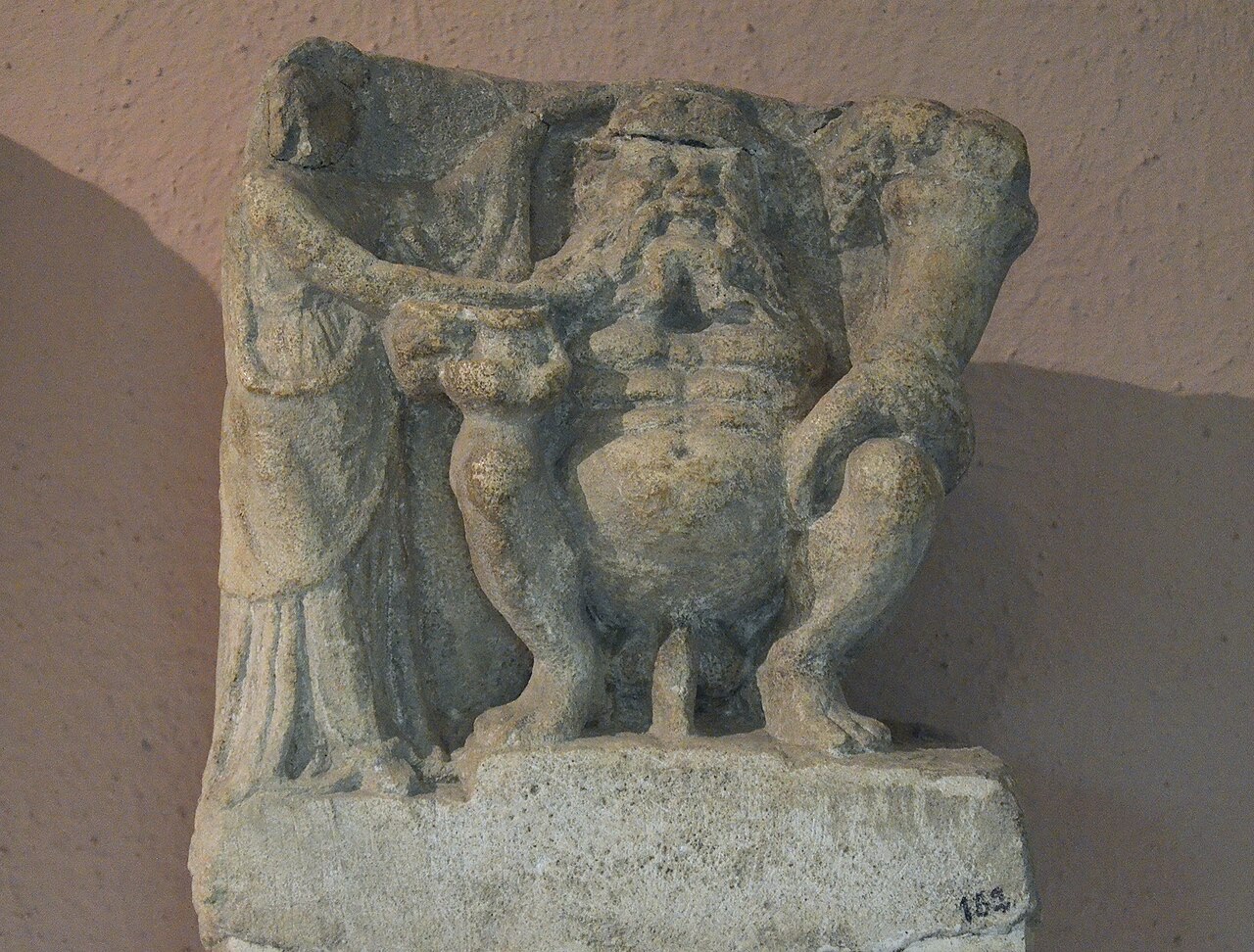
A male fertility deity whose cult is common to southern Illyria has also been identified at Amantia. The iconographies of this deity appear to derive from Egyptian or Italic sources, particularly the Bes-Silenus figure from the Greek colony of Taras, which spread through the region from the 4th century BC onwards with local stylistic adaptations. In the Roman period the same deity underwent further transformation under Eastern religious influence. The Illyrian-Greek cult of the nymphs was also widespread in the region and attested at Amantia. An ancient sanctuary of eternal fire called the Nymphaion was located in an area near Amantia and the Amantes.
The local culture borrowed iconography and technique from the Greeks readily. Scholars caution against assigning ancient cults exclusively to one ethnic or national tradition, noting that the southern Adriatic was a region of sustained religious exchange.
The archaeological site at Ploçë includes a temple dedicated to Aphrodite, a theatre, and a stadium, in addition to the substantial defensive walls and the remains of the acropolis. The walls, originally of irregular limestone construction and later rebuilt in isodomic ashlar, are among the most visible and studied features of the site.
Amantia was designated an archaeological park by the government of Albania on 7 April 2003. The numismatic material recovered at the site includes coins of republican Epirote origin, which are the most numerous, followed by a smaller number of locally produced coins bearing the legend ΑΜΑΝΤΩΝ. Excavations have also yielded evidence of a 4th-century AD basilica, confirming continued occupation into the late antique period.
Amantia's position in ancient Illyria—and the question of whether it should be classified as Greek, Illyrian, or Hellenized Illyrian—has generated sustained scholarly debate. It was described in ancient sources variously as Illyrian, Epirote, or simply barbarous, depending on the author and period. In Hellenistic times the city was considered part of either Illyria or Epirus depending on the source consulted; in Roman times it fell within Epirus Nova in the province of Macedonia.
The city's inclusion on the Delphic theorodokoi list, its minting of coins, its Greek-language inscriptions and Greek institutional names, and its reception of sacred envoys from Argos all point to a degree of integration with the broader Greek world. At the same time, scholars such as Lippert and Matzinger have maintained that it should not be equated with a Greek polis in the full constitutional sense. The debate reflects wider questions about cultural boundaries and acculturation processes in southern Illyria during the Hellenistic period.
Amantia's prosperity during the Hellenistic era is cited to explain the bilingualism of the settlement in that period. Its later alliance with Rome and status as a civitas libera under Roman administration, along with the evidence of a Latin enclave at the site, indicate that it maintained its importance through the Roman imperial period, with the bilingual inscription suggesting activity continuing around 200 AD.
City · Vlorë
Where the Adriatic meets the Ionian, and where Albanian independence was declared in 1912.
Historical period
The Indo-European tribes of the western Balkans, and the ancestors most Albanians claim.
Guide
Butrint, Apollonia, Byllis, Antigonea and Amantia: five sites that cover 2,500 years between them.
Something wrong on this page? Corrections are welcome and are checked against the source record. Tell us what is wrong and, if you can, where the right figure comes from.