Historische Stätte · Shkodër
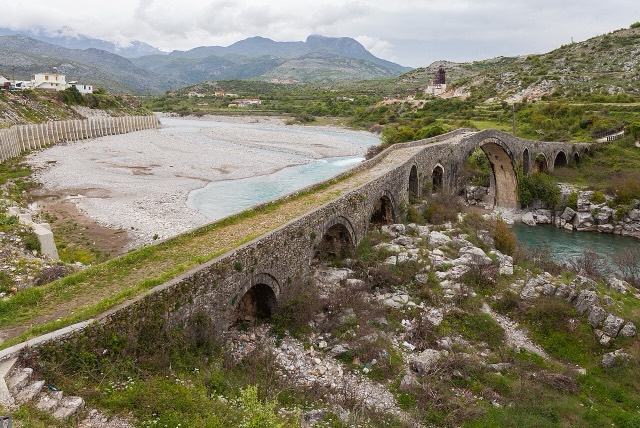
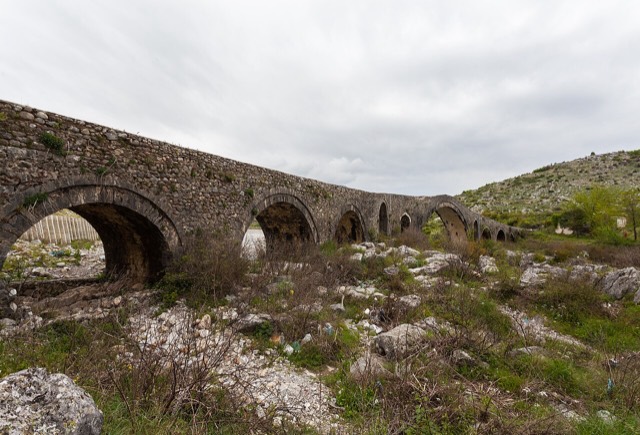
Mesi Bridge
A 108 m, thirteen-arch packhorse bridge over the Kir north-east of Shkodër.
Jeder Kreis, jede Küste, jedes Jahrhundert
Geführte Ansicht
Neu in Albanien? Jede Seite beginnt mit einer einfachen Erklärung, die auch ein Zehnjähriger verstehen würde – bevor es ins Detail geht.
Expertenansicht
Sie kennen die Grundlagen bereits. Direkt zur Substanz, ohne die vereinfachten Erklärungen. Dies ist die Standardeinstellung.
Stadt
The cultural capital of the north: a lake, a fortress, a bicycle city and a Catholic heartland.
Speichern
Shkodër is a city in the north beside a very big lake. A castle called Rozafa looks down on it. Lots of people ride bicycles here. It has long been a centre for Albanian writing, photography and Catholic churches.
Shkodër is a city in the north beside a very big lake. A castle called Rozafa looks down on it. Lots of people ride bicycles here. It has long been a centre for Albanian writing, photography and Catholic churches.
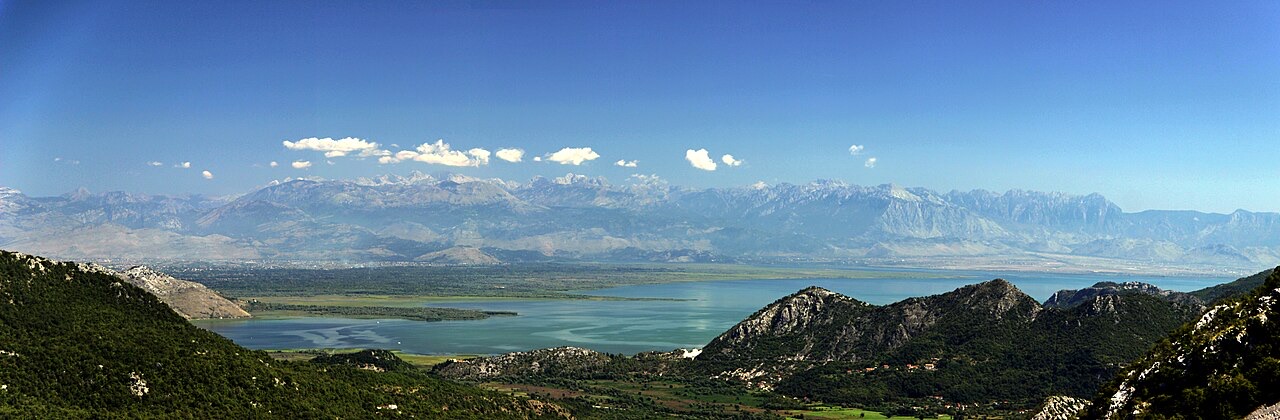
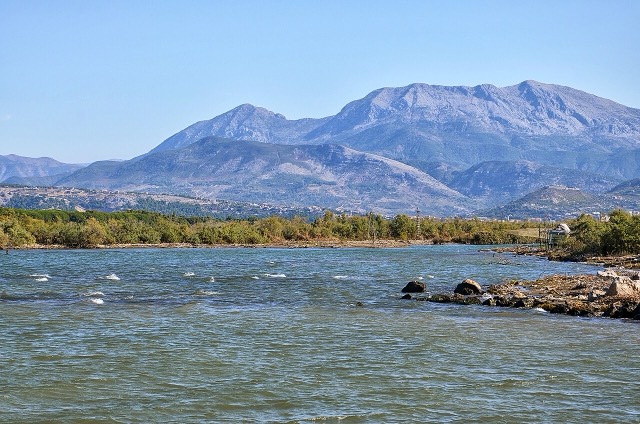
Shkodër (historically Scodra or Scutari) is the fourth-most-populous city of Albania and the administrative seat of both Shkodër County and Shkodër Municipality. It spreads across the Plain of Mbishkodra, positioned between the southern shore of Lake Shkodër and the foothills of the Albanian Alps, on the banks of the Buna, Drin, and Kir rivers.
The municipality covers 872.71 km² while the city proper occupies 16.46 km². The area to the northeast is dominated by Mount Maranaj at 1,576 m above Adriatic level. The Buna river rises from Lake Shkodër and flows into the Adriatic Sea, forming the border with Montenegro; it joins the Drin approximately 2 km southwest of the city. Shkodër is conventionally regarded as the traditional capital of northern Albania, the region also called Gegëria.
Proximity to the Adriatic gives Shkodër a borderline hot-summer Mediterranean and humid subtropical climate (Köppen Csa/Cfa). January mean monthly temperatures range from 1.8 °C to 10.3 °C and August means from 20.2 °C to 33.6 °C. Average annual precipitation is approximately 1,500 mm, placing the area among the wettest in Europe.
The city was first recorded in classical sources as Skodra in Ancient Greek (Σκόδρα, with the ethnonymic genitive Σκοδρινῶν appearing on 2nd-century BC coins) and Scodra in Latin. Although the ultimate origin of the toponym is uncertain, the name is agreed to be pre-Roman. A Paleo-Balkan origin has been proposed, linking it to the Albanian word kodër (meaning 'hill') and Romanian codru ('wooded mountain, forest'), sharing a root with the ancient toponym Codrio/Kodrion.
The evolution from ancient Skodra to modern Albanian Shkodra/Shkodër has been contested in Albanian historical linguistics. Some linguists treat it as evidence of regular phonological development within Albanian. Others argue the form fails to show expected changes: Proto-Albanian */sk-/ clusters normally shifted to */h-/ and Proto-Albanian /o/ normally shifted to /a/, neither of which is visible in Shkodër. The counter-argument is that these changes occurred early in Proto-Albanian and pre-date the foundation of Skodra in the 4th century BC, partly because Albanian contacts with Greek extend back to at least the 7th century BC with the founding of Greek colonies on the Adriatic coast.
The preservation of the vowel /o/ in Albanian Shkodër is explained by scholars as probably reflecting the strong influence of Latin on local toponym forms in the Adriatic coastal zone, since in the earliest Latin loanwords into Albanian the short Latin /ŏ/ is rendered as /u/. Despite these unresolved debates, the Albanian toponym Shkodër is considered to certainly predate the end of the Roman period. In modern usage the name was adapted into Italian as Scodra and Scutari, the latter form remaining current in English until the 20th century. In Serbo-Croatian the city is Skadar and in Turkish İşkodra.
The earliest signs of human activity in the Shkodër area date to the Middle Paleolithic, approximately 120,000 to 30,000 years ago. Artifacts and faunal remains indicate the first inhabitants were Pleistocene hunter-gatherers. Neolithic farmers are also attested by archaeological finds.
The Copper and Early Bronze Ages (broadly 2250–2000 BC for the Early Bronze Age) represent a significant period for social evolution on the eastern Adriatic coast. Inhabitants of the Shkodër basin during this period produced pottery, practised agriculture, and manufactured metal tools. The local Early Bronze Age culture shares similarities with the Cetina culture of the Eastern Adriatic and its hinterland, and also has connections with the Early Bronze Age culture of Maliq in southeastern Albania.
During the developed Early Bronze Age, tumulus burial practices appeared, possibly associated with Indo-European migrations from the steppes. Extraregional interactions increased through the Middle and Late Bronze Ages, and by the Late Bronze Age the inhabitants of the Shkodër basin had contacts with Italy or northwest Greece. By approximately 1100–800 BC, the close of the Bronze Age and onset of the Iron Age, a large, cohesive, and relatively homogeneous cultural group had formed in a well-defined territory that later historical sources would identify as the tribe of the Labeatae.
An urban settlement called Skodra was founded by the Illyrian tribe of the Labeatae in the 4th century BC on a 130 m hill strategically placed at the outflow of Lake Shkodër into the Buna river. The city became the capital of the Illyrian kingdom under the Ardiaei and Labeatae and was one of the most important urban centres in the Balkans in antiquity. It minted its own coins bearing the ethnonym of its inhabitants. King Agron, Queen Teuta, and King Gentius were among the most prominent rulers of the Ardiaei based there.
In 168 BC, following the third Illyrian War, the Romans captured Scodra after the defeat of the Illyrian king Gentius by the Roman force commanded by Anicius Gallus. The city was sacked and annexed. Under Roman rule it was colonised and remained part first of the province of Illyricum and subsequently of Dalmatia.
In the 3rd century AD, Scodra was elevated to capital of the new Roman province of Praevalitana as a result of the administrative reforms of Emperor Diocletian. By 395 AD it was part of the Diocese of Dacia. With the spread of Christianity in the 4th century, the Archdiocese of Scodra was established; in 535 Byzantine Emperor Justinian I assumed authority over it. After the division of the Roman Empire, Shkodra passed to Byzantine control.
In the early 11th century Jovan Vladimir ruled Duklja amid the conflict between Byzantine Emperor Basil II and the Bulgarian tsar Samuel. Vladimir retreated to Koplik when Samuel invaded Duklja and was compelled to accept Bulgarian vassalage; he was subsequently killed by the Bulgarians. The feast of Shingjon, commemorating Jovan Vladimir, has since been observed by Albanian Orthodox Christians.
In the 1030s Stefan Vojislav of Travunija expelled the last Byzantine strategos and by 1042 had defeated Byzantine forces; he established Shkodër as his capital. Constantine Bodin received the crusaders of the Crusade of 1101 in the city. After 12th-century dynastic struggles Shkodër became part of the Serbian Nemanjić Zeta province. In 1214 the city was briefly annexed by the Despotate of Epirus under Michael I Komnenos Doukas. In 1330 the Serbian king Stefan Dečanski appointed his son Stefan Dušan governor of Zeta with its seat at Shkodër; later that year Dečanski destroyed Dušan's court on the Drin River near the city. A truce was agreed in April 1331, but in August 1331 Dušan departed from Shkodër, marched to Nerodimlje, and overthrew his father.
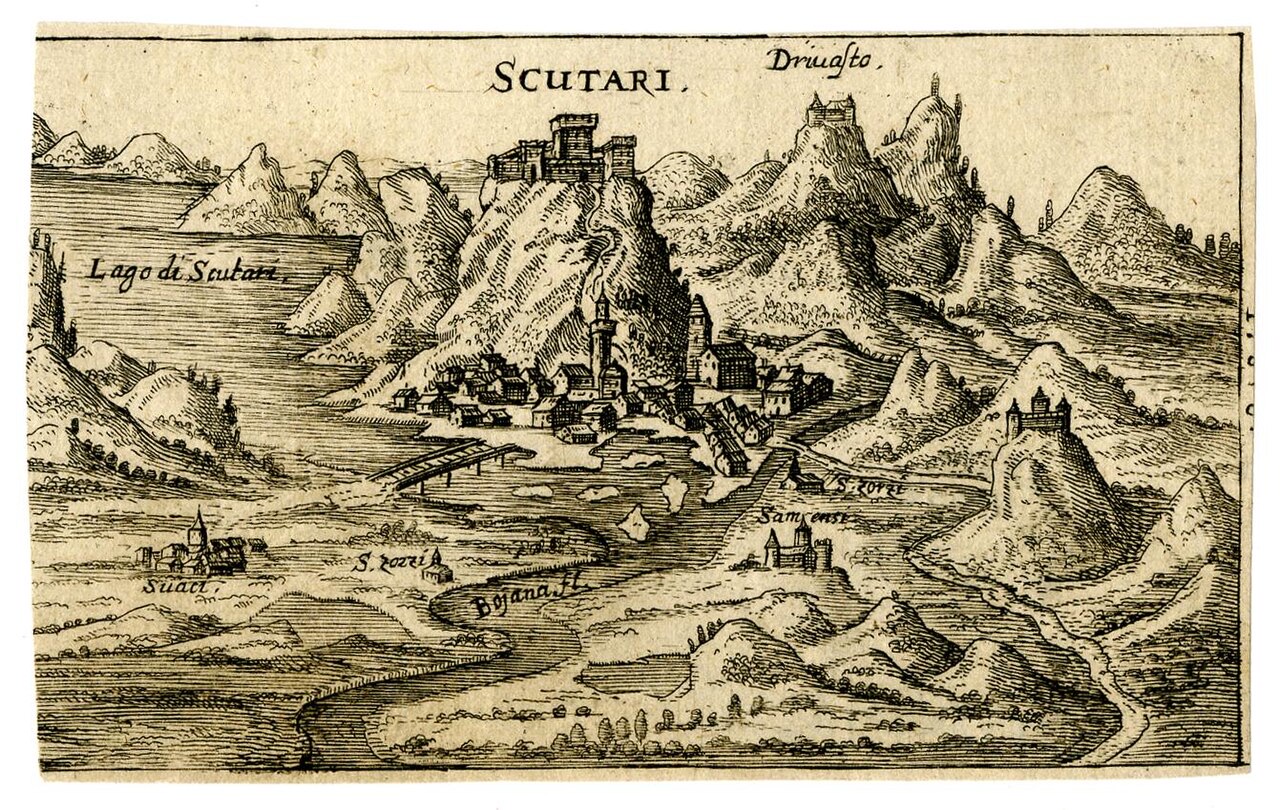
As the Serbian Empire disintegrated, Shkodër passed to the Zeta Balšić noble family, who in 1396 surrendered the city to the Republic of Venice to create a buffer against Ottoman expansion. Under Venetian rule the city adopted the Statutes of Scutari, a civic legal code written in Venetian. The Statutes record Albanian and Slavic populations in the city, though Venetian rule brought many Dalmatian Italians who formed a majority for a time. After the Black Death killed much of the population, Albanians and Slavs again constituted the majority. The Venetians constructed St. Stephen's Church (later converted into the Fatih Sultan Mehmet Mosque) and the Rozafa Castle.
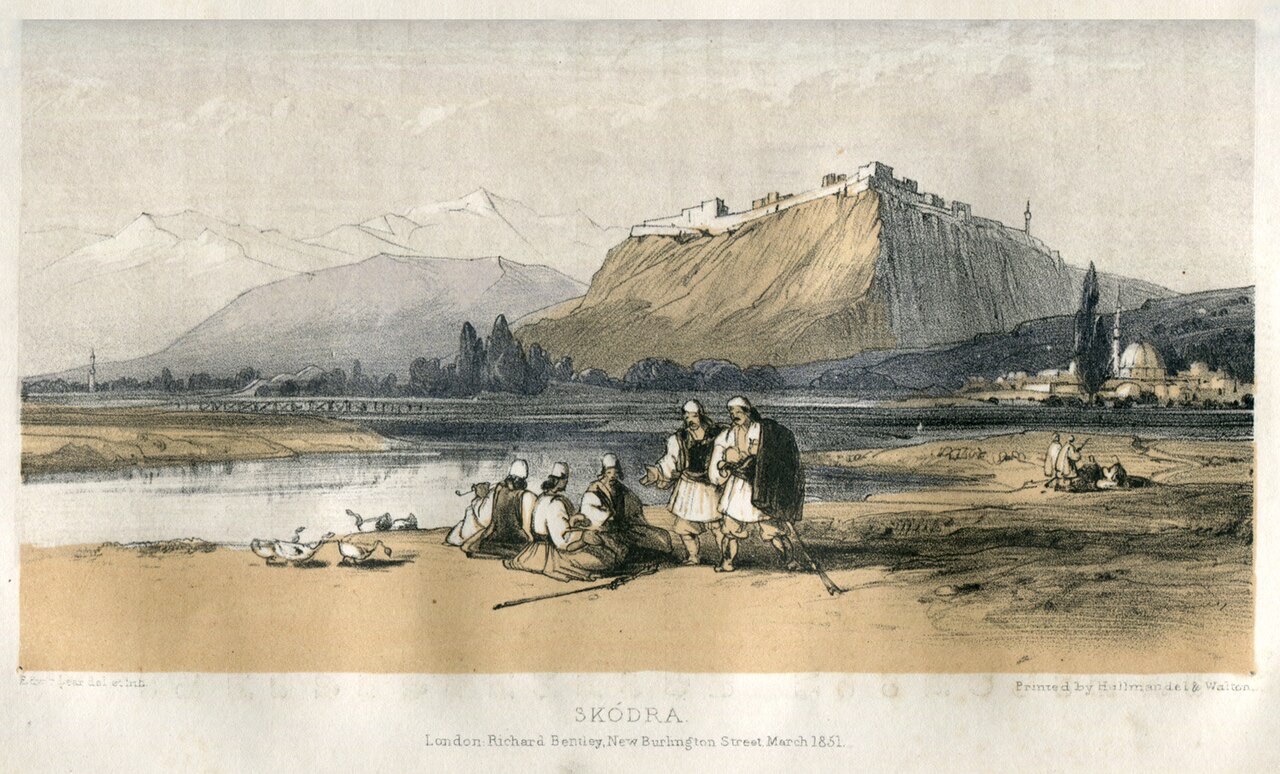
Ottoman forces moved against Shkodër in 1478. Sultan Mehmed II personally led the siege. Around ten heavy cannons were cast on site, and cannonballs weighing up to 380 kg were fired against the citadel; examples of these balls remain on display in the castle museum. Despite this bombardment the city resisted, and Mehmed left the field, leaving his commanders to continue operations. Through the winter the Ottomans captured the surrounding fortresses of Lezhë, Drisht, and Žabljak Crnojevića one by one, while famine and sustained bombardment wore down the defenders' morale.
The castle's position on a naturally protected hill meant every Ottoman assault caused substantial casualties. Both sides eventually considered a negotiated settlement. On 25 January an agreement between Venice and the Ottoman Empire ended the siege: the citizens were permitted to leave unharmed and the Ottomans took possession of the evacuated city. The defenders of the citadel emigrated to Venice. Many Albanians from the surrounding region withdrew into the mountains, while upper-class inhabitants, including those aided by the Jonima family, settled in Ravenna, Venice, and Treviso. The city then became the seat of the newly established Sanjak of Scutari.
In the immediate aftermath of the Ottoman takeover much of the population had fled. By 1485 there were 27 Muslim and 70 Christian hearths recorded in the city; by the end of the following century there were over 200 Muslim hearths compared with 27 Christian ones. From around the 17th century Shkodër grew as the economic centre of the Sanjak of Scutari. Craftsmen produced fabric, silk, arms, and silver articles. Construction during this period included two-storey stone houses, a covered market, and the Mesi Bridge (Ura e Mesit) over the Kir river, built in the second half of the 18th century. The bridge is over 100 m long, has 13 stone arches, with the largest arch 22 m wide and 12 m tall.
In the 18th century Shkodër became the centre of the pashaluk of Shkodër, ruled by the Bushati family from 1757 to 1831. In 1737, 178 Catholic families — all recorded as Albanian — lived in the city. The Bushati family produced many Islamic scholars, poets, and administrators. Other countries had maintained consulates in Shkodër since 1718. Obot, Ulcinj, and later Shëngjin served as the city's ports. A trade court and a directorate of postal services were established to manage Shkodër's extensive commerce.
By the second half of the 19th century Shkodër, as the administrative centre of the Vilayet of Shkodër, was an important trading hub for the entire Balkan peninsula with over 3,500 shops dealing in clothing, leather, tobacco, and gunpowder. The Ottoman-Albanian intellectual Sami Frashëri estimated the city's population in the 1880s at 37,000, of whom approximately three-quarters were Muslims and the remainder Christians, mostly Catholics with a few hundred Orthodox. Following the rebellion of Mustafa Pasha Bushatlliu, Shkodër was besieged by Ottoman forces for more than six months; Albanian resistance ended on 10 November 1831. In 1833 around 4,000 Albanian rebels seized the town again, holding off Ottoman forces from April to December, before the Ottoman government conceded to their terms.
Shkodër played a significant role in the League of Prizren, the Albanian political and military movement of the late 19th century. The city's branch of the League maintained its own armed unit and fought to protect territories including Plav, Gusinje, Hoti, Gruda, and Ulcinj. The Bushati Library, constructed in the 1840s, served as the Shkodër branch's organisational centre. Literary, cultural, and sports associations were formed, among them Bashkimi ('The Union') and Agimi ('The Dawn'). The first Albanian-language newspapers printed in Albania came from Shkodër's presses.
The Marubi family of photographers established their practice in Shkodër. Their archive preserves more than 150,000 negatives documenting the Albanian liberation movement, the raising of the Albanian flag at Vlorë, and everyday life in Albanian towns from the late 19th into the early 20th century. The expanded Marubi National Museum of Photography on Kolë Idromeno Street holds this collection, which documents Albanian social, cultural, and political life from 1850 onwards.
During the Balkan Wars, Ottoman forces under Hasan Riza Pasha and Esad Pasha held the city against Montenegrin and Serbian forces for seven months. Hasan Riza Pasha was killed in an ambush inside the city by Esad Toptani. Esad Pasha surrendered to Montenegro in April 1913 after Montenegro sustained more than 10,000 casualties. The London Conference of Ambassadors compelled Montenegro to relinquish the city to the new Albanian state in May 1913. British traveller Edith Durham recorded the suffering of civilians in the region in the wake of October 1913, describing thousands of refugees from Djakova and its surroundings.
During World War I, Montenegrin forces occupied Shkodër on 27 June 1915. In January 1916, Austria-Hungary took control and made the city the centre of its occupation zone. When the war ended on 11 November 1918, French forces moved into Shkodër along with other regions of Albania with significant Albanian populations. The international military administration of Albania was temporarily based in Shkodër after the war; in March 1920 the city passed to the administration of the national government in Tirana. During the Serbian-Albanian conflict of the second half of 1920, Shkodër resisted Serbian invasion under the leadership of Sylço Bushati, with financial support from notable figures including Musa Juka.
Between 1921 and 1924 Shkodër was a centre of democratic political activity. The democratic opposition won a majority in the Constitutional Assembly, and on 31 May 1924 democratic forces took the city before advancing on Tirana. Between 1924 and 1938 the number of small industrial factories in the city rose from 43 to 70, producing food, textiles, and cement. The population grew from 20,000 in 1924 to 29,000 in 1938. During the Italian invasion of 1939, resistance was led by Mehmet Ullagaj before the city fell. After the Italian withdrawal from Albania in 1943, Shkodër came under German control, remaining so until 29 November 1945, when it was liberated by the National Liberation Movement — making it the last city in Albania to be freed from German control.
Under the communist regime established by Enver Hoxha, Shkodër experienced severe political repression, falling particularly heavily on Catholics and on intellectuals opposed to communist ideology. The city is described in the article as having had one of the highest concentrations of political prisoners in Albania during the communist period. The historic Shkodër Bazaar and the port on the Buna river were demolished by the communist authorities, ending centuries of commercial activity and reducing the city's strategic importance. In the early 1990s Shkodër again became a major centre of the democratic movement that brought the communist regime to an end.
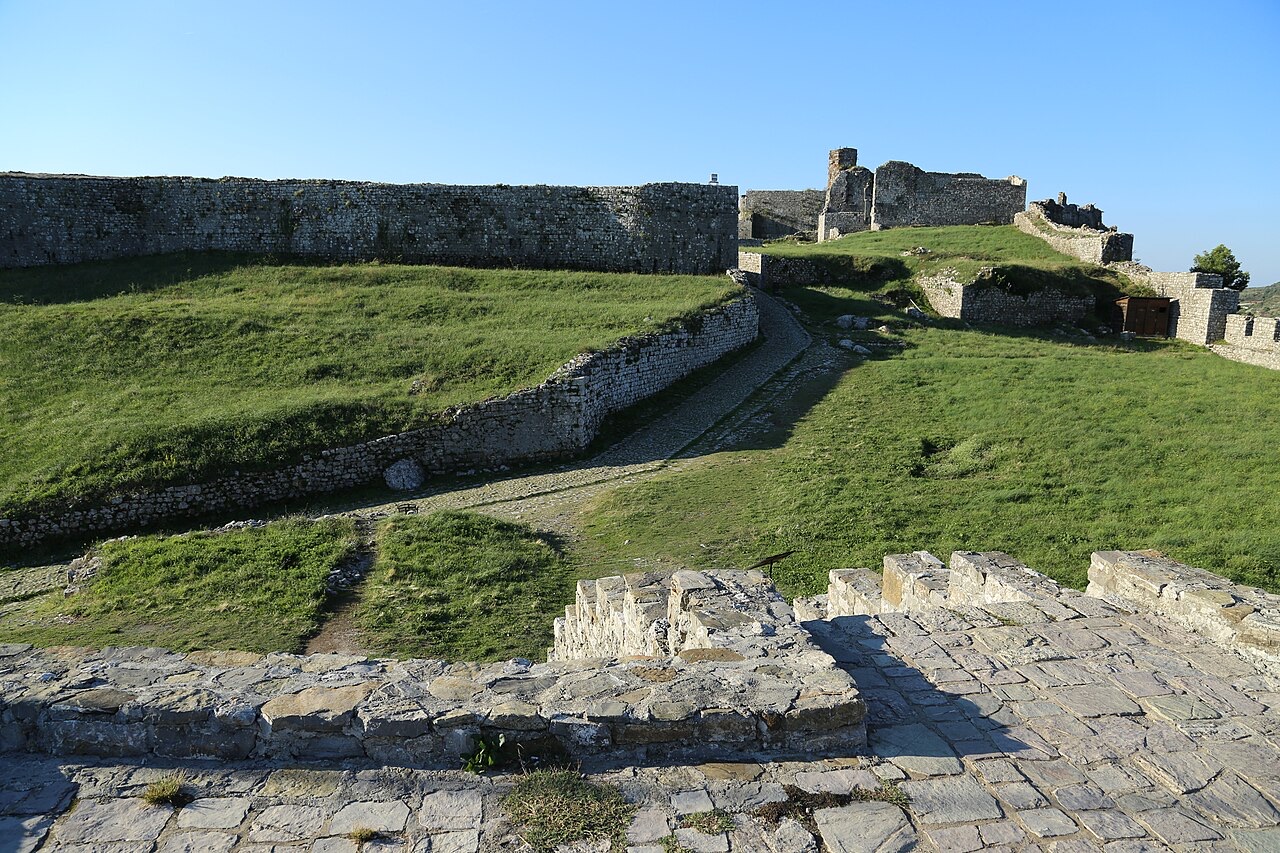
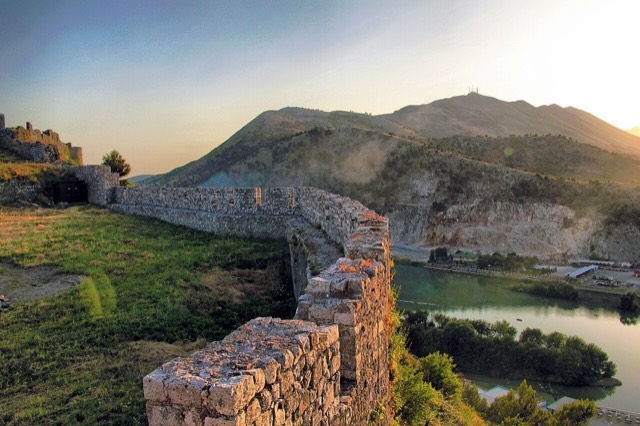
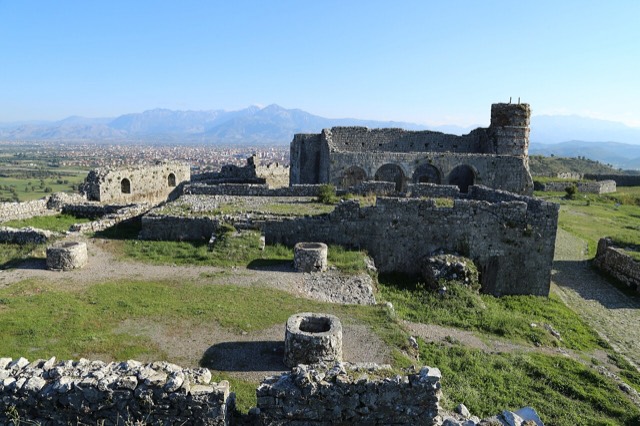
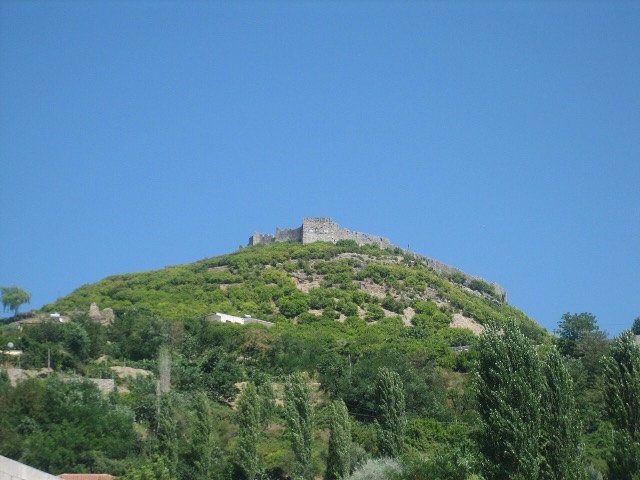
Rozafa Castle stands in the south of Shkodër on a hill historically used as the residence of Illyrian monarchs and a military stronghold. Its foundations are associated with a legend about a woman who sacrificed herself for the castle's construction. Artefacts and inscriptions discovered at the site are considered the earliest examples of symbolic human behaviour recorded in the city. The castle's hill is 130 m high and was strategically placed at the outflow of Lake Shkodër into the Buna.
The Historical Museum of Shkodër, the most important museum in the city, is housed in a 19th-century mansion collectively known as the house of Oso Kuka and was established to protect and display artefacts from across the Shkodër region. The Marubi National Museum of Photography on Kolë Idromeno Street holds an extensive visual archive of Albanian life beginning in 1850. Ruins of other fortifications, including Drisht Castle and Shurdhah Island, are also present in the broader municipality.
The city's religious architecture reflects a significant degree of confessional diversity. The most prominent religious buildings include the Ebu Beker Mosque, the Fatih Sultan Mehmet Mosque (converted from the Venetian-built St. Stephen's Church), the Franciscan Church, the Lead Mosque, the Nativity Cathedral, and St. Stephen's Cathedral. Shkodër is the seat of the Metropolitan Roman Catholic Archdiocese of Shkodër-Pult (Scutari-Pulati), represented in the city by the episcopal seat at Shkodër Cathedral. The city also contains the only institution in Albania providing high-level education in Arabic, Turkish, and Islamic Studies.
According to the 2011 census, the municipal unit of Shkodër had an estimated population of 77,075, of whom 37,630 were men and 39,445 women. The population of the broader municipality was 135,612 in 2011. Most inhabitants speak a distinctive dialect of northwestern Gheg Albanian. The city is governed by a mayor–council system; the municipality consists of the administrative units of Ana e Malit, Bërdicë, Dajç, Guri i Zi, Postribë, Pult, Rrethinat, Shalë, Shosh, Velipojë, and Shkodër as its seat.
The processing and textile industries have historically dominated Shkodër's economy, covering tobacco processing and cigarette manufacture, preserved and sugar-based foods, soft and alcoholic drinks, pasta, bread, rice, vegetable oil, garments, and silk products. The city also had a wood-processing and paper plant, and mechanical engineering industries producing wire, elevators, buses, and the products of the Drini Plant. According to the World Bank, Shkodër ranked 8th among 22 cities in southeastern Europe for economic improvement in 2016.
As the largest city in northern Albania, Shkodër functions as the main road link between Tirana and Podgorica. The SH1 highway connects it to the Albanian-Montenegrin border at Han i Hotit; the road segment from Hani i Hotit to Shkodra was completed in 2013 as a single carriageway. The SH5 begins at Shkodër and runs to Morinë. In December 2010 the city and surrounding region experienced flooding described as probably the worst in 100 years. A new swing bridge over the Buna was constructed in 2011, replacing an older nearby structure.
Der wärmste Monat ist August (mittleres tägliches Maximum 30°C), der kälteste ist January (mittleres tägliches Minimum 2°C), und der regenreichste ist November (257 mm). Der mittlere jährliche Gesamtniederschlag beträgt 1,799 mm.
| Monat | Maximum | Minimum | Niederschlag | Regentage | Sonne/Tag |
|---|---|---|---|---|---|
| January | 9°C | 2°C | 190 mm | 12 | 6.7 h |
| February | 11°C | 3°C | 171 mm | 12 | 7.6 h |
| March | 14°C | 6°C | 165 mm | 11 | 9.2 h |
| April | 18°C | 10°C | 144 mm | 12 | 10.5 h |
| May | 23°C | 15°C | 112 mm | 10 | 12.0 h |
| June | 27°C | 19°C | 60 mm | 6 | 13.5 h |
| July | 30°C | 22°C | 37 mm | 4 | 13.7 h |
| August | 30°C | 22°C | 54 mm | 4 | 12.8 h |
| September | 25°C | 17°C | 192 mm | 8 | 10.5 h |
| October | 20°C | 13°C | 188 mm | 10 | 8.9 h |
| November | 15°C | 8°C | 257 mm | 13 | 6.9 h |
| December | 10°C | 4°C | 229 mm | 13 | 6.2 h |
Quelle: ERA5 reanalysis via Open-Meteo, 1994–2023 · „Maximum" und „Minimum" sind das mittlere tägliche Temperaturmaximum bzw. -minimum. „Regentage" zählt Tage mit mindestens 1 mm Niederschlag.
Historische Stätte · Shkodër
A 108 m, thirteen-arch packhorse bridge over the Kir north-east of Shkodër.
Stadt · Shkodër
The cultural capital of the north: a lake, a fortress, a bicycle city and a Catholic heartland.
Historische Stätte · Shkodër
The rock fortress above the meeting of three rivers, and the setting of Albania's best-known legend.
See · Shkodër
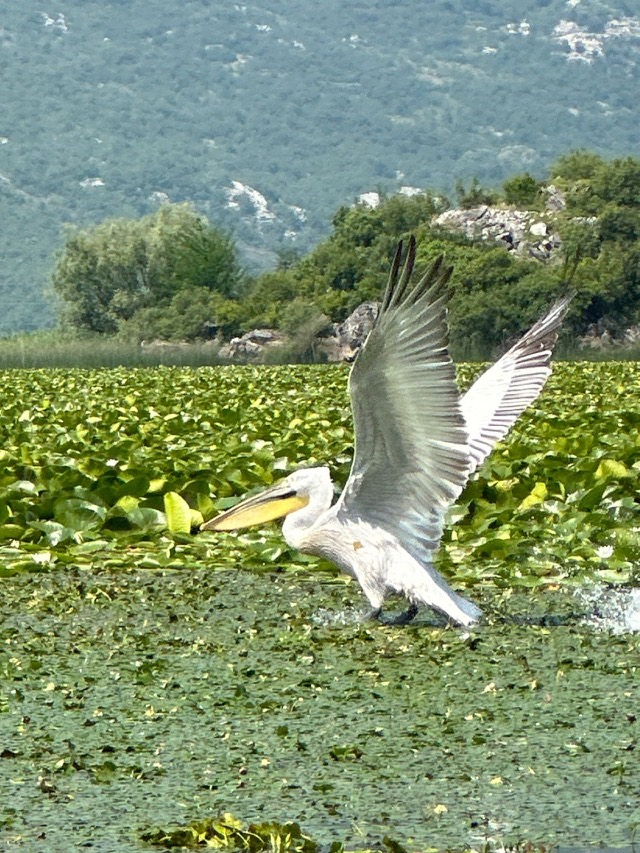
The largest lake in southern Europe, shared with Montenegro and a major bird wintering ground.
Fluss · Shkodër
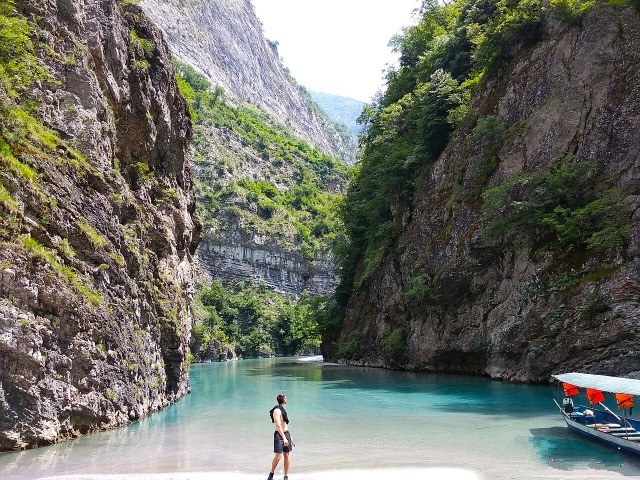
A tributary of the Drin above Koman, reached by boat and often called Albania's Thailand.
Schutzgebiet · Shkodër
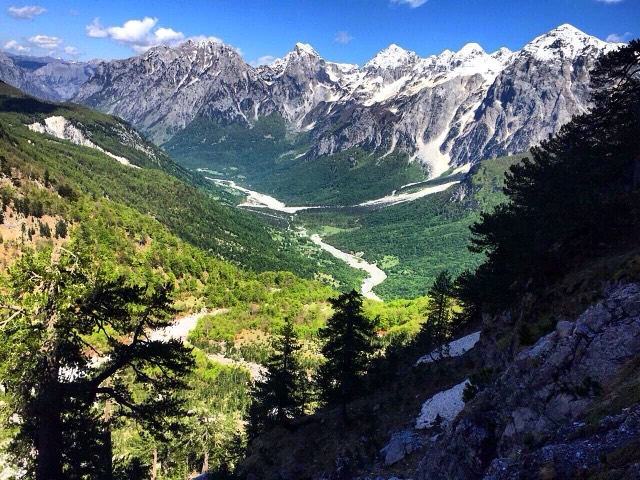
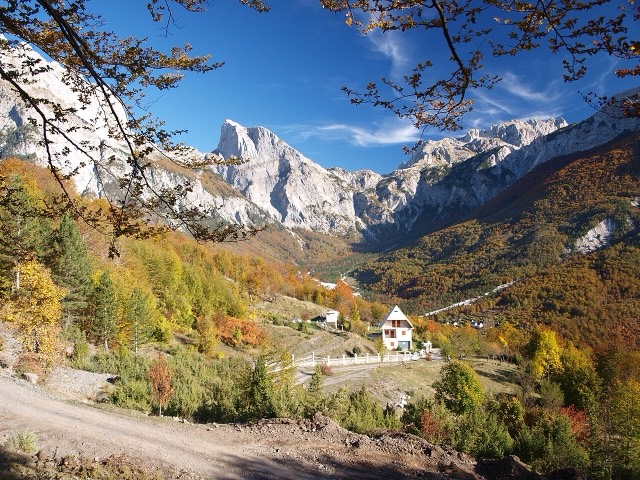
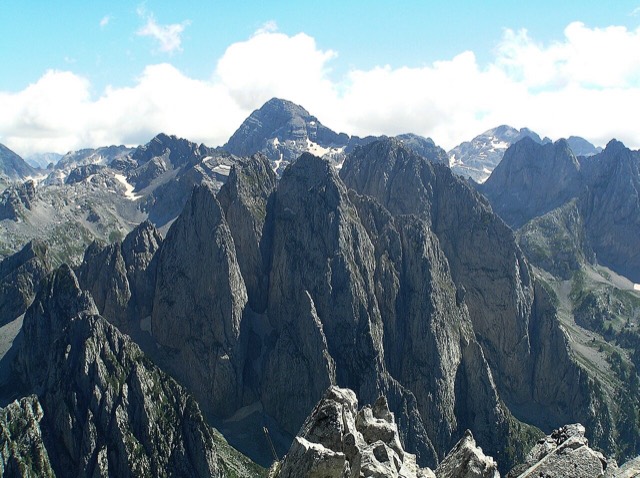
The glacial valley park at the heart of the Albanian Alps, merged into a wider protected complex in 2022.
Strand · Shkodër
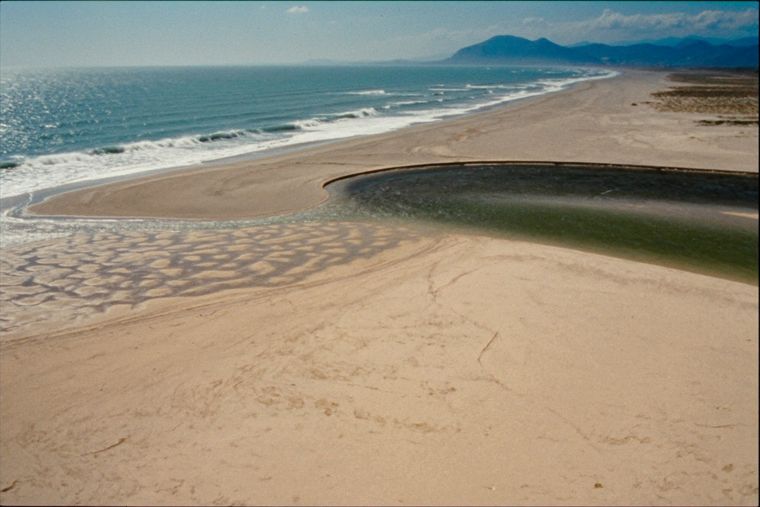
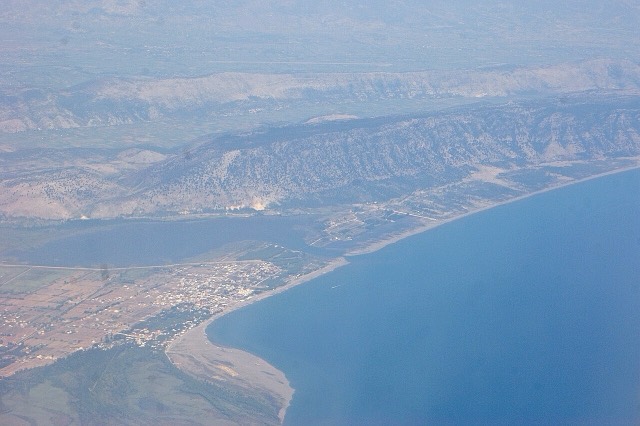
A very shallow, wide sand beach at the Buna delta, beside a protected lagoon.
Gebirge · Shkodër
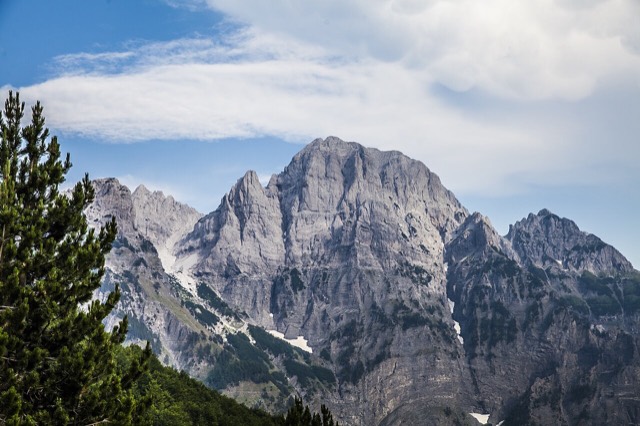
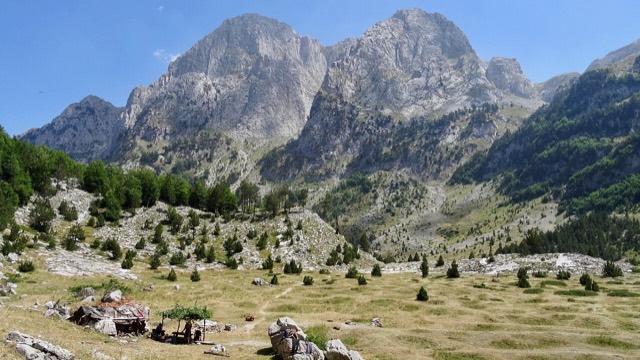
The limestone wall of the far north — locally the Accursed Mountains — shared with Montenegro and Kosovo.
Berg · Shkodër
At 2,694 m the highest peak entirely inside the Dinaric Alps, deep in the Albanian Alps.
Kleinstadt · Shkodër
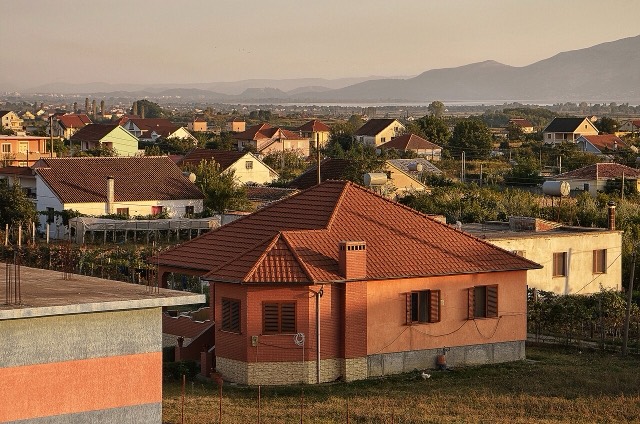
The seat of Malësi e Madhe, at the foot of the Alps near the Montenegrin border.
Dorf · Shkodër
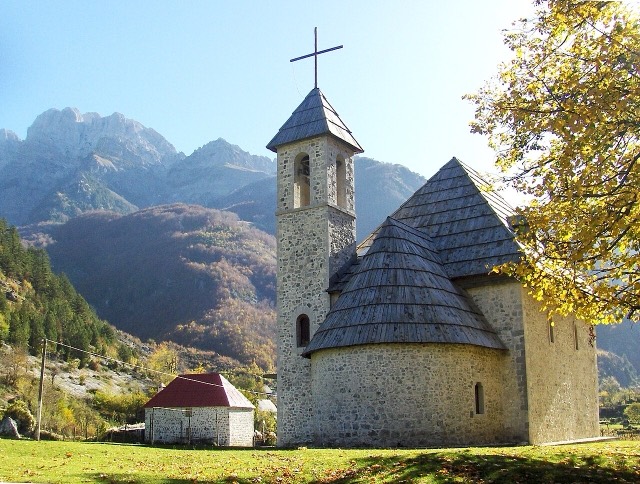
A glacial valley village in the Albanian Alps: a lock-in tower, a waterfall, and one end of the country's best-known trek.
Energiestandort · Shkodër
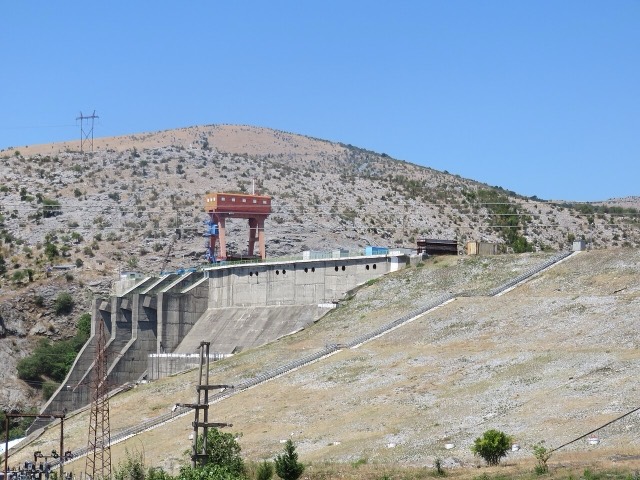
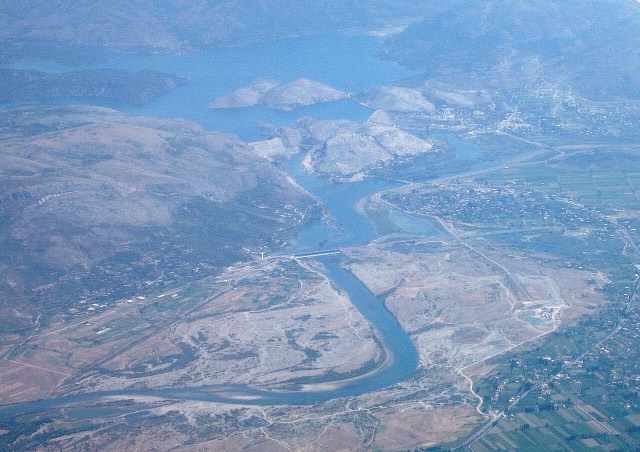
The lowest station of the Drin cascade, just upstream of Shkodër.
A wide, shallow sand beach at the Buna river mouth, with a protected lagoon reserve.
The archive of the Balkans' oldest photographic studio — about 500,000 negatives from 1858 onward.
The middle station of the Drin cascade, and the dam that created Lake Koman.
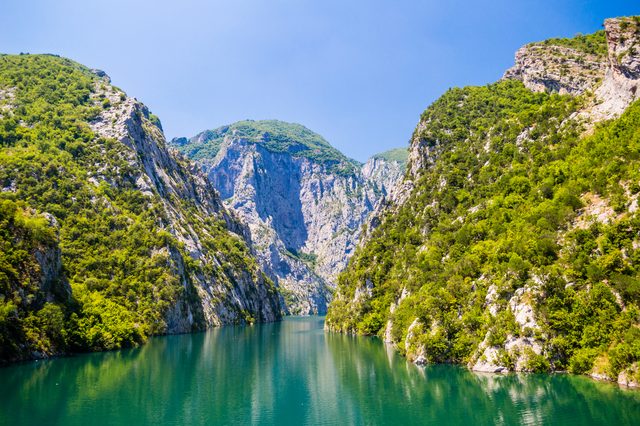
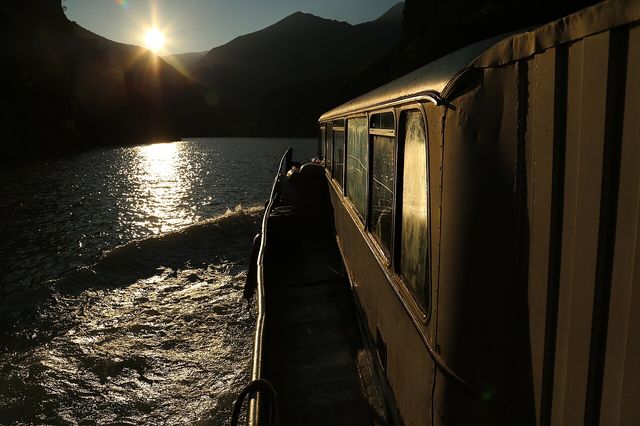
A working transport link through a gorge that has become one of Albania's best-known journeys.
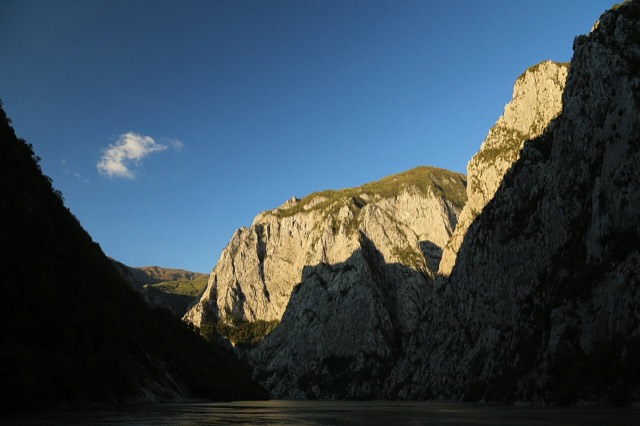
A 34 km reservoir in a gorge so narrow the ferry crossing is treated as a scenic journey in its own right.
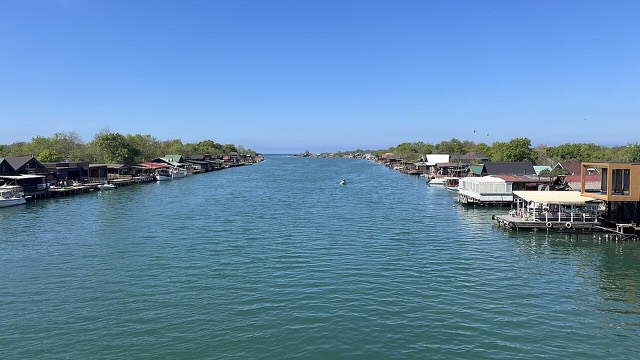
The short outflow of Lake Shkodër, and Albania's only navigable river.
Albania's longest river and the backbone of its electricity system, dammed three times in the north.
A forested highland town on the old road north, at about 830 m.
The town beside the lowest dam of the Drin cascade, east of Shkodër.
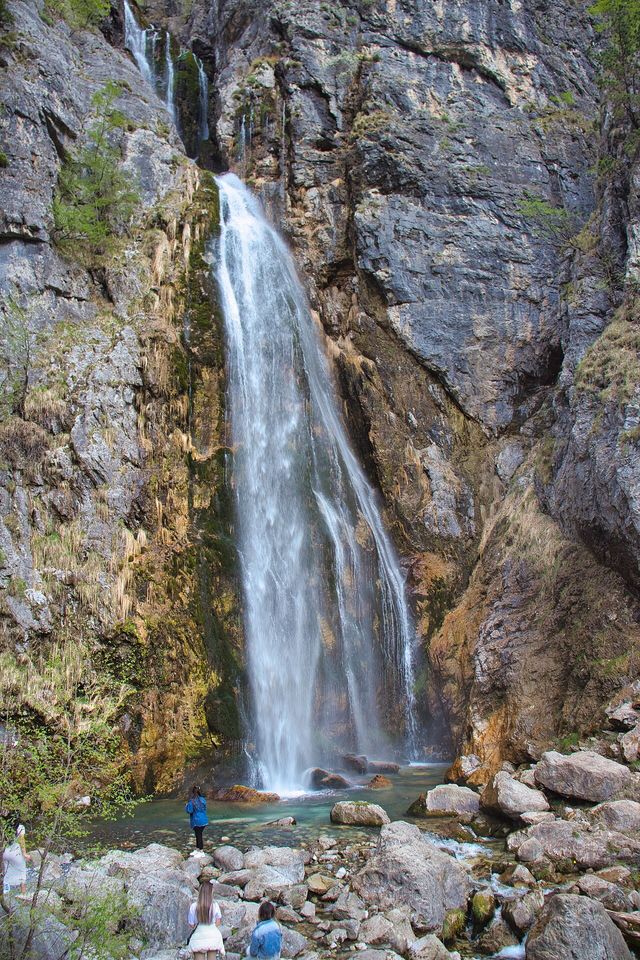
A 25–30 m fall in the Theth valley, and a declared natural monument.
The main public university of northern Albania.
A small timber and mining town in the northern highlands.
Historische Stätte · Shkodër
A 108 m, thirteen-arch packhorse bridge over the Kir north-east of Shkodër.
Historische Stätte · Shkodër
The rock fortress above the meeting of three rivers, and the setting of Albania's best-known legend.
See · Shkodër
The largest lake in southern Europe, shared with Montenegro and a major bird wintering ground.
Fluss · Shkodër
A tributary of the Drin above Koman, reached by boat and often called Albania's Thailand.
Kleinstadt · Lezhë
Where the Albanian princes swore their 1444 league, and where Skanderbeg is buried.
Gebirge · Shkodër
The limestone wall of the far north — locally the Accursed Mountains — shared with Montenegro and Kosovo.
Kleinstadt · Shkodër
The seat of Malësi e Madhe, at the foot of the Alps near the Montenegrin border.
Dorf · Shkodër
A glacial valley village in the Albanian Alps: a lock-in tower, a waterfall, and one end of the country's best-known trek.
Historische Stätte · Shkodër
The archive of the Balkans' oldest photographic studio — about 500,000 negatives from 1858 onward.
Leitfaden
The Alps, the Koman ferry and the Shkodër lake country: the part of Albania least like the coast.
Universität · Shkodër
The main public university of northern Albania.
Vergleich
Two small Adriatic neighbours: one bigger, cheaper and rougher, one smaller, pricier and more polished.
Person
Pietro Marubi and his successors photographed the north for a century, leaving half a million negatives.
Etwas falsch auf dieser Seite? Korrekturen sind willkommen und werden gegen den Quelldatensatz geprüft. Bitte mitteilen, was falsch ist und, wenn möglich, woher die richtige Angabe stammt.
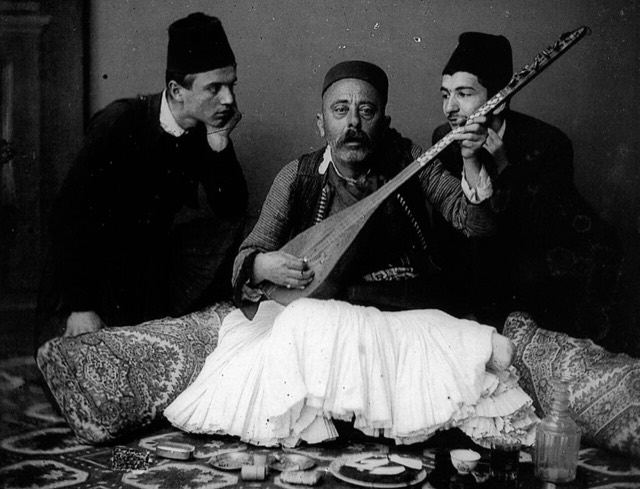
![Title: A chief of Thethi, Tribe of Shale [i.e. Shala], Albania Abstract/medium: 1 photographic print.](/static/img/thumbs/theth-4.jpg)