County
Dibër County
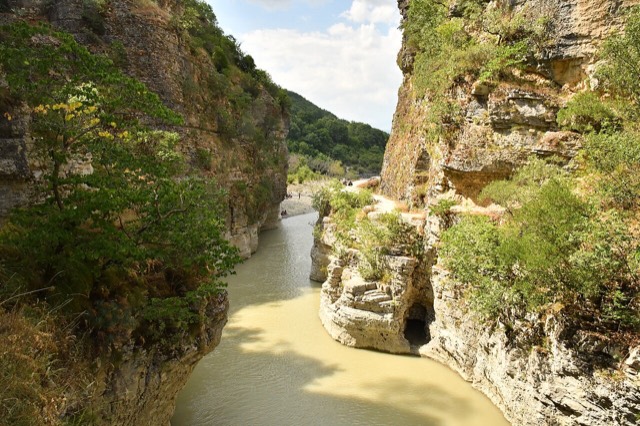
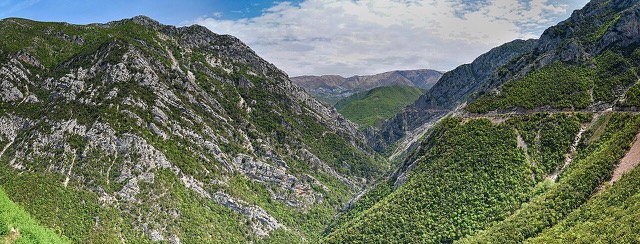
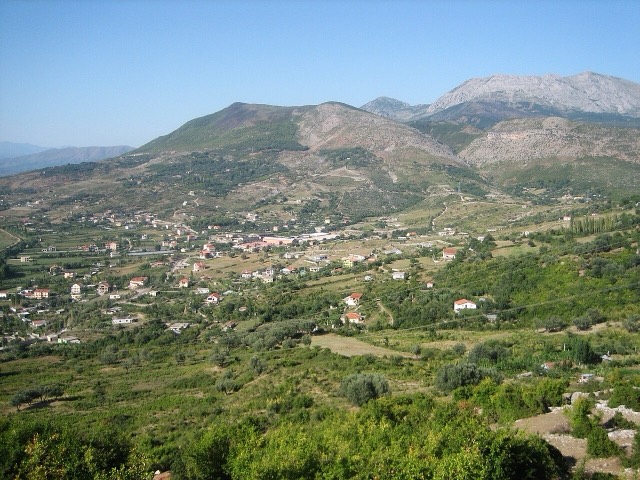
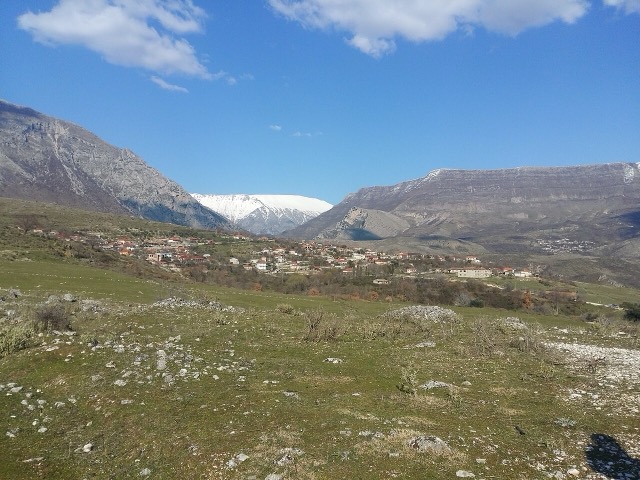
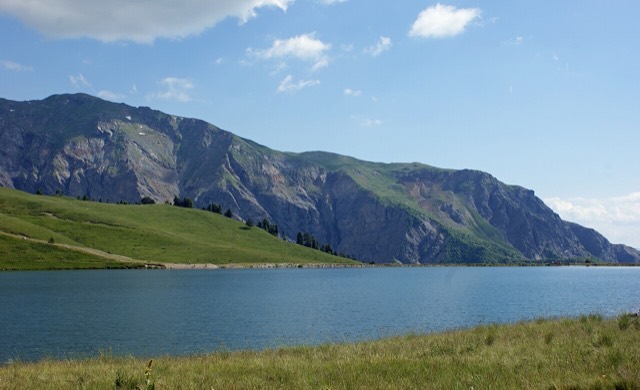
Albania's mountain interior on the North Macedonian border, containing Mount Korab.
Elke provincie, elke kust, elke eeuw
Begeleidende weergave
Nieuw in Albanië? Elke pagina begint met een uitleg in eenvoudige taal die u aan een tienjarige zou kunnen voorlezen, voordat de details beginnen.
Expertweergave
U kent de basis al. Meteen naar de kern, met de eenvoudige uitleg verborgen. Dit is de standaardinstelling.
Land
A mountainous country of about 2.4 million people on the Adriatic and Ionian seas, between Montenegro, Kosovo, North Macedonia and Greece.
Opslaan
Albania is a small country in south-east Europe. It sits on the sea, and most of the land behind the coast is mountains. About 2.4 million people live there. The language is Albanian, the money is the lek, and the capital city is Tirana.
Albania is a small country in south-east Europe. It sits on the sea, and most of the land behind the coast is mountains. About 2.4 million people live there. The language is Albanian, the money is the lek, and the capital city is Tirana.
Albania is a country in Southeast Europe, situated on the Balkan Peninsula along the Adriatic and Ionian Seas within the Mediterranean Sea. It covers an area of 28,748 km² (11,100 sq mi) and extends approximately 340 km from north to south and 148 km from east to west. It lies between latitudes 39° and 42° N and longitudes 19° and 21° E.
Albania shares land borders with Montenegro to the northwest, Kosovo to the northeast, North Macedonia to the east, and Greece to the south. Its extreme points are Vërmosh in the north (42° 35' 34" N), Konispol in the south (39° 40' 0" N), Sazan island to the west (19° 16' 50" E) and Vërnik to the east (21° 1' 26" E). The highest point is Mount Korab at 2,764 m above the Adriatic; the lowest is sea level along the Mediterranean coast.
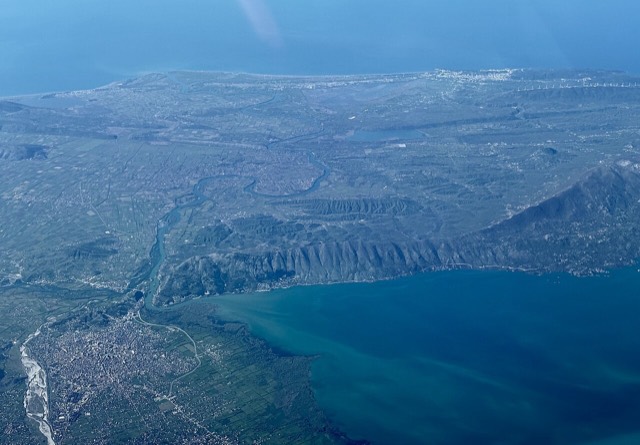
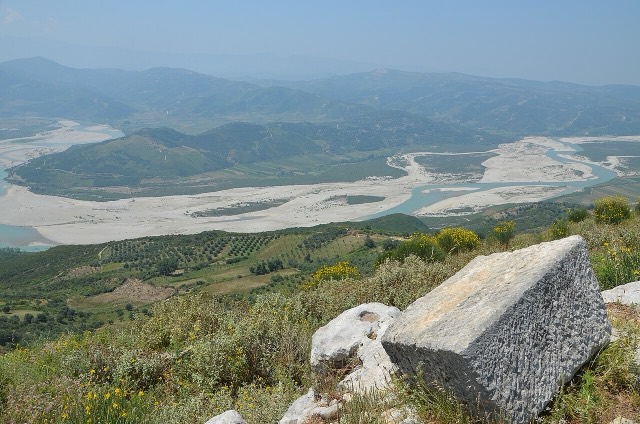
The country's landscape ranges from the Albanian Alps and the Korab, Skanderbeg, Pindus, and Ceraunian mountain ranges to fertile lowland plains along the Adriatic and Ionian coasts. Lake Shkodër in the northwest is Southern Europe's largest lake. Lake Ohrid in the southeast is one of the world's oldest continuously existing lakes. The Vjosa River has been identified as one of Europe's last intact large river systems. The longest river, measured from mouth to source, is the Drin, which begins at the confluence of the Black and White Drin.
Mesolithic habitation in Albania is evidenced at open-air sites near the Adriatic coast and in caves. Objects found near Xarrë include flint and jasper items alongside fossilised animal bones; finds at Mount Dajt include bone and stone tools comparable to Aurignacian culture material. The Neolithic era began around 7000 BC, with evidence of sheep and goat domestication and small-scale agriculture. Cardium pottery culture appears on the Albanian coast and across the Adriatic after 6500 BC.
The Albanian bitumen mines at Selenicë provide some of Europe's earliest evidence of bitumen exploitation, dating to the Late Neolithic from around 5000 BC. Local communities used the material as pigment for ceramics, for waterproofing, and as an adhesive. Evidence of overseas trade of Selenicë bitumen comes from Neolithic and Bronze Age contexts in southern Italy. The mines have been exploited continuously from the Late Neolithic to the present.
Indo-Europeanisation of the western Balkans began in Albania after 2800 BC. Early Bronze Age burial mounds near later Apollonia date to approximately 2679 ± 174 calibrated BC and are associated with the Adriatic-Ljubljana culture. The first archaeogenetic find linked to this process is a man with predominantly Yamnaya ancestry buried in northeastern Albania, dated to 2663–2472 calibrated BC. During the Middle Bronze Age, Cetina culture sites appear in Albania, concentrated around southern Lake Shkodër and in tumulus cemeteries, hillforts, and cave sites across the country.
By the historical period, the territory was inhabited by Illyrian and Epirote tribes and contained several Greek colonies. The Taulanti, one of the most powerful Illyrian tribes, occupied much of present-day Albania; their ruler Glaucias fought against Alexander the Great at the Battle of Pelium in 335 BC. The Ardiaean Kingdom, centred in Montenegro, extended over much of northern Albania and reached its greatest extent under King Agron. After Agron's death in 230 BC, his wife Teuta continued operations southward into the Ionian Sea, provoking Rome to declare war in 229 BC. The resulting conflict ended in Illyrian defeat in 227 BC, and a further war in 168–167 BC under Gentius led to Roman conquest and the division of the region into three administrative units.
Following the split of the Roman Empire in 395 AD and subsequent Slavic migrations across the Danube from the 6th century onward, the Illyrians disappear from historical records by the 7th century. The earliest undisputed written reference to Albanians appears in a work by Byzantine historian Michael Attaleiates, who noted their participation in a revolt against Constantinople in 1079 or 1080 and identified the Arbanitai as subjects of the Duke of Dyrrachium.
In 1190, Albanian leaders established the Principality of Arbanon under Progon of Kruja, succeeded by his sons Gjin Progoni and Demetrio Progoni. Historians consider Arbanon the first sketch of an Albanian state; it functioned as a semi-autonomous entity at the western edge of the Byzantine Empire. After Demetrio's death, authority passed to Gregorios Kamonas and then to Golem of Kruja, before the principality dissolved in the 13th century.
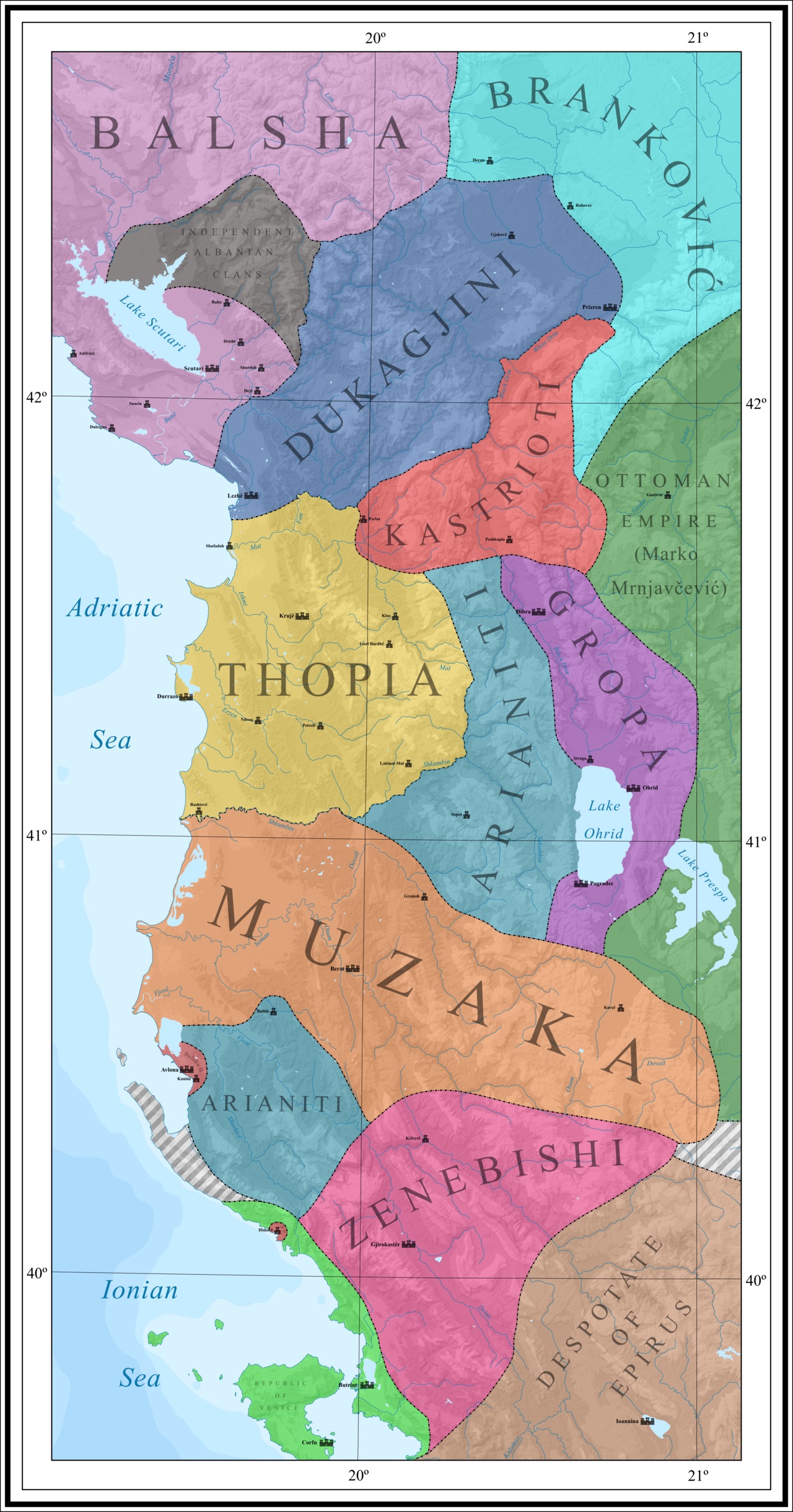
In 1272, Charles I of Anjou established the Kingdom of Albania, which claimed territory from Dyrrhachium southward along the Adriatic to Butrint, and served as a vehicle for spreading Catholicism in the Balkans. Around 30 Catholic churches and monasteries were built during the rule of Helen of Anjou, mainly in northern Albania. In the 14th century, the Serbian ruler Stefan Dušan established a short-lived empire that included all of Albania except Durrës. By 1367, Albanian rulers had established the Despotate of Arta, and several principalities existed concurrently, including the Principality of Kastrioti, the Lordship of Berat, and the Principality of Dukagjini.
Ottoman forces reached the Albanian Ionian Sea coast in 1385, established garrisons across southern Albania in 1415, and occupied most of the country by 1431. Thousands of Albanians fled to Calabria, Naples, Ragusa, and Sicily or retreated into the mountain interior. Because the great majority of Albanians were Christians, the Ottoman system classified them as an inferior class, subjecting them to heavy taxes and the Devshirme, by which the sultan collected a percentage of Christian adolescent boys to serve as Janissaries. Islamisation and mosque construction accelerated under Ottoman rule, becoming widespread from the 17th century onward.
Gjergj Kastrioti Skanderbeg, operating under the League of Lezhë, led sustained military resistance against the Ottomans following the league's formation. He united several Albanian principalities—among them the Arianitis, Dukagjinis, Zaharias, and Thopias—and established centralised authority over un-conquered territory, holding the title Lord of Albania. His forces consistently defeated Ottoman armies led by Sultans Murad II and Mehmed II. His resistance has been credited with temporarily delaying Ottoman expansion into Western Europe, giving Italian principalities additional time to prepare.
Skanderbeg's successes were ultimately limited in strategic terms. Most European powers, with the exception of Naples, provided insufficient support, and Pope Pius II's planned crusade against the Ottomans was never realised. Skanderbeg's manpower and resources were inadequate for a prolonged campaign. Albania fell to the Ottomans years after his death. The constant invasions caused severe destruction, reducing the population and devastating livestock and crops.
Under Ottoman administration, Albanian towns were organised into four principal sanjaks. The city of Vlorë became a transit point for imported European goods including velvets, cotton goods, mohairs, carpets, spices, and leather from Bursa and Constantinople. The government encouraged trade by settling a Jewish colony of refugees who had fled persecution in Spain. Islamisation, which spread widely from the 17th century, offered Albanians access to equal opportunities and advancement within the Ottoman system. Over two dozen Albanians served as Grand Viziers of the Ottoman Empire, and prominent figures of Albanian origin included members of the Köprülü family, Zagan Pasha, Muhammad Ali of Egypt, and Ali Pasha of Tepelena. Two Ottoman sultans, Bayezid II and Mehmed III, were born to mothers of Albanian ethnic background.
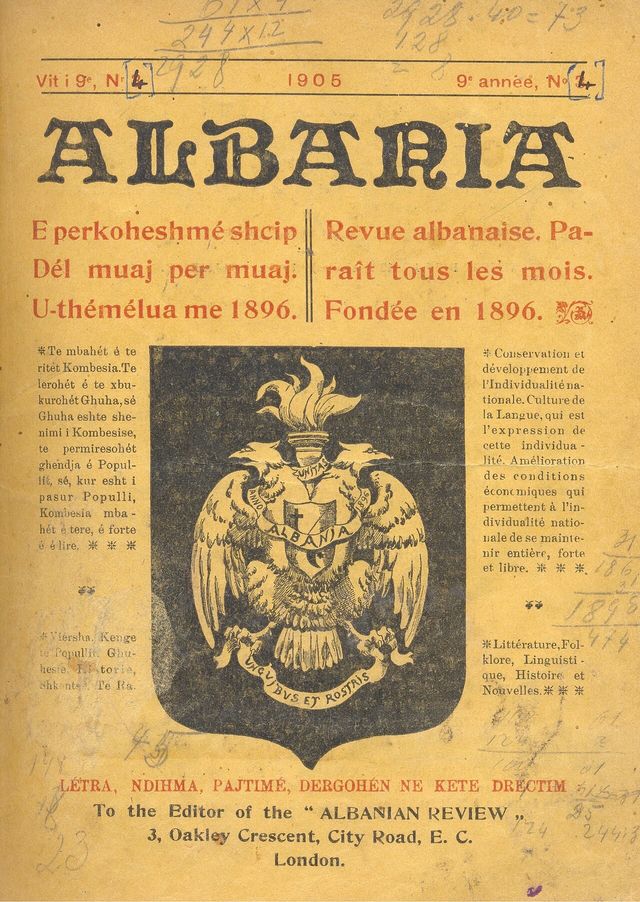
The Albanian Renaissance (Rilindja) had its roots in the late 18th century and continued through the 19th century. It was a period in which Albanian intellectual and cultural life developed around aspirations for national identity and political independence. Modern Albanian literature and arts flourished during this time under the influence of Romanticism and Enlightenment principles. Before this period, Ottoman authorities suppressed expressions of national unity or conscience among Albanians.
The Russian victory over the Ottoman Empire led to the Treaty of San Stefano, which assigned Albanian-populated lands to Slavic and Greek neighbours. The United Kingdom and Austro-Hungarian Empire blocked this arrangement, producing the Treaty of Berlin. In response, Albanians organised the League of Prizren with an initial goal of protecting and uniting Albanian-populated territories. The league initially had Ottoman backing rooted in Muslim solidarity, and it issued the Kararname, signed by 47 Muslim deputies, declaring willingness to defend Ottoman territorial integrity against Bulgaria, Serbia, and Montenegro.
When the league, under Abdyl Frashëri, shifted toward seeking Albanian autonomy and demanded the merging of four vilayets—Kosovo, Shkodër, Monastir, and Ioannina—into a unified Albanian Vilayet, Ottoman authorities withdrew their support. The league used military force to resist the annexation of Plav and Gusinje by Montenegro, winning several engagements including the Battle of Novšiće, before retreating and being eventually defeated by an Ottoman army dispatched by the sultan.
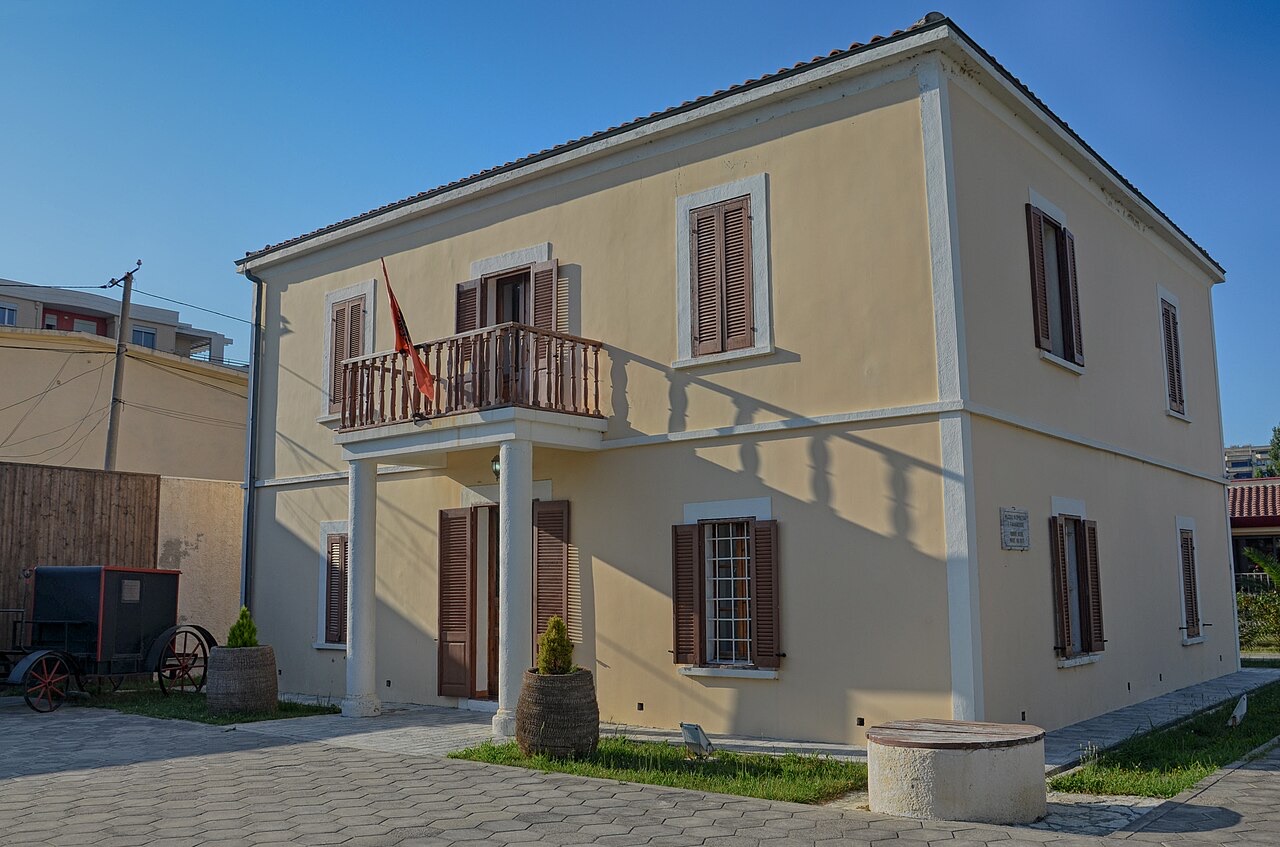
Albania declared independence from the Ottoman Empire on 28 November 1912. The Senate and Government were established by the Assembly of Vlorë on 4 December 1912. Sovereignty was recognised by the Conference of London, and on 29 July 1913 the Treaty of London delineated the country's borders with its neighbours, leaving large numbers of Albanians outside the new state, predominantly partitioned between Montenegro, Serbia, and Greece.
The International Commission of Control was established on 15 October 1913 and headquartered in Vlorë to administer Albania until domestic institutions were functional. Wilhelm of Wied was selected as the first prince; he arrived in Durrës on 7 March 1914 and appointed Turhan Pasha Përmeti to form the first Albanian cabinet. The International Gendarmerie served as the principality's first law enforcement agency, with its first members arriving in November 1913.
The early principality faced immediate internal and external pressures. In February 1914, the local Greek population in Gjirokastër proclaimed the Autonomous Republic of Northern Epirus against incorporation into Albania—a short-lived initiative; the southern provinces were incorporated into the Albanian Principality in 1921. Muslim clerics rallied around Essad Pasha Toptani, who led a peasant revolt against the new regime. Prince Wied's government collapsed and he left the country on 3 September 1914.
After World War I, Albania lacked an established government and internationally recognised borders, leaving it vulnerable to Greek, Italian, and Yugoslav interference. In 1919, Serbian forces launched attacks on Albanian inhabitants in Gusinje and Plav, resulting in massacres and large-scale displacement. Fan Noli became prime minister in 1924, aiming to establish a Western-style constitutional government, abolish feudalism, and counter Italian influence, but he was unable to secure foreign aid and was removed from power.
In 1928, Ahmet Zogu transitioned Albania from a republic to a monarchy backed by Fascist Italy, taking the title King Zog I. Constitutional changes dissolved the Senate and created a unicameral National Assembly while preserving Zog's powers. In 1939, Mussolini's Italy invaded Albania militarily, exiling Zog and establishing an Italian protectorate. Italian ambitions included territorial claims on parts of Greece, Macedonia, Montenegro, and Kosovo, forming the basis for a Greater Albania policy.
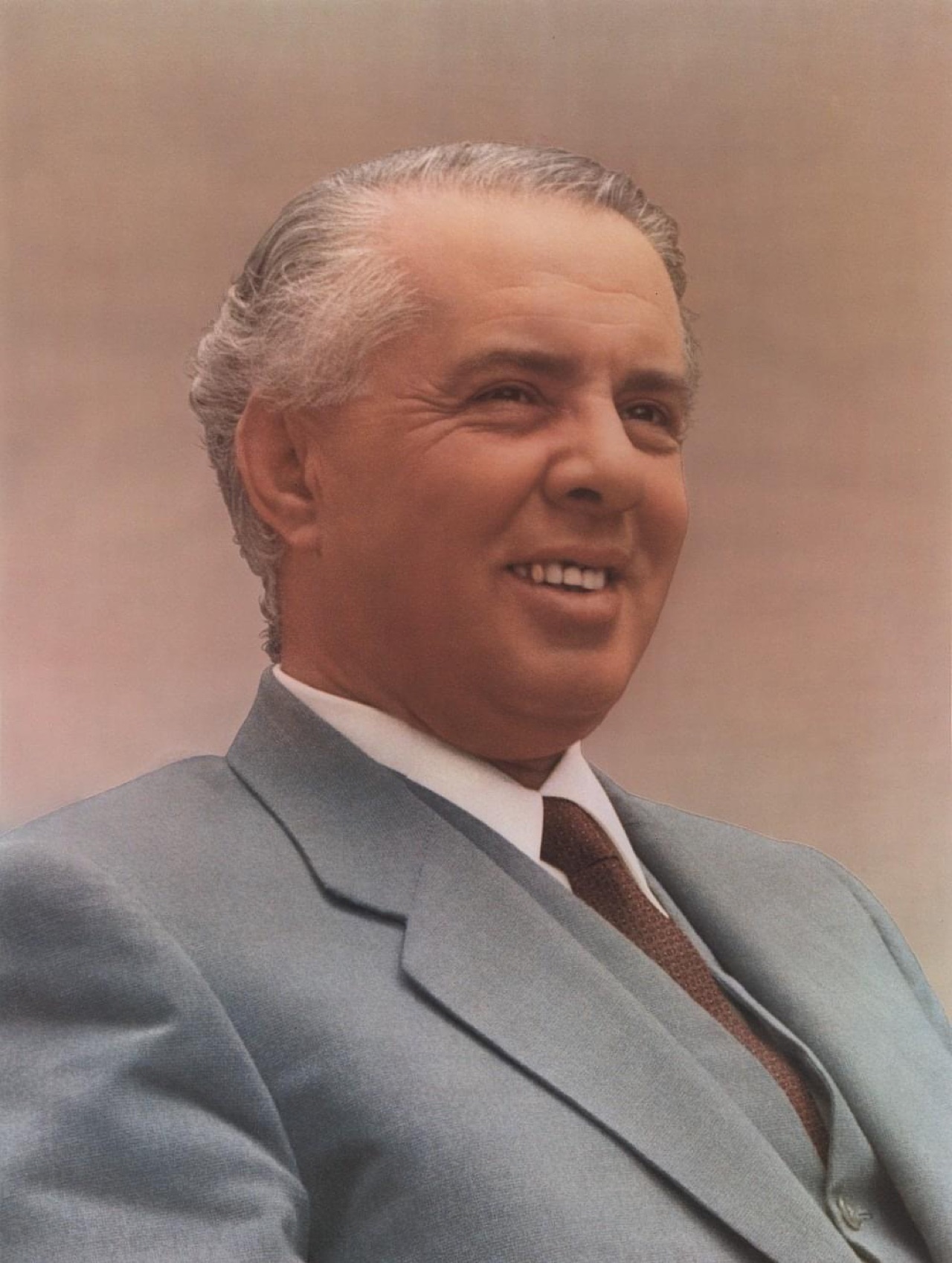
After Italy's control declined in 1943, Nazi Germany assumed control of Albania, subjecting the population to forced labour, economic exploitation, and repression. This period included the forced expulsion and massacres of the Cham Albanians, a predominantly Muslim group. In 1944, partisan forces under the leadership of Enver Hoxha and other communist leaders liberated Albania from German occupation.
The People's Republic of Albania under Enver Hoxha embraced Marxist-Leninist ideology and imposed authoritarian policies including the prohibition of religious practices, severe restrictions on travel, abolition of private property rights, purges, and the execution or imprisonment of opponents. In 1946, religious estates were nationalised and religious institutions closed or repurposed. In 1976, Albania became the world's first constitutionally atheist state, requiring citizens to renounce religious beliefs and adopt secular socialist ideology.
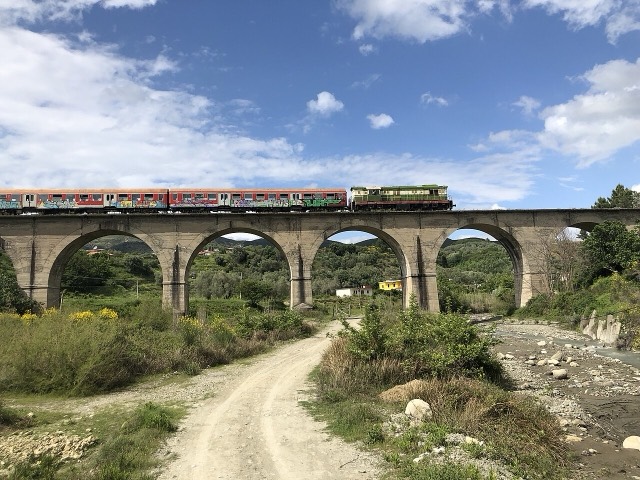
The regime pursued Soviet-style industrialisation, railway construction, expansion of education and healthcare, and the elimination of adult illiteracy. Albania initially allied with Yugoslavia, then aligned with the Soviet Union before experiencing disagreements over Soviet policies, leading to diplomatic separation from Moscow in 1961. Albania subsequently aligned with China during the Sino-Soviet conflict and withdrew from the Warsaw Pact in response to the Soviet invasion of Czechoslovakia in 1968. Relations with China stagnated in 1970, prompting Albania to reduce its dependence on Beijing as well.
The regime was defined by political isolation. Tensions with Western states persisted due to Albania's refusal to hold free elections and allegations of Western support for anti-communist movements. The country reduced its active military from 65,000 troops in 1988 to 14,500 by 2009.
After the first multi-party elections in 1991, the communist party retained a parliamentary majority until its defeat by the Democratic Party in the 1992 elections. During the mid-1990s, a large proportion of the population invested savings in pyramid schemes that were widely supported by the government. Estimates indicate that between one sixth and one third of the population participated. The International Monetary Fund warned against the schemes; Sali Berisha publicly defended them as legitimate investment firms.
The schemes began to collapse in late 1996. Initially peaceful protests by investors demanding their money back turned violent in February 1997 after government forces fired on demonstrators. In March 1997, police and the Republican Guard deserted, leaving their armouries open to militias and criminal gangs. The resulting civil disorder caused a wave of evacuations of foreign nationals and refugees.
Both Prime Minister Aleksandër Meksi and President Sali Berisha resigned following a general election. In April 1997, Operation Alba—a UN peacekeeping force led by Italy—entered Albania with two objectives: to assist with the evacuation of foreign nationals and to secure conditions for international organisations. The Western European Union's multinational Albanian Police element worked with the Albanian government to restructure the judicial system and the national police.
After the fall of communism, Albania pursued integration with Euro-Atlantic institutions. It joined NATO on 2 April 2009, having been invited to join on 3 April 2008. Albania formally applied for European Union membership on 28 April 2009 and was granted EU candidate status in June 2014. Accession negotiations began with the first intergovernmental conference in July 2022, and the fundamentals cluster was opened in October 2024. By late 2025, all negotiating clusters had been opened, which the European Commission described as a significant milestone.
Prime Minister Edi Rama, whose Socialist Party has governed since 2013, has cited EU membership as a central priority. After winning a fourth consecutive parliamentary mandate in the 2025 elections, Rama declared EU membership by 2030 the central goal of his administration. The European Commission has praised the work of Albania's Special Structure against Corruption and Organized Crime (SPAK) while continuing to stress that corruption remains widespread and that judicial independence must be protected from political pressure.
Albania's accession process has also drawn attention to environmental and governance obligations. In 2026, European Parliament figures warned that coastal development plans—including projects linked to Jared Kushner on Sazan Island and the Zvërnec peninsula—could affect Albania's EU accession if they conflicted with environmental obligations and democratic standards. These projects were also the initial trigger for the Flamingo Revolution protests of 2026.
Albania is a sovereign parliamentary constitutional republic under a constitution adopted in 1998 that enshrines the separation of powers. The legislature is the Parliament; the president is the ceremonial head of state; the prime minister is the functional head of government. The judiciary includes constitutional and supreme courts as well as appeal and administrative courts. Military service has been voluntary since 2010, with a minimum age of 19.
The Socialist Party of Albania has won four consecutive parliamentary elections—in 2013, 2017, 2021, and 2025—making Edi Rama the first Albanian prime minister to secure four consecutive mandates. A major justice reform package adopted in 2016 created new institutions including SPAK, which has since conducted high-level corruption prosecutions. Former prime minister Sali Berisha was indicted on corruption charges in 2024; former president Ilir Meta was arrested and charged with corruption and money laundering; Tirana mayor Erion Veliaj was detained in 2025 on similar allegations; and Deputy Prime Minister Belinda Balluku was investigated over public-tender allegations and dismissed by Rama in February 2026.
Freedom House classifies Albania as 'Partly Free' and as a 'Transitional or Hybrid Regime', noting that elections are competitive but that politics is highly polarised, dominated by powerful party leaders, and affected by corruption and bribery. Following the 2025 parliamentary election, the OSCE Office for Democratic Institutions and Human Rights found the election competitive and professionally managed but held in a highly polarised environment without a level playing field, citing reports of intimidation, misuse of public resources, and pressure on public employees. A 2021 report by Transparency International and the Institute for Democracy and Mediation argued that state-capture mechanisms in Albania involved clientelist networks, judicial corruption, and laws designed to benefit particular private interests.
Albania is classified as a developing open-market economy with upper-middle income status. As of 2025, nominal GDP is reported at $26.911 billion with a GDP per capita of $9,474. The service sector accounts for 48.6% of GDP; industry for 20.2%; agriculture, forestry, and fisheries for 18.5%; and manufacturing for 6.3%. Economic activity is heavily concentrated in the Tirana–Durrës–Laç triangle: Tirana County alone accounted for 44% of national GDP in 2021. Albania has the second-largest oil deposits in the Balkans after Romania, and Patos-Marinza is identified as the largest onshore oil field in Europe. Albania ranks fifth in the world in electricity generation from hydroelectricity as a percentage of total generation.
Tourism has expanded rapidly: Albania recorded approximately 500,000 visitors in 2005, around 4.74 million in 2016, and approximately 11.7 million in 2024 according to the UN World Tourism Organization. Tourism directly accounted for 8.4% of GDP in 2016, rising to 26% when indirect contributions are included. Albania's Adriatic and Ionian coastline extends 446 kilometres. The illegal drug trade contributes an estimated US$100 million to the economy annually.
The 2023 census recorded a population of 2,402,113, down from 2,821,977 in the 2011 census. The decline reflects falling fertility rates and sustained emigration. As much as one third of those born within Albania's borders now live outside the country. Tirana and Durrës counties together account for approximately 41% of the total population. The proportion of urban residents rose from 47% in 2001 to 65% in 2023, driven largely by internal migration toward the Tirana–Durrës corridor. Albanian is the official language; Greek is the second most spoken, used by an estimated 0.5–3% of the population, mainly in the south. The 2023 census recorded 91.07% of respondents citing Albanian as the language spoken at home.
De warmste maand is August (gemiddeld dagelijks maximum 31°C), de koudste is January (gemiddeld dagelijks minimum 1°C), en de natste is December (124 mm). De gemiddelde jaarlijkse neerslag bedraagt 1,013 mm.
| Maand | Maximum | Minimum | Neerslag | Natte dagen | Zon/dag |
|---|---|---|---|---|---|
| January | 11°C | 1°C | 104 mm | 11 | 7.1 h |
| February | 12°C | 2°C | 90 mm | 10 | 8.1 h |
| March | 15°C | 4°C | 104 mm | 11 | 9.5 h |
| April | 19°C | 7°C | 100 mm | 13 | 10.6 h |
| May | 24°C | 12°C | 83 mm | 12 | 11.9 h |
| June | 28°C | 16°C | 51 mm | 9 | 13.5 h |
| July | 31°C | 18°C | 33 mm | 6 | 13.7 h |
| August | 31°C | 19°C | 32 mm | 6 | 12.8 h |
| September | 26°C | 15°C | 82 mm | 9 | 10.7 h |
| October | 22°C | 11°C | 92 mm | 9 | 9.2 h |
| November | 17°C | 7°C | 119 mm | 10 | 7.2 h |
| December | 12°C | 3°C | 124 mm | 12 | 6.6 h |
Bron: ERA5 reanalysis via Open-Meteo, 1994–2023 · "Maximum" en "Minimum" zijn het gemiddelde dagelijkse maximum en minimum van de luchttemperatuur. "Natte dagen" telt dagen met ten minste 1 mm neerslag.
County
Albania's mountain interior on the North Macedonian border, containing Mount Korab.
County
The capital county: roughly a third of the country's people, its jobs and its universities.
County
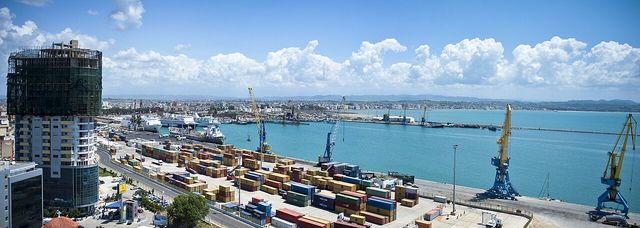
The country's smallest county by area and its main gateway: the biggest port, the longest sandy beach.
County
The north-eastern highlands on the Kosovo border, the gateway to the Valbona valley.
County
A short northern coast of lagoons and pine, backed by the copper country of Mirditë.
County
The north-west: the largest lake in southern Europe, the Albanian Alps and the Drin gorge.
County
A central industrial and agricultural county on the Shkumbin river, historically the road east.
County
The agricultural and oil-producing plain of the south-west, with the ancient city of Apollonia.
County
The southern mountain county of the Drino and Vjosa valleys, with a UNESCO stone city.
County
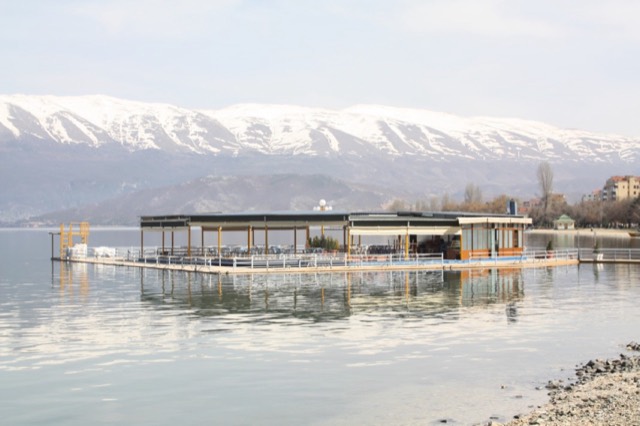
A high south-eastern plateau of lakes and orchards, with a distinct café and brewing culture.
County
The long southern coast: the Albanian Riviera, the Karaburun peninsula and the Corfu channel.
Stad · Tiranë
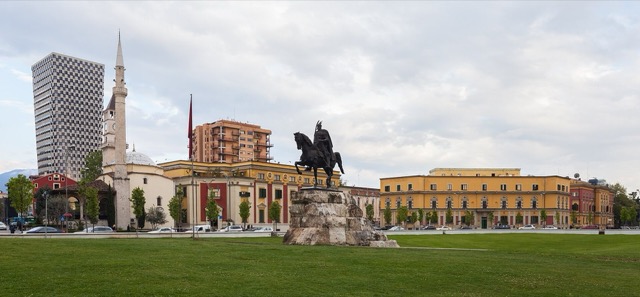
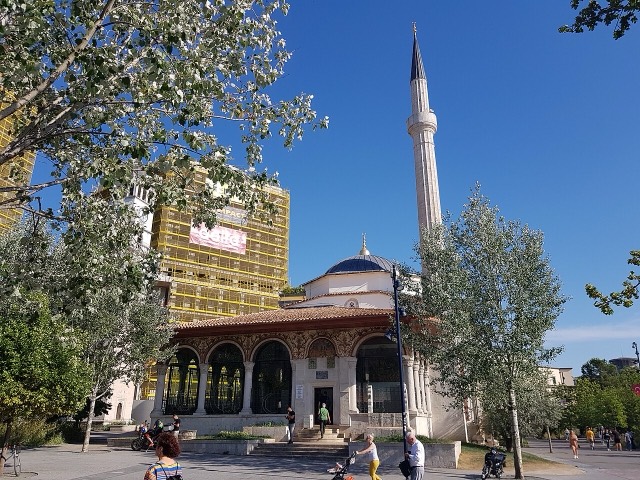
The capital: a fast-changing city of painted blocks, Ottoman survivals and new towers, under Mount Dajti.
Onderwerp · Vlorë
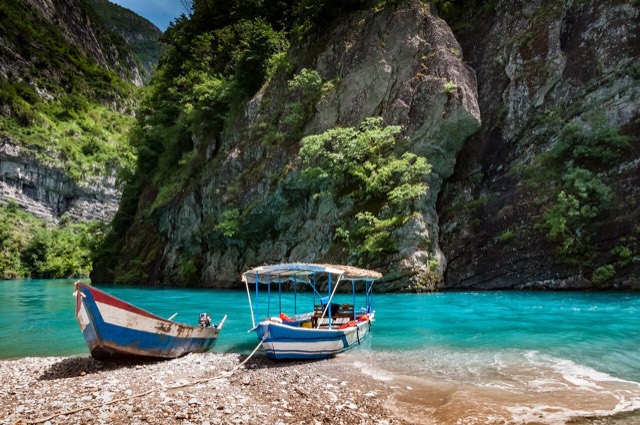
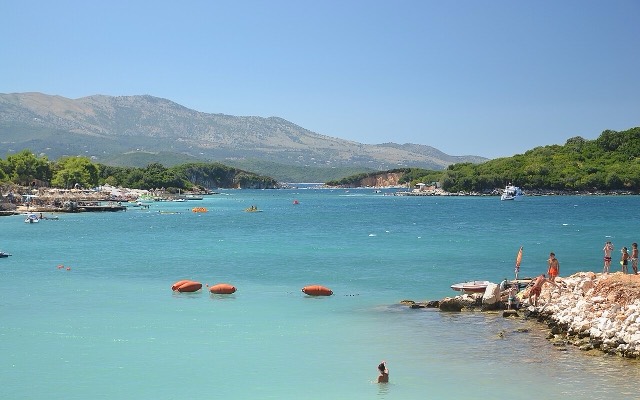
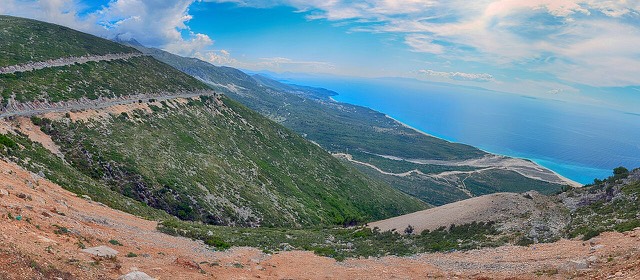
The 120 km of Ionian coast between the Llogara pass and Sarandë, where the Ceraunian mountains fall straight into the sea.
Onderwerp
An independent branch of the Indo-European family with no close living relative, written in a 36-letter Latin alphabet.
Onderwerp
An upper-middle-income economy of roughly $30 billion, led by services and tourism, with remittances and construction close…
Toelichting
Everything you need to hold the country in your head: where it is, who lives there, what happened, and what it runs on.
Toelichting
Twenty-eight thousand square kilometres, seventy per cent of it hills and mountains, and a coast that changes character halfway…
Toelichting
Twelve counties, sixty-one municipalities, and the 2014 reform that abolished nearly four hundred communes.
Toelichting
A parliamentary republic: a 140-seat assembly, a prime minister who governs, and a president elected by parliament.
Iets onjuist op deze pagina? Correcties zijn welkom en worden gecontroleerd aan de hand van de bronregistratie. Laat ons weten wat onjuist is en, indien mogelijk, waar het juiste cijfer vandaan komt.