Country
Albania
A mountainous country of about 2.4 million people on the Adriatic and Ionian seas, between Montenegro, Kosovo, North Macedonia…
Every county, coast and century
Guided view
New to Albania? Every page opens with a plain-language explanation you could read to a ten-year-old, before the detail begins.
Expert view
You already know the basics. Straight to the substance, with the simple explanations hidden. This is the default.
Explainer
Everything you need to hold the country in your head: where it is, who lives there, what happened, and what it runs on.
Save
Albania is a small country in south-east Europe, on the sea, with mountains behind. About 2.4 million people live there. It was part of the Ottoman Empire for 500 years, independent from 1912, communist and closed off from 1944 to 1991, and has been opening up since.
Albania is a small country in south-east Europe, on the sea, with mountains behind. About 2.4 million people live there. It was part of the Ottoman Empire for 500 years, independent from 1912, communist and closed off from 1944 to 1991, and has been opening up since.
Albania sits on the eastern side of the Adriatic and Ionian seas, with Montenegro to the north-west, Kosovo to the north-east, North Macedonia to the east and Greece to the south. It is about 28,700 km² — roughly the size of Belgium or the US state of Maryland — and about 70% of it is hills and mountains.
Albania's twelve counties, with the capital marked. Montenegro lies to the north-west, Kosovo to the north-east, North Macedonia to the east and Greece to the south; the Adriatic and Ionian seas meet off Vlorë.
County boundaries: geoBoundaries gbOpen ALB ADM1 (public domain). Neighbour labels are placed indicatively.
The 2023 census recorded about 2.4 million residents, sharply down on 2011, because emigration has been very high. Roughly a third of the population lives in Tirana County. The language is Albanian, which is its own branch of the Indo-European family with no close living relative.
Illyrians, Greek colonies, Rome, Byzantium, then almost five centuries in the Ottoman Empire. Independence was declared at Vlorë on 28 November 1912. After the Second World War, Enver Hoxha's communist government ruled until 1991, banning religion in 1967 and building about 170,000 bunkers. Albania joined NATO in 2009 and became an EU candidate in 2014.
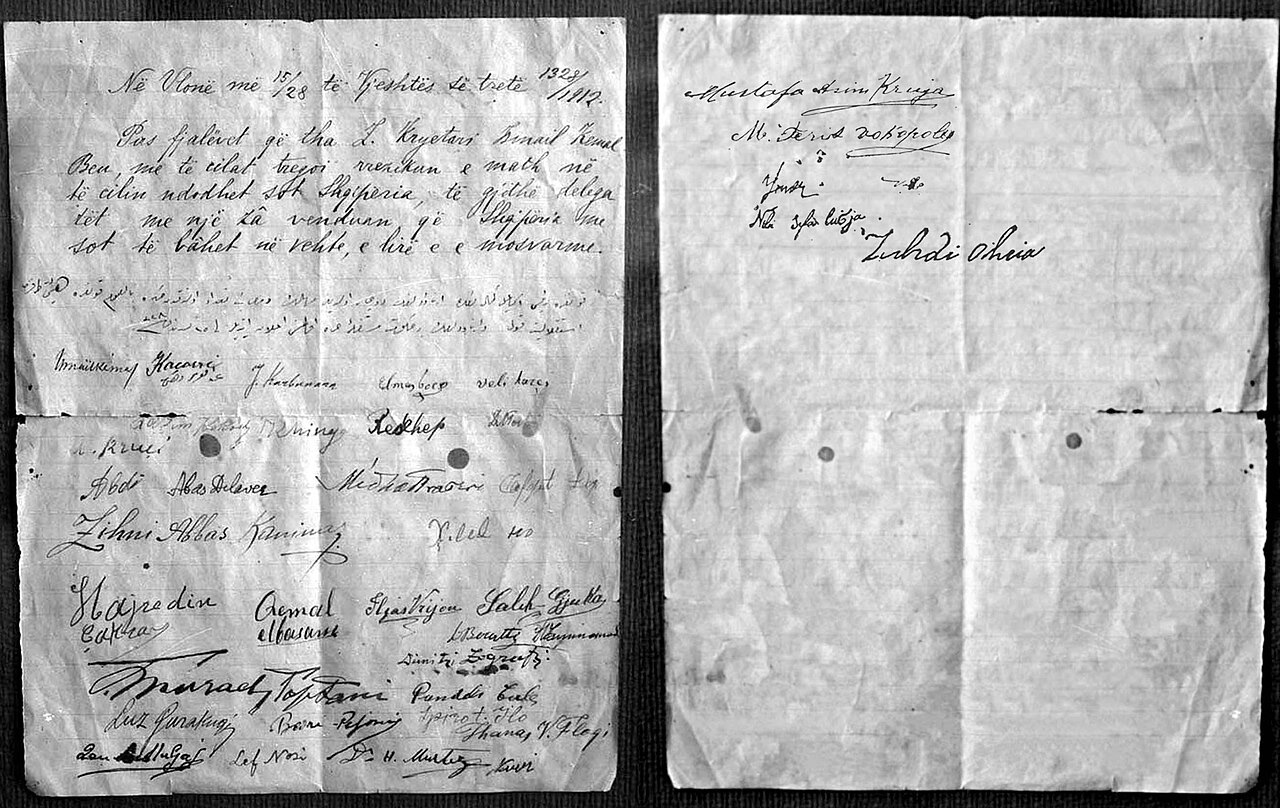
For most of its history the land that is now Albania was a frontier: between Greek and Illyrian, then between the Latin west and the Greek east of the Roman world, then between Catholic Venice and Orthodox Byzantium. Skanderbeg held the Ottomans off from Krujë for a quarter of a century in the 15th century, and after his death in 1468 the country was absorbed into the Ottoman Empire, where Albanians rose high as soldiers, governors and grand viziers.
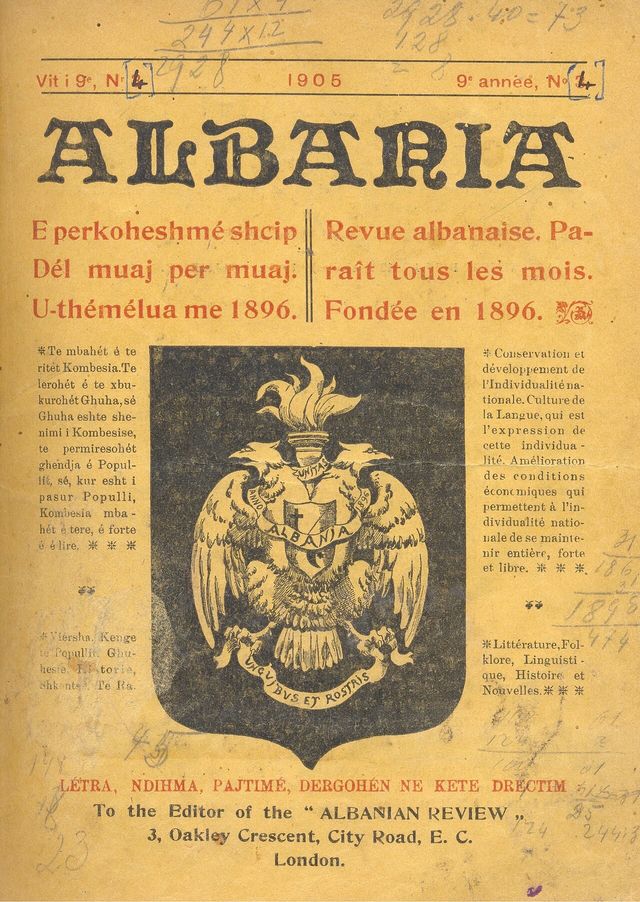
A national movement, the Rilindja or 'rebirth', took shape in the late 19th century. The League of Prizren in 1878 resisted the handing of Albanian-speaking lands to neighbouring states, and the alphabet was standardised at Manastir in 1908. Independence came in 1912, but the borders drawn by the great powers in London in 1913 left large Albanian populations outside the new state, above all in Kosovo.
The 20th century then delivered almost every form of government Europe produced: a short-lived German prince, a republic, King Zog's monarchy, Italian and German occupation, and from 1944 Enver Hoxha's communist state, which cut itself off first from Yugoslavia, then the Soviet Union, then China. When it ended in 1991 Albania was the poorest and most closed country in Europe; the three decades since have been a story of emigration, rapid building, the 1997 pyramid-scheme collapse and a steady turn towards NATO and the EU.
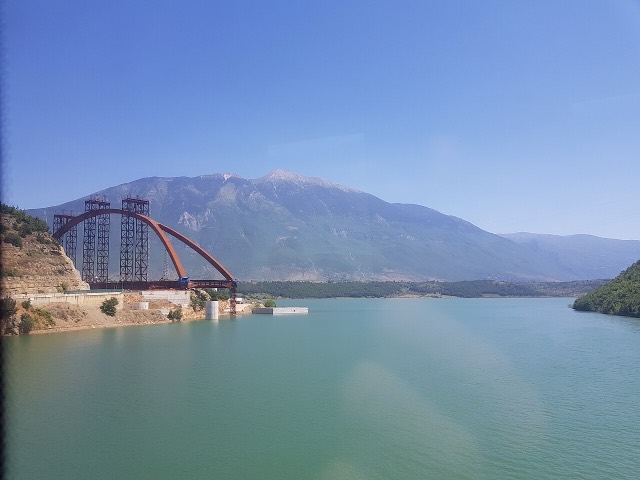
Services and tourism above all, plus construction, agriculture, energy and money sent home by Albanians abroad. Almost all electricity comes from hydropower, which means a dry year is an economic event. Italy is by far the largest trading partner.
Country
A mountainous country of about 2.4 million people on the Adriatic and Ionian seas, between Montenegro, Kosovo, North Macedonia…
Subject
An independent branch of the Indo-European family with no close living relative, written in a 36-letter Latin alphabet.
Subject
Illyrian kingdoms, Roman roads, five Ottoman centuries, twenty-eight years of independence, forty-six years of the strictest…
Subject
An upper-middle-income economy of roughly $30 billion, led by services and tourism, with remittances and construction close…
Something wrong on this page? Corrections are welcome and are checked against the source record. Tell us what is wrong and, if you can, where the right figure comes from.