城市
Durrës
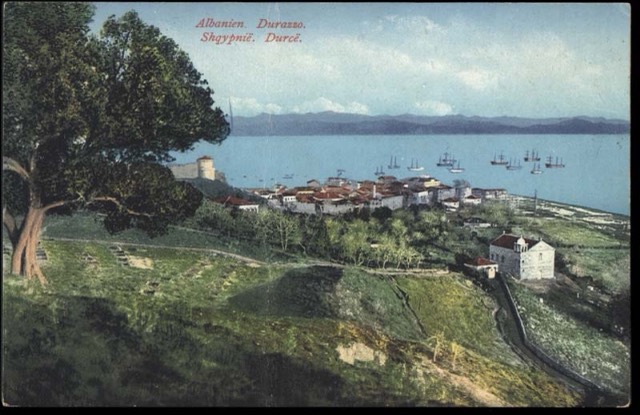
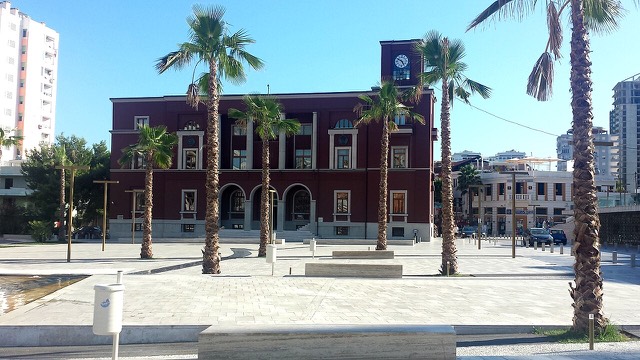
Albania's principal port and its oldest continuously inhabited city, founded as Epidamnos in 627 BC.
🧭 引导视图
初次了解阿尔巴尼亚?每个页面均以通俗易懂的说明开篇——即便是十岁的孩子也能读懂——随后再展开详细内容。
⚡ 专业视图
您已掌握基础知识。直接进入正题,简明解释默认隐藏。此为默认模式。
Durrës is a port city on the Adriatic. Ships and ferries from Italy dock here. It is very old — Greeks founded it more than 2,600 years ago — and there is a huge Roman amphitheatre right in the middle of town. It also has a very long sandy beach.
Durrës is a port city on the Adriatic. Ships and ferries from Italy dock here. It is very old — Greeks founded it more than 2,600 years ago — and there is a huge Roman amphitheatre right in the middle of town. It also has a very long sandy beach.
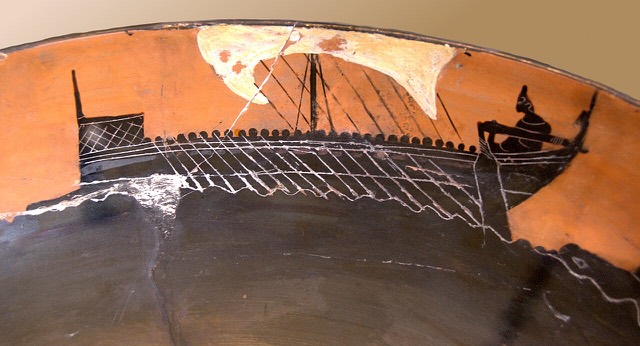
Durrës was founded in 627 BC by Greek colonists from Corinth and Corcyra, working in cooperation with the Taulantii, a local Illyrian tribe. The colonists assisted the Taulantii in expelling Liburnians and then mixed with the indigenous population, establishing a Greek element at the port. The city's earliest recorded name, Epidamnos, is widely considered to be of Illyrian origin, a view first proposed by linguist Hans Krahe. It appears in Thucydides in the 5th century BC, Aristotle in the 4th century BC, and Polybius in the 2nd century BC. Linguist Eqrem Çabej proposed an etymological connection to Proto-Albanian *dami, meaning 'cub' or 'young animal', which corresponds to the modern Albanian word dem.
The second ancient name, Dyrrhachion, is usually interpreted as a Greek compound from δυσ- ('bad') and ῥαχία ('rocky shore, flood, roaring waves'), a reading already noted in antiquity by Cassius Dio. Appian, writing in the 2nd century AD, recorded an alternative mythological account in which the city took its name from Epidamnus, a king of the local barbarians, and from his grandson Dyrrachius, who built a nearby port. Archaeological research has confirmed that two distinct settlements existed in the territory at the time of the city's foundation: a hill site predating the Greek colony, likely corresponding to Epidamnos in ancient literature, and a second site at the port, on a rocky shore struck by waves, which corresponds to the toponym Dyrrhachion.
After Roman control was established following the Illyrian Wars of 229 BC, Dyrrachium became the sole official name. According to Pomponius Mela and Pliny the Elder, the Romans abandoned Epidamnus because it resembled the Latin word damnum, signifying loss or harm. However, the Romans may equally have adopted Dyrrachium because it was already more frequently used by the city's inhabitants. The modern Albanian name Durrës and the Italian name Durazzo both derive from Dyrrachium, via a palatalized intermediate form Dyrratio attested in the early centuries AD. The preservation of the old Doric vowel /u/ in Albanian indicates the name was transmitted in its original Doric pronunciation, whereas in Byzantine Greek the vowel later evolved to /i/.
The territory of Durrës was populated from at least the Eneolithic period and was inhabited by Illyrian peoples in protohistoric times. Several peoples are attested at the site before the Greek colonial foundation: the Brygi, confirmed by ancient writers; the Illyrian Taulantii, whose arrival is estimated to have occurred no later than the 10th century BC; and probably the Liburni, who expanded southwards in the 9th century BC. The founding mythology of the city as recorded in ancient sources weaves together Illyrian kings, Greek settlers, heroes including Heracles, and the god Poseidon.
The city that emerged was among the wealthiest in the ancient Greek world. Around the 6th century BC, the citizens of Epidamnos constructed a Doric-style treasury at Olympia, a significant marker of civic prosperity. An ancient account described Epidamnos as 'a great power and very populated' city, and a flourishing commercial centre grew rapidly from the initial colonial settlement. Despite the prominence of the name Epidamnos among ancient Greek authors, the city's own coinage used only abbreviations of the name Dyrrhachion, suggesting that name had particular local currency.
From 323 BC onwards the city was drawn into Macedonian power struggles. In 314 BC the Macedonian king Cassander seized it, but the garrison he installed was besieged and expelled by the Illyrian king Glaukias and the Corcyrans. In 312 BC, following another failed Macedonian attack, the city came under the protection of Glaukias. Epidamnus subsequently came under the Illyrian Ardiaei under Agron, who fortified the city around 250–231 BC. From about 280 BC the Illyrian king Monunius and his successor Mytilos minted silver and bronze coins respectively at the city mint of Dyrrhachion, indicating they exercised authority over the city to some degree.
The Roman Republic's decisive defeat of the Illyrians in 229 BC brought Dyrrachium under Roman rule, where it was developed as a major military and naval base. In 219 BC, during the Second Illyrian War, Demetrius of Pharos, who had been installed by Rome, lost the city and his kingdom to the Romans. In the Third Illyrian War, King Gentius attacked Epidamnus but was defeated by the Romans in the same year. The poet Catullus described the city as Durrachium Hadriae tabernam, 'the taberna of the Adriatic', one of the stopping points on the sailing route up the coast.
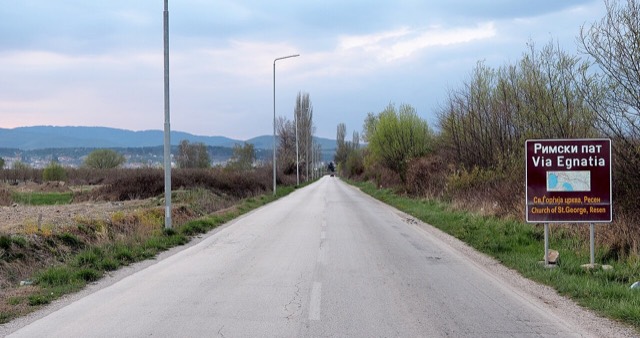
Dyrrachium's greatest strategic role under Rome was as the western terminus of the Via Egnatia, the great road that crossed the Balkan Peninsula to Thessalonica and on to Constantinople. A lesser road led south to Buthrotum, the modern Butrint. During the Great Roman Civil War, the Battle of Dyrrachium was fought between Julius Caesar and Gnaeus Pompey; it was a victory for Pompey, though it was followed by Caesar's more decisive win at the Battle of Pharsalus in Greece. The emperor Caesar Augustus made the city a colony for veterans of his legions following the Battle of Actium, designating it a civitas libera, or free town.
In the 4th century AD, Dyrrachium was made the capital of the Roman province of Epirus nova. The emperor Anastasius I was born in the city around 430. Later in that century, a powerful earthquake destroyed the city's defences, and Anastasius I rebuilt and strengthened the walls, which Byzantine historian Anna Komnene recorded as so thick that four horsemen could ride abreast on them; they stood 12 metres high. Significant portions of these ancient defences survive, though much reduced. The city was besieged in 481 by Theodoric the Great, king of the Ostrogoths, and in subsequent centuries faced frequent Bulgarian attacks, while remaining an important Byzantine port and link between the empire and western Europe.
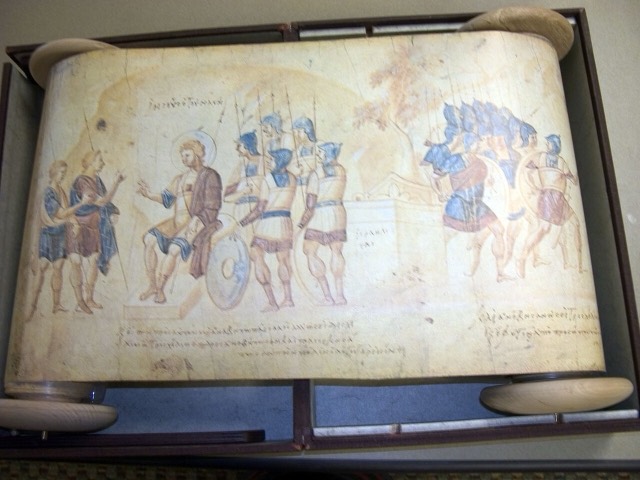
Durrës became the centre of the Byzantine Theme of Dyrrhachium, probably during the first decade of the 9th century. The city's bishopric had been created around 58 AD and was raised to archbishopric status in 449. In the late 10th century, control passed to Samuel of Bulgaria, possibly through his marriage to Agatha, daughter of local magnate John Chryselios. Samuel appointed his son-in-law Ashot Taronites, a Byzantine captive married to his daughter Miroslava, as governor. Around 1005, Ashot and Miroslava fled to Constantinople and notified Emperor Basil II of their intention to surrender the city; a Byzantine squadron under Eustathios Daphnomeles arrived and restored imperial control.
In the 11th and 12th centuries, Anna Komnene noted that medieval Dyrrhachium occupied only a portion of the ancient city, and it functioned primarily as a military stronghold and metropolitan see rather than an economic centre. In the 1070s, two governors—Nikephoros Bryennios the Elder and Nikephoros Basilakes—led unsuccessful rebellions against the Byzantine throne. In February 1082, Alexios I Komnenos was defeated by the Normans under Robert Guiscard and his son Bohemund at the Battle of Dyrrhachium, and the city was lost. Byzantine control was restored a few years later, but Bohemund returned to besiege it in 1107–08, and it was sacked again in 1185 under King William II of Sicily.
After the Fourth Crusade in 1205, the city passed to the Republic of Venice, which formed the Duchy of Durazzo. In 1213, Michael I Komnenos Doukas of the Despotate of Epirus conquered it. In 1257, Manfred of Hohenstaufen, King of Sicily, occupied Durrës; his rule lasted until his death at the Battle of Benevento in 1267, after which the city passed to Charles I of Sicily. Around 1273, a devastating earthquake struck the city, documented by George Pachymeres, though it recovered. In 1296, King Milutin of Serbia briefly occupied it. A Jewish community existed in the city during the 13th century, employed in the salt trade.
In the early 14th century, Durrës was ruled by a coalition of Anjous, Hungarians, and Albanians of the Thopia family. In 1317 or 1318 the Serbs took the area and retained it until the 1350s. Papal diplomacy was active in this period, working through Latin bishops including the Archbishop of Durrës. After the Anjou installed themselves in the city, it became a centre of Catholicism; in 1272 a Catholic archbishop was installed, and until the mid-14th century both Catholic and Orthodox archbishops held office simultaneously. Two Irish pilgrims passing through in 1322 described the city as 'inhabited by Latins, Greeks, perfidious Jews and barbaric Albanians'.
When the Serbian Tsar Dušan died in 1355, the city passed to the Albanian Thopia family. In 1376 the Navarrese Company under Louis of Évreux, Duke of Durazzo, attacked and seized the city, but in 1383 Karl Topia recovered control. Venice regained the city in 1392 from Gjergj Thopia and held it as part of Albania Veneta. In 1380 the Venetians had established the theological University of Dyrrhachium in Durrës, which was later transferred to Zadar in 1396 as Ottoman pressure on the Balkans intensified. The city withstood a siege by Ottoman Sultan Mehmed II in 1466, but fell to Ottoman forces in 1501.
Under Ottoman rule from 1501, much of Durrës's population converted to Islam and mosques were erected. The city was renamed Dırac in Ottoman Turkish. For the first two centuries of Ottoman rule, the city declined significantly in importance and became, according to contemporary accounts, a centre of piracy. As a port, it was of limited value to an empire that controlled the entire Albanian coast; its strategic castle and rich salt deposits were its main assets. The Ottoman chronicler Evliya Çelebi, who visited in 1670–71, recorded approximately 150 houses and a mosque named after Sultan Bayezid II.
Economic recovery began from the late 17th century, driven by salt exports throughout the Balkan hinterland. According to François Pouqueville, by 1699 about 100 Turkish and Greek merchants lived in the city, exporting goods including 300 tons of beeswax, 1,500 tons of finished cloth, 15,000 pieces of fine leather, and between 60 and 100 ship-loads of grain and millet to Venice annually, despite an official prohibition from Constantinople. France, England, the Netherlands, and Austria all established consulates in Durrës in 1700. Trade with Venice in grains and olive oil continued until Napoleon's occupation of that city in 1797, after which Austria-Hungary, via Trieste, became the principal trading partner. Friedrich Wilhelm von Reden recorded total exports of 672,000 Austrian thalers per year against imports of 455,000 thalers.
By the mid-19th century the population had fallen to approximately 1,000 people in about 200 households. In the late 19th century the city held 1,200 Orthodox Aromanians among a larger Muslim Albanian population and a significant number of Catholic Albanians. During the Tanzimat reforms, Durrës was separated from the Sanjak of Elbasan and became the seat of the Sanjak of Durrës within the İşkodra Vilayet, established in 1880. By 1892–93 the population of the kaza had grown to approximately 4,781, comprising 3,018 Muslims, 1,514 Orthodox, 201 Catholics, and 48 foreigners. On 26 November 1912, with the Ottoman Empire engaged in the First Balkan War, Ismail Qemali raised the Albanian flag over the city; Albania declared independence two days later, ending four centuries of Ottoman rule in Durrës.
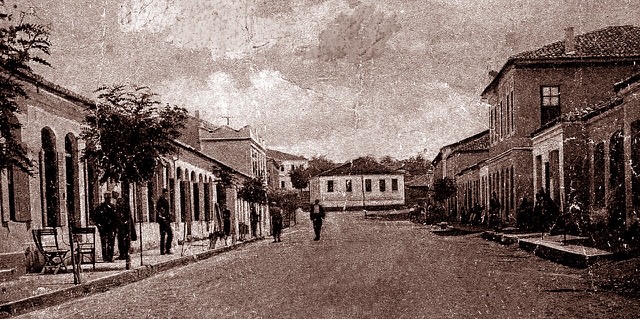
Durrës was occupied by the Kingdom of Serbia three days after Ismail Qemali raised the Albanian flag, becoming the seat of one of the counties Serbia established on Albanian territory during the First Balkan War. The Serbian army withdrew in April 1913. On 7 March 1914, Durrës became Albania's second national capital under Prince Wilhelm of Albania. It remained the capital until 11 February 1920, when the Congress of Lushnjë transferred that status to Tirana. During the First World War, Italy occupied the city in 1915 and Austria-Hungary held it from 1916 to 1918. On 2 October 1918, allied ships bombarded Durrës and attacked Austrian vessels in the harbour; the Old City, adjacent to the harbour, was largely destroyed, including the Royal Palace of Durrës and other major public buildings. Italian troops captured the city on 16 October 1918.
After sovereignty was restored, Durrës experienced economic growth driven by Italian investment and developed into a major seaport under King Zog. A modern harbour was constructed in 1927. An earthquake in 1926 damaged parts of the city; the subsequent rebuilding gave Durrës much of its modern appearance. During the 1930s the Bank of Athens maintained a branch there. In April 1939, Italian forces landed at Durrës—fiercely resisted by Mujo Ulqinaku—and annexed Albania to the Kingdom of Italy. The city served as the launch point for the Italian invasion of Greece. From 1943 it was occupied by Nazi Germany until autumn 1944. Allied bombing caused heavy damage during the war, and retreating German soldiers blew up the port installations before withdrawing.
The Communist regime under Enver Hoxha rebuilt the city rapidly after 1944, establishing heavy industries and expanding the port. Albania's first railway, the Durrës–Tirana line, was begun in 1947. In the late 1980s, the city was briefly renamed Durrës-Enver Hoxha. Following the collapse of communist rule in 1990, Durrës became the departure point for mass emigration: in August 1991 alone, over 20,000 people crossed to Italy in hijacked ships. Italy intervened militarily to control the port area, and the city became the centre of the European Community's food-aid Operation Pelican. In 1997, an Italian-led peacekeeping force was deployed under Operation Alba in response to the anarchy that followed Albania's pyramid-scheme collapse.
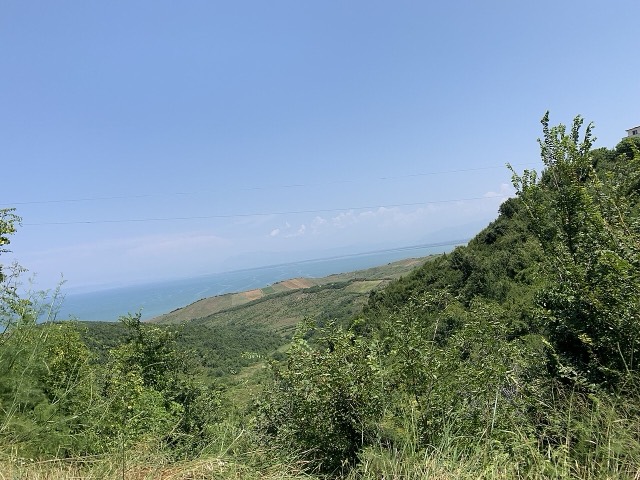
Durrës stands on a flat alluvial plain along the Adriatic coast between the mouths of the Erzen and Ishëm rivers, at the southeastern corner of the Adriatic Sea. The municipality encompasses the seat of Durrës and the adjacent administrative units of Ishëm, Katund i Ri, Manëz, Rrashbull, and Sukth. The municipality is part of Durrës County within the Northern Region of Albania. The municipal territory extends from the mouth of the Ishëm River at the Cape of Rodon in the north, across the Bay of Lalzi, to the Shkëmbi i Kavajës in the south.
Under the Köppen climate classification, Durrës falls within the periphery of the hot-summer Mediterranean climate zone (Csa). The average annual temperature is 15.9 °C. Monthly mean temperatures range from 7.5 °C in winter to 23.8 °C in summer. The highest recorded temperature was 39 °C on 14 August 1957; the lowest was −6.2 °C on 26 January 1954. Most precipitation falls in winter months; mean annual precipitation ranges between 1,000 mm and 1,273 mm. The climate is shaped by proximity to the Adriatic Sea and by the hills of the Western Lowlands inland.
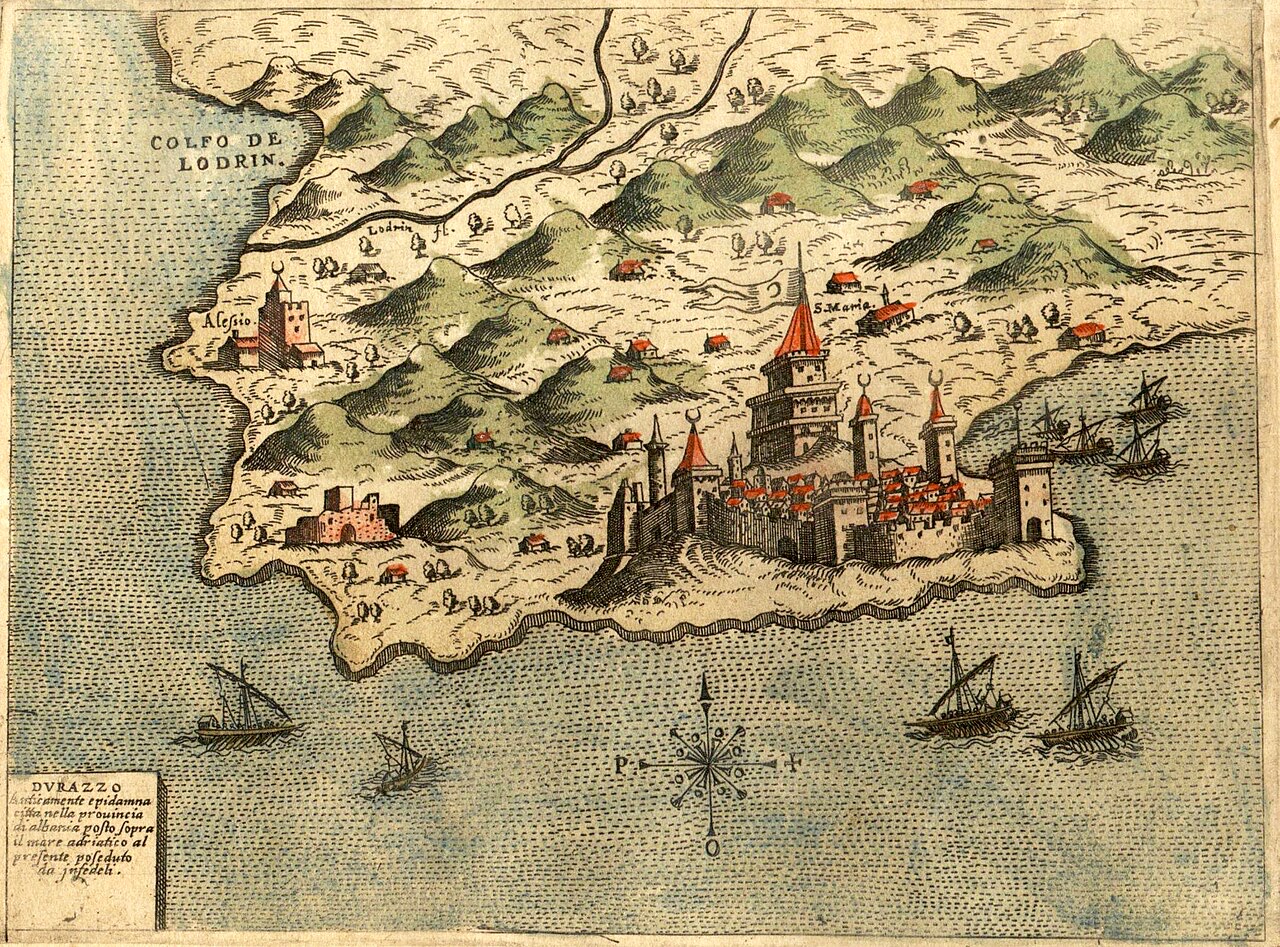
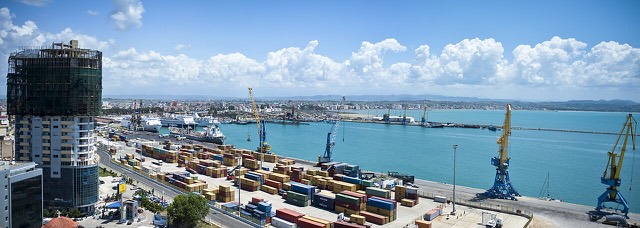
The Port of Durrës, situated in the southwest of the city, is one of the major ports on the Adriatic Sea and handles more than 1.5 million passengers per year, making it one of the largest passenger ports on that sea. The port occupies an artificial basin formed between two moles, with a west-northwesterly-oriented entrance between their ends. The port is a key node in the Pan-European Corridor VIII, which runs between Durrës on the Adriatic coast and Varna on the Bulgarian Black Sea coast. A new terminal opened in July 2012 following major infrastructure upgrades.
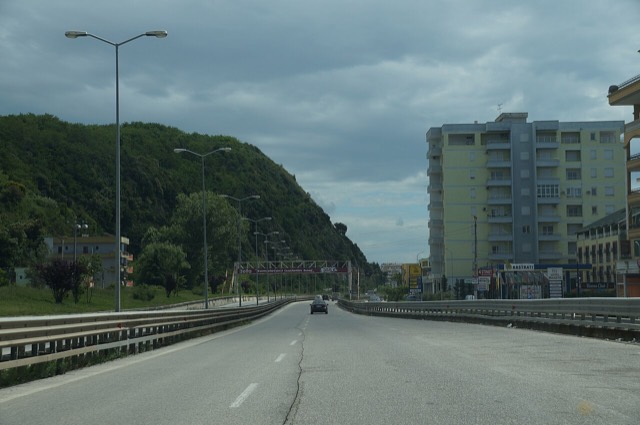
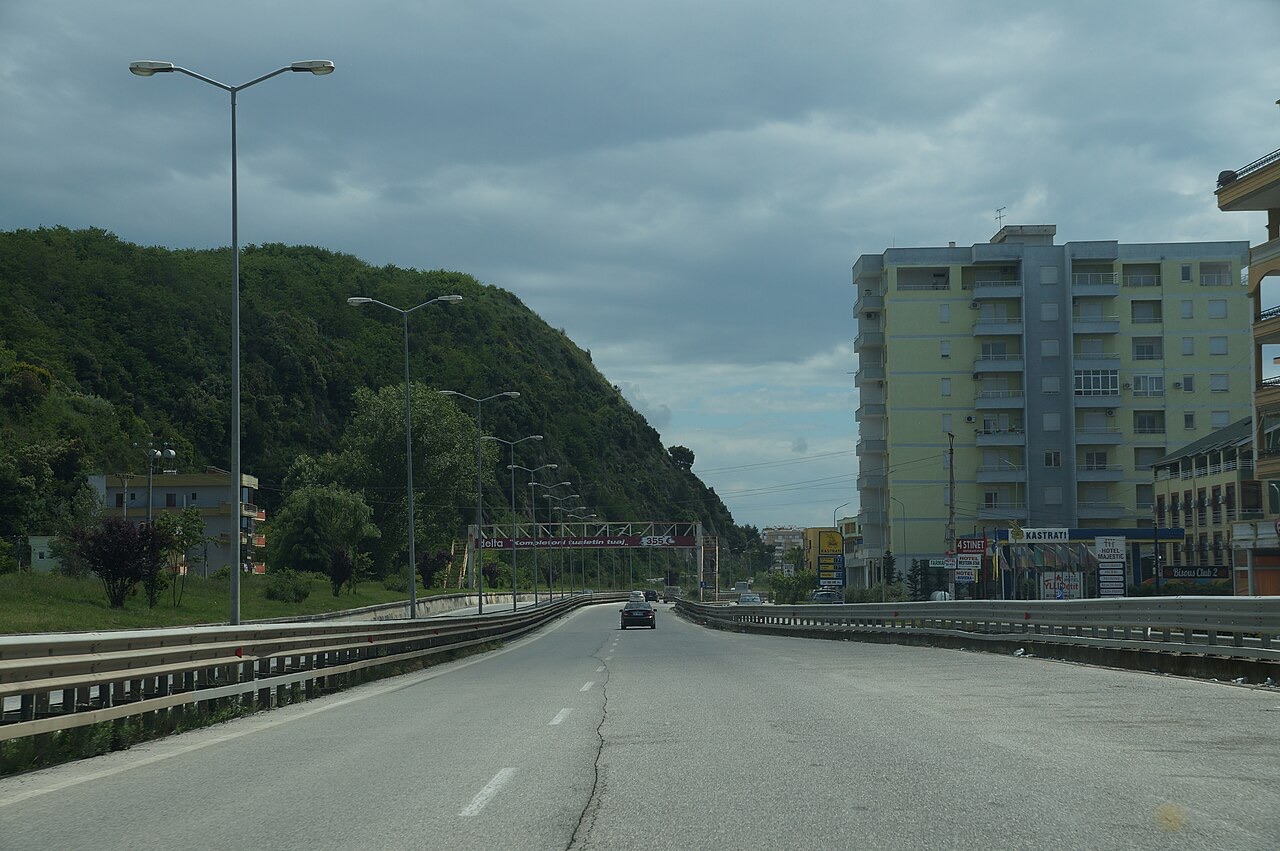
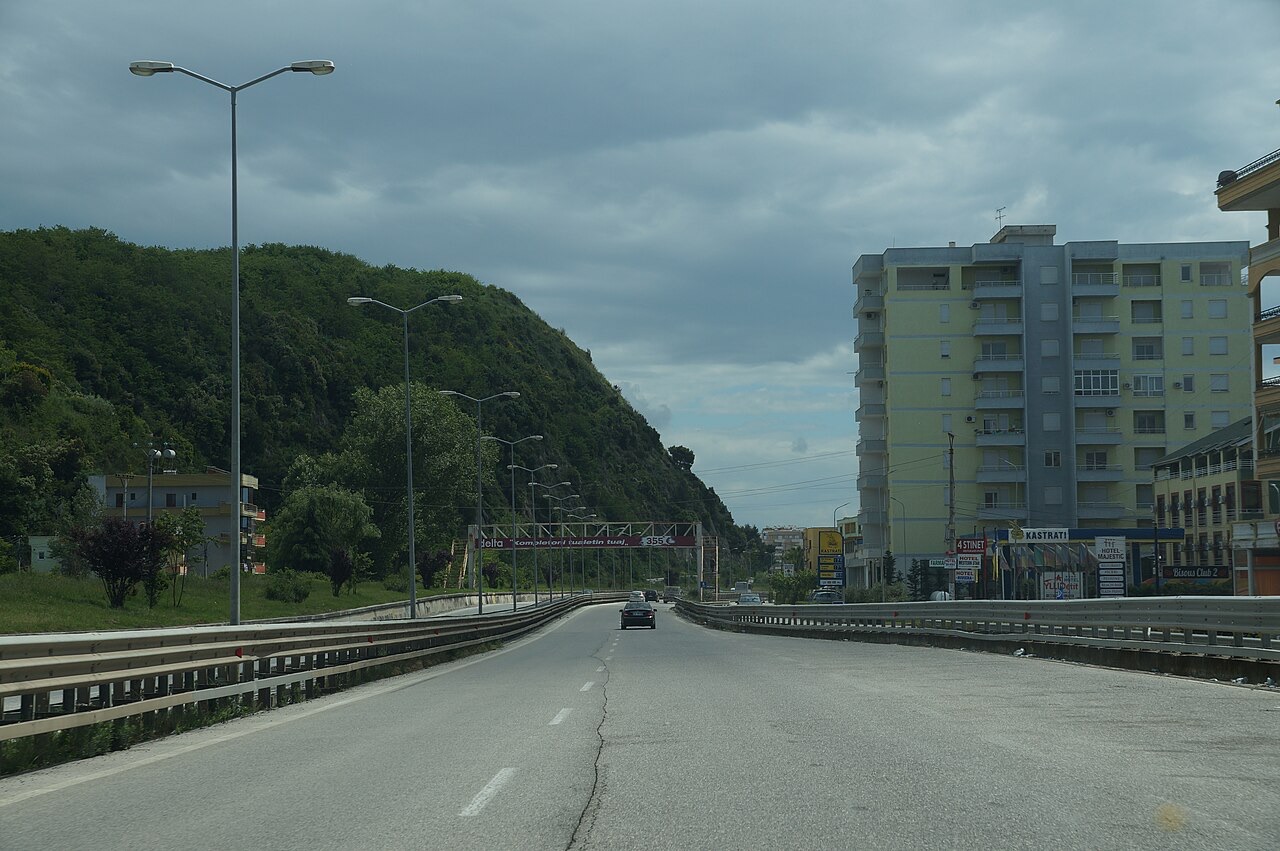
Durrës is the starting point of Pan-European Corridor VIII and of national roads SH2 and SH4. National Road SH2 begins at the Port of Durrës, bypasses the road to Tirana International Airport, and ends at the Kamza Overpass on the outskirts of Tirana. The Albania–Kosovo Highway, a four-lane road constructed between 2006 and 2013, connects Durrës with Pristina and, as part of South-East European Route 7, is intended to link the port with the E75/Corridor X near Niš, Serbia. A rail connection between Durrës and Pristina was proposed in 2021, with a feasibility study prepared in 2022.
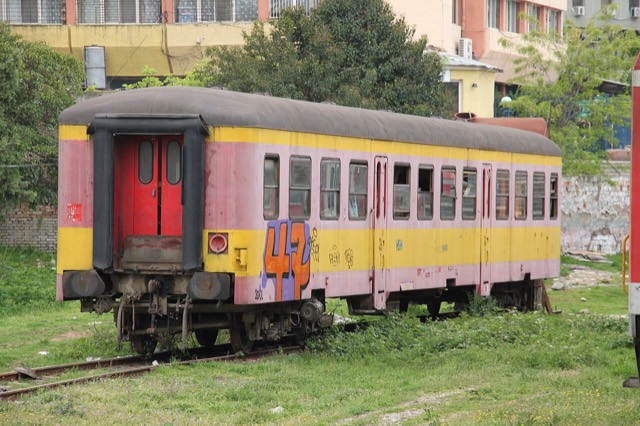
The Durrës–Tirana railway, begun in 1947 as Albania's first railway, ran 38 kilometres between the two cities. The line connects to the Shkodër–Vorë railway at Vorë and to the Durrës–Vlorë railway in Durrës. The railway station also serves Elbasan and Shkodër. Daily ferry services connect Durrës to Bari in Italy, reflecting the city's role as the principal maritime link between Albania and western Europe.
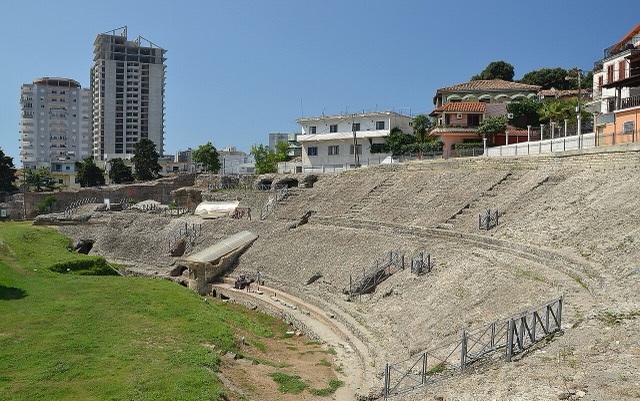
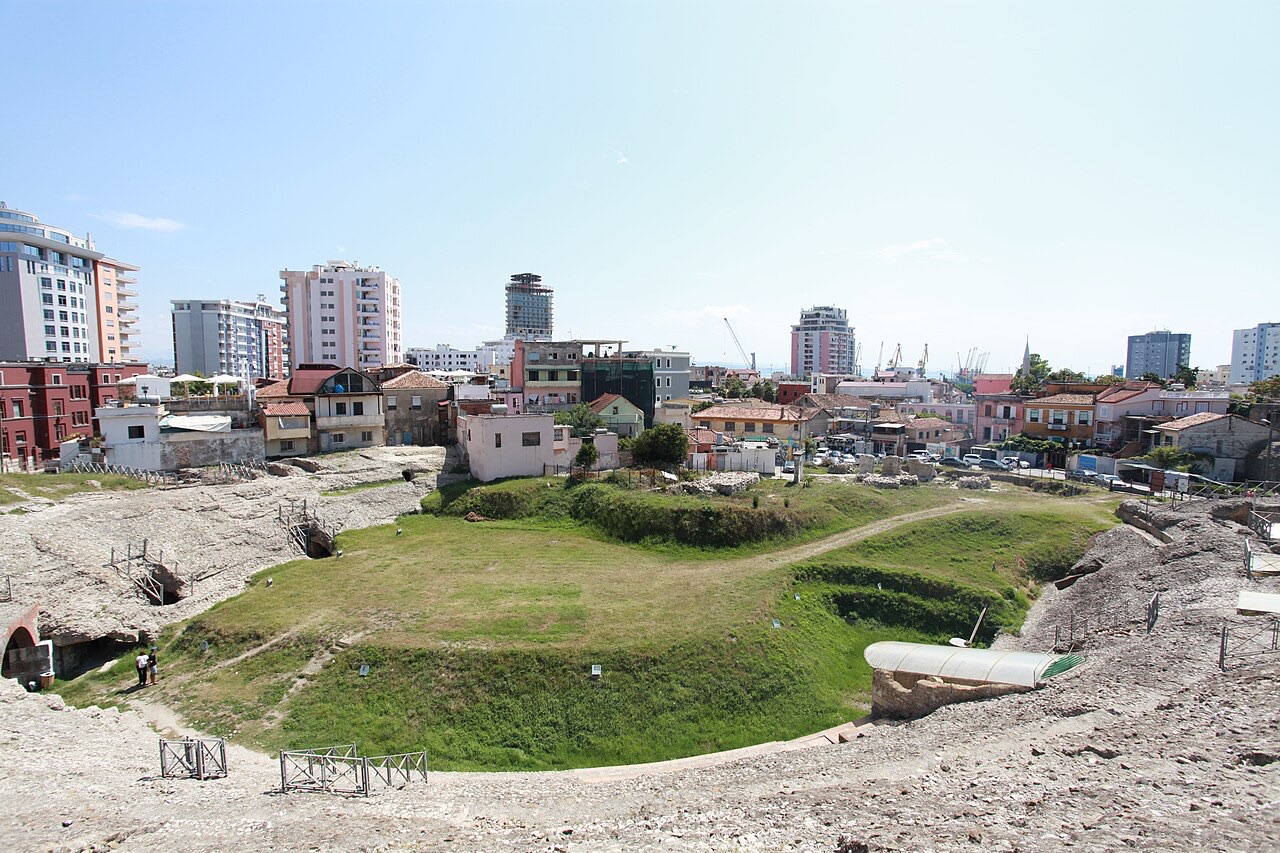
The Amphitheatre of Durrës is the largest amphitheatre in the Balkan Peninsula and the city's most significant ancient monument. Built in the 5th century, it had a capacity for 20,000 people. It is included on Albania's tentative list for designation as a UNESCO World Heritage Site and is the venue for the annual International Film Summerfest of Durrës, founded in 2008, held in late August or early September.
The Byzantine city walls, also known as Durrës Castle, are another principal monument. The walls north of the Durrës Archaeological Museum date from the 6th century and were constructed following the Visigoth invasion of 481. Anastasius I, born in Durrës around 430, rebuilt and strengthened the original city defences after they were destroyed by a powerful earthquake in the late 4th century; Anna Komnene recorded that four horsemen could ride abreast on their 12-metre height. Significant portions survive today, though much reduced from their original extent.
The Durrës Archaeological Museum, located near the beach, is the largest archaeological museum in Albania. Its collection draws primarily on artefacts from the nearby ancient site of Dyrrhachium and spans the Illyrian, Ancient Greek, Hellenistic, and Roman periods. Notable items include Roman funeral steles, stone sarcophagi, and a colourful elliptical mosaic measuring 17 by 10 feet and known as The Beauty of Durrës. The museum also holds a collection of miniature busts of Venus, reflecting a period when Durrës was a centre of worship of that goddess. Other museums in the city include the Royal Villa of Durrës, built by King Zog as a summer palace, and the Museum of History, housed in the former home of the actor Aleksandër Moisiu.
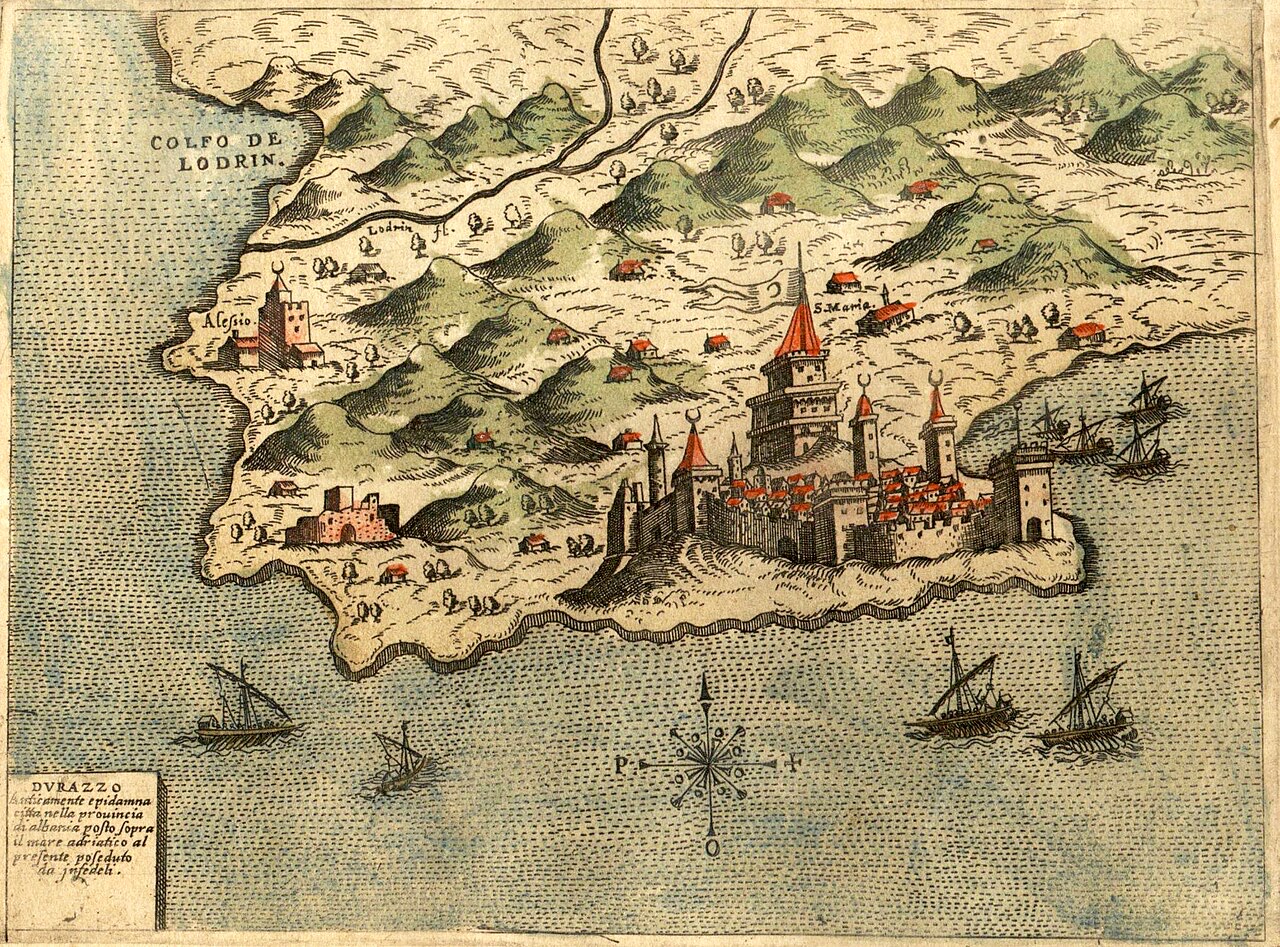
Durrës is the second most populous municipality in Albania. The 2011 census recorded a population of 113,249 in the municipal unit, of whom 56,511 were men and 56,738 were women. The municipal council consists of 51 councillors elected for four-year terms, with the mayor also serving a four-year term. The city ranks ninth among 22 cities in Southeastern Europe in a World Bank assessment of ease of starting a business published in 2016, placing ahead of Tirana, Belgrade, and Sarajevo.
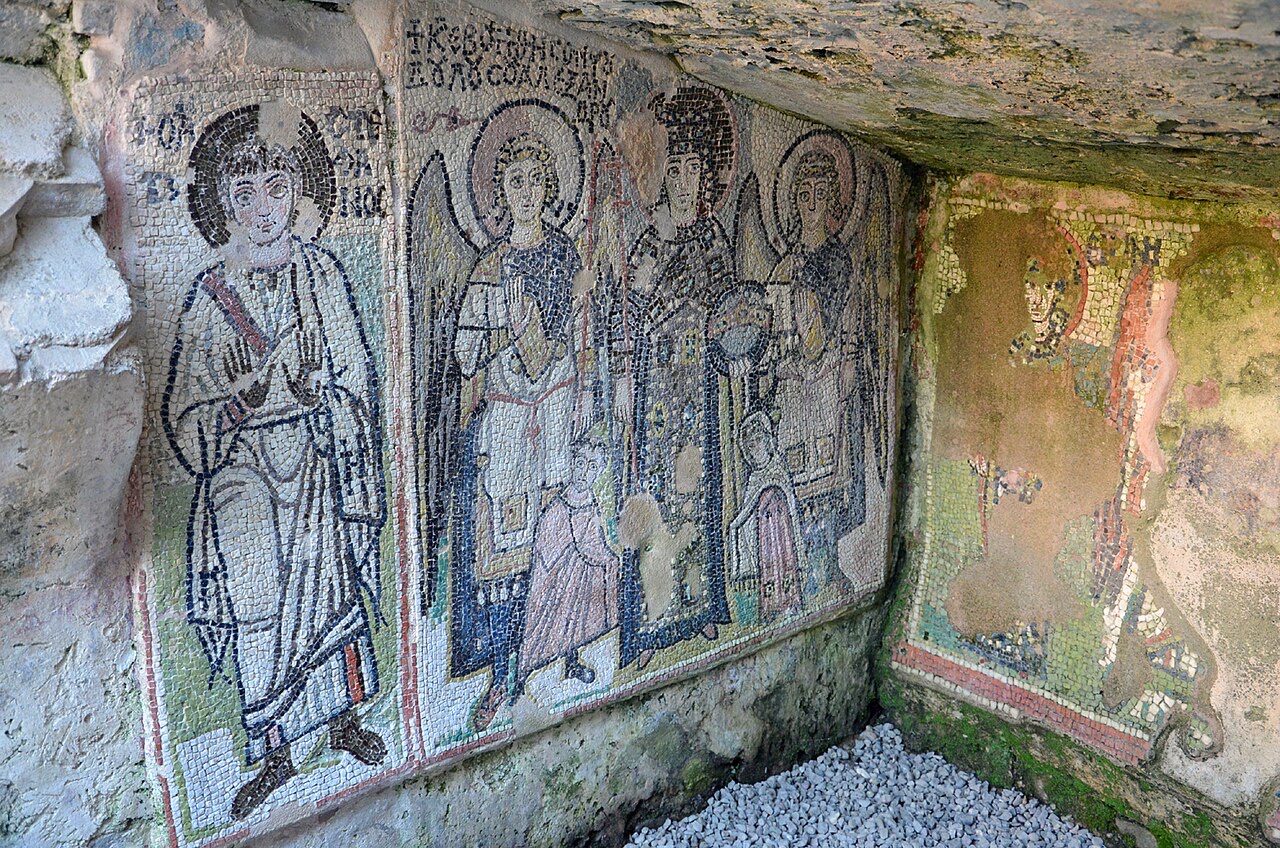
Islam was introduced during the early 16th century Ottoman conquest, and much of the local population converted over the following four centuries of Ottoman rule. The Great Mosque of Durrës was built in 1931 on the site of an earlier Ottoman mosque; the Fatih Mosque was erected in 1502, one year after the city came under Ottoman rule. Christianity in Durrës has a continuous documented presence from early in the common era: the bishopric was created around 58 AD, raised to an archbishopric in 449, and Christian tradition attributes its foundation to the apostle Paul during his preaching in Illyria and Epirus. The Orthodox Church of Albania, autocephalous since 1923, includes the archbishopric of Tirana–Durrës as one of its subdivisions.
Cultural institutions include the Aleksandër Moisiu Theatre, the Estrada Theatre, a puppet theatre, and the Philharmonic Orchestra. Academic institutions in the city include the University of Durrës, the Albanian College of Durrës, the Kajtazi Brothers Educational Institute, and several secondary schools including the Gjergj Kastrioti High School and the Jani Kukuzeli Artistic Lycée. Durrës is twinned with Bari and Bitonto in Italy, Istanbul in Turkey, and Thessaloniki in Greece, and maintains cooperation agreements with Kumanovo in North Macedonia, Shantou in China, and Ulcinj in Montenegro.
三十年气候平均值,地点: Durrës, 由本 Atlas 依据 1994—2023 年 ERA5 逐日再分析数据计算得出。以上为长期平均值,并非预报;任何单一年份均可能存在较大偏差。
最热月份为 August (日最高气温均值 28°C), 最冷月份为 January (日最低气温均值 6°C), 降水最多的月份为 November (171 mm). 年均降雨总量为 1,235 mm. 海水温度在八月达到峰值,约为 26°C.
| 月份 | 最高气温 | 最低气温 | 降雨量 | 降雨天数 | 日照时长 | 海水温度 |
|---|---|---|---|---|---|---|
| January | 11°C | 6°C | 134 mm | 12 | 7.2 h | 16°C |
| February | 12°C | 7°C | 118 mm | 11 | 8.2 h | 14°C |
| March | 14°C | 8°C | 116 mm | 11 | 9.7 h | 15°C |
| April | 17°C | 11°C | 99 mm | 11 | 10.8 h | 16°C |
| May | 21°C | 15°C | 74 mm | 9 | 12.2 h | 19°C |
| June | 25°C | 19°C | 45 mm | 6 | 13.6 h | 24°C |
| July | 28°C | 22°C | 29 mm | 4 | 13.8 h | 26°C |
| August | 28°C | 22°C | 36 mm | 4 | 12.9 h | 26°C |
| September | 25°C | 19°C | 116 mm | 9 | 10.7 h | 24°C |
| October | 21°C | 15°C | 135 mm | 10 | 9.2 h | 23°C |
| November | 17°C | 12°C | 171 mm | 13 | 7.4 h | 19°C |
| December | 13°C | 8°C | 162 mm | 13 | 6.7 h | 17°C |
数据来源: ERA5 reanalysis via Open-Meteo, 1994–2023 · "最高气温"与"最低气温"分别为日最高和日最低气温均值。"降雨天数"统计降水量不低于 1 毫米的天数。 获取 JSON 数据
Albania's principal port and its oldest continuously inhabited city, founded as Epidamnos in 627 BC.
The largest Roman amphitheatre in the Balkans, found by accident in 1966 under the modern city.
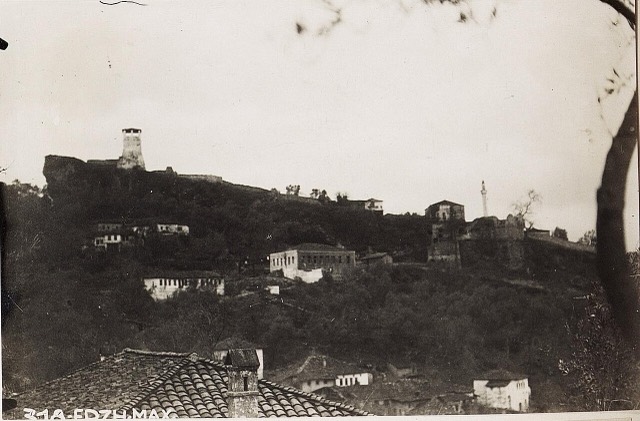
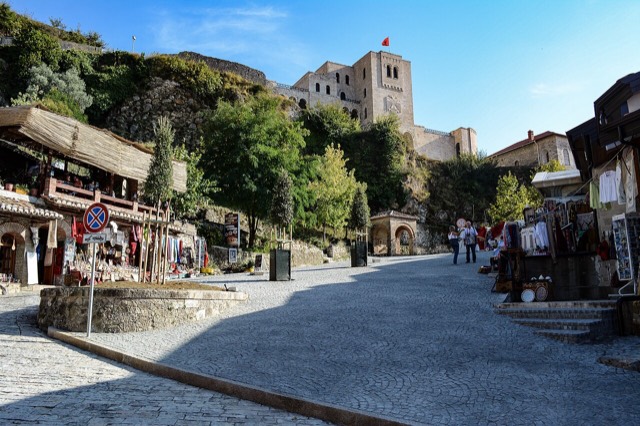
Skanderbeg's base, which held out against three Ottoman sieges and now houses the national museum of the resistance.
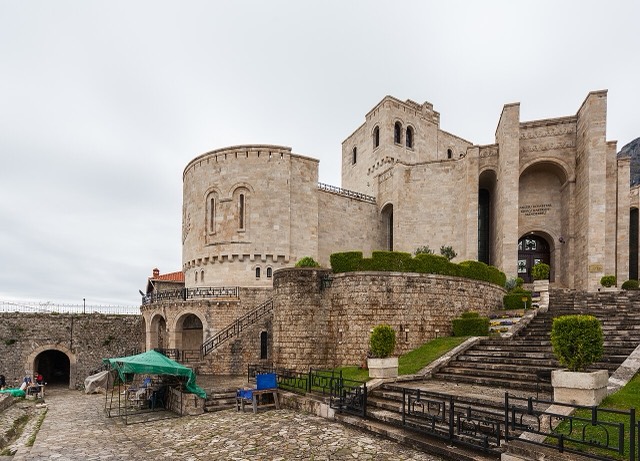
The museum of the 15th-century resistance, built inside Krujë Castle by Enver Hoxha's daughter and son-in-law.
A continuous sand strip running south from the city — the busiest beach in Albania by visitor numbers.
Byzantine sea walls raised under Anastasius I, later strengthened by Venice and the Ottomans.
A sheltered arc on the Rodon cape, below Skanderbeg's coastal castle.
Skanderbeg's mountain stronghold, an old bazaar street, and the national museum of the resistance.
The country's main commercial and passenger port, handling the large majority of Albanian seaborne trade.
A narrow, largely dormant network built after 1947; a rebuilt Durrës–Tirana line is the main active project.
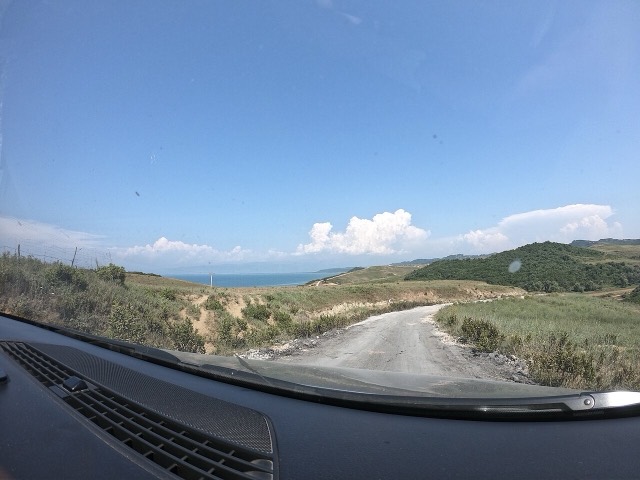
A low cape north of Durrës holding Skanderbeg's sea castle and the church of St Anthony.
The industrial town on the plain below Krujë, and the site of Albania's largest cement works.
A market town between Durrës and Tirana with a long-established Roma and Egyptian community.
A pine-backed sand bay north of Durrës that has become Albania's main resort-property zone.
The main overnight vehicle link between Albania and Italy.
A large cement plant at Boka e Kuqe near Krujë, built by TITAN Cement.
The longer northern Italian crossing, used heavily by lorries and by the diaspora in summer.
以下均为本 Atlas 中真实存在的关联关系——与本地点邻近的地点,以及本条目实际所属的主题类别。本栏目不包含任何通用推荐内容。
The largest Roman amphitheatre in the Balkans, found by accident in 1966 under the modern city.
A central industrial city inside an Ottoman fortress wall, on the old Via Egnatia.
The service town of the oil and farming plain, next to the ruins of Apollonia.
Skanderbeg's base, which held out against three Ottoman sieges and now houses the national museum of the resistance.
The capital: a fast-changing city of painted blocks, Ottoman survivals and new towers, under Mount Dajti.
The capital county: roughly a third of the country's people, its jobs and its universities.
A continuous sand strip running south from the city — the busiest beach in Albania by visitor numbers.
Byzantine sea walls raised under Anastasius I, later strengthened by Venice and the Ottomans.
The largest Roman amphitheatre in the Balkans, found by accident in 1966 under the modern city.
A continuous sand strip running south from the city — the busiest beach in Albania by visitor numbers.
Byzantine sea walls raised under Anastasius I, later strengthened by Venice and the Ottomans.
Corinthian and Corcyraean foundations at Epidamnos, Apollonia and Orikum along the coast.
Nine centuries of eastern Roman rule, interrupted by Bulgarians, Normans, Serbs and Angevins.
The country's main commercial and passenger port, handling the large majority of Albanian seaborne trade.
Rome's road from the Adriatic to Byzantium, which began at Durrës and Apollonia.
The main overnight vehicle link between Albania and Italy.
上文标注"深度解析"的章节,系本 Atlas 依据以下来源文章全文阅读后撰写而成 (35,624 字符). 以上内容为基于该文献的 AI 辅助研究成果,并已与本页精选事实核对。如涉及重要事项,请务必核对原始来源。
本页内容有误? 欢迎提交更正意见,所有意见均会与原始记录核对。请告知错误所在,如能提供正确数据的出处,请一并注明。