City · Durrës
Durrës
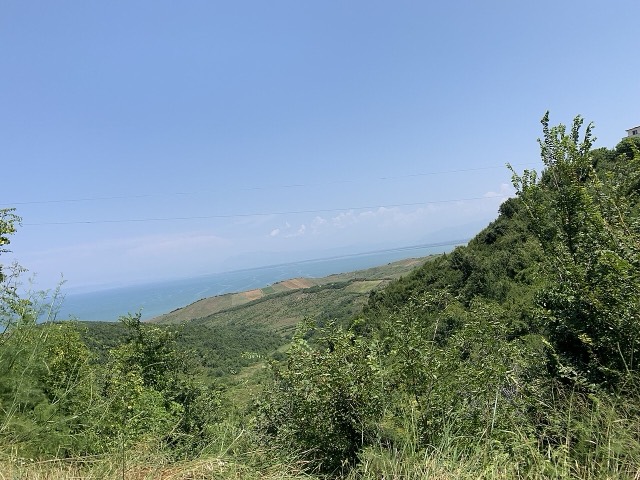
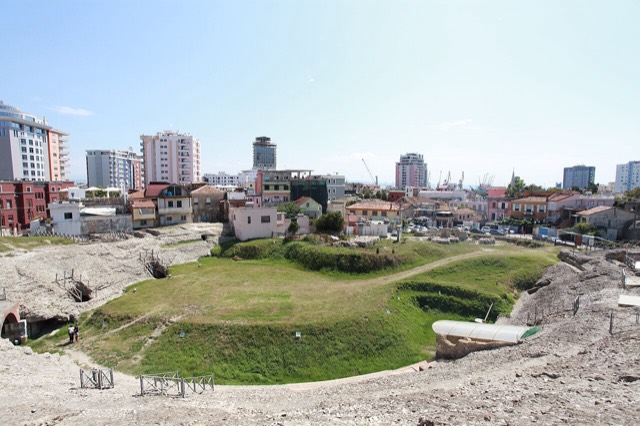
Albania's principal port and its oldest continuously inhabited city, founded as Epidamnos in 627 BC.
Every county, coast and century
Guided view
New to Albania? Every page opens with a plain-language explanation you could read to a ten-year-old, before the detail begins.
Expert view
You already know the basics. Straight to the substance, with the simple explanations hidden. This is the default.
Beach · Durrës County
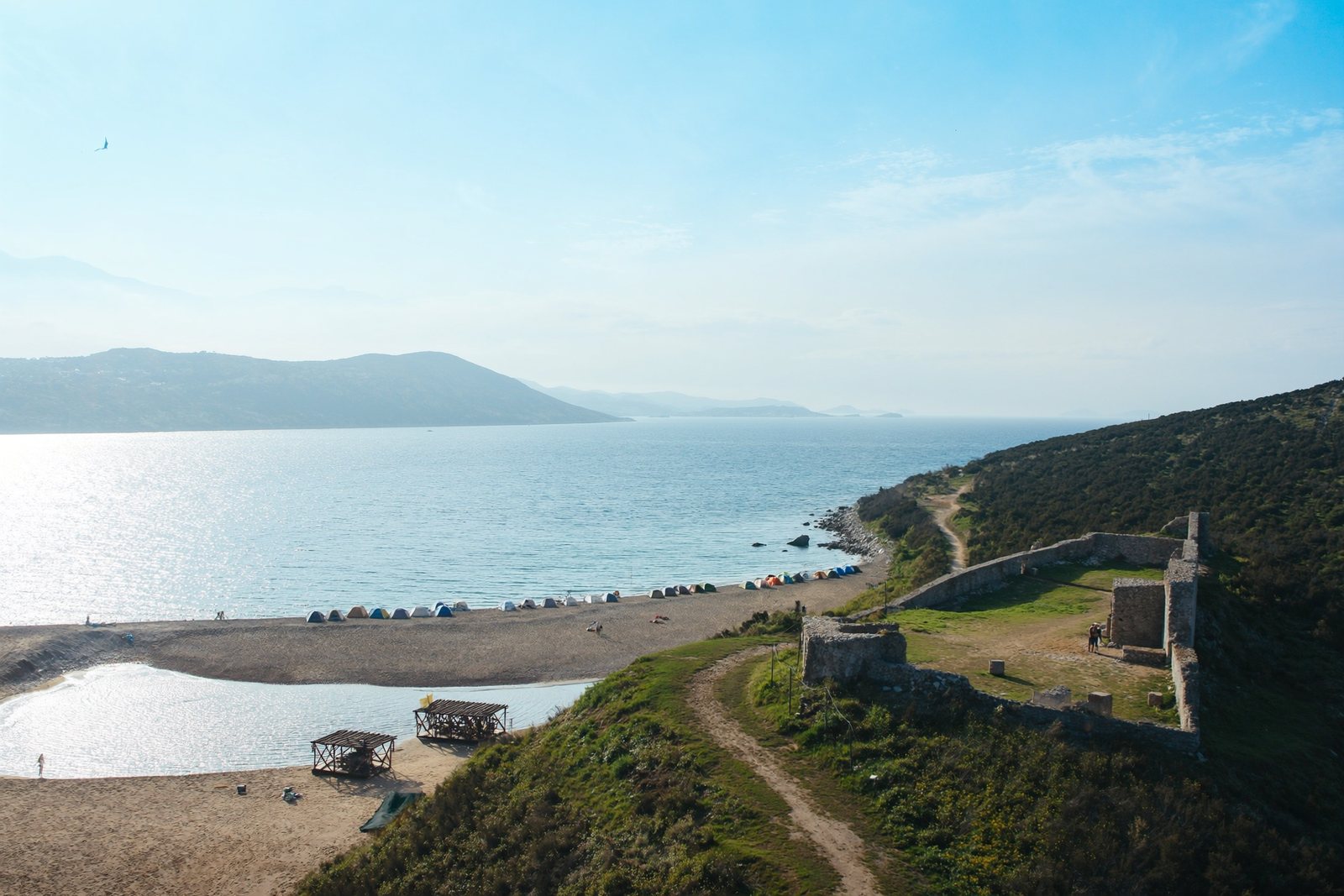
A sheltered arc on the Rodon cape, below Skanderbeg's coastal castle.
Save
General Beach is on a peninsula north of Durrës, near an old castle built by Skanderbeg.
General Beach is on a peninsula north of Durrës, near an old castle built by Skanderbeg.
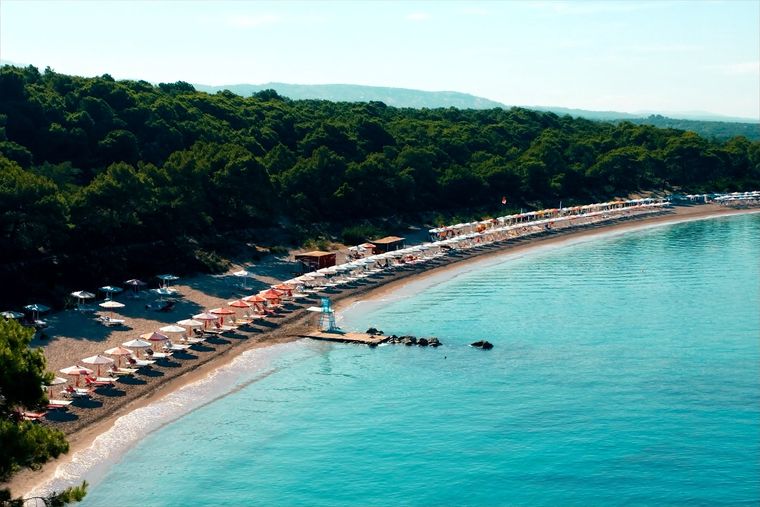
General Beach (Plazhi i Gjeneralit) lies on the Adriatic coast of Albania, situated in the bay south of Kepi i Rodonit — also known as Kepi i Skënderbeut — a rocky cape north of the city of Durrës. The wider area between the cape and the Rrushkull Reserve forms a bay that shelters several beach resorts, including facilities known as 'Lura' and 'San Pietro Resort', which attract significant numbers of visitors during the summer season.
The cape itself is a rocky promontory extending into the Adriatic Sea. Its position defines the northern boundary of the bay in which the beach resorts, including General Beach, are found.
The toponym Rodoni derives from Redon, a deity attested in ancient inscriptions found at Santa Maria di Leuca, in present-day Lecce, Italy, and on coins minted by the Illyrian city of Lissos. Historians have interpreted Redon as the guardian deity of Lissos and, probably, as a sea god, though this second function is a scholarly inference rather than a directly attested title.
Redon was consistently depicted on coins wearing a petasos — a broad-brimmed traveller's hat — which led researchers to conclude that he functioned as the protector of travellers and sailors. Supporting this reading, the inscriptions at Santa Maria di Leuca were carved by the crews of two Roman merchant ships manned by Illyrians, suggesting that sailors invoked him before or after voyages.
Mentions of Redon also appear on coins from the Illyrian cities of Daorson and Scodra, and in archaeological material from Dyrrhachium following the establishment of a Roman colony there. The Albanian place name Kepi i Rodonit is understood by historians as potentially preserving the memory of an Illyrian sanctuary dedicated to this deity, though this interpretation is inferential.
On the cape above the bay stands Rodoni Castle, constructed by the Albanian lord Gjergj Kastrioti Skanderbeg in 1463. The castle gives the cape its alternative Albanian name, Kepi i Skënderbeut — 'Skanderbeg's Cape'. Saint Anthony Church also stands on the cape, though the article does not specify a construction date for the church.
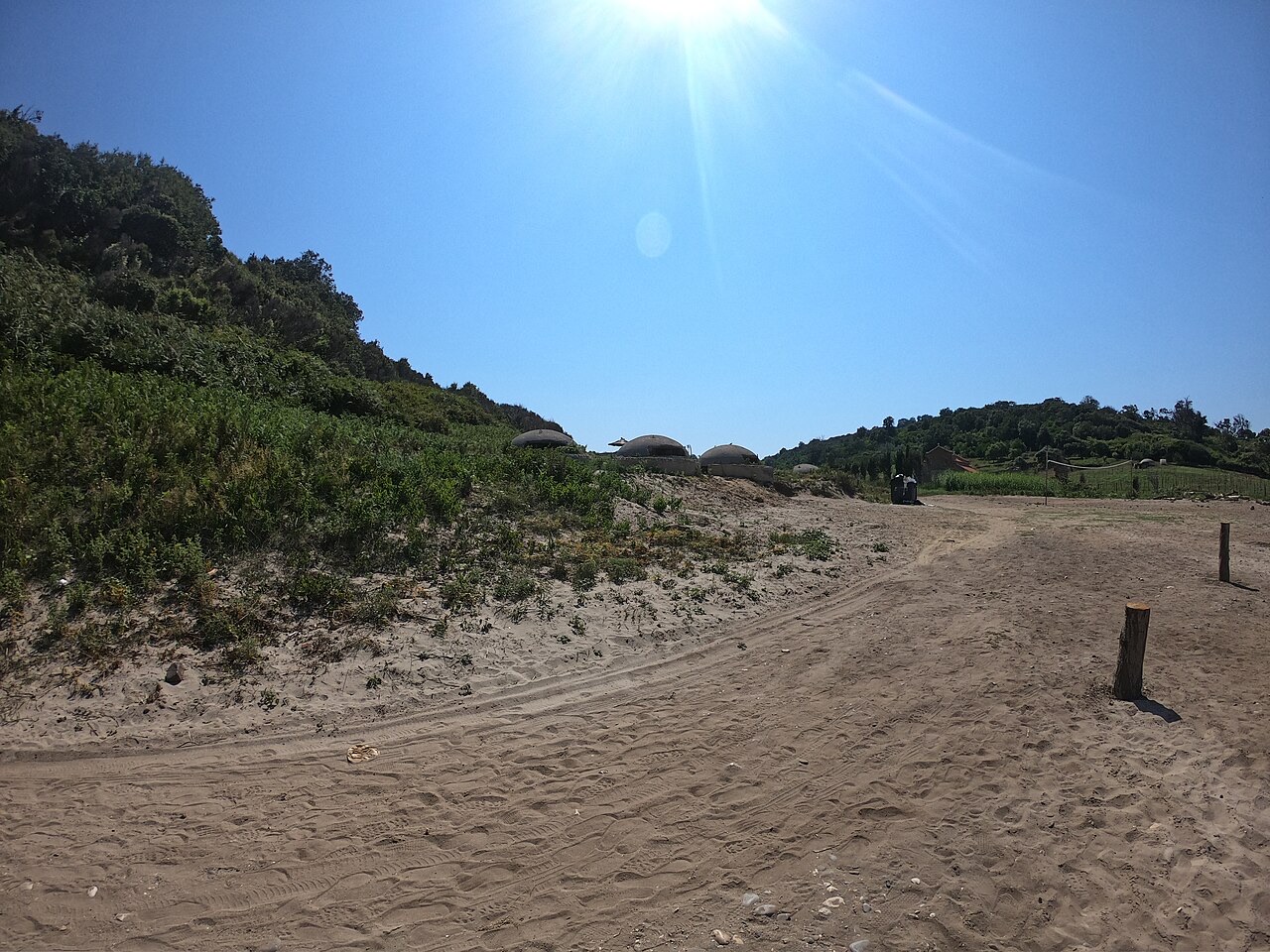
The southern limit of the bay in which General Beach sits is defined by the Rrushkull Reserve. The reserve and the cape together enclose the bay that contains the cluster of beach resorts. The article does not supply detailed information on the ecological character or protected status of the reserve beyond naming it as a boundary marker of the area.
The bay between Kepi i Rodonit and the Rrushkull Reserve contains several resort facilities, specifically named in the source as 'Lura' and 'San Pietro Resort'. These gather a considerable number of tourists during the summer months. No visitor figures, infrastructure details, or ownership information are given in the available source material.
The distribution of inscriptions and coin imagery relating to Redon across multiple Illyrian cities — Lissos, Daorson, Scodra, and Dyrrhachium — indicates that the cult was not confined to a single locality but was shared across the Adriatic Illyrian world. The presence of dedications at Santa Maria di Leuca on the Italian side of the Adriatic, made by Illyrian-crewed merchant ships, suggests the deity's relevance extended to maritime routes crossing the sea.
Historians have proposed that Kepi i Rodonit may mark the site of an Illyrian sanctuary to Redon, making the cape a site of potential religious-geographical significance in the pre-Roman and early Roman periods. This remains an interpretive hypothesis based on the analysis of the place name and the pattern of attestations, rather than a finding confirmed by excavation at the cape itself.
The warmest month is August (mean daily high 27°C), the coldest is January (mean daily low 7°C), and the wettest is November (186 mm). Total annual rainfall averages 1,305 mm. Sea temperature peaks in August at about 25°C.
| Month | High | Low | Rain | Wet days | Sun/day | Sea |
|---|---|---|---|---|---|---|
| January | 11°C | 7°C | 146 mm | 12 | 7.2 h | 15°C |
| February | 12°C | 8°C | 122 mm | 11 | 8.2 h | 13°C |
| March | 14°C | 9°C | 120 mm | 11 | 9.7 h | 15°C |
| April | 16°C | 12°C | 104 mm | 11 | 10.8 h | 16°C |
| May | 20°C | 16°C | 73 mm | 9 | 12.2 h | 19°C |
| June | 24°C | 20°C | 47 mm | 5 | 13.6 h | 23°C |
| July | 27°C | 22°C | 30 mm | 4 | 13.8 h | 26°C |
| August | 27°C | 23°C | 37 mm | 4 | 12.9 h | 25°C |
| September | 24°C | 20°C | 128 mm | 8 | 10.8 h | 24°C |
| October | 20°C | 16°C | 142 mm | 10 | 9.2 h | 23°C |
| November | 17°C | 13°C | 186 mm | 12 | 7.4 h | 19°C |
| December | 13°C | 9°C | 169 mm | 13 | 6.7 h | 16°C |
Source: ERA5 reanalysis via Open-Meteo, 1994–2023 · “High” and “Low” are mean daily maximum and minimum air temperature. “Wet days” counts days with at least 1 mm of precipitation.
City · Durrës
Albania's principal port and its oldest continuously inhabited city, founded as Epidamnos in 627 BC.
Subject · Durrës
A low cape north of Durrës holding Skanderbeg's sea castle and the church of St Anthony.
Beach · Durrës
A pine-backed sand bay north of Durrës that has become Albania's main resort-property zone.
Something wrong on this page? Corrections are welcome and are checked against the source record. Tell us what is wrong and, if you can, where the right figure comes from.