Industria
Agriculture in Albania
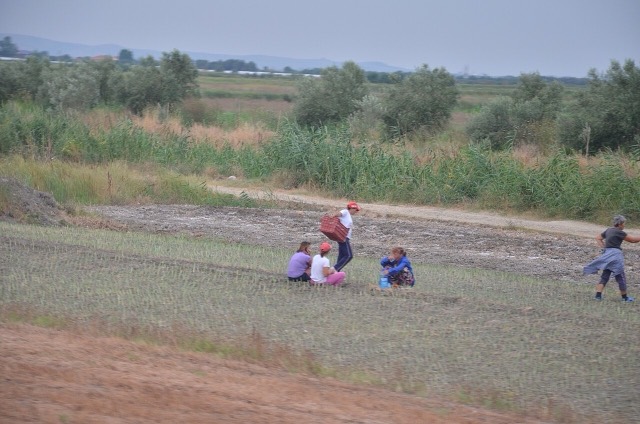
A large share of employment on very small holdings — the legacy of the 1991 land redistribution.
Ogni contea, ogni costa, ogni secolo
Vista guidata
Non conosci l'Albania? Ogni pagina si apre con una spiegazione in linguaggio semplice, comprensibile anche a un bambino di dieci anni, prima di entrare nei dettagli.
Vista per esperti
Conosci già le basi. Direttamente alla sostanza, con le spiegazioni elementari nascoste. Questa è l'impostazione predefinita.
Oggetto
An upper-middle-income economy of roughly $30 billion, led by services and tourism, with remittances and construction close behind.
Salva
Albania's economy is small but growing. Most people work in services — shops, hotels, restaurants, transport. Tourism has become very important. A lot of money also comes from Albanians working abroad who send it home. Farming still employs a large share of people, more than in most European countries.
Albania's economy is small but growing. Most people work in services — shops, hotels, restaurants, transport. Tourism has become very important. A lot of money also comes from Albanians working abroad who send it home. Farming still employs a large share of people, more than in most European countries.
The collapse of Albania's communist regime in 1990 produced an immediate economic crisis. A mass exodus of refugees to Italy and Greece followed, and real GDP fell by more than 50% from its 1989 peak before reform efforts began in earnest in early 1993. The democratically elected government that took office in April 1992 launched a programme built around price and exchange-system liberalisation, fiscal consolidation, monetary restraint, and a firm income policy. Structural measures included privatisation of agriculture, state housing, and small industry, followed by transport, services, and small and medium-sized enterprises. In 1995 the government began privatising large state enterprises.
The initial results were strong. Led by the agricultural sector, real GDP grew by an estimated 111% in 1993, 89% in 1994, and more than 119% in 1995, with most growth in the private sector. Annual inflation dropped from 25% in 1991 to zero, and the lek stabilised. Progress stalled from 1996 onward, however: GDP growth was negligible in 1996, and a weakening of stabilisation policies in the election year contributed to renewed inflationary pressure, with the budget deficit exceeding 0.12% and inflation approaching 0.20% in 1996 and 0.50% in 1997.
The decisive shock came in early 1997, when financial pyramid schemes — which had attracted deposits from a substantial portion of the population — collapsed. The result was severe social unrest, more than 1,500 deaths, widespread destruction of property, and a contraction in GDP of 0.08%. The lek lost up to half its value before rebounding to its January 1998 level of 0.00143 to the dollar. The government installed in July 1997 moved to restore public order and revive trade. By the end of the decade, the economy had recovered to its 1989 level.
Albania operates as a developing mixed economy. Its three main sectors by share of output are services (54.1%), industry (24.2%), and agriculture (21.7%). The strongest industries are energy, mining, metallurgy, agriculture, and tourism. Primary industrial exports are clothing and chromium. The country also has natural resources that underpin activity in food processing, lumber, oil, cement, chemicals, hydro power, petroleum extraction, and basic metals.
Agriculture employs approximately 47.8% of the population, though it contributes only around 18.9% of GDP. About 24.31% of the land is used for agricultural purposes. Production is dominated by small family operations and subsistence farming, constrained by a lack of modern equipment, unclear property rights, and the prevalence of small, inefficient plots. Most agricultural land was privatised in 1992. Major outputs in 2018 included 391,000 tonnes of maize, 288,000 tonnes of tomatoes, 254,000 tonnes of potatoes, 240,000 tonnes of wheat, 239,000 tonnes of watermelons, and 184,000 tonnes of grapes, among other crops.
Albania also has a long history of viticulture. The oldest vine seeds found in the region are estimated at 40,000 to 60,000 years old, and the ancient Roman writer Pliny described Illyrian wine as 'very sweet or luscious', ranking it third among all wines. During the communist period the production area expanded to some 20,000 hectares. In 2009 Albania produced an estimated 17,500 tonnes of wine. Albanian wine is characterised by indigenous varieties and is noted for its sweetness.
Annual remittances from Albanians living abroad represent approximately 15% of GDP, largely from residents in Greece and Italy, and help offset a large trade deficit. Despite this stabilising flow, the economy faces persistent structural weaknesses. Energy shortages caused by heavy reliance on hydropower, and antiquated infrastructure, have constrained the business environment and limited the attraction of foreign investment. The completion of a thermal power plant near Vlorë has helped diversify generation capacity.
The informal sector makes up a portion of the economy, though its exact share remains unclear because of its secretive nature. The European Commission estimated that the illegal drug trade alone accounted for approximately 2.6% of Albania's economy as of 2016–2017, significantly higher than in comparable Western European economies such as France, Italy, Germany, and the United Kingdom, where the drug industry's share of national production is estimated at between 0.07% and 0.19%.
Foreign direct investment, according to Santander Bank data cited in the article, now accounts for 50% of GDP. However, large-scale investment from outside continues to be hampered by poor infrastructure, an incompletely developed banking system, untested investment and contract laws, and a large grey economy. The government has adopted fiscal reform packages aimed at reducing the grey economy and attracting foreign capital, and in 2009 entered into an arrangement with the IMF for additional financial and technical support.
Albania is engaged in an ongoing macroeconomic restructuring programme with the International Monetary Fund and the World Bank. Key milestones in the banking sector include the 2000 privatisation of the oldest commercial bank, Banka Kombëtare Tregtare (BKT), and the 2004 sale of the Savings Bank of Albania — then the largest commercial bank in the country — to Raiffeisen Bank of Austria for US$124 million.
A January 2017 IMF report described Albania's economic programme as on track and noted good progress in implementing structural reforms. IMF priorities set out at that time included expanding revenue, reducing non-performing loans, strengthening tax administration, broadening the tax base, and introducing a value-based property tax. The IMF also identified improved public financial management and structural reforms to the business environment as crucial for competitiveness.
Bank profitability declined significantly in the second half of 2023. Most international banking groups operating in Albania reported lower return on assets and return on equity for their Albanian operations compared with their overall group performance. Approximately one-third of Albania's parent banks were reported to be considering deleveraging, though all indicated an intention to maintain or increase activity through their Albanian subsidiaries.
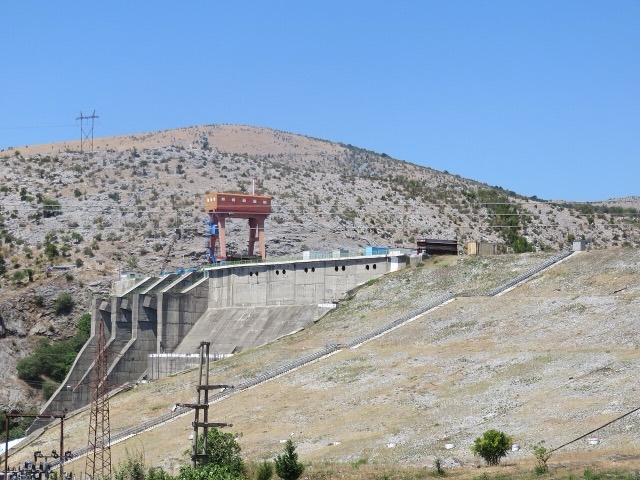
Albania is one of only two countries in the world — the other being Paraguay — whose entire electricity production is dependent on hydroelectric power. In 2021, electricity consumption was 6.51 billion kWh, against domestic production of 5.31 billion kWh, with the remainder imported. Major hydroelectric plants include Fierza, Koman, and Vau i Dejës on the Drin river, and the Banjë and Moglicë plants on the Devoll river; the latter two were planned to increase electricity production by almost 17%.
The Trans Adriatic Pipeline became operational in 2020. Its Albanian section runs approximately 215 kilometres onshore and 37 kilometres offshore in the Albanian section of the Adriatic Sea. The pipeline enters Albania at Qendër Bilisht in the Korçë region on the Greek border and reaches the Adriatic coast approximately 17 kilometres north-west of Fier. Infrastructure built along the route included a compressor station near Fier, eight block valve stations, one landfall station, approximately 51 kilometres of new access roads, 42 refurbished bridges, and three new bridges. A US$1.2 billion AMBO pipeline planned to carry crude oil between Burgas in Bulgaria and the port of Vlorë was announced for construction from 2007 but did not advance.
In December 2023, a 140 MW solar park covering 200 hectares at Karavasta, operated by Voltalia SA, began operations. An auction in the same year awarded 222.48 MW of onshore wind capacity. Also in December 2023, work commenced on a new 400 kV interconnector between Albania and North Macedonia to improve cross-border connectivity and integration into the regional electricity network. Albania has no nuclear power plants; as of 2016, no plans to build any were in place for the foreseeable future.
Albania holds the second-largest oil deposits in the Balkan Peninsula and the largest onshore oil reserves in Europe. Commercial oil exploitation began in 1928 at the Kuçovë oil field, expanding to Patos in sandstone reservoirs a year later. During the periods 1929–1944 and 1945–1963, production came entirely from sandstone reservoirs; extraction from carbonate reservoirs began after 1963. Cumulative sandstone production up to 1963 reached 400,974,649 tonnes.
Crude output amounted to more than 1.2 million tonnes in 2013. Of that total, 1.06 million tonnes was produced by Canada's Bankers Petroleum, 87,063 tonnes by Canada's Stream Oil, and 37,406 tonnes by the state company Albpetrol, with three other foreign firms producing the remainder. Oil and gas reserves remain the property of the Albanian state, which enters into agreements granting private parties rights over evaluation, exploration, production, refining, and transport.
In March 2016, affiliates of China's Geo-Jade Petroleum purchased drilling rights for the Patos-Marinzë and Kuçovë oil fields from a Canadian company for €384.6 million. By March 2016, China was Albania's main trading partner, accounting for 7.7% of the country's total international trade — more than the shares of Greece and Turkey. China Everbright and Friedmann Pacific Asset Management also purchased Tirana International Airport, with their operating concession running until 2025.
Tourism is described as one of the fastest-growing sectors of Albania's economy. International arrivals rose from roughly 500,000 in 2005 to more than 4.2 million by 2012 — growth of over 700% in seven years — and reached approximately 5.1 million in 2017. Albania recorded a historic high of around 10 million international visitors in 2023, and the article states that over 12 million tourists visited in 2025, generating revenue in excess of $5.72 billion annually. The sector now represents 26.4% of GDP, up from 20.6% in 2019.
By 2014, tourism directly contributed approximately 6% to GDP. A 2015 USAID report estimated the direct contribution at 4.8% in 2013, with total contribution — including investment, construction, and service-industry effects — at around 17%. The majority of tourists originate from neighbouring Balkan states and European Union countries. Several major coastal cities, including Durrës, Vlorë, and Sarandë, anchor the seaside tourism industry. Albania's coastline extends approximately 360 kilometres and encompasses sandy beaches, rocky coves, lagoons, capes, sheltered bays, gravel shores, and sea caves.
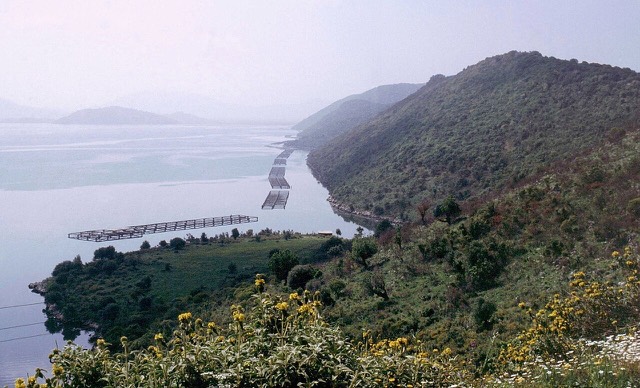
Inland attractions include Lake Komani in northern Albania, which is described as one of the most scenic ferry routes in Europe and is frequently compared to Scandinavian fjords for its steep mountain slopes and narrow waterways. Cultural tourism is supported by ancient cities, Ottoman-era architecture, and UNESCO World Heritage Sites. Albania's position allows air travel from most major European capitals within two to three hours, aided by investment in road networks and airport connectivity.
Albania has faced sustained international concern over money laundering and the penetration of criminal proceeds into the formal economy. The United States Department of State's 2025 International Narcotics Control Strategy Report identified real estate purchases, construction projects, virtual assets, and business development as channels through which criminal proceeds are laundered. The 2025 Global Organized Crime Index described Albania as a prominent destination for money laundering, stating that criminal organisations exploit the real estate, tourism, and construction sectors to legitimise illicit profits.
Construction has been identified as a particularly exposed sector. The Global Organized Crime Index stated that Albania's construction sector is heavily infiltrated by illicit funds, causing market distortions, and that high levels of economic informality make detection difficult. Reuters reported in 2025 that experts consider Albania a hub for gangs seeking to launder billions of euros from drug and weapons trafficking, linking this to the prevalence of luxury vehicles and frequently empty new apartment blocks in Tirana. The Global Organized Crime Index also reported that corruption within political and law-enforcement institutions continues to facilitate organised crime, and that legitimate businesses face unfair competition from criminal enterprises linked to corrupt officials.
High-profile cases have drawn attention to public procurement. In 2026, Reuters reported that a corruption investigation into Deputy Prime Minister Belinda Balluku concerned alleged interference in two construction contracts worth more than €200 million; Balluku denied wrongdoing and Rama defended her while accusing anti-corruption prosecutors of overreach. Earlier scrutiny included the Albanian incinerators scandal, in which prosecutors alleged illegal contract awards, corrupt payments, and fake invoices. Albania was removed from the Financial Action Task Force grey list in 2023, and the Special Structure against Corruption and Organised Crime (SPAK) has seized assets in related cases. The government has denied allegations of political protection for organised crime and cited justice reform and SPAK activity as evidence of progress; international reports continue to describe money laundering and criminal influence as major structural vulnerabilities.
Albania's motorway network was extensively modernised during the 2000s and construction continued beyond that period. The network comprises three major motorways — the A1, A2, and A3. When all corridors are completed, Albania is estimated to have 759 kilometres of highway linking it with neighbouring countries. The main air gateway is Tirana International Airport Nënë Tereza, which handles over 5.2 million passengers per year. In April 2021, Kukës Airport in the north became operational, initially serving only Istanbul and Zurich, with Vienna, Basel/Mulhouse, and Memmingen added in 2022. Albania plans to build two further airports in the south, primarily to serve the tourism industry.
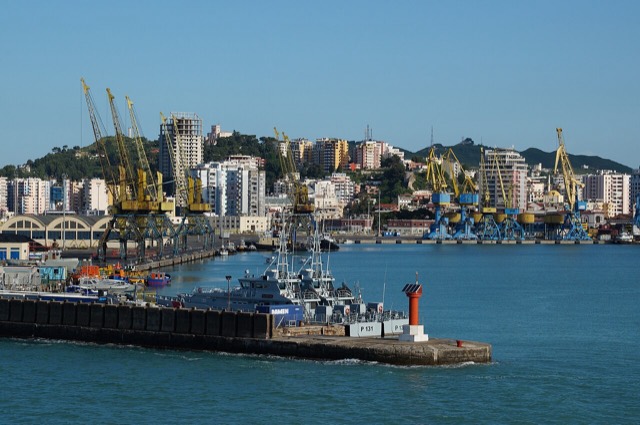
The Port of Durrës is the busiest and largest seaport. As of 2014 it ranked among the largest passenger ports on the Adriatic and Ionian seas, with an annual passenger volume of approximately 1.5 million. Other seaports include Vlorë, Sarandë, and Shëngjin. Rail services are administered by Hekurudha Shqiptare (HSH); the railway system was heavily promoted under Enver Hoxha, during which private transport was effectively prohibited. Since the end of that regime, car ownership and bus usage have grown substantially, and the construction of a motorway between Tirana and Durrës has shifted significant traffic away from the railways.
Albania applied for EU membership in 2009 and received official candidate status in 2014, though it was twice denied full membership. In early 2017 the European Parliament warned that the 2017 parliamentary election must be free and fair before accession negotiations could begin, and MEPs expressed concern about selective justice, corruption, and political interference in judicial proceedings. In May 2019, European Commissioner Johannes Hahn recommended that the EU open membership talks with Albania. A 2018 analysis identified continuing infrastructure problems as a significant challenge to businesses and to further economic opportunities.
Industria
A large share of employment on very small holdings — the legacy of the 1991 land redistribution.
Industria
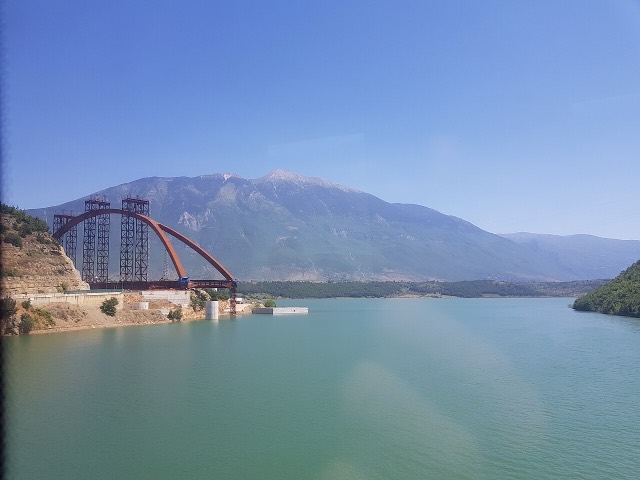
Electricity almost entirely from hydropower — which makes supply depend on rainfall.
Industria
The fastest-growing part of the economy, concentrated on the southern coast and in a short summer season.
Industria
A euroised, foreign-owned banking sector supervised by the Bank of Albania.
Industria
Italy is by a wide margin the largest partner; exports are led by textiles, minerals, oil and agri-food.
Industria
One of the largest contributors to growth, and the sector most exposed to tourism demand.
Industria
Money sent home by Albanians abroad — a large and stabilising share of national income.
Industria
Call centres and IT services for the Italian market, and a small but growing software sector.
Industria
Cut-make-trim contract manufacturing for Italian brands — long one of Albania's largest goods exports.
Industria
Chromium above all — Albania has long been among the larger world producers — plus copper and nickel.
Industria
Heavy onshore crude from Patos-Marinza, produced since the 1920s and refined at Ballsh.
Paese
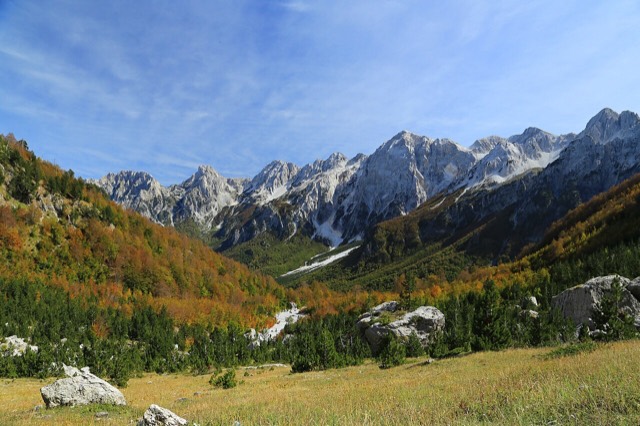
A mountainous country of about 2.4 million people on the Adriatic and Ionian seas, between Montenegro, Kosovo, North Macedonia…
Città · Tiranë
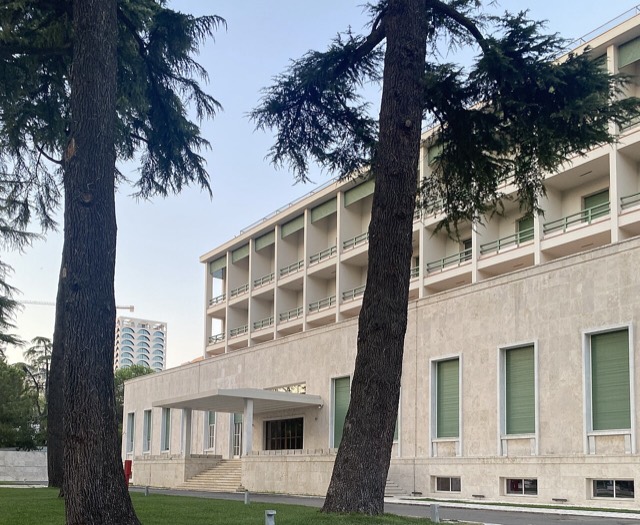
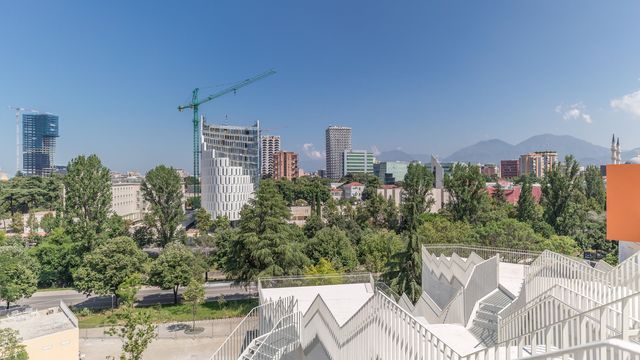
The capital: a fast-changing city of painted blocks, Ottoman survivals and new towers, under Mount Dajti.
Periodo storico
NATO membership in 2009, EU candidate status in 2014, and tourism growing into a central industry.
Industria
A large share of employment on very small holdings — the legacy of the 1991 land redistribution.
Industria
Electricity almost entirely from hydropower — which makes supply depend on rainfall.
Industria
The fastest-growing part of the economy, concentrated on the southern coast and in a short summer season.
Industria
A euroised, foreign-owned banking sector supervised by the Bank of Albania.
Porto · Durrës
The country's main commercial and passenger port, handling the large majority of Albanian seaborne trade.
Hai notato un errore in questa pagina? Le correzioni sono benvenute e vengono verificate rispetto al record di fonte. Indica cosa è sbagliato e, se possibile, da dove proviene il dato corretto.