Historische Stätte · Fier
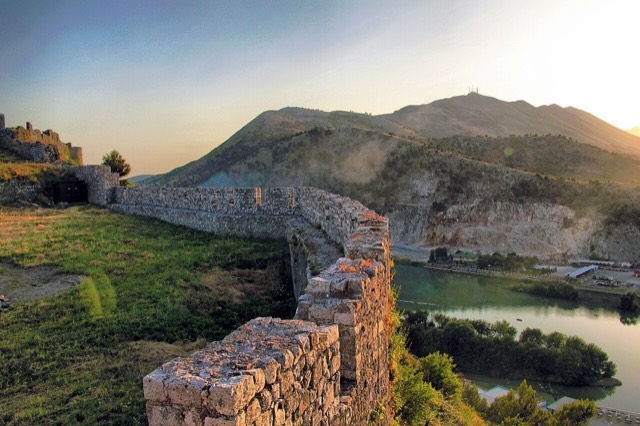
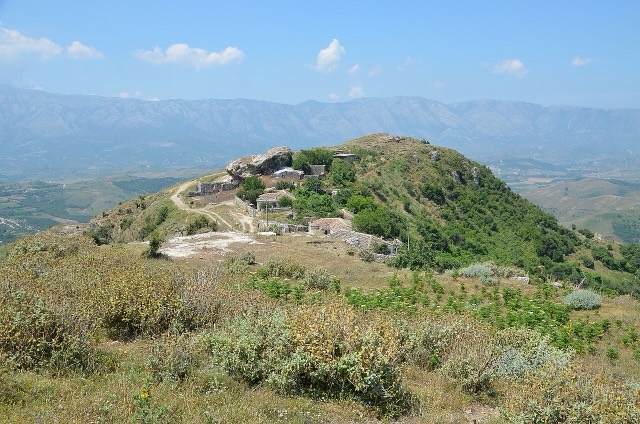
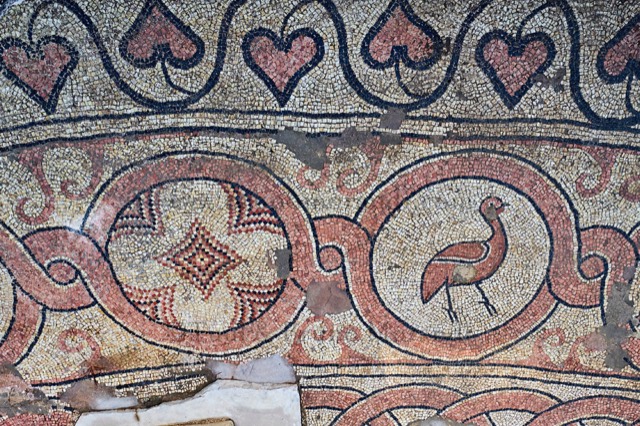
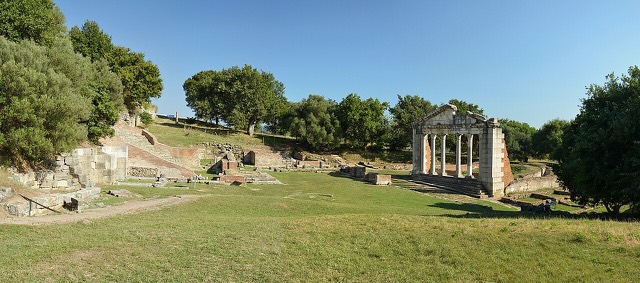
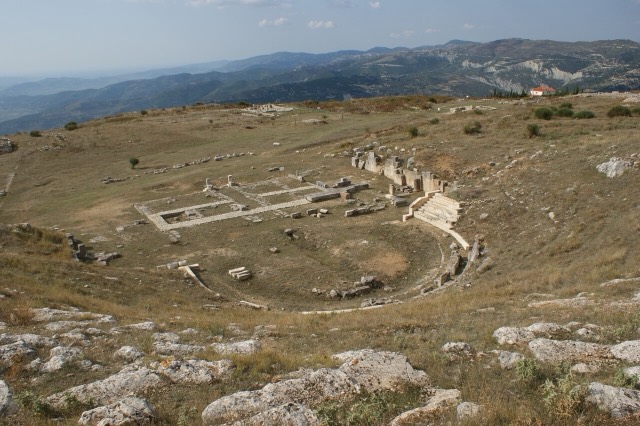
Byllis
The largest Illyrian city yet excavated, on a plateau above the Vjosa with five early Christian basilicas.
Jeder Kreis, jede Küste, jedes Jahrhundert
Geführte Ansicht
Neu in Albanien? Jede Seite beginnt mit einer einfachen Erklärung, die auch ein Zehnjähriger verstehen würde – bevor es ins Detail geht.
Expertenansicht
Sie kennen die Grundlagen bereits. Direkt zur Substanz, ohne die vereinfachten Erklärungen. Dies ist die Standardeinstellung.
Historische Epoche
The Indo-European tribes of the western Balkans, and the ancestors most Albanians claim.
Speichern
The Illyrians were groups of people who lived along the eastern side of the Adriatic Sea before the Romans arrived. They had kings, built hill towns, and were known as sailors and sometimes as pirates. Many Albanians consider them their ancestors, though scholars still debate the details.
The Illyrians were groups of people who lived along the eastern side of the Adriatic Sea before the Romans arrived. They had kings, built hill towns, and were known as sailors and sometimes as pirates. Many Albanians consider them their ancestors, though scholars still debate the details.
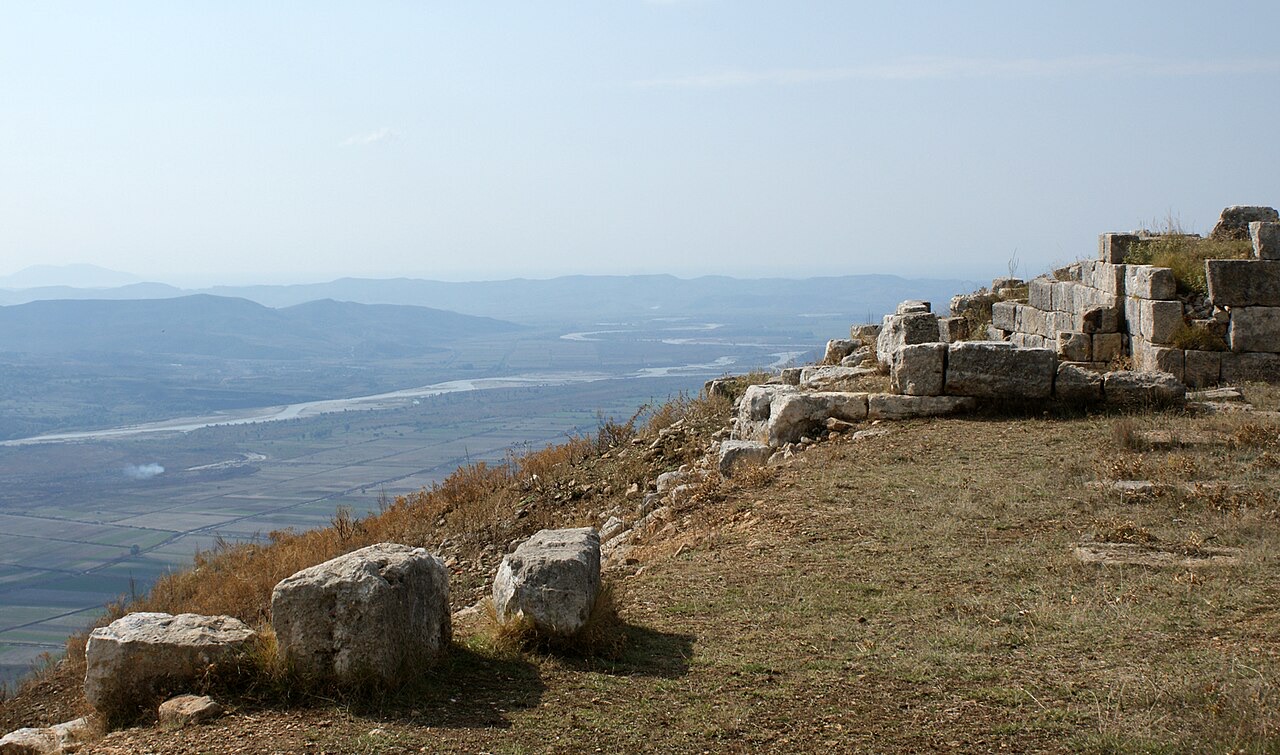
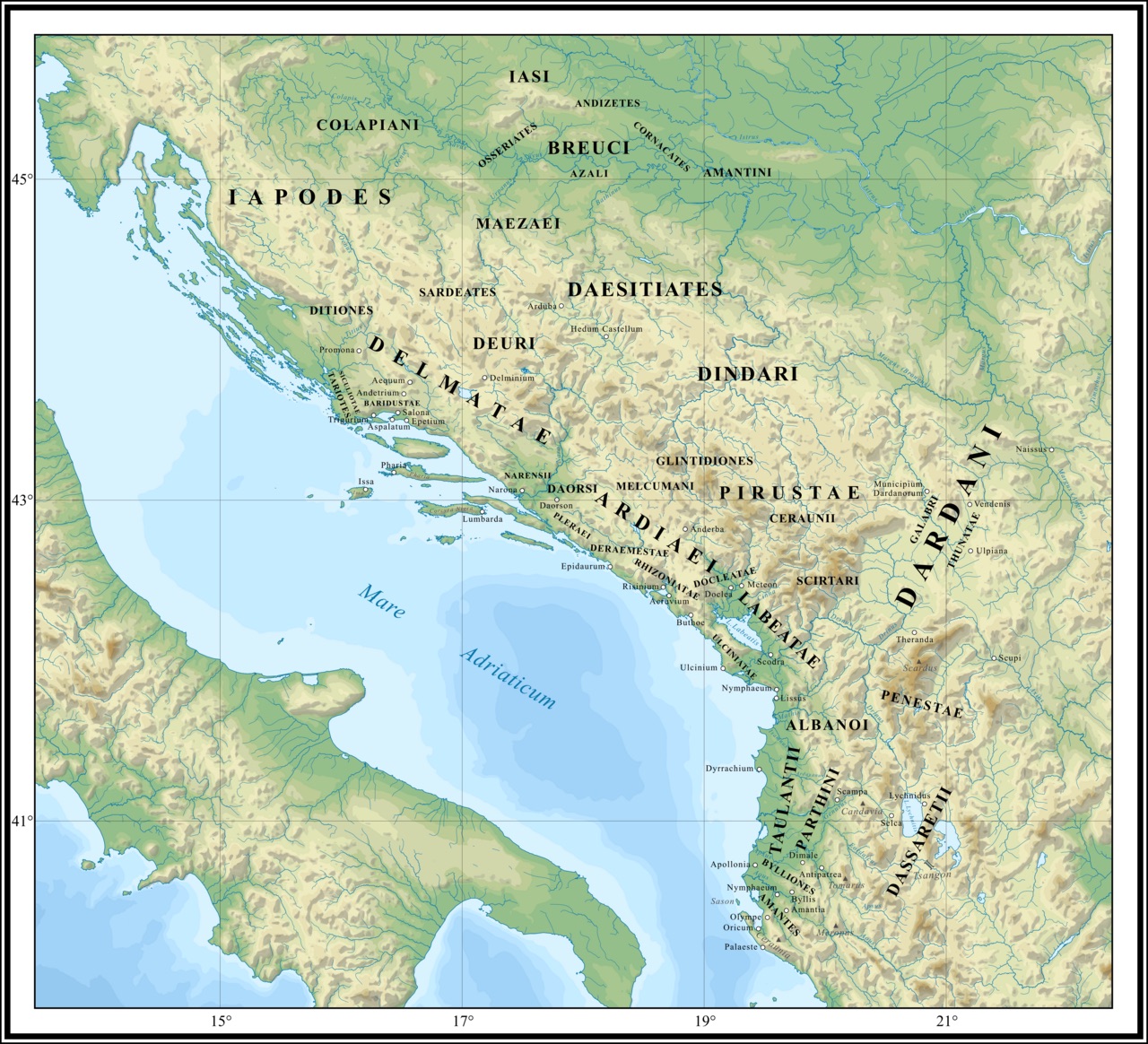
The Illyrians were a group of Indo-European-speaking peoples who inhabited the western Balkan Peninsula in ancient times. Ancient Greek and Roman authors identified their territory—called Illyria—as corresponding broadly to most of present-day Albania, Montenegro, Kosovo, much of Croatia and Bosnia and Herzegovina, western and central Serbia, and parts of Slovenia. The territory was bounded by the Adriatic Sea to the west, the Drava river to the north, the Morava river to the east, and the Ceraunian Mountains to the south. They constituted one of the three main Paleo-Balkan populations, alongside the Thracians and the Greeks.
The first written account of Illyrian people dates to the 6th century BC, in the works of the ancient Greek writer Hecataeus of Miletus. In the Macedonian historical record of the 6th and 5th centuries BC, the term 'Illyrian' had a fairly specific political meaning, denoting a kingdom on the north-western borders of Upper Macedonia. From the 5th century BC onward, the term was extended to describe a large ethnic group whose territory reached deep into the Balkan interior. Ancient Greeks clearly regarded the Illyrians as a distinct ethnos from both the Thracians and the Macedonians.
Modern scholars broadly agree that the peoples collectively labelled 'Illyrians' were not a culturally or linguistically homogeneous entity. It has been suggested that the Illyrian tribes never collectively identified as 'Illyrians' and likely used no collective nomenclature at all. The name 'Illyrians' appears to have originally belonged to a specific tribe in southern Illyria that was among the first to come into contact with the ancient Greeks, after which the Greeks applied the label, by a process of pars pro toto, to all neighbouring peoples sharing similar language and customs. The term last appears in the historical record in the 7th century AD, when it referred to a Byzantine garrison operating within the former Roman province of Illyricum.
The forms Illyrioi and Illyrii, used by Greek and Latin writers, are now considered likely misspellings of the original tribal name. Based on historically attested forms such as Úlloí and Hil(l)uri, the linguist Heiner Eichner reconstructed the native tribal name as *Hillurio-, derived from an older form *Hullurio-. Eichner interprets this ethnonym as translating to 'water snake', tracing it to the Proto-Indo-European root *ud-lo, meaning 'of water' or 'aquatic', which shares a common origin with the Ancient Greek word üllos, meaning 'fish' or 'small water snake'. The name exhibits a dl > ll sound shift through assimilation and carries the suffix -uri(o), also found in Illyrian place names such as Tragurium.
Eichner also highlights the semantic parallel between this ethnonym and the name of the Enchelei, which translates to 'eel-people', both names evoking aquatic snake-like animals. He further argues that the Ancient Greeks must have first learned this name from a tribe in southern Illyria, subsequently applying it more broadly to all related peoples in the region.
The Illyrians are understood to have emerged from the fusion of Proto-Indo-European-descended, Yamnaya-related population movements into the Balkans around 2500 BC with the pre-existing Balkan Neolithic population. This fusion initially produced 'proto-Illyrian' Bronze Age cultures. As these proto-Illyrian groups moved toward the Adriatic coast, they merged with populations of a pre-Illyrian substratum—the Enchelei may represent one such group—leading over time to the formation of the historically attested Illyrians.
Older Pan-Illyrian theories, which emerged in the 1920s and identified proto-Illyrians as the original inhabitants of a very large area extending into central Europe, have been dismissed by modern scholarship. These theories were linked to the racialist politics of their era, including Nordicism and Aryanism. No convincing archaeological evidence for significant migratory movements from the Urnfield-Lusatian culture into the western Balkans has been found. The existence of Illyrian place-name traces beyond the western Balkans—the phenomenon these theories sought to explain—remains without a clear scholarly consensus.
By the 7th century BC, at the beginning of the Iron Age, the Illyrians emerged as a recognisable ethnic group with a distinct material culture and art form. Various Illyrian tribes appeared under the influence of the Hallstatt cultures from the north and organised regional centres. Depending on local geography, the economic basis during the Iron Age was a combination of arable farming and livestock rearing.
Archaeogenetic studies have identified the Y-DNA haplogroup J2b2a1-L283 as a major paternal lineage among populations associated with the Illyrians. A 2018 study (Mathieson et al.) examined three samples from Dalmatia, including two Early and Middle Bronze Age samples from Veliki Vanik (near Vrgorac, dated 1631–1521 and 1618–1513 cal BCE) and one Iron Age sample (805–761 cal BCE) from Jazinka Cave in Krka National Park. These individuals showed approximately 60% Early European Farmer, 33% Western Steppe Herder, and 7% Western Hunter-Gatherer-related ancestry. The male individual from Veliki Vanik carried Y-DNA haplogroup J2b2a1-L283.
A 2022 study (Lazaridis et al.) examined 18 samples from the Cetina culture. All males but one carried Y-DNA haplogroup J-L283, with many further identified as J-L283 > Z597 > J-Y15058 > J-Z38240 > J-PH1602. The oldest J-L283 sample in that study was found at the Middle Bronze Age site of Shkrel in northern Albania, dating to as early as the 19th century BCE, making it the oldest known J-L283 find in the region historically associated with Illyria. The Cetina culture is understood by Freilich et al. (2021) as the vector by which this haplogroup spread across the eastern Adriatic from Croatia to Montenegro and northern Albania.
A 2022 study (Aneli et al.) based on Early Iron Age samples from Dalmatia found that Iron Age Illyrians shared high genetic affinity with the Daunians, part of the Iapygian group in Apulia, southeastern Italy, and with the 'autochthonous Roman Republicans'. Three Bronze Age males carrying J-L283 were also identified in the Late Bronze Age Nuragic civilization of Sardinia; the researchers interpreted this as indicating dispersal from the western Balkans toward Sardinia, possibly via an intermediary population on the Italian peninsula.
A 2026 archaeogenetic study by Davranoglou et al. investigated the relationship between modern Albanians and ancient western Balkan populations, including Iron Age groups traditionally associated with the Illyrians. The authors found that present-day Albanians derive a substantial proportion of their ancestry from pre-Roman and Roman-era populations of the western and central Balkans, and that medieval individuals from Albania show strong genetic continuity with modern Albanian populations.
The study identified continuity of several paternal lineages shared by modern Albanians and ancient western Balkan populations, including J2b-L283, R1b-BY611, R1b-PF7562, I-M223, and E-V13. Some of these lineages have ancient representatives in regions associated with Illyrian groups. The study placed the ancestors of modern Albanians within the same broader West Balkan genetic continuum as Illyrian-associated populations. The authors concluded that the genetic history of Albanians is consistent with substantial continuity from ancient Balkan populations, including those historically described as Illyrians.
Organised political realms emerged in southern Illyria earlier than in other parts of the region. One of the oldest known Illyrian kingdoms is that of the Enchelei, which appears to have reached its height in the 8th–7th centuries BC before declining around the 6th century BC. Their weakening led to their absorption into a newly established Illyrian realm by at latest the 5th century BC, from which the Dassaretii emerged, replacing the Enchelei in the lakeland area around Lychnidus. A number of modern scholars hold that the dynasty of Bardylis—the first attested Illyrian dynasty—was Dassaretan.
The Taulantii, another early Illyrian group, lived on the Adriatic coast of southern Illyria (present-day Albania), controlling at various times the plain between the Drin and the Aous rivers, including the area around Epidamnus/Dyrrhachium. In the 7th century BC they invoked the aid of Corcyra and Corinth against the Liburni; following the Liburni's defeat, the Corcyreans founded in 627 BC on the Illyrian mainland a colony called Epidamnus. The Taulantian kingdom reached its peak during the rule of Glaukias, between 335 and 302 BC. On the Neretva Delta, the Illyrian tribe of the Daors developed a strongly Hellenistic-influenced culture; their capital Daorson at Ošanići near Stolac was surrounded in the 4th century BC by megalithic stone walls five metres high, composed of large trapezoid stone blocks.
After Philip II of Macedon defeated Bardylis in 358 BC, killing 7,000 Illyrians and annexing territory up to Lake Ohrid, the Grabaei under Grabos II became the strongest state in Illyria. During the second part of the 3rd century BC, a number of Illyrian tribes united into a proto-state stretching from central present-day Albania to the Neretva river in Herzegovina, ruled from 250 BC by King Agron and financed largely by piracy. Following Agron's death in 231 BC, his wife Teuta assumed the regency for her stepson Pinnes. The Illyrian Wars of 229 BC, 219 BC, and 168 BC saw Rome progressively subdue Illyrian power; the campaign of 229 BC marked the first time the Roman Navy crossed the Adriatic to launch an invasion. Rome finally suppressed the last Illyrian kingdom when it defeated Gentius at Scodra in 168 BC.
After the Roman conquest, some Illyrian communities were organised in their pre-Roman locations under their own administrative units called civitates. Others were forcibly resettled: the Azali were transferred to frontier areas in northern Hungary following the Great Illyrian Revolt, while the Pirustae, skilled miners, were settled at the gold mines of Alburnus Maior in Dacia, where they formed their own communities. The Great Illyrian Revolt, an alliance of native peoples against Rome in the Roman province of Illyricum in the 1st century AD, is described chiefly by Velleius Paterculus in his Roman History and by Pliny the Elder in his biography of Octavius Augustus. Its two leaders were Bato the Breucian and Bato the Daesitiate. The revolt's defeat was followed by division of Illyria into the provinces of Pannonia in the north and Dalmatia in the south.
By the end of the 2nd century and beginning of the 3rd century CE, Illyrian populations had become highly integrated into the Roman Empire and formed a core population of its Balkan provinces. During the crisis of the Third Century, an elite faction of Illyrians serving in the Roman army along the Pannonian and Danubian frontiers rose to political prominence, producing many emperors from the late 3rd to the 6th century CE. These rulers are collectively known as the Illyrian Emperors and include the Constantinian, Valentinianic, and Justinianic dynasties. Gaius Messius Quintus Traianus Decius, a native of Sirmium, is usually recognised in historiography as the first Illyrian emperor. Inscriptions show that by the early imperial period many Illyrians had acquired Roman citizenship.
The term 'Illyrians' last appears in the historical record in the 7th century AD, in the Miracula Sancti Demetrii, referring to a Byzantine garrison in the former Roman province of Illyricum. In the acts of the Second Council of Nicaea in 787, Nikephoros of Durrës signed himself as 'Episcopus of Durrës, province of the Illyrians'. After 1204 references to Illyria as an administrative region in Byzantine literature cease, and the term came to refer specifically to the more restricted Albanian territory.
The languages spoken by the Illyrian tribes are extinct and very poorly attested. It is not established whether they belonged to the centum or the satem branch of Indo-European. No written records in Illyrian have been found; the language is known mainly through personal names and place names preserved in Greek and Latin inscriptions—the field of Illyrian onomastics. Three main onomastic provinces have been identified in contemporary research. The southern Illyrian or south-eastern Dalmatian province, the core of which corresponds to the territory of the Illyrii proprie dicti in classical sources, covers most of Albania, Montenegro, and their hinterlands, extending along the Adriatic coast from the Aous valley in the south to beyond the Neretva valley in the north. The central Illyrian or middle Dalmatian-Pannonian province covered a larger area including much of Bosnia, central Dalmatia, western Serbia, and Sandžak. A third northern province, the North Adriatic area, is more closely connected to the Venetic language than to Illyrian.
The Messapic language, spoken in ancient Apulia in southeastern Italy by the Iapygian tribes (Messapians, Daunii, and Peucetii), is widely considered either a dialect or a sister language of Illyrian and is thought to have reached Apulia through Illyrian migrations across the Adriatic. However, the surviving Illyrian material is too fragmentary for any firm conclusions. On both sides of the border between southern Illyria and northern Epirus, contact between Illyrian and Greek produced an area of bilingualism, with Illyrians more readily adopting Greek than vice versa. All Illyrian languages are believed to have been extinct by the 5th century AD.
The hypothesis that the Albanian language descended from Illyrian is frequently cited by scholars on geographic and historical grounds but has not been proven. An alternative hypothesis derives Albanian from Thracian. The available evidence is, in the words cited in the article, 'too meager and contradictory for us to know whether the term Illyrian even referred to a single language'. The ancestor dialects of Albanian are thought to have survived somewhere along the boundary of Latin and Ancient Greek linguistic influence, known as the Jireček Line. What happened to the Illyrians and their languages after late antiquity remains a matter of scholarly debate.
The Illyrians were polytheistic, worshipping many gods associated with natural forces. The chief object of prehistoric Illyrian cult appears to have been the Sun, depicted through geometric symbols—the spiral, the concentric circle, and the swastika—and through animal figures, particularly birds, serpents, and horses. Water-fowl and horse symbols were more common in northern areas, while the serpent was more prevalent in the south. No single most prominent deity has been identified for all Illyrian tribes; many deities appear only in specific regions.
Named Illyrian deities include Dei-pátrous, worshipped as the Sky Father in Illyris; Prende, a love-goddess and consort of the thunder-god Perendi; En or Enji, a fire-god; Redon, a tutelary deity of sailors attested on inscriptions in coastal towns including Lissus, Daorson, Scodra, and Dyrrhachium; and Medaurus, the protector deity of Risinium, represented by a monumental equestrian statue on the city's acropolis. In Dalmatia and Pannonia, the Roman deity Silvanus—depicted with the iconography of Pan—was one of the most widely practised cults during the Roman period. In the hot springs of Topusko in Pannonia Superior, altars were dedicated to Vidasus and Thana, identified with Silvanus and Diana respectively.
The most common Iron Age burial form was the tumulus or mound burial. In the southern parts of the Balkans, the dead were interred in large stone or earthen tumuli—natively called gromile—which in Herzegovina reached monumental proportions, more than 50 metres wide and 5 metres high. Archaeological finds from these tumuli include weapons, ornaments, garments, and clay vessels. Human sacrifice is recorded in Illyrian contexts: Arrian records the Illyrian chieftain Cleitus sacrificing three boys, three girls, and three rams before his battle with Alexander the Great. The Illyrians also held beliefs in the power of the evil eye, protective amulets, and animal totems, with the serpent among the most important.
The Komani-Kruja culture is an archaeological culture attested from late antiquity through the Middle Ages in central and northern Albania, southern Montenegro, and similar sites in the western parts of North Macedonia. Its settlements were typically built below hillforts along the Lezhë (Praevalitana)–Dardania and Via Egnatia road networks connecting the Adriatic coast with the central Balkan Roman provinces. The type site is Komani, with its associated fort on the nearby Dalmace hill in the Drin river valley; Kruja and Lezha are also significant sites. Material finds from Dalmace and other sites span a wide geographical range, including Byzantine, Sicilian, Avar-Slavic, Hungarian, Crimean, and possibly Merovingian and Carolingian objects.
The population of Komani-Kruja is described in scholarship as a local, non-Slavic western Balkan people connected to the Justinianic military system of forts. Within Albanian archaeology, based on the continuity of pre-Roman Illyrian forms in locally produced grave objects, the population has been interpreted as descended from local Illyrians who re-asserted independence from Rome and formed the core of the later historical region of Arbanon. This nationalist interpretation has been described by the scholar John Wilkes as 'a highly improbable reconstruction of Albanian history' and has been roundly rejected by non-Albanian scholars. Other scholars argue the culture should not be assigned to a single ethnic group but placed in a broader Roman-Byzantine or Christian framework.
A survey completed in 2014, following research expansion after 2009, revealed that Komani occupied an area of more than 40 hectares—larger than previously believed. Its oldest settlement phase dates to the Hellenistic era, with its main development beginning in late antiquity and continuing into the Middle Ages, reaching the 13th–14th centuries. During the 7th century, as Byzantine authority was re-established after Avar-Slavic raids, Komani's population increased and a new local elite emerged, with new settlements and churches established. Winnifrith (2020) described this population as the survival of a 'Latin-Illyrian' culture that later appeared in historical records as Albanians and Vlachs, noting that the geographical conditions of northern Albania—hilly and mountainous terrain—may have favoured the continuation of a distinct language. The thesis connecting Komani-Kruja directly to the first definite medieval attestation of Albanians in the 11th century remains, in the words of the article, an untestable hypothesis, as no historical sources exist to confirm the link.
Historische Stätte · Fier
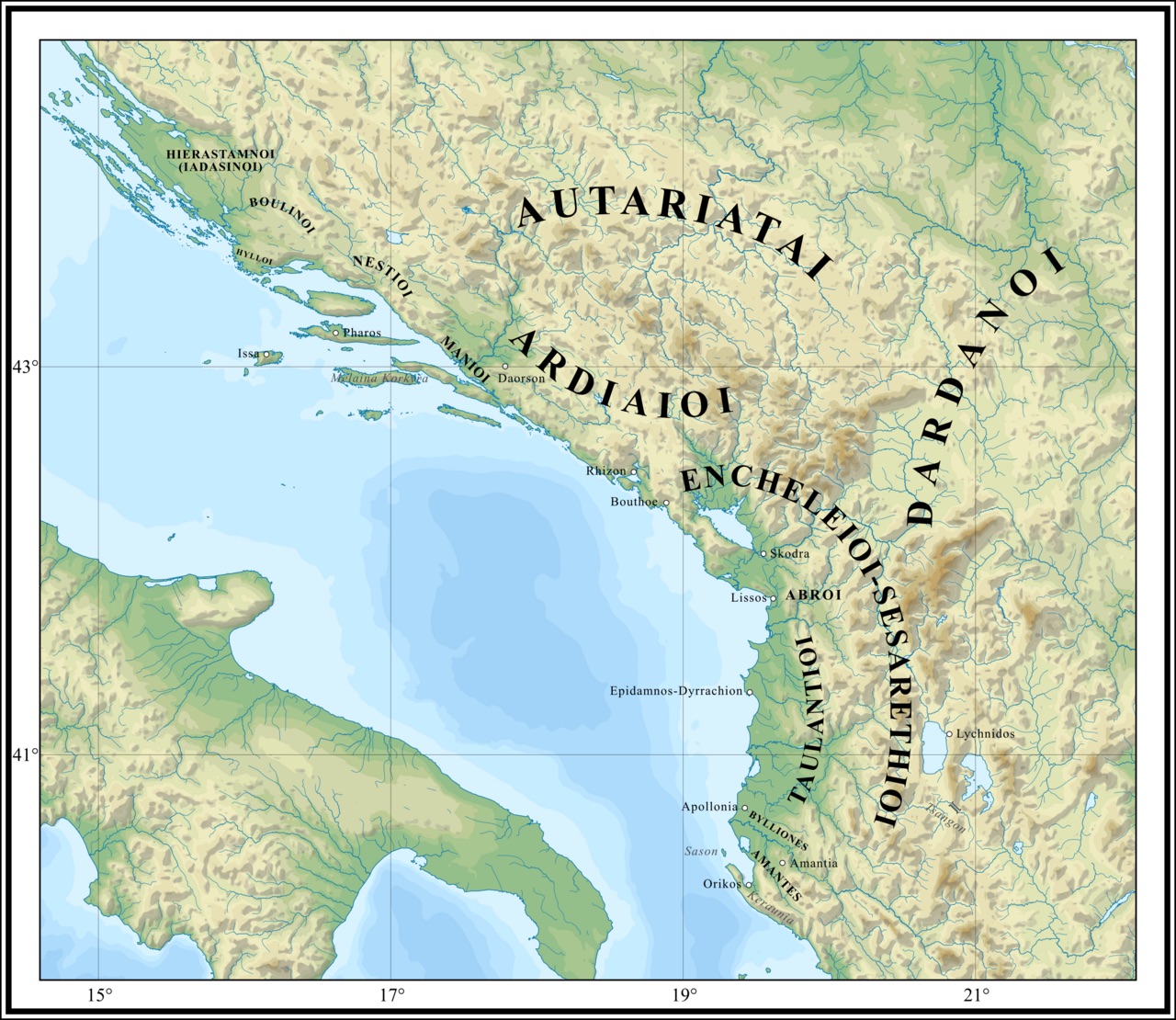
The largest Illyrian city yet excavated, on a plateau above the Vjosa with five early Christian basilicas.
Historische Stätte · Shkodër
The rock fortress above the meeting of three rivers, and the setting of Albania's best-known legend.
Historische Stätte · Vlorë
An Illyrian hill city whose stadium — cut into the slope — is among the best preserved in the region.
Betreff
An independent branch of the Indo-European family with no close living relative, written in a 36-letter Latin alphabet.
Betreff
Illyrian kingdoms, Roman roads, five Ottoman centuries, twenty-eight years of independence, forty-six years of the strictest…
Historische Epoche
Cave settlement at Konispol, and one of Europe's oldest lakeside pile villages under Lake Ohrid.
Erläuterung
Illyrians, Greek colonists and Rome, layered on the same coastline for a thousand years.
Etwas falsch auf dieser Seite? Korrekturen sind willkommen und werden gegen den Quelldatensatz geprüft. Bitte mitteilen, was falsch ist und, wenn möglich, woher die richtige Angabe stammt.