موقع تاريخي · Gjirokastër
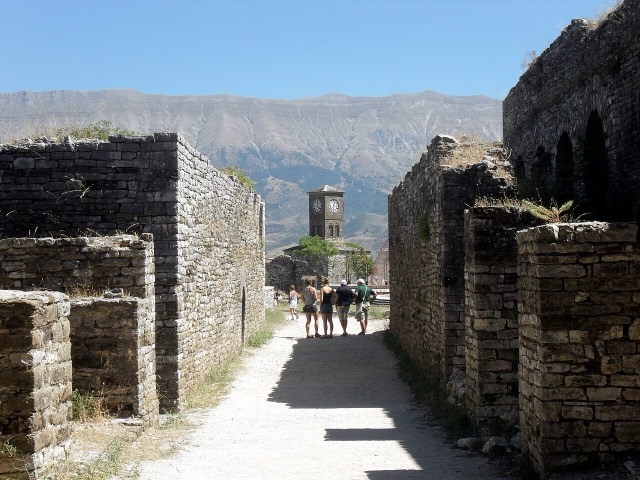
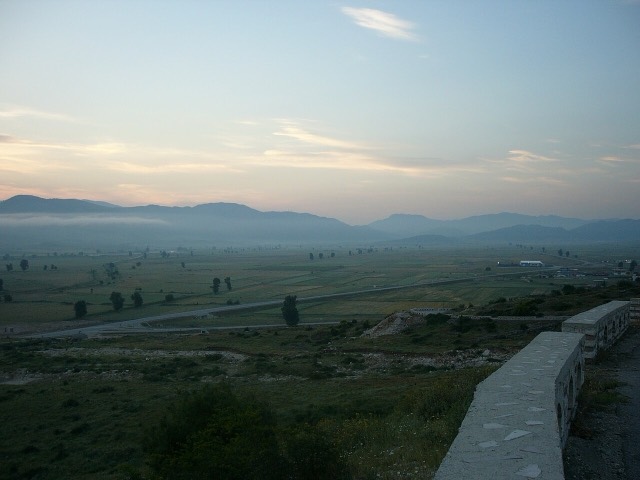
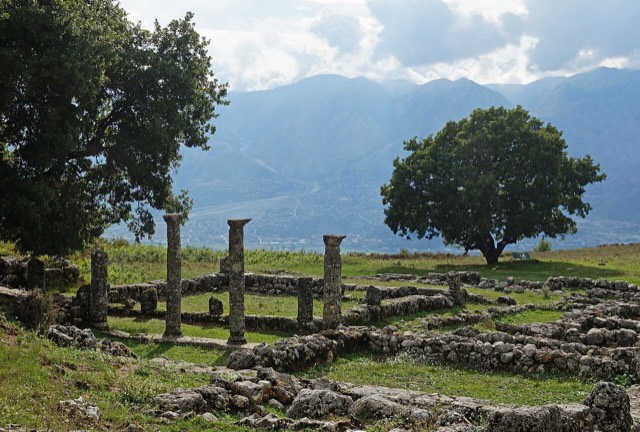
Antigonea
A short-lived Epirote city founded by King Pyrrhus and burned by Rome in 167 BC.
كل مقاطعة، كل ساحل، كل قرن
عرض إرشادي
هل أنت جديد على ألبانيا؟ تفتتح كل صفحة بشرح مبسّط يمكن قراءته لطفل في العاشرة من عمره، قبل أن تبدأ التفاصيل.
عرض للمتخصصين
أنت تعرف الأساسيات بالفعل. مباشرةً إلى الجوهر، مع إخفاء الشروح المبسّطة. هذا هو الوضع الافتراضي.
المحافظة
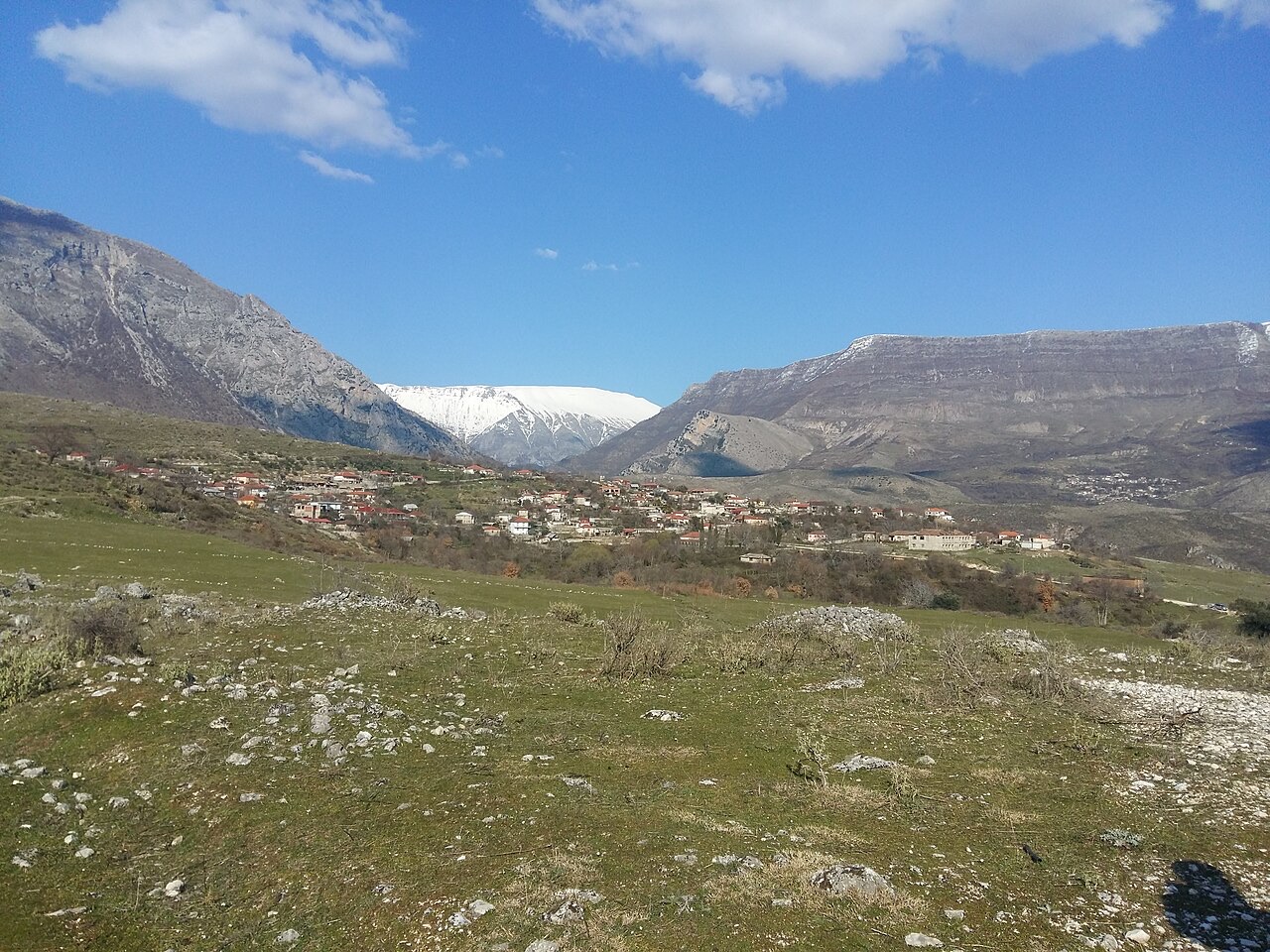
The southern mountain county of the Drino and Vjosa valleys, with a UNESCO stone city.
حفظ
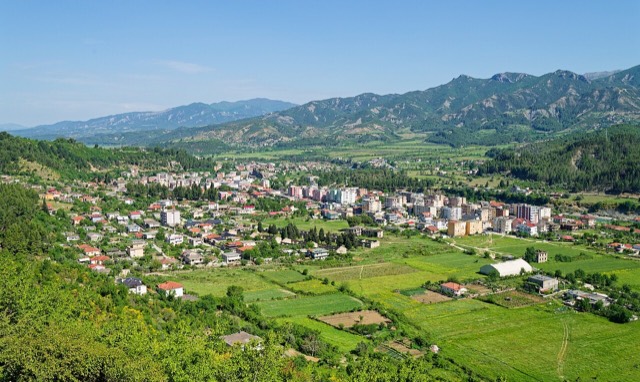
Gjirokastër County is in the south, in the mountains near Greece. Its main town is built of grey stone and has a huge castle. The Vjosa, one of the last wild rivers in Europe, runs through the county.
Gjirokastër County is in the south, in the mountains near Greece. Its main town is built of grey stone and has a huge castle. The Vjosa, one of the last wild rivers in Europe, runs through the county.
The city appears in historical records for the first time under the medieval Greek name Argyrókastron (Αργυρόκαστρον), recorded by John VI Kantakouzenos in 1336. The name combines argyrón (ἀργυρόν, meaning 'silver') with kástron (κάστρον), derived from Latin castrum, meaning 'castle' or 'fortress'; the full meaning is therefore 'silver castle'. Byzantine chronicles also used the variant Argyropolýchni (Αργυροπολύχνη, meaning 'silver town'), and the city was alternatively known in medieval sources as Argyropolis (Ἀργυρόπολις, 'Silver City').
The definite Albanian form of the name is Gjirokastra; in the Gheg Albanian dialect it appears as Gjinokastër. Both Albanian forms derive from the Greek original. During the Ottoman era the town was known in Turkish as Ergiri, and also Ergiri Kasrı in official usage. The theory that the name derives from a legendary princess called Argjiro is classified by scholars as folk etymology, since the princess is said to have lived in the 15th century, well after the name is first attested.
Archaeological evidence places the earliest identifiable inhabitants of the Gjirokastër area as the Chaonians, an ancient Greek tribe belonging to the Epirote group. In antiquity, the main local urban centre was at Antigonia, approximately 5 kilometres from modern Gjirokastër on the opposite bank of the river Drino. Pottery artifacts dating to the early Iron Age have been found in the region, crafted in a style that first appeared in the late Bronze Age at Pazhok in Elbasan County.
Nicholas Hammond has argued that the region was occupied by a mosaic of small Phrygian principalities from roughly 1150 BCE to around 850 BCE, with the principality centred at Vodhinë. The first fortification on the hill where the present castle stands dates to the 5th–6th centuries CE, during the period of Slavic migrations into the Balkans. This structure was expanded in the 9th–10th centuries, and the first clear signs of settled urban development within the castle area date to the 13th–14th centuries.
In the medieval period Gjirokastër formed part of the Despotate of Epirus. Its first recorded mention by the name Argyrokastro, by John VI Kantakouzenos in 1336, notes that the city remained loyal to the Byzantine Emperor during a local Epirote rebellion in favour of Nikephoros II Orsini. The Albanian Zenebishi clan, first recorded as land holders in the Angevin holdings in Albania in 1304, had established control over the city by the end of the 14th century. According to Laonikos Chalkokondyles, Albanian clans from the area of Durrës had already moved southward and taken control of much of the Gjirokastër region before 1336.
In 1399, Esau de' Buondelmonti, the Italian ruler of Ioannina and an Ottoman ally, assembled forces from Ioannina, Zagori, Dryinoupolis, and Gjirokastër along with the Mazaraki and Malakasi clans to move against Gjon Zenebishi. He was ambushed, defeated, and captured near Dhivër, a victory that secured Gjirokastër for Zenebishi and established it as his capital. Gjon Zenebishi died in 1417 and was succeeded by his son Simon. The Ottomans besieged the city almost immediately; Simon temporarily fled to Ioannina, returned when the siege failed, but eventually surrendered the city to Ottoman forces. By 1419 Gjirokastër had become the seat of the Sanjak of Albania, and the surrounding territory was known as Zenebish-ili, meaning 'land of Zenebishi'.
Following Ottoman acquisition the city became administratively significant as the seat of the Sanjak of Albania. During the Albanian Revolt of 1432–36 it was besieged by forces under Depë Zenebishi, but the rebels were defeated by Ottoman troops led by Turahan Bey. In the 1570s, local nobles Manthos Papagiannis and Panos Kestolikos discussed the possibility of an anti-Ottoman armed struggle with John of Austria and other European rulers, representing themselves as spokesmen for enslaved Greece and Albania, though the initiative produced no result.
The Ottoman traveller Evliya Çelebi, who visited in 1670, recorded that the city then contained around 2,000 houses distributed across eight hills, along with eight mosques, three churches, 280 shops, five fountains, and five inns. He heard the traditional Albanian lament known as the vajtim performed by a professional mourner one Sunday, and described the city as so loud that he called it the 'city of wailing'. Between the 16th century and the early 19th century, the city's religious composition shifted from overwhelmingly Christian to majority Muslim, driven both by conversion among the urban population and by an influx of Muslim converts from the surrounding countryside. Gjirokastër also became a significant centre for the Bektashi Sufi order, particularly in relation to the spread and literary activity of that order.
In 1811 Gjirokastër was incorporated into the Pashalik of Yanina under Ali Pasha of Ioannina, the Albanian-born ruler who built a semi-autonomous fiefdom across the southwestern Balkans until his death in 1822. In 1833 Albanian rebels seized the town, compelling the Ottoman government to accept rebel terms. After the pashalik fell in 1868 the city served as capital of the sanjak of Ergiri. On 23 July 1880, southern Albanian committees of the League of Prizren held a congress in the city, resolving that if Albanian-populated Ottoman territories were ceded to neighbouring states, they would revolt.
In early March 1908 the binbashi of Gjirokastër was assassinated by Çerçiz Topulli and his followers. During the period 1909–1912 the Albanian population was split between urban liberals who sought cooperation with the Greeks and nationalists who formed guerrilla bands in the countryside. When the Ottomans retreated during the First Balkan War of 1912–1913, the Hellenic Army took the city. Under the Treaty of London of 1913 and the Protocol of Florence of 17 December 1913, Gjirokastër was awarded to the newly independent Albanian state. The local Greek population, represented by Georgios Christakis-Zografos, convened the Panepirotic Assembly in Gjirokastër in protest and established the short-lived Autonomous Republic of Northern Epirus in 1914, with Gjirokastër as its capital, demanding either local autonomy or occupation by Great Power forces for the districts of Gjirokastër, Sarandë, and Korçë.
In April 1939 Italy occupied Gjirokastër following its invasion of Albania. On 8 December 1940, during the Greco-Italian War, the Hellenic Army entered the city and remained for five months. Following the capitulation of Greek and Allied forces to Nazi Germany in April 1941, the city returned to Italian command. After Italy signed the Armistice of Cassibile in September 1943, German forces took control of Gjirokastër before it was eventually returned to Albanian control in 1944.
The Albanian writer Ismail Kadare drew on the city's wartime experience in his novel Chronicle in Stone, which recounts the Italian and Greek occupations of the city during the Second World War and describes the customs and daily life of its inhabitants. Musine Kokalari, another writer from Gjirokastër, published in 1941 a collection of ten prose tales written in her native Gjirokastrian dialect, titled As my old mother tells me, which documented the daily struggles of women in the city and the prevailing customs of the region.
After the war, the communist government developed Gjirokastër as an industrial and commercial centre. Because the city was the birthplace of People's Socialist Republic of Albania leader Enver Hoxha, who had been born there in 1908, it was elevated to the status of a 'museum town' and its architectural heritage was officially protected. Hoxha's house was converted into a museum. The city was one of only a few Albanian urban centres preserved from modernising building programmes in the 1960s and 1970s, alongside Berat.
The Cultural Revolution imposed by the communist government in 1967 had severe consequences for the city's religious buildings. Of 15 tekkes and mosques that had been functional in the city in 1945, 13 were destroyed or closed in 1967; only the Gjirokastër Mosque, built in 1757, survived. A madrasa that had operated continuously in the city since 1727 was also closed in 1967 after 240 years of uninterrupted function. The demolition of a monumental statue of Enver Hoxha in Gjirokastër by members of the local Greek community in August 1991 marked the end of the one-party state; according to the article, it was the last such statue to be demolished in Albania during the fall of communism, occurring on 28 July 1991.
Gjirokastër suffered severe economic difficulties following the end of communist rule in 1991. In the spring of 1993 the region became a centre of open conflict between members of the Greek minority and Albanian police. The city was then severely affected by the 1997 collapse of a large pyramid scheme that destabilised the entire Albanian economy. Gjirokastër became a focal point of rebellion against the government of Sali Berisha, with violent anti-government protests eventually contributing to Berisha's resignation. On 16 December 1997, Hoxha's former house-museum was damaged by unknown attackers but was subsequently restored.
In 2010, the Greek economic crisis created further difficulties for the city, as many Albanian emigrants working in Greece lost employment and returned home, reducing remittance income. The city's population fluctuated between approximately 42,000 and 47,000 during the 2000s. According to the 2011 census, Gjirokastër Municipality had 28,673 residents across an area of 469.55 square kilometres; the city itself recorded 19,836 inhabitants. The 2011 census results were, however, affected by a minority boycott, and the Council of Europe's Advisory Committee on the Framework Convention for the Protection of National Minorities advised that the results should be treated with the utmost caution.
Gjirokastër is built on the slopes surrounding its citadel, which sits on a commanding plateau. Although city walls date to the third century and the city is first mentioned in the 12th century, the majority of surviving buildings date from the 17th and 18th centuries. Typical houses are tall stone-block structures, up to five storeys high, with both external and internal staircases. The lower storey holds a cistern and stable; the upper storeys contain guest rooms, family rooms with fireplaces, and accommodation for extended families connected by internal stairs. The style is thought to derive from fortified country houses typical of southern Albania, and the use of flat dressed-stone roof tiles has given the city the informal name 'City of Stone'. A similar architectural style is found in the Pelion district of Greece.
Gjirokastër Fortress dominates the town and overlooks the strategically important valley route. It contains a military museum with captured artillery and memorabilia of the communist resistance against German occupation, including a captured United States Air Force aircraft. The fortress has five towers and includes a clock tower, a church, water fountains, and horse stables. Its northern section was converted into a prison by King Zog I's government and subsequently held political prisoners during the communist period. The old Ottoman bazaar, originally built in the 17th century and rebuilt in the 19th century after a fire, is dominated by the Gjirokastër Mosque of 1757. More than 500 homes are preserved as cultural monuments.
Gjirokastër was first proposed for UNESCO World Heritage listing in 1988, but experts from the International Council on Monuments and Sites identified a number of modern constructions that detracted from the historic core. The historic centre was finally inscribed in 2005, fifteen years after the original nomination. The National Folklore Festival, held at the fortress every five years, began in 1968. The Greek-language newspaper Laiko Vima, founded in 1945, is published in the city; it was the only Greek-language printed publication permitted during the People's Socialist Republic of Albania.
موقع تاريخي · Gjirokastër
A short-lived Epirote city founded by King Pyrrhus and burned by Rome in 167 BC.
مدينة · Gjirokastër
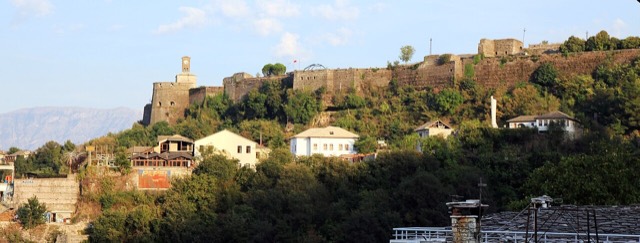
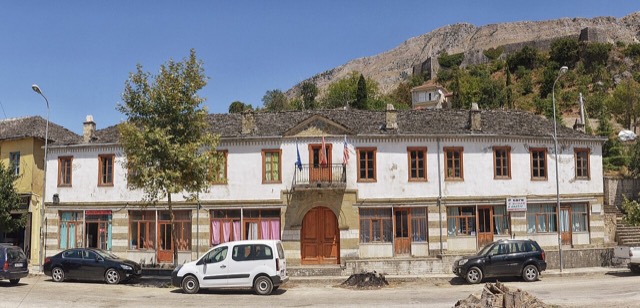
The 'stone city': slate-roofed tower houses on a steep slope beneath one of the Balkans' largest castles.
موقع تاريخي · Gjirokastër
One of the largest castles in the Balkans, holding an artillery gallery and a captured US aircraft.
نهر · Gjirokastër
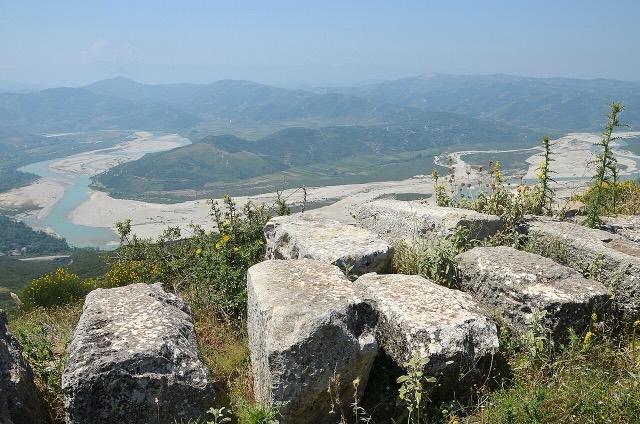
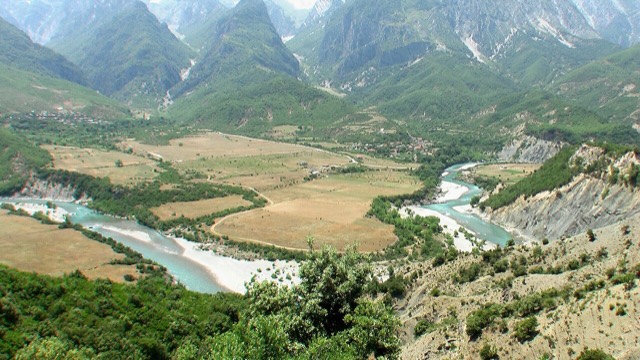
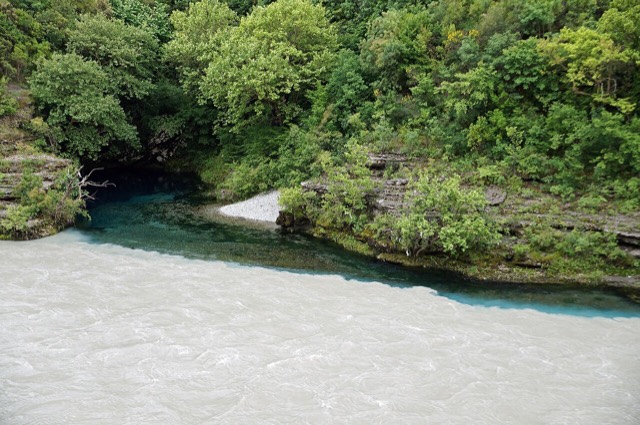
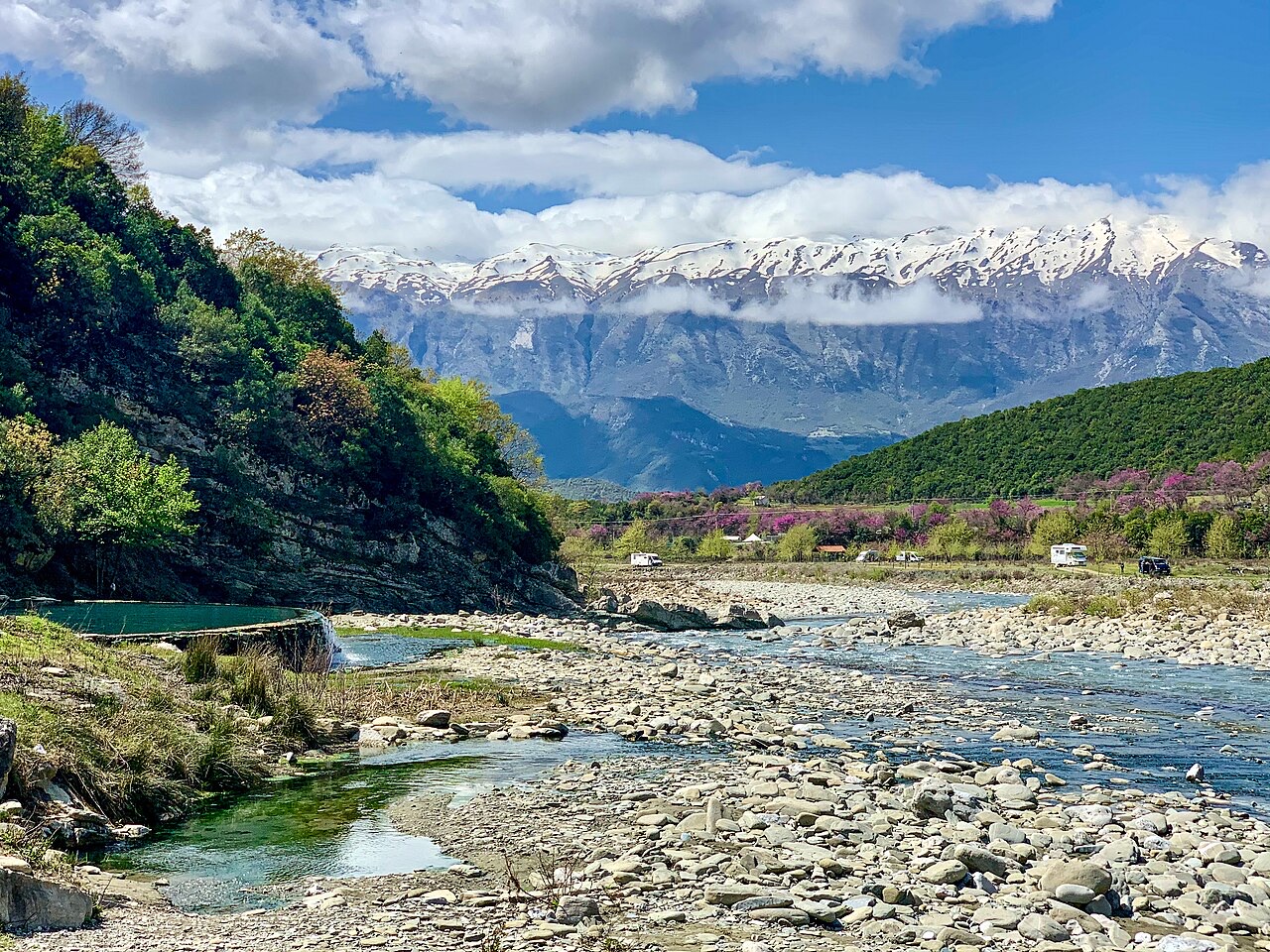
One of the last large free-flowing rivers in Europe, declared a Wild River National Park in March 2023.
منطقة محمية · Gjirokastër
Declared in March 2023, Europe's first national park built around a whole free-flowing river system.
بلدة · Gjirokastër
A valley of villages south of Gjirokastër with a large Greek-speaking population.
بلدة · Gjirokastër
A small Vjosa-side town known for its fruit preserves, thermal baths and polyphonic singing.
ينبوع · Gjirokastër
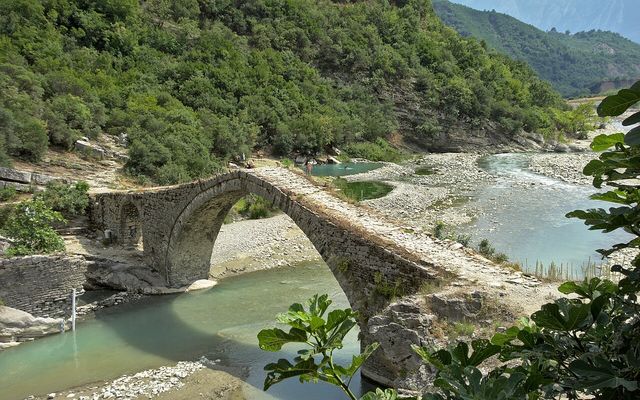
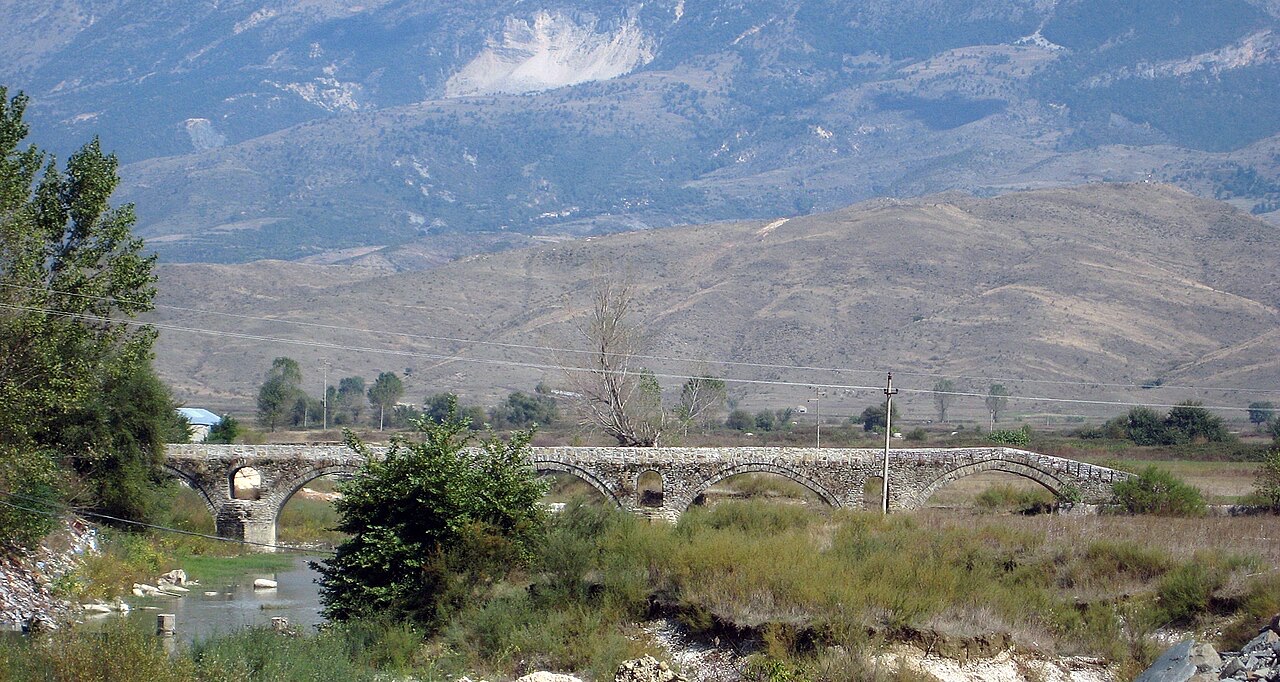
Sulphur pools beside the Ottoman Katiu bridge, at the mouth of the Lengarica canyon.
بلدة · Gjirokastër
A hill town below a castle built by Ali Pasha for his sister, opposite Gjirokastër.
The public university of the southern mountains.
ثمة خطأ في هذه الصفحة؟ نرحب بالتصويبات وتُراجَع في مواجهة سجل المصدر. أخبرنا بما هو خاطئ، وإن أمكن، بالمكان الذي يأتي منه الرقم الصحيح.