历史遗址 · Gjirokastër
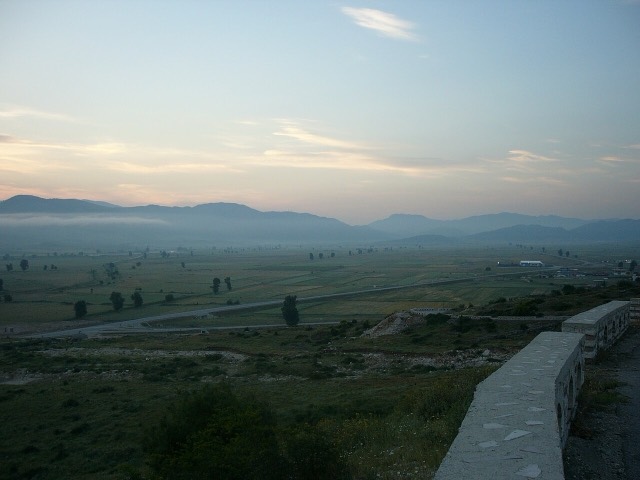
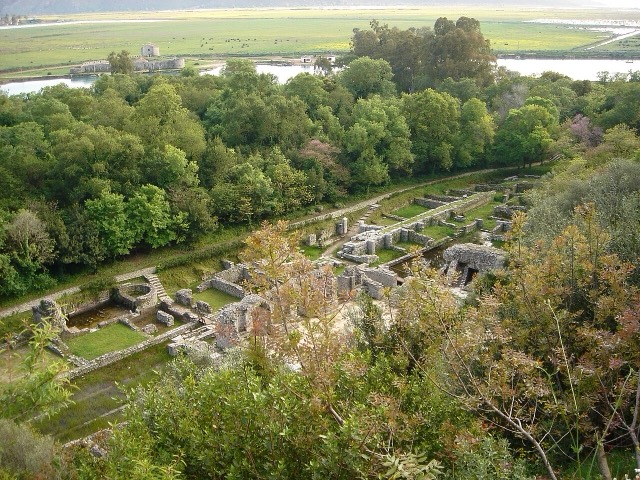
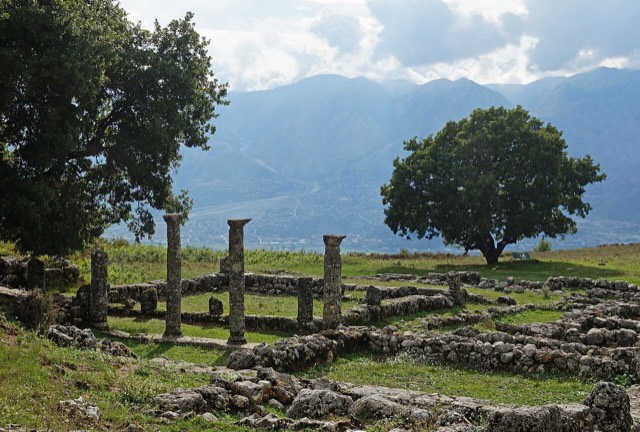
Antigonea
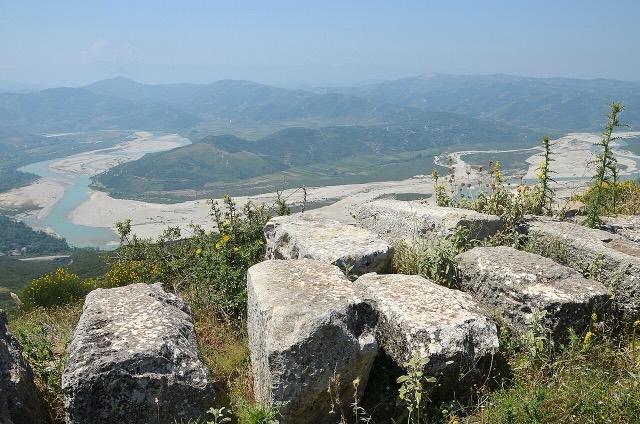
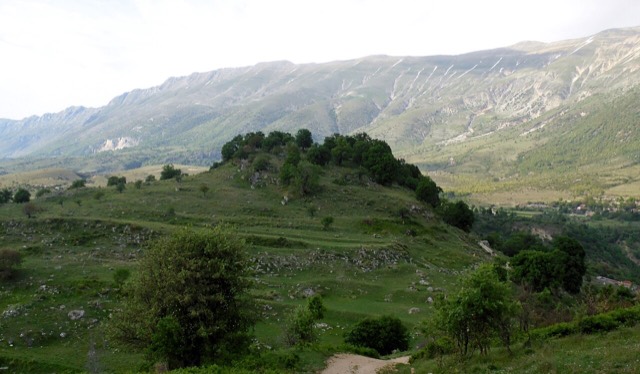
A short-lived Epirote city founded by King Pyrrhus and burned by Rome in 167 BC.
每个县、每段海岸、每个世纪
引导视图
初次了解阿尔巴尼亚?每个页面均以通俗易懂的说明开篇——即便是十岁的孩子也能读懂——随后再展开详细内容。
专业视图
您已掌握基础知识。直接进入正题,简明解释默认隐藏。此为默认模式。
城市
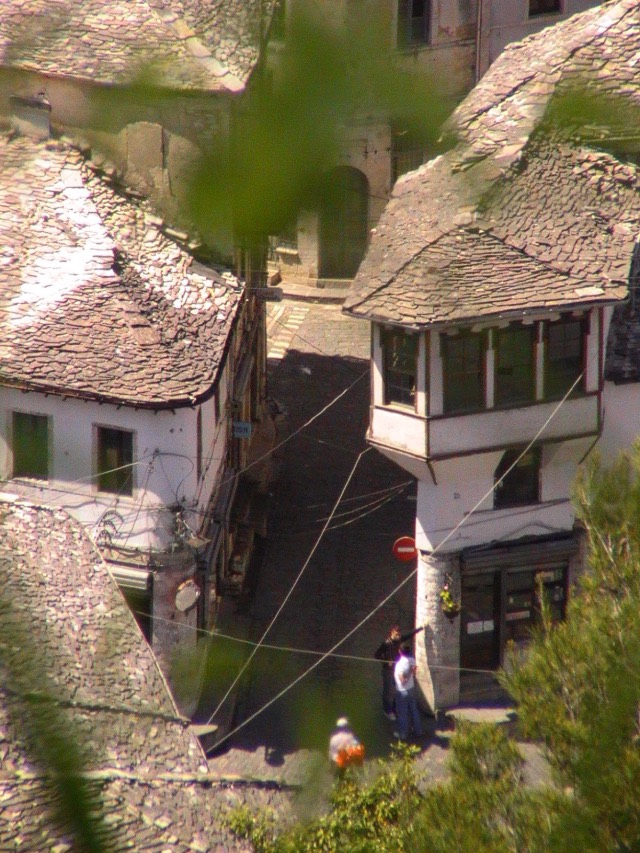
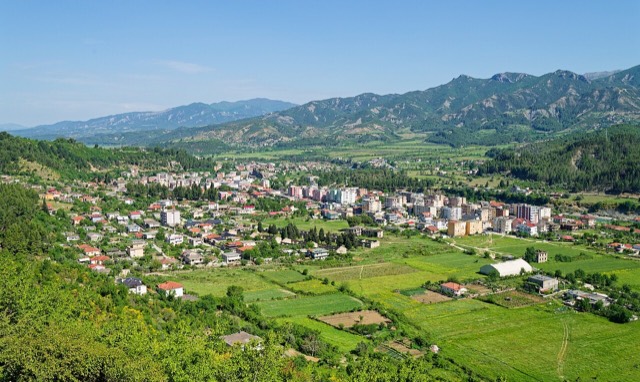
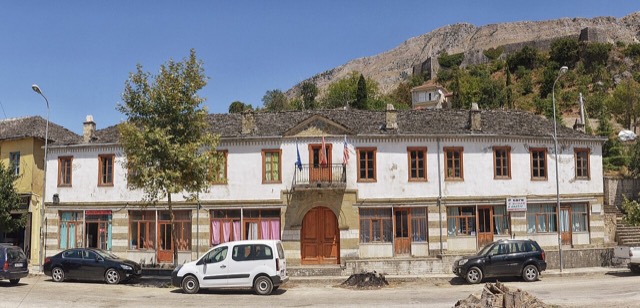
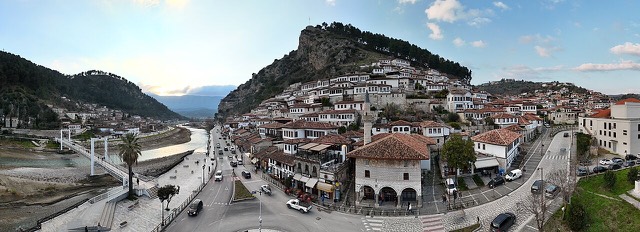
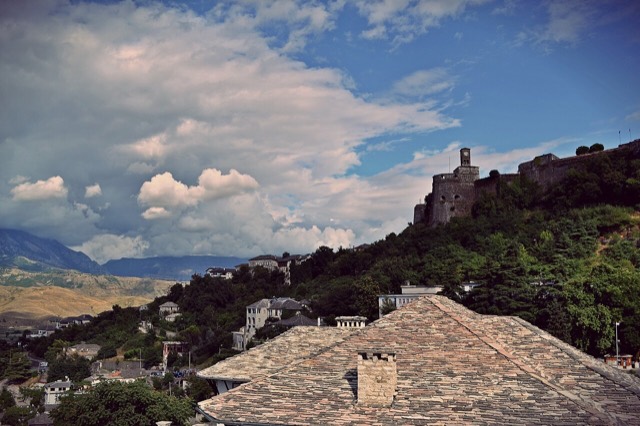
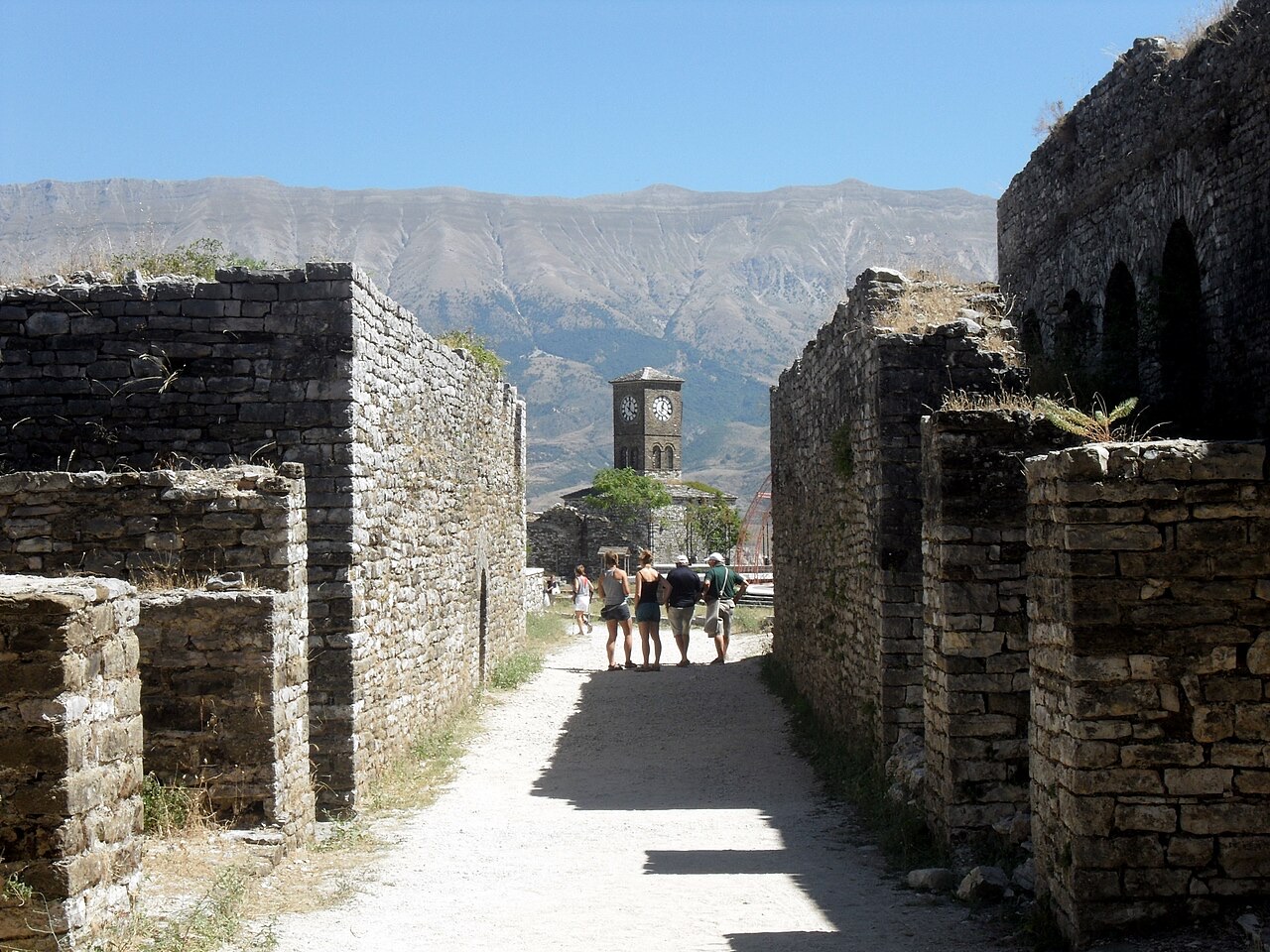
The 'stone city': slate-roofed tower houses on a steep slope beneath one of the Balkans' largest castles.
保存
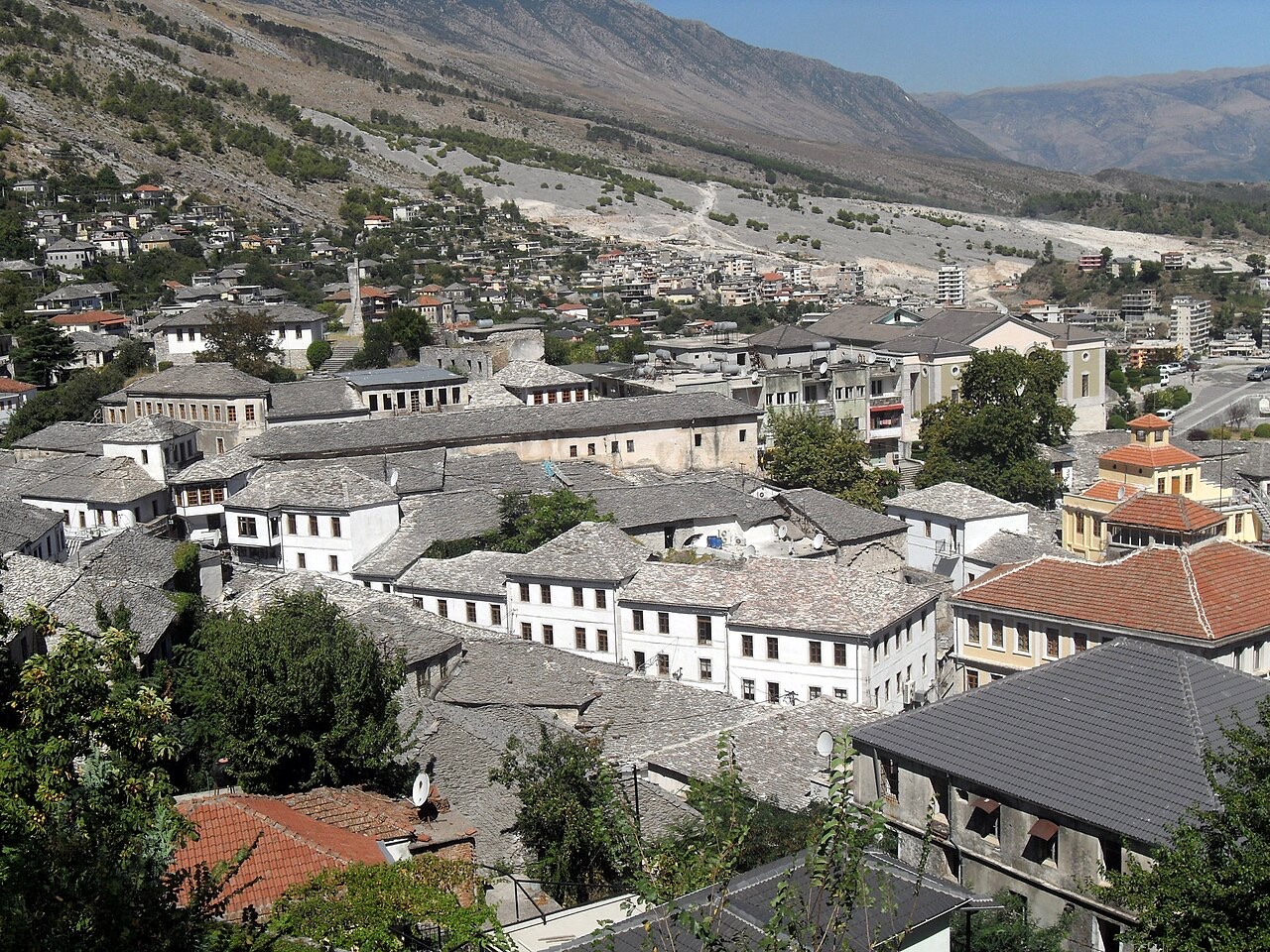
Gjirokastër is built out of grey stone on the side of a mountain, so from a distance the roofs look like silver scales. It has a huge castle with old weapons and an American spy plane inside. The writer Ismail Kadare and the dictator Enver Hoxha were both born here.
Gjirokastër is built out of grey stone on the side of a mountain, so from a distance the roofs look like silver scales. It has a huge castle with old weapons and an American spy plane inside. The writer Ismail Kadare and the dictator Enver Hoxha were both born here.
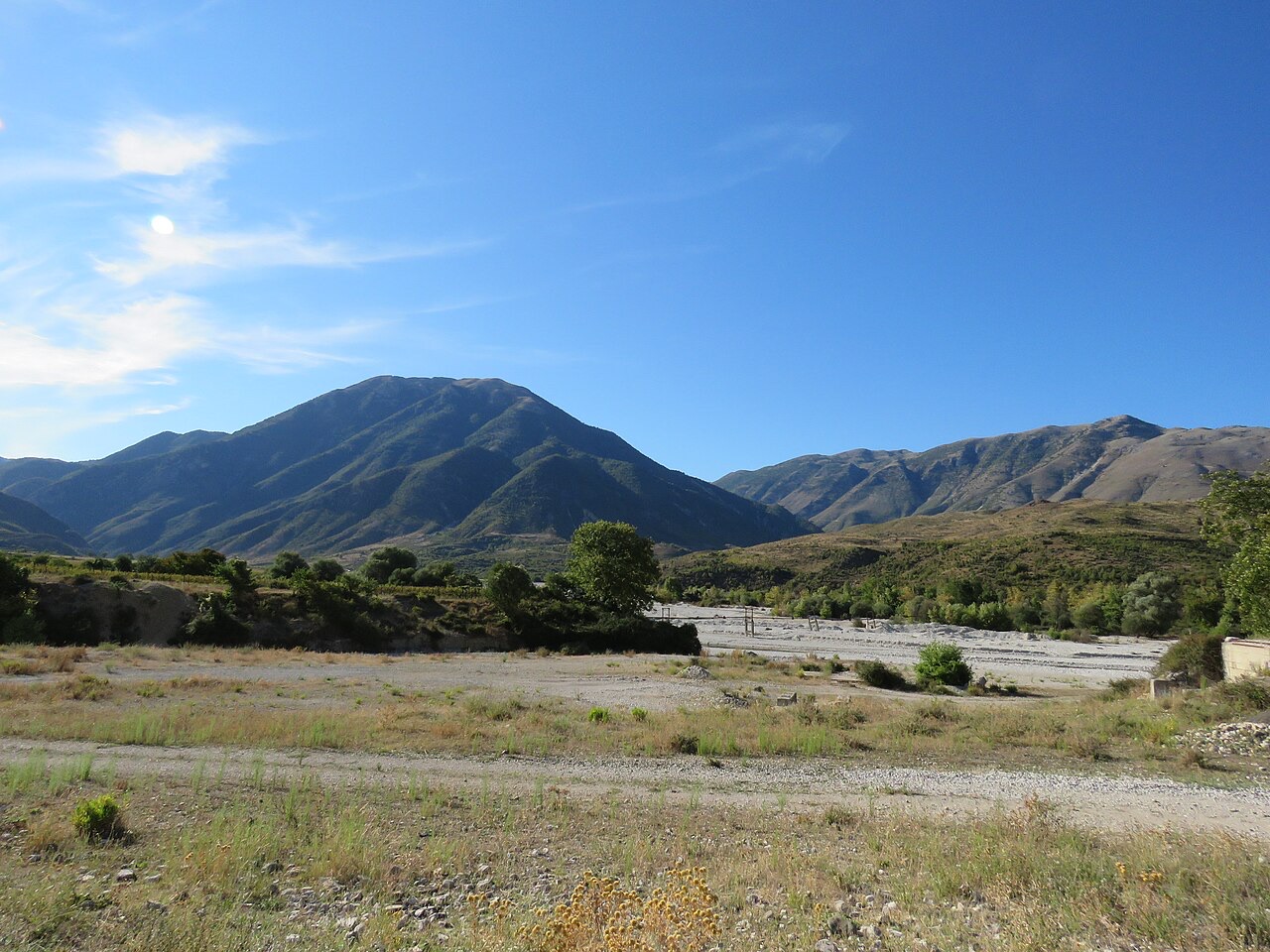
Gjirokastër lies in southern Albania in a valley between the Gjerë mountains and the Drino river, at 300 metres above sea level. The city occupies the slopes surrounding a dominant plateau on which its fortress stands. It serves as the seat of both Gjirokastër County and Gjirokastër Municipality.
The present municipality was formed in the 2015 local government reform by merging the former municipalities of Antigonë, Cepo, Gjirokastër, Lazarat, Lunxhëri, Odrie, and Picar, each of which became a municipal unit. The combined area covers 469.55 square kilometres. Situated between the lowlands of western Albania and the interior highlands, the city has a hot-summer Mediterranean climate with heavier rainfall than is typical for that classification.
The city first appears in historical records under the medieval Greek name Argyrókastron (Αργυρόκαστρον), recorded by Byzantine emperor John VI Kantakouzenos in 1336. The name combines argyrón (ἀργυρόν, 'silver') and kástron (κάστρον, derived from Latin castrum, meaning 'castle' or 'fortress'), giving the meaning 'silver castle'. Byzantine chronicles also used the variant Argyropolýchni (Αργυροπολύχνη, 'silver town'), and the city was referred to in medieval sources as Argyropolis.
The definite Albanian form is Gjirokastra; the Gheg Albanian dialect uses Gjinokastër. Both Albanian forms derive from the Greek name. During the Ottoman period the city was known in Turkish as Ergiri, and also Ergiri Kasrı. The folk etymology linking the name to a legendary Princess Argjiro, about whom 19th-century writer Kostas Krystallis and Ismail Kadare wrote novels, is considered unsupported, since the princess is said to have lived in the 15th century, after the name was already recorded.
The region's Phrygian period is estimated to span from around 1150 BCE to around 850 BCE. Nicholas Hammond argues it comprised small Phrygian principalities, with the Gjirokastër area centred at Vodhinë. Archaeological finds include pottery dating to the early Iron Age, crafted in a style that first appeared in the late Bronze Age at Pazhok, Elbasan County, and is found across Albania. The earliest recorded inhabitants of the area were the Chaonians, an ancient Greek tribe belonging to the Epirote group.
In antiquity the local urban centre was Antigonia, approximately 5 kilometres from modern Gjirokastër on the opposite bank of the Drino. The medieval city began to develop on the hill where the fortress stands. The first fortification dates to the 5th–6th centuries CE, constructed during the period of Slavic migrations into the Balkans. It was expanded in the 9th–10th centuries, and the first clear signs of urban settlement in the castle area date to the 13th–14th centuries, when the city was part of the Despotate of Epirus.
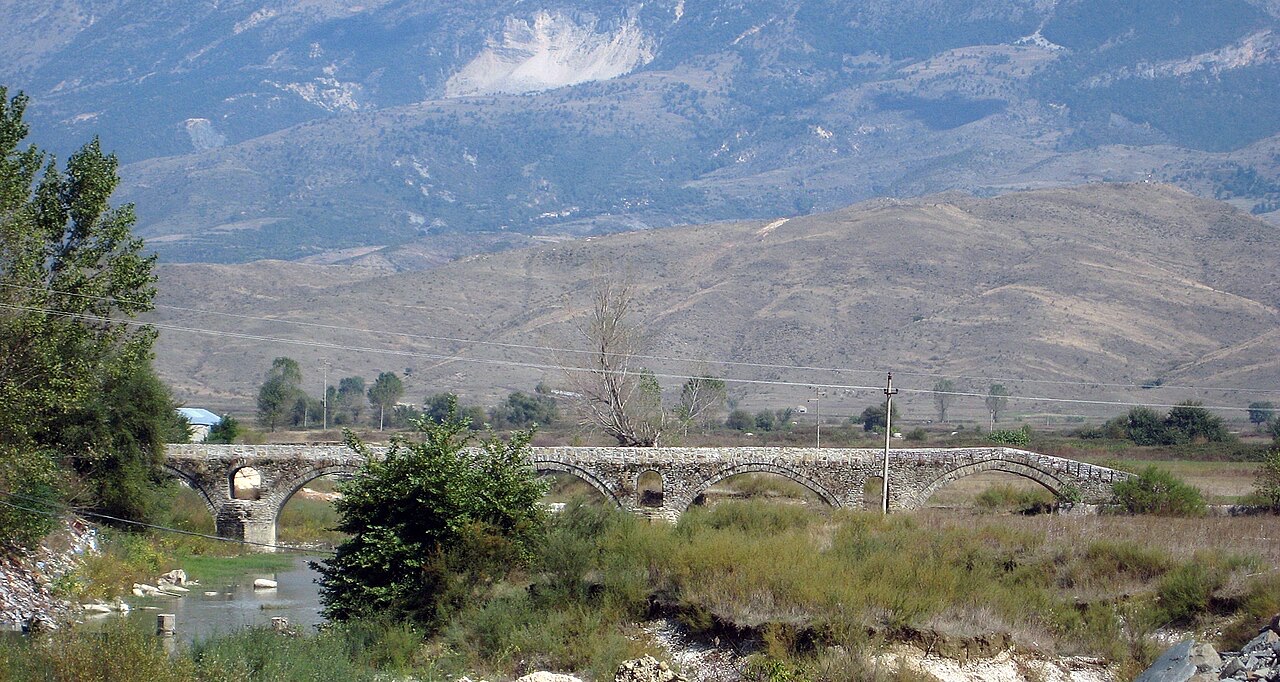
In 1336, Argyrokastro is recorded as loyal to the Byzantine Emperor during a local Epirote rebellion in favour of Nikephoros II Orsini. The Albanian Zenebishi clan, first mentioned in 1304 as landholders in Angevin territories, gained control of the city by the end of the 14th century. In 1399, Esau de' Buondelmonti, the Italian ruler of Ioannina and an Ottoman ally, marched against Gjon Zenebishi with forces drawn from Ioannina, Zagori, Dryinoupolis, Gjirokastër, and the Mazaraki and Malakasi clans. He was ambushed, defeated, and captured near Dhivër. The victory consolidated Gjirokastër as Gjon Zenebishi's capital.
Gjon Zenebishi died in 1417. His son Simon succeeded him as lord of Gjirokastër in early 1418, and the Ottomans immediately besieged the city. Simon departed during the siege to seek refuge in Ioannina and returned after the Ottoman siege failed, but ultimately surrendered the city to Ottoman forces. The area was thereafter known as Zenebish-ili ('land of Zenebishi') and by 1419 had become the seat of the Sanjak of Albania. During the Albanian Revolt of 1432–36, forces under Depë Zenebishi besieged the city, but Ottoman troops led by Turahan Bey defeated the rebels.
The Ottoman traveller Evliya Çelebi visited the city in 1670 and recorded approximately 2,000 houses, eight mosques, three churches, 280 shops, five fountains, and five inns. He described 200 houses within the castle, 200 in the Christian eastern neighbourhood of Kyçyk Varosh, and 150 in the Byjyk Varosh, along with six further neighbourhoods — Palorto, Vutosh, Dunavat, Manalat, Haxhi Bey, and Memi Bey — spread across eight hills around the castle. On one visit Çelebi heard a vajtim, the traditional Albanian lament for the dead performed by a professional mourner, and described the city as so noisy he called it the 'city of wailing'.
From the 16th century to the early 19th century the city's religious composition shifted substantially. It had been an overwhelmingly Christian city in the 16th century; conversions to Islam by the urban population, combined with an influx of Muslim converts from the surrounding countryside, produced a Muslim majority by the early 19th century. The city was also a significant centre for the Bektashi Sufi order, particularly regarding the order's spread and literary activity. In the early 19th century, British diplomat William Martin Leake recorded his arrival on 26 December 1804 and noted approximately 2,000 Muslim families and around 100 Christian families in Gjirokastër.
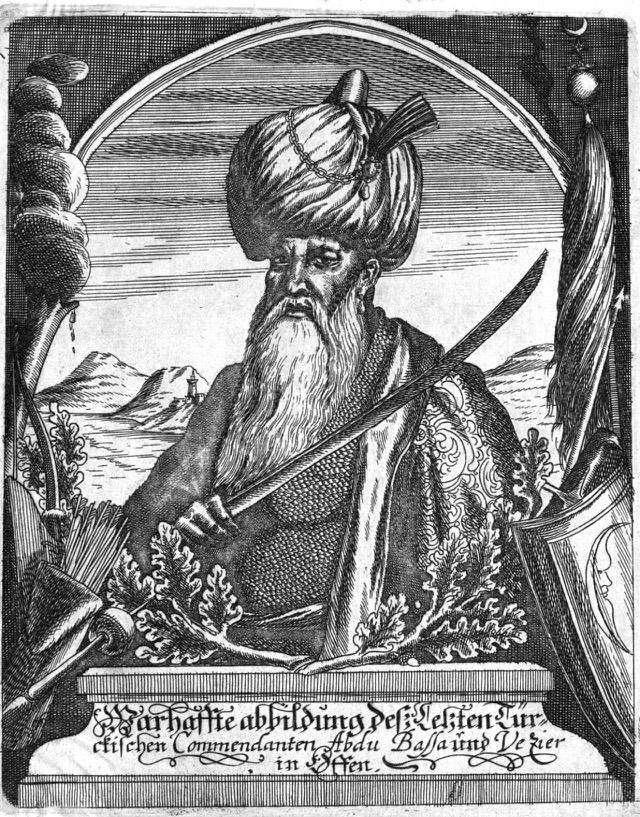
In 1811, Gjirokastër became part of the Pashalik of Yanina under Ali Pasha of Ioannina and functioned as part of a semi-autonomous fiefdom in the southwestern Balkans until Ali Pasha's death in 1822. In 1833 Albanian rebels took over the town, compelling the Ottoman government to comply with rebel demands. After the fall of the pashalik in 1868 the city served as the capital of the Sanjak of Ergiri.
On 23 July 1880, southern Albanian committees of the League of Prizren held a congress in Gjirokastër and resolved that if Albanian-populated Ottoman territories were ceded to neighbouring states, they would revolt. During the Albanian National Awakening of 1831–1912, the city was a major centre of the movement, with some groups reportedly carrying portraits of Skanderbeg. The city also supplied individuals who served as kadıs across the wider Ottoman Empire and was regarded as an important centre of Islamic culture. In early March 1908, the city's binbashi was assassinated by Çerçiz Topulli and his followers.
Greece claimed and captured Gjirokastër during the First Balkan War of 1912–1913 following the Ottoman withdrawal. Under the Treaty of London of 1913 and the Protocol of Florence of 17 December 1913, the city was awarded to Albania. The local Greek population objected strongly: their representatives under Georgios Christakis-Zografos convened the Panepirotic Assembly in Gjirokastër, which demanded either local autonomy or international occupation by the Great Powers for the districts of Gjirokastër, Sarandë, and Korçë. The result was the short-lived Autonomous Republic of Northern Epirus, with Gjirokastër as its capital, established in 1914.
In April 1939, Italy occupied Gjirokastër following the Italian invasion of Albania. On 8 December 1940, during the Greco-Italian War, the Hellenic Army entered the city and remained for five months before capitulating to Nazi Germany in April 1941, after which Italian command was restored. Following Italy's armistice in September 1943, German forces took the city. Albanian control was restored in 1944.
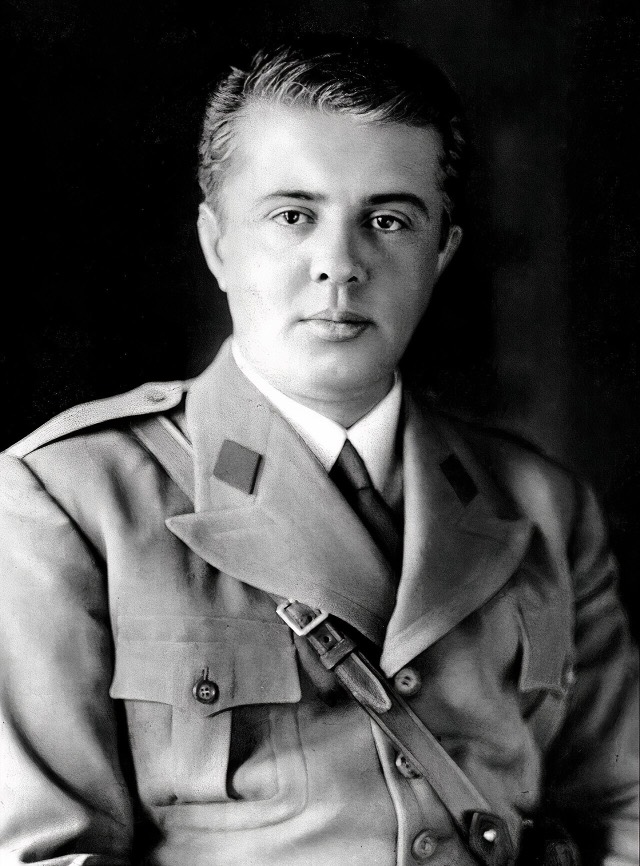
After World War II, the communist government developed Gjirokastër as an industrial and commercial centre. It was designated a 'museum town', in part because it was the birthplace of Enver Hoxha, leader of the People's Socialist Republic of Albania, who was born there in 1908. His house was converted into a museum. The city, along with Berat, was among the few Albanian cities protected from modernising construction programmes in the 1960s and 1970s.
The demolition of a monumental statue of Hoxha in Gjirokastër by members of the local Greek community in August 1991 marked, according to the article, the end of the one-party state; it is described as the last statue in Albania to be demolished during the fall of communism, five months after other statues had been removed from February 1991 onwards. On 16 December 1997, Hoxha's former house was damaged by unknown attackers but was subsequently restored.
Gjirokastër suffered severe economic problems after the end of communist rule in 1991. In the spring of 1993, the region became a site of open conflict between Greek minority members and the Albanian police. The city was significantly affected by the 1997 collapse of a large pyramid scheme that destabilised the Albanian economy as a whole.
Gjirokastër became a focal point of rebellion against the government of Prime Minister Sali Berisha. Violent anti-government protests in the city contributed to Berisha's eventual resignation. In 2010, following the Greek economic crisis, the city was among the first areas in Albania to experience secondary effects, as many Albanian emigrants who had been working in Greece became unemployed and returned home.
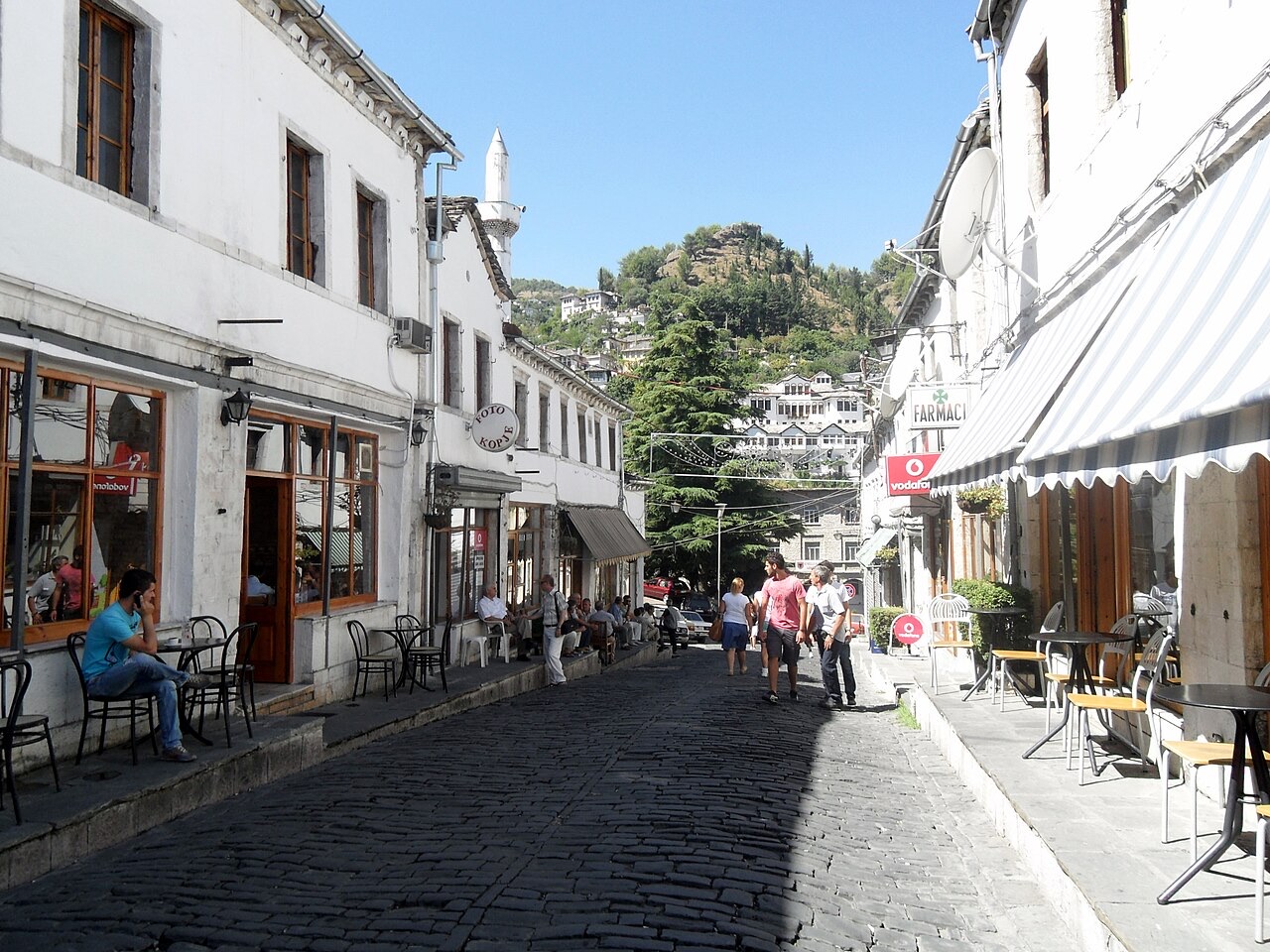
The majority of Gjirokastër's existing buildings date from the 17th and 18th centuries. Typical houses are tall stone block structures of up to five stories, with external and internal staircases, a ground-floor cistern and stable, upper-floor guest and family rooms with fireplaces, and further storeys for extended family accommodation. The style is thought to derive from fortified country houses common in southern Albania. The prevalence of flat dressed stone roof coverings gave the city its nickname 'City of Stone'. A comparable architectural style is found in the Pelion district of Greece.
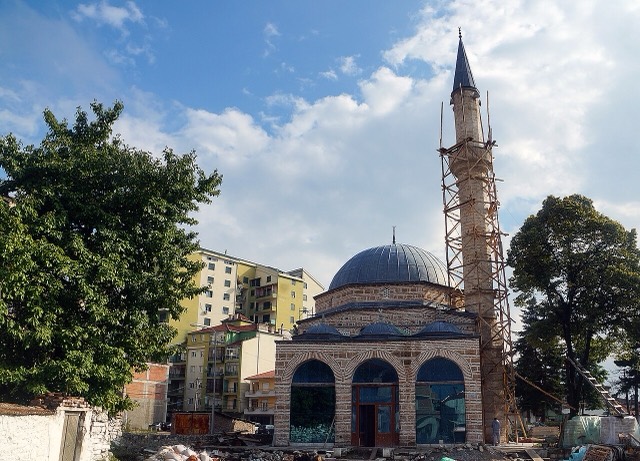
The historic core of Gjirokastër was first nominated for UNESCO World Heritage status in 1988, but experts from the International Council on Monuments and Sites identified modern constructions that detracted from the old town. Inscription was eventually achieved in 2005, seventeen years after the original nomination. More than 500 homes are preserved as cultural monuments. The Gjirokastër Mosque, built in 1757, stands in the old bazaar, which was originally constructed in the 17th century and rebuilt in the 19th century after a fire.
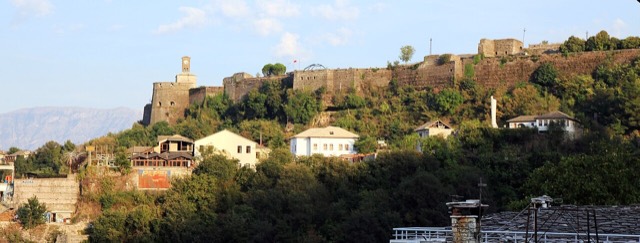
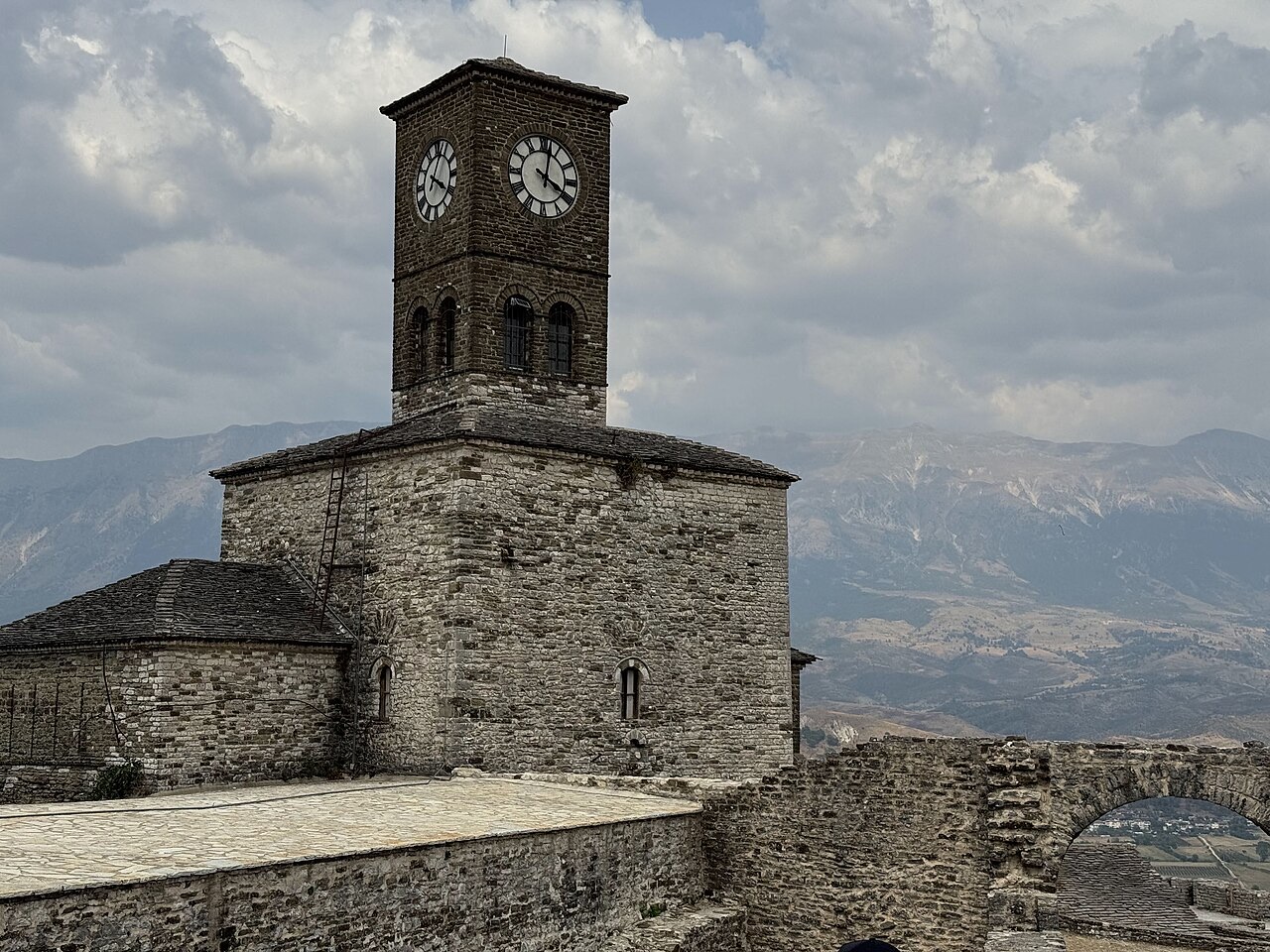
Gjirokastër Fortress dominates the town and overlooks the Drino valley route. It contains a military museum with captured artillery, communist-era memorabilia, and a captured United States Air Force aircraft forced down by Anastas Ngjela. The fortress has five towers and contains a clock tower, a church, water fountains, and horse stables. Additions were made in the 19th and 20th centuries by Ali Pasha of Ioannina and by the government of King Zog I. The northern section was converted into a prison under Zog and later held political prisoners during the communist period.
The 2011 census recorded 19,836 inhabitants in the city of Gjirokastër and 28,673 in the municipality as a whole, across 6,919 housing units. The municipality had a population density of 53.91 persons per square kilometre. The 2011 census results were affected by a minority boycott; the Council of Europe's Advisory Committee on the Framework Convention for the Protection of National Minorities stated the results should be viewed 'with the utmost caution'. The city hosts a Greek minority estimated by Human Rights Watch at approximately 4,000 out of 30,000 in 1989, though Greek spokesmen have claimed up to 34 percent of the population is Greek. A Greek consulate operates in the city, which is considered the centre of the Greek community in Albania.
The first school in Gjirokastër was a Greek-language institution erected in 1663, funded by local merchants and supervised by the local bishop. It was destroyed in 1821 when the Greek War of Independence broke out and reopened in 1830. A madrasa began operating in 1727 and functioned for 240 years until closed in 1967 by the communist Cultural Revolution. The first Albanian school in the city opened in 1886. Today the city has 14 Albanian-language schools and two bilingual Albanian-Greek schools. Eqrem Çabej University opened in 1968 and has faced declining enrolments in recent years.
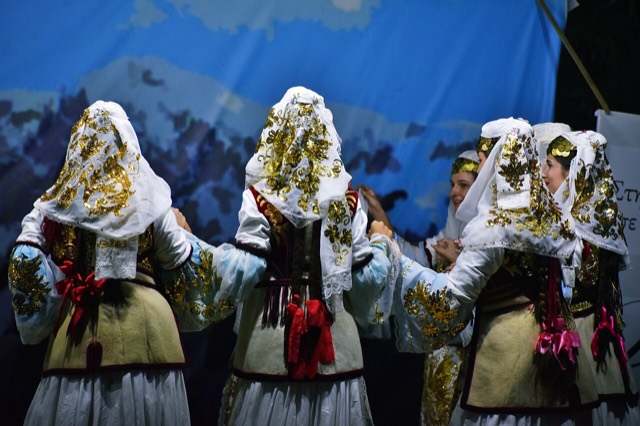
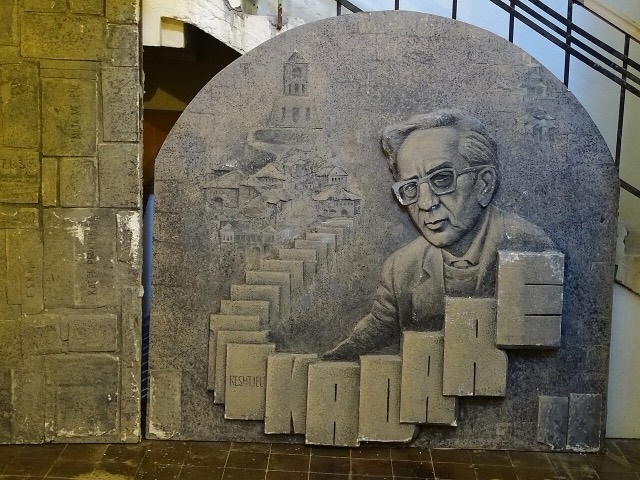
The National Folklore Festival, held every five years at Gjirokastër Fortress, began in 1968 and had reached its ninth season by 2009. The city is associated with both Albanian and Greek polyphonic singing. The Greek-language newspaper Laiko Vima is published in Gjirokastër; founded in 1945, it was the only Greek-language printed publication permitted during the People's Socialist Republic of Albania. Ismail Kadare's novel Chronicle in Stone is set in the city and depicts life during the Italian and Greek occupations of World War II. Musine Kokalari wrote her 1941 collection As my old mother tells me in the Gjirokastrian dialect, drawing on the daily lives of women in the city.
最热月份为 August (日最高气温均值 29°C), 最冷月份为 January (日最低气温均值 1°C), 降水最多的月份为 November (253 mm). 年均降雨总量为 1,582 mm.
| 月份 | 最高气温 | 最低气温 | 降雨量 | 降雨天数 | 日照时长 |
|---|---|---|---|---|---|
| January | 9°C | 1°C | 195 mm | 13 | 6.8 h |
| February | 10°C | 2°C | 163 mm | 12 | 7.6 h |
| March | 13°C | 4°C | 153 mm | 12 | 9.2 h |
| April | 16°C | 7°C | 114 mm | 13 | 10.7 h |
| May | 21°C | 11°C | 90 mm | 11 | 11.9 h |
| June | 25°C | 15°C | 48 mm | 8 | 13.6 h |
| July | 28°C | 18°C | 22 mm | 4 | 13.8 h |
| August | 29°C | 18°C | 29 mm | 5 | 12.8 h |
| September | 24°C | 15°C | 120 mm | 9 | 10.6 h |
| October | 19°C | 11°C | 160 mm | 10 | 9.0 h |
| November | 14°C | 7°C | 253 mm | 13 | 6.8 h |
| December | 10°C | 3°C | 235 mm | 14 | 6.2 h |
数据来源: ERA5 reanalysis via Open-Meteo, 1994–2023 · "最高气温"与"最低气温"分别为日最高和日最低气温均值。"降雨天数"统计降水量不低于 1 毫米的天数。
历史遗址 · Gjirokastër
A short-lived Epirote city founded by King Pyrrhus and burned by Rome in 167 BC.
城市 · Gjirokastër
The 'stone city': slate-roofed tower houses on a steep slope beneath one of the Balkans' largest castles.
历史遗址 · Gjirokastër
One of the largest castles in the Balkans, holding an artillery gallery and a captured US aircraft.
河流 · Gjirokastër
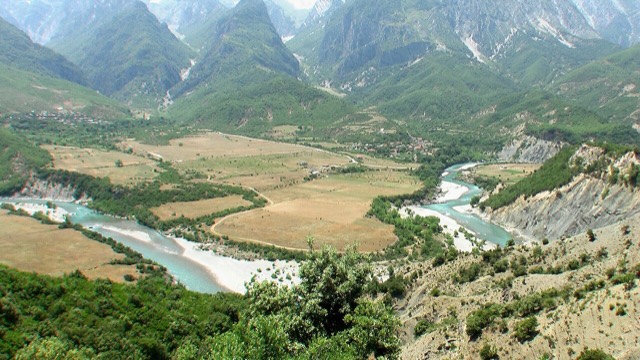
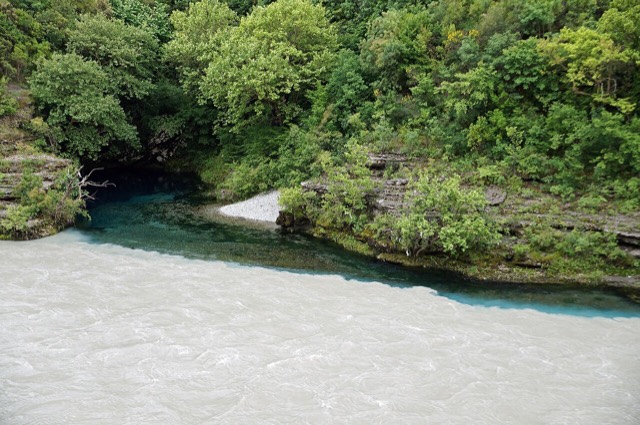
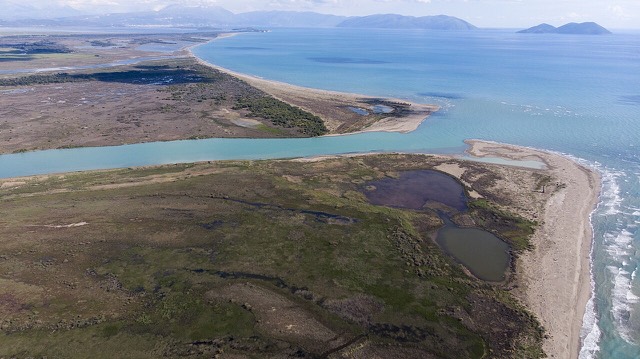
One of the last large free-flowing rivers in Europe, declared a Wild River National Park in March 2023.
保护区 · Gjirokastër
Declared in March 2023, Europe's first national park built around a whole free-flowing river system.
城镇 · Gjirokastër
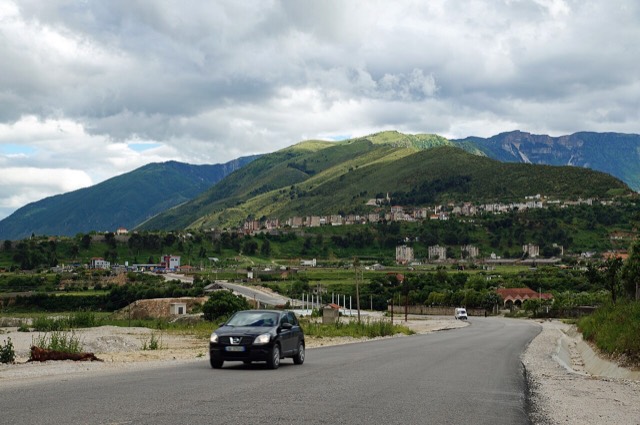
A valley of villages south of Gjirokastër with a large Greek-speaking population.
城镇 · Gjirokastër
A small Vjosa-side town known for its fruit preserves, thermal baths and polyphonic singing.
泉 · Gjirokastër
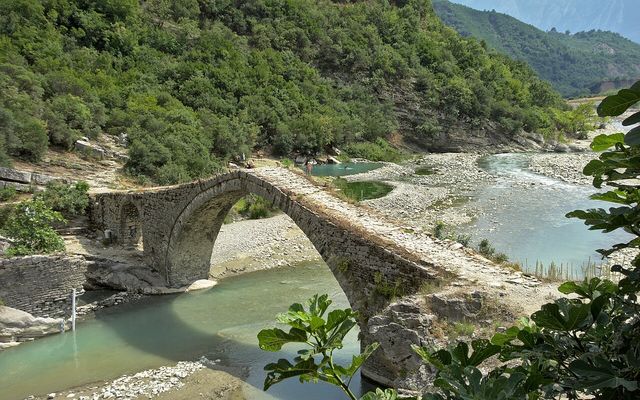
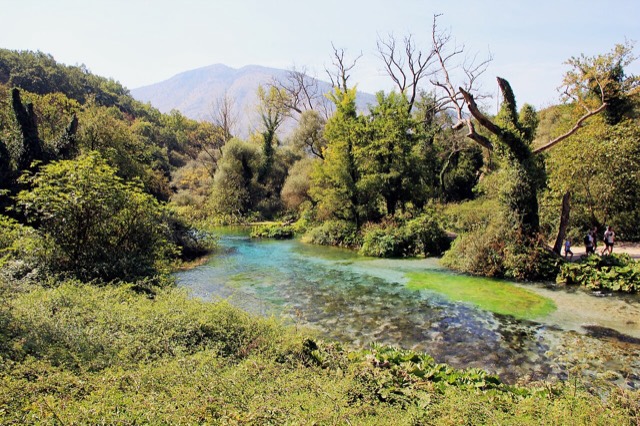
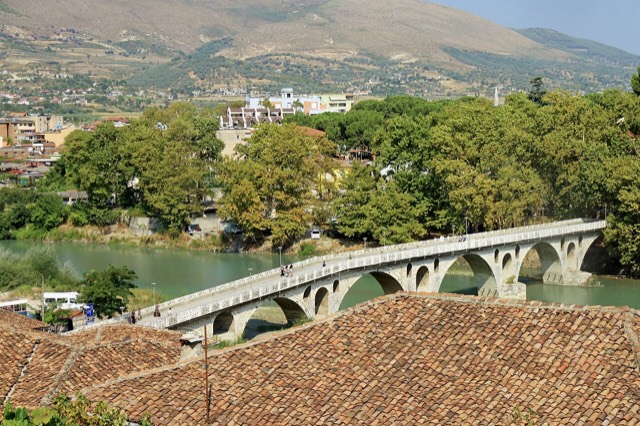
Sulphur pools beside the Ottoman Katiu bridge, at the mouth of the Lengarica canyon.
城镇 · Gjirokastër
A hill town below a castle built by Ali Pasha for his sister, opposite Gjirokastër.
The public university of the southern mountains.
历史遗址 · Gjirokastër
A short-lived Epirote city founded by King Pyrrhus and burned by Rome in 167 BC.
城市 · Berat
The 'city of a thousand windows': an Ottoman hill town under a still-inhabited castle, UNESCO-listed since 2008.
历史遗址 · Gjirokastër
One of the largest castles in the Balkans, holding an artillery gallery and a captured US aircraft.
城市 · Korçë
The highland city of serenades, the first Albanian-language school, and the country's oldest brewery.
城市 · Vlorë
Where the Adriatic meets the Ionian, and where Albanian independence was declared in 1912.
河流 · Gjirokastër
One of the last large free-flowing rivers in Europe, declared a Wild River National Park in March 2023.
泉 · Vlorë
A karst spring of extraordinary clarity whose bottom has never been definitively reached.
城镇 · Gjirokastër
A valley of villages south of Gjirokastër with a large Greek-speaking population.
历史时期
Four and a half centuries in the empire — mass conversion to Islam, powerful local pashas, and eventually a national movement.
人物
The leader who took Albania out of the Soviet bloc, then out of the Chinese one, and banned religion outright.
人物
The writer who found ways to describe a totalitarian state from inside it, in novels read worldwide.
主题
Multipart unaccompanied singing over a held drone, inscribed by UNESCO in 2005.
专题解析
Four inscriptions: Butrint, the historic centres of Berat and Gjirokastra, the Ohrid region, and the primeval beech forests.
指南
Two stone cities, the country's best archaeology, a wild river, and the Riviera behind it.
本页内容有误? 欢迎提交更正意见,所有意见均会与原始记录核对。请告知错误所在,如能提供正确数据的出处,请一并注明。