Protected area
Kune-Vain Nature Reserve
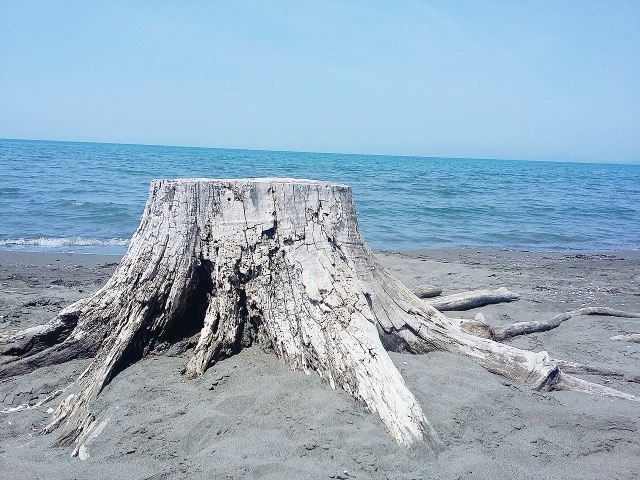
Lagoons, pine and one of Albania's few surviving coastal alluvial forests, beside Shëngjin.
🧭 Guided view
New to Albania? Every page opens with a plain-language explanation you could read to a ten-year-old, before the detail begins.
⚡ Expert view
You already know the basics. Straight to the substance, with the simple explanations hidden. This is the default.
Shëngjin is a long sandy beach in the north with a small port at one end and pine woods and lagoons at the other.
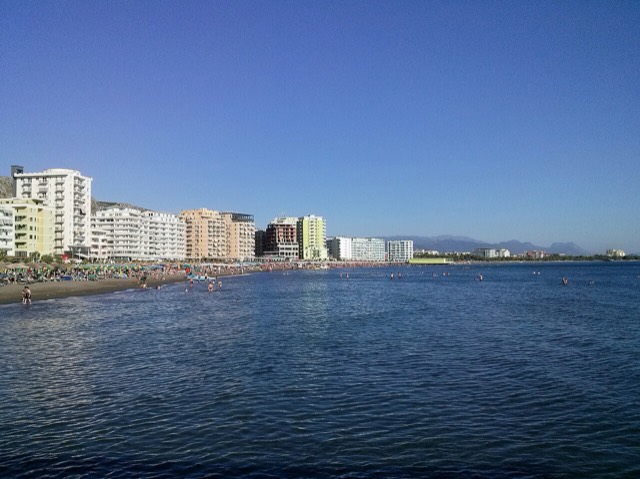
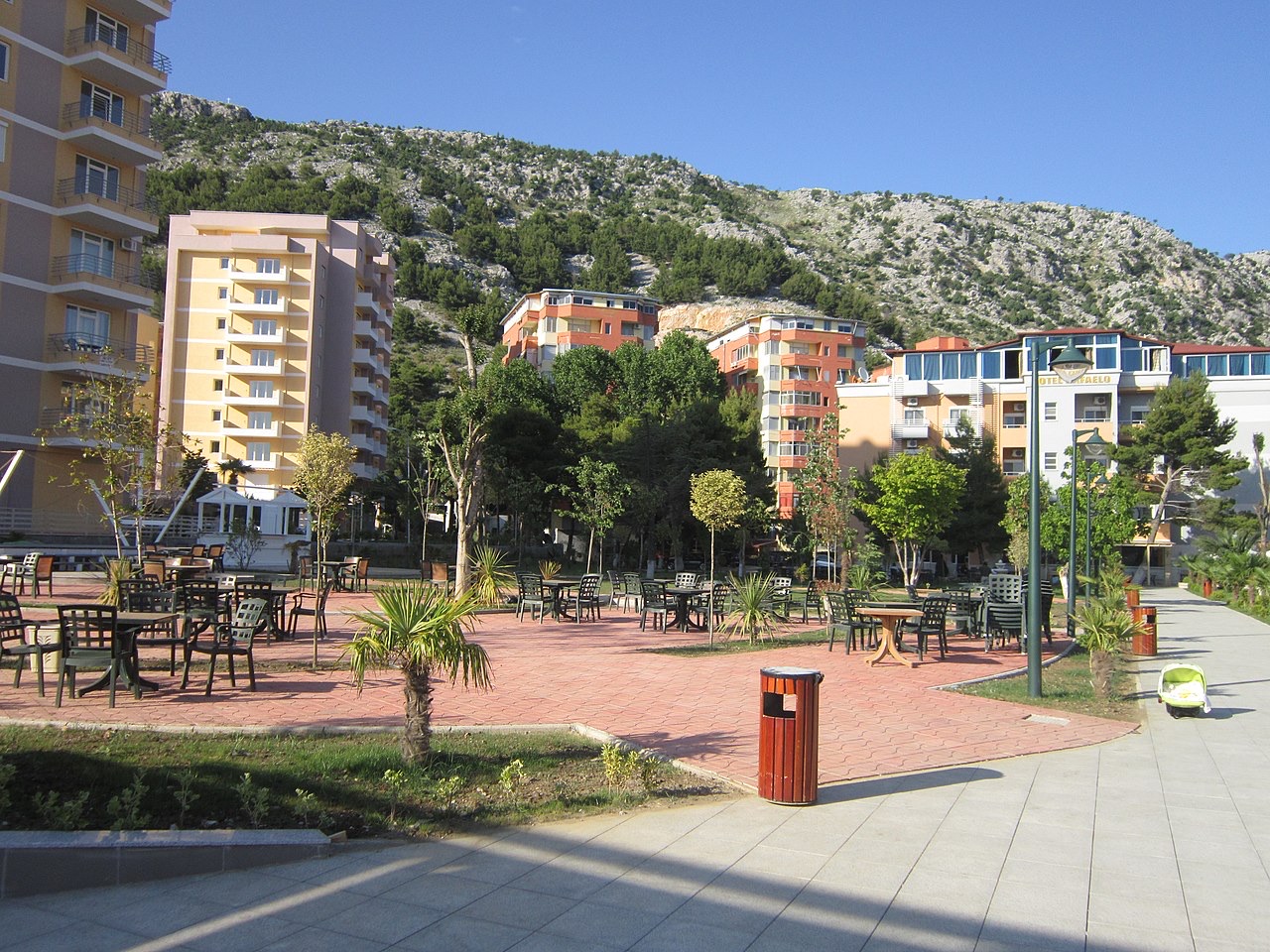
Shëngjin is a long sandy beach in the north with a small port at one end and pine woods and lagoons at the other.
The site of Shëngjin has been identified by scholars with the ancient harbour of Nymphaeum, located on the Illyrian coast three miles north of Lissus. This identification places continuous human use of the anchorage across more than a millennium, the town later serving as the principal seaport for the inland city of Scutari.
In the vicinity of Shëngjin, the League of Lezhë was concluded in the 15th century, when Skanderbeg united the Albanian princes against the Ottoman Empire. Skanderbeg is recognised in Albania as a national hero for that effort. Before the modern period, the town was repeatedly occupied or attacked by Venetian forces during their successive wars with the Ottomans, reflecting the strategic value of the harbour to competing regional powers.
During the Ottoman period the town was known as Şingin. In the Albanian revolt of 1911 it remained loyal to Ottoman authority, largely because Turkish soldiers held the nearby fortress of Scutari. The following year, in November 1912, Serbian and Montenegrin armies captured Shëngjin when Montenegro laid siege to Scutari. Montenegro subsequently claimed the town, but the Great Powers compelled both armies to withdraw.
Serbia reoccupied Shëngjin in the summer of 1915 and held it until the advancing Austro-Hungarian Army drove Serbian forces out in January 1916. The Austro-Hungarians evacuated in November 1918 and were replaced by Italian troops for several months while the frontier with the new Yugoslav state was being determined. Before the First World War, Austria-Hungary had maintained a consulate in the town to serve its commercial interests.
In 1924 the Albanian government renamed the town Port Wilson, in honour of American President Woodrow Wilson, who had backed Albanian independence in 1919 when proposals for the partition of Albania were circulating among the Great Powers. In April 1939 the Italian Army landed at Shëngjin as part of its occupation of Scutari and northern Albania. During the Second World War the town's name was officially changed to the Italian form San Giovanni di Medua. After the war it reverted to Shëngjin.
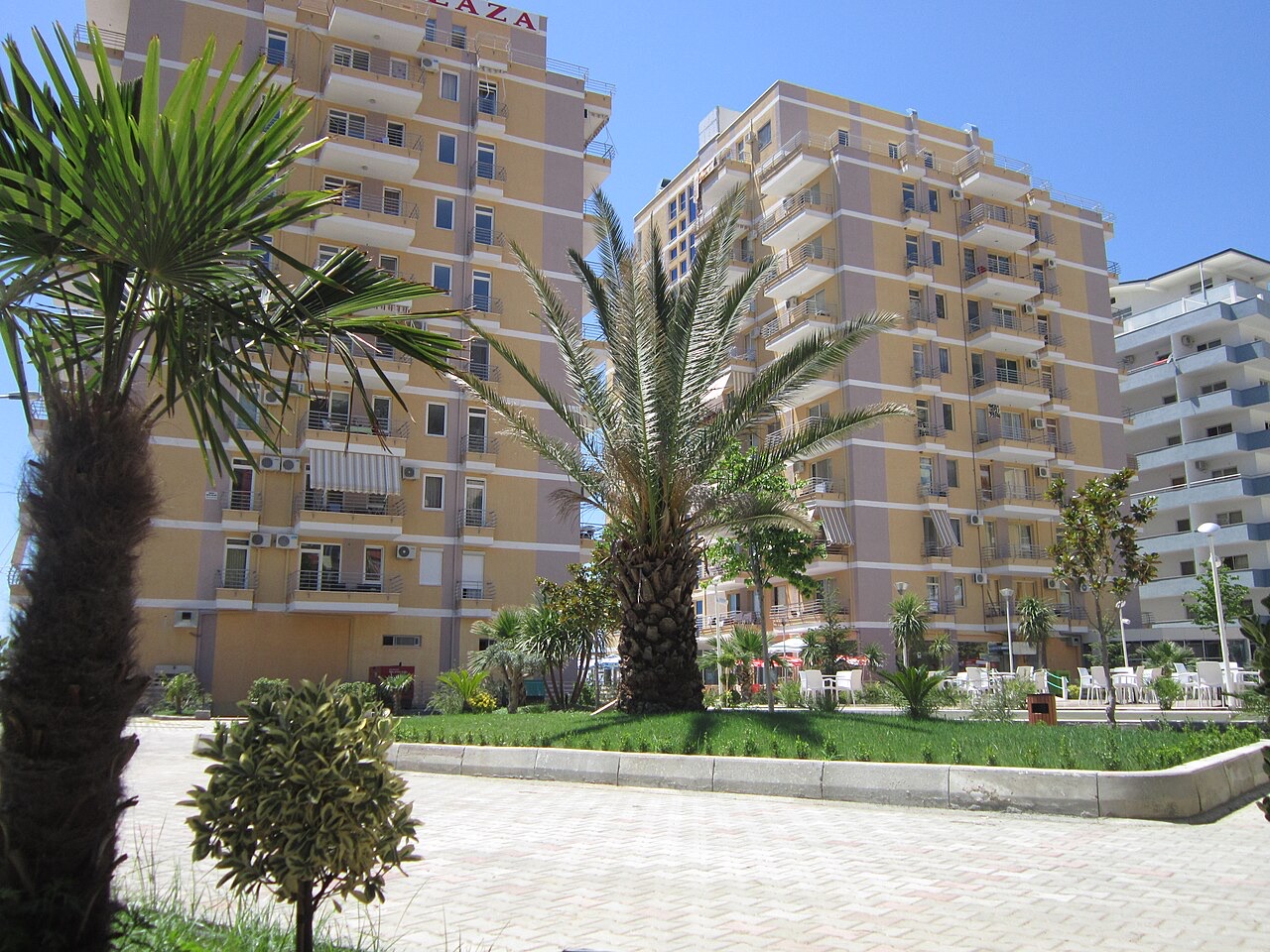
Shëngjin lies in Lezhë County in northwestern Albania, approximately 60 km from Tirana Mother Teresa International Airport. The town sits roughly 100 metres from the Adriatic Sea and below a mountainside called Rrenci, which rises to approximately 159 metres.
To the south of the town lies the Kunë-Vain-Tale Nature Park, a protected area of wetlands and seafront. Immediately north of the town centre is the coastal dune area known in Gheg Albanian as Rana e Hedhun and in standard Albanian as Rera e Hedhur, an undeveloped stretch of sand dunes along the coastline. The beach front extends for approximately 3 km.
Shëngjin's economy centres on two industries: the seaport and tourism. The Port of Shëngjin is the northernmost seaport in Albania and is regularly used by cargo and fishing vessels. It is described as the third largest port in Albania. The harbour entrance is located on the northwest side of the town, and the port is protected by rock walls that extend into the sea.
Tourism has grown into a significant economic sector. In 2019, the electronic music festival UNUM was held at Rana e Hedhun, described as the first such event organised on the Adriatic coast of Albania, with organisers drawing a comparison to similar festivals along the Albanian Riviera.
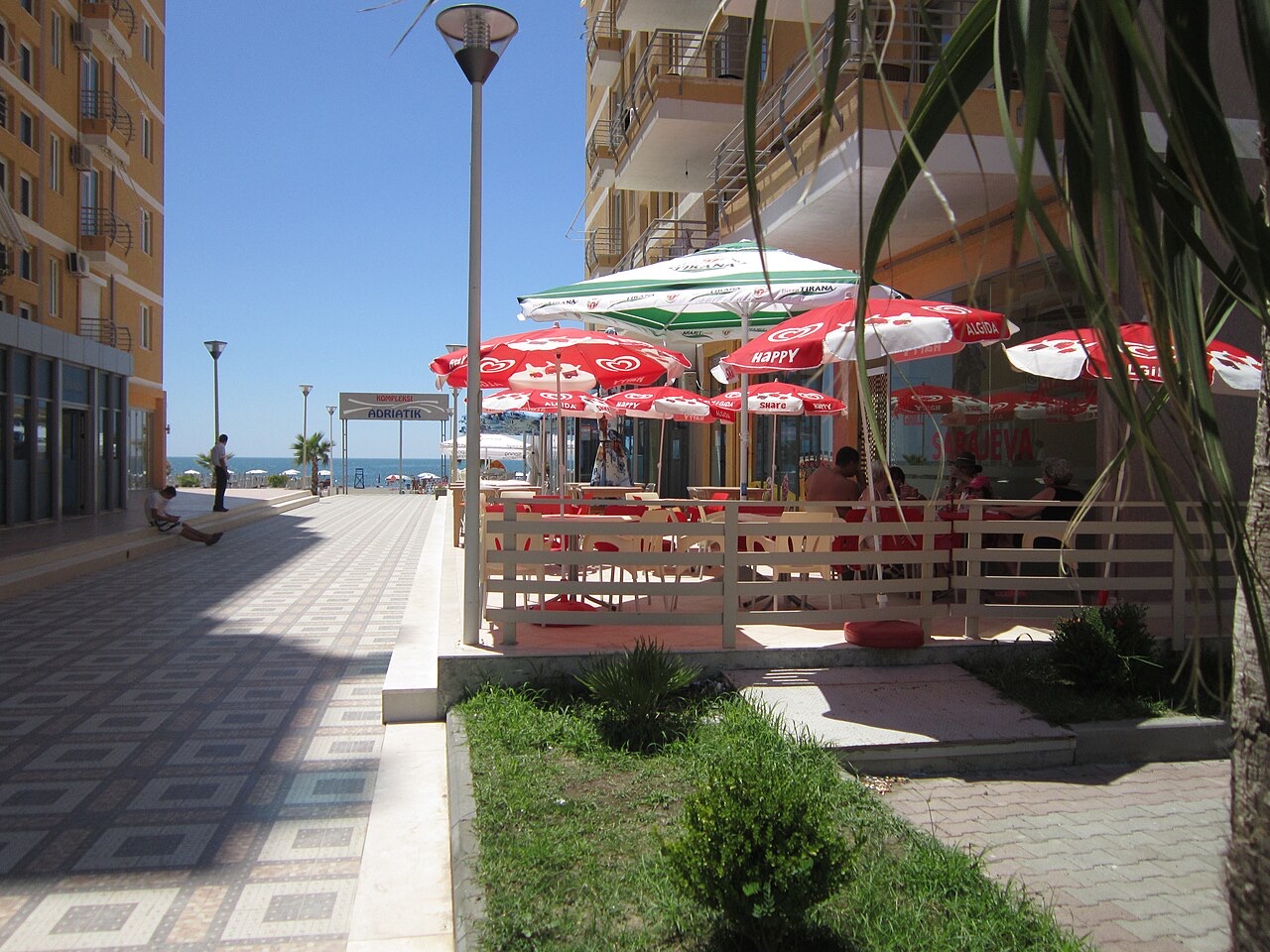
Shëngjin experiences a mild climate characteristic of the northwestern Albanian coast. Daytime temperatures range from approximately 9.5 °C in January to 30.1 °C in August. Night-time lows average 3.0 °C in January, while the warmest nights occur in July, averaging 20.2 °C.
The hottest months run from May through September. Average daytime temperatures rise from around 24 °C in May to 30 °C in July and August.
In early November 2023, Italian Prime Minister Giorgia Meloni and Albanian Prime Minister Edi Rama signed a migration agreement under which Italy and Albania agreed to establish reception centres for asylum seekers at Shëngjin. The centres are operated under Italian law and staffed by Italian personnel, with asylum applications processed on site.
These facilities are described as the first reception centres for migrants located outside the European Union to be run by an EU member state. However, Italian courts repeatedly ordered the temporary repatriation of migrants brought to the centres. By October 2025 only 256 people had been detained there, and in most cases judicial decisions resulted in their return to Italy.
Thirty-year normals for Shëngjin Beach, computed for this Atlas from daily ERA5 reanalysis over 1994–2023. These are long-run averages, not a forecast: any individual year can differ substantially.
The warmest month is August (mean daily high 30°C), the coldest is January (mean daily low 2°C), and the wettest is November (255 mm). Total annual rainfall averages 1,812 mm. Sea temperature peaks in August at about 25°C.
| Month | High | Low | Rain | Wet days | Sun/day | Sea |
|---|---|---|---|---|---|---|
| January | 10°C | 2°C | 193 mm | 12 | 6.7 h | 14°C |
| February | 11°C | 3°C | 169 mm | 12 | 7.7 h | 12°C |
| March | 14°C | 5°C | 163 mm | 11 | 9.3 h | 14°C |
| April | 18°C | 9°C | 146 mm | 12 | 10.5 h | 15°C |
| May | 22°C | 14°C | 114 mm | 10 | 12.1 h | 19°C |
| June | 26°C | 18°C | 61 mm | 6 | 13.5 h | 23°C |
| July | 29°C | 21°C | 38 mm | 4 | 13.7 h | 26°C |
| August | 30°C | 21°C | 55 mm | 4 | 12.8 h | 25°C |
| September | 25°C | 17°C | 194 mm | 8 | 10.6 h | 24°C |
| October | 20°C | 12°C | 193 mm | 10 | 8.9 h | 22°C |
| November | 16°C | 8°C | 255 mm | 13 | 6.9 h | 19°C |
| December | 11°C | 4°C | 232 mm | 14 | 6.3 h | 16°C |
Source: ERA5 reanalysis via Open-Meteo, 1994–2023 · “High” and “Low” are mean daily maximum and minimum air temperature. “Wet days” counts days with at least 1 mm of precipitation. Get this as JSON
These are real relationships in the Atlas — places that are near this one, and subjects it genuinely belongs with. Nothing here is a generic recommendation.
Lagoons, pine and one of Albania's few surviving coastal alluvial forests, beside Shëngjin.
A very shallow, wide sand beach at the Buna delta, beside a protected lagoon.
A northern beach resort and small commercial port backed by the Kune-Vain pine lagoons.
A northern beach resort and small commercial port backed by the Kune-Vain pine lagoons.
The sections marked “deep dive” above were written for this Atlas from the source article named below, which was read in full (6,125 characters). They are AI-assisted research over that document, checked against the curated facts on this page. Verify anything consequential against a primary source.
Something wrong on this page? Corrections are welcome and are checked against the source record. Tell us what is wrong and, if you can, where the right figure comes from.