Town · Kukës
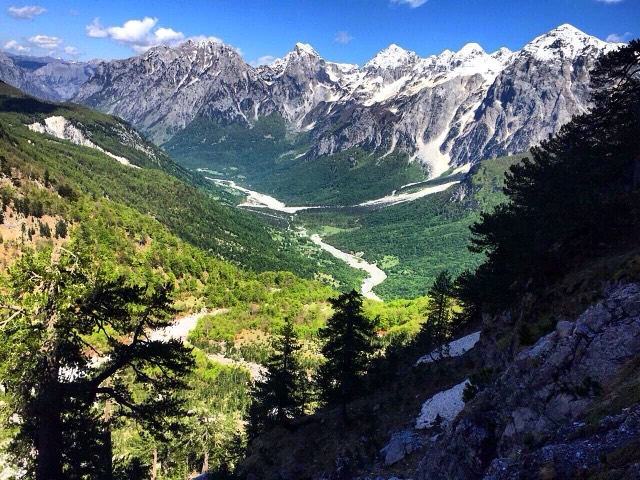
Bajram Curri
The road head for the Valbona valley, named after a guerrilla leader of the 1920s.
Every county, coast and century
Guided view
New to Albania? Every page opens with a plain-language explanation you could read to a ten-year-old, before the detail begins.
Expert view
You already know the basics. Straight to the substance, with the simple explanations hidden. This is the default.
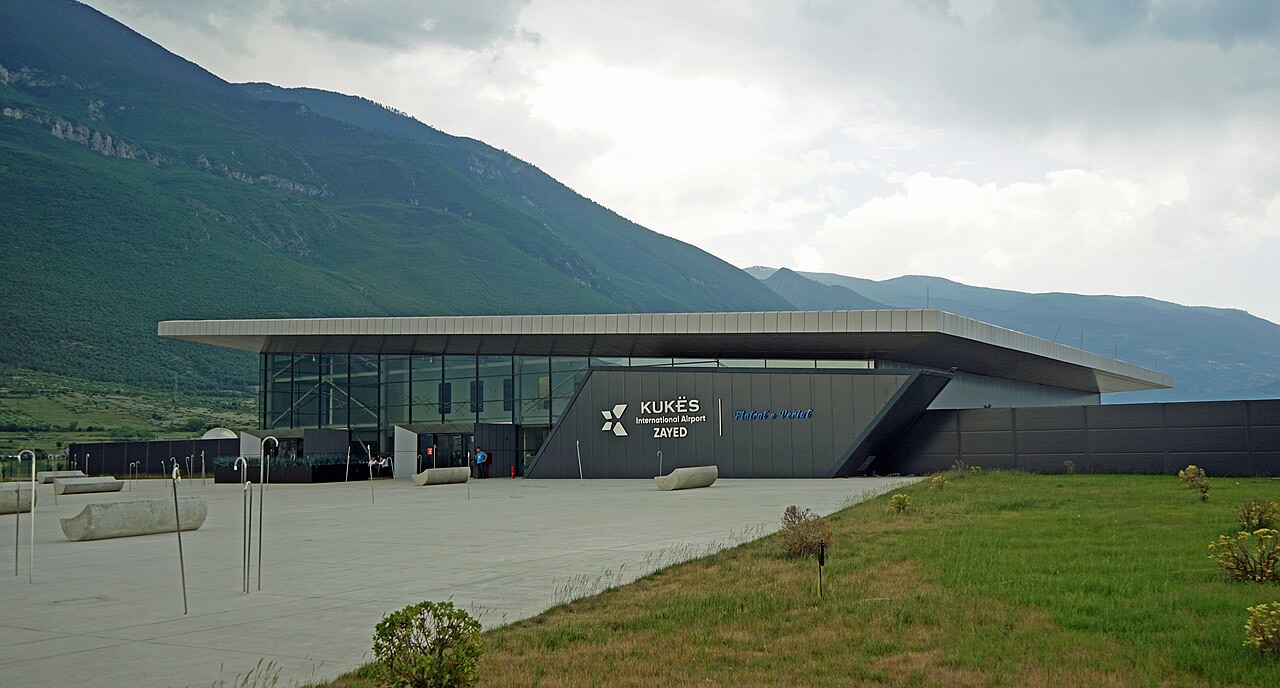
Airport · Kukës County
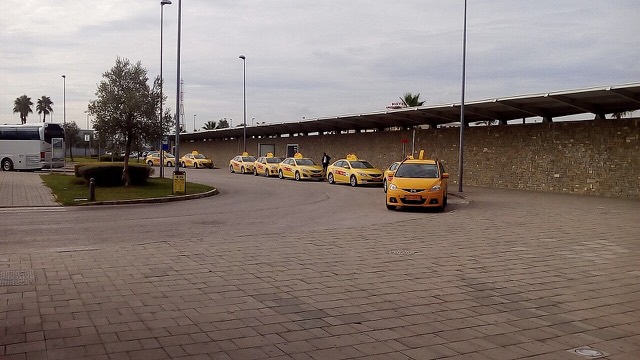
A small northern airport that opened to commercial flights in 2021, mainly serving the diaspora.
Save
Kukës airport is in the north-east mountains near Kosovo. It was built years earlier but only started taking passenger flights in 2021. It mostly serves Albanians living abroad who come home in summer.
Kukës airport is in the north-east mountains near Kosovo. It was built years earlier but only started taking passenger flights in 2021. It mostly serves Albanians living abroad who come home in summer.
The site now occupied by Kukës International Airport Zayed lies 3.5 km south of the city of Kukës, in the village of Shtiqën. Its recorded aviation history begins on 20 April 1929, when it opened for the first time as a domestic airfield offering a scheduled air connection between Tirana and Kukës via Peshkopi.
The link operated for approximately fifteen years before the communist government removed its civil status and converted the facility into a military airfield. It remained outside civilian use for decades until the circumstances of the 1998–1999 Kosovo War created new pressure to reactivate it.
During the Kosovo War, the United Arab Emirates organised a humanitarian camp in Kukës to assist refugees fleeing Kosovo. As part of that relief effort, the UAE first developed the airfield to allow the supply of incoming aid to reach the area. Kukës at that time received the largest influx of Kosovo citizens of any location in Albania.
UAE representatives used this period to propose the development of a permanent civil airport as a gift to the region. The Albanian government accepted the proposal, and the General Directorate of Civil Aviation undertook joint feasibility studies with the investors. On 15 February 2001, the Council of Ministers approved a Memorandum of Understanding between the Government of the Republic of Albania and the Government of the United Arab Emirates for the construction of Kukës Airport.
Construction began on 10 May 2003 and was completed on 31 October 2005. The total investment was approximately USD 20 million, provided as a funding gift by the government of the United Arab Emirates. At the time, the project was expected to employ more than 200 people and to open touristic opportunities for the surrounding region.
On 7 June 2006, Kukës Airport came under the administration of the General Directorate of Civil Aviation. That body was subsequently renamed the Civil Aviation Authority after 2010.
In 2021, Prime Minister Edi Rama changed the airport's name to Kukës International Airport Zayed — Albanian: Aeroporti Ndërkombëtar i Kukësit Zayed — in honour of Sheikh Zayed bin Sultan Al Nahyan, whose government had sponsored the original investment. The IATA code is KFZ and the ICAO code is LAKU.
The formal opening ceremony took place on 18 April 2021. To mark the occasion, Air Albania Flight 9003 arrived from London Stansted Airport after a short stopover at Tirana International Airport Nënë Tereza; a stopover was necessary because the airport had not yet received approval for direct international flights at that point.
The first international commercial flight landed on 9 July 2021, when Helvetic Airways Flight 8174 arrived from Zurich Airport, making that the first scheduled international service the airport had received.
The airport is designed to handle small to medium-sized aircraft. Its apron provides parking for up to three aircraft simultaneously. The terminal is equipped with a stated annual capacity of up to 500,000 passengers.
The airport is intended to function as a low-cost facility and to serve as an alternative to Tirana International Airport Nënë Tereza, which is the country's principal international gateway.
Since opening, the airport has faced persistent difficulties in attracting and retaining airline operators, which has constrained its full operationalisation. A specific technical challenge relates to the landing corridor, which presents conditions described as affecting the regularity of flight operations. As of 4 June 2024, no regular passenger flights were operating to or from Kukës Airport.
On 30 December 2024, a new airline named Air Kosova was established with the stated aim of maintaining regular flight operations to and from the airport. Prime Minister Edi Rama described the initiative as a shared source of national pride, placing it alongside Air Albania in that framing.
The warmest month is August (mean daily high 29°C), the coldest is January (mean daily low -1°C), and the wettest is December (120 mm). Total annual rainfall averages 1,128 mm.
| Month | High | Low | Rain | Wet days | Sun/day |
|---|---|---|---|---|---|
| January | 6°C | -1°C | 107 mm | 12 | 6.5 h |
| February | 8°C | 0°C | 96 mm | 11 | 7.6 h |
| March | 11°C | 3°C | 103 mm | 13 | 9.0 h |
| April | 16°C | 7°C | 112 mm | 15 | 10.3 h |
| May | 22°C | 12°C | 110 mm | 15 | 11.6 h |
| June | 26°C | 17°C | 75 mm | 12 | 13.3 h |
| July | 29°C | 19°C | 61 mm | 9 | 13.4 h |
| August | 29°C | 20°C | 56 mm | 8 | 12.5 h |
| September | 24°C | 15°C | 85 mm | 10 | 10.2 h |
| October | 19°C | 10°C | 88 mm | 10 | 8.6 h |
| November | 13°C | 6°C | 114 mm | 11 | 6.8 h |
| December | 8°C | 1°C | 120 mm | 12 | 6.0 h |
Source: ERA5 reanalysis via Open-Meteo, 1994–2023 · “High” and “Low” are mean daily maximum and minimum air temperature. “Wet days” counts days with at least 1 mm of precipitation.
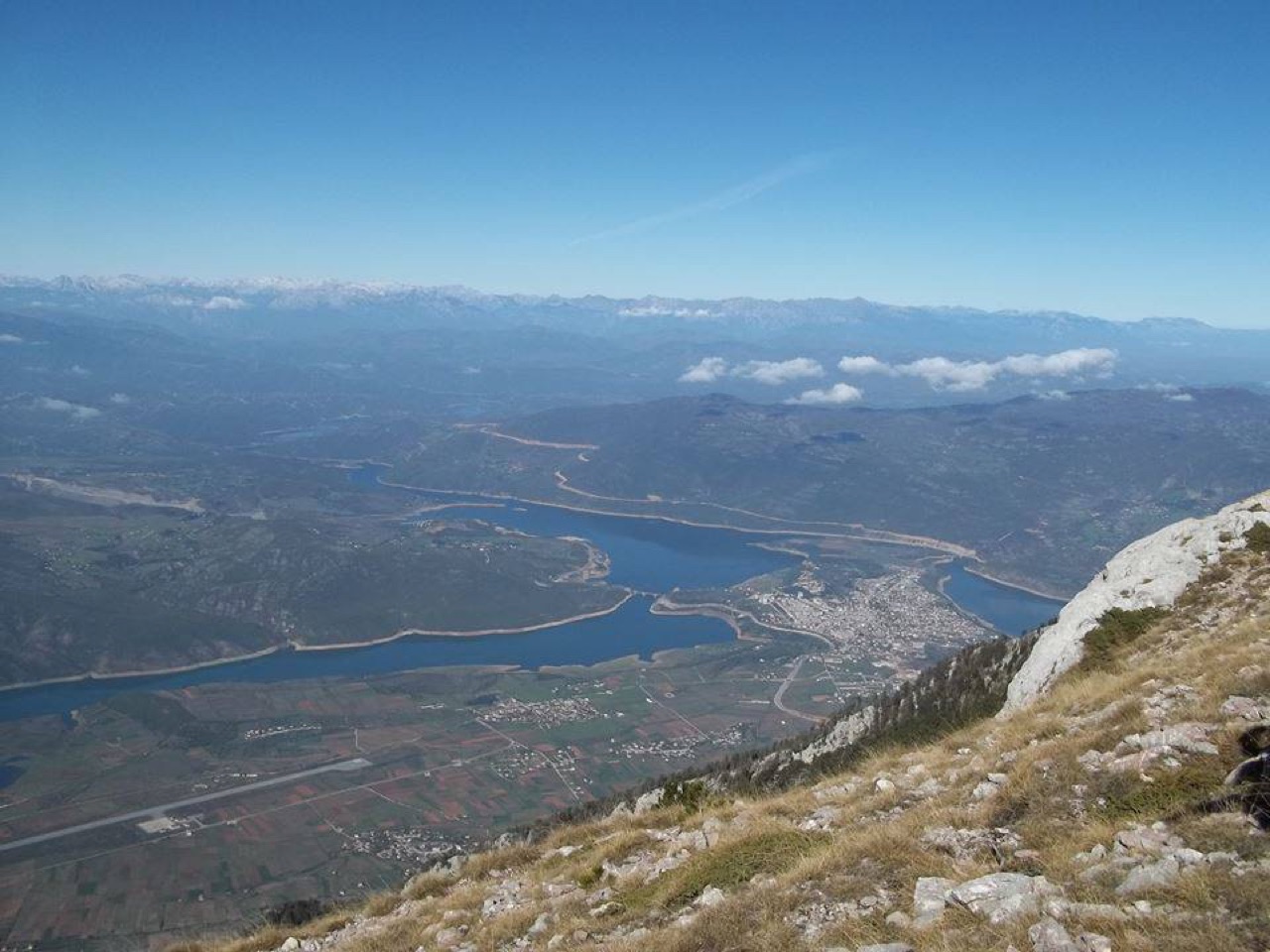
Town · Kukës
The road head for the Valbona valley, named after a guerrilla leader of the 1920s.
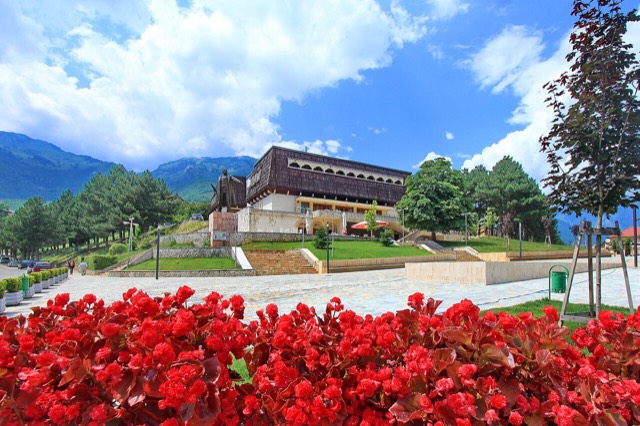
Village · Kukës
A wide white riverbed under 2,500 m peaks; the eastern end of the Theth trek.
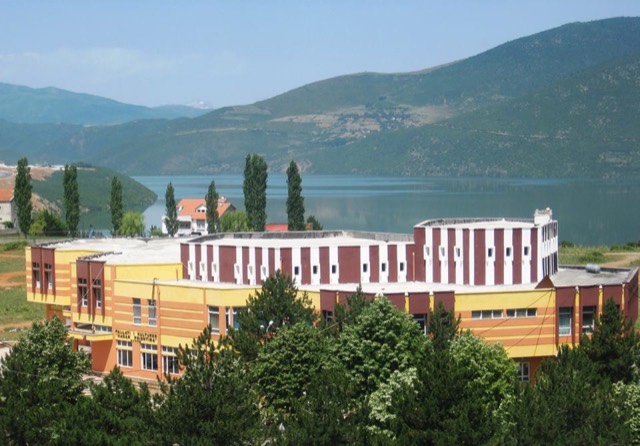
Town · Kukës
A town rebuilt above a reservoir in the 1970s, and the northern end of the Nation's Road.
Guide
One main airport, four ferry corridors, and four land borders that all behave differently.
Something wrong on this page? Corrections are welcome and are checked against the source record. Tell us what is wrong and, if you can, where the right figure comes from.