Stadt · Berat
Berat
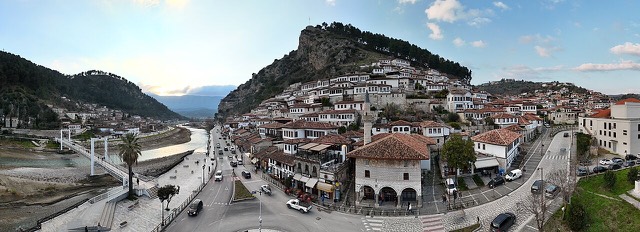
The 'city of a thousand windows': an Ottoman hill town under a still-inhabited castle, UNESCO-listed since 2008.
Jeder Kreis, jede Küste, jedes Jahrhundert
Geführte Ansicht
Neu in Albanien? Jede Seite beginnt mit einer einfachen Erklärung, die auch ein Zehnjähriger verstehen würde – bevor es ins Detail geht.
Expertenansicht
Sie kennen die Grundlagen bereits. Direkt zur Substanz, ohne die vereinfachten Erklärungen. Dies ist die Standardeinstellung.
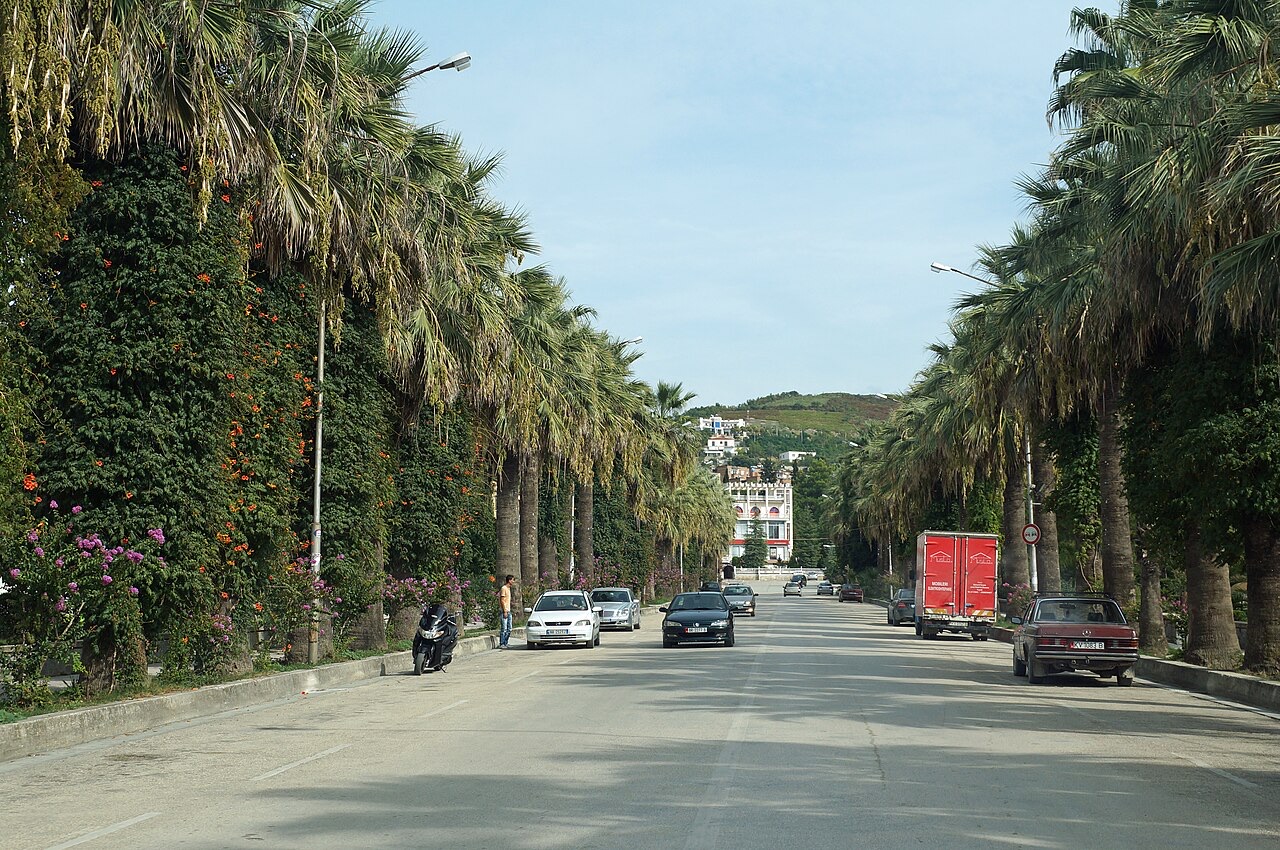
Kleinstadt · Berat County
An oil town and air base, called Qyteti Stalin from 1950 to 1990.
Speichern
Kuçovë grew because of oil found nearby in the 1920s. Under communism it was renamed 'Stalin City'. It also has a large military airfield.
Kuçovë grew because of oil found nearby in the 1920s. Under communism it was renamed 'Stalin City'. It also has a large military airfield.
Kuçovë is a municipality in south-central Albania. It was created by the 2015 local government reform through the merger of four former municipalities: Kozare, Kuçovë, Lumas, and Perondi, each of which became a municipal unit under the new arrangement. The seat of the municipality is the town of Kuçovë.
The municipality covers a total area of 160.33 square kilometres (61.90 sq mi). According to the 2023 census, the total municipal population is 31,077, while the population of the municipal unit of Kuçovë specifically stands at 12,629. The population density of the Kuçovë district is recorded at 567 inhabitants per square kilometre, which ranks it as the most heavily populated district in Albania on a national scale.
Archaeological work at the village of Katundas, near Kuçovë, has identified six distinct phases of human inhabitation at the site. These phases span the Neolithic, Chalcolithic, Bronze Age, Iron Age, urban Illyrian, and Late Antiquity periods, indicating long and continuous occupation of the area.
No further detail on the specific finds or excavation history is provided in the available record, but the sequence demonstrates that the territory around the present-day town has been inhabited for several millennia.
Kuçovë's modern industrial character dates to the early 1920s, when Italian commercial influence began shaping the town. The first oil well in Albania was drilled in 1928 in a location called 'Dikatër', establishing the Kuçovë oil field. From that point the town developed as a settlement for oil workers and their families.
Following the 1928 drilling, the Italian company AIPA reached an agreement with the government of King Zog I: if annual oil extraction exceeded 50,000 tonnes, AIPA would construct a refinery in Albania. By 1939, extraction had surpassed 170,000 tonnes, but Italy's military occupation of Albania that year rendered the agreement void. No refinery was built, and extracted oil was transported directly to Italy.
Kuçovë remains one of Albania's principal oil-producing centres, alongside the Patos-Marinza and Ballsh-Hekal oil fields. Much of the infrastructure installed during the Italian period is considered outdated.
During the communist era, Kuçovë was renamed Stalin City (Albanian: Qyteti Stalin) and designated a closed military district. The town was extensively developed in the 1950s, and the built fabric from that period is of interest to students of communist-era architecture.
Following the collapse of communism, the original buildings were subject to substantial unauthorised construction and modification, altering much of the period streetscape. The town reverted to its original name after the end of communist rule.
The end of communism brought severe industrial decline to Kuçovë. Many factories closed, and the town's power plant was destroyed during the 1997 riots that followed the collapse of pyramid banking schemes across Albania.
Recovery has been partial. A number of micro-businesses have begun operating from premises that were formerly state-run factories, and several foreign-owned banks with a small number of ATMs are present in the town. Unemployment, however, remains high, and emigration among young people seeking work abroad is a persistent feature of the local economy.
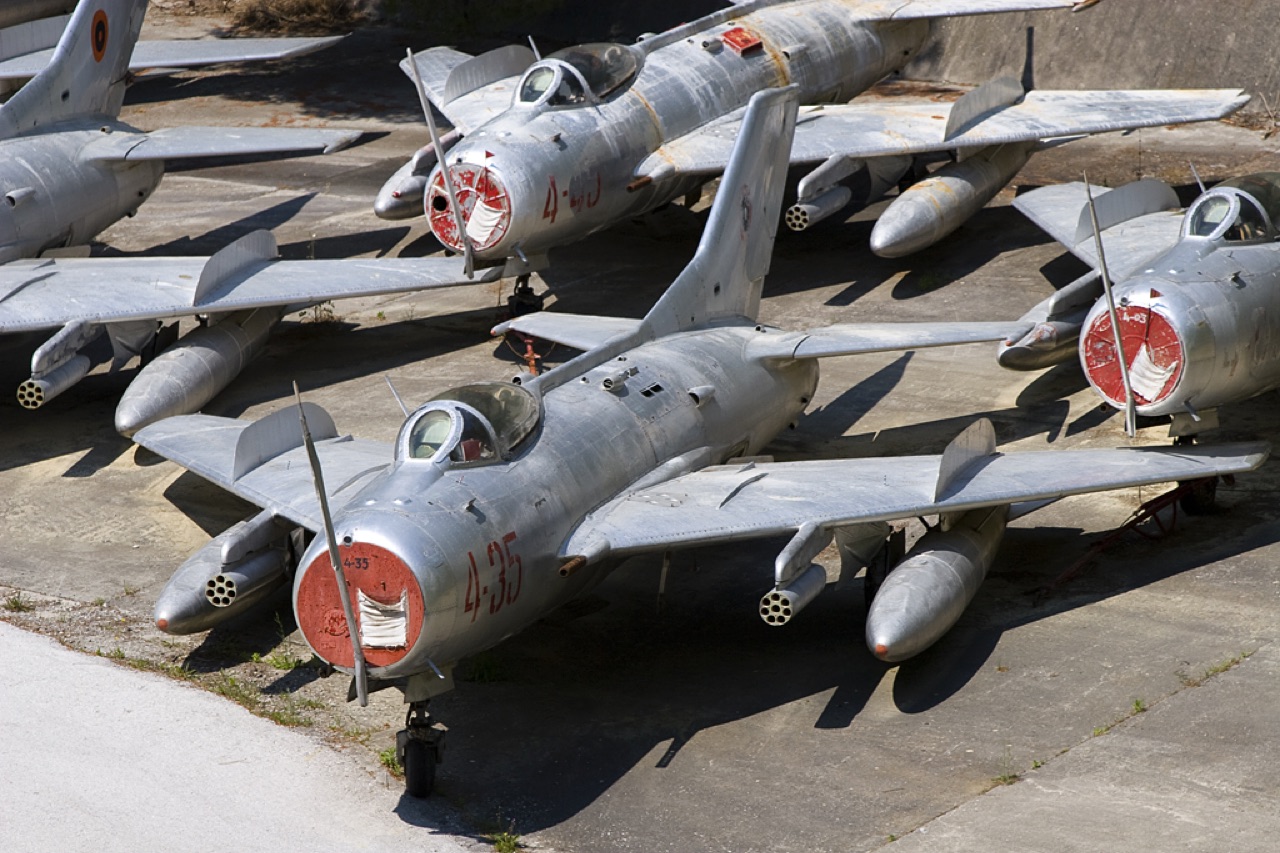
Kuçovë is the location of the Kuçovë Air Base of the Albanian Air Force. From 2005, the Albanian air force ceased flying the MiG fighter aircraft that had been supplied by the Soviet Union and China, and its operational capacity was reduced to rotary-wing aircraft only.
In 2024 the airfield was reactivated as a NATO air base, in the context of the alliance's broader expansion into Eastern Europe.
Of Kuçovë municipality's approximately 31,000 residents recorded in the 2023 census, around 12,000 live in the town of Kuçovë itself, placing the municipality twelfth out of 65 municipalities nationally by city population. Sixty-three percent of the district's population live in the urban centre, with the remainder in surrounding villages — a higher urban concentration than most other Albanian districts.
The town is divided into five neighbourhoods (Albanian: lagje): 'Lgj. 11 Janari', 'Lgj. Llukan Prifti', 'Lgj. 11 Shkurti', 'Lgj. Tafil Skendo', and '1 Maji'. One of the largest parks in the town is named 'Pishat', meaning The Pines.
Kuçovë has two public general high schools — 'Myrteza Kepi' and General High School Kuçovë — as well as one non-public high school. Five schools covering grades 1 through 9 also operate in the town: '18 Tetori', '28 Nëntori', 'Gaqi Karakashi', '23 Nëntori', and 'Dëshmorët e Kombit'. Students seeking university education travel to other Albanian cities or abroad, as no higher education institution is based in Kuçovë.
The town's football club, KF Naftëtari Kuçovë, competes in the Albanian Second Division. Home matches are played at the Bashkim Sulejmani Stadium, which has a capacity of 5,000 spectators.
Stadt · Berat
The 'city of a thousand windows': an Ottoman hill town under a still-inhabited castle, UNESCO-listed since 2008.
Historische Epoche
Forty-six years under Enver Hoxha and his successor: total collectivisation, the banning of religion, successive breaks with…
Industrie
Heavy onshore crude from Patos-Marinza, produced since the 1920s and refined at Ballsh.
Etwas falsch auf dieser Seite? Korrekturen sind willkommen und werden gegen den Quelldatensatz geprüft. Bitte mitteilen, was falsch ist und, wenn möglich, woher die richtige Angabe stammt.