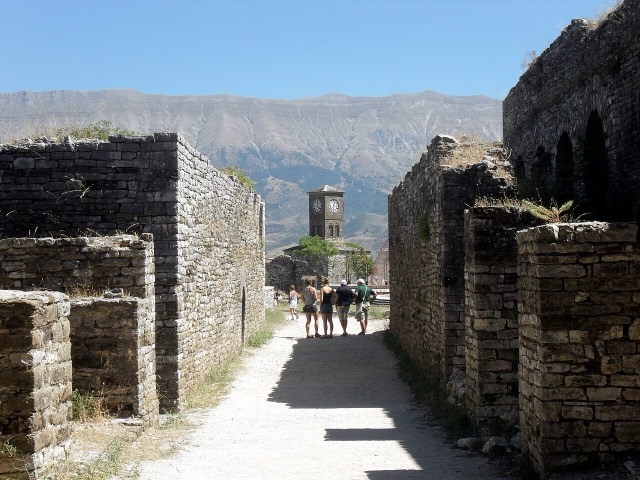
城市 · Gjirokastër
Gjirokastër
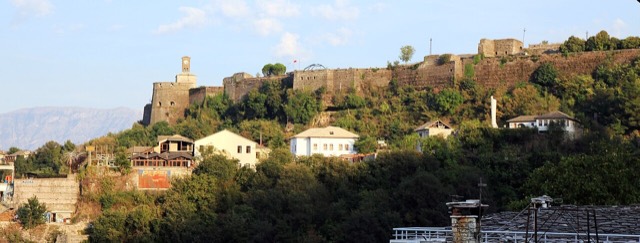
The 'stone city': slate-roofed tower houses on a steep slope beneath one of the Balkans' largest castles.
每个县、每段海岸、每个世纪
引导视图
初次了解阿尔巴尼亚?每个页面均以通俗易懂的说明开篇——即便是十岁的孩子也能读懂——随后再展开详细内容。
专业视图
您已掌握基础知识。直接进入正题,简明解释默认隐藏。此为默认模式。
主题
Multipart unaccompanied singing over a held drone, inscribed by UNESCO in 2005.
保存
In southern Albania people sing in a special way: two or three singers carry the tune while a group holds one long note underneath, called the iso. There are no instruments. UNESCO put it on its list of the world's intangible heritage in 2005.
In southern Albania people sing in a special way: two or three singers carry the tune while a group holds one long note underneath, called the iso. There are no instruments. UNESCO put it on its list of the world's intangible heritage in 2005.
Albanian Iso-Polyphony (Albanian: Iso-polifonia) is a traditional form of folk music in which multi-line singing is accompanied by choral drone parts. It exists in many regional and formal variations across southern Albania and in Albanian-speaking communities beyond the country's borders. UNESCO has included it on its intangible cultural heritage list.
The term iso — sometimes written yso or ysa — derives from the Greek word ίσον (ison), which denotes a drone in Byzantine church music. Polyphony refers to the presence of multiple simultaneous lines of melody. The compound name 'iso-polyphony' is thought to have spread through scholarly usage in the later twentieth century. Among folk singers, various terms are used instead, including e mbajnë zë ('they hold the voice'), këngë me iso ('songs with a drone'), zjejnë ('to boil'), and me të rënkuar ('with a moan or groan').
At Albanian occasions of music or singing, listeners often call out Béni iso! or Béni isa! ('Do a drone!') or the similar Ajde, mbusheni! ('Come on, fill it!'), encouraging participants to add the drone part.
All four ethnographic regions of southern Albania — Lalëria (Myzeqe), Toskëria, Çamëria, and Labëria — include polyphonic song as part of their musical culture. The tradition is performed in two Albanian dialects: Tosk and Lab. The Tosk musical dialect covers the regions of Toskëria, Myzeqeja, and Chamëria, while the Lab musical dialect covers Labëria.
A related form of polyphonic singing is also found in northern Albania in the area of Peshkopi, in the North Macedonian areas of Polog, Tetovo, Kičevo, and Gostivar, and in Malësia in northern Albania and southern Montenegro. Two-voice iso-polyphony is additionally documented among the Arbëreshë of Calabria, Italy.
Albanian Iso-Polyphony is considered to have its roots in the many-voiced vajtim, the southern Albanian traditional lamentation of the dead. Many scholars who have studied Albanian iso-polyphony, and Balkan polyphonic music more broadly, regard it as an old tradition dating back to the Thraco-Illyrian era, though historical documentation of this music is scarce. Scholars have reached their conclusions primarily by analysing the living tradition rather than written records, since the music is considered a product of oral transmission across many generations.
Several specific features are cited as indicators of ancient origin: the pentatonic modal and tonal structure, which is widely thought to represent an early stage of a people's musical culture; the presence of recitative vocals, which is associated with an undeveloped melodic phase; the presence of calls and shouts, similarly linked to a primitive phase of musical development; and the a cappella singing style, which suggests antiquity because of its lack of instrumental accompaniment.
Although the region was under Byzantine rule for many centuries, Balkan polyphonic tradition developed differently from medieval Byzantine music. The Balkan tradition was non-institutionalised and collectively formed over time, transmitted orally by musically illiterate common people. Byzantine music, by contrast, was composed by individual composers, institutionalised, extensively documented, and performed by trained professionals. The two traditions coexisted for centuries and would have had some mutual influence, though scholars consider the interaction between Albanian polyphonic music and Byzantine music to have been relatively small.
Albanian polyphonic traditional music is thought to have originated with only two melodic lines: the taker (Albanian: marrës, the first voice) and the turner (Albanian: kthyes or pritës, the second voice). The turner is believed to have initially played a non-specific melodic role, a style still found in the two-voiced polyphonic singing of women in Gjirokastër. Over time the turner is thought to have become more precisely defined melodically; the tradition in which the turner plays a clearly defined melodic role is found today among the men of Dukat.
The drone (Albanian: iso) is considered the next melodic line to have evolved. It appears to have been adapted naturally to the existing two lines, producing three-voiced polyphony. The introduction of the drone is regarded as a significant artistic achievement because it diversified and enriched the harmonic interplay between melodic lines. Three-voice polyphony is now the most common form; it is typical in the areas of Skrapar, Gramsh, Devoll, Gjirokastër, Kolonjë, Sarandë, and Vlorë. Although currently sung by mixed-gender groups, three-voice polyphony was traditionally sung only by men.
The launcher (Albanian: hedhësi, the third voice) is considered the last melodic line to have been added, giving rise to four-voiced polyphony. Its introduction increased artistic sophistication without fundamentally altering the vocal harmony. Four-voiced polyphony is entirely absent from Toskëria, Myzeqeja, and Chamëria, and exists only in Labëria. Scholar Vasil Tole attributes the consolidation of the four-voice method to Neço Muko through recordings made in the 1920s and 1930s.
Regarding the two-voice form, scholar Vasil Tole argues that treating it as a first developmental stage is incorrect, because the two voices actually perform three functional roles, making two-voice iso-polyphony a 'hidden' form of three-voice iso-polyphony.
Labëria is particularly associated with multipart singing. Songs in the region can have two, three, or four parts. Two-part songs are sung only by women. Three-part songs can be sung by men and women. Four-part songs are a Labërian specialty, found nowhere else in Albania's polyphonic tradition.
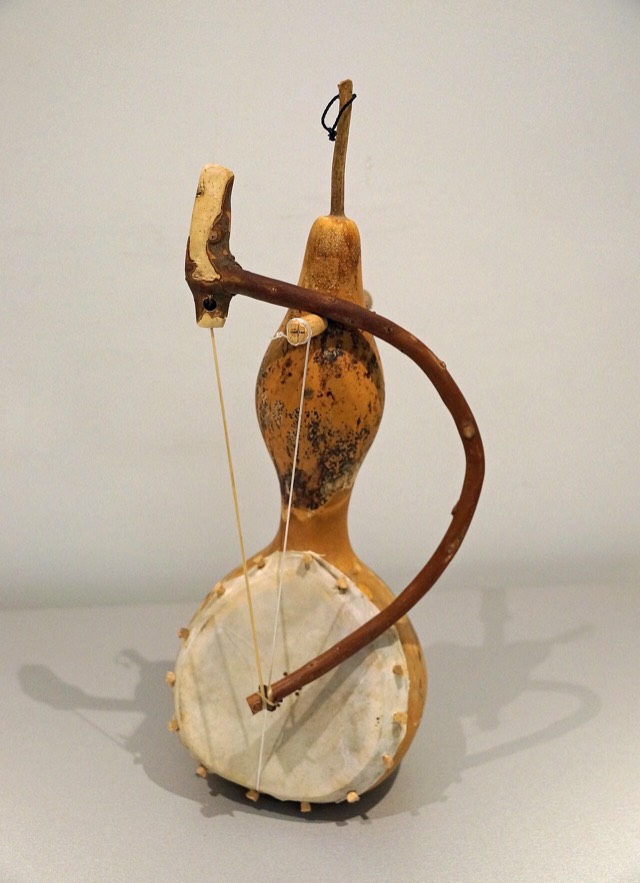
Research has established that four-part songs developed after three-part ones and represent the most complex form of polyphonic singing. The instrumental expression of Albanian Iso-Polyphony evolved separately into the Albanian kaba, a related musical form.
Pleqërishte is a genre of Albanian folk iso-polyphony sung by men in Labëria, principally identified with the city of Gjirokastër and its surrounding area. The word means both 'of old men' and 'of the old time', referring respectively to the mode of singing and to the lyrical themes found in part of the repertoire. Songs on specifically historical or ancient themes are also called lashtërishte ('of the ancient time'), a term used exclusively in Gjirokastër. These thematic subjects have largely fallen out of common use but remain historically notable.
The genre is characterised by slow tempo, low pitch, and small vocal range, contrasting with genres such as djemurishte ('of young men'). As a four-part genre, pleqërishte features a third soloist called the hedhës. Unlike other four-part genres, where the hedhës mainly functions as a secondary drone a minor third above the keynote, in pleqërishte the hedhës relieves the first soloist (marrës) and allows him a breathing break. Each rendition begins with the marrës singing the opening lines, followed by the entry of the second soloist (kthyes) and then the hedhës; after the hedhës, the marrës's lyrics are repeated by the drone group in various forms.
Pleqërishte songs are exemplified by the folk group Pleqtë e Gjirokastrës, sometimes described as the 'last representative' of the genre. One of the best-known songs in their repertoire is Doli shkurti, hyri marsi, which recounts a battle between Çerçiz Topulli and Ottoman troops in 1908 in the village of Mashkullorë near Gjirokastër.
The Gjirokastër National Folklore Festival (Albanian: Festivali Folklorik Kombëtar) has been held every five years in October since 1968. It typically includes many polyphonic songs and serves as a major public forum for the performance of iso-polyphony in Albania.
The term iso in iso-polyphony is linguistically related to the ison, the drone used in Byzantine church music. However, the structural and social relationship between Albanian polyphonic tradition and Byzantine music is considered by scholars to be limited. The two traditions coexisted in the same geographic area for centuries, but they developed along fundamentally different lines.
Byzantine music was the product of named individual composers, was institutionalised and thoroughly documented, and was performed by professionally trained and musically literate practitioners. The Balkan polyphonic tradition, by contrast, was collectively and anonymously formed, transmitted entirely by oral means, and performed by people without formal musical education. Scholars conclude that while some mutual influence is plausible given their geographic proximity, that interaction is judged to have been relatively small.
Albanian Iso-Polyphony is included on UNESCO's list of intangible cultural heritage. Because the tradition has been transmitted orally across many generations, written historical documentation is scarce, and scholars' conclusions about its origins and development rest primarily on analysis of the living practice as it continues to be performed.
The tradition encompasses a wide range of regional varieties across southern Albania, with documented forms also among Albanian-speaking communities in North Macedonia and among the Arbëreshë of Calabria. The encyclopaedic work on the subject in Albanian includes Vasil Tole's 2014 Enciklopedia e iso-polifonisë popullore shqiptare.
城市 · Gjirokastër
The 'stone city': slate-roofed tower houses on a steep slope beneath one of the Balkans' largest castles.
历史遗址 · Gjirokastër
One of the largest castles in the Balkans, holding an artillery gallery and a captured US aircraft.
主题
A culture shaped by mountain isolation, five centuries of Ottoman rule, and fifty years of enforced separation.
城镇 · Gjirokastër
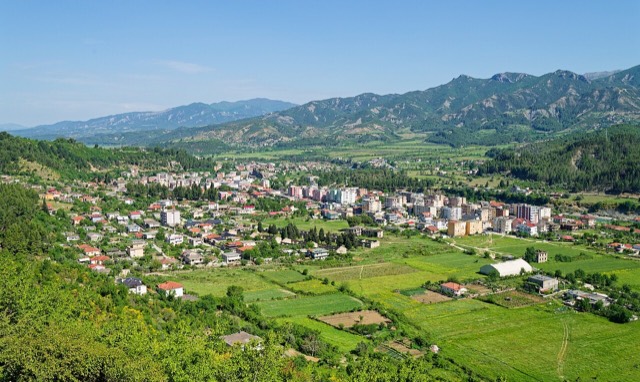
A small Vjosa-side town known for its fruit preserves, thermal baths and polyphonic singing.
专题解析
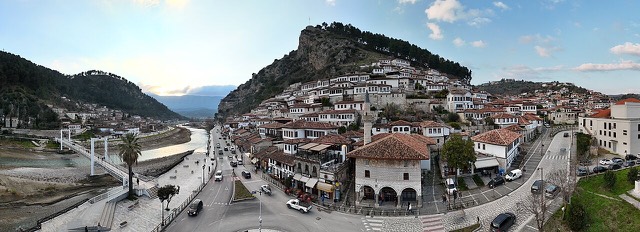
Four inscriptions: Butrint, the historic centres of Berat and Gjirokastra, the Ohrid region, and the primeval beech forests.
本页内容有误? 欢迎提交更正意见,所有意见均会与原始记录核对。请告知错误所在,如能提供正确数据的出处,请一并注明。