Historische Epoche
The Zog Years
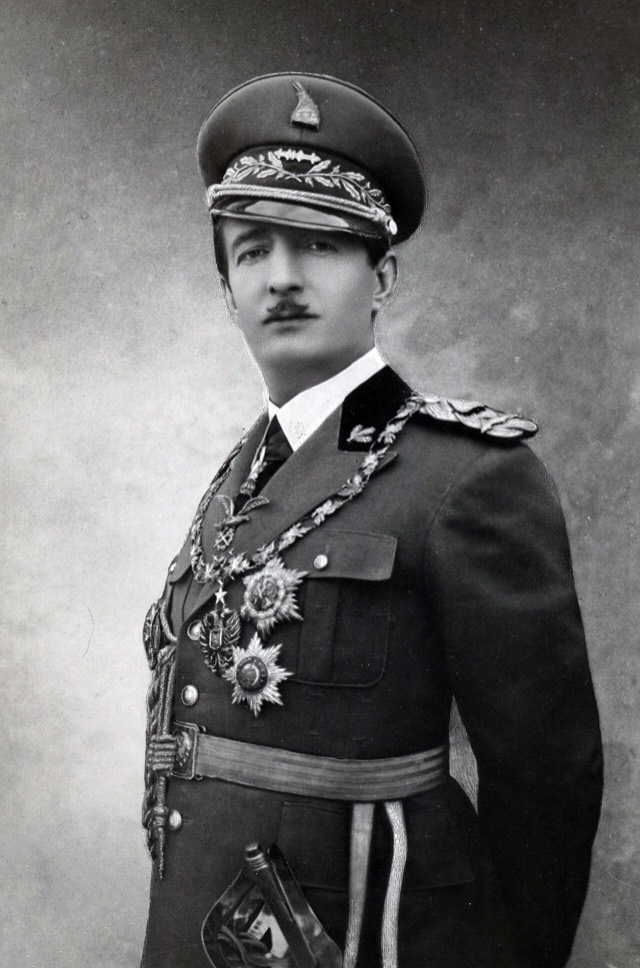
From the Congress of Lushnjë to a republic, then a monarchy, under Ahmet Zogu.
Jeder Kreis, jede Küste, jedes Jahrhundert
Geführte Ansicht
Neu in Albanien? Jede Seite beginnt mit einer einfachen Erklärung, die auch ein Zehnjähriger verstehen würde – bevor es ins Detail geht.
Expertenansicht
Sie kennen die Grundlagen bereits. Direkt zur Substanz, ohne die vereinfachten Erklärungen. Dies ist die Standardeinstellung.
Betreff
Illyrian kingdoms, Roman roads, five Ottoman centuries, twenty-eight years of independence, forty-six years of the strictest communism in Europe, and three decades of reopening.
Speichern
Albania's story is long. Ancient people called Illyrians lived here first. Then the Romans came, then the Byzantines, then the Ottomans, who stayed almost 500 years. Albania became independent in 1912. After the Second World War it became a communist country that shut itself off from everyone. That ended in 1990-91, and Albania has been reopening ever since.
Albania's story is long. Ancient people called Illyrians lived here first. Then the Romans came, then the Byzantines, then the Ottomans, who stayed almost 500 years. Albania became independent in 1912. After the Second World War it became a communist country that shut itself off from everyone. That ended in 1990-91, and Albania has been reopening ever since.
The earliest evidence of human presence in Albania dates to the Middle and Upper Paleolithic periods. Finds were made at two sites: a cave near the village of Xarrë, close to Sarandë, which yielded flint and jasper objects and fossilized animal bones, and Mount Dajt near Tirana, where bone and stone tools comparable to those of the Aurignacian culture were recovered. These finds share strong similarities with material from Crvena Stijena in Montenegro and north-western Greece.
Neolithic-era archaeological sites are distributed across Albania, with artifacts dated between approximately 6,000 BCE and the end of the Early Bronze Age. The most significant sites include Maliq, Gruemirë, Dushman in the Dukagjin region, the Erzen river valley near Shijak, the area around Durrës, Ziçisht, Nepravishtë, Finiq, and Butrint.
The Bronze Age in Albania coincides with the broader Indo-Europeanization of the Balkans, driven by Pontic steppe migrations that introduced Indo-European languages and, through fusion with the existing Neolithic population, produced the Paleo-Balkan peoples. In Albania, the ancestral groups to the Iron Age Illyrians are identified towards the end of the Early Bronze Age, associated with the arrival of tumuli burial grounds belonging to patrilineally organized clans. Some of the earliest such tumuli date to the 26th century BCE. These mounds represent the southern expression of the Adriatic-Ljubljana culture, related to the Cetina culture, which moved southward along the Adriatic from the northern Balkans, with similar constructions recorded in Montenegro at Rakića Kuće and in northern Albania at Shtoj.
In the late Bronze Age and early Iron Age, further population movements affected the territory of modern Albania, including the settlement of the Bryges in areas of southern Albania and north-western Greece, and the movement of Illyrian tribes into central Albania. The Bryges were a Phrygian people, and their migration is thought to coincide roughly with the beginning of the Iron Age in the Balkans during the early first millennium BCE.
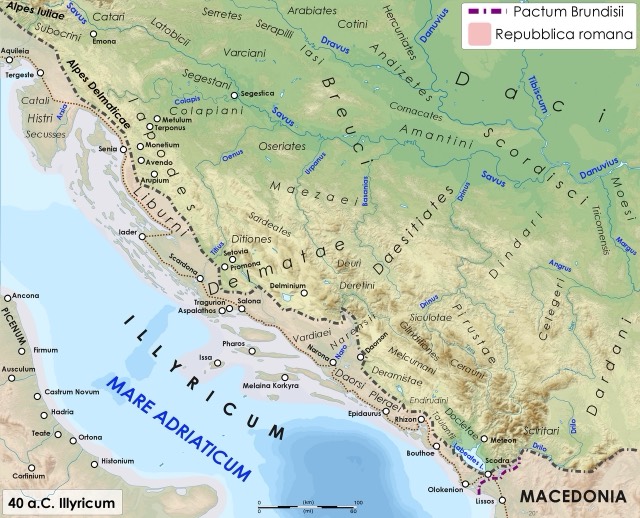
The Illyrians were a group of tribes inhabiting the western Balkans during classical antiquity. Greek and Roman authors applied the name Illyria to a territory bounded roughly by the Adriatic Sea to the west, the Drava river to the north, the Morava river to the east, and the mouth of the Vjosë river to the south. The first surviving account of the Illyrian peoples appears in a periplus, an ancient Greek text dateable to the middle of the 4th century BCE. Several Illyrian tribes occupied what is now Albania: the Ardiaei, Taulantii, and Albanoi in central Albania; the Parthini, Abri, and Cavii in the north; the Enchelei in the east; and the Bylliones in the south. The Bryges lived along the westernmost parts of the territory, and the Greek tribe of the Chaonians inhabited the south.
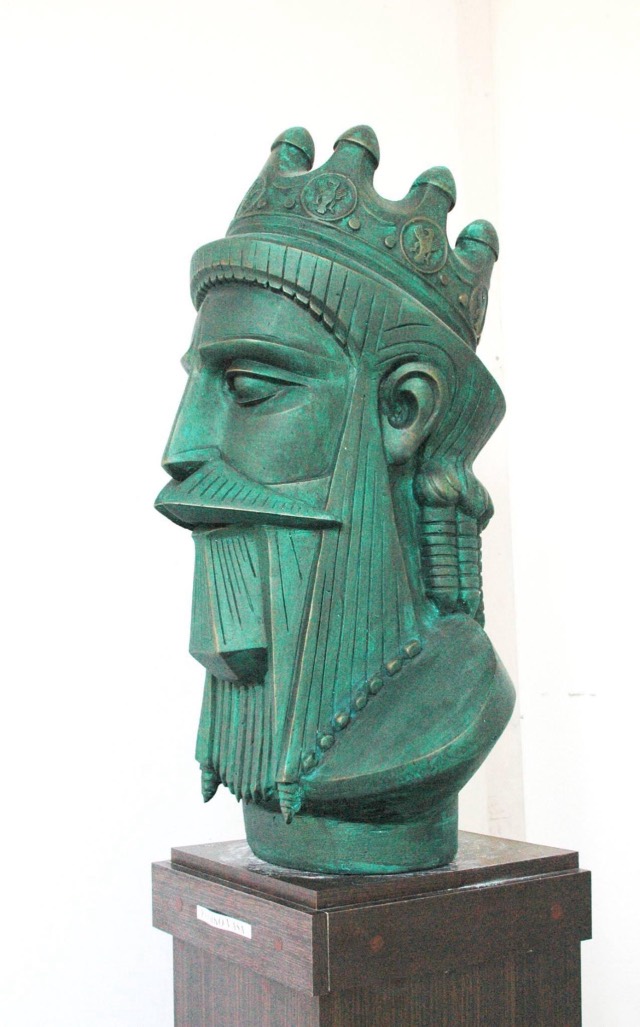
The earliest recorded Illyrian king, Bardylis, emerged in the territory of modern Albania around 400 BCE. He united multiple southern Illyrian tribes, expanded his dominion over Upper Macedonia and Lynkestis, and engaged in repeated conflicts with Macedon and the Molossians. He was eventually defeated by Macedon. His successors were Grabos II, Bardylis II, and Cleitus the Illyrian, who was in turn defeated by Alexander the Great. Before the rise of Macedon, the Illyrians constituted the dominant regional power.
In the late 4th century BCE, the kingdom of the Taulantii under Glaukias dominated southern Illyrian affairs from a base in central Albania, and exerted significant influence on the Epirote state through close ties with the Molossian king Pyrrhus. The greatest Illyrian kingdom emerged under the Ardiaei in the 3rd century BCE, with core territory encompassing northern Albania. Its power rested on a large army and fleet, and it controlled a stretch of territory running from the Neretva River in the north to the borders of Epirus in the south, with influence extending through Epirus into Acarnania.
Around 230 BCE, the Ardiaean king Agron extended his rule over neighbouring tribes, raided Epirus, Epidamnus, and the islands of Corcyra and Pharos, and his state reached from Narona in Dalmatia south to the river Aoos. Agron died around 231 BCE following his victory over the Aetolians. His second wife, Queen Teuta, acted as regent and pursued an aggressive policy that included capturing Dyrrhachium and Phoenice, defeating a combined Achaean and Aetolian fleet at the Battle of Paxos, and seizing Corcyra. In 229 BCE her actions brought her into conflict with Rome, initiating the Illyrian Wars. These wars, extending over 60 years, ended in 168 BCE with the defeat of King Gentius of the Labeatae tribe — the last known king of the Illyrians — by a Roman army under Anicius Gallus. After Gentius's defeat, Rome divided the region into three administrative units called meris.
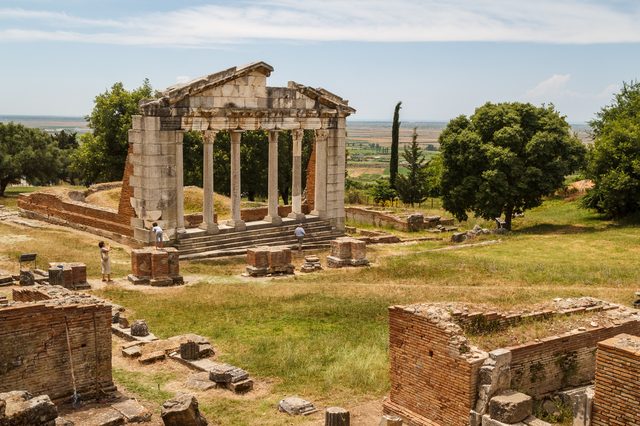
Beginning in the 7th century BCE, Greek colonies were established along the Illyrian coast. The most significant were Apollonia, Aulon (modern Vlorë), Epidamnos (modern Durrës), and Lissus (modern Lezhë). The city of Buthrotum (modern Butrint), now a UNESCO World Heritage Site, was in Julius Caesar's time considered an unimportant outpost — Caesar used it as a provisions depot during his 1st-century BCE campaigns — and it was overshadowed by Apollonia and Epidamnos.
Following the Roman defeat of Gentius in 168 BCE, the lands of modern Albania were incorporated into the Roman Empire. Territory north of the river Drin became part of the province of Illyricum, while territory to the south formed part of Roman Macedonia, specifically as Epirus Nova. The western section of the Via Egnatia ran through modern Albania, terminating at Dyrrachium. Illyricum was subsequently divided into the provinces of Dalmatia and Pannonia. In 357 CE the region formed part of the Praetorian prefecture of Illyricum, one of four large praetorian prefectures of the Late Roman Empire. By 395 CE the relevant dioceses were the Diocese of Dacia (as Pravealitana) and the Diocese of Macedonia (as Epirus Nova), with most of modern Albania corresponding to Epirus Nova.
When the Roman Empire was divided into eastern and western halves in 395 CE, the territories of modern Albania passed to the Eastern Empire. Between the early decades of Byzantine rule and 461, the region suffered raids by Visigoths, Huns, and Ostrogoths. During the 6th and 7th centuries, Slavic migrations into the Balkans forced Albanians and Vlachs into mountainous regions and towards Byzantine Greece, weakening or destroying Roman and Byzantine cultural centres across the region. In the mid-9th century, most of eastern Albania was absorbed into the Bulgarian Empire, and the area — known as Kutmichevitsa — became an important Bulgarian cultural centre in the 10th century, with towns including Devol, Glavinitsa (Ballsh), and Belgrad (Berat).
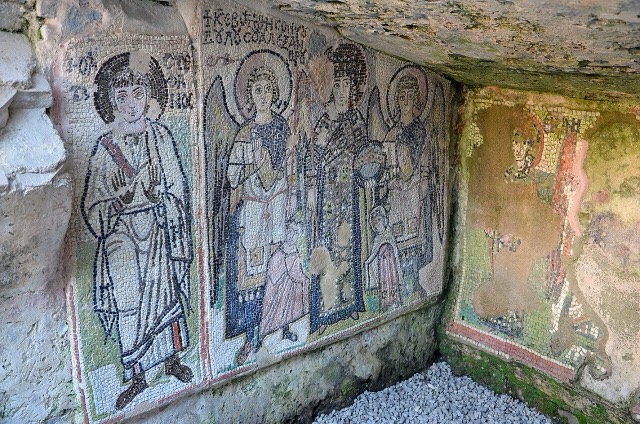
Christianity reached Epirus Nova as part of the Roman province of Macedonia. By the 3rd and 4th centuries CE it had become the established religion in Byzantium, displacing pagan polytheism. The Durrës Amphitheatre was used during this period to preach Christianity to civilians.
When the Empire divided in 395, the eastern Illyrian lands, including what is now Albania, were administered by Constantinople but remained ecclesiastically dependent on Rome. This arrangement persisted until 732, when the Byzantine emperor Leo III — angered by regional archbishops who had sided with Rome in the Iconoclastic Controversy — removed the provincial church from papal jurisdiction and placed it under the Patriarch of Constantinople.
The Great Schism of 1054 produced the first significant religious split within Albania: southern Albania retained its ties to Constantinople and Eastern Orthodoxy, while the north reverted to the jurisdiction of Rome. Following the formation of the Slav principality of Dioclia (modern Montenegro), the metropolitan see of Bar was created in 1089, and dioceses in northern Albania, including Shkodër and Ulcinj, became its suffragans. From 1019, Albanian dioceses of the Byzantine rite were suffragans of the Archdiocese of Ohrid, until Dyrrachion and Nicopolis were re-established as metropolitan sees, after which only the inner Albanian dioceses of Elbasan and Krujë remained attached to Ohrid. In the 13th century, during the Venetian occupation, the Latin Archdiocese of Durrës was founded.
The first undisputed mention of Albanians in any historical source appears in the Byzantine historian Michael Attaliates's work History, recording their participation in a revolt against Constantinople in 1043 and identifying the Arbanitai as subjects of the duke of Dyrrhachium. Attaliates also refers to Albanian participation in a rebellion around 1078. By the late 12th century, as Byzantine central authority weakened, the region of Arbanon had become an autonomous principality under hereditary princes.
In 1190, the Principality of Arbër was founded by archon Progon in the region of Krujë. He was succeeded by his sons Gjin Progoni and Dhimitër Progoni, who retained considerable autonomy from Constantinople. In 1204, Arbanon achieved full, if temporary, political independence by exploiting the weakening of Constantinople after the Fourth Crusade's sack of the city. Around 1216, however, Michael I Komnenos Doukas of Epirus invaded northward, took Krujë, and ended the principality's independence. After Dhimitër's death, Arbanon passed successively to the Despotate of Epirus, the Bulgarian Empire, and from 1235 to the Empire of Nicaea.
The Kingdom of Albania was established in February 1272 when Charles of Anjou took the title of King of Albania following a treaty signed on 21 February 1272 with a delegation of Albanian noblemen and citizens from Durrës, who had been brought to his court by two local Catholic priests acting as negotiators. The kingdom extended along the coast from Durrës south to Butrint. Charles appointed Gazzo Chinardo as Vicar-General. The Byzantines under Michael VIII Palaiologos worked to undermine Albanian noble support for Charles, and by 1274 had recovered most of Albania, leaving only Valona and Dyrrhachium in Angevin hands. Charles's delayed military advance on Constantinople was stopped at the Siege of Berat in 1280–1281. The kingdom ultimately contracted to a small area around Durrës; Karl Thopia, declaring himself an Angevin descendant, captured Durrës in 1368 and created the Princedom of Albania.
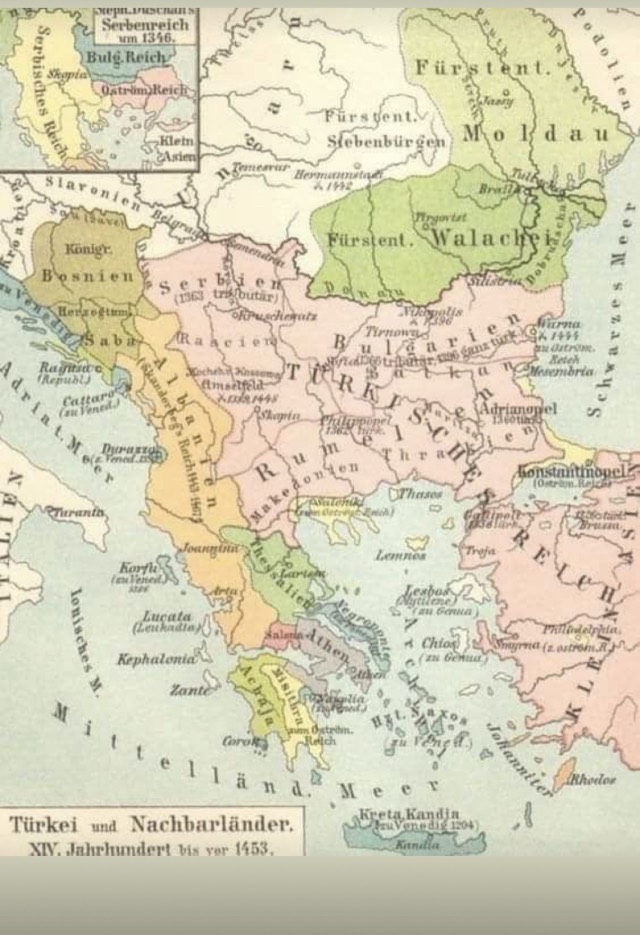
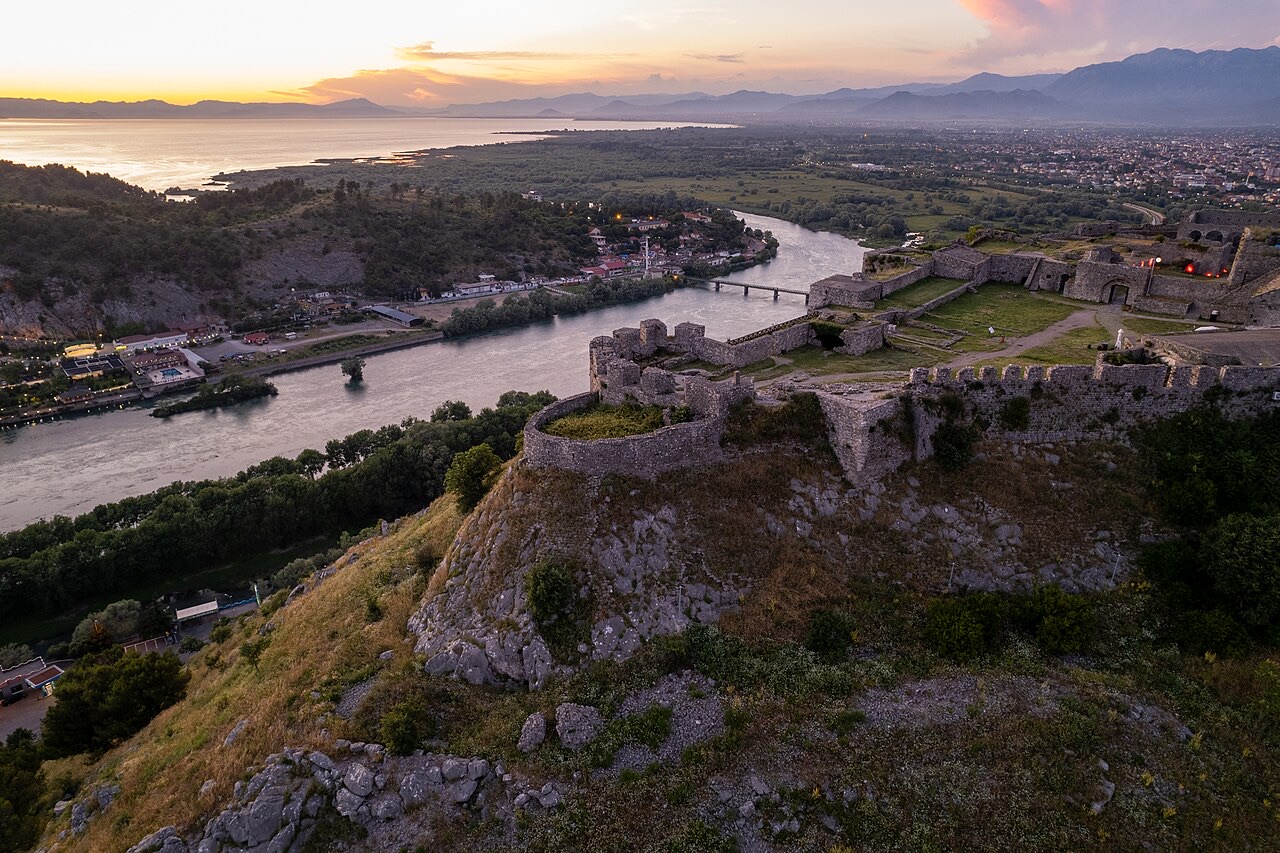
In 1371, the dissolution of the Serbian Empire led to the formation of several Albanian principalities. In the late 14th and early 15th centuries the Ottoman Empire conquered parts of south and central Albania. The League of Lezhë was established on 2 March 1444 at Lezhë under the leadership of Gjergj Kastrioti Skanderbeg, uniting Albanian and Serbian feudal lords against Ottoman expansion under Venetian patronage. Its main members were the Arianiti, Balšić, Dukagjini, Muzaka, Spani, Thopia, and Crnojevići. Skanderbeg commanded an army of approximately 10,000 men and held off Ottoman campaigns for 25 years, repelling major sieges at Krujë in 1450, 1466–67, and 1467 against forces led by Murad II and Mehmed II. He also won battles at Torvioll, Oranik, Otonetë, Modric, Ohrid, Mokra, and Albulena. Hungary, Naples, and Venice provided financial support, but the promised assistance from the papacy and Italian states did not materialize. Skanderbeg died in 1468. Resistance continued until the Ottoman siege of Shkodra in 1478–79, which ended when the Republic of Venice ceded Shkodra to the Ottomans by treaty in 1479. Shortly after the fall of these northern castles, many Albanians fled to Italy, forming the Arbëreshë communities.
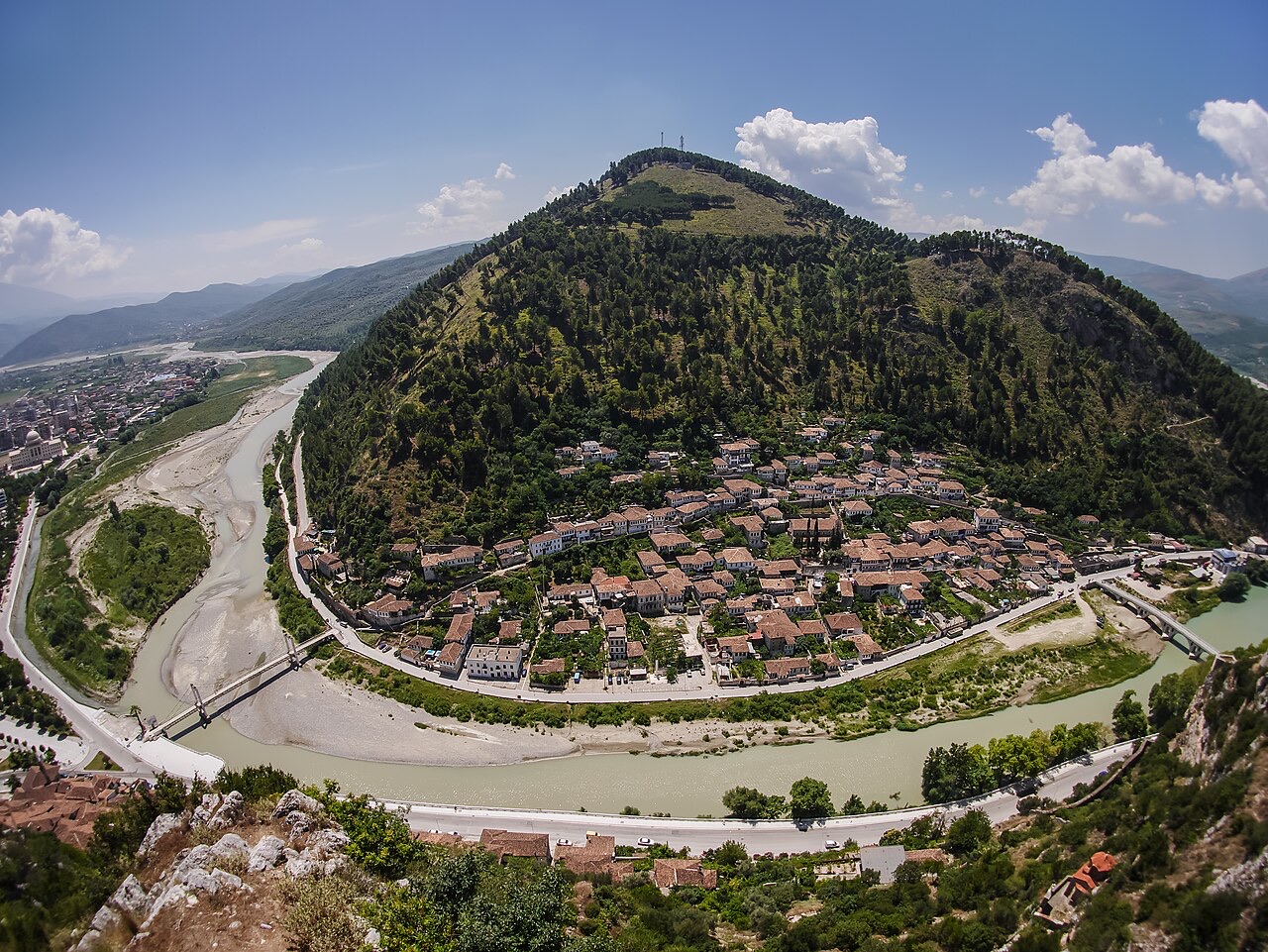
Ottoman supremacy in the western Balkans began with their victory at the Battle of Savra in 1385. In 1415 the empire established the Sanjak of Albania, covering territory from the Mat River in the north to Chameria in the south, with Gjirokastra becoming its administrative centre in 1419. Following the end of Skanderbeg's resistance, part of the Albanian population gradually converted to Islam, with many joining the Sufi Bektashi Order. Conversion brought practical advantages including access to Ottoman trade networks, administrative positions, and military service. Many Albanians rose to prominence in the empire, among them Köprülü Mehmed Pasha, founder of the Köprülü family of Grand Viziers, and Muhammad Ali, ruler of Egypt.
As Ottoman central authority declined in the 18th century, semi-independent pashaliks emerged. Three generations of the Bushati family dominated most of northern Albania from 1757 to 1831. Ali Pasha of Tepelena, who began as a brigand, ruled over southern Albania and northern Greece from 1788 to 1822, with his court at Ioannina. Both pashaliks operated as states within the state until overthrown by the sultan.
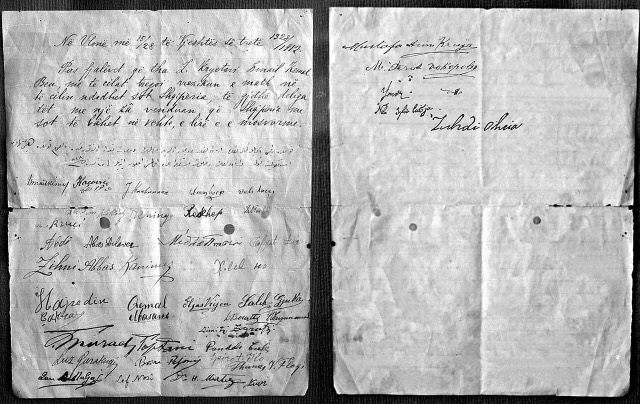
The League of Prizren was formed on 18 June 1878 at a meeting of 47 Ottoman beys in Prizren. Its founding document, the Kararname, expressed the intention to preserve Ottoman territorial integrity in the Balkans and defend Albanian territories by force of arms. The league fought against Montenegro and temporarily secured Plav and Gusinje. Under pressure from the Great Powers following the Congress of Berlin, the sultan dispatched Dervish Turgut Pasha to suppress the league and hand Ulcinj to Montenegro. The league's leaders were arrested and deported. Its founding figure Abdyl Frashëri, initially sentenced to death, was imprisoned until 1885 and exiled until his death seven years later. A successor league was established at Peja in 1899 by Haxhi Zeka, a former member of the Prizren league; it ended its activity in 1900 following armed conflict with Ottoman forces, and Zeka was assassinated by a Serbian agent, Adem Zajmi, in 1902.
The Albanian revolt between 1908 and 1910 contributed to the outbreak of the First Balkan War in 1912, as it exposed weaknesses in Ottoman control. Following the subsequent Ottoman collapse in Europe, Serbia occupied northern Albania and Greece occupied the south. The successful Albanian revolt of 1912, combined with foreign occupation and the threat of partition, led Ismail Kemal to proclaim independence in Vlorë on 28 November 1912, waving the Albanian national flag — modelled on Skanderbeg's principality flag — from the balcony of the Assembly of Vlorë. Albanian independence was recognised by the Conference of London on 29 July 1913, which also delineated borders that left more than half of ethnic Albanians outside the new state.
The new Albanian state was assigned to William of Wied, a German prince and nephew of Queen Elisabeth of Romania, after Aubrey Herbert, a British MP who had advocated the Albanian cause, was dissuaded by Prime Minister H. H. Asquith from accepting the offered crown. The Principality of Albania was established on 21 February 1914, when 18 Albanian delegates made a formal offer to William, which he accepted. Within Albania he was referred to as Mbret (King) rather than prince, to avoid appearing inferior to the King of Montenegro. William left Albania on 3 September 1914 following a pan-Islamic revolt initiated by Essad Pasha Toptani and later led by Haxhi Qamili; William joined the German army and served on the Eastern Front, but never renounced his throne claim.
World War I fragmented Albania along religious and tribal lines. Under the secret Treaty of London of April 1915, the Triple Entente promised Italy Vlorë, nearby lands, and a protectorate over Albania in exchange for entering the war against Austria-Hungary; Serbia and Montenegro were promised much of northern Albania, and Greece much of the south. When the war ended in November 1918, Italy occupied most of Albania, Serbia held much of the northern mountains, Greece occupied a sliver within the 1913 borders, and French forces held Korçë and Shkodër. A postwar Albanian National Assembly at Lushnjë in January 1920 rejected a partition plan agreed by France, Britain, and Greece at the Paris Peace Conference, appointed a four-man regency, created a bicameral parliament, and moved the capital to Tirana in February 1920. In March 1920, US President Woodrow Wilson intervened to block the Paris partition agreement. In December 1920 the League of Nations admitted Albania as a full member.
Interwar Albanian governments were highly unstable: between July and December 1921 alone the premiership changed hands five times. Ahmed Bey Zogu consolidated power, repulsed an attack on Tirana in early 1922 with British ambassador support, and took the premiership. Fan Noli led an insurgency that took control of Tirana in June 1924 and formed a government on 16 June 1924 with a twenty-point reform programme. Noli's government lasted just over six months. On 13 December 1924 Zogu crossed into Albania with a Yugoslav-backed mercenary force reinforced by approximately 1,000 Yugoslav army regulars and Russian White émigrés; by Christmas Eve he had retaken the capital and Noli had fled to Italy.
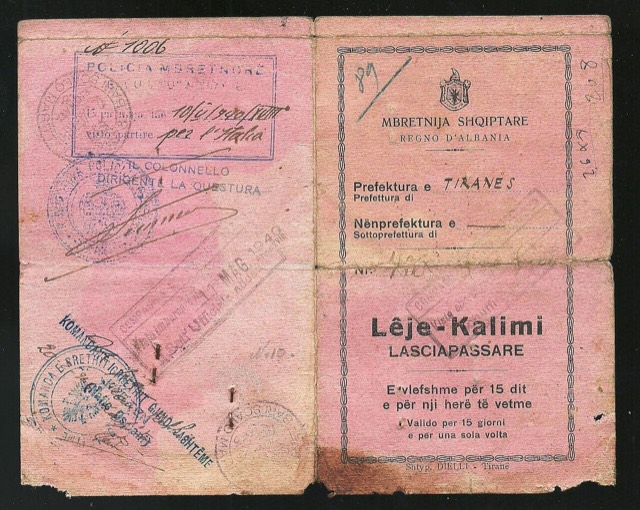
After defeating Noli, Zogu had parliament adopt a new constitution, proclaim a republic, and grant him dictatorial powers. On 31 January 1925 he was elected president for a seven-year term. In 1928 Zogu secured parliament's consent to its own dissolution, declared Albania a monarchy, and became King Zog I. The new constitution abolished the Senate and created a unicameral parliament, though Zog retained his dictatorial powers. In 1931 Zog refused to renew the 1926 First Treaty of Tirana with Italy. In 1932 and 1933 Albania could not service its loans from the Society for the Economic Development of Albania; Zog refused Italian demands for control of the Gendarmerie, a customs union, and Italian-language instruction in all Albanian schools, instead cutting the national budget by 30 percent, dismissing Italian military advisers, and nationalising Italian-run Catholic schools in the north. Despite this resistance, Italian economic penetration deepened through the 1930s, and Italy invaded on 7 April 1939. King Zog, Queen Geraldine Apponyi, and their infant son Leka fled to Greece and eventually London. On 12 April 1939 the Albanian parliament deposed Zog and offered the Albanian crown to Italy's King Victor Emmanuel III.
The Italian invasion of 7 April 1939, led by General Alfredo Guzzoni, encountered stubborn resistance particularly at Durrës but overran the country rapidly: Durrës fell on 7 April, Tirana on 8 April, Shkodër and Gjirokastër on 9 April, and almost the entire country by 10 April. Albania became one of the first countries occupied by the Axis powers. Victor Emmanuel III was proclaimed King of Albania; Shefqet Bej Verlaci was appointed prime minister and served as acting head of state for five days until the king formally accepted the crown in Rome. Victor Emmanuel III appointed Francesco Jacomoni di San Savino as his Lieutenant-General in Albania. In October 1940, Mussolini used Albania as a staging area for an invasion of Greece, which failed; Greek forces counter-attacked and occupied parts of southern Albania including Gjirokastër and Korçë. These areas returned to Italian command in April 1941 after Greece capitulated to Germany. Albania was also notable for sheltering approximately 1,200 Jewish residents and refugees from other Balkan countries during the war, according to official records, making it one of the few occupied countries to end the war with a larger Jewish population than before it.
After Italy's armistice with the Allies in September 1943, Germany occupied Albania, dropping paratroopers into Tirana before Albanian guerrillas could take the capital. The German authorities announced they would recognise Albanian independence and organised a new government and armed forces. Unlike the Italians, the Germans did not exert direct administrative control, instead seeking popular support by backing causes such as the annexation of Kosovo. Balli Kombëtar units cooperated with the Germans. Albanian collaborators, particularly the Skanderbeg SS Division, expelled and killed Serbs in Kosovo. An anticommunist royalist resistance group, Legaliteti, formed in December 1943 in northern Albania under Abaz Kupi. The partisans liberated Tirana on 17 November 1944 after a 20-day battle, and Albania was entirely liberated from German occupation on 29 November 1944, with Albanian forces pursuing the German army to Višegrad in Bosnia in collaboration with Yugoslav communist forces.
The Albanian Communist Party had been established in Tirana in October 1941, comprising 130 members under Enver Hoxha's leadership with an eleven-man Central Committee. In September 1942 the party organised the National Liberation Movement from several resistance groups. In May 1944 a congress at Përmet established an Anti-Fascist Council of National Liberation with Hoxha as executive chairman and supreme commander of the National Liberation Army. The communists defeated the last Balli Kombëtar forces in southern Albania by mid-summer 1944 and formed a provisional government at Berat in October 1944. After the war the Internal Affairs Minister, Koçi Xoxe, oversaw the trial and execution of thousands of opposition politicians, clan chiefs, and members of former governments. According to the United Nations Relief and Rehabilitation Administration, Albanian wartime losses included approximately 30,000 dead, 200 destroyed villages, 18,000 destroyed houses, and roughly 100,000 people left homeless; Albanian official statistics claim higher figures.
In December 1945, Albania held elections in which only candidates from the communist-controlled Democratic Front appeared on the ballot; official results recorded 92 percent turnout with 93 percent voting for the Democratic Front. The People's Assembly convened in January 1946 and transformed Albania into a people's republic. The new government conducted rapid agrarian reform, dismantling large estates and distributing land to peasants, destroying the bey class. Industry, banks, and all commercial and foreign properties were nationalised. Collectivisation of agriculture began shortly after the agrarian reform and continued until 1967. In 1967 the authorities conducted a violent campaign to eliminate religious practice: all churches, mosques, monasteries, and religious institutions were closed or converted to secular uses by year's end. Albania broke with the Soviet Union after 1956 over de-Stalinisation, then forged a strong alliance with China. China curtailed aid after 1974 and cut it off entirely in 1978 when Albania criticised China's reform policies following Mao Zedong's death, causing the Sino-Albanian split. According to the Albanian Association of Former Political Prisoners, 6,000 people were executed by the regime from 1945 to 1991; a total of 43,000 people were imprisoned or executed over the 45-year period of Stalinist rule.
Relations with Yugoslavia were close until 1948, when Yugoslavia's expulsion from the Cominform ended its dominance over Albanian affairs. Albania had in 1945 signed a treaty reincorporating Kosovo into Yugoslavia as an autonomous province. Relations deteriorated as Albania complained that Yugoslavia was exploiting joint economic arrangements and paying too little for Albanian raw materials. After the break, Albania became dependent on Soviet aid and joined the Council for Mutual Economic Assistance in February 1949. In 1951 the Albanian government launched its first five-year plan emphasising oil, chromite, copper, nickel, asphalt, and coal extraction, electricity expansion, agricultural output, and transportation improvement. In 1958 Albania aligned with China against Moscow on peaceful coexistence, de-Stalinisation, and Yugoslavia's independent road to socialism. By 1971 Albania had normalised relations with Yugoslavia and Greece and opened trade negotiations with France, Italy, and newly independent Asian and African states.
In 1976, the People's Parliament adopted a new communist constitution that enshrined autarky in law and prohibited the government from seeking financial aid, credits, or joint ventures with capitalist or revisionist communist countries. In 1980, Hoxha chose Ramiz Alia as his successor over Mehmet Shehu; in November 1982 Hoxha announced that Shehu had been a foreign spy working for US, British, Soviet, and Yugoslav intelligence, and Shehu's family and supporters were purged. Hoxha died on 11 April 1985. Alia introduced limited liberalisation, signed the Helsinki Agreement, and in 1990 granted freedom to travel abroad. The Socialist Party under Alia won the 1991 elections, but a general strike forced the formation of a coalition cabinet. On 22 March 1992, the Democratic Party won the parliamentary elections, routing the former Communist Party of Labour of Albania. The communist regime's collapse was accompanied by severe economic disruption and a large Albanian diaspora, primarily to Italy, Greece, Switzerland, Germany, and North America during the 1990s. The crisis peaked in the Albanian Turmoil of 1997. Albania became a full member of NATO in 2009 and is applying for European Union membership.
Historische Epoche
From the Congress of Lushnjë to a republic, then a monarchy, under Ahmet Zogu.
Historische Epoche
NATO membership in 2009, EU candidate status in 2014, and tourism growing into a central industry.
Historische Epoche
The Indo-European tribes of the western Balkans, and the ancestors most Albanians claim.
Historische Epoche
Four and a half centuries in the empire — mass conversion to Islam, powerful local pashas, and eventually a national movement.
Historische Epoche
The Rilindja: the League of Prizren, the fight for an alphabet, and the first Albanian-language school.
Historische Epoche
Forty-six years under Enver Hoxha and his successor: total collectivisation, the banning of religion, successive breaks with…
Historische Epoche
Declared at Vlorë on 28 November 1912 as the Ottoman Empire collapsed in the Balkan Wars.
Historische Epoche
Twenty-five years in which a coalition of Albanian nobles held off the Ottoman Empire at its height.
Historische Epoche
The Via Egnatia crossed here, making the coast Rome's gateway to Greece and the East.
Historische Epoche
Occupation, a three-way resistance, and the sheltering of Jewish refugees under besa.
Historische Epoche
Italy invaded on 7 April 1939; Albania was annexed under the Italian crown until Italy's surrender.
Historische Epoche
Arbanon, then the Angevin Kingdom of Albania, then the great noble houses — Thopia, Balsha, Kastrioti, Arianiti.
Corinthian and Corcyraean foundations at Epidamnos, Apollonia and Orikum along the coast.
Nine centuries of eastern Roman rule, interrupted by Bulgarians, Normans, Serbs and Angevins.
The fall of the regime, mass emigration, and the 1997 collapse of the pyramid schemes.
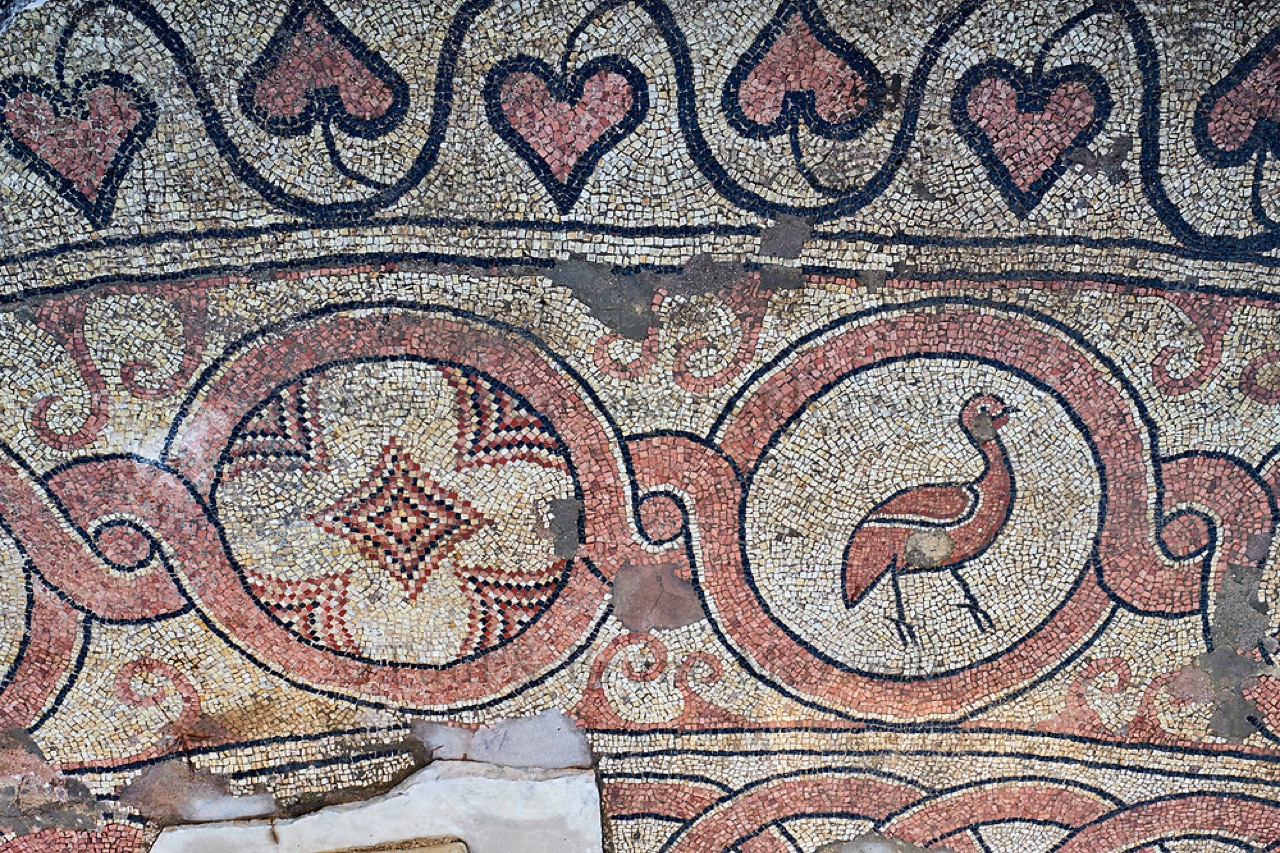
Cave settlement at Konispol, and one of Europe's oldest lakeside pile villages under Lake Ohrid.
Historische Stätte · Tiranë
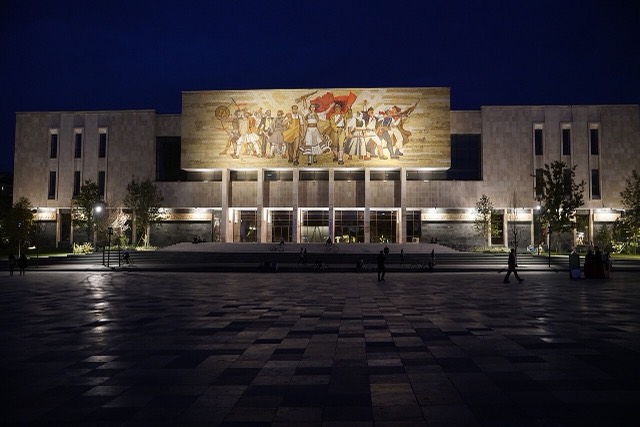
Albania's principal museum, under the Skanderbeg Square mosaic mural known as 'The Albanians'.
Historische Epoche
The Indo-European tribes of the western Balkans, and the ancestors most Albanians claim.
Historische Epoche
Four and a half centuries in the empire — mass conversion to Islam, powerful local pashas, and eventually a national movement.
Historische Epoche
Forty-six years under Enver Hoxha and his successor: total collectivisation, the banning of religion, successive breaks with…
Erläuterung
Everything you need to hold the country in your head: where it is, who lives there, what happened, and what it runs on.
Erläuterung
Candidate since 2014, negotiating since July 2022 — where the process actually stands and what the remaining steps are.
Etwas falsch auf dieser Seite? Korrekturen sind willkommen und werden gegen den Quelldatensatz geprüft. Bitte mitteilen, was falsch ist und, wenn möglich, woher die richtige Angabe stammt.