Еда
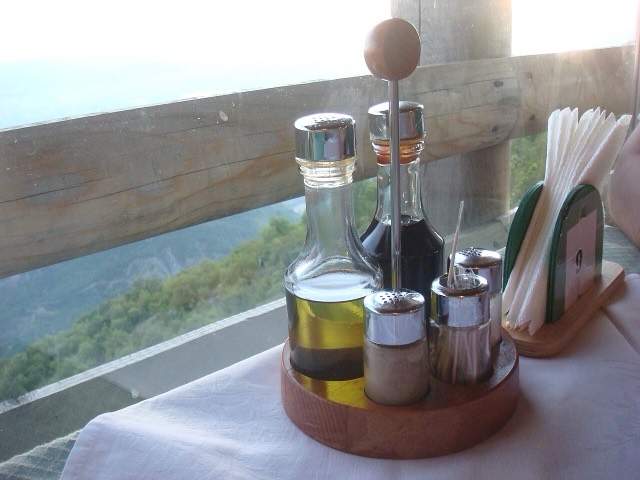
Albanian Olive Oil
Oil from Kalinjot, Kokërrmadh and other local varieties, chiefly from Vlorë, Fier and Berat.
Каждый округ, каждый берег, каждый век
Режим с пояснениями
Впервые об Албании? Каждая страница начинается с доступного объяснения, понятного даже десятилетнему ребёнку, и лишь затем переходит к подробностям.
Режим эксперта
Основы вам уже известны. Сразу к существу вопроса, без простых пояснений. Это режим по умолчанию.
Тема
Mediterranean at the coast, Balkan and Ottoman inland, dairy-heavy in the mountains.
Сохранить
Albanian food changes with the landscape. On the coast there is fish, olive oil and vegetables. Inland and in the mountains there is more lamb, yoghurt, cheese and pies. Ottoman cooking left a strong mark, and so did Italy and Greece.
Albanian food changes with the landscape. On the coast there is fish, olive oil and vegetables. Inland and in the mountains there is more lamb, yoghurt, cheese and pies. Ottoman cooking left a strong mark, and so did Italy and Greece.
Albanian cuisine sits within the broader Mediterranean culinary tradition, sharing its structural dependence on olive oil, fresh fruits, vegetables, and fish. Olive oil is described as the most ancient and commonly used vegetable fat in Albanian cooking, produced since antiquity and particularly along the coast. The country's position on the western Balkan Peninsula, with direct access to the Adriatic and Ionian seas, and its range of microclimates resulting from differing soil types and topography, allow a wide variety of produce to be cultivated domestically.
Hospitality is considered a fundamental custom of Albanian society, and serving food to guests is central to that tradition. The medieval Albanian code of honor known as besa framed the care of guests and strangers as an act of recognition and gratitude. It is not uncommon for visitors to be invited to eat and drink with local households. The Albanian expression for going to eat a meal translates literally as 'going to eat bread,' reflecting bread's centrality to the food culture, and the traditional hospitality saying is rendered as 'bread, salt and heart' (bukë, kripë e zemër).
Onions are described as arguably the country's most widely used ingredient alongside garlic, and Albania is ranked fifth in the world in terms of onion consumption per capita. Albania is also noted as among the leading producers and exporters of herbs globally, with oregano, thyme, sage, salvia, rosemary, and yellow gentian among its most significant herb exports. The country's approximately 250 aromatic and medicinal plant species benefit from its Mediterranean climate and proximity to the sea.
Albania's culinary heritage is traced by historians to the Illyrian era, estimated between 900 BCE and 600 CE, during which the diet primarily consisted of grains, legumes, wild herbs, and dairy products. The region's arable land and Mediterranean climate supported the cultivation of wheat, which became a dietary staple. When Romans took hold of the area in the 2nd century CE, they introduced grapes, olives, and additional staples.
Albania's subsequent absorption into the Byzantine Empire introduced dishes incorporating olive oil, seafood, and a variety of herbs — ingredients consistent with the broader Mediterranean tradition. This period established culinary patterns that persist in the modern cuisine, particularly the prevalence of olive oil as a cooking medium and the central role of seafood along coastal settlements.
Following the Ottoman conquest in the 15th century, Albanian cuisine integrated a range of Turkish culinary elements that remain present today. Dishes such as byrek (a savory pie), baklava, and kebabs became staples. Spices including cinnamon, cloves, and nutmeg entered common use, and rice-based dishes such as pilaf became prominent.
Because Albania was part of the Ottoman Empire, coffee in the Turkish style remains common alongside espresso-based preparations. The Ottoman inheritance is also evident in desserts: baklava is prepared throughout the country, particularly around religious holidays observed by Muslims, Catholics, and Orthodox Christians alike, and is made with hazelnuts or walnuts sweetened with syrup and cut into various shapes from large trays.
The 45-year authoritarian Communist rule of Enver Hoxha, spanning 1945 to 1990, caused significant disruption to Albanian food culture. The regime imposed rationing of food supplies, a prohibition on fishing, and conditions that led to a widespread decline in beef and dairy consumption. These measures were framed around political control and the promotion of economic self-sufficiency.
The Hoxha government also attempted to collectivize all regional Albanian cuisines, deliberately blurring localized culinary differences in favor of a singular national cuisine that emphasized simplicity and thrift. After the fall of Communist rule, new generations of Albanians began efforts to revive traditional recipes and culinary elements that had been discouraged under the regime.
In the period after World War II, before the full entrenchment of Communist restrictions, Albanian cuisine began to incorporate elements from Yugoslavia, its northern neighbor. The most notable addition was ajvar, a relish made from eggplant, roasted red peppers, and various herbs and spices, which entered the Albanian kitchen from this period onward.
Albanian cuisine is divided into three major regional traditions. The northern regional cuisine has rural, coastal, and mountainous origins, centering on meat, fish, and vegetables. Common ingredients include potatoes, carrots, maize, beans, and cabbage, as well as cherries, walnuts, and almonds. Garlic and onions are described as essential components added to nearly every northern dish. In high-elevation localities across Albania more broadly, smoked meat and pickled preserves are common, and dried or pickled vegetables are processed especially in remote areas such as the Albanian Alps where fresh vegetables were difficult to obtain out of season.
The central region is characterized as the flattest zone, rich in vegetation and biodiversity. Its cuisine combines rural, mountainous, and coastal influences, with Mediterranean characteristics attributed to its proximity to the sea. The region is noted for meat specialties and a wide range of desserts. The southern regional cuisine draws on two distinct sources: rural products including dairy products, citrus fruits, and olive oil, and coastal products encompassing seafood. Pastures and feed resources in the south are described as abundant, making it particularly suitable for animal rearing.
Coastal cities — specifically Durrës, Sarandë, and Vlorë — are noted for strong seafood traditions. Popular seafood includes trout, calamari, octopus, cuttlefish, red mullet, sea bass, and gilt-head bream. Fresh fish is caught from the Adriatic and Ionian coasts as well as from inland lakes including Lake Butrint, Lake Shkodër, Lake Ohrid, and Lake Prespa, and from lagoons including Karavasta, Narta, and Patos.
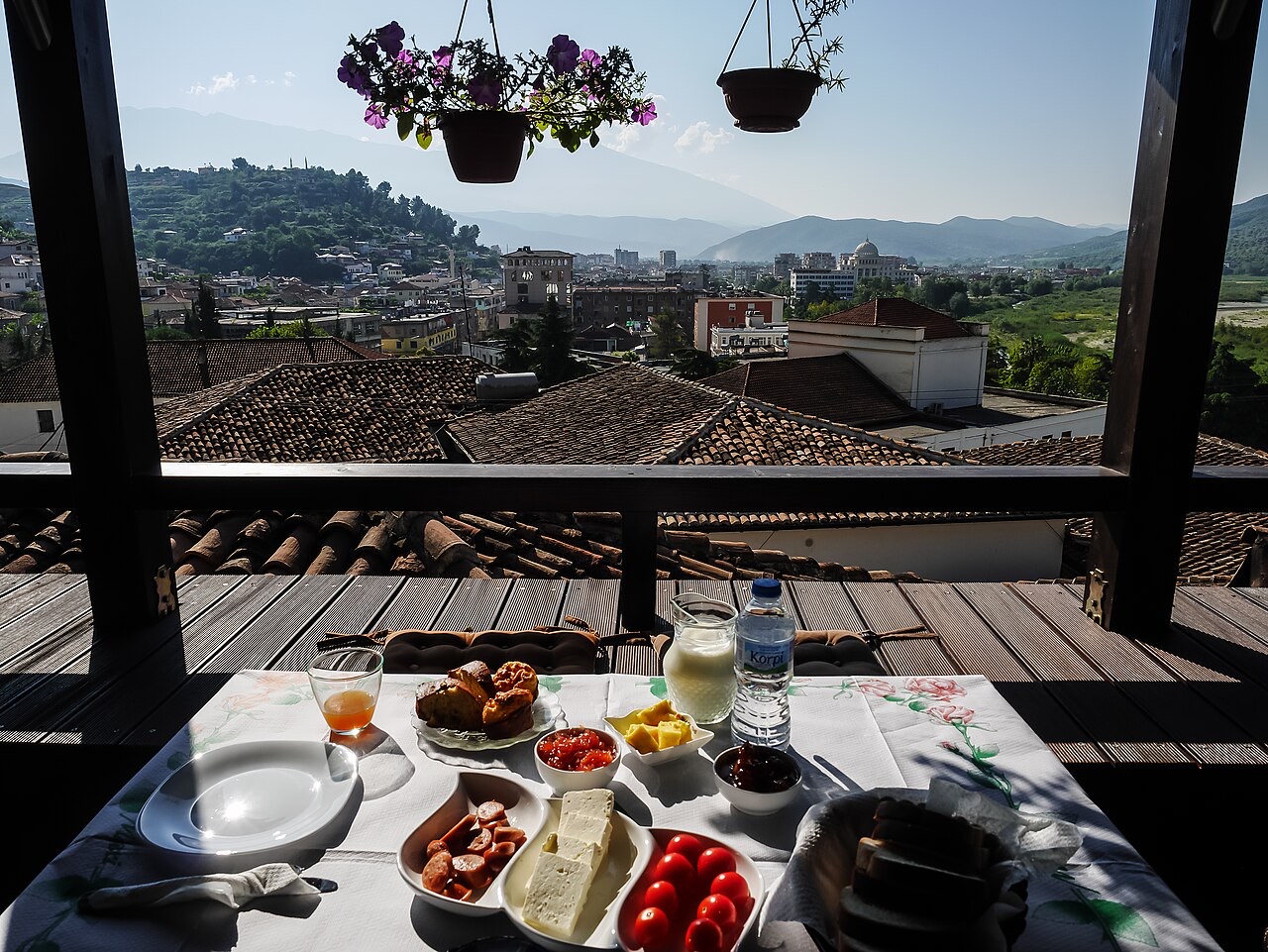
Breakfast in Albania is generally light and varies by region. Bread is common, served with butter, cheese, jam, and yogurt, and accompanied by olives, coffee, milk, tea, or raki. Tarhana — a soup made from wheat and fermented milk — is a common breakfast food in many rural areas. Coffee and tea are consumed both at home and in cafés.
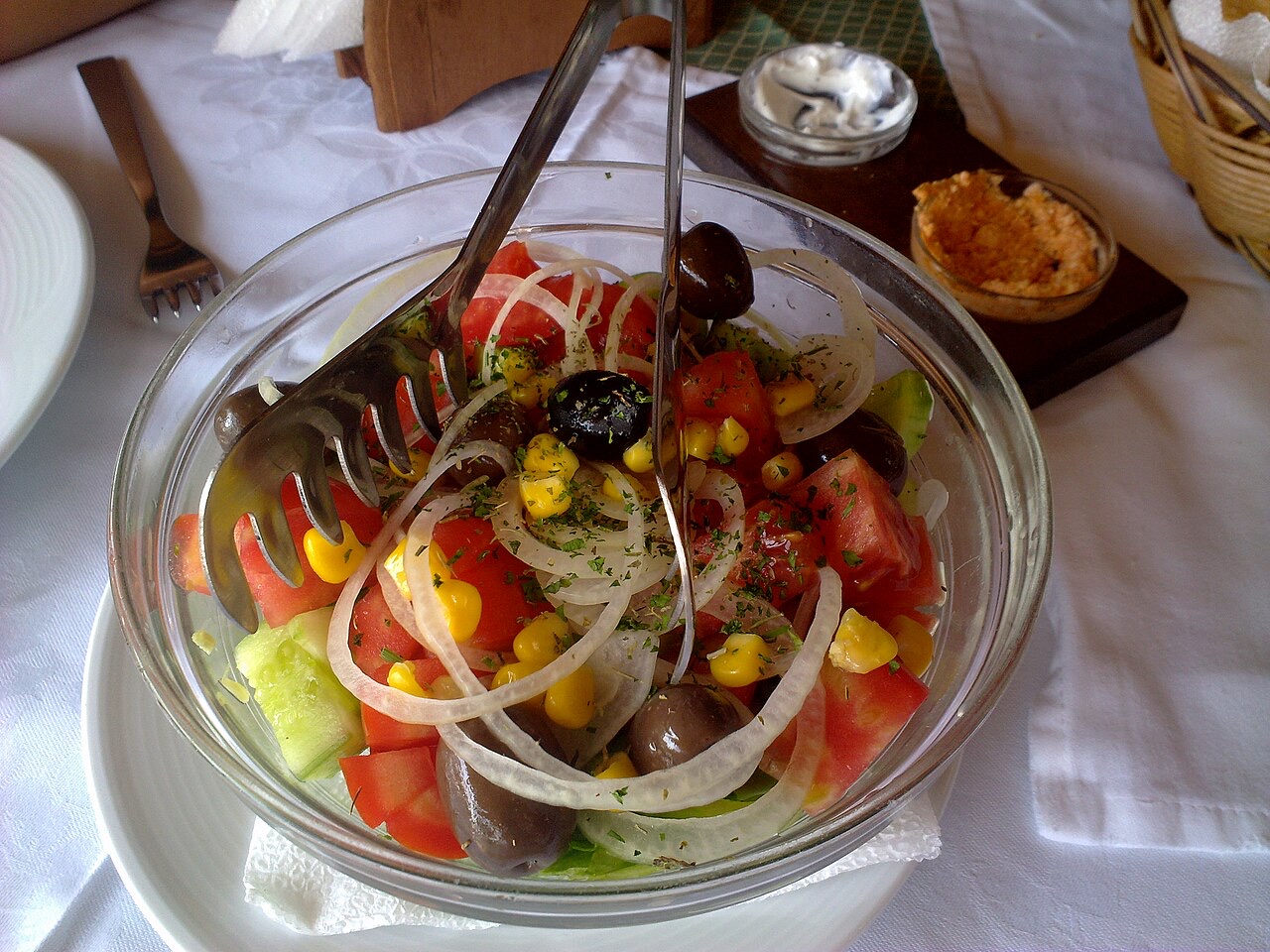
Lunch is traditionally the largest meal of the day across social groups. A typical lunch may consist of gjellë, a main dish of slowly cooked meat with various vegetables, accompanied by a salad of fresh vegetables such as tomatoes, cucumbers, green peppers, onions, and olives. Salads are typically dressed with salt, olive oil, and white vinegar or lemon juice, and are served alongside meat dishes. Grilled or fried vegetables, sausages, and omelettes also feature. Although it was historically customary to return home for lunch, it is now common to eat at restaurants or cafeterias.
Supper is a smaller meal, frequently consisting of varieties of bread, meat, fresh fish or seafood, cheese, eggs, and vegetables, in a format described as similar to breakfast. Sandwiches are also eaten at supper. Common beverages throughout the day include coffee, tea, fruit juices, and milk.
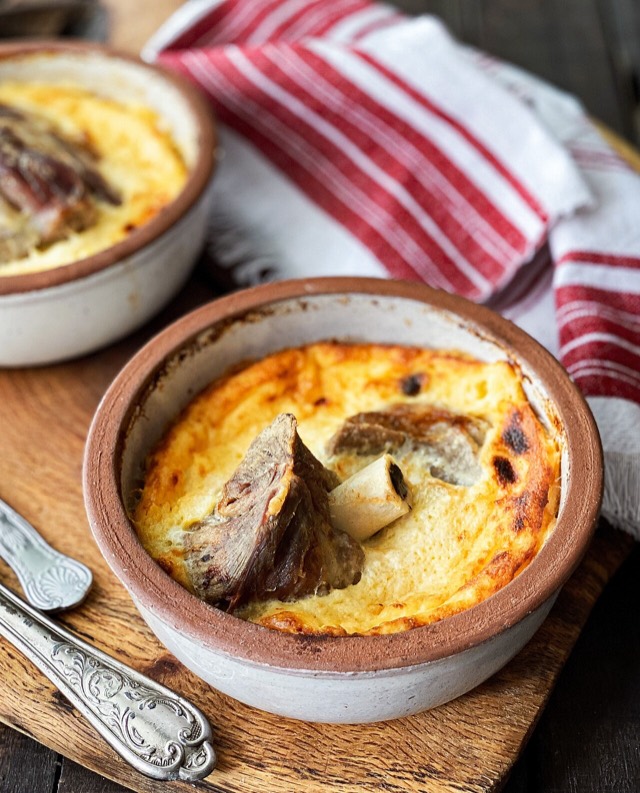
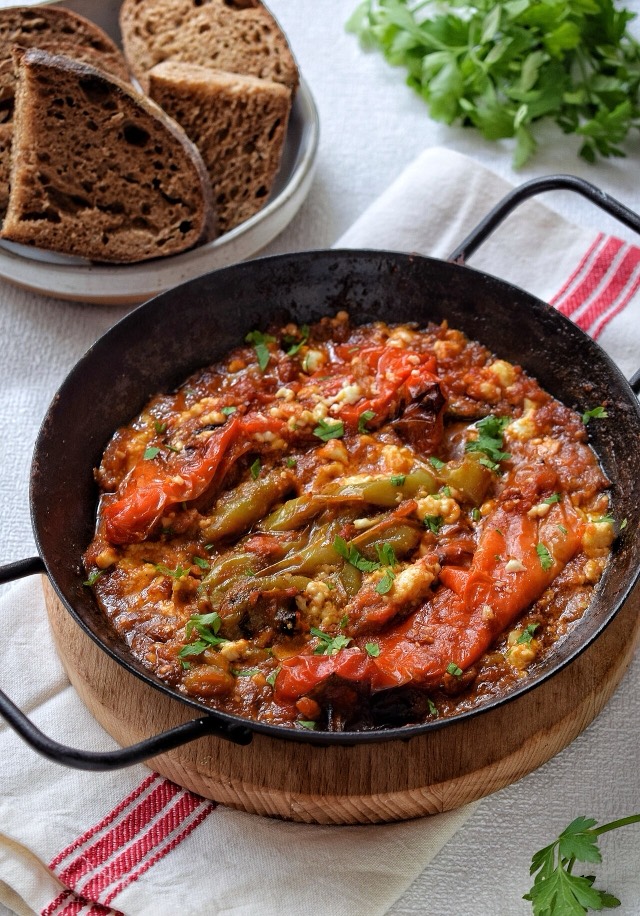
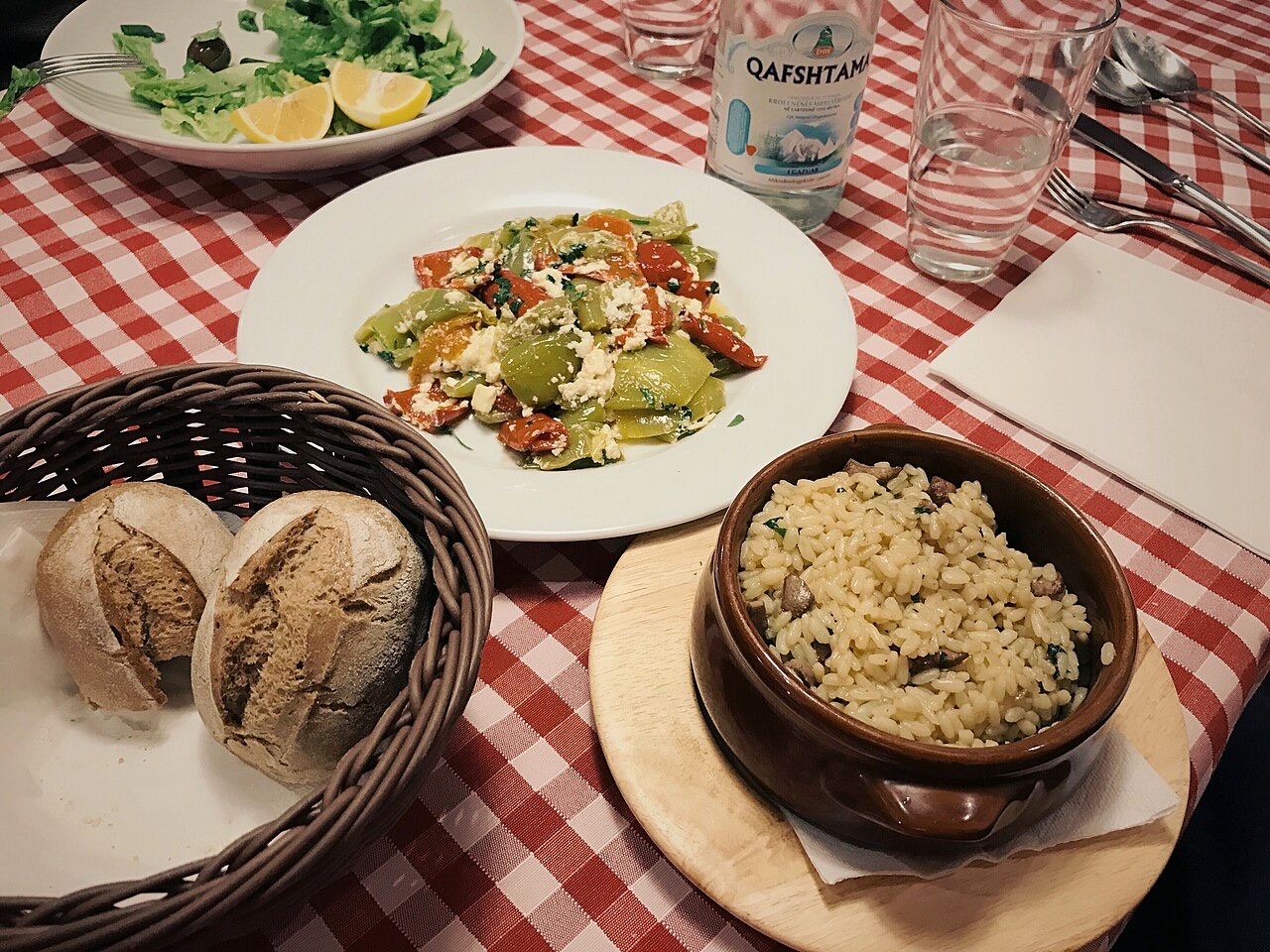
Tavë kosi is considered a national dish in Albania. It consists of baked lamb and rice served with a flavored yogurt sauce. The dish has become popular among Greek and Turkish communities associated with the Albanian diaspora in those countries. Fërgesë is described as the most iconic dish of Tirana and Central Albania, made from peppers, tomatoes, onions, and gjizë (Albanian ricotta), cooked first on the stove and then in the oven. The version with liver is considered more traditional in Tirana and is sometimes called fërgesë tirane.
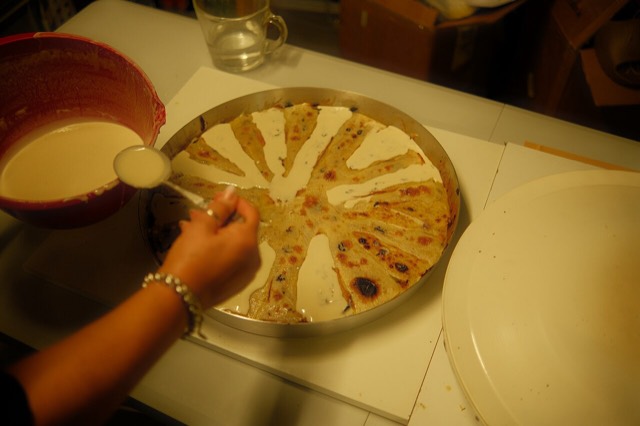
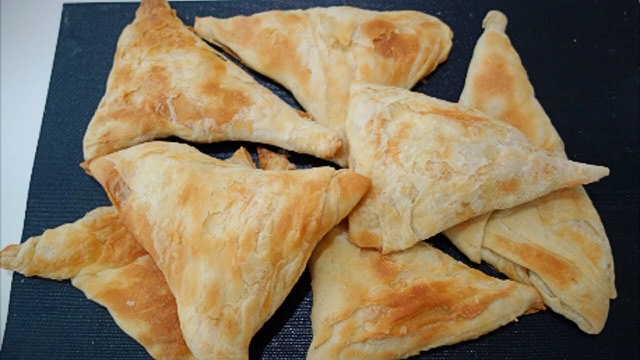
Pite — a general term for pie — is regarded by most Albanians as one of the national foods. Notable varieties include byrek, pepeq, shaprak, qollopita, and lakror. Lakror is a southern Albanian specialty with layers of dough thinner than byrek, traditionally cooked on embers under a metal semispherical lid, with common fillings of leek and gjizë or tomato and onion. It is particularly associated with regions including Lunxheri and Korça. Flia features at large social gatherings, weddings, and births.
Beef and veal are the most commonly consumed meats, followed by pork. Qebapa are small, skinless grilled sausages of lamb and beef, served with onions, sour cream, ajvar, and pita bread. Qofte are fried meatballs of minced meat, herbs, and spices, cooked with tomato sauce and vegetables or beans, with specialized shops called qofteri found throughout the country. Paçe — a stew made from a sheep's, pig's, or cattle's head boiled until the meat separates and then cooked with garlic, onion, black pepper, and vinegar — is described as traditionally common in Albania.
There is a strong tradition of home baking in Albania, and pâtisseries are present in every city and village. Kanojët is a tube-shaped fried pastry shell filled with a sweet ricotta-based cream, derived from Sicilian cannoli and brought to Albania by the Arbëreshë people. The kanojët from Piana degli Albanesi, an Arbëreshë village, are described in the article as often considered the best cannolo. Ballokume is a cookie that originated in Elbasan during the Middle Ages and is prepared annually on Summer Day, a public Albanian public holiday; it is made in large copper pots, whipped with a wooden spoon, and baked in a wood oven.
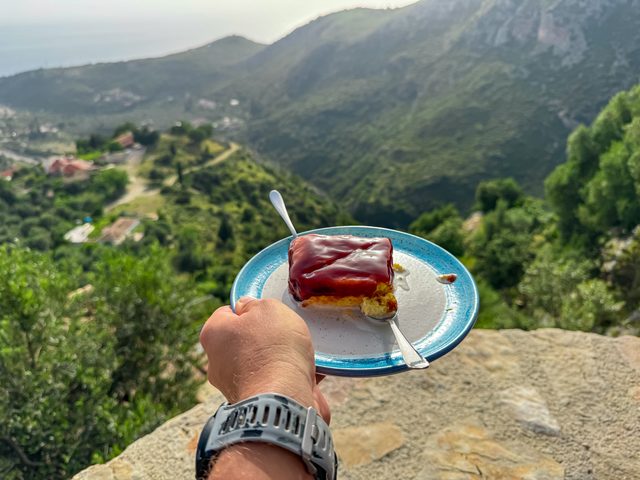
Trileçe is an Albanian adaptation of the Latin American tres leches cake, made with milk from cows, goats, and water buffaloes (though cow's milk and cream are used commonly). According to Hürriyet, Albania was the first country to introduce this dessert from the Americas to the region; the article attributes its adoption to the popularity of Latin American soap operas in Albania, after which local chefs reproduced the dessert before it spread to Turkey. Kabuni is a traditional cold-served dessert of rice fried in butter with mutton broth, raisins, salt, and caramelized sugar, finished with cinnamon and ground cloves.
Ashure, described in the article as the world's oldest dessert, is served particularly during Muslim (Bektashi) holidays in Albania. It is a congee made from grains, nuts, fruits, and dried fruits. Tambëloriz (also called sultjash) is a rice pudding made from milk, rice, and cinnamon, to which nuts and raisins may be added. Hallvë is prepared in several forms across the country, with flour halva, semolina halva (home-cooked), and sesame halva (commercially produced) all consumed; it is described as typical at local religious fairs.
Raki is described as the most popular spirit in Albania and is regarded as the national spirit beverage. The most common types are made from grape, plum, or blackberry. It is commonly served to older people, heated and sweetened with honey or sugar, with added spices. In the south, Raki rigoni — made from white oregano cultivated in that region — is described as particularly popular.
In 2016, Albania surpassed Spain to become the country with the most coffee houses per capita in the world, recording 654 coffee houses per 100,000 inhabitants in a country with approximately 2.5 million inhabitants. Coffee varieties consumed include espresso, cappuccino, macchiato, mocha, latte, Turkish-style coffee, filter coffee, and instant coffee. Tirana is specifically noted for its café culture. Tea — including Albanian-style mountain tea grown in Albanian mountains and villages, and black tea in Russian and Turkish styles — is widely consumed at cafés, restaurants, and homes.
Wine production in Albania is traced back an estimated 6,000 years, and the article states that evidence positions Albania among the earliest wine producers in Europe. Albanians drink an estimated 5.83 liters of wine per person per year, a figure described as increasing as domestic production of higher-quality wine grows. Dhallë is a traditional yogurt-based drink made by blending yogurt with water or milk and spices, particularly popular in summer and optionally served with salt. Boza is a malt drink made from maize and wheat, widely consumed with desserts.
Еда
Oil from Kalinjot, Kokërrmadh and other local varieties, chiefly from Vlorë, Fier and Berat.
Еда
Concentric crepe layers built up one at a time under a hot metal lid — a northern highland dish that takes hours.
Еда
Lamb baked under a set custard of yoghurt, egg and a little flour — the dish most often named as Albania's national one.
Еда
Peppers and tomato cooked down with white cheese, sometimes with liver — a Tirana staple.
Еда
The everyday Albanian pie: hand-stretched pastry layered with cheese, spinach, leek, meat or tomato.
Нашли ошибку на этой странице? Исправления приветствуются и проверяются по исходной записи. Сообщите нам, что именно неверно, и по возможности укажите, откуда взята правильная цифра.