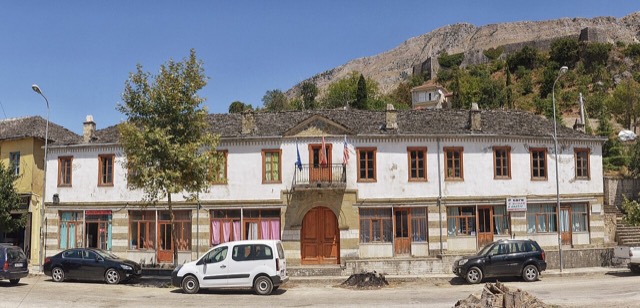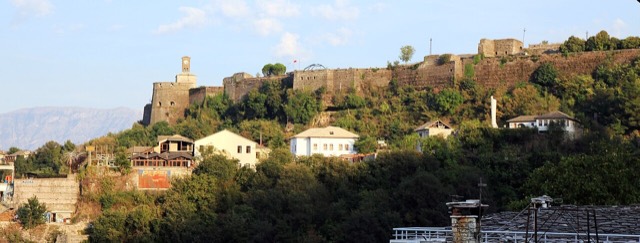
Site historique · Gjirokastër
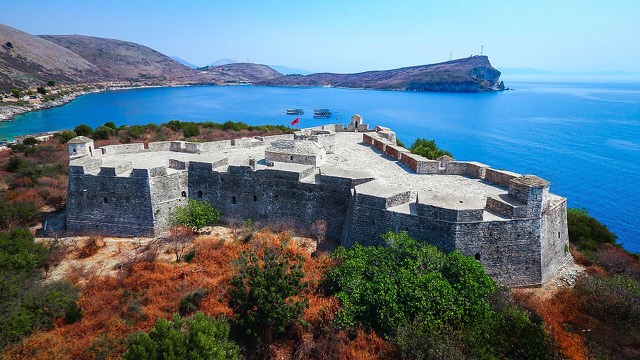
Gjirokastër Castle
One of the largest castles in the Balkans, holding an artillery gallery and a captured US aircraft.
Chaque comté, chaque côte, chaque siècle
Vue guidée
Nouveau en Albanie ? Chaque page s'ouvre sur une explication en langage clair, accessible à un enfant de dix ans, avant d'entrer dans le détail.
Vue expert
Vous connaissez déjà les bases. Directement à l'essentiel, les explications simples étant masquées. Il s'agit du réglage par défaut.
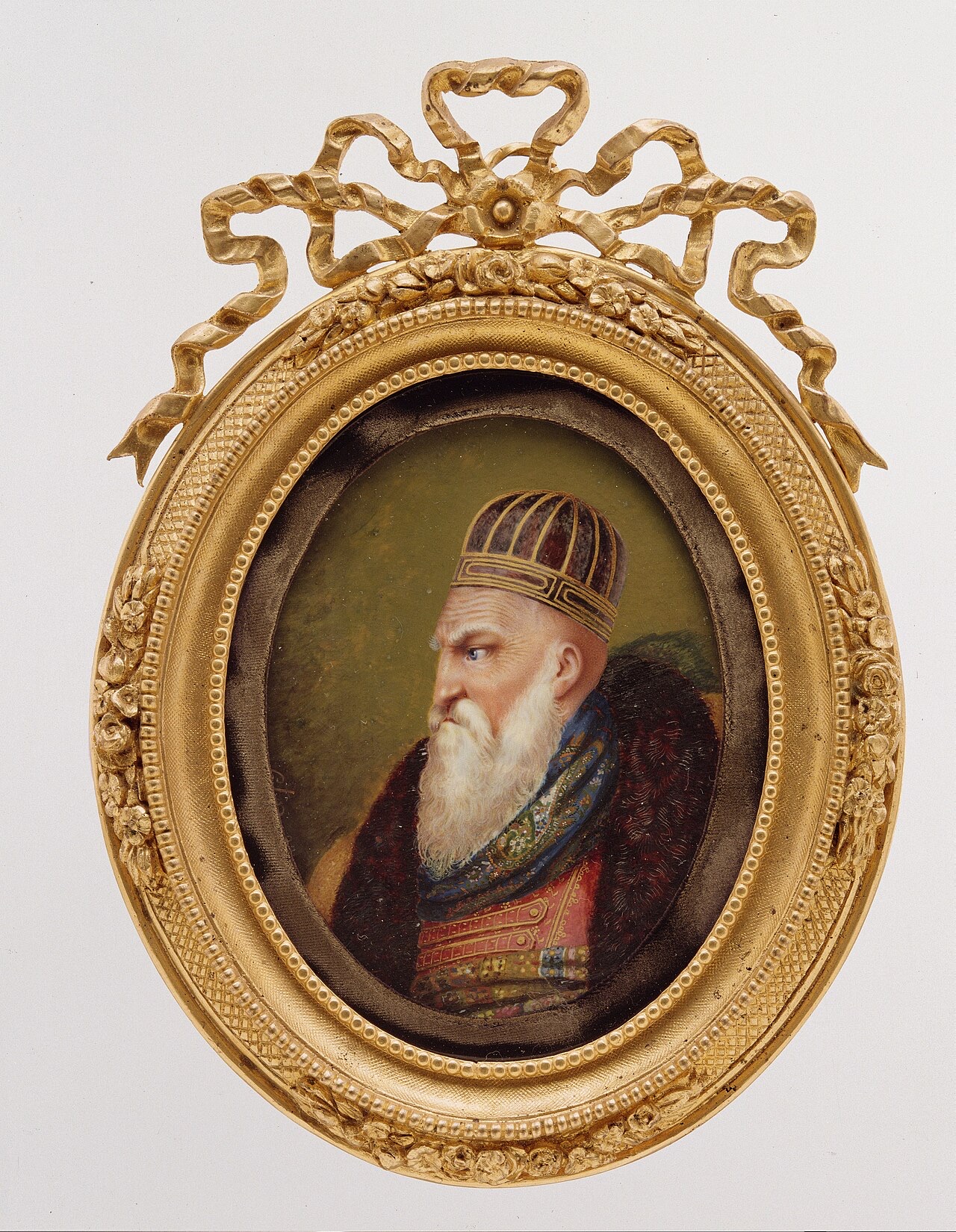
Personne
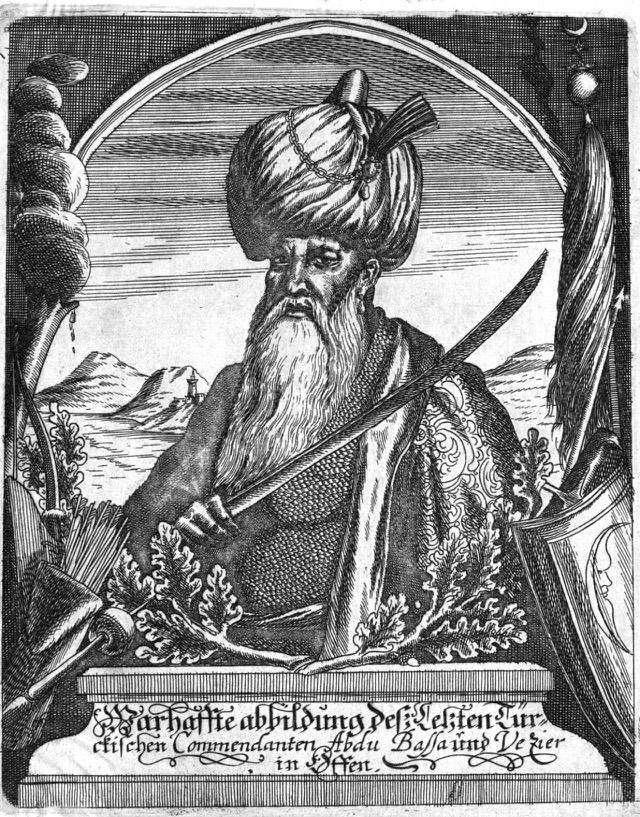
The 'Lion of Ioannina': an Ottoman governor who built his own state, courted Britain and France, and was finally killed for it.
Enregistrer
Ali Pasha was born in Tepelenë and rose to govern a large area of southern Albania and northern Greece. In practice he ruled it as his own country, dealing directly with Britain and France. Lord Byron visited him. The sultan eventually had him killed.
Ali Pasha was born in Tepelenë and rose to govern a large area of southern Albania and northern Greece. In practice he ruled it as his own country, dealing directly with Britain and France. Lord Byron visited him. The sultan eventually had him killed.
Ali Pasha was born in 1743 in Beçisht, though some accounts place his birth in the adjacent town of Tepelena, in what is now southern Albania. He belonged to the Albanian Meçohysaj clan, Christian Albanians who converted to Islam during the Ottoman period. The family claimed descent from a Mevlevi dervish named Nazif who had migrated from Konya through Kütahya to Tepelenë, a tradition Ali himself promoted to claim legitimacy over landholdings when dealing with foreigners and Ottoman officials; historians regard this tradition as unfounded, identifying the family as being of local Albanian origin.
The family had achieved some regional standing by the seventeenth century. Ali's great-grandfather, Mustafa Yussuf, from the Gjirokastër region, was a brigand, warrior and clan chieftain who obtained the title of bey and may have been recognised as deputy governor of Tepelena. Ali's grandfather, Muhtar Bey, was also a bandit chieftain who died during the 1716 siege of Corfu. Ali's father, Veli Bey, was the local ruler of Tepelena and killed a rival cousin, Islam Bey, to secure the position of mutasarrıf in 1762, but was himself assassinated shortly afterward when Ali was approximately ten years old.
Ali was subsequently raised by his mother, Chamko (also recorded as Hanko or Hamko), who came from Konitsa. She took control of Veli's armed band to preserve the family's position and was said to have poisoned Ali's half-brother to secure Ali's inheritance. A formative episode occurred when a confederacy of villages expelled Hamko and her family from Tepelena; she and Ali's sister were later ambushed by men from the villages of Hormovë and Kardhiq, raped and publicly humiliated. Hamko instilled a desire for revenge in her son that shaped his conduct for the rest of his life, culminating decades later in the massacres of those villages.
Hamko arranged a marriage between Ali and Emine, the daughter of Kaplan Pasha of Gjirokastër. Ali had two sons by Emine: Muhtar Pasha and Veli Pasha. A third son, Selim, was born to a slave in 1802. Both of Ali's sons with Emine married daughters of Ibrahim Pasha of Berat. Ali's sister, Shainitza, was married to Sulejman of Gjirokastër, whose family came from Libohovë in Zagoria, where Ali built a fortified seraglio as her dowry.
In his early years Ali made his reputation as a mountain bandit. The Ottoman government authorised Ahmet Kurt Pasha of Berat to subdue him, and Ali was captured—at least definitively in 1775—and subsequently employed in Kurt's service. Their relationship was complicated by Kurt's earlier refusal to let Ali marry his daughter, Miriem, who instead married Ibrahim Bey of Vlorë in 1765; this created a lasting rivalry between Ali and Ibrahim that continued until Ibrahim's death.
Venetian records document Ali in 1772 as part of a 9,000-strong force of Muslim Albanians under Sulejman Çapari engaged in conflict with the Souliotes. His first confirmed military participation was in Ahmet Kurt Pasha's 1776 conflict with Mehmed Pasha Bushati, where Ali and his cousin Islam distinguished themselves near Kavajë and Tirana, though Ali subsequently fell out with Kurt over the division of spoils. When Kurt was disgraced in 1778, a Thessalian Turk known as Catalcali Haci Ali Pasha assumed guardianship of the mountain passes; finding the local Albanians hostile, he appointed Ali—then holding the title of bey—as his deputy to impose order among them, while Catalcali remained in his fortress at Chalkis on Euboea.
This administrative position gave Ali the means to displace Kurt's officials and install his own men, build a network among Albanian band leaders and armatoli captains, and operate protection rackets that generated revenue for hiring mercenaries and funding bribes. During approximately five months in this role he imposed order and a systematic tax regime across Epirus while accumulating substantial personal wealth. An episode at Missolonghi illustrated his methods: arriving with Albanian troops to collect a debt from a Venetian subject who could not be found, Ali seized several Venetians including the consul, releasing them only after the town's leaders agreed to pay the debt themselves and after he took 500 barrels of merchandise bound for the Ionian Islands as a guarantee—barrels that were never returned.
Ali affiliated himself with the Bektashi sect, though he showed no particular favouritism toward either Muslim or Christian subjects as a ruler and was not described by contemporaries as self-consciously devout.
When Kurt returned to power in 1779 through bribes to the Sublime Porte, Ali mounted a direct challenge. He marched an army of 2,000–3,000 Albanians through Thessaly, dispersing them to extract tribute from towns along the route. At Trikkala his own detachment of 300 men entered a near-deserted town and collected protection money before moving on; at Farsala, he and Catalcali Haci plotted against Kurt. Ali then seized the district of Acarnania, occupied the regional capital of Vrachori (modern Agrinion) with 4,000 men, and extracted further tribute from Missolonghi.
The Sublime Porte dispatched Ottoman general Cezayirli Gazi Hasan Pasha to restore order in Macedonia and Thessaly, but Hasan was unable to defeat or expel the Albanians despite assistance from local Turks, armatoles and Greek peasants. Ali, meanwhile, returned to Tepelena. Kurt mustered a force of 10,000 men and 100 cavalry but could not dislodge Ali from the mountain passes and resorted to besieging Tepelena. Ali broke through the siege and made for Butrint. Kurt sent 6,000 soldiers to the Bay of Arta to cut off his southern route. Ali recruited allies—including his cousin Islam Bey of Këlcyrë, Hasan Çapari of Margariti and Demoglou of Konispol—and reversed course, marching toward Ioannina and subduing villages along the way. Kurt's son-in-law Ibrahim Bey could not defeat him, producing a stalemate.
Ali used the prolonged confrontation to establish diplomatic relations with Venice, sending a declaration of friendship to the Venetian administration at Corfu in 1783—an act that risked a charge of treason. He asked the Venetians to intercede at the Sublime Porte to accelerate his promotion to Pasha of two tails; they did so, and in return Ali moved against Mustafa Koka, the Pasha of Delvinë, who was a Venetian opponent. His high standing among Albanian fighters—to whom the Porte still owed large sums in back pay from the 1769–1770 Morea campaign—and his success in normalising Venetian–Ottoman relations eventually persuaded Constantinople that he was the de facto power in the region. He was appointed mutasarrif of Ioannina at the end of 1784 or the beginning of 1785, on condition that he lead 1,000 troops on campaign, possibly connected to the Ottoman military response to the Russian annexation of Crimea.
Ali did not fulfil this condition. Instead he turned to settling family scores, attacking Hormovë with over 1,000 men in revenge for his mother's humiliation: the village's men were killed, women and children sold into slavery, and the leader roasted alive. This display of force brought surrounding villages into submission, consolidating his hold on the region around Gjirokastër. He was dismissed from Ioannina at one point in favour of Kurt Pasha, but he performed military services in the campaign against Kara Mahmud Pasha Bushati and in the Russo-Turkish War of 1787–1792—during which he also secretly established contacts with the Russians. In reward for services at Banat, he was granted the Sanjak of Trikala in 1787. The earliest known reference to Ali formally as Pasha of Ioannina is dated 15 March 1788; in that same year he delegated the Sanjak of Trikala to his son Veli.
Once established as pasha, Ali systematically dismantled the factions competing for power within his territory, replacing Greek armatoles with Albanian ones, targeting wealthy Muslim landowners under the guise of peasant justice, and rewarding supporters with positions and alliances. He married his sons to the daughters of Ibrahim Pasha of Berat to secure a key border alliance. He also appointed himself Dervendji-Pasha, giving him authority over the mountain passes and the revenues they generated. In wartime he could, according to contemporary accounts, assemble an army of 50,000 Albanian men within two to three days and double that number within two to three weeks. His Supreme Council included Muhtar Pasha, Veli Pasha, Celâleddin Bey, Abdullah Pashe Taushani, Hasan Dervishi, Omar Vrioni and others.
In 1788, Ali's troops completed the destruction of Moscopole, an Aromanian cultural centre in south-eastern Albania that had already been subjected to repeated raids by Albanian irregulars since 1769, owing to its pro-Russian stance and support for the Orlov Revolt. The Aromanian population was dispersed; many scattered across the Balkans, founding settlements including Kruševo, while others emigrated abroad. A similar campaign was directed against Sarakatsani communities.
The Souliotes, a Christian Albanian community within Ali's pashalik, were a persistent military problem. They had previously paid taxes to their spahi in Ioannina, Bekir Bey, whom Ali imprisoned for refusing to hand over that revenue. Backed by Russian Empress Catherine the Great—acknowledged as protector of Orthodox Christians in the empire under the 1774 Treaty of Küçük Kaynarca—the Souliotes reportedly gathered 2,200 armed men against Ali. Ali responded with 3,000 troops aided by the Çapari family of Paramythia, but the assault failed with significant losses and no Russian fleet arrived to support the Souliotes. In 1792, Ali attempted a deception: he feigned a campaign against Gjirokastër with 10,000 men as a pretext to lure Souliote captains George Botsaris and Lambros Tzavelas out of their mountains. Tzavelas came with 70 men, was immediately seized and sent in chains to Ioannina, with some of his men killed outright.
Ali then attacked Souli with his son Muhtar, pushing 1,300 defenders into the inner mountains. He eventually coerced Lambros Tzavelas into a deal—offering him lordship of Souli and taking his twelve-year-old son Fotos as a guarantee of compliance—but Lambros repudiated the agreement by letter once safely away, stating that he was prepared to sacrifice his son rather than submit. Ali was forced to exchange prisoners, pay ransoms and sign a truce, ending the 1792 campaign as a Souliote victory. In the subsequent negotiations, the Botsaris clan was recognised by Ali as the lawful representative clan of Souli and George Botsaris as the enforcer of peace among the Souliotes.
The fall of Venice to Napoleon in 1797 and the subsequent Treaty of Campo Formio transferred the Ionian Islands and neighbouring ports to France, placing strategically important positions under French control. Ali, communicating secretly with Napoleon despite the risk of a treason charge, impressed French General Antoine Gentili with professions of admiration and arranged a marriage between an alleged illegitimate daughter and a French adjutant general. He sought military assistance and naval access around Corfu. Influenced by Ali's approach and by Himara's ties to the Neapolitan Army opposing Napoleon, Gentili collaborated with Ali in a surprise attack on Nivicë on Easter Sunday 1798, ferrying Ali's troops through the Ionian straits in violation of the treaty between the Venetians and the Porte. Landing at Lukovë, Ali's men attacked Nivicë and the neighbouring village of Shën Vasili while inhabitants were at prayer. The towns were reduced to ruins; an estimated 6,000 unarmed civilians were killed, some by roasting alive and impalement, and the remainder were sent to Ali's farms near Trikkala. Their land was partitioned for cultivation by Ali's subjects from Saranda. This campaign resulted in the annexation of Himara and extended Ali's control along the coast to Vlorë.
Despite this cooperation, Ali's alliance with France deteriorated. The French had promised financial and military support and, according to British traveller Henry Holland who reported in 1815 on a personal conversation with Ali, Napoleon had at one point offered Ali the position of King of Albania. Holland noted that Ali was unconvinced and distrusted the French. Ali's involvement in the Ottoman campaign against the rebel governor Osman Pazvantoğlu—France's ally—further strained relations. Ali took 20,000 Albanian troops to fight Pazvantoğlu, earning from the Porte the title 'Aslan' (the Lion), but returned to Ioannina alienated from the French and compelled to align with the Sultan's efforts to expel them from Epirus.
By September 1798, with war declared between France and the Ottomans, Ali mobilised rapidly. He lured the French adjutant general Rose—temporarily in charge at Corfu—to a meeting near Igoumenitsa; Rose was taken prisoner, tortured and sent to Ioannina in chains. In October 1798, Ali's forces attacked Preveza, defended by a small garrison of French troops, Souliotes, Ionian islanders and pro-French Greeks. The former Souliote chieftain George Botsaris allowed Ali's men passage through Souliote territory in exchange for payment. The battle occurred on 12 October as Ali observed from a position above Nicopolis. His son Mukhtar led the cavalry charge, and the French defences were overwhelmed. Metropolitan Ignatios of Arta, acting as Ali's agent, weakened the resolve of the Greek defenders through counter-propaganda.
After Preveza fell, Ali ordered the execution of 300 Greeks, and a further 170 who returned on a false promise of amnesty were also executed. Survivors were marched to Ioannina carrying the salted severed heads of their companions. Women and young girls were sold into slavery. Among the notable French prisoners was Louis-Auguste Camus de Richemont, the commander of French engineers, who was spared because of Mukhtar's admiration for his bravery. French grenadiers and officers were sent to Constantinople and imprisoned in the Yedikule Fortress. Preveza's population was estimated to have fallen from 16,000 to around 3,000 as properties were seized and redistributed among Ali's Albanians, with survivors displaced to the marshlands around the Ambracian Gulf. Ali subsequently transformed Preveza into a naval base, which acquired the description 'Portsmouth of Albania.'
Ali's final campaign against the Souliotes employed blockade rather than assault, drawing on the lesson of his earlier failures. He constructed a ring of twelve fortresses around Souli, with the fort at Gliki controlling the only road into the territory. The construction was slow and complicated by Souliote sharpshooters; an estimated third of Ali's troops deserted during the process. Simultaneously, in 1802, Ali secured Delvinë after seven years of conflict, giving him control of Epirus from Arta to Tepelenë and Vlorë, with Souli the last holdout.
The Souliotes were weakened from within. In 1800, the chieftain George Botsaris accepted a large sum and the position of armatolos of Tzoumerka, and the Botsaris clan—a significant part of Souli's military strength—departed, taking valuable munitions with them. This was the first time a Souliote clan entered the Ottoman political system. Fotos Tzavelas, son of Lambros, became the new Souliote leader. Ali attacked in autumn 1803 with an army of 20,000 receiving regular imperial supplies against a Souliote force running critically short of provisions. Most Souliotes gathered at the stronghold of Kungi above the village of Suli. A faction preferring death to surrender waited for Ali's troops to enter the arsenal; led by a monk known as 'Last Judgement Samuel' and with Fotos Tzavelas' knowledge, the monk and five collaborators set fire to the magazines and blew up the arsenal as the soldiers entered.
The remaining 4,000 Souliotes agreed to abandon Souli and left for Parga and the Ionian Islands; their four villages were destroyed. Souliote men who were captured during the conquest were tortured to death and then impaled or burnt, while captured women and children were enslaved in harems. The Souliote men who went into exile subsequently served in various armies—Russian, French, Ottoman and even Ali's own. Following his victory, Ali moved against the Çapari family in 1807, confiscating their properties; they fled to the Ionian Islands before eventually joining Muhammad Ali Pasha in Egypt, returning home only after Ali's death.
By 1811, Ali's realm incorporated the sanjaks of Ohrid, Elbasan, Gjirokastër and Delvinë. Gjirokastër surrendered quickly to a show of force that included artillery. In 1806, after the death of Mihrişah Valide Sultan, Ali gained control of Karli-Eli, meaning his realm encircled the southern Pindus mountains. By 1811, Ali had conquered Vlorë after the fall of Berat—taken after a year of skirmishing with an 8,000-man army under Omer Bey Vrioni aided by British rockets—extending his dominion from Durrës in the north to Arta in the south. The former pasha of Berat, Ibrahim, was subsequently imprisoned and poisoned. Ali named his son Mukhtar as the new pasha of Berat and also purchased the pitch mines between Berat and Vlorë from the Porte, using Vlorë as an export base throughout the Mediterranean.
The inhabitants of Kardhiq had sheltered some of Ali's opponents in 1811, including Ibrahim Pasha of Berat and Mustafa Pasha of Delvinë, and later that year the chieftains of Kardhiq played a prominent role in a rebellion that inflicted a heavy defeat on Ali's troops in October. Once Gjirokastër fell to Ali, Kardhiq found itself isolated. Ali surrounded the town with an army of up to 15,000 men. In December 1811 the men of Kardhiq offered to surrender on condition of being allowed to emigrate to Corfu; Ali refused. The village fell on 21 February 1812, with at least 300 defenders killed in the final assault.
On 15 March 1812, Ali herded 700–800 captives—those he held responsible for the humiliation inflicted on his mother and sister—into the courtyard of a large han, locked the gates and manned the surrounding walls with his men. On his signal, all the captives were shot. The massacre was carried out by Ali's captain Thanasis Vagias, who had also led the final assault on the citadel. During the massacre Ali spared the family of an imam from Kolonjë—approximately 30 men—who were eventually permitted to return and repopulate the village. Ali sent 36 prominent townspeople to Ioannina as prisoners; they were also shot on arrival. He sent hair harvested from victims' heads to his sister to stuff her divan cushions, and installed a stone memorial at the massacre site warning of the consequences of crossing his family.
Ali's last major territorial acquisition was Parga, a coastal town that had long resisted him. In 1812 he sent Mukhtar, his nephew Daut Bey, Omer Vrioni and 6,000 men to besiege it. Daut Bey was killed in the attack and was buried in a mausoleum within sight of the castle. On 22 March 1814, the Pargians transferred control of the town to Britain. At the Congress of Vienna in 1815, Britain retained the Ionian Islands but Parga's status remained unresolved. After lengthy negotiations, Parga was ceded to Ali in 1817 in exchange for the Ottomans renouncing their claims to the Ionian Islands. The British required that compensation be paid to inhabitants who wished to leave; the Ottomans passed this obligation to Ali, who paid £150,000. Most of the 3,000–4,000 Pargians emigrated to Corfu in April 1819, and Ali took control of an empty town in May of that year.
The same year, 1816, Ali married his long-standing favourite, Kyra Vassiliki. She had first come to him as a twelve-year-old to plead for her father's life; after his pardon she was introduced into Ali's harem and eventually married to Ali. Ali's first wife Emine had died some years earlier, around the time of the Souliote conquest.
After the Second Serbian Uprising produced a semi-independent Serbian state in 1817, Ottoman minister Halet Efendi drew Sultan Mahmud II's attention to Ali's unchecked power. Official complaints against Ali had begun in 1814 over his encroachment on the territory of the pasha of Salonika, from where his men had been collecting taxes since 1808. In 1820, the Porte declared Ali an enemy after allegations that he had sent assassins to kill his former ally Ismail Pashabey, who had defected to Constantinople; three Albanians were found, interrogated until they confessed and then executed, though this sequence of events was likely staged. The pashaliks of Ioannina and Delvinë were to be confiscated and given to Ismail. In July 1820, the Sultan issued an ultimatum demanding Ali appear in Constantinople within forty days. Ali refused and was besieged in Ioannina by an Ottoman army of 25,000 in August 1820.
As the Ottoman forces advanced—drawn from the south and supplemented by a Turkish naval expedition from Constantinople along with squadrons from Algeria and Egypt—Ali's support network collapsed. His sons eventually abandoned their positions: Mukhtar surrendered Berat, and Gjirokastër fell, resulting in the capture of Ali's third son Selim. Only Hussein Bey, Mukhtar's second son, swore to continue resistance. The Ottomans brought the Souliotes back from exile in Corfu, who helped capture Preveza from Veli. Ali garrisoned himself with 8,000 soldiers in Ioannina. Colonel Charles Napier visited on behalf of the British and urged Ali to spend money on fortifications and reorganise his army; Ali eventually offered two million to Napier for this purpose, but Napier considered it too late. After Odysseas Androutsos retreated from Thermopylae and Omer Vrioni deserted to the Ottomans with 15,000 men, Ali's position became untenable. He burned the town of Ioannina in October and retreated to the citadel in the north-eastern corner of Ioannina Castle.
In January 1822, the Ottomans broke into the citadel and found only 100 defenders. Ali retreated to his strongest tower and had his men place barrels of gunpowder in the basement. He accepted an offer of negotiations and received a false imperial firman from Hurshid Pasha instructing him to leave the citadel while a full pardon was considered. Ali left with his wife, entourage and bodyguards and settled in the Monastery of St Panteleimon on the island in Lake Pamvotis.
On 24 January 1822, a senior official called Kiose Mehmed Pasha arrived claiming to carry the Sultan's firman for Ali's execution. Ali drew his pistol and fired; in the ensuing gunfight he was mortally wounded in the abdomen and subsequently beheaded. Alternative accounts describe the sequence differently: in one version Ali was shot through the heart; in another he was stabbed on a balcony; in a third—recorded at the monastery thirty years later and the most widely repeated—soldiers fired through the wooden floorboards and mortally wounded him in the groin. His head was displayed through the streets of Ioannina and then sent to Constantinople, where it was displayed on the gates of the Sultan's palace alongside the heads of three of his sons and a grandson, who were also executed. Ali's headless corpse was buried with full honours in a mausoleum next to the Fethiye Mosque, which he shares with his first wife Emine.
Ali Pasha's revolt directly shaped the context in which the Greek War of Independence began. Ottoman forces were heavily committed to the siege of Ioannina from August 1820 onward, and Hurshid Pasha's absence from the Morea as commanding general at Ioannina made the region ripe for revolt. Even after the Peloponnese was in full revolt by March 1821, the Ottomans remained more focused on Ali than on the Greek uprising, allowing the Greeks time to consolidate. In December 1820, Ali formed an anti-Ottoman coalition with the Souliotes, to whom he contributed the return of the fortress of Kiafa and offered the prospect of returning to their homeland; the Souliotes contributed 3,000 soldiers. This coalition helped draw Ottoman attention and resources away from southern Greece. The Filiki Eteria leadership explicitly considered the conflict between Ali and the Sultan an ideal moment to launch the revolution.
Ali's attempt to negotiate a place in the revolution—sending his representative Alexis Noutsos to propose an Albanian-Greek state under his sovereignty—was refused by the Greeks; Noutsos himself joined the revolution under Alexandros Mavrokordatos at Missolonghi. A more limited military alliance between Greek revolutionary forces, Souliote chieftains and Muslim Albanian beys was ratified on 1 September 1821, though Greek signatories treated it instrumentally rather than as a genuine commitment to Ali's cause. The alliance unravelled after Omer Vrioni informed the Muslim Albanian contingent that Ali's time was over and that the Greeks were fighting only for themselves; upon discovering that the Greek forces lacked arms, ammunition and were destroying mosques, the Muslim Albanians deserted and the Souliotes returned to Souli.
On Albanian political development, Ali's rule is assessed as consequential but ambivalent. He was among the Albanian military leaders who exploited the weakness of the Sublime Porte to exercise independent military and political power, and he established formal diplomatic relations with Napoleonic France and Britain—an act that British contacts interpreted as an implicit claim to Albanian statehood. Ismail Qemali, the first head of the Albanian state (1833–1919), stated that Ali represented a wasted opportunity: had he possessed greater political foresight, 'Albania and Greece, with the whole of Thessaly and Macedonia, might have become an independent State and a kingdom of great importance.' Ali Pasha has been regarded by Albanian nationalists as a national hero who rose against Ottoman rule, though historians note that his intent was not to build a nation state but rather to exercise personal power within an Ottoman framework.
In cultural terms, Ali's court at Ioannina fostered educational and intellectual activity. The city developed into a significant educational and economic hub during his rule. Scholars including Athanasios Psalidas and Georgios Sakellarios operated in its schools, and figures such as Ioannis Kolettis—who served as Muhtar's personal physician—later played prominent roles in the Greek War of Independence. It has been suggested that the Albanian Korçare songs emerged in Ali's seraglio in Ioannina, possibly composed by his court musician Muço. Albanian tribal customary laws were largely suppressed in his pashalik in favour of his own legal code, which applied equally to Muslims and Christians; blood feuds were replaced with blood payment, expulsion or the death penalty.
Site historique · Gjirokastër
One of the largest castles in the Balkans, holding an artillery gallery and a captured US aircraft.
Site historique · Vlorë
A triangular fortress on a causeway peninsula, built for Ali Pasha of Tepelena.
Période historique
Four and a half centuries in the empire — mass conversion to Islam, powerful local pashas, and eventually a national movement.
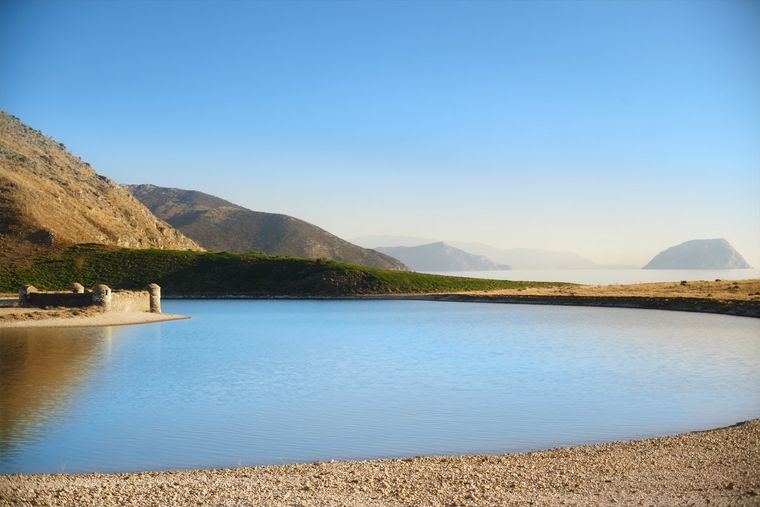
Plage · Vlorë
A near-enclosed bay wrapped around Ali Pasha's triangular fortress on its own peninsula.
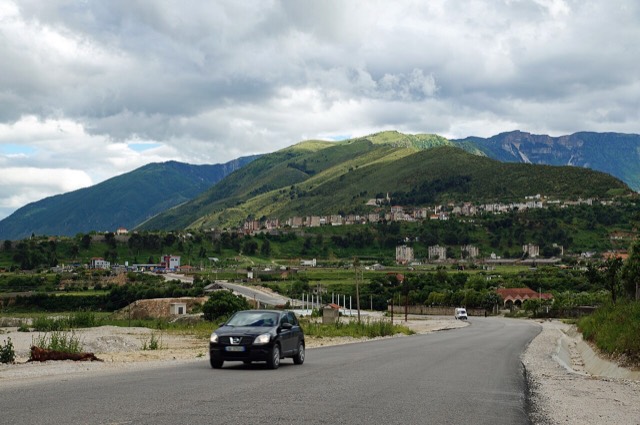
Bourg · Gjirokastër
A hill town below a castle built by Ali Pasha for his sister, opposite Gjirokastër.
Une erreur sur cette page ? Les corrections sont les bienvenues et sont vérifiées par rapport au document source. Indiquer ce qui est erroné et, si possible, d'où provient le chiffre correct.