Subjek
Besa
The customary obligation of keeping one's word — the principle behind Albania's wartime sheltering of Jewish refugees.
Setiap kabupaten, pantai, dan abad
Tampilan terpandu
Baru mengenal Albania? Setiap halaman dibuka dengan penjelasan dalam bahasa sederhana yang dapat dibaca oleh anak usia sepuluh tahun, sebelum detail lebih lanjut dimulai.
Tampilan ahli
Anda sudah mengetahui dasar-dasarnya. Langsung ke inti pembahasan, dengan penjelasan sederhana yang disembunyikan. Ini adalah tampilan default.
Penjelasan
A body of customary law that governed the northern highlands for centuries — and the part of it that everyone has heard of.
Simpan
The Kanun was a set of traditional rules that people in the northern mountains followed for hundreds of years. It covered property, marriage, hospitality and how to settle arguments. It also had rules about blood feuds, and that is the part people usually mean when they mention it.
The Kanun was a set of traditional rules that people in the northern mountains followed for hundreds of years. It covered property, marriage, hospitality and how to settle arguments. It also had rules about blood feuds, and that is the part people usually mean when they mention it.
The Kanun was customary law — unwritten, transmitted orally, and administered by village elders in regions where central authority was weak or absent. The best-known recension is the Kanun of Lekë Dukagjini from the northern highlands; others existed elsewhere.
It covered twelve books: the church, the family, marriage, the house and property, work, loans and transfers, the spoken word, honour, damages, the law on crimes, exemptions and exceptions. It was written down and published by the priest Shtjefën Gjeçovi, posthumously in 1933.
Customary law of this kind is older than any of the names attached to it. The Kanun is traditionally credited to Lekë Dukagjini, a 15th-century lord of the northern highlands and contemporary of Skanderbeg, but he is better understood as the figure around whom older custom was gathered than as its author. Other regions had their own codes: the Kanun of Skanderbeg in the Dibër and Krujë highlands, the Kanun of Labëria in the south, and local variants valley by valley.
It survived because the state was absent. After the Ottoman conquest the highland clans were governed indirectly, through their own chiefs (bajraktarë) and assemblies of elders, and Ottoman courts rarely reached them. Gjeçovi, a Franciscan who spent decades recording the Kanun in mountain parishes, was murdered in 1929 before his collection appeared.
Zog's government tried to curb blood feuds in the 1920s and 1930s, and the communist state suppressed the Kanun outright, treating feuding as a crime against the state and punishing it severely. When that state collapsed in the early 1990s, some families in the north fell back on the old rules to settle land and honour disputes, and reconciliation committees were set up to mediate between them.
Two of its most important concepts are mikpritja — the obligation to receive and protect a guest — and besa, the pledge of honour. Under the Kanun a guest's safety became the host's responsibility absolutely. This is the framework Albanians invoked when sheltering Jewish refugees during the Second World War.
The Kanun also codified gjakmarrja, blood vengeance, and the rules constraining it: who could be targeted, where the killing could not take place, and how a feud could be reconciled. The lock-in towers still standing in villages like Theth exist because of it.
Blood feuds re-emerged in some northern areas in the 1990s after state authority collapsed. This is a documented social problem that Albanian institutions and NGOs have worked on since; it is not a description of everyday Albanian life, and treating it as one is a common and lazy error in foreign coverage.
The Kanun is historical customary law. It is not, and has not been, Albanian law. It remains culturally significant, is studied seriously, and is a genuine influence on the north's social memory.
Subjek
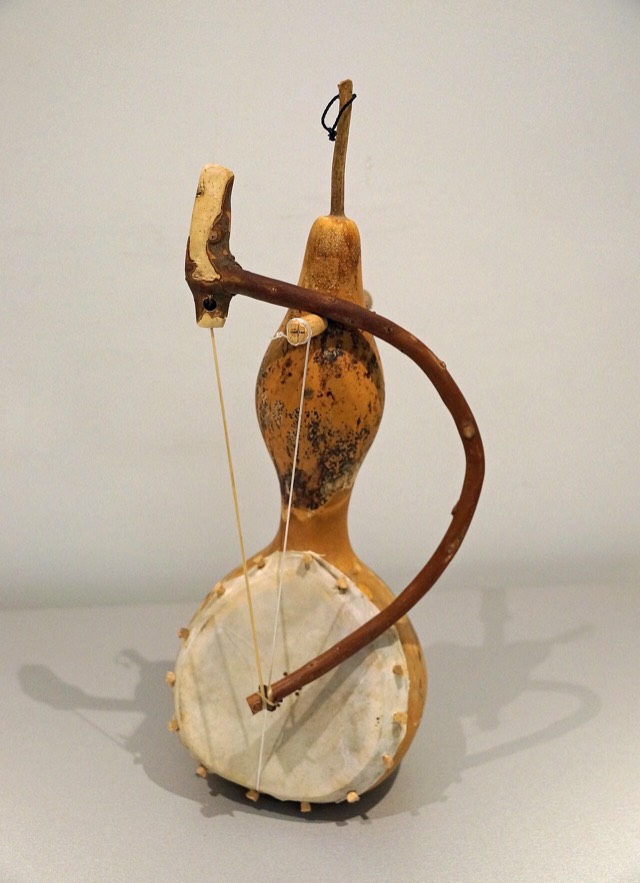
The customary obligation of keeping one's word — the principle behind Albania's wartime sheltering of Jewish refugees.
Subjek
A culture shaped by mountain isolation, five centuries of Ottoman rule, and fifty years of enforced separation.
Pegunungan · Shkodër
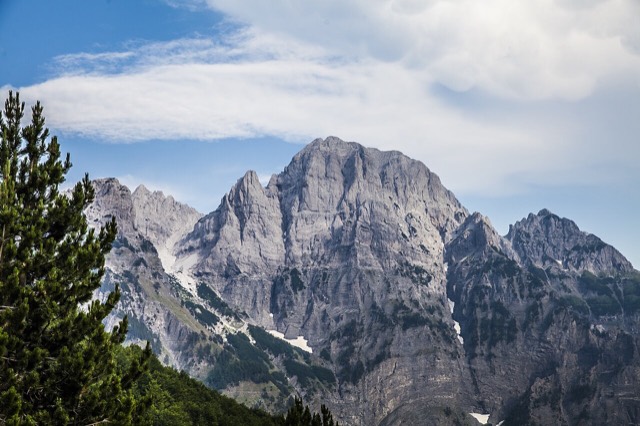
The limestone wall of the far north — locally the Accursed Mountains — shared with Montenegro and Kosovo.
Desa · Shkodër
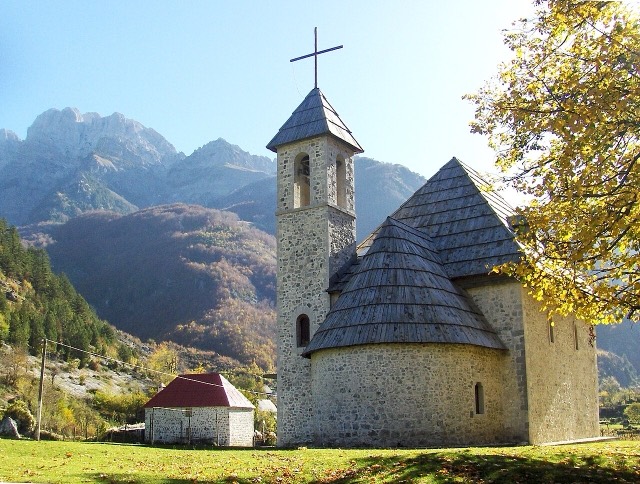
A glacial valley village in the Albanian Alps: a lock-in tower, a waterfall, and one end of the country's best-known trek.
Subjek
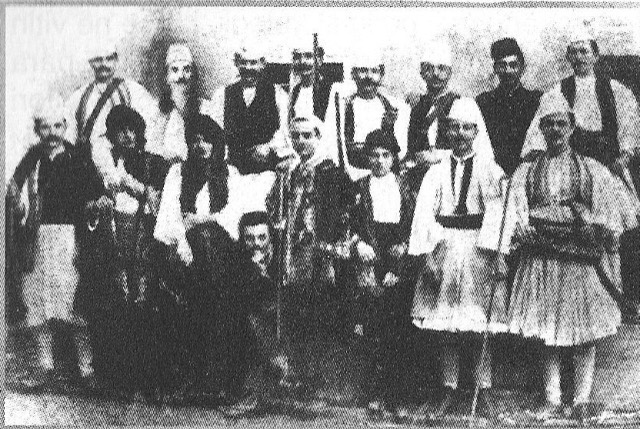
A body of customary law, best known in the Lekë Dukagjini recension, that governed the northern highlands for centuries.
Ada yang salah di halaman ini? Koreksi sangat disambut dan akan diperiksa terhadap catatan sumber. Beri tahu kami apa yang salah dan, jika memungkinkan, dari mana angka yang benar berasal.