Assunto
The Albanian Language
An independent branch of the Indo-European family with no close living relative, written in a 36-letter Latin…
🧭 Vista guiada
Novo na Albânia? Cada página começa com uma explicação em linguagem simples, acessível a uma criança de dez anos, antes de entrar em pormenor.
⚡ Vista para especialistas
Já conhece o essencial. Direto ao conteúdo, com as explicações simples ocultadas. Esta é a vista predefinida.
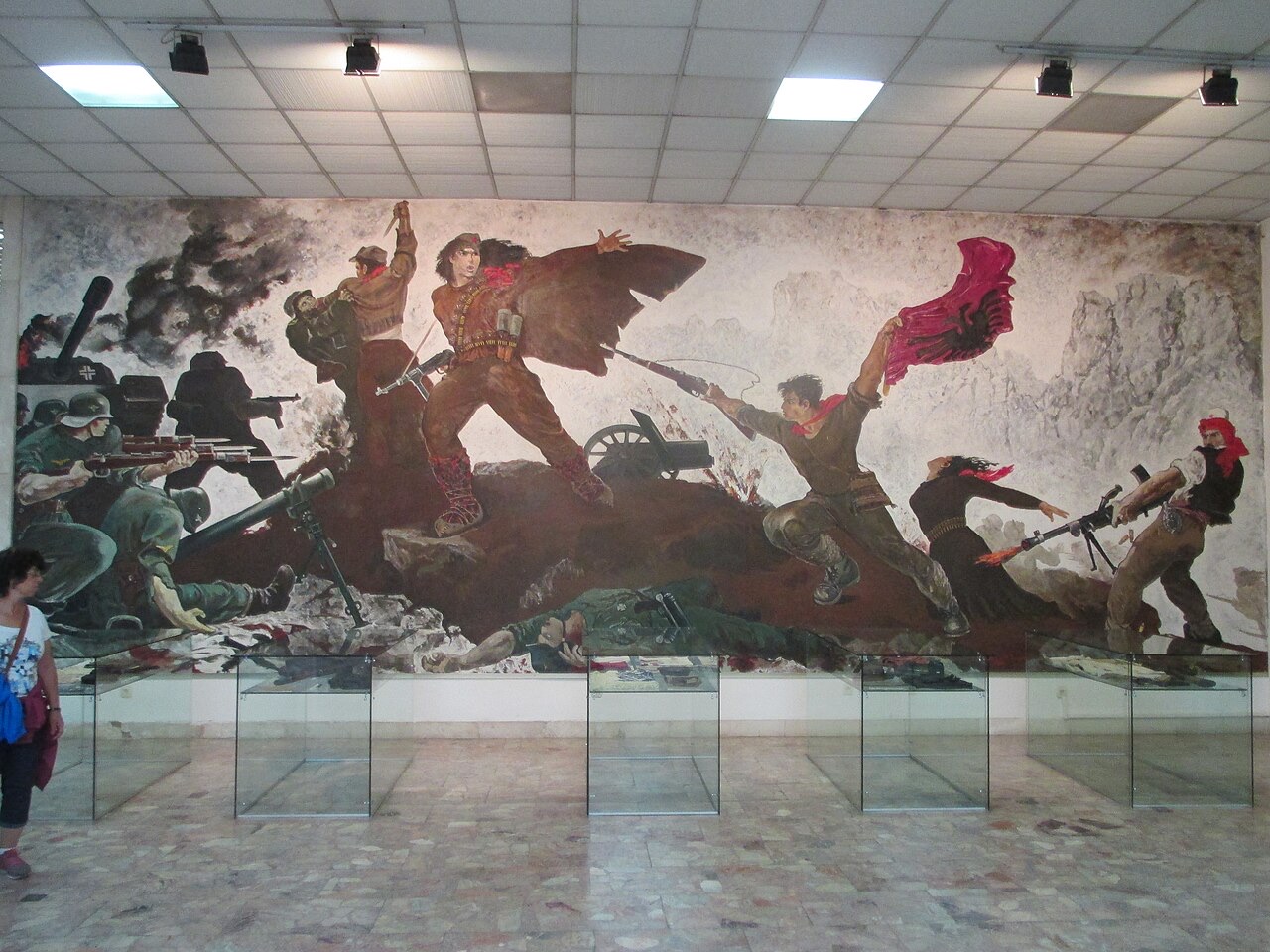
The mosaic on the National History Museum, Tirana · Avi1111 dr. avishai teicher · CC BY-SA 4.0 · Wikimedia Commons
Albanian nouns have a form with 'the' built into them. That is why you see Vlorë and Vlora, Berat and Berati, Shkodër and Shkodra. Both are correct; one just means 'the' town.
Albanian nouns have a form with 'the' built into them. That is why you see Vlorë and Vlora, Berat and Berati, Shkodër and Shkodra. Both are correct; one just means 'the' town.
Albanian marks definiteness with a suffix rather than a separate word. Vlorë is 'Vlorë'; Vlora is 'the Vlorë'. Both appear constantly, including on road signs, and neither is wrong.
This Atlas uses the indefinite form as the page title (Vlorë, Shkodër, Berat) and gives the Albanian definite form alongside it, because that is the form you will most often see locally.
Some places have long-established Greek names in the south (Himarë/Himara, Dhërmi/Drimades) and Italian forms inherited from the interwar period (Durrës/Durazzo, Vlorë/Valona). Older maps and books often use these.
Estas são relações reais no Atlas — lugares próximos deste e temas com os quais está genuinamente associado. Nada aqui é uma recomendação genérica.
An independent branch of the Indo-European family with no close living relative, written in a 36-letter Latin…
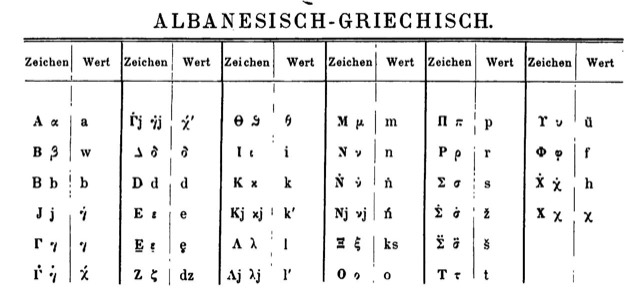
Thirty-six letters agreed at the Congress of Monastir in 1908, replacing competing Arabic, Greek and Latin scripts.
The two dialect groups, divided by the Shkumbin river: Gheg to the north, Tosk to the south.
Esta página baseia-se apenas no inventário curado; ainda não lhe foi associada nenhuma fonte externa.
Algo errado nesta página? As correções são bem-vindas e verificadas em confronto com o registo de origem. Indique o que está errado e, se possível, de onde provém o valor correto.