Objet
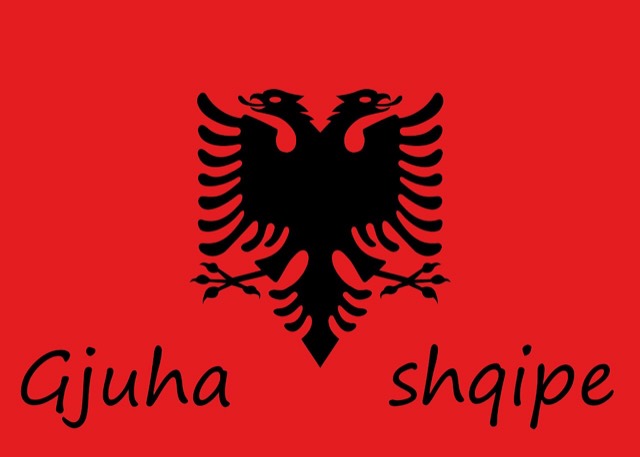
The Albanian Language
An independent branch of the Indo-European family with no close living relative, written in a 36-letter Latin…
🧭 Vue guidée
Nouveau en Albanie ? Chaque page s'ouvre sur une explication en langage clair, accessible à un enfant de dix ans, avant d'entrer dans le détail.
⚡ Vue expert
Vous connaissez déjà les bases. Directement à l'essentiel, les explications simples étant masquées. Il s'agit du réglage par défaut.
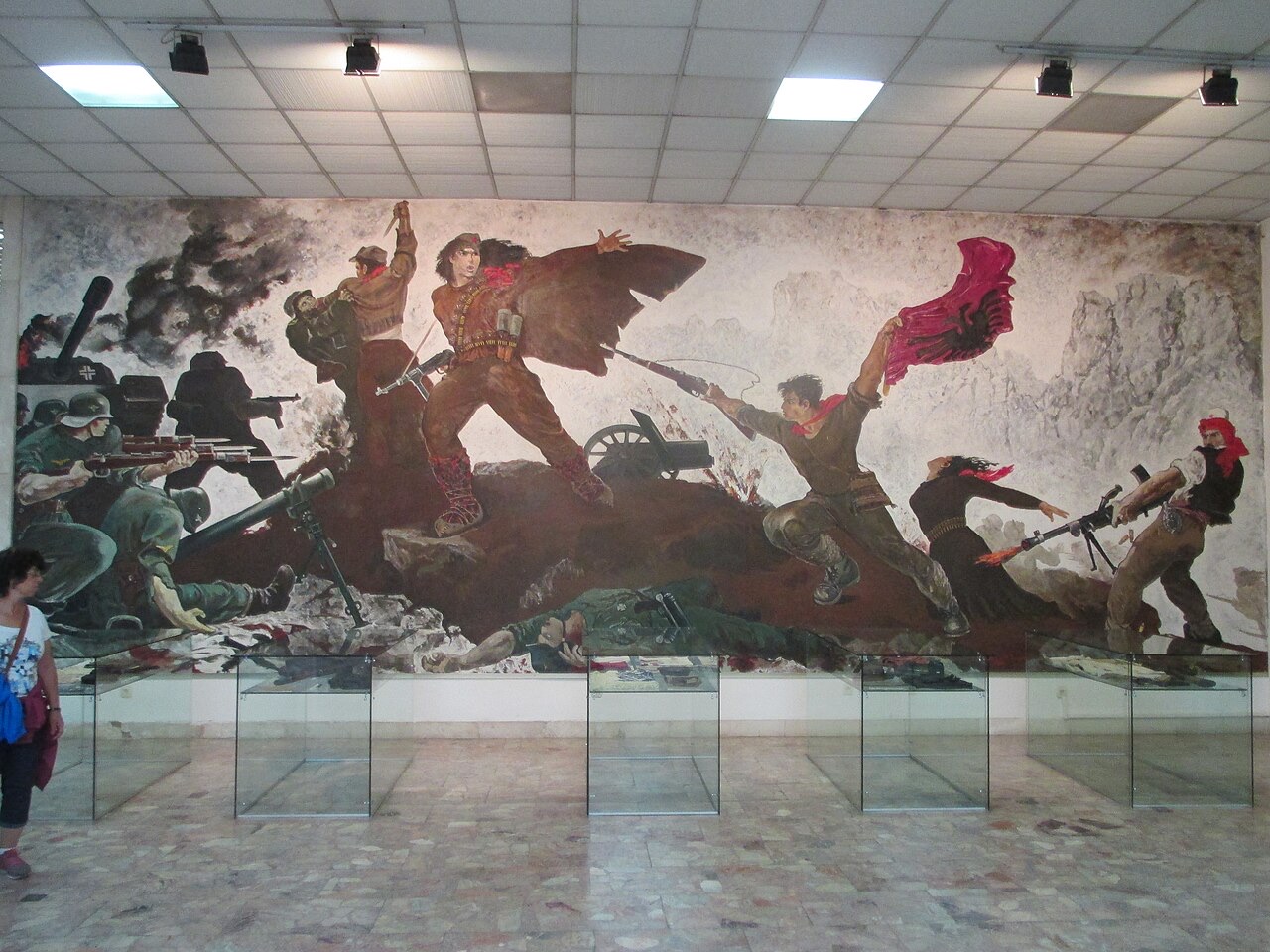
The mosaic on the National History Museum, Tirana · Avi1111 dr. avishai teicher · CC BY-SA 4.0 · Wikimedia Commons
Albanian first names come from several places: old Illyrian and Albanian words, Islam, Christianity, and national heroes. Surnames often come from a place, a job or an ancestor.
Albanian first names come from several places: old Illyrian and Albanian words, Islam, Christianity, and national heroes. Surnames often come from a place, a job or an ancestor.
Albanian given names draw on four traditions at once, which is unusual: indigenous names (Agron, Teuta, Genti — Illyrian rulers), Muslim names (Ardit, Besnik, Fatmir, Arben), Christian names (Gjergj, Pjetër, Marie), and names revived during the national awakening.
Skënder and Gjergj are both after Skanderbeg. Many modern names are transparently Albanian words: Besnik means 'faithful', Fatmir 'lucky', Drita 'light', Lule 'flower'.
Family names often derive from a place (Shkodrani, Korçari, Dibra), from an ancestor, or from an occupation. The suffix -aj is common in the north and typically indicates descent from a named ancestor. The great medieval families — Kastrioti, Dukagjini, Thopia, Arianiti, Balsha, Muzaka — survive as surnames.
Under the communist government some names were changed to remove religious associations, and a 1975 decree required citizens with names deemed unsuitable to change them.
Albanian uses ë and ç, and names are frequently written without them abroad — Berisha for Berisha, Hoxha for Hoxha, but Çela becomes Cela and Përparim becomes Perparim. Both forms refer to the same person.
Ce sont de vraies relations dans l'Atlas — des lieux proches de celui-ci et des sujets auxquels il appartient réellement. Rien ici n'est une recommandation générique.
An independent branch of the Indo-European family with no close living relative, written in a 36-letter Latin…
Gjergj Kastrioti: an Ottoman commander who changed sides and held Albania against the empire for twenty-five years.
A culture shaped by mountain isolation, five centuries of Ottoman rule, and fifty years of enforced separation.
Cette page s'appuie uniquement sur l'inventaire sélectionné ; aucune source externe ne lui a encore été associée.
Une erreur sur cette page ? Les corrections sont les bienvenues et sont vérifiées par rapport au document source. Indiquer ce qui est erroné et, si possible, d'où provient le chiffre correct.