Person
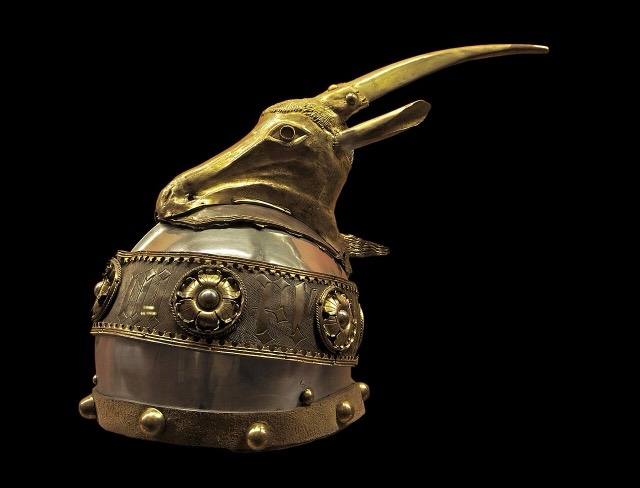
Skanderbeg
Gjergj Kastrioti: an Ottoman commander who changed sides and held Albania against the empire for twenty-five years.
Jeder Kreis, jede Küste, jedes Jahrhundert
Geführte Ansicht
Neu in Albanien? Jede Seite beginnt mit einer einfachen Erklärung, die auch ein Zehnjähriger verstehen würde – bevor es ins Detail geht.
Expertenansicht
Sie kennen die Grundlagen bereits. Direkt zur Substanz, ohne die vereinfachten Erklärungen. Dies ist die Standardeinstellung.
Erläuterung
Why so many Albanians are called Skender, and what a surname tells you about where a family comes from.
Speichern
Albanian first names come from several places: old Illyrian and Albanian words, Islam, Christianity, and national heroes. Surnames often come from a place, a job or an ancestor.
Albanian first names come from several places: old Illyrian and Albanian words, Islam, Christianity, and national heroes. Surnames often come from a place, a job or an ancestor.
Albanian given names draw on four traditions at once, which is unusual: indigenous names (Agron, Teuta, Genti — Illyrian rulers), Muslim names (Ardit, Besnik, Fatmir, Arben), Christian names (Gjergj, Pjetër, Marie), and names revived during the national awakening.
Skënder and Gjergj are both after Skanderbeg. Many modern names are transparently Albanian words: Besnik means 'faithful', Fatmir 'lucky', Drita 'light', Lule 'flower'.
Family names often derive from a place (Shkodrani, Korçari, Dibra), from an ancestor, or from an occupation. The suffix -aj is common in the north and typically indicates descent from a named ancestor. The great medieval families — Kastrioti, Dukagjini, Thopia, Arianiti, Balsha, Muzaka — survive as surnames.
Under the communist government some names were changed to remove religious associations, and a 1975 decree required citizens with names deemed unsuitable to change them.
For most of the Ottoman period a name announced a religion: a Muslim family chose Arabic and Turkish names, a Catholic one saints' names in their Albanian forms, an Orthodox one Greek-derived names. The national awakening of the late 19th century pushed back against that division by promoting names that were simply Albanian — Illyrian rulers such as Teuta, Agron and Genti, heroes such as Skënder, and words of the language itself.
The communist state took the idea much further. Official lists of approved 'Illyrian' and 'revolutionary' names were published, religious names were discouraged after the 1967 ban on religion and then targeted by the 1975 decree, and a generation was named Shpresa ('hope'), Liri ('freedom') or after partisans and the party.
After 1991 the fashion swung outward. Parents picked names from Italian television, Hollywood and football, and later from the countries where relatives had emigrated — so a single Albanian family can hold an Illyrian grandparent, a revolutionary parent and a child named after an Italian singer.
Albanian uses ë and ç, and names are frequently written without them abroad — Berisha for Berisha, Hoxha for Hoxha, but Çela becomes Cela and Përparim becomes Perparim. Both forms refer to the same person.
Person
Gjergj Kastrioti: an Ottoman commander who changed sides and held Albania against the empire for twenty-five years.
Betreff
An independent branch of the Indo-European family with no close living relative, written in a 36-letter Latin alphabet.
Betreff
A culture shaped by mountain isolation, five centuries of Ottoman rule, and fifty years of enforced separation.
Etwas falsch auf dieser Seite? Korrekturen sind willkommen und werden gegen den Quelldatensatz geprüft. Bitte mitteilen, was falsch ist und, wenn möglich, woher die richtige Angabe stammt.