Industry
Banking and Finance
A euroised, foreign-owned banking sector supervised by the Bank of Albania.
Every county, coast and century
Guided view
New to Albania? Every page opens with a plain-language explanation you could read to a ten-year-old, before the detail begins.
Expert view
You already know the basics. Straight to the substance, with the simple explanations hidden. This is the default.
Guide
Among the lowest cost bases in Europe — with Tirana and the summer coast as the two big exceptions.
Save
Living in Albania costs less than in most of Europe. Rent, food and transport are cheap. Tirana is the most expensive place, and the coast in summer is expensive for short stays.
Living in Albania costs less than in most of Europe. Rent, food and transport are cheap. Tirana is the most expensive place, and the coast in summer is expensive for short stays.
Specific prices go out of date faster than anything else on a reference site, so this Atlas does not print a table of invented monthly budgets. What it does instead: the Data section carries wage, inflation and price-level series with their observation periods and sources, and this page explains the structure of costs so you can apply current numbers yourself.
If you see a precise monthly budget for Albania quoted without a date and a source, treat it as unreliable.
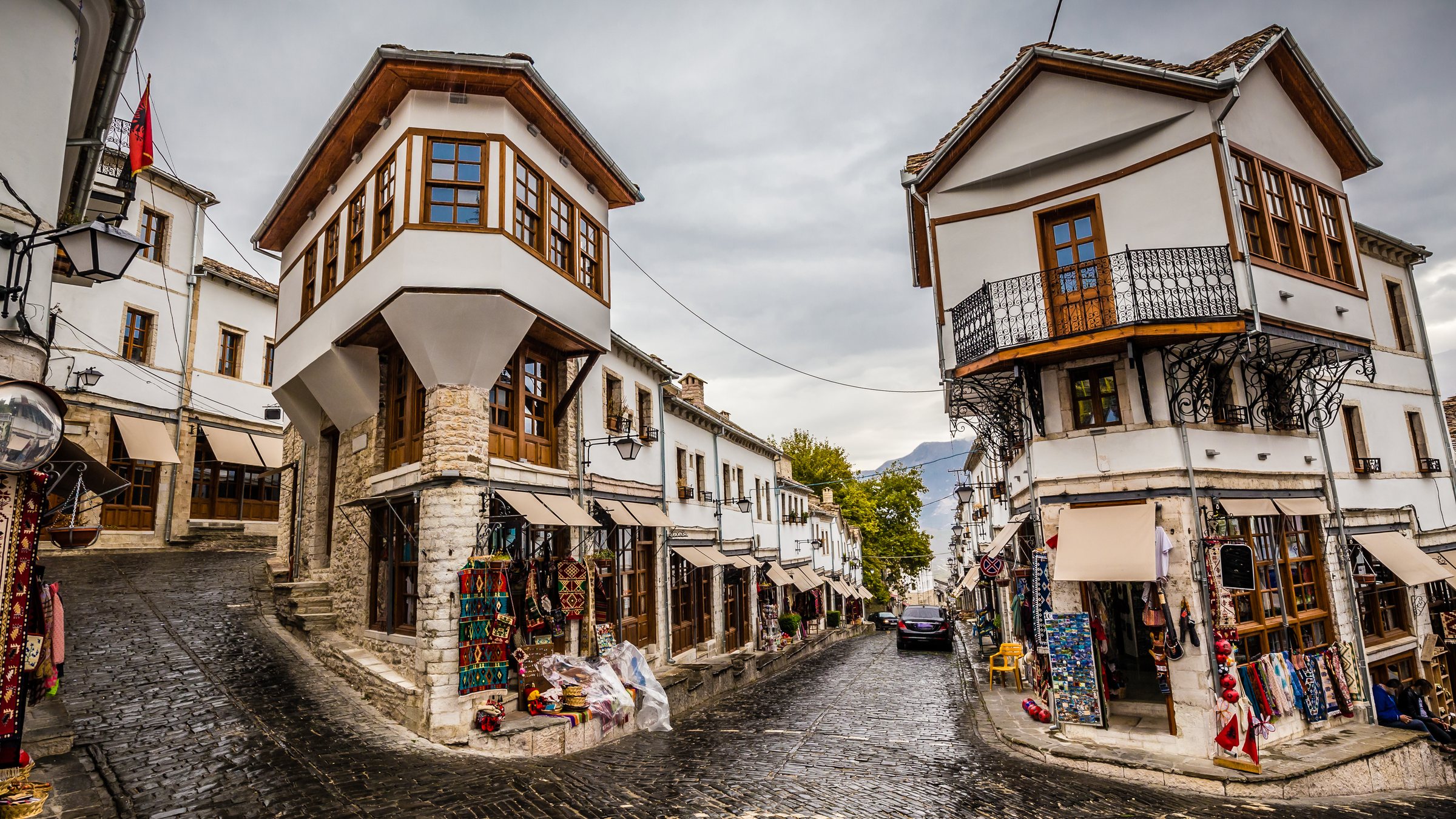
Tirana is its own market and by a distance the most expensive place to rent. The coastal towns are cheap in winter and expensive in July and August. Inland towns — Korçë, Berat, Shkodër, Gjirokastër, Elbasan — are consistently the cheapest, and are where the gap with western Europe is widest.
Imported goods, cars, electronics and international-standard private schooling are priced close to or above EU levels. A low cost of living in Albania is largely a low cost of housing, food, services and labour — not of manufactured imports.
Industry
A euroised, foreign-owned banking sector supervised by the Bank of Albania.
Guide
A foreign-owned banking sector, a partly euroised economy, and a country where cash still matters.
Guide
A one-year permit route since 2022, cheap rent, fast urban internet, and a small but real community in Tirana.
Guide
Why retirees look at Albania, what the practical constraints are, and the questions to answer before deciding.
Guide
What the move actually involves: entry, residence, registration, banking, housing and the things people underestimate.
Guide
Cheap by European standards, largely informal, and priced in euros in the places foreigners want.
Explainer
A currency most visitors never see quoted, in a country where a lot of prices are in euros.
Guide
Still one of the cheapest countries in Europe, though the Riviera in August is no longer cheap.
Something wrong on this page? Corrections are welcome and are checked against the source record. Tell us what is wrong and, if you can, where the right figure comes from.