유적지 · Durrës
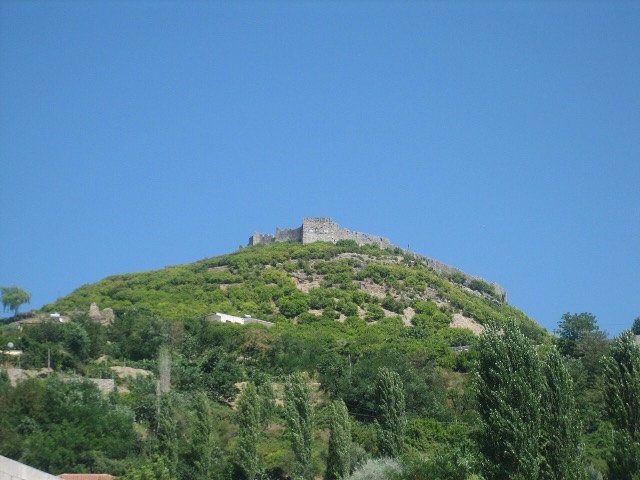
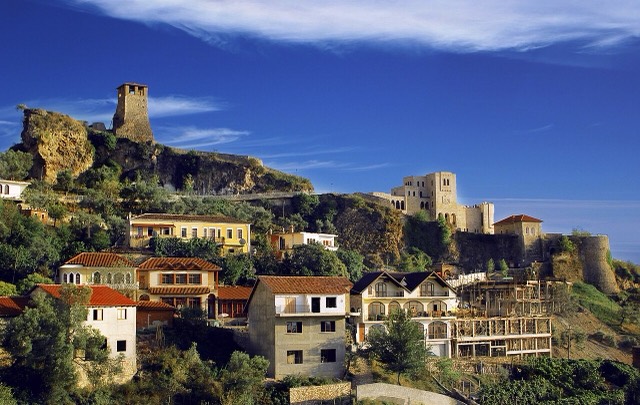
Krujë Castle
Skanderbeg's base, which held out against three Ottoman sieges and now houses the national museum of the resistance.
모든 주, 모든 해안, 모든 세기
안내 보기
알바니아가 처음이신가요? 모든 페이지는 세부 내용이 시작되기 전에, 열 살짜리 아이도 이해할 수 있는 평이한 설명으로 시작됩니다.
전문가 보기
기본 내용은 이미 알고 계신가요? 간단한 설명은 숨기고 핵심 내용만 바로 확인하세요. 이것이 기본 설정입니다.
역사적 시기
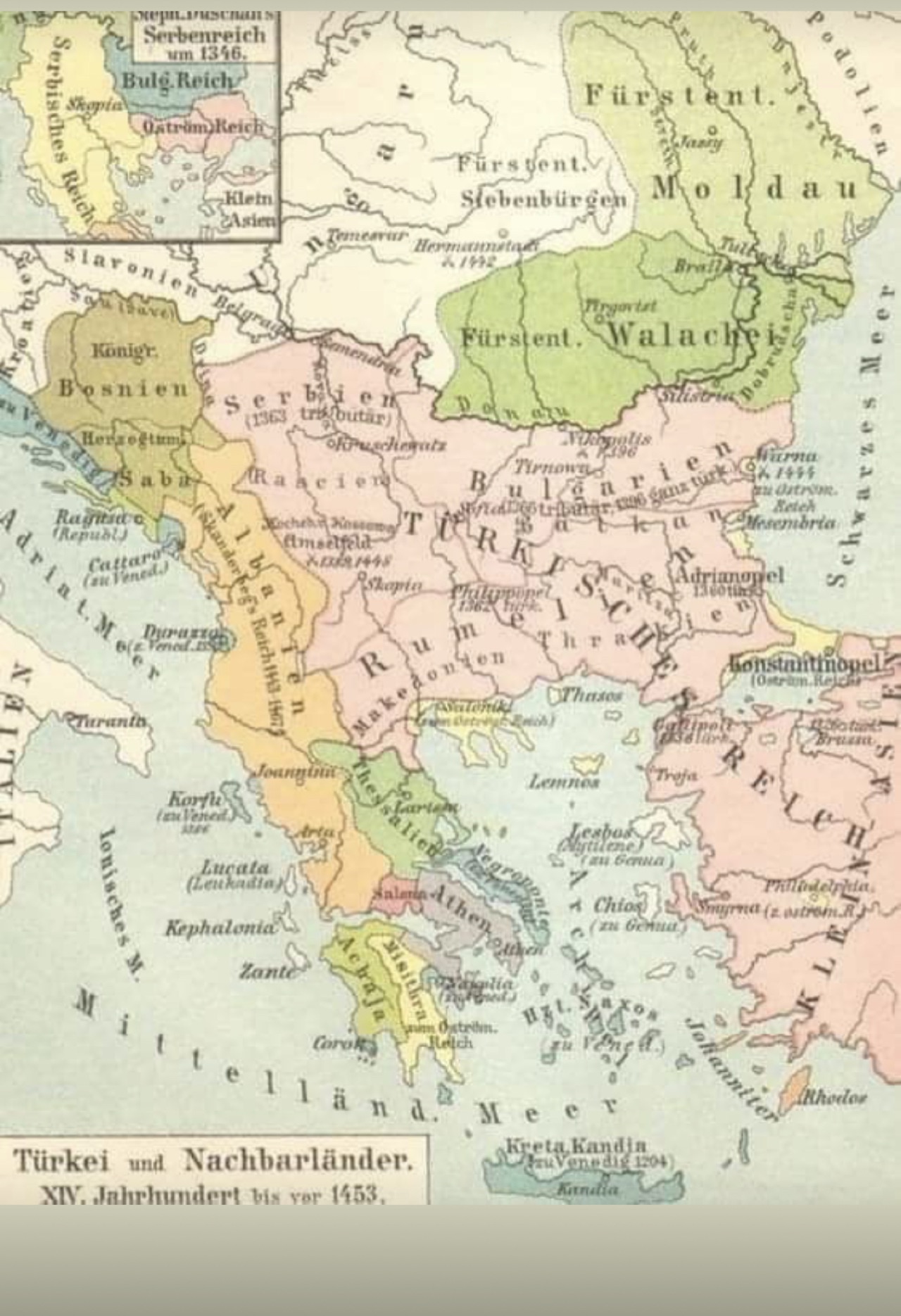
Twenty-five years in which a coalition of Albanian nobles held off the Ottoman Empire at its height.
저장
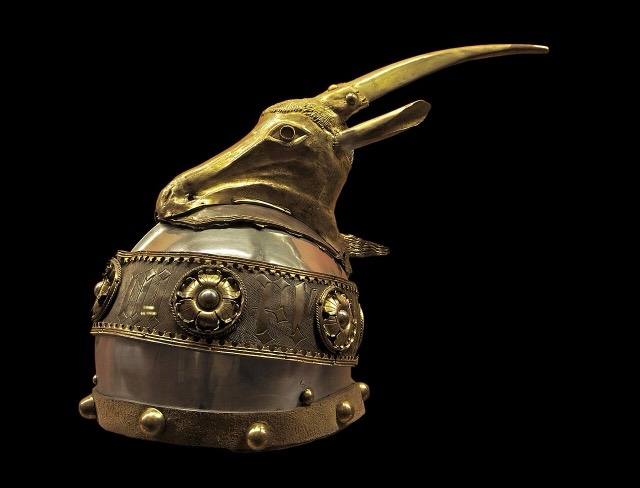
In 1443 a nobleman named Skanderbeg left the Ottoman army and came home to fight it. In 1444 he brought the Albanian noble families together at Lezhë. For 25 years they held off much bigger Ottoman armies, and Skanderbeg became a hero across Europe.
In 1443 a nobleman named Skanderbeg left the Ottoman army and came home to fight it. In 1444 he brought the Albanian noble families together at Lezhë. For 25 years they held off much bigger Ottoman armies, and Skanderbeg became a hero across Europe.
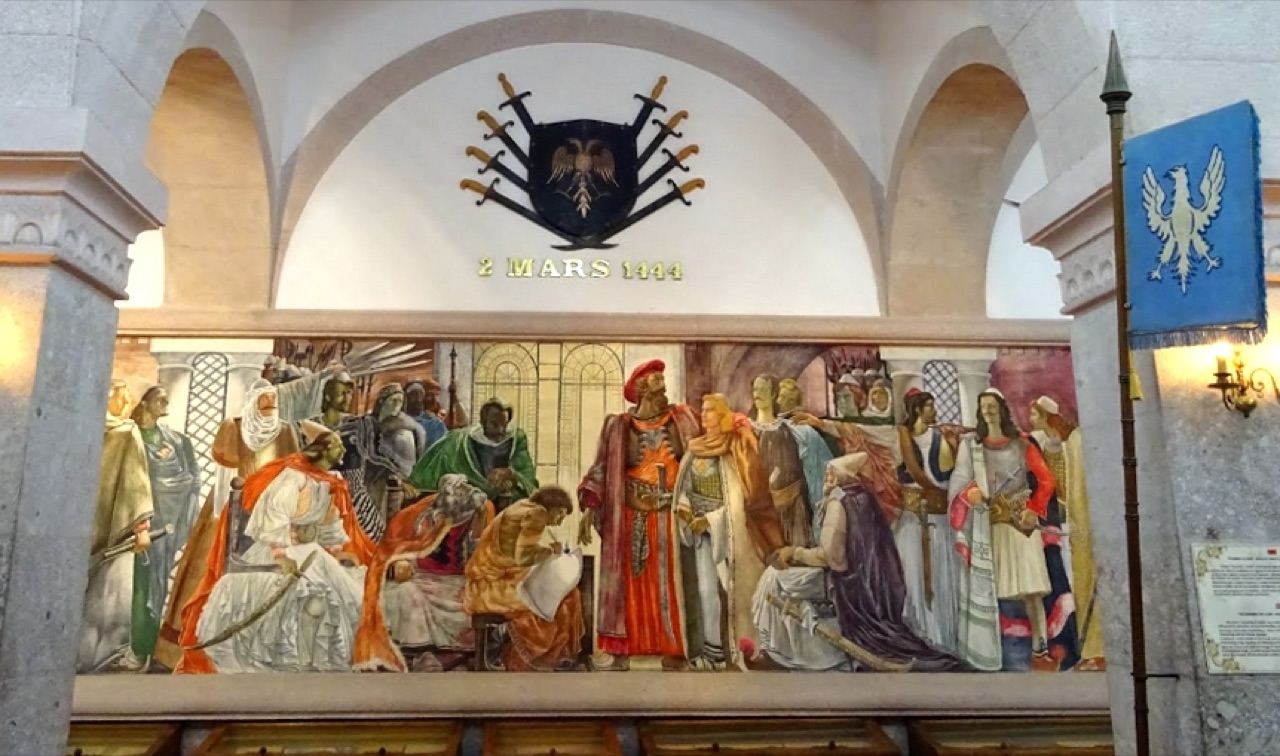
The League of Lezhë was established on 2 March 1444 in the city of Lezhë, bringing together the principal Albanian aristocratic families in a combined military and diplomatic alliance against the Ottoman Empire. The founding assembly included representatives of the Kastrioti, Arianiti, Zaharia, Muzaka, Spani, Thopia, Balsha, and Crnojević families, many of whom were linked to the Kastrioti through matrilineal descent or marriage. Delegates from Venice were also present at the meeting.
The chronicler Marin Barleti described the gathering in Latin as the generalis concilium or universum concilium — meaning 'general council' or 'whole council'. The name 'League of Lezhë' was not used at the time; it was coined by later historians. The peace treaty signed on 4 October 1448 following the Albanian–Venetian War is identified as the first diplomatic document on which the league appears as an independent entity.
The league was initiated and organized under Venetian patronage and was placed, through treaties, under the suzerainty of King Alfonso V of Naples, with Skanderbeg serving as captain general. Each member lord retained control over the internal affairs of his own domain. The combined armed forces of the alliance numbered 8,000 warriors at its founding.
The named founders of the league at the 1444 assembly were: Lekë Zaharia, lord of Sati and Dagnum, accompanied by his vassals Pal and Nicholas Dukagjini; Pjetër Spani, lord of the mountains behind Drivasto; Lekë Dushmani, lord of Minor Pult; Gjergj Strez Balsha, Gjon Balsha, and Gojko Balsha, lords of Misia between Kruja and Lezhë; Andrea Thopia, lord of Scuria between Tirana and Durrës, with his nephew Tanush; Gjergj Arianiti; Theodor Corona Muzaka; and Stefan Crnojević, lord of Upper Zeta.
The structure of the alliance was explicitly non-centralizing. Member lords contributed men and money to the league while retaining autonomy over their own domains. Skanderbeg, as commander-in-chief, had no right to interfere in the internal affairs of other nobles' territories and functioned in the role of primus inter pares — first among equals — rather than as a sovereign ruler over them.
The pro-Venetian Balsha and Crnojević families left the league shortly after its formation, in circumstances connected to the Albanian–Venetian War of 1447–48. Their departure illustrated from the outset the fragility of an alliance composed of lords with competing external allegiances and local interests.
At the 1444 assembly, Gjergj Kastrioti was proclaimed 'Chief of the League of the Albanian People' and served as the league's supreme military leader and commander-in-chief of its combined forces. In his own correspondence and documents, Skanderbeg consistently signed himself using the Latin title 'Dominus Albaniae' — rendered in Albanian as 'Zot i Arbërisë' and in English as 'Lord of Albania'.
The league is considered by some historians to represent the first unified independent Albanian polity of the medieval period. Others dispute this characterization, arguing it functioned only as a military alliance rather than a state. The article notes that it did provide foundational elements of Albanian unity, though the question of its precise political status remains a point of historical debate.
Ottoman forces first engaged in Albania at the Battle of Savra on 18 September 1385, when Karl Thopia invited the Ottomans into the region. In that engagement, Balsha II, the Lord of Zeta, was defeated and killed. Over the following decades, the Ottoman Empire consolidated its position in the Balkans with limited organized resistance from the Christian nobility of the region.
The pace of Ottoman territorial acquisition in Albania accelerated in the early fifteenth century. Ottoman forces captured Kruja from the Thopia family in 1415, Berat from the Muzaka in 1417, Vlorë and Kaninë from Rugjina Balsha in 1417, and Gjirokastër from the Zenevisi in 1418. Local Albanian principalities, already under simultaneous pressure from the Ottoman Empire and the Republic of Venice, began to lose cohesion.
The Ottoman civil war of 1402–13, fought among the sons of Bayezid I, presented an opportunity that the Christian nobility of the Balkans did not exploit. Bulgarians, Serbs, and Hungarians instead participated as allies of the eventual victor, Mehmed I, rather than using the conflict to push back Ottoman power. Some Albanian nobles revolted between 1432 and 1436. In November 1443, Skanderbeg captured Kruja with his troops and declared its independence from the Ottoman sultan, setting the immediate context for the 1444 assembly.
The league's first significant military success came at the Battle of Torvioll in 1444. The victory was reported rapidly across Europe and marked the beginning of a period in which Albanian forces, under Skanderbeg's command, consistently defeated Ottoman armies in the field. Further victories followed at Mokra in 1445, Otonetë in 1446, and Oranik in 1448, though the league suffered a defeat at Svetigrad in 1448.
On 14 May 1450, the Ottoman forces began the first siege of Kruja. This siege was eventually abandoned without success. In 1451, Skanderbeg formed an alliance with the Kingdom of Naples, though Albanian forces received no practical military assistance from Naples during this period. Ottoman defeats continued at Mokrra and Meçadi in 1452.
An Albanian–Venetian War ran from 1447 to 1448, a complication within the broader struggle against the Ottomans. It ended on 4 October 1448, when Skanderbeg and Nicholas Dukagjini signed a peace treaty with Venice. Under its terms, Venice retained its possessions in Albania, including Dagnum, in exchange for a yearly payment of 1,400 ducats and certain trade privileges extended to some league members.
Following the fall of Constantinople in 1453, Albanian forces began receiving financial aid from Naples, Venice, and the papacy. The league achieved a victory at Polog in 1453 and continued to defeat Ottoman armies in the field through the subsequent years. Until 1462, Skanderbeg's forces were able to repel Ottoman attacks each year without significantly diminishing overall Ottoman military capacity. Only in 1460 and 1463 did ceasefires interrupt the fighting.
Despite these sustained tactical successes, the structural imbalance between the two sides was apparent. The Ottoman sultan was able to dispatch a new army each year without serious difficulty, whereas the league's resources were finite and its membership unstable. In 1462, Skanderbeg captured the important city of Ohrid, representing one of the more strategically significant territorial gains of the entire campaign. A victory at Mokra was also recorded in 1462.
In 1466, Ottoman forces mounted a second siege of Kruja, which was again repelled. Following that failure, the Ottomans constructed the fortress of Elbasan in the valley of the Shkumbin River to provide logistical support for future campaigns in the region. The construction of Elbasan represented a strategic shift toward establishing permanent infrastructure rather than relying solely on seasonal military expeditions.
A third Ottoman siege of Kruja was attempted in 1467 and again failed. By 1468, Skanderbeg commanded a force estimated at 10,000 men. Financial support was provided by Venice and by the kings of Hungary and Naples, described in the article as providing 'the financial backbone' of the resistance. This support came from powers that had previously been enemies of the Albanian lords.
The league began fragmenting from an early stage. No official date of dissolution is recorded, but by 1450 it had clearly ceased to function as originally constituted. Only the core grouping around Skanderbeg and Arianiti continued active military resistance against the Ottomans. Several members chose to act in accordance with their own political interests rather than the collective military purpose of the alliance.
During the 1450 campaign against Ottoman forces, some members shifted their positions, alternating between supporting the Ottomans and rejoining Skanderbeg. After Pjetër Spani and Gjergj Dushmani withdrew, and after the Arianiti and Dukagjini families left the alliance in 1450, members of the Dukagjini family went further — concluding a separate peace with the Ottoman Empire and, according to the article, even plotting against Skanderbeg himself.
Among Skanderbeg's commanders, defections to the Ottoman side occurred notably in 1457: Hamza Kastrioti (Skanderbeg's nephew), Moisi Arianit Golemi, Nikollë Dukagjini, and Pal III Dukagjini all passed to the Ottomans in that year. The list of commanders otherwise included Vrana Konti, Vladan Jurica (identified as General Quartermaster), Tanush Thopia, Karl Muzaka Thopia, Lekë Dukagjini, Pjetër Perlati, Marin Spani, Andrea Thopia, Ajdin Muzaka, Dhimitër Berisha, Nik Peta, and Pal Golemi.
Skanderbeg died in 1468, after 25 years of leading resistance against the Ottoman Empire. Following his death, the League of Lezhë began to disintegrate. The Ottoman sultan, according to the article, 'easily subdued Albania' after Skanderbeg's death, though armed resistance did not end immediately.
Lekë III Dukagjini assumed leadership of the remaining Albanian forces and continued resistance against the Ottomans. The northern Albanians, following the Venetians, were particularly active in continuing the fight. The final collapse of organized resistance came in 1479, when the Ottomans captured Shkodra, which had until that point been under Venetian control. With its fall, the entire Albanian settlement area was incorporated into the Ottoman Empire.
The League of Lezhë is considered the first unified independent Albanian polity of the medieval period, though this characterization is disputed among historians. Some regard it as a functioning Albanian state; others contend it was solely a military alliance and that applying the concept of statehood to it overstates its institutional character. The league is credited with providing foundational elements of Albanian national unity regardless of which interpretation is accepted.
The league and the figure of Skanderbeg have become central to Albanian historiography. The article notes that this period, categorized as pre-communist, is treated by many as mythical and beyond critical challenge. Struggles against the Ottoman Empire and other foreign powers during this era are closely linked to narratives of national self-definition. Skanderbeg's use of the title 'Dominus Albaniae' — Lord of Albania — and his role as the first leader under whom Albanian lords operated as a single military entity have contributed to his enduring symbolic importance in Albanian national memory.
유적지 · Durrës
Skanderbeg's base, which held out against three Ottoman sieges and now houses the national museum of the resistance.
역사적 시기
Four and a half centuries in the empire — mass conversion to Islam, powerful local pashas, and eventually a national movement.
인물
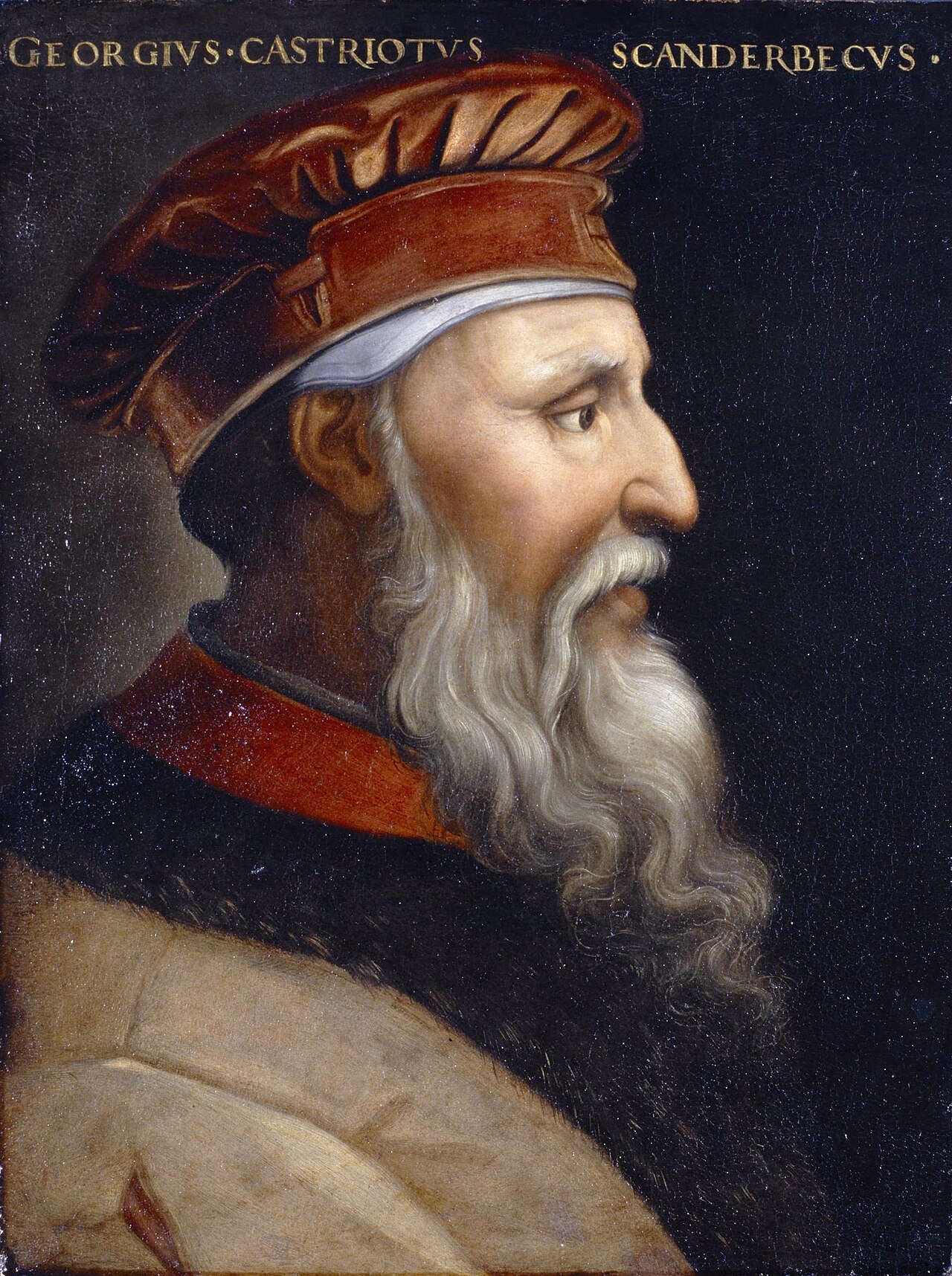
Gjergj Kastrioti: an Ottoman commander who changed sides and held Albania against the empire for twenty-five years.
소도시 · Lezhë
Where the Albanian princes swore their 1444 league, and where Skanderbeg is buried.
역사적 시기
Arbanon, then the Angevin Kingdom of Albania, then the great noble houses — Thopia, Balsha, Kastrioti, Arianiti.
이 페이지에 오류가 있습니까? 수정 제안을 환영하며, 출처 기록과 대조하여 검토합니다. 잘못된 내용과 가능하다면 올바른 수치의 출처를 알려 주십시오.