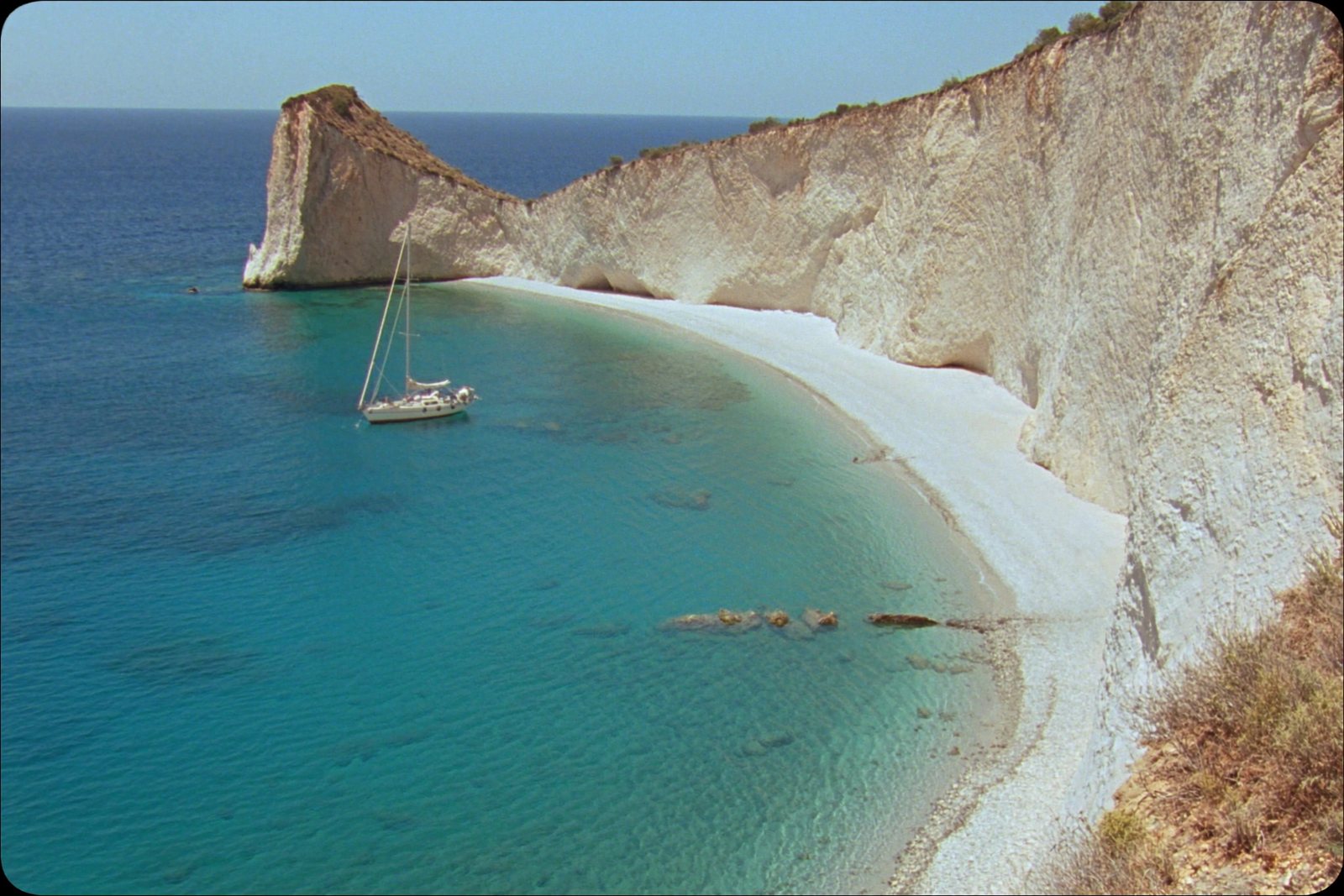
- Nearest town
- Orikum (by boat)
- Shore
- White pebble and limestone slabs
- Access
- Boat only, from Orikum, Vlorë or Dhërmi
- Main season
- June to September; water warmest in August
सरल भाषा में
Grama Bay is on a wild peninsula with no roads. Sailors from ancient times carved their names into the rocks there, and you can still see the writing. You can only arrive by boat.
सरल व्याख्या
Grama Bay is on a wild peninsula with no roads. Sailors from ancient times carved their names into the rocks there, and you can still see the writing. You can only arrive by boat.
इस पेज पर
Location and setting
Grama Bay (Albanian: Gjiri i Gramës; pronounced [ˈɟiːɾi i ˈgraːməs]) lies on the Ionian Sea along the Albanian Riviera. It is one of several bays formed along the western face of the Ceraunian Mountains, a coastal range whose steep terrain shapes the character of the shoreline throughout this stretch of the Albanian coast.
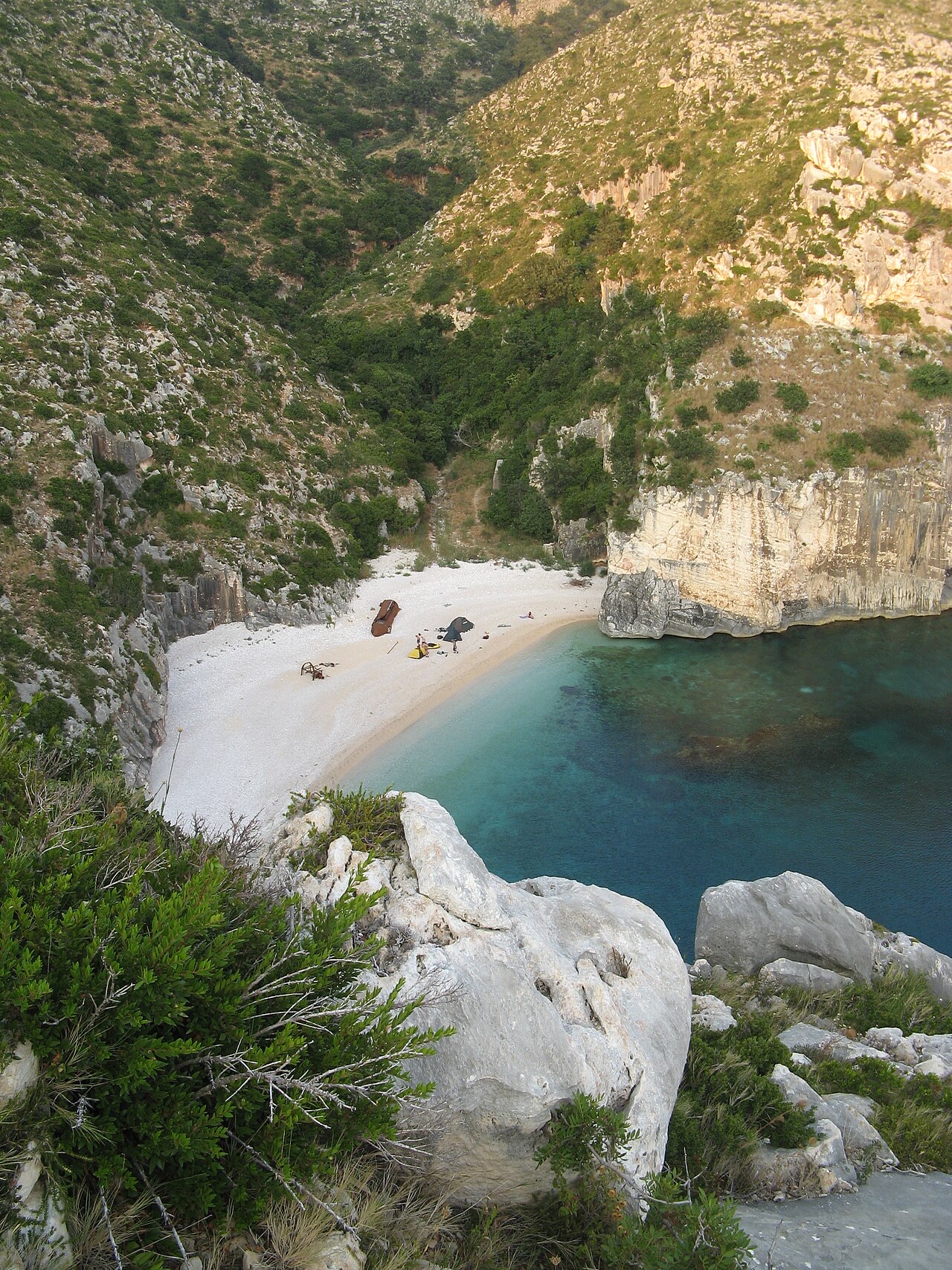
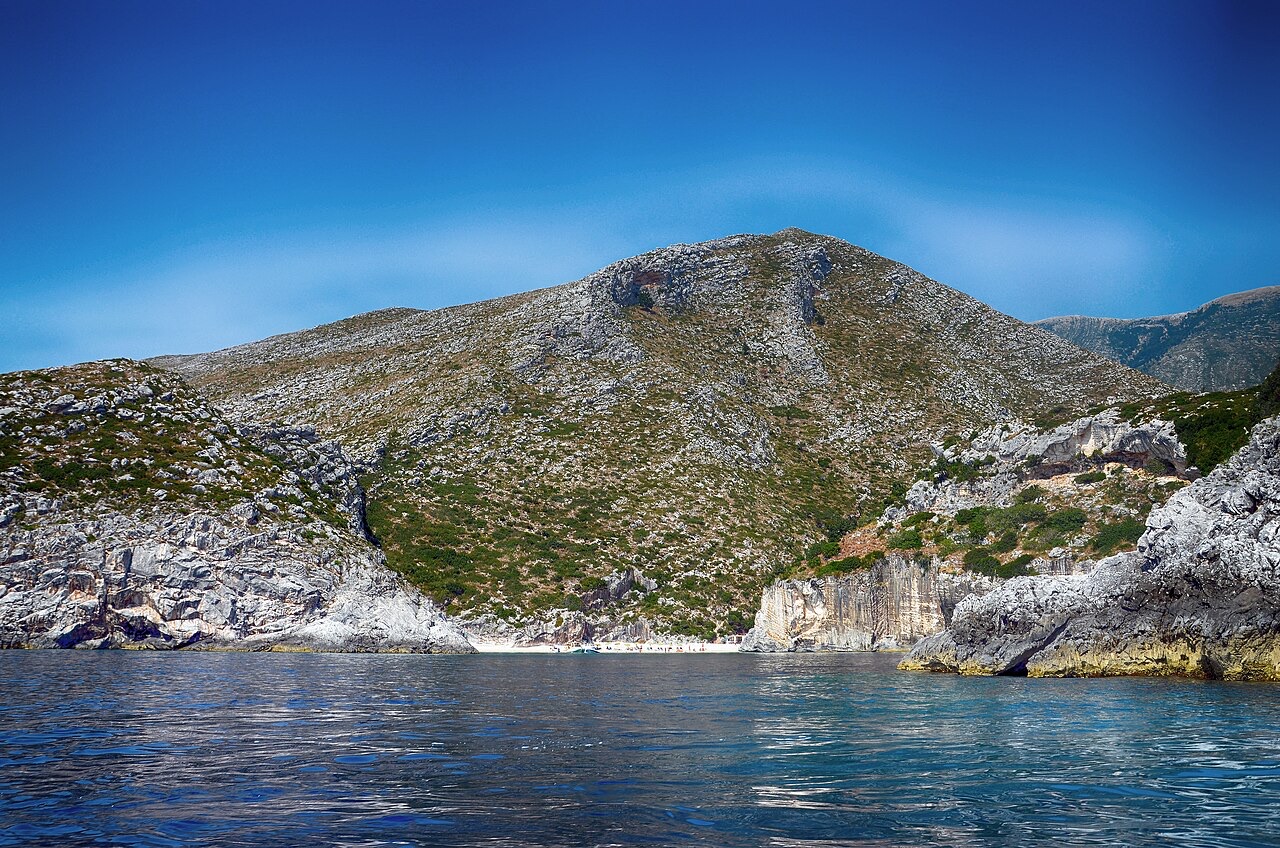
The bay falls within the boundaries of the Karaburun-Sazan Marine Park. Its shore is dominated by coastal cliffs that slope vertically into the sea, alongside rocky and pebbled beaches. The site has been designated a natural monument on account of its landscape, which includes solutional caves and sea caves formed by coastal erosion.
The name and its origins
The name Grama derives from the Greek word for 'letter', a direct reference to the carved inscriptions that cover the surrounding cliffs. The bay is also referred to as Grammata (or Grammata), the plural of Gramma, reflecting the accumulated body of inscribed texts found there.
These inscriptions were left by Greek, Roman and medieval sailors as expressions of thanksgiving to the Dioscuri — Castor and Pollux — and to other patron figures. The naming of the bay is therefore inseparable from its role as a site of votive inscription over many centuries.
Ancient and medieval inscriptions
In antiquity, Grama Bay was a sheltered cove along the Chaonian coast, west of the Ceraunian Mountains. It served as a harbour and place of refuge for vessels sailing along this section of the coastline during classical antiquity.
On the vertical cliff faces and rocks, sailors carved inscriptions in Ancient Greek, Latin and Medieval Greek. This category of inscription was known in antiquity as euploia inscriptions (Greek: ευπλοϊα), a term associated with prayers or thanks for safe passage at sea. The presence of texts in three languages and across several historical periods indicates the bay was in continuous use as a waypoint over a long span of time.
A scholarly study of the inscriptions, authored by Arben Hajdari, Joany Reboton, Saïmir Shpuza and Pierre Cabanes, was published in the Revue des Études Grecques in 2007 under the title 'Les Inscriptions de Grammata (Albanie)'.
Use during the Second World War
During World War II, Grama Bay was used as a base by the Special Operations Executive (SOE). The article provides no further detail on the nature or duration of SOE operations conducted from the bay.
Sea caves and the Mediterranean monk seal
The sea caves of Grama Bay constitute a distinct ecosystem within the site. The article identifies them as providing important refuge for the Mediterranean monk seal, which it describes as the rarest seal species in the world.
The bay's landscapes are characterised in the article as being of global importance for their contribution to ecological balance and as habitat for species that are globally threatened or endangered. The sea caves are cited specifically in this context as an exceptional habitat type.
Protected status and conservation
Grama Bay's designation as a natural monument relates to its landscape qualities, including the presence of solutional and sea caves, rather than solely to its archaeological or historical significance. It sits within the Karaburun-Sazan Marine Park, which provides a broader protected area framework for the surrounding coastal and marine environment.
The bay is described in the article as contributing to Albania's ecological balance. Its dual significance — as a site of archaeological and epigraphic importance and as a habitat for threatened marine species — underlies its protected status.
माह के अनुसार जलवायु
सबसे गर्म महीना है August (औसत दैनिक अधिकतम 31°C), सबसे ठंडा है January (औसत दैनिक न्यूनतम 7°C), और सबसे अधिक वर्षा वाला है November (206 mm). कुल वार्षिक वर्षा का औसत है 1,256 mm. समुद्र का तापमान अगस्त में लगभग अपने चरम पर पहुँचता है 25°C.
| माह | अधिकतम | न्यूनतम | वर्षा | वर्षा के दिन | धूप/दिन | समुद्र |
|---|---|---|---|---|---|---|
| January | 12°C | 7°C | 146 mm | 13 | 7.4 h | 17°C |
| February | 13°C | 7°C | 126 mm | 12 | 8.3 h | 15°C |
| March | 15°C | 9°C | 118 mm | 12 | 9.9 h | 15°C |
| April | 18°C | 12°C | 86 mm | 12 | 11.0 h | 16°C |
| May | 23°C | 16°C | 61 mm | 9 | 12.3 h | 18°C |
| June | 28°C | 20°C | 33 mm | 6 | 13.7 h | 23°C |
| July | 31°C | 22°C | 17 mm | 4 | 13.8 h | 25°C |
| August | 31°C | 23°C | 27 mm | 4 | 12.9 h | 25°C |
| September | 26°C | 20°C | 103 mm | 9 | 10.8 h | 26°C |
| October | 22°C | 16°C | 143 mm | 10 | 9.3 h | 25°C |
| November | 18°C | 12°C | 206 mm | 14 | 7.4 h | 21°C |
| December | 14°C | 9°C | 190 mm | 14 | 6.8 h | 18°C |
स्रोत: ERA5 reanalysis via Open-Meteo, 1994–2023 · "अधिकतम" और "न्यूनतम" क्रमशः औसत दैनिक अधिकतम और न्यूनतम वायु तापमान हैं। "वर्षा के दिन" उन दिनों की गणना करता है जिनमें कम से कम 1 मिमी वर्षण हुई हो।
अधिक चित्र
संबद्ध विषय
निकटवर्ती
विषय · Vlorë
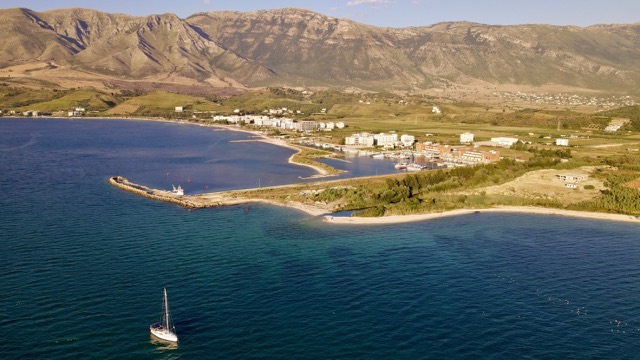
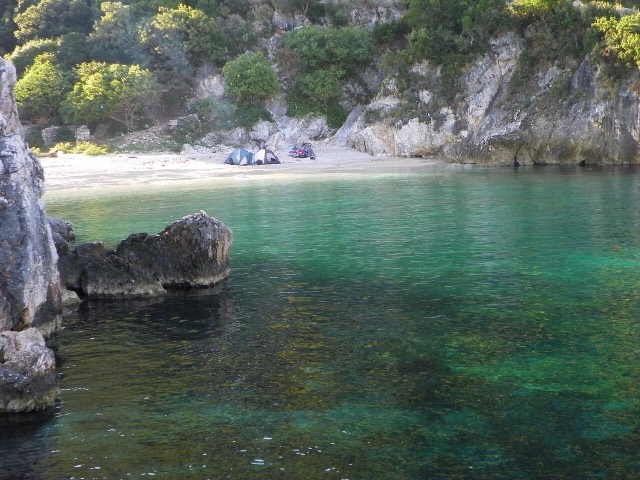
Karaburun Peninsula
Albania's largest uninhabited peninsula, closed to the public for most of the 20th century and now a marine park.
संबंधित विषय
संरक्षित क्षेत्र · Vlorë
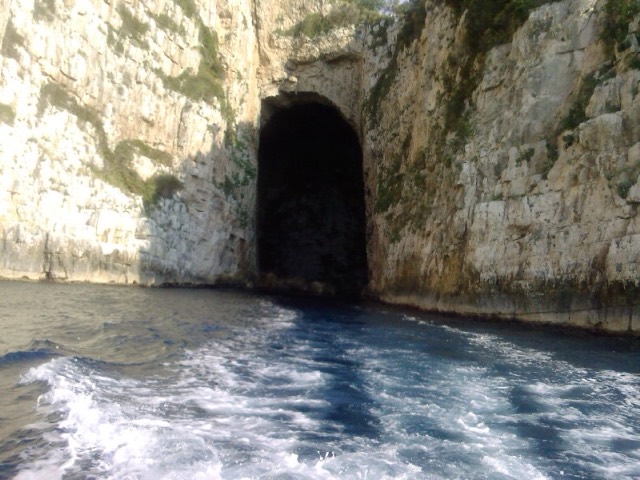
Karaburun-Sazan Marine Park
Albania's only marine national park: sea caves, wrecks and the country's clearest water.
मार्गदर्शिका
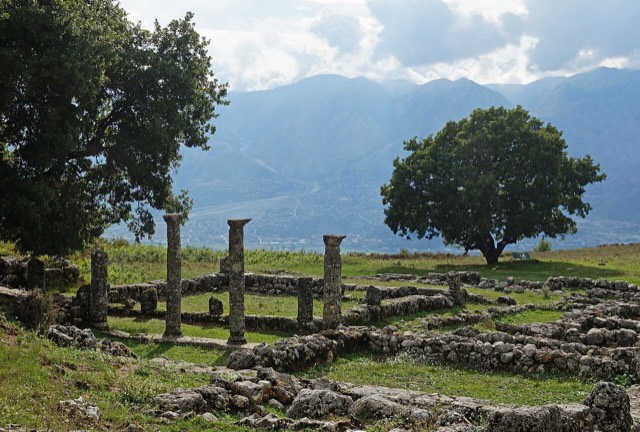
Archaeological Albania
Butrint, Apollonia, Byllis, Antigonea and Amantia: five sites that cover 2,500 years between them.
स्रोत
- Wikipedia.
Grama Bay — English Wikipedia
· प्राप्त किया 13 Oct 2026
Used to ground the deep-research section and as a discovery aid; not relied on alone for contested claims. - Wikidata.
Wikidata item Q20574906
· प्राप्त किया 13 Oct 2026
Source of the population, area and elevation figures shown in Quick facts, each with its own observation year. - Open-Meteo / ECMWF.
Monthly climate normals, 1994–2023
· प्राप्त किया 13 Oct 2026
Computed here from daily ERA5 reanalysis via Open-Meteo over 1994–2023. - Wikimedia Commons.
Photographs
· प्राप्त किया 13 Oct 2026
Each photograph carries its own creator, licence and file link beneath it. Only public-domain, CC0, CC BY and CC BY-SA files are published.
इस पृष्ठ पर कुछ गलत है? सुधार स्वागतयोग्य हैं और स्रोत अभिलेख के विरुद्ध जाँचे जाते हैं। हमें बताएँ क्या गलत है और, यदि संभव हो, तो सही आँकड़ा कहाँ से आता है।