City · Durrës
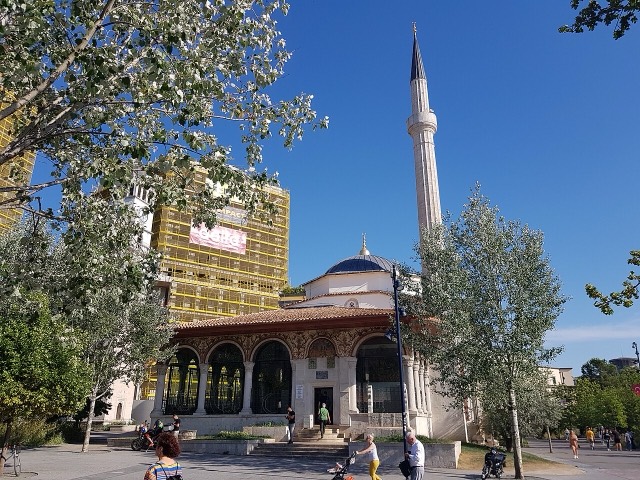
Durrës
Albania's principal port and its oldest continuously inhabited city, founded as Epidamnos in 627 BC.
Every county, coast and century
Guided view
New to Albania? Every page opens with a plain-language explanation you could read to a ten-year-old, before the detail begins.
Expert view
You already know the basics. Straight to the substance, with the simple explanations hidden. This is the default.
Airport · Tiranë County
Albania's principal airport, 17 km north-west of Tirana — for years the country's only functioning civil airport.
Save
Tirana International Airport, named after Mother Teresa, is where almost everyone flying to Albania arrives. It is about 17 kilometres from the middle of Tirana, and a bus runs into the city. For a long time it was the only airport in the country you could fly into.
Tirana International Airport, named after Mother Teresa, is where almost everyone flying to Albania arrives. It is about 17 kilometres from the middle of Tirana, and a bus runs into the city. For a long time it was the only airport in the country you could fly into.
Tirana International Airport Nënë Tereza — IATA code TIA, ICAO code LATI — is the international airport serving Tirana, the capital of Albania. It is also commonly referred to as Rinas International Airport, after the locality in which it sits. The airport is located 6 nautical miles (11 kilometres; 6.9 miles) northwest of Tirana, within the municipality of Krujë, Durrës County.
The airport is named after Mother Teresa (1910–1997), the Albanian Roman Catholic nun and missionary. As of April 2026, it is the only airport in Albania operating scheduled commercial passenger flights; Kukës International Airport and Vlora International Airport are both inactive.
Commercial aviation in Albania predates the current airport infrastructure by several decades. Domestic air transport began in 1926, when the German airline Adria Aero Lloyd was granted a monopoly over internal routes and commenced services linking Tirana with Shkodër, Korçë, and Vlorë. Those operations proved financially unsustainable, and Adria Aero Lloyd subsequently transferred its rights to the Italian carrier Ala Littoria, which from 1935 operated domestic routes connecting Tirana with Shkodër, Kukës, Peshkopia, Kuçova, Vlorë, and Gjirokastër.
International scheduled services were introduced in 1938, when the Yugoslav airline Aeroput began flights linking Tirana with Belgrade via Dubrovnik. The present physical airport infrastructure at Rinas was constructed between 1955 and 1957, replacing ad hoc earlier arrangements.
Following the Second World War and the imposition of an isolationist communist government, international air services became severely restricted. Between 1944 and 1948, limited flights operated between Tirana and Belgrade, but after Albania severed relations with Yugoslavia, the only scheduled international connection until 1953 was an infrequent service to Budapest operated by Maszovlet, a Soviet–Hungarian airline. From 1953 to early 1955 no regular civil services operated at all.
Services resumed in February 1955 with the inauguration of flights to Moscow, followed by connections to other Eastern European capitals consistent with Albania's position within the socialist bloc. During the 1970s, China's CAAC Airlines operated a weekly long-haul service to Beijing routed via Bucharest and Tehran. By the late 1980s, six airlines in total operated scheduled services to Tirana, offering approximately nine international round-trip flights per week.
The collapse of the communist regime in 1991 and the liberalisation of international travel produced rapid expansion in passenger traffic. By 1999, the airport recorded 8,249 aircraft movements and 356,823 passengers — a sevenfold increase over 1991 levels. Passenger volumes exceeded 1.5 million annually by 2010 and reached two million per year by 2016.
Extensive modernisation followed the award of a 20-year build–own–operate–transfer (BOOT) concession to Tirana International Airport SHPK, a consortium led by Hochtief AirPort, which assumed management on 23 April 2005. The concession programme delivered a completely new passenger terminal, a new access road, expanded parking, and a bridge over the former airport access route. The terminal building, its subsequent expansion, the cargo facilities, associated landscaping, and car-park canopies were designed by Malaysian architect Hin Tan of Hintan.
Growth accelerated sharply after the COVID-19 pandemic. The airport handled more than 7.2 million passengers in 2023 and surpassed 10 million passengers for the first time on 9 December 2024. In 2025, it recorded 11.6 million passengers, making it one of the busiest airports in the Balkans.
In 2017, China Everbright Limited acquired the airport operator from Hochtief AirPort, becoming the sole owner of Tirana International Airport Nënë Tereza. The acquisition was accompanied by an agreement with the Albanian Government to end the airport's long-standing monopoly on international flights from Albania. China Everbright Limited is an international financial services group active in asset management, direct investment, brokerage, and investment banking.
On 25 December 2020, Kastrati Group acquired 100 percent of the shares of the airport from China Everbright Limited for a reported price of €71 million. Kastrati Group operates the airport through its aviation subsidiary, Kastrati Aviation Holding, via the entity Tirana International Airport SHPK.
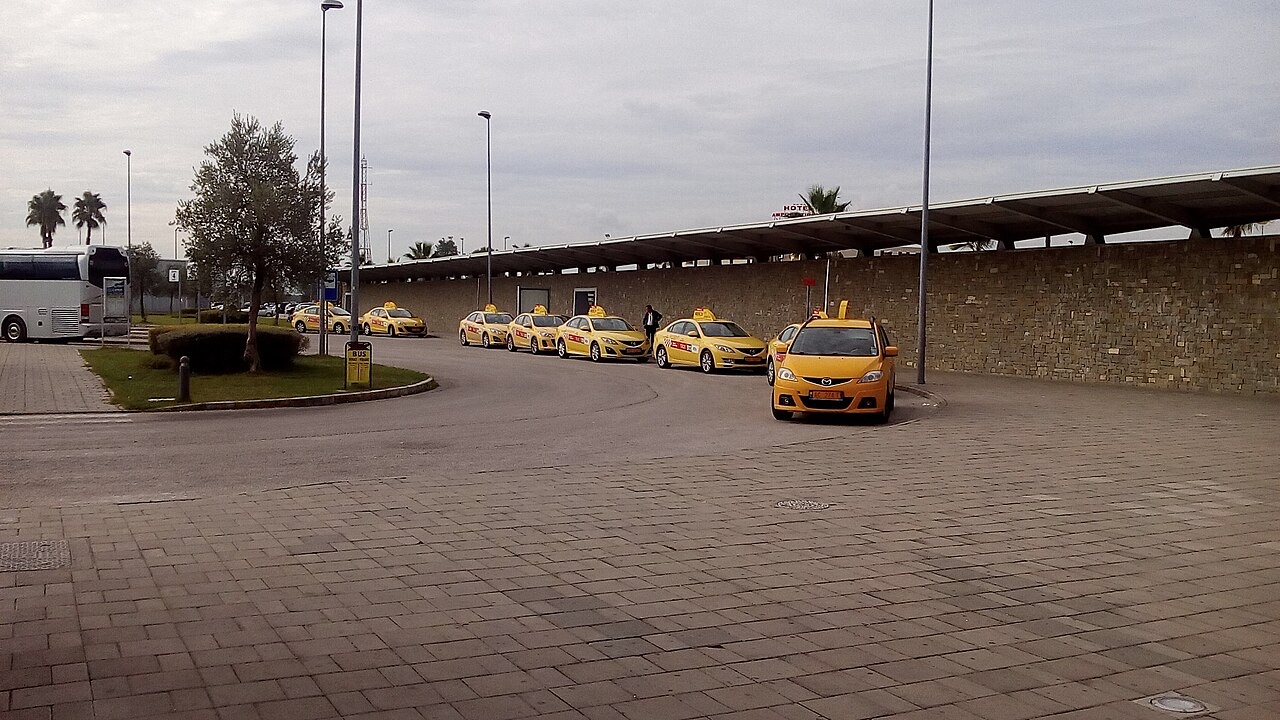
The airport is connected to the national road network via SH60, which links it to the SH2 Durrës–Tirana highway and provides access to the A1 corridor. Road upgrades, including improved junctions and access roads, were completed in 2024. Taxis and car hire are available at the terminal; the journey to central Tirana typically takes 20–25 minutes depending on traffic. An airport bus service operates 24 hours a day, seven days a week, with departures approximately every hour from outside the arrivals terminal. A new electrified railway linking Tirana, Durrës, and the airport is under development, with a dedicated airport station planned and operations with electric trains scheduled to begin in early 2027.
Three significant security incidents have been recorded at the airport. On 3 October 2006, Turkish Airlines Flight 1476, en route from Tirana to Istanbul with 107 passengers and six crew, was hijacked by Hakan Ekinci in Greek airspace; the flight transmitted two coded hijack signals, was intercepted by Greek air force aircraft, and landed safely at Brindisi, Italy. On 30 June 2016, three armed and masked individuals entered the cargo terminal and stole what was reported to be up to €3 million in cash destined for transport abroad, prompting national security concerns. On 9 April 2019, while an Austrian Airlines aircraft bound for Vienna had its engines running, three masked men in military fatigues approached the fuselage and stole €6 million; one robber was shot dead in an exchange of fire with police approximately one kilometre from the airport.
The warmest month is August (mean daily high 30°C), the coldest is January (mean daily low 3°C), and the wettest is November (169 mm). Total annual rainfall averages 1,375 mm.
| Month | High | Low | Rain | Wet days | Sun/day |
|---|---|---|---|---|---|
| January | 11°C | 3°C | 140 mm | 12 | 7.1 h |
| February | 12°C | 4°C | 124 mm | 11 | 8.0 h |
| March | 15°C | 6°C | 132 mm | 12 | 9.5 h |
| April | 18°C | 9°C | 130 mm | 13 | 10.7 h |
| May | 22°C | 13°C | 106 mm | 12 | 12.1 h |
| June | 26°C | 17°C | 62 mm | 8 | 13.6 h |
| July | 29°C | 20°C | 41 mm | 6 | 13.7 h |
| August | 30°C | 20°C | 45 mm | 6 | 12.8 h |
| September | 25°C | 17°C | 127 mm | 10 | 10.7 h |
| October | 21°C | 13°C | 136 mm | 10 | 9.1 h |
| November | 17°C | 9°C | 169 mm | 12 | 7.3 h |
| December | 12°C | 5°C | 164 mm | 13 | 6.6 h |
Source: ERA5 reanalysis via Open-Meteo, 1994–2023 · “High” and “Low” are mean daily maximum and minimum air temperature. “Wet days” counts days with at least 1 mm of precipitation.
City · Durrës
Albania's principal port and its oldest continuously inhabited city, founded as Epidamnos in 627 BC.
City · Tiranë
The capital: a fast-changing city of painted blocks, Ottoman survivals and new towers, under Mount Dajti.
Historic site · Tiranë
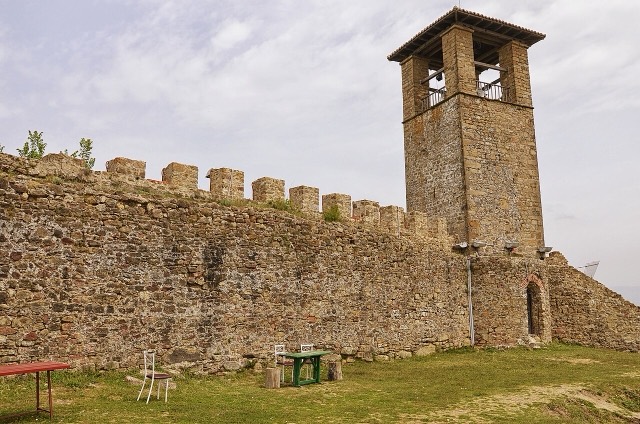
A compact hill castle between Tirana and the airport, with a view over the whole plain.
Person
Born in Skopje to an Albanian family from Prizren and Shkodër; canonised in 2016 and now a national symbol.
Company · Tiranë
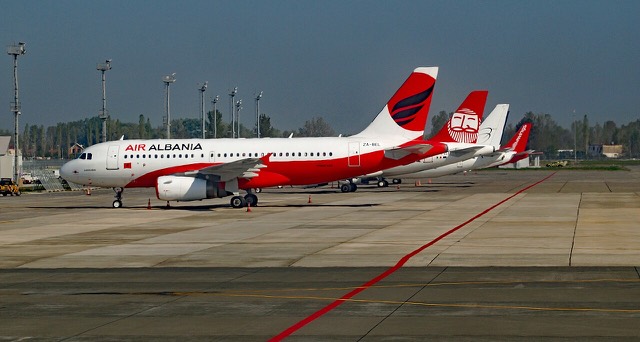
The national flag carrier, launched in 2018 with Turkish Airlines as a founding shareholder.
Guide
One main airport, four ferry corridors, and four land borders that all behave differently.
Something wrong on this page? Corrections are welcome and are checked against the source record. Tell us what is wrong and, if you can, where the right figure comes from.