Stad · Durrës
Durrës
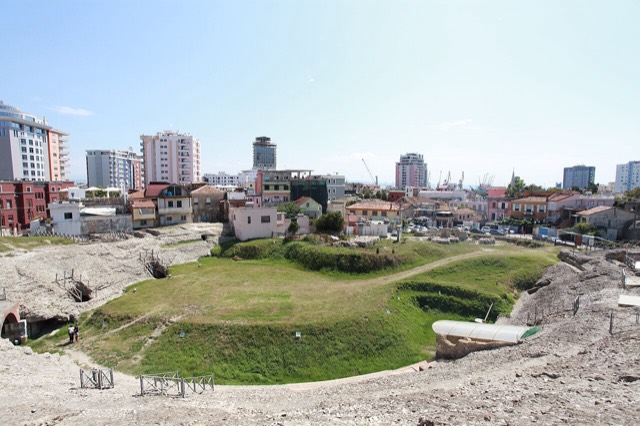
Albania's principal port and its oldest continuously inhabited city, founded as Epidamnos in 627 BC.
Elke provincie, elke kust, elke eeuw
Begeleidende weergave
Nieuw in Albanië? Elke pagina begint met een uitleg in eenvoudige taal die u aan een tienjarige zou kunnen voorlezen, voordat de details beginnen.
Expertweergave
U kent de basis al. Meteen naar de kern, met de eenvoudige uitleg verborgen. Dit is de standaardinstelling.
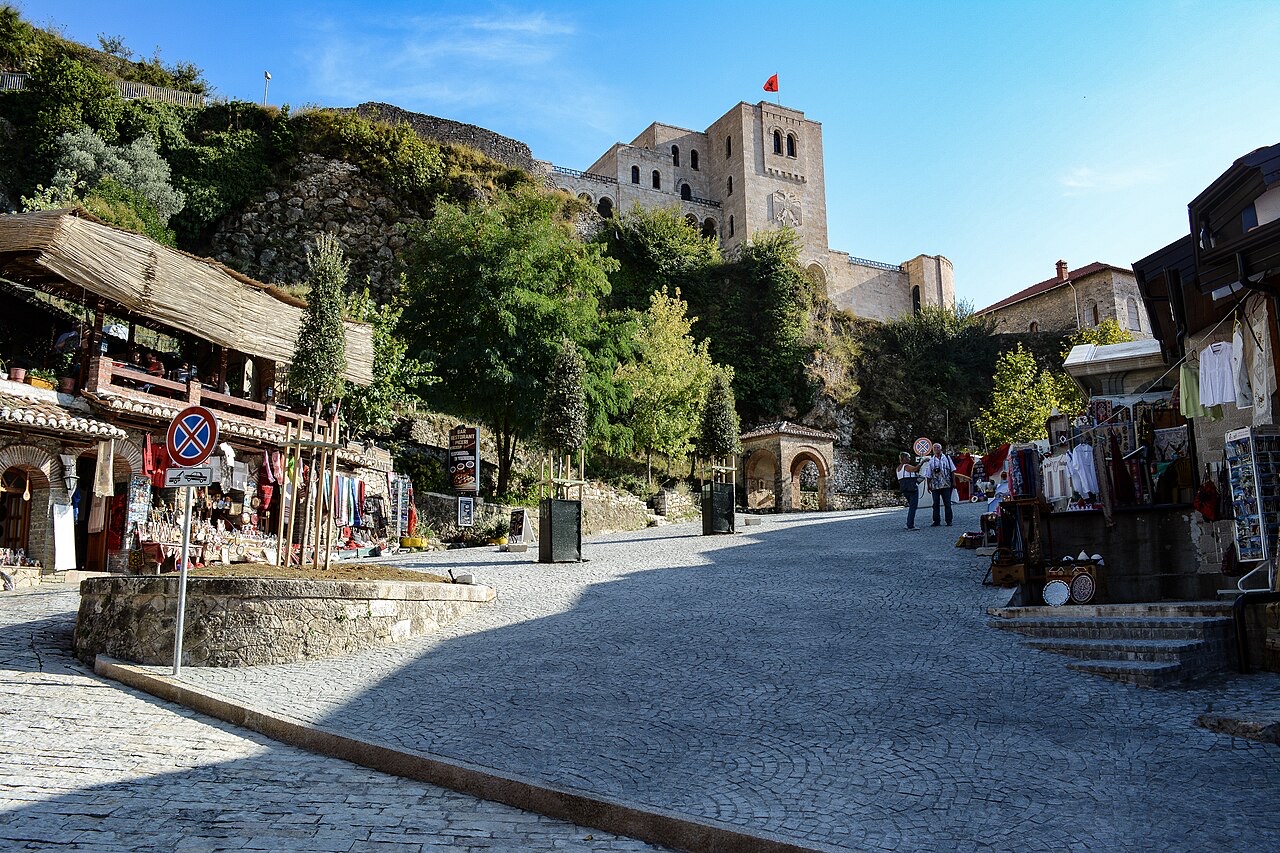
Plaats · Durrës County
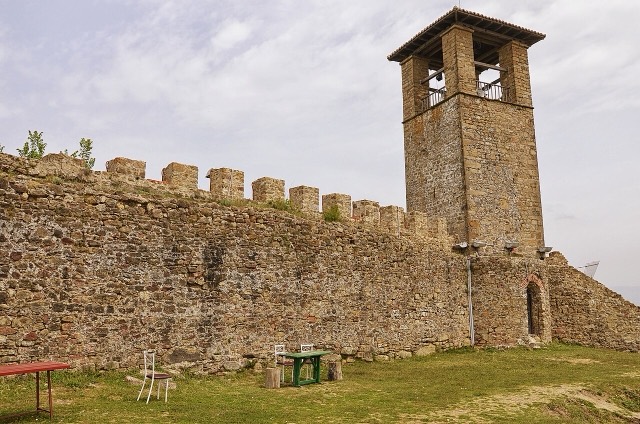
Skanderbeg's mountain stronghold, an old bazaar street, and the national museum of the resistance.
Opslaan
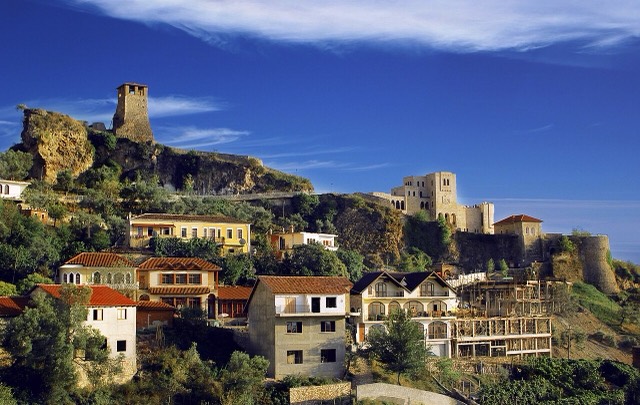
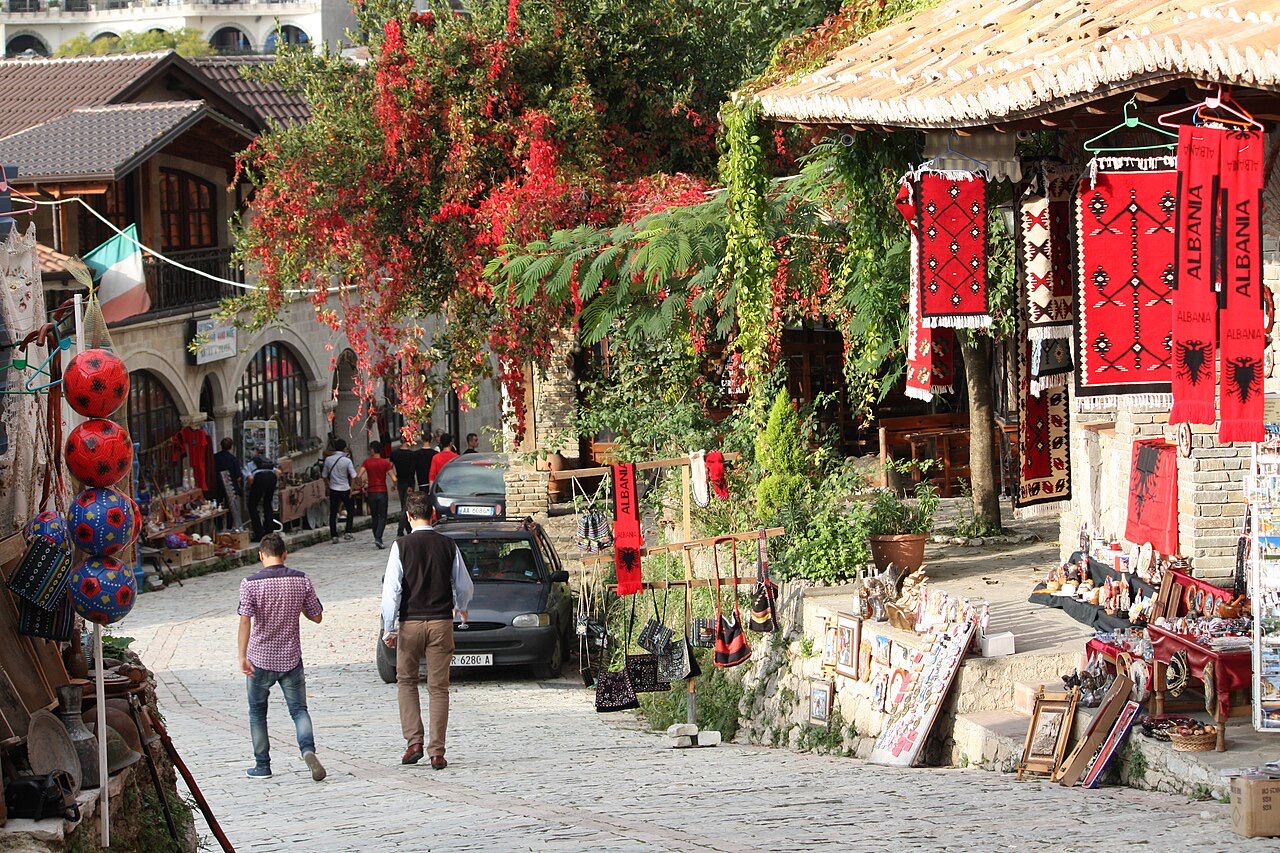
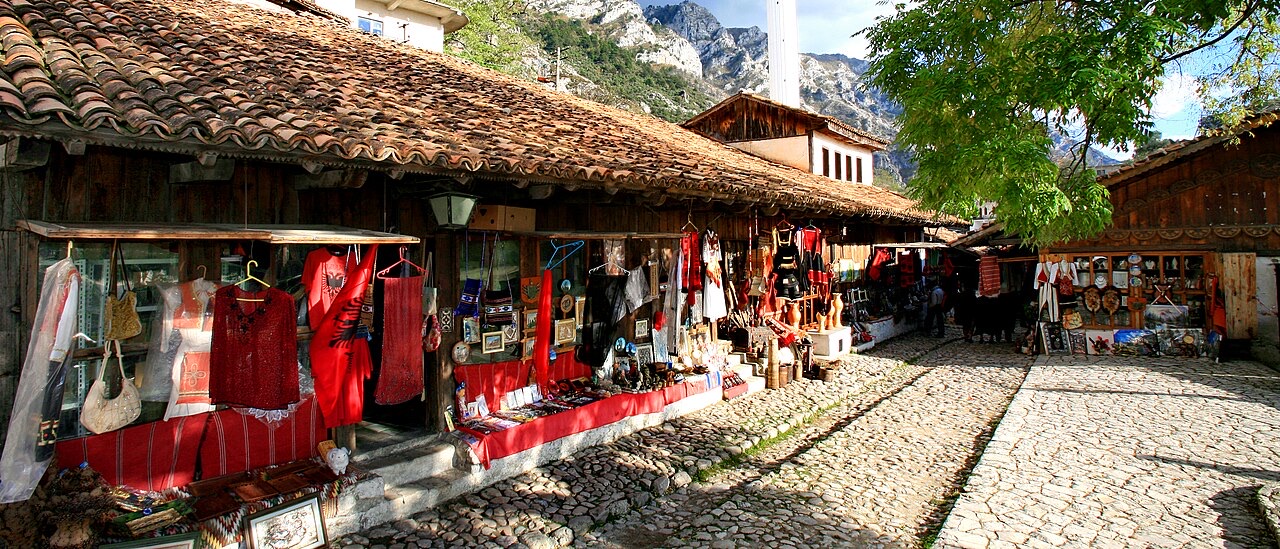
Krujë is a small town on a mountainside above the plain. Its castle is where Skanderbeg held out against Ottoman armies in the 1400s. There is an old bazaar street selling carpets and copper, and a museum about Skanderbeg inside the castle walls.
Krujë is a small town on a mountainside above the plain. Its castle is where Skanderbeg held out against Ottoman armies in the 1400s. There is an old bazaar street selling carpets and copper, and a museum about Skanderbeg inside the castle walls.
Krujë is a town and municipality in north-central Albania, situated at an altitude of 600 metres on the foot of Mount Krujë, with the plain of the Ishëm River lying to the south and west. It sits 20 kilometres north of Tirana and 37 kilometres from Durrës. The town occupies the northern part of the outer Albanides tectonic unit, which consists of anticlines of Mesozoic carbonate platforms.
The name derives from the Albanian word kroi or krua, meaning 'fountain' or 'water source', traced back through Proto-Albanian to the reconstructed forms *krana and *krasna. The earliest recorded attestation appears in Byzantine documents of the early 9th century as Kroai (Medieval Greek: Κροαί). Medieval Latin sources used Croia, Croya, and Croarum. During the Ottoman period the town was also known as Ak Hisar or Akçahisar, from the Turkish ak (white) and hisar (castle).
In ancient times the region of Krujë was inhabited by the Illyrian tribe known as the Albani. The town stands near the Iron Age Illyrian site of Zgërdhesh. Some scholars have identified Zgërdhesh as Albanopolis, the main settlement of the Albani, while others have placed Albanopolis at Krujë itself; the identification remains disputed. During the Illyrian Wars the area was captured by the Roman Republic.
Early medieval evidence from fifth- and sixth-century cemeteries includes dress items and weaponry indicating high-status burials. Krujë began as a middle-sized fortress comparable to other urban centres of the period and expanded into a town probably between the sixth and ninth centuries AD.
In 1190 Krujë became the capital of the Principality of Arbër (also called Arbanon), which is identified as the first Albanian state of the Middle Ages. It was founded by Progon of the House of Progon. Under a later ruler, Gulam of Albania, the principality was dissolved and absorbed into the newly founded Kingdom of Albania.
The Kingdom of Albania was itself dissolved between 1363 and 1368. In 1363 Karl Topia captured its capital Durrës and incorporated Krujë into his Princedom of Albania. After 1389 the House of Thopia gradually lost control of the town, and by 1395 Krujë had come under Ottoman vassalage. The Ottomans briefly lost Krujë in the early 15th century when it was captured by Niketa Thopia, but regained it in 1415, incorporating it into the Sanjak of Albania with the administrative status of a Subaşilik, as recorded in a regional register of 1431.
On 28 November 1443, Skanderbeg took control of Krujë by presenting a forged sultan's letter to deceive its subaşi, and raised what is described as the first Albanian flag the same day. In 1444 he incorporated the town into the League of Lezhë, the confederation of Albanian principalities. Before this, Skanderbeg had himself served as the Ottoman governor (subaşi) of Krujë during 1437–1438.
During the first Ottoman siege of Krujë in 1450, a garrison of 1,500 to 2,000 soldiers of the League of Lezhë under Vrana Konti and Skanderbeg repelled an Ottoman force reported at approximately 100,000 men led by Sultan Murad II, who had also attempted to bribe Konti into surrendering the castle. A second and third siege followed in 1466 and 1467, conducted by Ballaban Pasha and Sultan Mehmed II with a combined force of approximately 150,000 troops; both failed.
After Skanderbeg's death in 1468, the Venetian Republic supplemented the garrison with its own troops. In 1476 a fourth Ottoman force of around 10,000 men under Gedik Ahmed Pasha besieged the town. The local garrison, led by proveditor Pietro Vetturi, held out until reinforcements arrived under Francesco Contarini and Nikollë Dukagjini, forcing the Ottomans to retreat. The city finally fell in 1478 after a siege lasting more than a year. The Ottomans regarded this victory as a favourable sign for their concurrent siege of Shkodra.
After 1478 Krujë was incorporated into Ottoman territory. During the rise of Albanian nationalism in the Ottoman Empire the town became a recurring site of anti-Ottoman resistance, partly connected to the imposition of new taxes.
In 1906 the population of Krujë revolted against Ottoman authority. The Wāli of Shkodër, Sali Zeki Pasha, dispatched four battalions of the Ottoman army to suppress the rebellion. Following prolonged confrontations, Ottoman officials agreed to negotiate. On 20 September 1906, rebel leaders and Ottoman diplomats met at the Tallajbe quarter of Krujë to discuss the town's administrative status. Ottoman forces under Şemsi Pasha then ambushed the rebel leaders during the meeting. The battle that followed, named after the Tallajbe district, left approximately 30 people dead, including uninvolved civilians.
During the Albanian Revolt of 1912, Krujë was captured on 14 August and functioned as one of the major anti-Ottoman centres. These events contributed to the broader movement that resulted in the Declaration of Independence of Albania.
In 1914, Essad Toptani — a member of the Toptani family of the region and an officer of the Ottoman army — captured Krujë and made it a centre of his short-lived Republic of Central Albania. In June of the same year, Prênk Bibë Doda reincorporated the town into the Principality of Albania. On 20 December 1914, local opponents of Toptani, led by Abdi Toptani and Mehmet Gjinali, formed the Union of Krujë, which quickly extended its authority across central Albania.
Following the Italian invasion of Albania, the country became a protectorate of the Kingdom of Italy. Mustafa Merlika-Kruja, a native of Krujë who served as Prime Minister under the new regime, ordered the formation of a 300-man gendarmerie to defend the town against resistance forces. Resistance leader Abaz Kupi, also a native of Krujë, nonetheless created one of the first permanent resistance forces in Albania in the town and gradually took control of the surrounding region.
In 1943, at an assembly at Tapizë, Balli Kombëtar proposed to the LNÇ (National Liberation Movement) the formation of a provisional resistance government with Krujë as its capital; the LNÇ leadership rejected the proposal. In late November 1944, the last German troops in the area were defeated and LNÇ battalions entered the town.
In antiquity Krujë was used for pagan rituals. After the spread of Christianity, a church dedicated to Saint Alexander was built near Mount Krujë. In the late 9th century a bishop named David of Krujë is recorded as a participant in the Fourth Council of Constantinople. By the early 10th century Krujë had an Eastern Orthodox suffragan bishop subordinate to the metropolitan bishop of Durrës. The Roman Catholic bishopric of Krujë was established in 1167, when Pope Alexander III consecrated its bishop. In 1284 the Byzantine Empire expelled the Catholic bishop, and in 1317 Stefan Uroš II Milutin, having captured the town, expelled Catholic bishop Andreas Croensis.
In Illyricum Sacrum, Daniele Farlati documented fourteen Catholic bishops of Krujë spanning 1286 to 1694; Konrad Eubel recorded four additional bishops. Bektashism reached the Krujë region in the early 18th century. During the Ottoman period a tekke dedicated to the Bektashi saint Sari Saltik was built near the church of Saint Alexander. Between 1789 and 1799 the Dollma family constructed the Dollma tekke near the castle. In 1807 Sheikh Mimi, dispatched by Ali Pasha, founded a further tekke; he was subsequently executed by Kaplan Pasha, who destroyed it. Baba Husayn of Dibër restored the tekke in the mid-19th century. In the early 20th century, researcher Hasluck observed that the population of Krujë appeared to be almost entirely Bektashi.
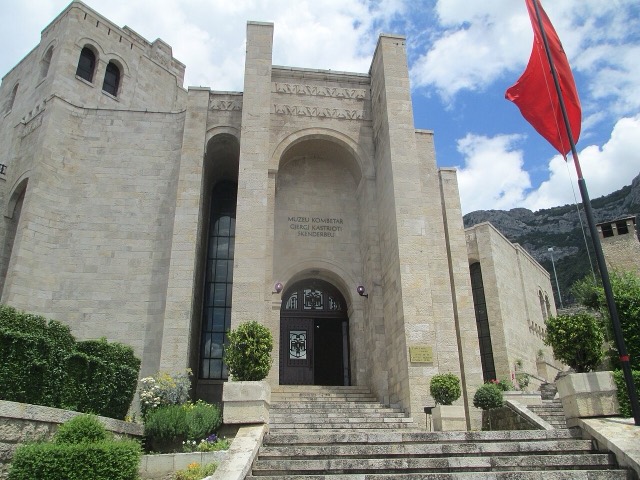
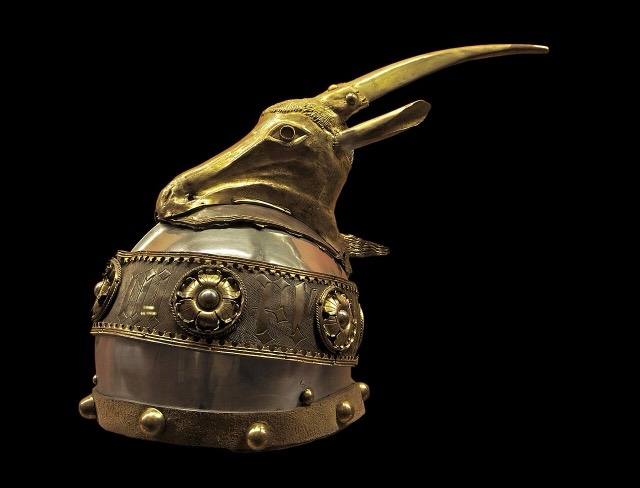
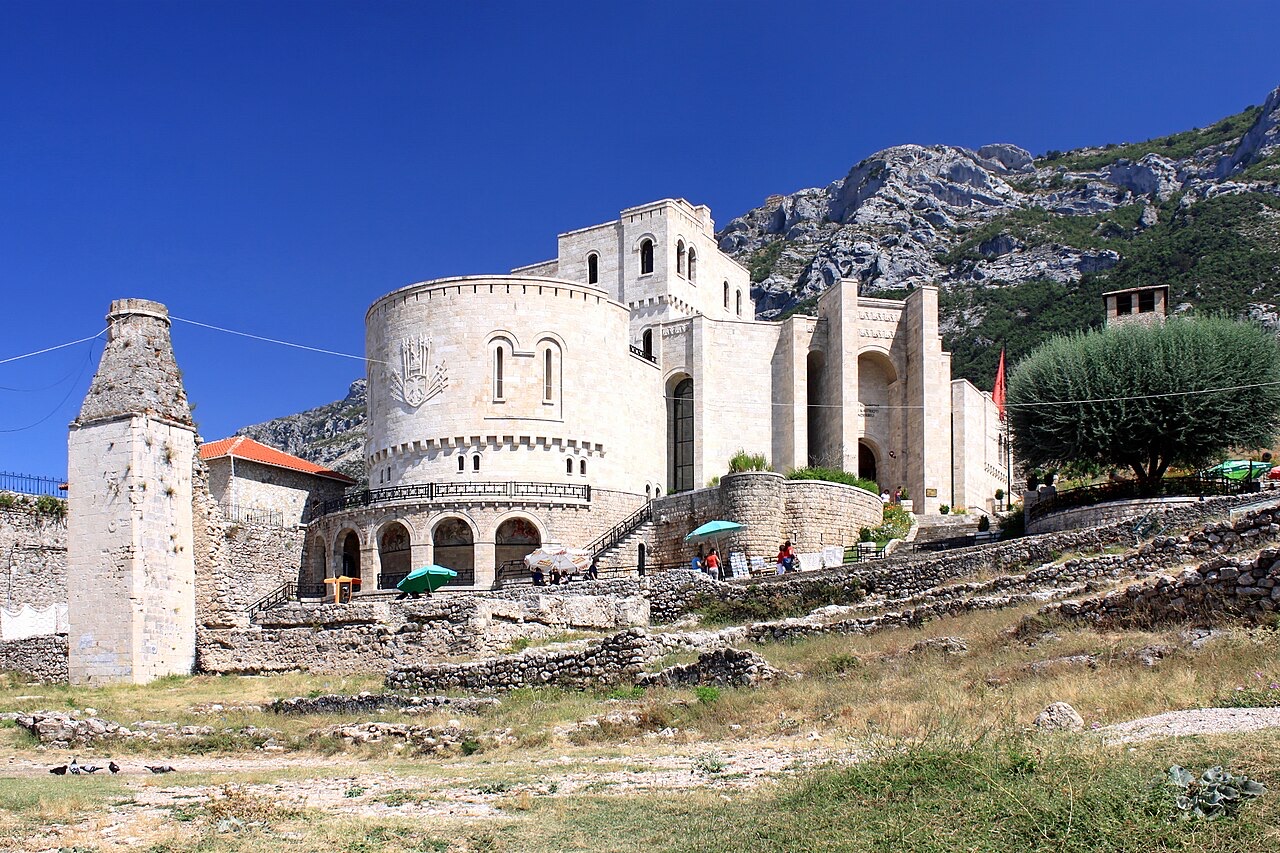
The Skanderbeg Museum, founded in 1982, is located within the environs of Krujë Castle. Its collection consists mainly of 15th-century artefacts related to the Albanian-Ottoman wars, centred on the four sieges of the castle. The national ethnographic museum was founded in 1989 and occupies a 15-to-16-room villa built in 1764 by the Toptani family. Its principal exhibits are objects of artisanship ranging from approximately 60 to 500 years old.
The principal football club is KS Kastrioti, founded in 1926 and briefly renamed Puna Krujë in 1951. The club's home ground is Kastrioti Stadium, with a capacity of 8,500 spectators.
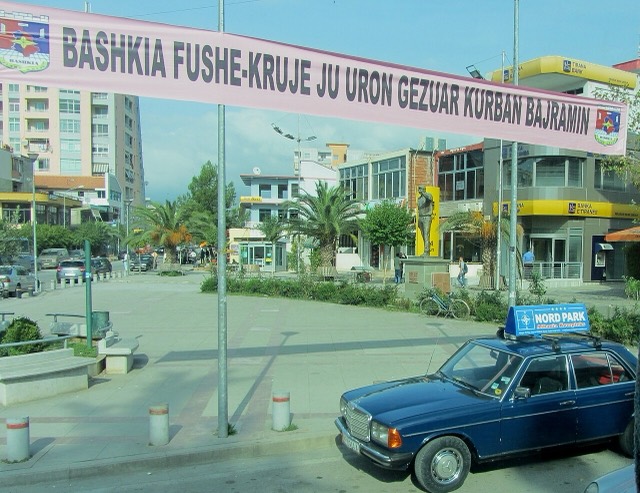
The municipality of Krujë was formed under the 2015 local government reform through the merger of six former municipalities: Bubq, Cudhi, Fushë-Krujë, Krujë, Nikël and Kodër-Thumanë, each of which became a municipal unit. The total municipal population was recorded at 51,191 in the 2023 census, over a total area of 339.20 square kilometres. The population of the municipal unit of Krujë itself stands at 8,921.
De warmste maand is August (gemiddeld dagelijks maximum 27°C), de koudste is January (gemiddeld dagelijks minimum -0°C), en de natste is December (171 mm). De gemiddelde jaarlijkse neerslag bedraagt 1,422 mm.
| Maand | Maximum | Minimum | Neerslag | Natte dagen | Zon/dag |
|---|---|---|---|---|---|
| January | 8°C | -0°C | 145 mm | 12 | 7.1 h |
| February | 9°C | 0°C | 129 mm | 12 | 8.0 h |
| March | 12°C | 2°C | 133 mm | 12 | 9.5 h |
| April | 15°C | 6°C | 129 mm | 14 | 10.7 h |
| May | 20°C | 10°C | 113 mm | 12 | 12.1 h |
| June | 24°C | 14°C | 70 mm | 9 | 13.6 h |
| July | 27°C | 17°C | 44 mm | 6 | 13.7 h |
| August | 27°C | 17°C | 50 mm | 6 | 12.9 h |
| September | 23°C | 13°C | 131 mm | 10 | 10.7 h |
| October | 18°C | 9°C | 138 mm | 10 | 9.1 h |
| November | 14°C | 5°C | 170 mm | 12 | 7.3 h |
| December | 9°C | 1°C | 171 mm | 13 | 6.6 h |
Bron: ERA5 reanalysis via Open-Meteo, 1994–2023 · "Maximum" en "Minimum" zijn het gemiddelde dagelijkse maximum en minimum van de luchttemperatuur. "Natte dagen" telt dagen met ten minste 1 mm neerslag.
Stad · Durrës
Albania's principal port and its oldest continuously inhabited city, founded as Epidamnos in 627 BC.
Historische site · Durrës
Skanderbeg's base, which held out against three Ottoman sieges and now houses the national museum of the resistance.
Historische site · Durrës
The museum of the 15th-century resistance, built inside Krujë Castle by Enver Hoxha's daughter and son-in-law.
Stad · Tiranë
The capital: a fast-changing city of painted blocks, Ottoman survivals and new towers, under Mount Dajti.
Plaats · Dibër
The seat of Mat municipality in the central highlands, near the Mat river dams.
Historische site · Tiranë
A compact hill castle between Tirana and the airport, with a view over the whole plain.
Plaats · Durrës
The industrial town on the plain below Krujë, and the site of Albania's largest cement works.
Persoon
Gjergj Kastrioti: an Ottoman commander who changed sides and held Albania against the empire for twenty-five years.
Bedrijf · Durrës
A large cement plant at Boka e Kuqe near Krujë, built by TITAN Cement.
Iets onjuist op deze pagina? Correcties zijn welkom en worden gecontroleerd aan de hand van de bronregistratie. Laat ons weten wat onjuist is en, indien mogelijk, waar het juiste cijfer vandaan komt.