Thành phố · Vlorë
Sarandë
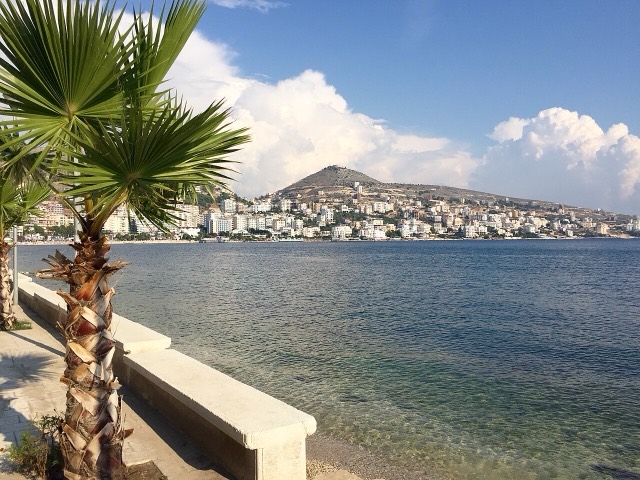
The Ionian resort town facing Corfu, and the arrival point for most visitors to southern Albania.
Mọi hạt, mọi bờ biển, mọi thế kỷ
Chế độ hướng dẫn
Mới tìm hiểu về Albania? Mỗi trang mở đầu bằng một giải thích ngôn ngữ đơn giản mà bạn có thể đọc cho một đứa trẻ mười tuổi, trước khi đi vào chi tiết.
Chế độ chuyên gia
Bạn đã nắm được những điều cơ bản. Đi thẳng vào nội dung, với các giải thích đơn giản được ẩn đi. Đây là chế độ mặc định.
Thị trấn · Vlorë County
A hill town above the Sarandë plain with a mixed Albanian and Greek population.
Lưu
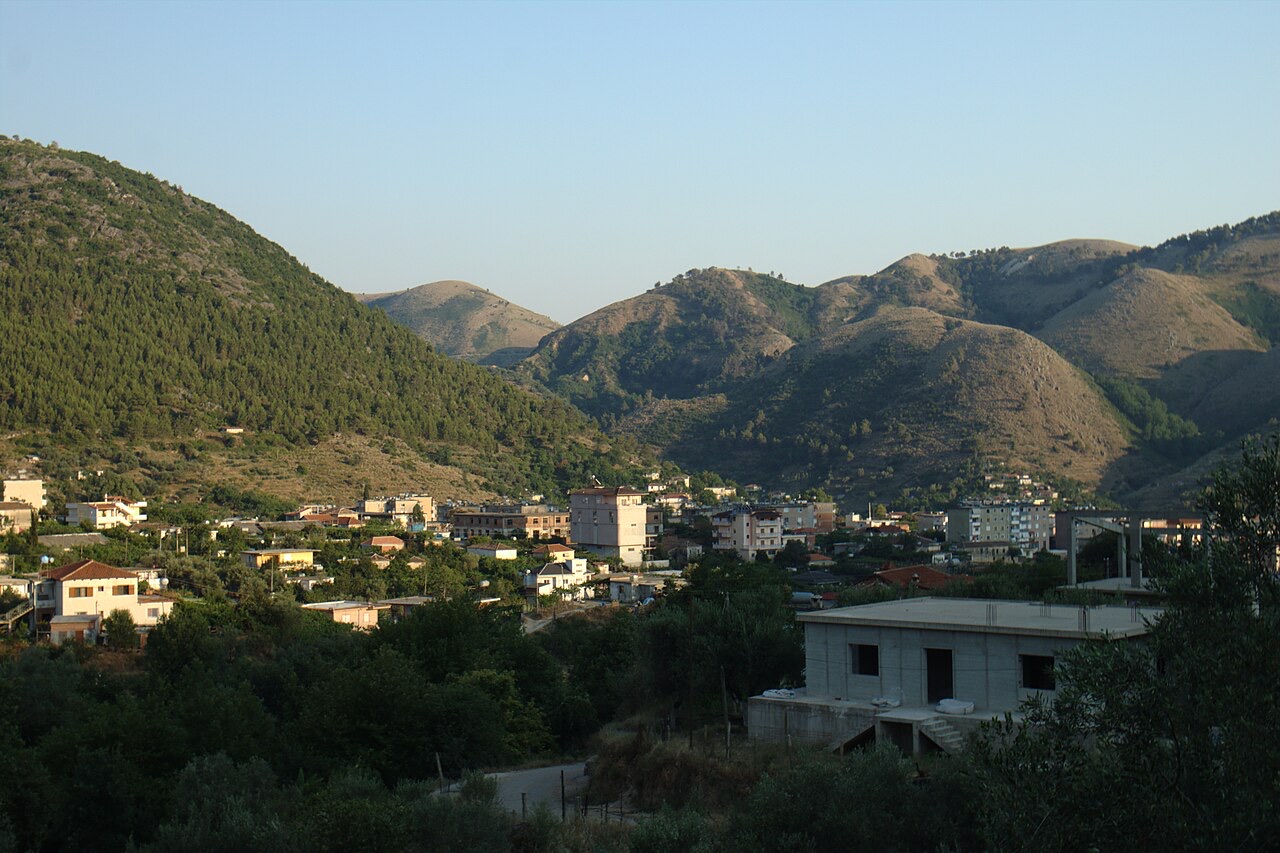
Delvinë is a small town in the hills a short way inland from Sarandë. Its old quarter has Ottoman houses, mosques and Orthodox churches side by side.
Delvinë is a small town in the hills a short way inland from Sarandë. Its old quarter has Ottoman houses, mosques and Orthodox churches side by side.
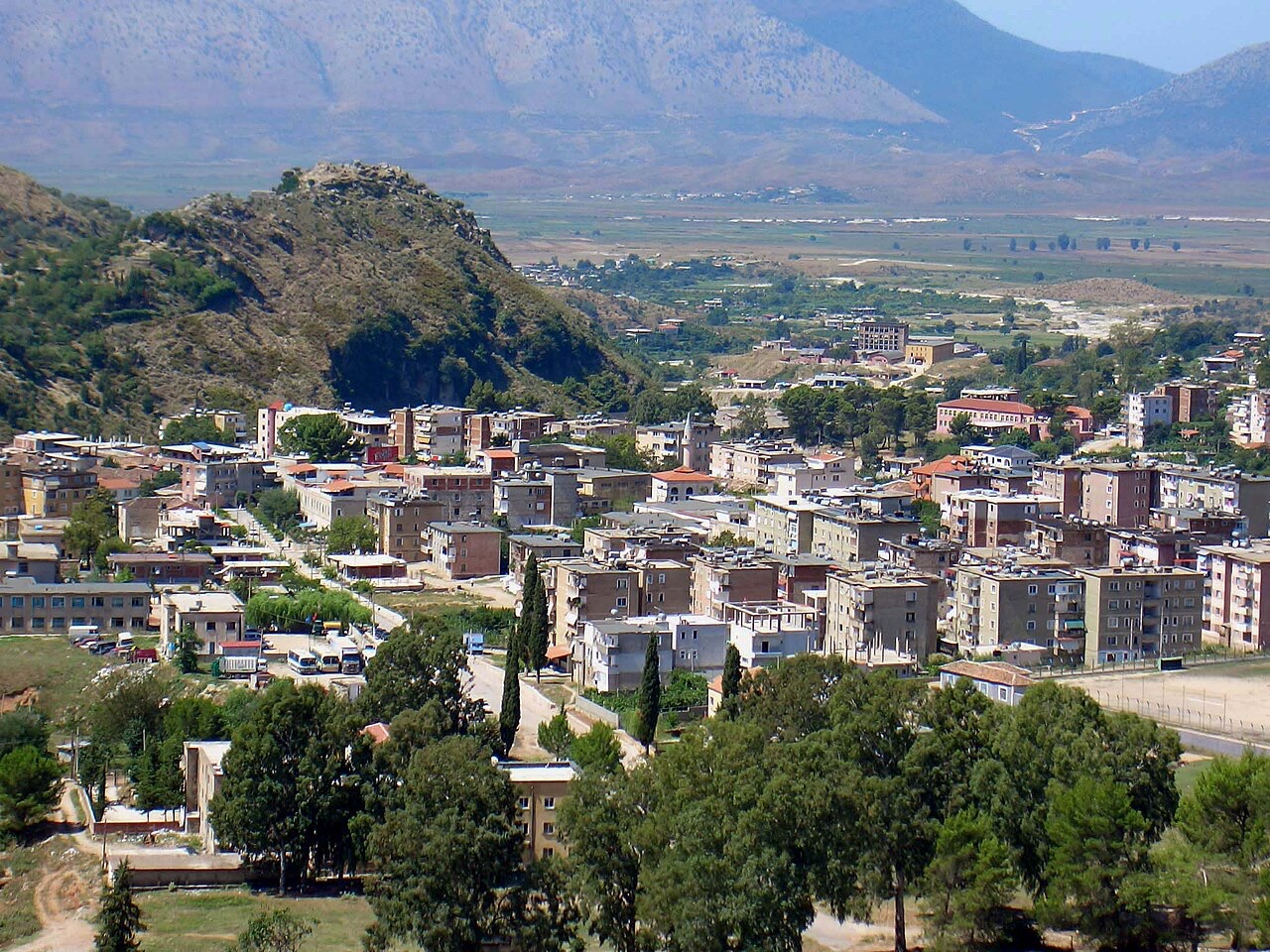
Delvinë is a town and municipality in Vlorë County, in southern Albania, situated 16 kilometres (10 miles) northeast of Sarandë. The town is built on a mountain slope. The municipal unit was formed in the 2015 local government reform by the merger of the former municipalities of Delvinë and Vergo, with the town of Delvinë serving as the municipal seat.
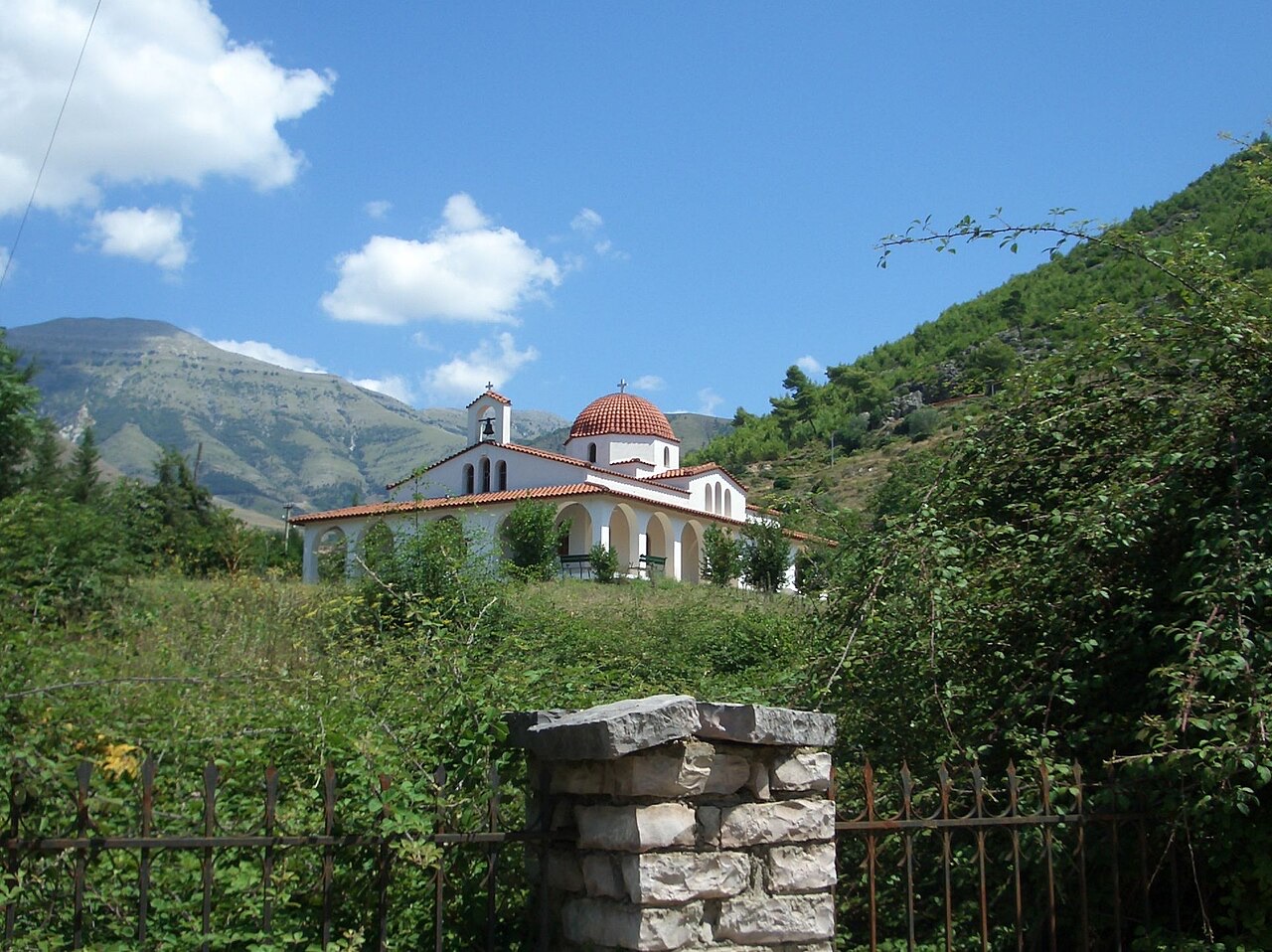
The town contains four active religious buildings: a mosque, a Catholic church, a Protestant church, and an Orthodox church. The remains of a medieval castle stand nearby. Despite the proximity of Sarandë, which has experienced significant tourist growth, Delvinë benefits little from that activity, and local employment is largely provided by the state.
The Albanian toponym Delvinë — in its definite form, Delvina — is connected to the Albanian words dele and delmë, meaning 'sheep'. Linguist Xhelal Ylli translates the name as 'white sheep'. In Greek the town is known as Δέλβινο (Delvino), and in Turkish as Delvine.
Delvinë was ruled by the First Bulgarian Empire from the end of the 9th century until 1119, when it came under Norman control. In the 13th century it belonged to the Despotate of Epirus, after which Serbian occupation followed. In 1354 the noble Shpata family took control of the town and its castle.
In the late 14th and early 15th centuries, Delvinë was governed by the Zenebishi family, whose last ruler of the town was Dep Zenebishi. The Ottoman Empire temporarily seized the entire region in 1431 and definitively consolidated control after 1492, when a garrison was placed in the castle. Evliya Çelebi later claimed that Delvinë was under Venetian control for a period, though this claim has not been proven.
The separate Sanjak of Delvina was established in 1537 by Ayas Mehmed Pasha, an Albanian-born vizier of Suleiman the Magnificent. The sanjak was created to secure Ottoman control against potential Venetian infiltration from nearby Butrint and to control the rebellious zone of Himara. The county town was Delvinë, but during the 18th century the local Pasha relocated the seat to Gjirokastër, though the official name did not change — the sanjak was also referred to as the Sanjak of Gjirokastër.
During the 16th to 18th centuries, Delvinë underwent rapid economic and population growth, supported by fertile surrounding land and a trade route connecting the Ionian Sea with Gjirokastër and Ioannina. In the 18th century, control of the town was disputed between the Koka and Delvina clans until Ali Pashë Tepelena seized it in 1784.
The Turkish traveller Evliya Çelebi visited Delvinë around 1670 and recorded that the sanjak covered 24 zeamets and 155 timars. He described roughly 100 brick-built houses, each standing relatively far apart and nearly every one with a tower. There was no town wall. The town had several mosques, three medreses, approximately 80 stores, and an open marketplace. Çelebi noted that all inhabitants at that time spoke Albanian and had no knowledge of Greek. The castle held a cistern, an ammunition depot, and a small mosque.
An ecclesiastical entry of 1635 in the Codex of the church of Delvinë, written in Greek, recorded that the Muslim population had increased and moved into quarters previously inhabited by Orthodox Christians, confiscating and converting their churches into mosques, thereby forcing non-Islamised Christians to relocate to other parts of the town.
By 1730, a further entry in the same Codex noted that some Greek Orthodox clergy faced linguistic difficulties administering their congregations, as many Christian villagers within the region of Delvinë were Albanian-speaking. Members of the local diaspora in Venice, as part of the Venetian Greek community's Brotherhood of Saint Nicholas, financially supported Greek education in the area. In 1713 Spyros Stratis and in 1749 Spyridon Rizos each funded expansions of the local Greek education system and donated money to local Orthodox monasteries and churches.
Delvinë also served as an important centre of Sufi orders. Dervishes of the Halveti order, introduced to Albania by Helvacı Yakub Efendi around 1530, were present in the town. A Bektashi tekke stands in the Xhermahalle section of the town. Surviving Ottoman monuments include the citadel, a mosque, a Halveti tekke, a Bektashi tekke, and a hamam. Ottoman inscriptions preserved in the town appear mainly on tombstones, with some graffiti also recorded in the porch of the Gjin Aleksi Mosque.
In 1833 Albanian rebels took over Delvinë, compelling the Ottoman government to comply with rebel demands. In 1847, during an Albanian revolt, 500 revolutionaries led by Zenel Gjoleka seized the town. A Greek female school was founded in 1875. In 1878 a Greek revolt saw a unit of approximately 700 revolutionaries, mostly Epirotes from the Ionian Islands, take control of Sarandë and occupy Delvinë; Ottoman troops suppressed it and burned 20 villages in the region. The local branch of the League of Prizren was founded that same year.
By the late 19th century, Delvinë had reached a population of around 7,500 people and had 400 shops and workshops. In September 1912, the Greek Band of Ioannis Poutetsis was defeated by Albanian groups and a Turkish detachment near Delvinë; Poutetsis was killed. In the early 20th century, a çetë (armed band) of approximately 200 activists of the Albanian National Awakening was formed in the town.
During the Balkan Wars, the Greek Army entered Delvinë on 3 March 1913. In June 1914 the town hosted the constituent assembly of representatives of Northern Epirus, which discussed and approved the Protocol of Corfu on 26 July 1914, making Delvinë briefly part of the short-lived Autonomous Republic of Northern Epirus. During and after World War I, much of Delvinë was burned by Greek brigands, and Greek guerrillas led by Georgios Christakis-Zografos harassed Albanian inhabitants and destroyed a large number of Ottoman monuments.
On 15 May 1937, an anti-monarchist revolt led by Ethem Toto began in Delvinë and spread across the wider region, though it was quickly suppressed by the government of King Zog I. During World War II, in the initial stage of the Greco-Italian War (1940–1941), Greek forces of the 3rd Division marched through Delvinë and took Sarandë.
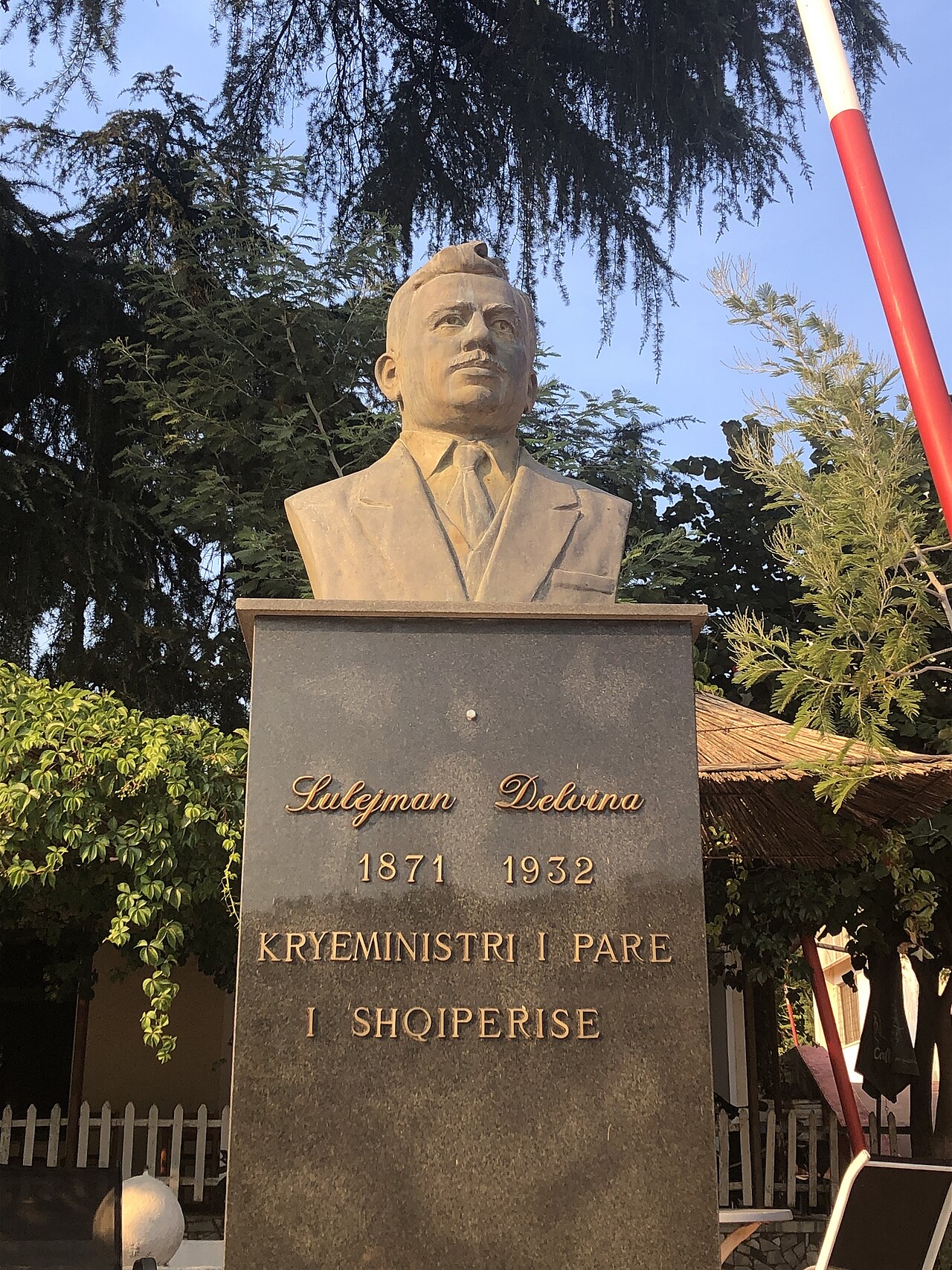
The first Communist Party cell for the Sarandë District was founded in Delvinë in January 1942. After the collapse of the communist system in 1991, the town declined in both population and economic importance.
The town's population consists of a majority of Albanians alongside communities of Greeks and Balkan Egyptians. British diplomat William Martin Leake visited on 24 December 1804 and recorded an Albanian Muslim majority with eight or ten small mosques; the Greek population occupied eastern suburbs called Láka and comprised about thirty families, ten of which bore the surname Kanáki. According to Human Rights Watch, Greeks constituted approximately 50% of the town's population in 1989, equating to around 4,000 individuals, but this proportion fell to approximately 25%, or 500 people, by 1999.
The 2011 census recorded the city population alone at 5,754 and the total registered population of the municipality at 14,218. That census recorded Albanians as approximately 66% of the total population and Greeks as approximately 6%, with Roma at 0.25% and the remainder unregistered. Albanian was recorded as the mother tongue of approximately 95% of the population and Greek of approximately 4%. The Advisory Committee on the Framework Convention for the Protection of National Minorities has assessed the 2011 census as unreliable, inaccurate, and incompatible with established standards for the protection of national minorities, noting that it was affected by a boycott by a significant portion of the Greek community.
Following the 2015 municipal reform and the addition of Vergo, the total resident population of Delvinë municipality was recorded at 7,598, with a total registered population of 18,074. A 2014 Albanian government report identified 2,300 Greeks among the total registered citizens of the municipality. As of 2014, 134 students in the municipality were enrolled in Greek-language education. At the 2023 census, the population of the municipal unit of Delvinë was 4,952 and of the full municipality was 6,166.
Until World War II, a small Jewish community existed in Delvinë, composed of Jews of Spanish origin who had arrived during the Ottoman period and maintained close connections with the large Jewish community in Ioannina. After the war, nearly all members of this community emigrated to Israel.
Tháng nóng nhất là August (nhiệt độ cao trung bình ngày 30°C), tháng lạnh nhất là January (nhiệt độ thấp trung bình ngày 3°C), và tháng mưa nhiều nhất là November (275 mm). Tổng lượng mưa hàng năm trung bình 1,617 mm.
| Tháng | Cao | Thấp | Mưa | Ngày mưa | Nắng/ngày |
|---|---|---|---|---|---|
| January | 11°C | 3°C | 201 mm | 13 | 7.1 h |
| February | 12°C | 3°C | 172 mm | 12 | 7.8 h |
| March | 14°C | 5°C | 157 mm | 12 | 9.4 h |
| April | 17°C | 8°C | 108 mm | 12 | 10.8 h |
| May | 22°C | 13°C | 77 mm | 10 | 12.0 h |
| June | 26°C | 17°C | 40 mm | 6 | 13.6 h |
| July | 30°C | 20°C | 17 mm | 3 | 13.8 h |
| August | 30°C | 20°C | 24 mm | 4 | 12.9 h |
| September | 25°C | 16°C | 126 mm | 9 | 10.6 h |
| October | 21°C | 12°C | 173 mm | 10 | 9.1 h |
| November | 16°C | 8°C | 275 mm | 14 | 7.0 h |
| December | 12°C | 4°C | 247 mm | 14 | 6.4 h |
Nguồn: ERA5 reanalysis via Open-Meteo, 1994–2023 · "Cao" và "Thấp" là nhiệt độ không khí tối đa và tối thiểu trung bình ngày. "Ngày mưa" tính những ngày có lượng mưa ít nhất 1 mm.
Thành phố · Vlorë
The Ionian resort town facing Corfu, and the arrival point for most visitors to southern Albania.
Suối · Vlorë
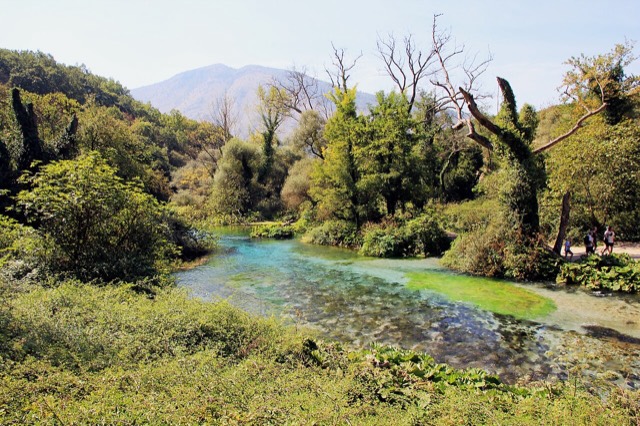
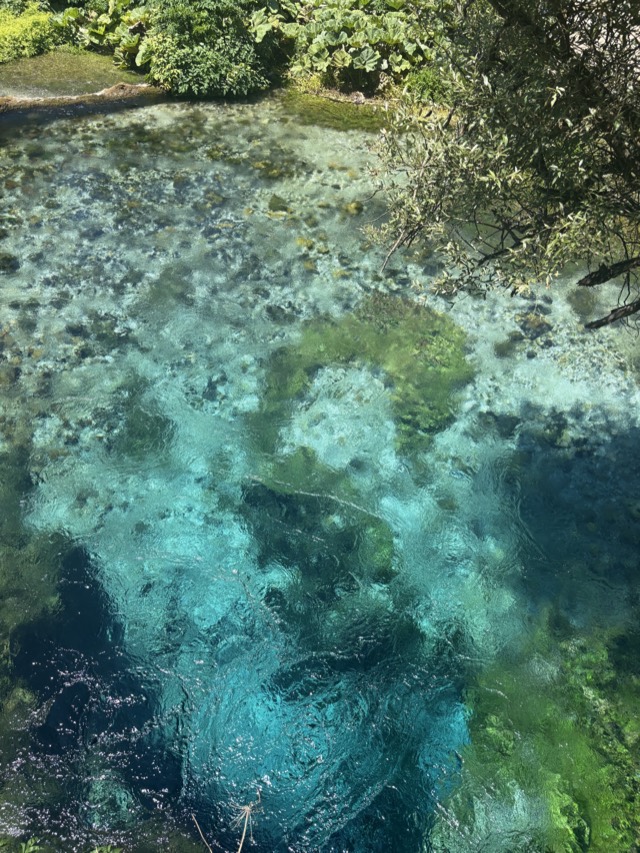
A karst spring of extraordinary clarity whose bottom has never been definitively reached.
Thị trấn · Vlorë
A municipality of villages near Sarandë, containing the Blue Eye and the ancient site of Phoenice.
Có thông tin sai trên trang này? Chúng tôi hoan nghênh các đề nghị đính chính và sẽ đối chiếu với hồ sơ nguồn. Hãy cho chúng tôi biết điều gì sai và, nếu có thể, nguồn số liệu chính xác là ở đâu.