Sito storico · Fier
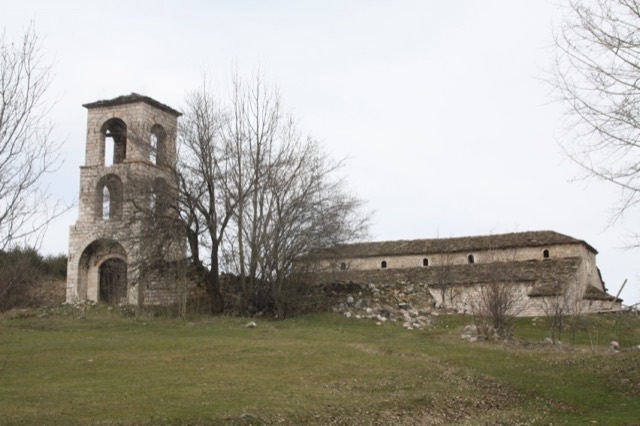
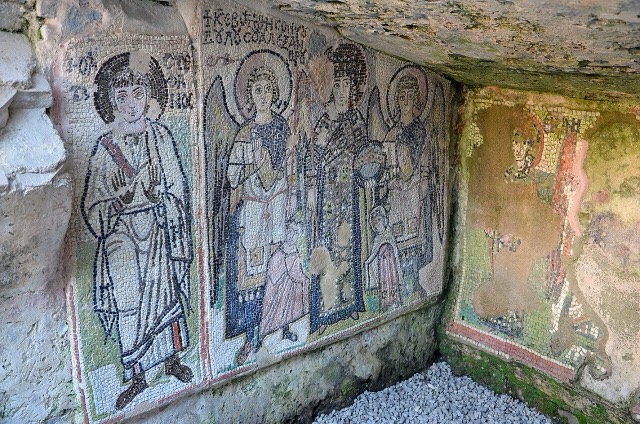
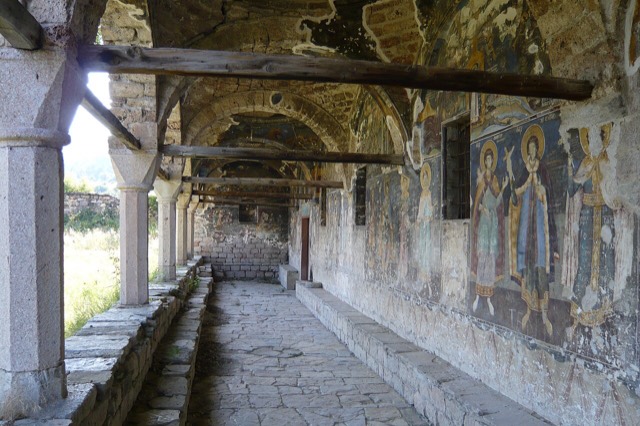
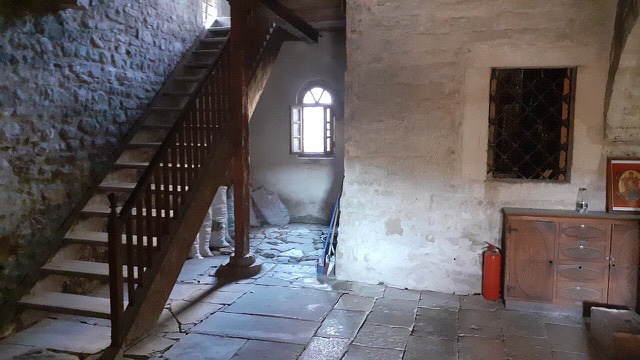
Ardenica Monastery
A hilltop monastery on the Myzeqe plain where, by tradition, Skanderbeg was married in 1451.
Ogni contea, ogni costa, ogni secolo
Vista guidata
Non conosci l'Albania? Ogni pagina si apre con una spiegazione in linguaggio semplice, comprensibile anche a un bambino di dieci anni, prima di entrare nei dettagli.
Vista per esperti
Conosci già le basi. Direttamente alla sostanza, con le spiegazioni elementari nascoste. Questa è l'impostazione predefinita.
Oggetto
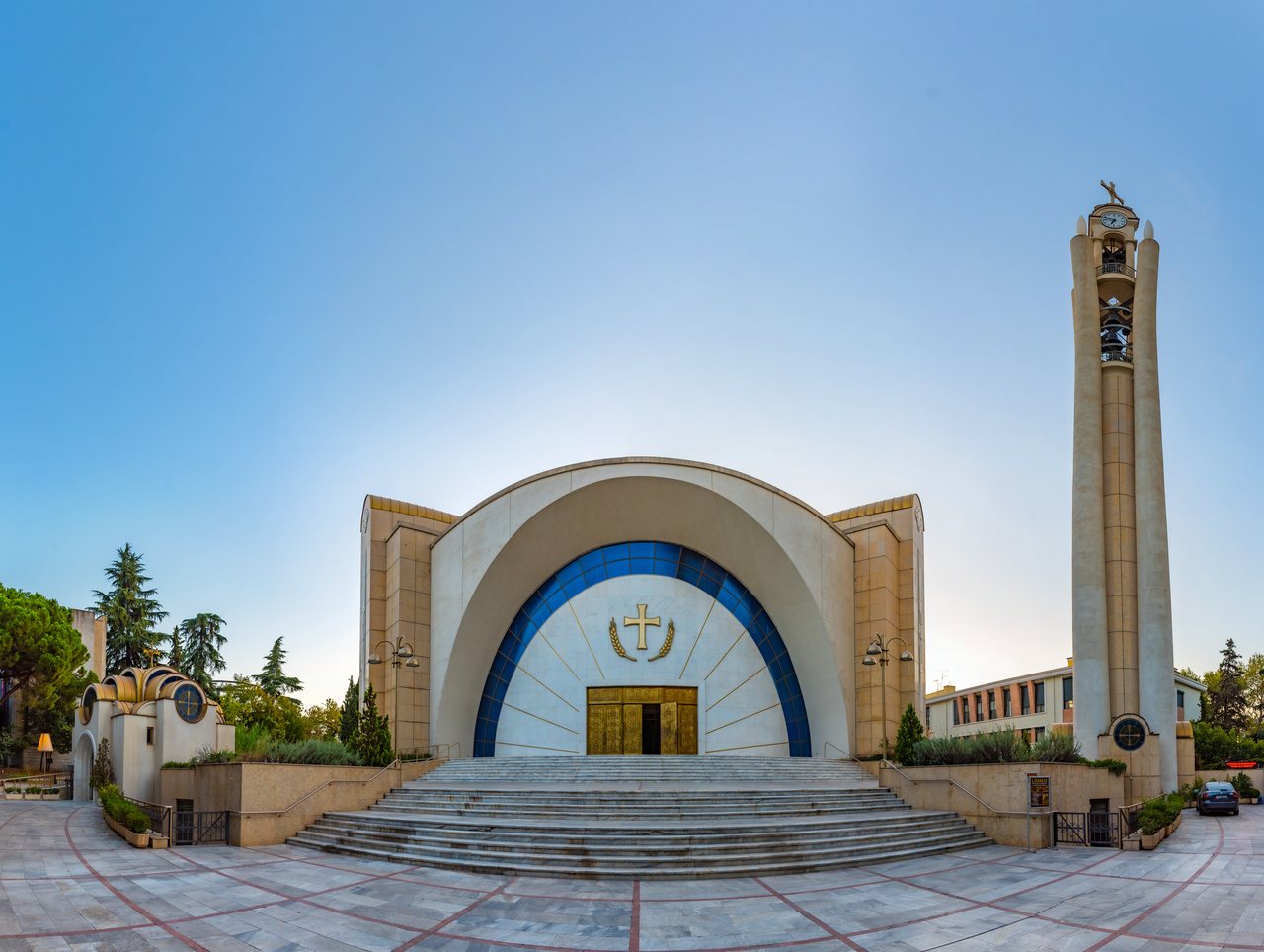
An autocephalous church since 1937, rebuilt almost from nothing after 1991.
Salva
The Albanian Orthodox Church became independent from other Orthodox churches in 1937. Under communism it was shut down entirely; when religion became legal again in 1991 there was almost nothing left, and it had to be rebuilt.
The Albanian Orthodox Church became independent from other Orthodox churches in 1937. Under communism it was shut down entirely; when religion became legal again in 1991 there was almost nothing left, and it had to be rebuilt.
The Christian religious vocabulary of Albanian is predominantly Latin in origin, including terms for concepts such as 'to bless', 'altar', and 'to receive communion'. This linguistic evidence indicates that Albanians were Christianized under a Latin-based liturgical and ecclesiastical order, which later became known as Roman Catholicism. Ecclesiastically, Christians in Albania formed part of the province of Illyricum and were under the jurisdiction of the Bishop of Rome from the 2nd to the 8th century.
Between 732 and 733 AD, the ecclesiastical jurisdiction of Illyricum was transferred to the Ecumenical Patriarchate of Constantinople. The Great Schism of 1054 formalized the split of Christianity into Catholicism and Orthodoxy, a division reflected in Albania through the emergence of a Catholic north and an Orthodox south.
During the Ottoman period, the Orthodox population of Albania was integrated into the Patriarchate of Constantinople. The population of central and south-eastern Albania fell under the ecclesiastical jurisdiction of the Orthodox Archbishopric of Ohrid, while the population of south-western Albania came under the Metropolis of Ioannina. By the late 18th century, several factors—poverty of the local church, an illiterate clergy, the absence of clergy in some areas, liturgy conducted in a language other than Albanian, and the decline of the Archbishopric of Ohrid partly through simony—had weakened adherence to Orthodoxy and reduced the resistance of Orthodox Albanians to conversion to Islam. By the mid-19th century the Tanzimat reforms, which imposed mandatory military service on non-Muslims, accelerated further loss of adherents as the majority of Albanians became Muslim.
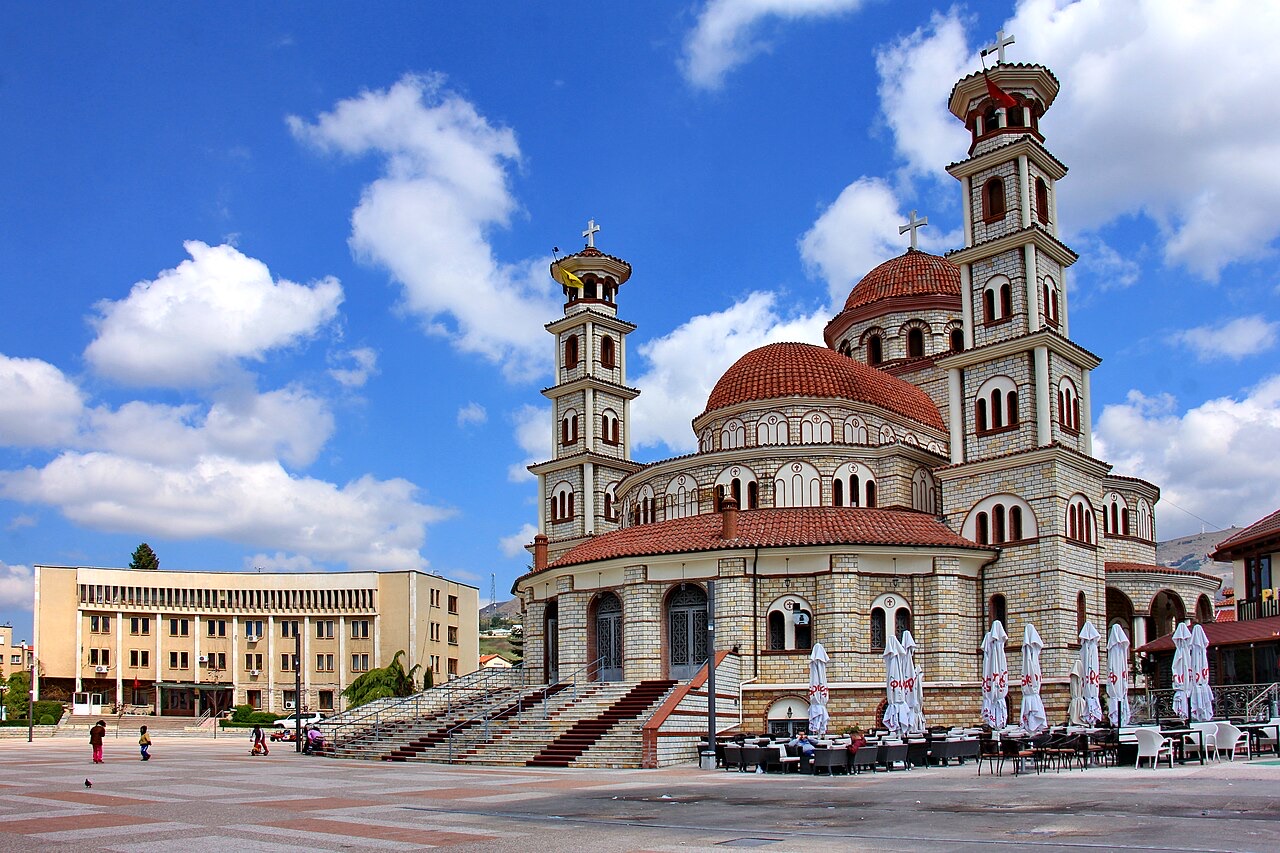
In the 19th century, Orthodox Albanians under the Patriarchate of Constantinople received liturgy and schooling in Greek, which also served as the lingua franca in southern Albania. Political opinion among Orthodox Albanians was divided: some desired incorporation into a Greek state, some sought a Greek-Albanian federation or dual monarchy, and some supported full Albanian statehood. For Orthodox Albanians, Albanian national identity was initially closely tied to Hellenism through shared Orthodox faith.
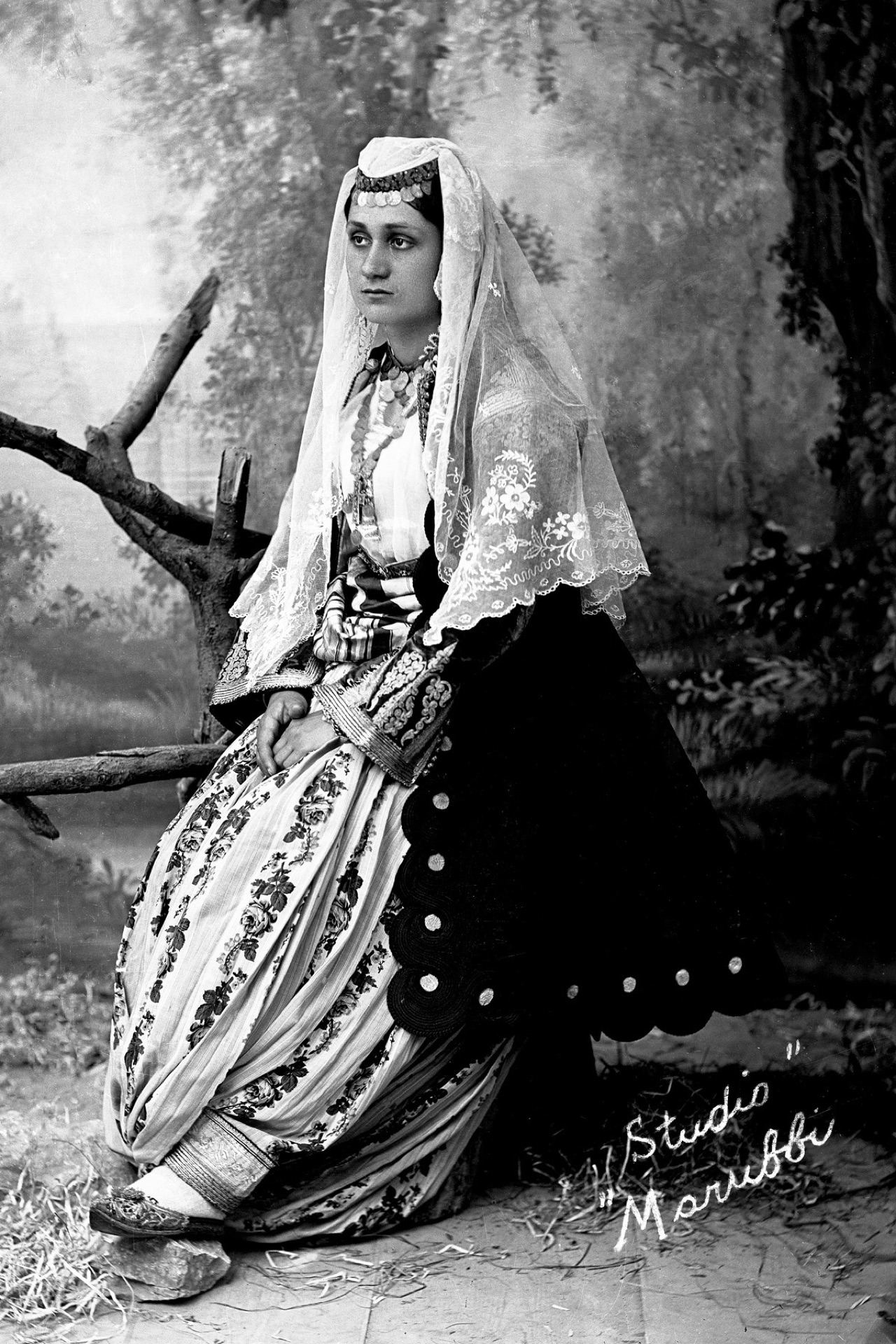
During the Eastern crisis, growing competition between Albanian and Greek national movements over parts of Epirus caused some Albanian Orthodox Christians to reject the assumed link between Orthodoxy and Greek identity. Because of the religious diversity of Albanians, Albanian nationalism could not be grounded in religion; instead, from its earliest formulations—including the writings of Naum Veqilharxhi—it promoted interreligious cooperation. Although Orthodox Albanians were a minority among Albanians overall, they played an active and often leading role in the Albanian national independence movement.
In 1905, priest Kristo Negovani introduced Albanian-language liturgy for Orthodox worship in his native village of Negovan—the first instance of its kind. He was subsequently murdered by Greek andartes acting on behalf of Bishop Karavangelis of Kastoria. This killing led to the retaliatory murder of the Metropolitan of Korçë, Photios, who had opposed the Albanian national movement. In 1907, an Orthodox Albanian immigrant named Kristaq Dishnica was refused funeral services in the United States by a local Greek Orthodox priest because of his involvement in Albanian nationalist activities. This episode, known as the Hudson incident, galvanized the émigré Orthodox Albanian community and directly prompted the formation of an Albanian Orthodox Church under Fan Noli.
On 18 March 1908, as a direct consequence of the Hudson incident, Fan Noli was ordained as a priest by Russian bishop Platon in the United States. In March 1908 he conducted the Orthodox liturgy in Albanian for the first time among the Albanian-American community. Noli devoted considerable effort to translating the liturgy into Albanian and emerged as the leading figure of the Orthodox Albanian community in the United States.
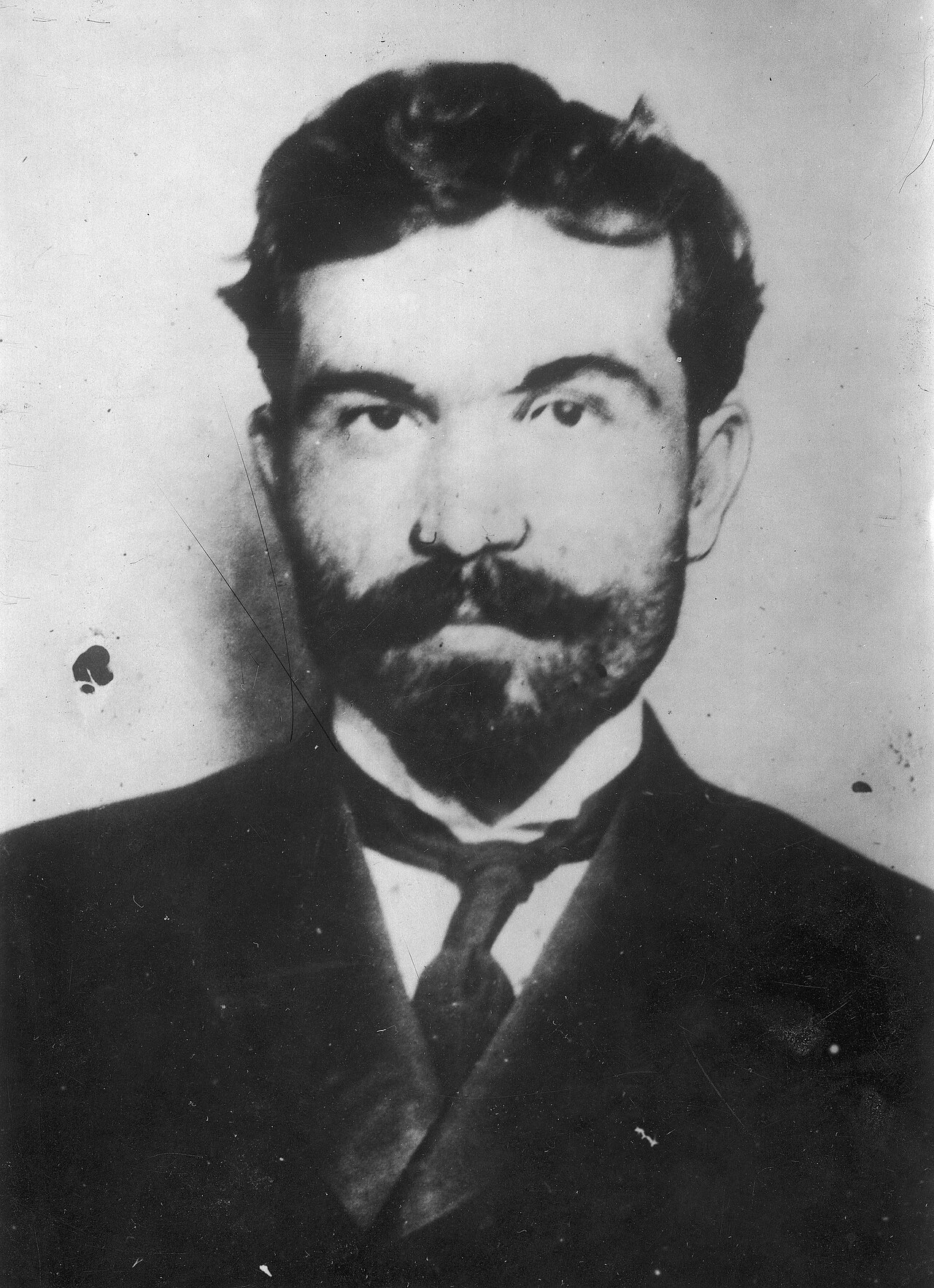
In 1911 Noli visited Orthodox Albanian diaspora communities in Romania, Ukraine, and Bulgaria. His aim was to counter Greek irredentism and to build an institutional Albanian Orthodox presence independent of the Greek-dominated hierarchy. Individuals such as Jani Vreto and Spiro Dine also contributed to the broader national movement, with some explicitly advocating for an Albanian Orthodoxy in order to curtail the Hellenization occurring among Orthodox Albanians.
After Albanian independence in 1912, Fan Noli traveled to Albania and took an active role in shaping the national church. From 10 to 12 September 1922, the first Orthodox Congress convened in Berat. It formally laid the foundations for an Albanian Orthodox Church, declared autocephaly, and established a provisional ecclesiastical council to administer the church. At the close of the Congress, the first statute of the church was approved.
Fan Noli was subsequently consecrated as Bishop of Korçë and primate of Albania. The establishment of an autocephalous Albanian Orthodox Church was regarded as significant for Albanian national unity. In February 1929 the Holy Synod of the Albanian Orthodox Church was established, with Visarion Xhuvani as Archbishop of Albania and overseer of the Metropolis of Korçë, Agathangjel Çamçe as Metropolitan of Berat, Ambroz Ikonomi as Metropolitan of Gjirokastër, and Efthim Kosteva as assistant to the Archbishop.
On 29 June 1929, the Second Clergy–Laity Congress was held in Korçë and adopted a new statute entitled the 'Statute of the Autocephalous Orthodox Church of Albania', amending the 1922 Berat statute. On the same date, the Regulation of General Administration was approved. The Ecumenical Patriarchate initially refused to recognize these acts but subsequently entered into negotiations; it formally recognized the autocephaly of the Albanian Orthodox Church in 1937.
On 26 November 1950, the Parliament of Albania approved a Third Statute, abrogating the 1929 statute. Article 4 of the new statute required that the primate of the church hold Albanian citizenship. With the exception of amendments made in 1992, this statute remained in force.
On 11 July 1992, the 1950 statute was amended. In 1996, the amendments were approved by then-president Sali Berisha. Among the changes, the requirement in Article 4 for the primate to hold Albanian citizenship was removed.
On 3 and 4 November 2006, a special Clergy–Laity Assembly was held at the new Monastery of St. Vlash in Durrës, attended by 257 representatives including all clergy members. A new Constitution (Statute) was unanimously adopted, and was approved by the Holy Synod on 6 November 2006. On 24 November 2008, the Orthodox Autocephalous Church of Albania and the Council of Ministers signed an agreement regulating their reciprocal relationship under the 1998 Constitution of Albania. The agreement was ratified by the Albanian Parliament and became Law No. 10057 on 22 January 2009.
The church suffered severe damage during the dictatorship of Enver Hoxha. All churches were placed under government control and land originally held by religious institutions was seized by the state. Religion in schools was banned. Hoxha propagated the view that Albania was threatened by religion generally, characterizing Orthodoxy in particular—associated with Greece and Serbia—as a 'Trojan Horse' serving the interests of traditional enemies. In 1952 Archbishop Kristofor was found dead; the prevailing belief was that he had been killed.
In 1967, Hoxha closed all religious buildings in the country and declared Albania the world's first atheist state. All expression of religion, public or private, was outlawed, and hundreds of clergy were killed or imprisoned. Of the 1,600 Orthodox churches present in 1944, a total of 600 were demolished as a result of this policy. Other Orthodox buildings were forcibly stripped of their religious function.
When communist rule ended and religious freedom was restored in 1991, only 22 Orthodox priests remained alive in Albania. The Ecumenical Patriarch appointed Anastasios—then serving as Bishop of Androusa and dividing his time between teaching at the University of Athens and overseeing the Archbishopric of Irinoupolis in Kenya—as Patriarchal Exarch for the Albanian Church. He was elected on 11 July 1992 and enthroned on 2 August 1992.
Anastasios began a seminary in 1992, initially operating in a disused hotel. In 1996 it was relocated to its own buildings at Shën Vlash, 15 kilometres from the port of Durrës, and established as the Resurrection of Christ Theological Academy. As of February 2011, the church had 145 clergy members, all Albanian citizens who had graduated from that academy. Two ecclesiastical high schools for boys were also opened: the 'Holy Cross' in Gjirokastër in 1998, and the 'Holy Cross' in Sukth of Durrës in 2007.
As of the time covered by the article, more than 250 churches had been restored or rebuilt and more than 100 clergy ordained since the restoration of religious freedom. The church has 909 parishes across Albania and an estimated 500,000 to 550,000 faithful, though some Orthodox sources place the figure as high as 700,000, with the number rising further when accounting for the Albanian diaspora. Most parishes use Albanian in the liturgy; in areas with a Greek minority, Greek is also used.
Since the revival, 150 new churches have been built, more than 160 churches repaired, and 60 monasteries reconstructed. A further 70 buildings—including preschools, schools, youth centers, health centers, metropolitan sees, workshops, and soup kitchens—have been built, bought, or reconstructed, bringing the total number of building projects to approximately 450. The church's architecture course, run since 1979 on a periodic basis, provides more than 40 young people per year with instruction in ecclesiastical construction and architecture.
The church operates a radio station named Ngjallja (Resurrection), which broadcasts around the clock with spiritual, musical, informative, and educational programming, including a dedicated children's programme. Publications include the monthly newspaper Ngjallja, the children's magazine Gëzohu ('Rejoice'), the youth magazine Kambanat ('Bells'), the student bulletin Fjala ('Word'), the English-language news bulletin News from Orthodoxy in Albania, and several cultural and spiritual periodicals including Tempulli, Kërkim, and Enoria Jonë. As of February 2008, more than 100 books on liturgical, spiritual, intellectual, and academic topics had been published.
The church established 'The Annunciation' Orthodox Diagnostic Center in Tirana in 1999, staffed by some of Albania's most prominent doctors and offering services across 23 medical specialties through four medical clinics and one mobile dental clinic. The 'Service of Love' (Diakonia Agapes) office provides training and assistance to midwives and nurses. The church has also established three elementary schools (grades 1–9), 17 day-care centers, and two professional training institutes called 'Spirit of Love', founded in Tirana in 2000, offering courses in Team Management, IT Accounting, Computer Science, Medical Laboratory work, and the Restoration and Conservation of Artwork and Byzantine Iconography.
During the political and social crises of 1992, 1994, and 1997, the church collected and distributed thousands of tons of food, clothing, and medicine. In 1999, when Albania received large numbers of refugees from Kosovo, the church—in collaboration with donors and international religious organizations including ACT and the World Council of Churches—led a humanitarian program valued at more than $12 million, housing 33,000 Kosovars in two camps and supplying food, clothing, medical care, and other goods.
The church participates in international Orthodox and ecumenical bodies. It is a member of the Conference of European Churches, of which Archbishop Anastasios served as vice-president from December 2003. It is also a member of the World Council of Churches, of which Anastasios was elected one of eight presidents in 2006, and of Religions for Peace, of which Anastasios was chosen as Honorary President in 2006. The Holy Synod of Bishops, established in 1997, currently comprises seven members covering the Archbishopric of Tirana-Durrës, the Metropolises of Korçë, Berat/Vlorë/Kaninë, Gjirokastër, Elbasan/Shpat/Librazhd, and Apollonia/Fier, and the Titular Bishopric of Amantia.
Sito storico · Fier
A hilltop monastery on the Myzeqe plain where, by tradition, Skanderbeg was married in 1451.
Sito storico · Korçë
Six surviving basilicas of a town that once rivalled any city in the Balkans, covered inside with frescoes.
Oggetto
Four historic communities — Sunni, Bektashi, Orthodox and Catholic — and a state that banned all of them from 1967 to 1990.
Persona
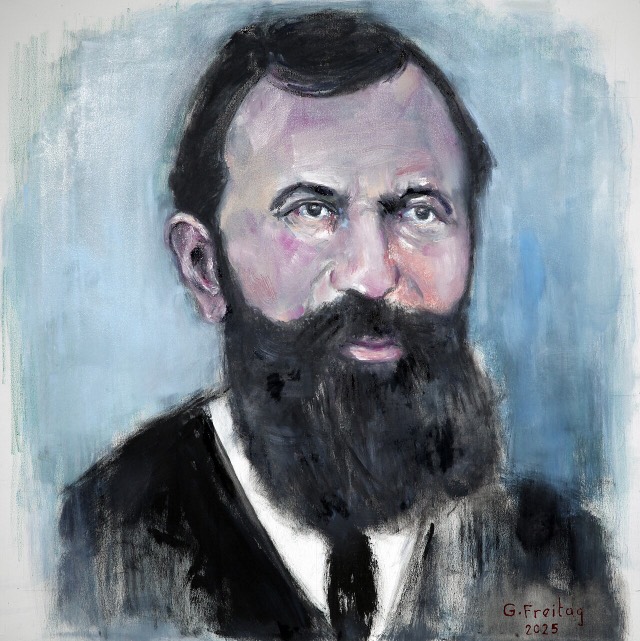
The Orthodox bishop who translated Shakespeare into Albanian and led a government for six months.
Persona
The 16th-century painter whose red pigment and expressive faces defined Albanian icon painting.
Periodo storico
Nine centuries of eastern Roman rule, interrupted by Bulgarians, Normans, Serbs and Angevins.
Villaggio · Korçë
In the 18th century one of the largest towns in the Balkans; today a village of frescoed churches.
Approfondimento
Four communities, centuries of coexistence, twenty-three years of total prohibition, and a census question nobody agrees about.
Hai notato un errore in questa pagina? Le correzioni sono benvenute e vengono verificate rispetto al record di fonte. Indica cosa è sbagliato e, se possibile, da dove proviene il dato corretto.