Betreff
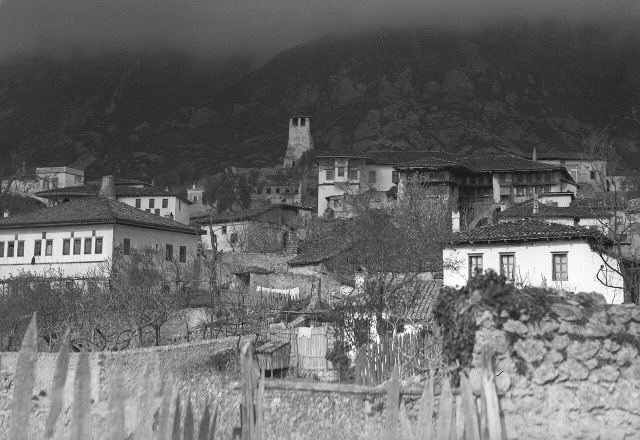
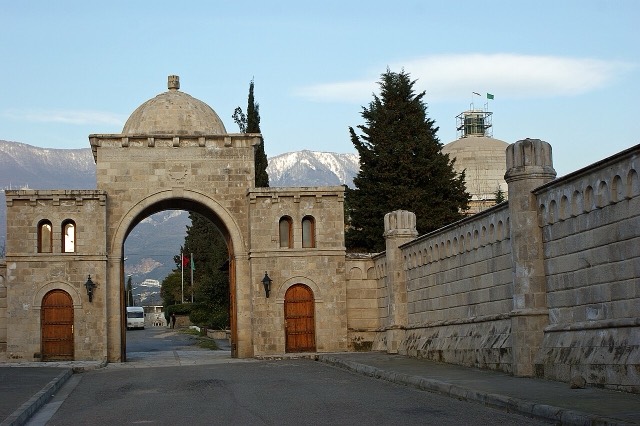
Religion in Albania
Four historic communities — Sunni, Bektashi, Orthodox and Catholic — and a state that banned all of them from 1967 to 1990.
Jeder Kreis, jede Küste, jedes Jahrhundert
Geführte Ansicht
Neu in Albanien? Jede Seite beginnt mit einer einfachen Erklärung, die auch ein Zehnjähriger verstehen würde – bevor es ins Detail geht.
Expertenansicht
Sie kennen die Grundlagen bereits. Direkt zur Substanz, ohne die vereinfachten Erklärungen. Dies ist die Standardeinstellung.
Betreff
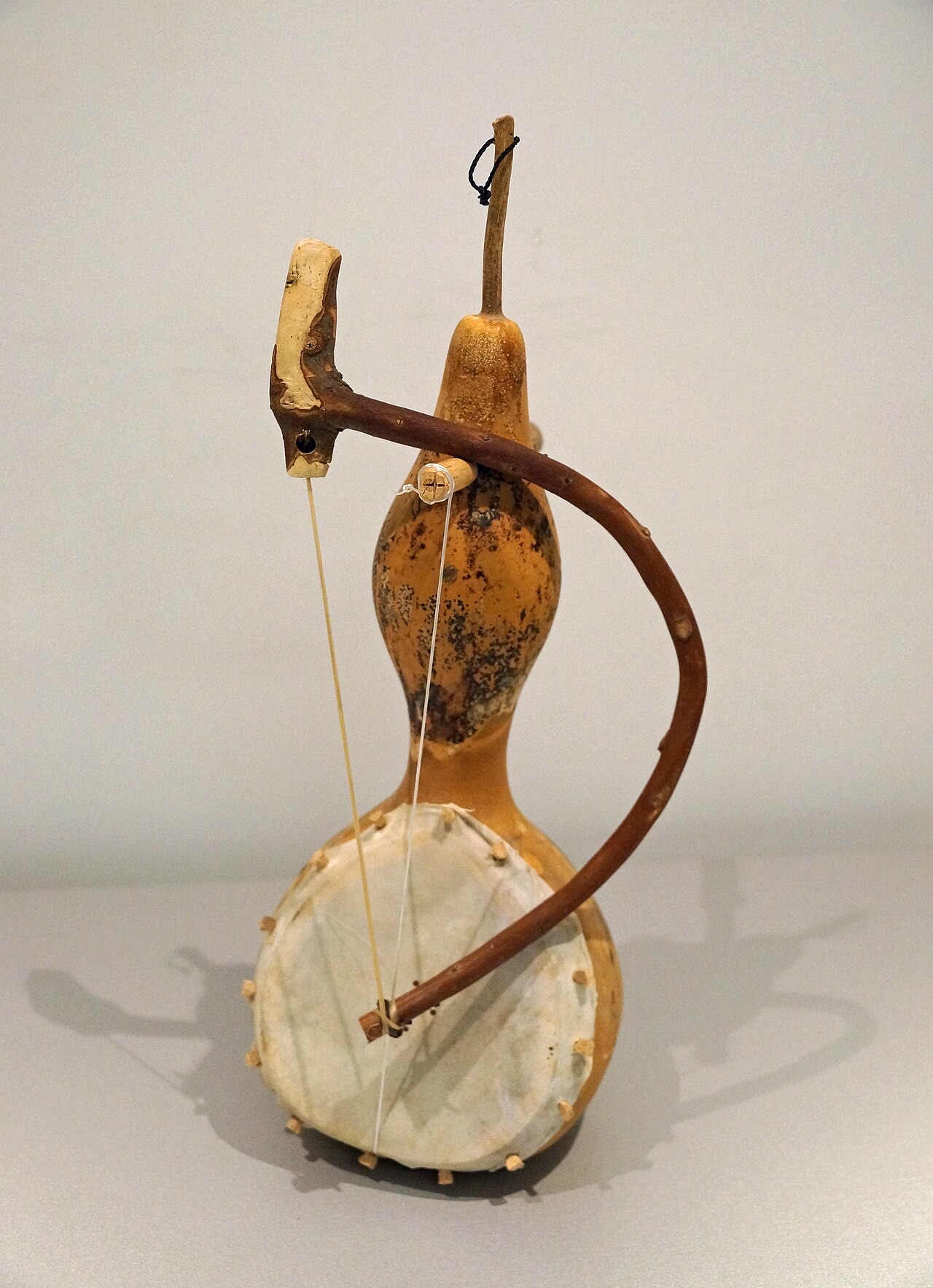
A culture shaped by mountain isolation, five centuries of Ottoman rule, and fifty years of enforced separation.
Speichern
Albanian culture comes from many layers: very old local traditions, five hundred years inside the Ottoman Empire, and then fifty years cut off from the rest of the world under communism. Hospitality, family and music are central to it.
Albanian culture comes from many layers: very old local traditions, five hundred years inside the Ottoman Empire, and then fifty years cut off from the rest of the world under communism. Hospitality, family and music are central to it.
Albanian culture encompasses the artistic, culinary, literary, musical, political and social elements representative of ethnic Albanians across multiple territories: the country of Albania itself, Kosovo, North Macedonia and Montenegro, where ethnic Albanians form a native population. It also draws on traditions from parts of northern Greece. The culture evolved since ancient times in the western Balkans and has been shaped by the geography and history of those regions, producing a distinct language, set of beliefs and way of life.
The name 'Albanian' derives from the Illyrian tribe of the Albanoi and their capital Albanopolis, recorded by the geographer Ptolemy in antiquity. Until the sixteenth century, Albanians referred to their country as Arbëri or Arbëni and to themselves as Arbëreshë or Arbëneshë. Thereafter, the toponym Shqipëria and the endonym Shqiptarë gradually replaced the older terms. Both are popularly interpreted as references to eagles: 'Land of Eagles' and 'Children of Eagles' or 'Eagle-Men' respectively.
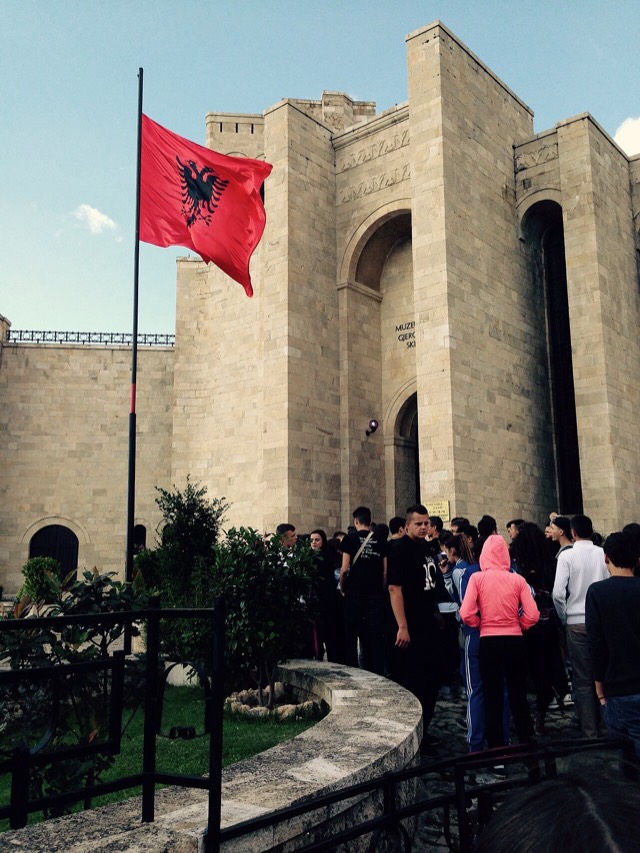
The double-headed eagle serves as the national and ethnic symbol of all Albanian-speaking people. Its earliest recorded appearance in stone carving dates from the tenth century, coinciding with the establishment of the Principality of Arbanon. Documentary evidence also confirms its use as a heraldic symbol by numerous noble families in medieval Albania. The symbol is associated with bravery, valor, freedom and heroism, and appears widely in Albanian traditional art including jewellery, embroidery and house carving.
Albanians are culturally and linguistically divided into two subgroups: the northern Ghegs and the southern Tosks. The boundary between them is the Shkumbin River, which crosses Albania from east to west. Outside Albania, Gheg is spoken by Albanians in Kosovo, northwestern North Macedonia, Montenegro and Croatia, where the community is known as Arbanasi. Tosk is spoken by Albanians in Greece (Arvanites and Chams), southwestern North Macedonia and southern Italy, where the community is known as Arbëreshë.
Despite the substantial differences that can exist between the two groups in dialect and some customs, both sides identify strongly with a shared national and ethnic culture. Albanian iso-polyphony, originating from the southern Tosk tradition, has been recognized by UNESCO as an Intangible Cultural Heritage of Humanity. The northern Gheg and southern Tosk musical traditions are contrasted by the rugged, heroic tone of the north against the softer, polyphonic, more social character of the south.
The Kanun is a comprehensive compilation of Albanian traditional customs and cultural practices, codified by Lekë Dukagjini in the Middle Ages. Scholars have conjectured that it may derive from Illyrian tribal laws, while others have suggested it retains elements from pre-historic Indo-European periods. It was transmitted orally across generations before codification and reflects legal practices that find echoes in other Indo-European cultures, including Vedic India and ancient Greece and Rome.
The Kanun regulates a wide range of aspects of life, including customs, traditions, social obligations and conflict resolution. It encompassed the Albanian tribal society, which crystallized most distinctly in the mountains of northern Albania and adjacent areas of Montenegro, and was also present in a less developed form in southern Albania. The traditional clan-based social structure governed by the Kanun was inherited from the ancient Illyrians, thrived until the early twentieth century, and remained largely intact until the communist regime came to power in 1944.
Besa, meaning 'to keep the promise', is the Albanian code of honour and a central component of the Kanun. It carries moral and ethical weight, denoting the given word, the keeping of a promise or obligation, and guaranteed agreement among honourable men. In practice, Besa also encompasses the obligation to care for those in need and to offer hospitality. The concept was invoked during the Holocaust, when Albanians saved and protected approximately 2,000 Jewish people, giving them clothes, Albanian names and treating them as members of the family.
The traditional Albanian social structure is based on the fis, or clan, characterized by common culture, often common ancestry and shared social ties. In earlier periods, clans defended their territory and interests against other clans and external forces. This structure was linked directly to the Kanun of Lekë Dukagjini and persisted as the dominant social framework until the mid-twentieth century.
The oda is a large room in a traditional Albanian house reserved for the host to receive and entertain guests. Traditionally, those present in the oda were older and married men; until the end of the twentieth century, women and young boys were not permitted to enter. In the oda, men hold political discussions and sing epic songs, and historical events and traditions are transmitted orally through these gatherings.
Hospitality is described as a fundamental custom of Albanian society, rooted in the Besa code of honour. Serving food to guests is integral to the hosting function. Albanian cuisine reflects this emphasis on hospitality and has developed over centuries of social and economic change. Olive oil is the most commonly used fat in Albanian cooking and has been produced since antiquity, particularly along the coasts. Ingredients include a wide range of vegetables, cereals, herbs and spices, with lamb, goat, beef, veal and poultry among the widely used meats, and seafood prominent along the Adriatic and Ionian coasts.
Christianity, Islam and Judaism are the traditional religions of Albania. The Albanian constitution extends freedom of religion to all citizens. Albania has never had an official state religion, either as a republic or as a kingdom, and successive republican, monarchic and communist regimes pursued a systematic policy of separating religion from official functions and cultural life after the declaration of independence on 28 November 1912.
Christianity has a long presence in the territory. According to the article, there were thought to have been approximately seventy Christian families in Durrës as early as the time of the Apostles, and Paul the Apostle is credited with founding the Archbishopric of Durrës while preaching in Illyria and Epirus. The first known bishop of Albania was the Bishop of Scutari, founded in 387 in Shkodër. By the eleventh century, when Albanians first appeared in Byzantine sources, they were already described as fully Christianized. Pope Clement XI, who served as pope from 1700 to 1721, was born to an Albanian father descended from the noble Albani family from the Malësi e Madhe region.
The history of Judaism in Albania can be traced to the classical era; Jewish migration from the Roman Empire is considered the most likely source of the earliest Jewish presence, possibly arriving as early as the first century BC. The first synagogue was built in Sarandë in the early fifth century. By the sixteenth century, Jewish settlements existed in most major cities including Berat, Elbasan, Vlorë and Durrës. Albania was the only country in Europe during the Holocaust where the Jewish population experienced growth. After mass emigration to Israel following the fall of the communist regime, approximately 200 Albanian Jews remained in the country. In 2010, a new synagogue, 'Hechal Shlomo', began providing services for the Jewish community in Tirana.
Islam arrived in the region for the first time in the ninth century, when Muslim Arabs raided the eastern Adriatic Sea. It became the majority religion during the centuries of Ottoman rule from the fifteenth century onward, though a significant Christian minority remained throughout that period.
The art of Albania encompasses painting, sculpture, mosaic and architecture across a long chronological span. Surviving monuments from the Illyrian, Ancient Greek and Roman periods include pottery, terracotta, metalwork, sculptures and mosaics. The best concentrations of ancient architecture are found at Butrint in the southwest, Apollonia, Durrës and Byllis in the west, and Amantia and Phoenice in the south.
Albanian medieval art developed within the Byzantine tradition. The earliest paintings took the form of icons and frescoes. The most prominent representative of Albanian medieval art was Onufri, distinguished for his rich use of colours and decorative shades incorporating ethnographic national elements. His successors included David Selenica, Kostandin Shpataraku and the Zografi Brothers. Illuminated manuscripts were another significant form; the Codices of Berat, two ancient Gospels from Berat dating from the sixth and ninth centuries, were inscribed on UNESCO's Memory of the World Register in 2005.
During the fifteenth century, Ottoman invasion prompted emigration of several notable Albanian artists, among them painters Marco Basaiti and Viktor Karpaçi, sculptor and architect Andrea Nikollë Aleksi, and art collector Alessandro Albani. The Ottoman period also opened a new section in Albanian art through extensive mosque construction. In the nineteenth century, the national liberation movement beginning with the League of Prizren in 1878 and culminating in independence in 1912 established conditions for an artistic movement in which Impressionism and Realism came to dominate.
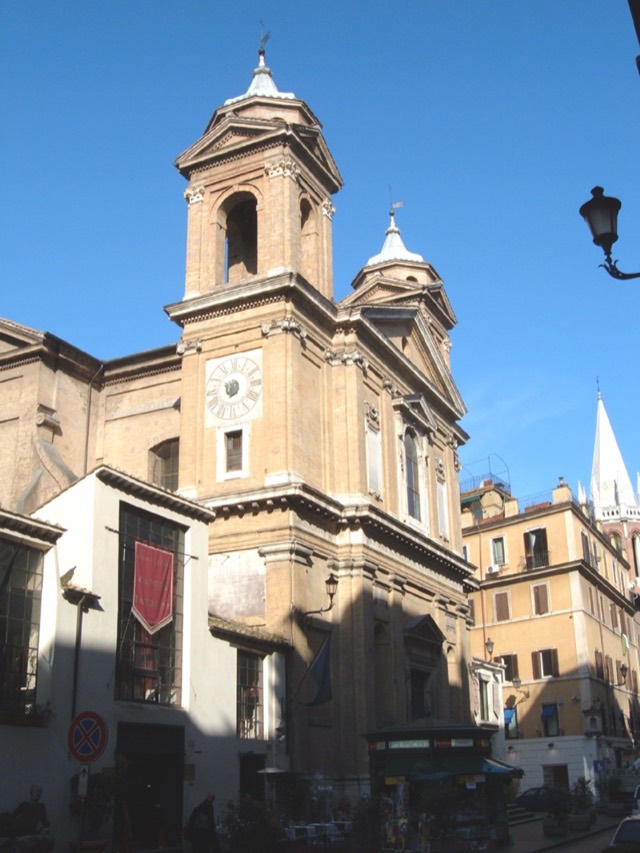
In the eighteenth and nineteenth centuries, Albanian medieval towns underwent urban transformation by Austro-Hungarian and Italian architects, introducing Historicism, Art Nouveau, Neo-Renaissance and Neoclassical styles. This influence is particularly evident in Tirana and Korçë. Albania holds three sites on the UNESCO World Heritage Site List.
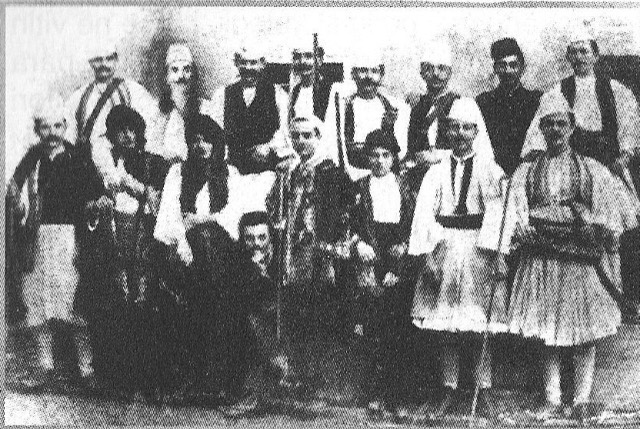
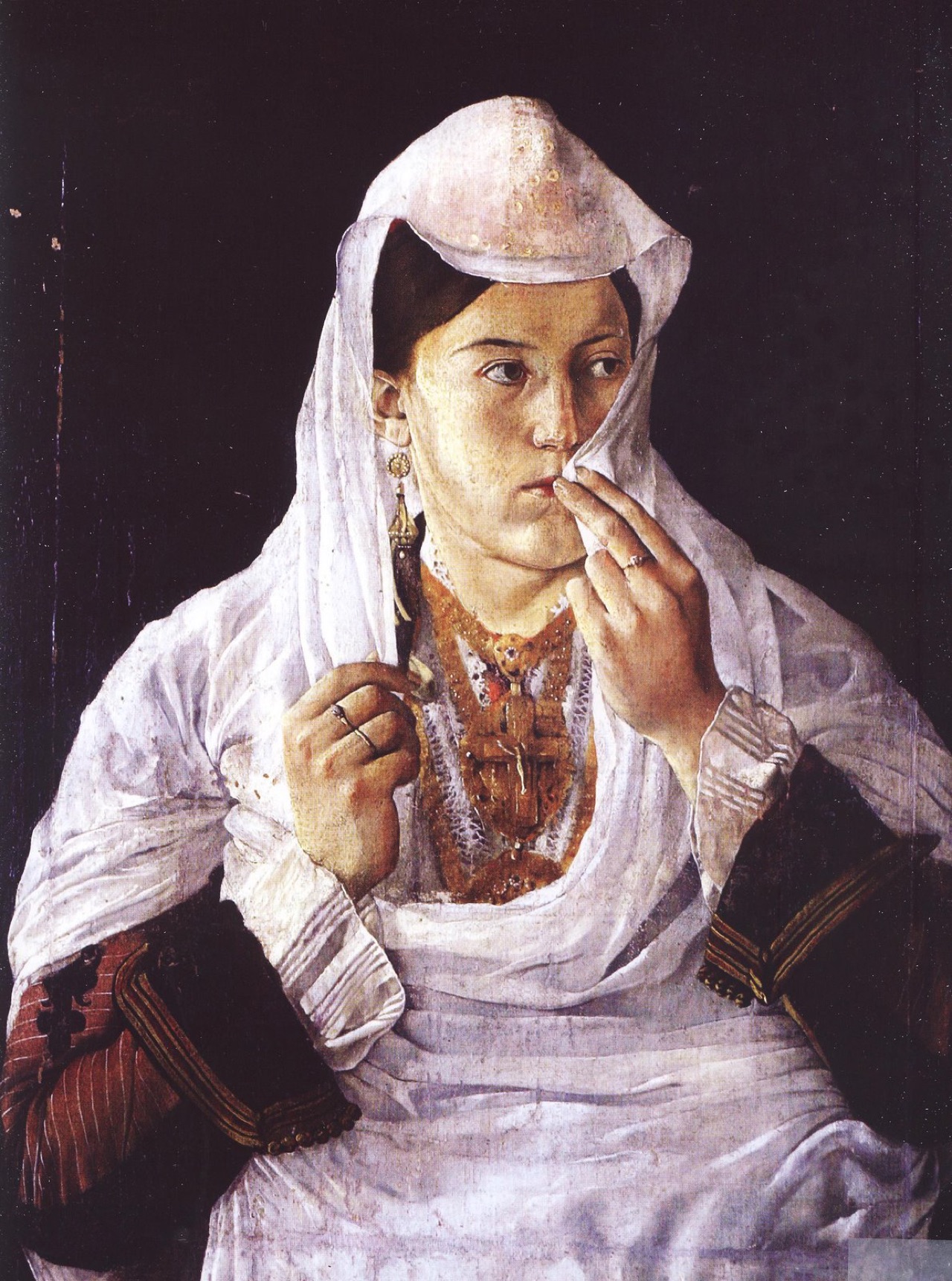
Traditional Albanian clothing has a recorded history extending to classical antiquity and includes more than two hundred different forms across Albania and neighbouring territories, encompassing Albanian communities in Kosovo, western North Macedonia, southern Montenegro, Italy and Greece. Each cultural and geographical region has its own specific variety, characterized by particular colour and detail.
Costumes are frequently decorated with pagan symbolic elements associated with the Illyrians, including suns, eagles, moons, stars and snakes, alongside zig-zag and concentric circle motifs found in ancient times across the Balkans. The garments were traditionally made from local agricultural and livestock products including leather, wool, linen, hemp fibre and silk, and are still embroidered in elaborate ancient patterns.
A common cultural trait across Gheg, Tosk and Cham Albanians is the predominance of white in national dress. Gheg Albanians traditionally wore white trousers; Tosk and Cham Albanians traditionally wore a white kilt. Named garments include the Qeleshe (also known as Plis), the Qylafë, the Fustanella, the Xhubleta, the Xhamadan, the Brez, the Çorape and the Opinga. The white skull cap, the qeleshe or plis, is etymologically related to the Greek Pilos or Pileus cap.
Albanian folk music is a central part of national identity and shows major stylistic differences between the northern Ghegs and the southern Labs and Tosks. The Ghegs are known for a distinctive tradition of sung epic poetry covering themes of honour, hospitality, treachery and revenge. Tosk music is described as soft and gentle, and polyphonic in nature. Albanian iso-polyphony from the south has been declared a UNESCO Intangible Cultural Heritage of Humanity.
Instruments used in the north include the def, çifteli and sharki for dance and pastoral songs, along with homemade wind instruments such as the zumarë and lahuta, traditionally played by shepherds. Southern ensembles typically include violins, clarinets, lahuta and def. The tradition of church singing was practised throughout the Middle Ages in ecclesiastical centres including Berat, Durrës and Shkodër. Shën Jan Kukuzeli, of Albanian origin, is identified as one of the earliest known musicians, described as a singer, composer and musical innovator.
Classical music became widely popular in the nineteenth and twentieth centuries. Composers Martin Gjoka, Fan Noli and Mikel Koliqi are identified as central figures who incorporated national identity, religious and folk elements into their compositions. Notable Albanian performers who gained international recognition include sopranos and tenors Inva Mula, Marie Kraja, Saimir Pirgu and Ermonela Jaho. In contemporary popular music, internationally recognized performers of Albanian origin include Ava Max, Bebe Rexha, Dua Lipa, Era Istrefi, Ermal Meta, Rita Ora and Action Bronson, among others.
Albanian dance traditions vary considerably by region, influenced by the country's diverse topography. Dances of the northern Ghegs tend toward a solo character, while those of the southern Tosks are more social in expression, taking the form of line and semi-circle dances.
The earliest documented evidence of written Albanian dates from 1332, in a Latin report by the French Dominican Guillelmus Adae, Archbishop of Antivari, who noted that Albanians used Latin letters in their books despite their language differing from Latin. Other early evidence includes a baptism formula written in Albanian within a Latin text by the Bishop of Durrës, Pal Engjëlli, in 1462; a glossary of Albanian words compiled in 1497 by the German traveller Arnold von Harff; and a fifteenth-century fragment of the Gospel of Matthew in Albanian written in Greek letters. This evidence indicates that Albanian was written from at least the fourteenth century, though the tradition preceding the earliest surviving texts is not well understood.
The Meshari (The Missal), translated by cleric Gjon Buzuku and published in 1555, is considered one of the first literary works of written Albanian. The refined language and stabilised orthography suggest it built on an earlier written tradition. The humanist Marin Barleti, in his Rrethimi i Shkodrës (The Siege of Shkodër, 1504), recorded consulting chronicles written in the vernacular language, and his Historia de vita et gestis Scanderbegi Epirotarum principis (1508) remains the foundation of Skanderbeg studies. During the sixteenth and seventeenth centuries, significant works included Lekë Matrënga's catechism of 1592, Pjetër Budi's Doktrina e krishterë (1618) and Rituale romanum (1621), Frang Bardhi's apology for George Castriot (1636), and Pjetër Bogdani's theological-philosophical treaty Cuneus Prophetarum (1685).
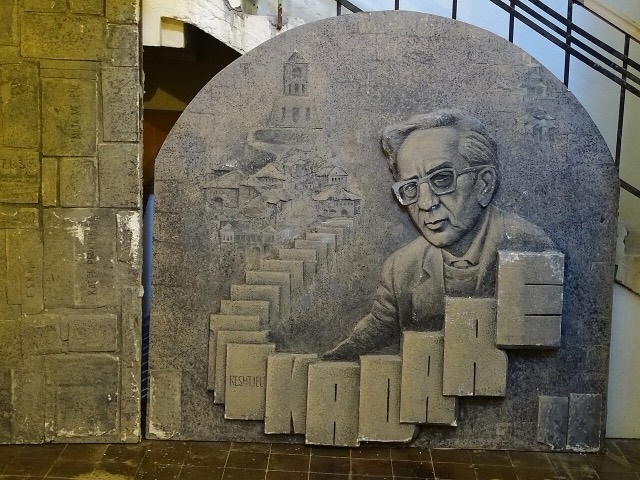
Albania's best-known contemporary writer is Ismail Kadare (1936–2024), whose novels have been translated into 45 languages. His major works include The General of the Dead Army (1963), The Siege (1970), Chronicle in Stone (1971), The Three-Arched Bridge (1978), Broken April (1980), The File on H. (1981), The Palace of Dreams (1981), The Pyramid (1992) and The Successor (2002). The central theme of his work is totalitarianism and its mechanisms. Living in Albania under strict censorship, Kadare used parable, myth, allegory, folk-tale and coded language to circumvent Communist censors, who banned three of his books. In 1990, he defected to Paris to escape the Communist regime and its Sigurimi secret police.
Kadare received numerous international awards: the Prix mondial Cino Del Duca (1992), the Herder Prize (1998), the inaugural Man Booker International Prize (2005), the Prince of Asturias Award of Arts (2009), the Jerusalem Prize (2015), the Park Kyong-ni Prize (2019) and the Neustadt International Prize for Literature (2020). France made him a foreign associate of the Académie des Sciences Morales et Politiques in 1996, and in 2016 he received the Commandeur de la Légion d'Honneur. He was nominated for the Nobel Prize in Literature 15 times. Since the 1990s, both major Albanian political parties asked him to become a consensual President of Albania; he declined.
Betreff
Four historic communities — Sunni, Bektashi, Orthodox and Catholic — and a state that banned all of them from 1967 to 1990.
Betreff
More Albanians may live outside the country than in it — chiefly in Italy, Greece, Germany, Switzerland, the UK and the US.
Betreff
The customary obligation of keeping one's word — the principle behind Albania's wartime sheltering of Jewish refugees.
Betreff
A black double-headed eagle on red — Skanderbeg's standard, and one of the oldest continuously used national symbols in Europe.
Person
The writer who found ways to describe a totalitarian state from inside it, in novels read worldwide.
Historische Stätte · Shkodër
The archive of the Balkans' oldest photographic studio — about 500,000 negatives from 1858 onward.
Betreff
Multipart unaccompanied singing over a held drone, inscribed by UNESCO in 2005.
Betreff
A body of customary law, best known in the Lekë Dukagjini recension, that governed the northern highlands for centuries.
Etwas falsch auf dieser Seite? Korrekturen sind willkommen und werden gegen den Quelldatensatz geprüft. Bitte mitteilen, was falsch ist und, wenn möglich, woher die richtige Angabe stammt.