Vila · Durrës
Krujë
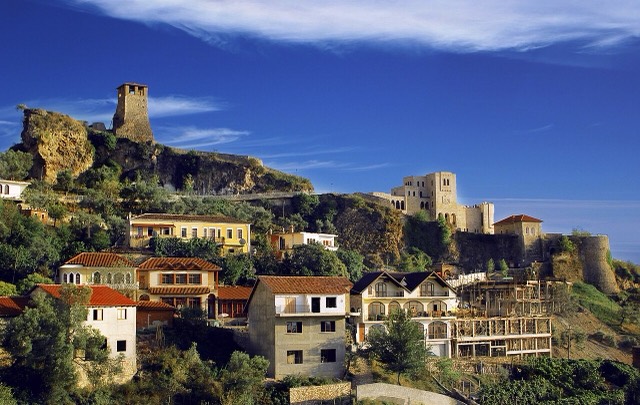
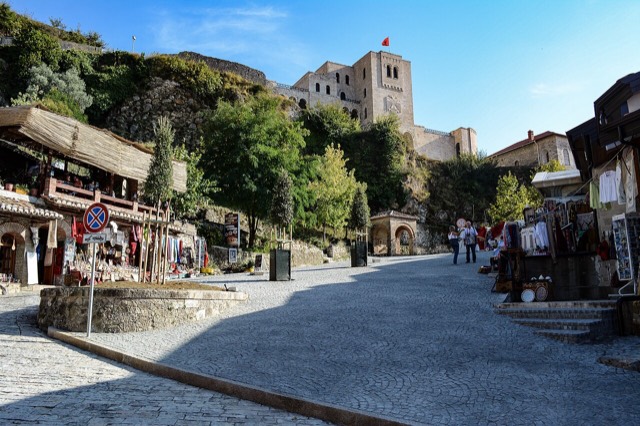
Skanderbeg's mountain stronghold, an old bazaar street, and the national museum of the resistance.
Cada condado, cada costa, cada século
Vista guiada
Novo na Albânia? Cada página começa com uma explicação em linguagem simples, acessível a uma criança de dez anos, antes de entrar em pormenor.
Vista para especialistas
Já conhece o essencial. Direto ao conteúdo, com as explicações simples ocultadas. Esta é a vista predefinida.
Sítio histórico · Durrës County
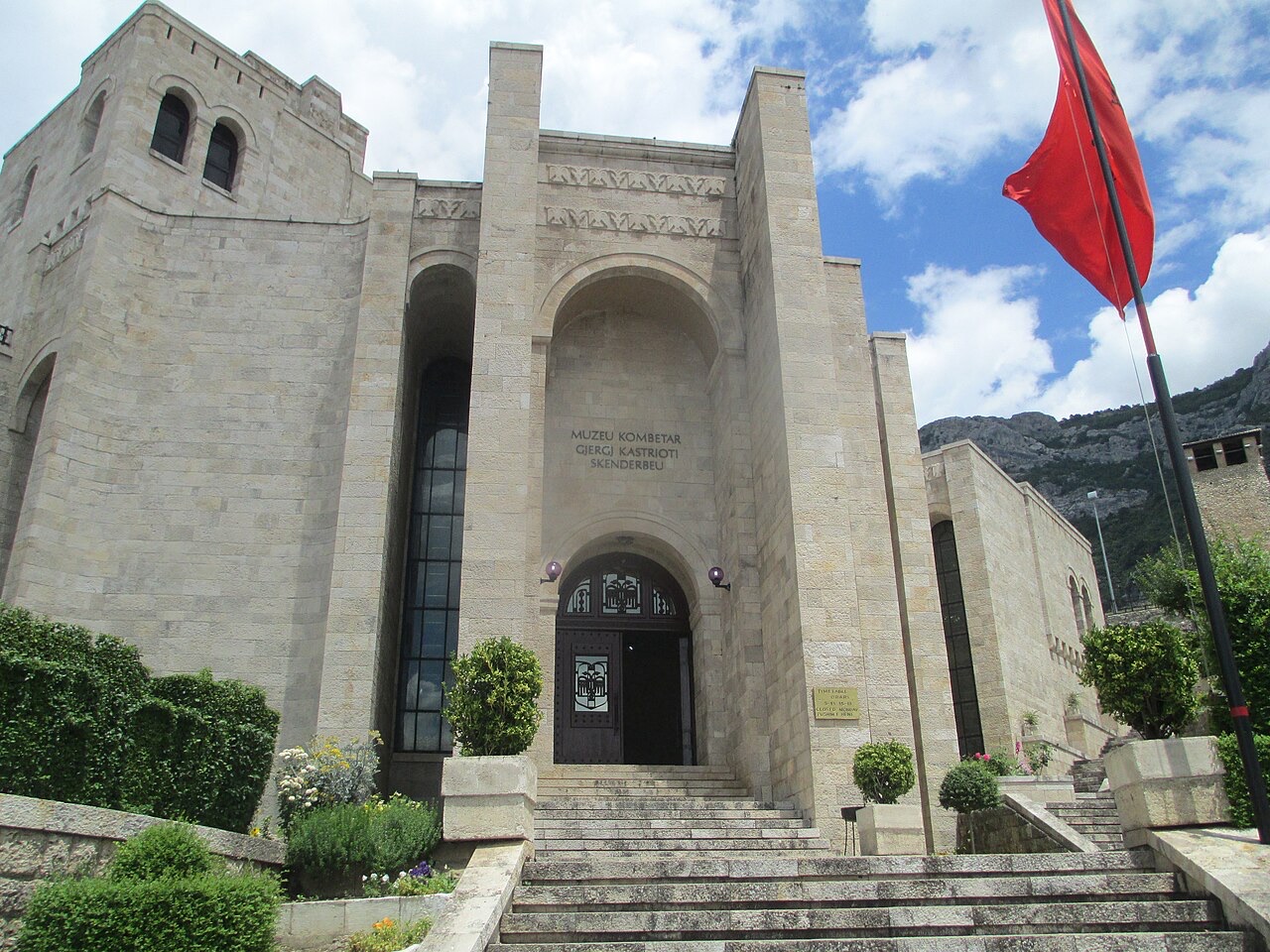
The museum of the 15th-century resistance, built inside Krujë Castle by Enver Hoxha's daughter and son-in-law.
Guardar
This museum inside Krujë Castle tells the story of Skanderbeg and his wars against the Ottoman Empire. It was designed by the daughter of Albania's communist leader.
This museum inside Krujë Castle tells the story of Skanderbeg and his wars against the Ottoman Empire. It was designed by the daughter of Albania's communist leader.
The Skanderbeg Museum occupies the interior of Krujë Castle, a historic citadel in the city of Krujë, Albania. The castle served as the principal military stronghold from which George Kastrioti Skanderbeg conducted his defence of Albania against Ottoman expansion for more than two decades.
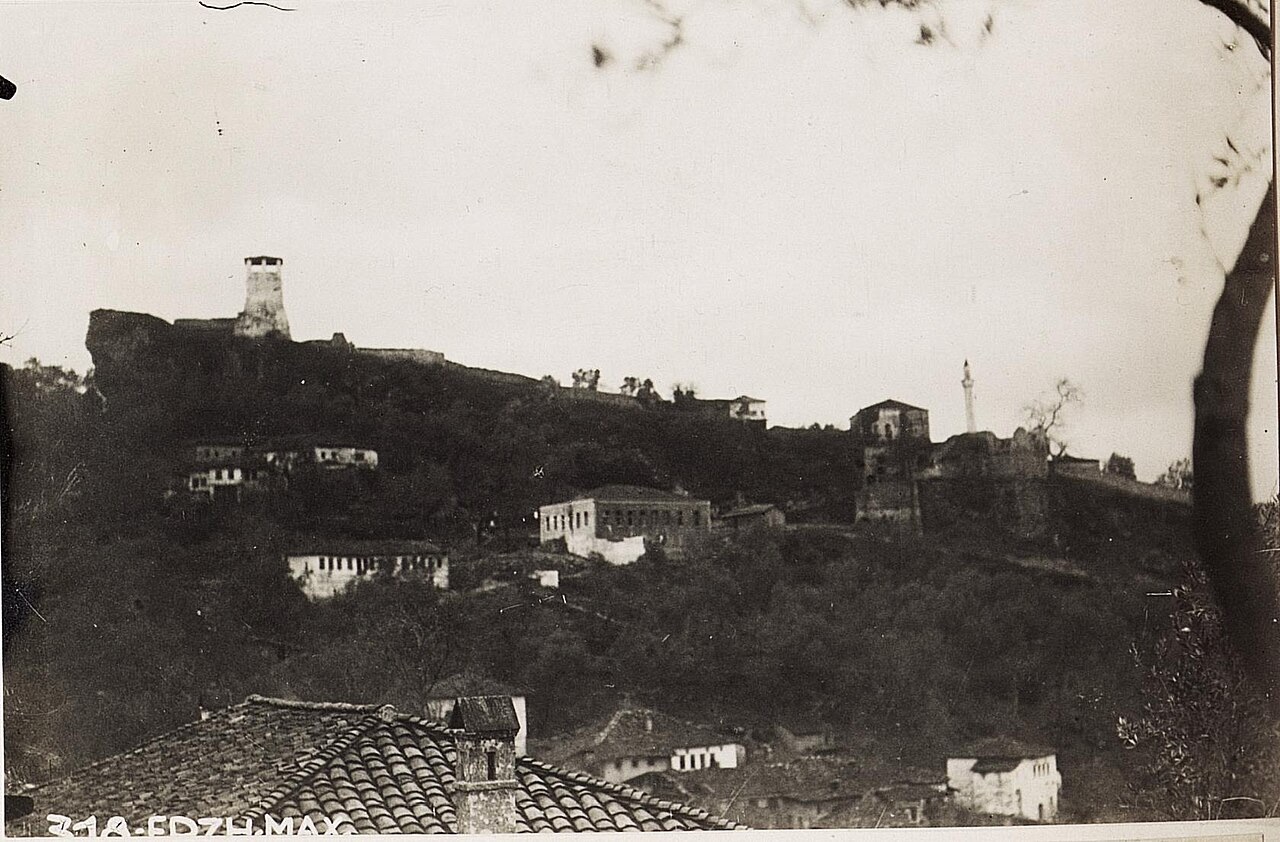
Ottoman forces attacked the castle three times — in 1450, 1466, and 1467 — and failed on each occasion to take control of it. A fourth siege, in 1476, finally brought the fortress under Ottoman control. The castle's repeated resistance to Ottoman assault is directly linked to the museum's commemorative purpose and to why the site was chosen for a national memorial institution.
The conceptual platform for the Skanderbeg Museum was designed by Aleks Buda in September 1976. This document was issued as a design assignment to the Institute of Studies and Projects (ISP) No. 1 in Tirana, placing the project under the direction of architect Pirro Vaso.
After reviewing three design variants, the ISP determined that the museum building would be sited within the walls of Krujë Castle. The decision to place a national history museum dedicated to Skanderbeg inside the castle he had defended was therefore both symbolic and institutional, rooted in a formal planning process rather than an informal choice.
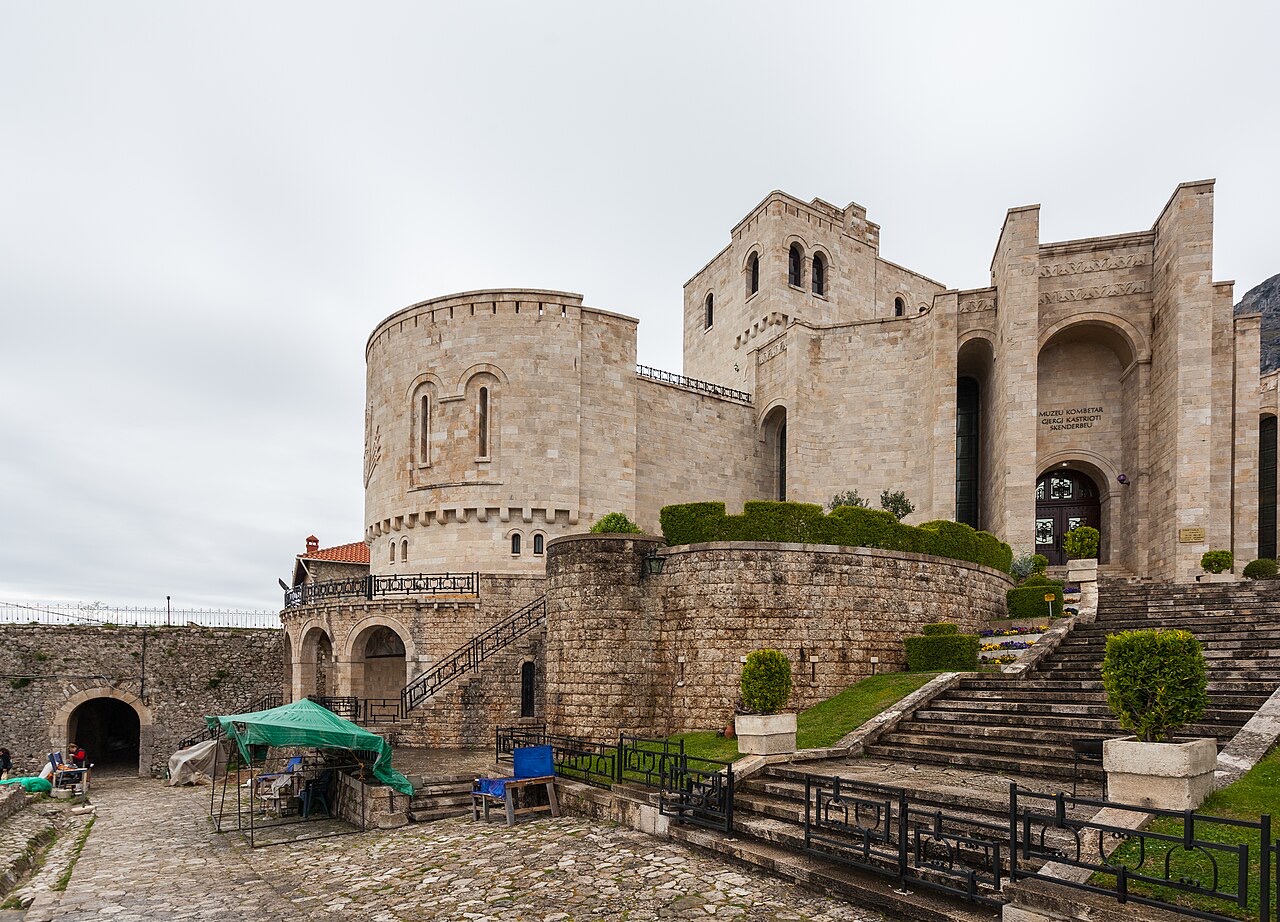
The design team assembled by the ISP included architects and technical specialists: Pirro Vaso, Pranvera Hoxha (daughter of Enver Hoxha), F. Stermasi, K. Meka, L. Gashi, Gjarçani, and R. Agalliu. Their brief was to produce a building that would be stylistically consistent with Albanian medieval towers, particularly those built in northern Albania.
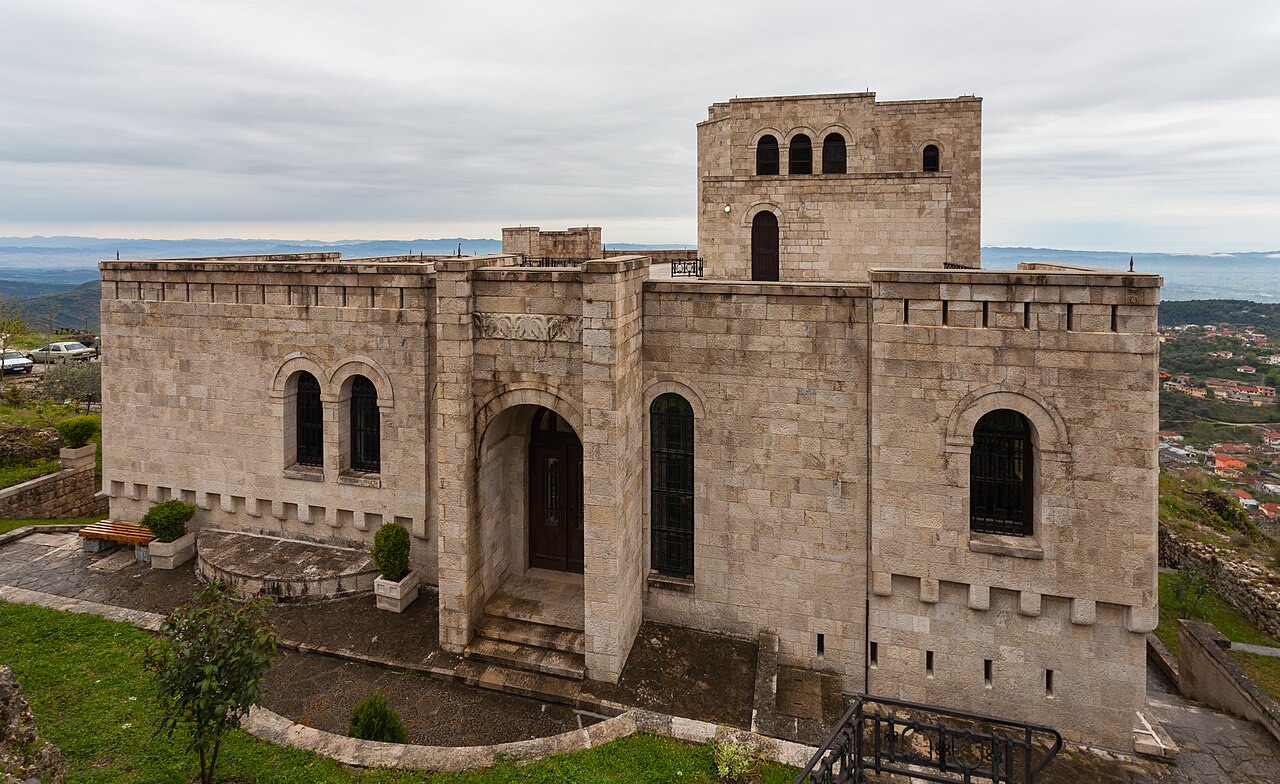
The resulting architecture draws on two principal sources: traditional Albanian stone tower construction and medieval Romanesque architecture. The building was therefore designed to give the museum the character of a memorial rather than a conventional exhibition hall, with the architectural form itself intended to evoke the historical period it commemorates.
Once the draft concept received approval from the Ministry of Education and Culture, the ISP working group proceeded to project implementation. The approved design placed the new structure inside the existing castle walls, integrating a modern institution within a medieval fortification.
Construction of the museum began in September 1978 and was directed on site by Robert Kote, who led a local construction team. The Ministry of Education and Culture formed two separate working groups in March 1980 to address the museum's content rather than its structure: one for exhibition design, pavilions, and mural paintings.
A group of historians led by Professor Kristo Frashëri was responsible for the historical content, while a group of painters led by Bashkim Ahmeti handled the visual and artistic components. Both groups completed their work by the end of 1980, leaving approximately two years for the integration of content with the finished building before the scheduled opening.
The museum opened to the public on 1 November 1982, following a construction and preparation period of just over four years from the start of building works.
The institution's full official name is the National History Museum 'Gjergj Kastrioti Skënderbeu' (Albanian: Muzeu Historik Kombëtar 'Gjergj Kastrioti Skënderbeu'). It is also referred to as the Skanderbeg Museum or the Kruja Museum. The name honours Gjergj Kastrioti Skënderbej, recognised in Albania as the national hero.
Skanderbeg's significance to Albanian national identity derives from his role in resisting Ottoman military expansion. The museum was conceived explicitly as a memorial to that resistance, and its entire exhibition programme is oriented around his life and military record.
The building's architectural design is credited to Pirro Vaso and Pranvera Hoxha. Vaso held the senior institutional role, directing the ISP team from the outset of the project in 1976. Pranvera Hoxha, who was the daughter of Enver Hoxha — the head of the Albanian communist state at the time — was a member of the design team from the project's inception.
The involvement of both architects is acknowledged in the museum's own description of its construction history. The article does not elaborate further on the individual contributions of each architect to specific design decisions, beyond noting that the building was the product of the ISP working group they jointly led.
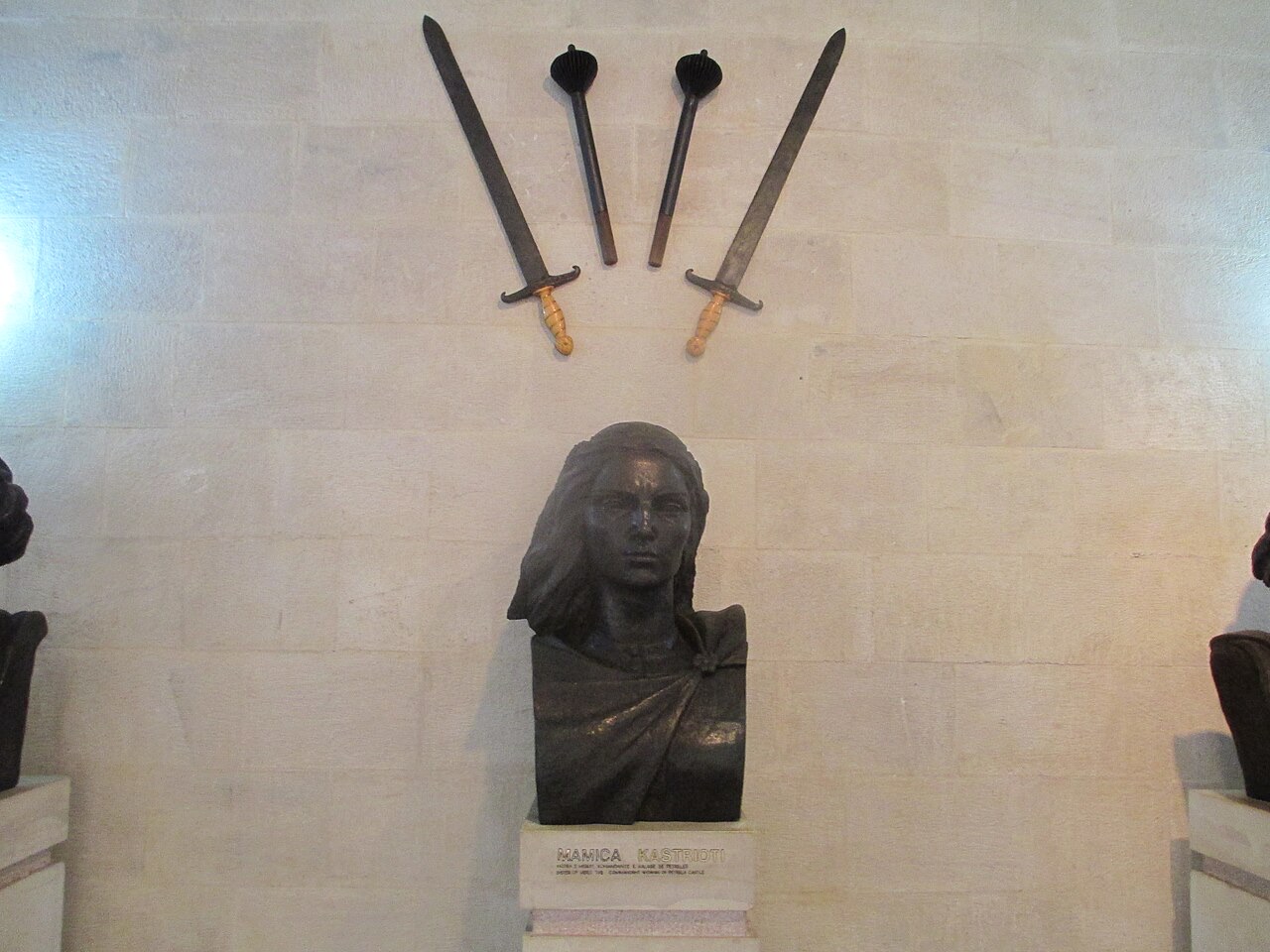
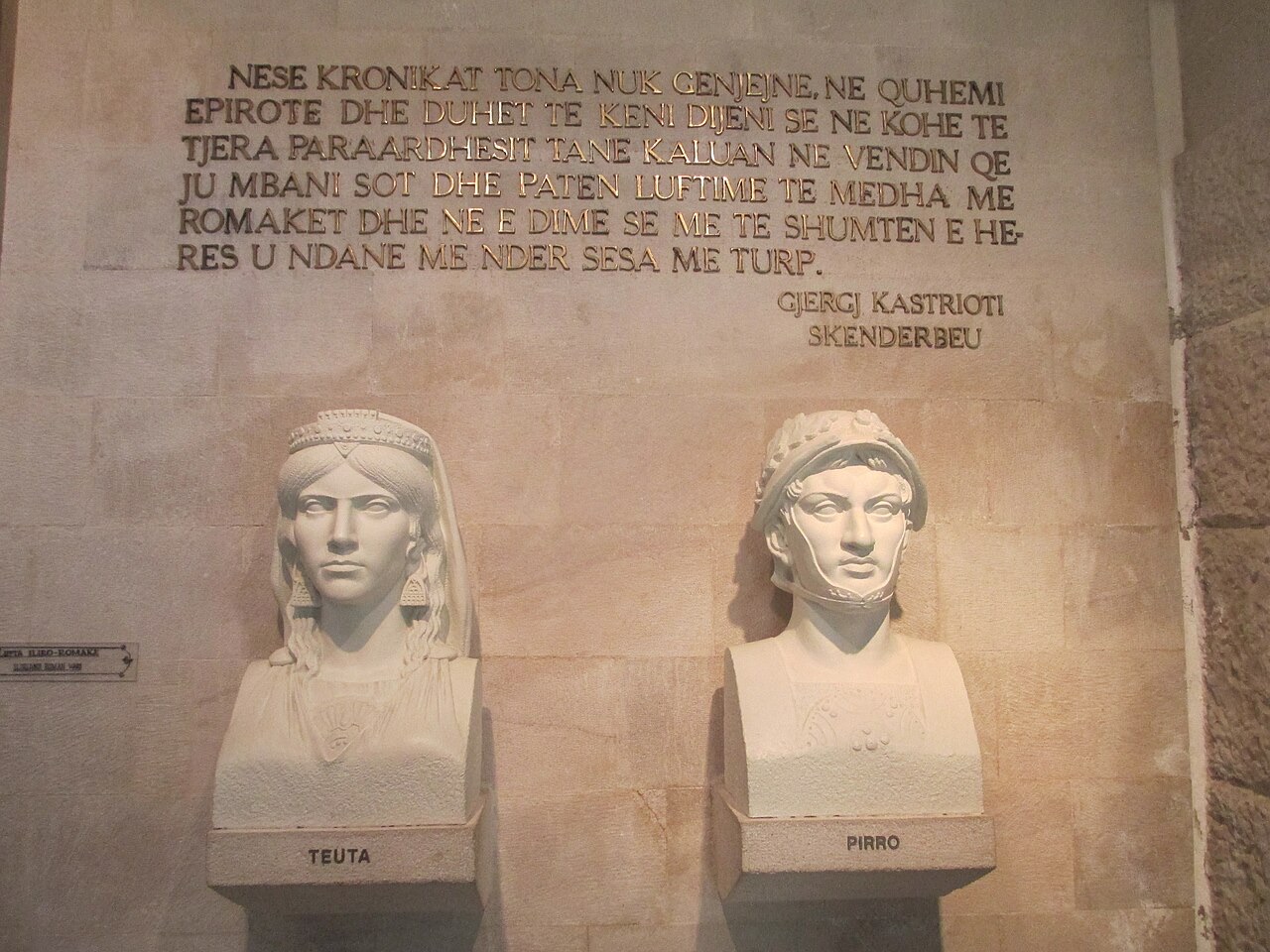
The museum's exhibits are organised to chronicle Skanderbeg's life and military campaigns in sequence. Objects dating to Skanderbeg's lifetime are presented alongside paintings, armour, and other artefacts associated with the period, with the arrangement intended to document what the museum characterises as one of the most significant episodes in Albanian history.
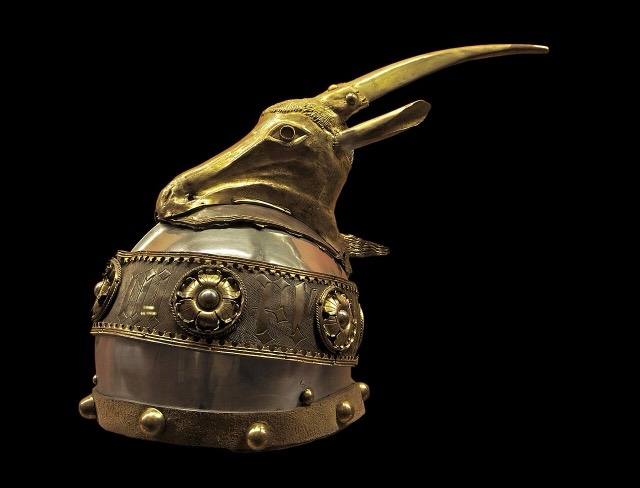
Among the displays is a replica of Skanderbeg's helmet, which is topped with a goat's head. The article notes that the original helmet is held at the Kunsthistorisches Museum. The presence of a replica rather than the original is therefore a function of the original's location in Vienna rather than any deficiency of the collection.
The preparation of the museum's intellectual and artistic content was a distinct phase of the project, formally organised by the Ministry of Education and Culture in March 1980, more than a year after building works had begun. Two working groups were constituted with separate responsibilities.
Professor Kristo Frashëri led the historians' group, which was responsible for the historical framework, factual content, and narrative structure of the exhibitions. Bashkim Ahmeti led the painters' group, which addressed mural paintings and visual presentation. The two groups completed their work together by the end of 1980, roughly two years before the museum's public opening.
The Skanderbeg Museum is described in the source article as one of the most important and most visited museums in Albania. It is classified as a national history museum, distinguishing it institutionally from regional or municipal collections.
Its location within Krujë Castle means that visitors encounter both the museum building — a purpose-built structure of the early 1980s — and the medieval castle fabric that gives the site its historical substance. The two elements are physically integrated, with the modern museum constructed inside the castle's existing walls.
The museum was inaugurated on 1 November 1982. The article does not explain the significance of this date beyond recording it. Construction had begun in September 1978, making the total span from groundbreaking to opening approximately four years and two months.
The building project originated from a conceptual document dated September 1976, meaning the full process from initial platform to public opening extended over six years. The museum represents a substantial institutional investment of the late Albanian communist period, involving the Ministry of Education and Culture, the ISP, academic historians, and professional artists alongside the construction team.
O mês mais quente é August (temperatura máxima média diária 27°C), o mais frio é January (temperatura mínima média diária -0°C), e o mais chuvoso é December (171 mm). A precipitação total anual média é 1,422 mm.
| Mês | Máx. | Mín. | Chuva | Dias com chuva | Sol/dia |
|---|---|---|---|---|---|
| January | 8°C | -0°C | 145 mm | 12 | 7.1 h |
| February | 9°C | 0°C | 129 mm | 12 | 8.0 h |
| March | 12°C | 2°C | 133 mm | 12 | 9.5 h |
| April | 15°C | 6°C | 129 mm | 14 | 10.7 h |
| May | 20°C | 10°C | 113 mm | 12 | 12.1 h |
| June | 24°C | 14°C | 70 mm | 9 | 13.6 h |
| July | 27°C | 17°C | 44 mm | 6 | 13.7 h |
| August | 27°C | 17°C | 50 mm | 6 | 12.9 h |
| September | 23°C | 14°C | 131 mm | 10 | 10.7 h |
| October | 18°C | 10°C | 138 mm | 10 | 9.1 h |
| November | 14°C | 5°C | 170 mm | 12 | 7.3 h |
| December | 9°C | 1°C | 171 mm | 13 | 6.6 h |
Fonte: ERA5 reanalysis via Open-Meteo, 1994–2023 · "Máx." e "Mín." são as temperaturas do ar máxima e mínima médias diárias. "Dias com chuva" conta os dias com pelo menos 1 mm de precipitação.
Vila · Durrës
Skanderbeg's mountain stronghold, an old bazaar street, and the national museum of the resistance.
Sítio histórico · Durrës
Skanderbeg's base, which held out against three Ottoman sieges and now houses the national museum of the resistance.
Pessoa
Gjergj Kastrioti: an Ottoman commander who changed sides and held Albania against the empire for twenty-five years.
Algo errado nesta página? As correções são bem-vindas e verificadas em confronto com o registo de origem. Indique o que está errado e, se possível, de onde provém o valor correto.