Thành phố · Durrës
Durrës
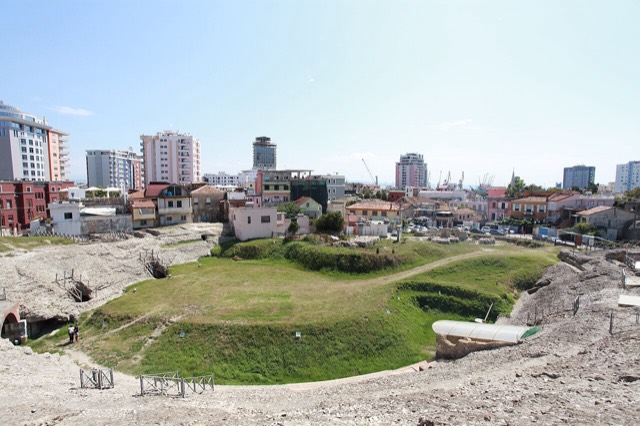
Albania's principal port and its oldest continuously inhabited city, founded as Epidamnos in 627 BC.
Mọi hạt, mọi bờ biển, mọi thế kỷ
Chế độ hướng dẫn
Mới tìm hiểu về Albania? Mỗi trang mở đầu bằng một giải thích ngôn ngữ đơn giản mà bạn có thể đọc cho một đứa trẻ mười tuổi, trước khi đi vào chi tiết.
Chế độ chuyên gia
Bạn đã nắm được những điều cơ bản. Đi thẳng vào nội dung, với các giải thích đơn giản được ẩn đi. Đây là chế độ mặc định.
Di tích lịch sử · Durrës County
Skanderbeg's base, which held out against three Ottoman sieges and now houses the national museum of the resistance.
Lưu
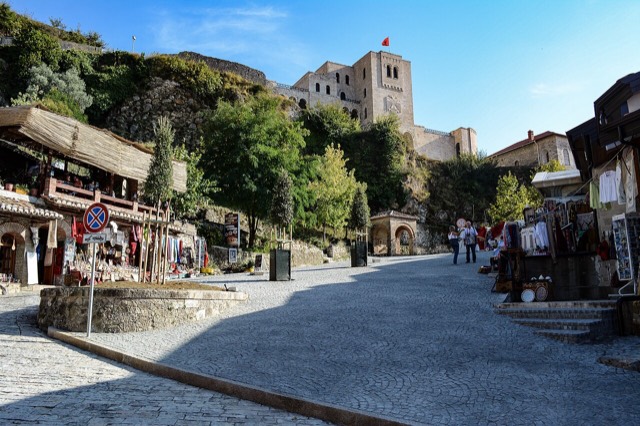
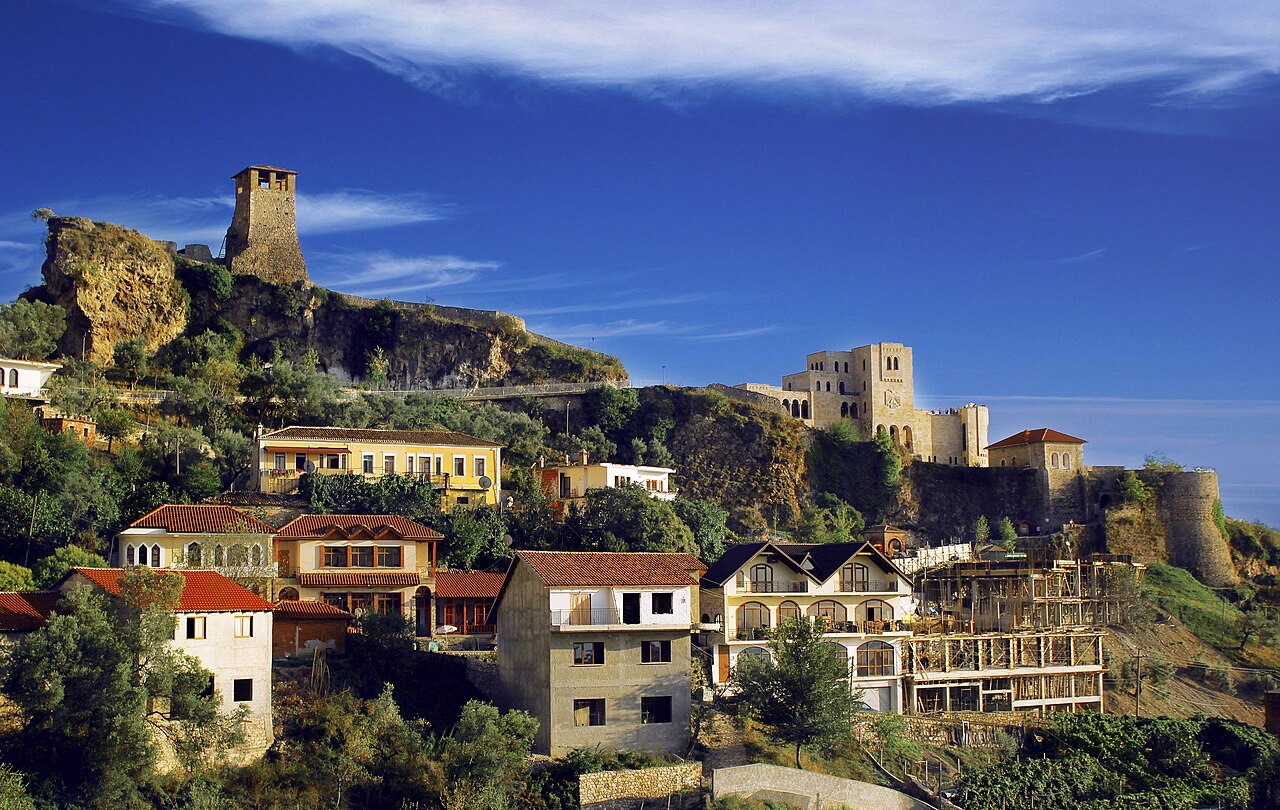
Krujë Castle is where Skanderbeg defended Albania against much larger Ottoman armies in the 1400s. Inside there is a museum about him, and a small Ottoman bathhouse and a dervish lodge.
Krujë Castle is where Skanderbeg defended Albania against much larger Ottoman armies in the 1400s. Inside there is a museum about him, and a small Ottoman bathhouse and a dervish lodge.
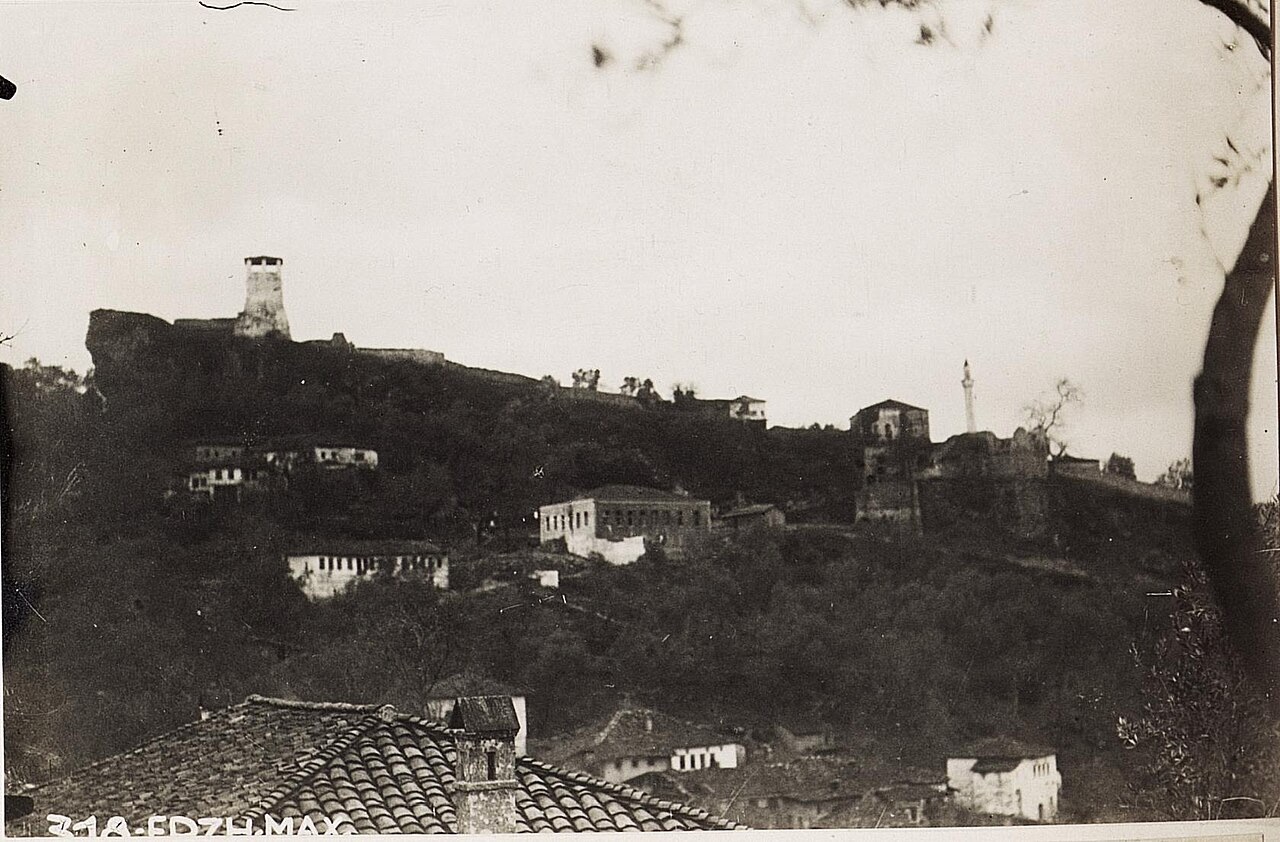
Krujë Castle, known in Albanian as Kalaja e Krujës, was built in the 5th or 6th century. The precise date of construction is not recorded in surviving sources, and the 5th-or-6th-century range reflects the uncertainty in the historical record. The fortress stands at an elevation of 557 metres (1,827 ft) above the city of Krujë, occupying a commanding position over the settlement below.
The structure served from its earliest known history as a military stronghold controlling the surrounding area. Its elevated position made it a natural defensive site, and it would remain in continuous military use for over a millennium.
During the Albanian Revolt of 1432 to 1436, the city of Krujë was subjected to a siege led by Andrea Thopia. That siege was unsuccessful. Following the failure, Ottoman rule over the city was restored, and the fortress returned to Ottoman control.
This episode preceded the more celebrated resistance associated with Skanderbeg by roughly a decade, and it established the pattern of Krujë serving as a focal point of Albanian resistance and Ottoman counter-pressure in the region.
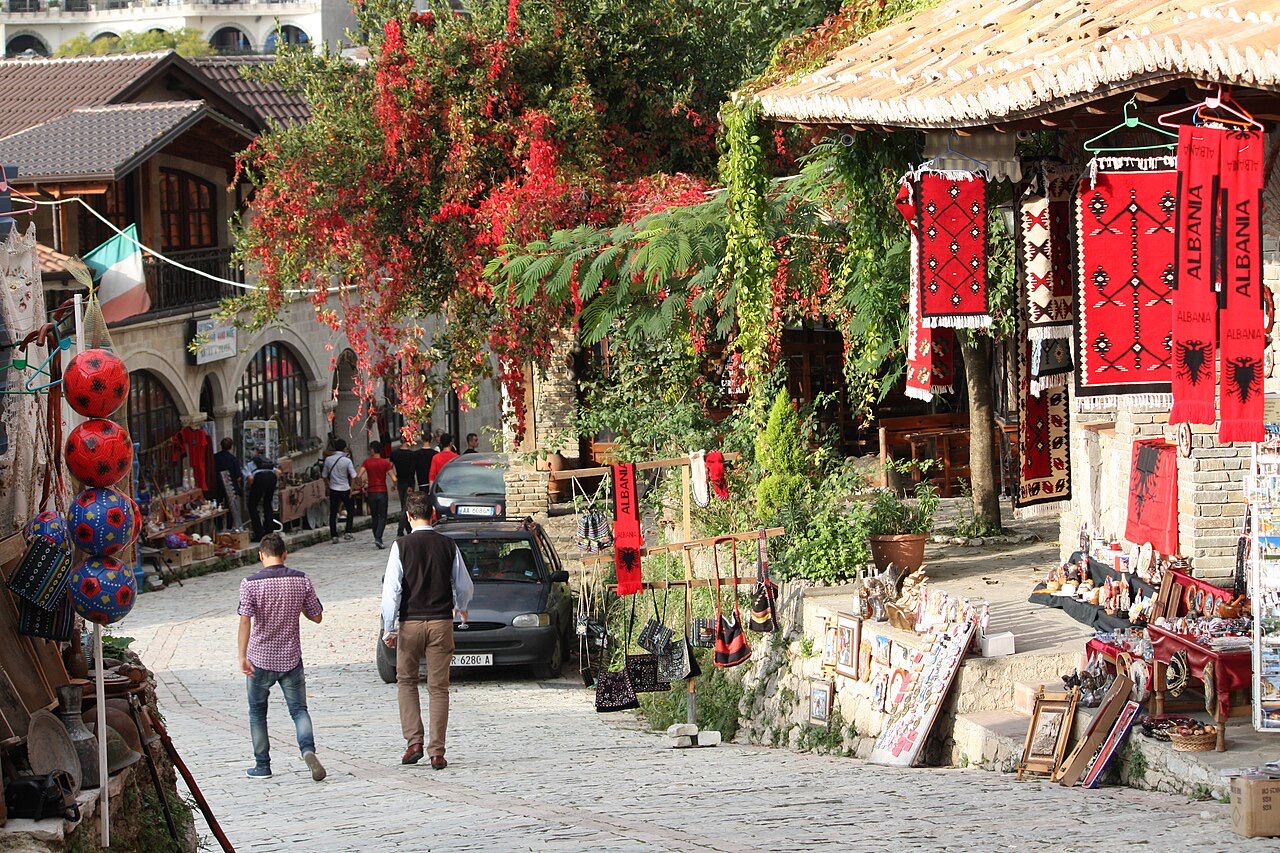
In 1443, Gjergj Kastrioti Skanderbeg launched his rebellion against the Ottoman Empire and made Krujë Castle the center of that resistance. The fortress subsequently withstood three major Ottoman sieges: in 1450, in 1466, and in 1467. On each occasion, the garrison holding the castle numbered no more than approximately 2,000 to 3,000 men under Skanderbeg's command.
The repeated failure of Ottoman forces to take the fortress during Skanderbeg's lifetime made Krujë a symbol of Albanian resistance. Mehmed II, known as 'The Conqueror,' was among those who could not breach its defences while Skanderbeg lived. The castle's ability to hold against numerically superior forces is attributed in the historical record to both its elevated position and its determined defence.
Skanderbeg died in 1468. The Ottoman forces under Mehmed II finally succeeded in taking Krujë Castle in 1478, ten years after Skanderbeg's death. The fortress had thus held out for thirty-five years from the start of Skanderbeg's rebellion in 1443.
The fall of Krujë in 1478 effectively ended the period of sustained Albanian resistance centred on the castle. Its capture by Mehmed II, who had personally failed to take it during multiple earlier campaigns, marked a definitive shift in Ottoman control over the region.
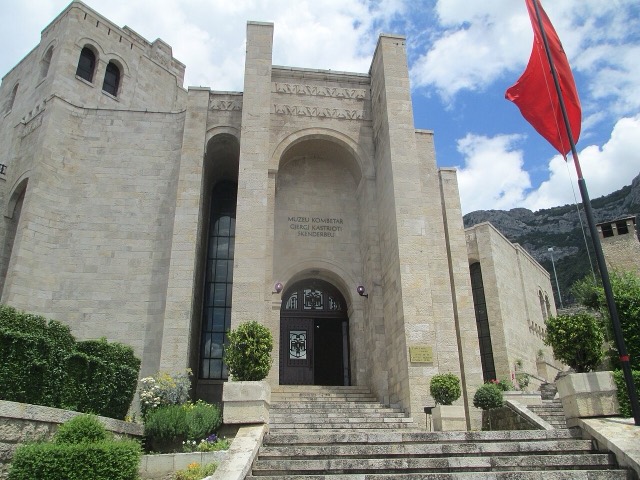
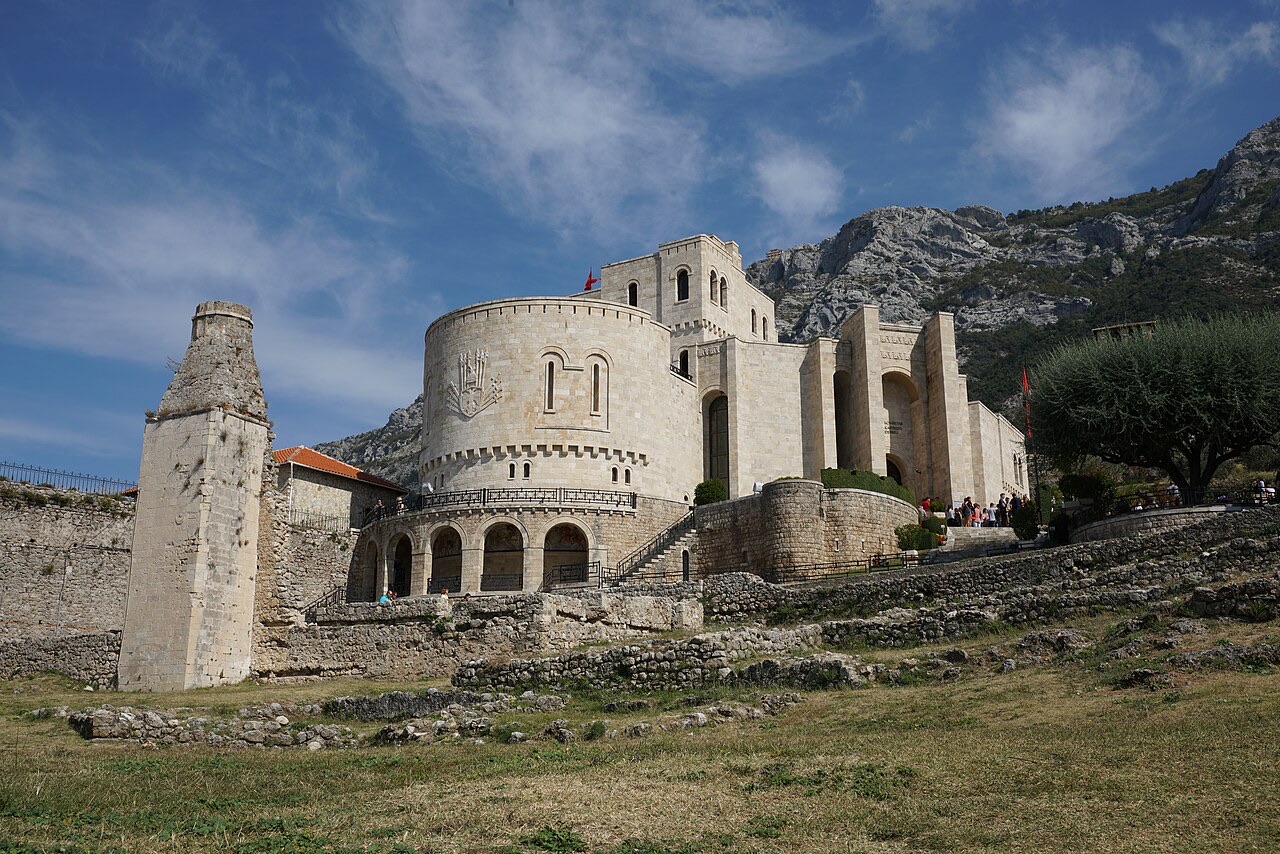
Inside the fortress walls stands the National Museum 'George Castroti Skanderbeg' (Muzeu Kombëtar 'Gjergj Kastrioti Skënderbeu' in Albanian). The museum was built in the early 1980s and was designed by architects Pranvera Masha and Pirro Vaso.
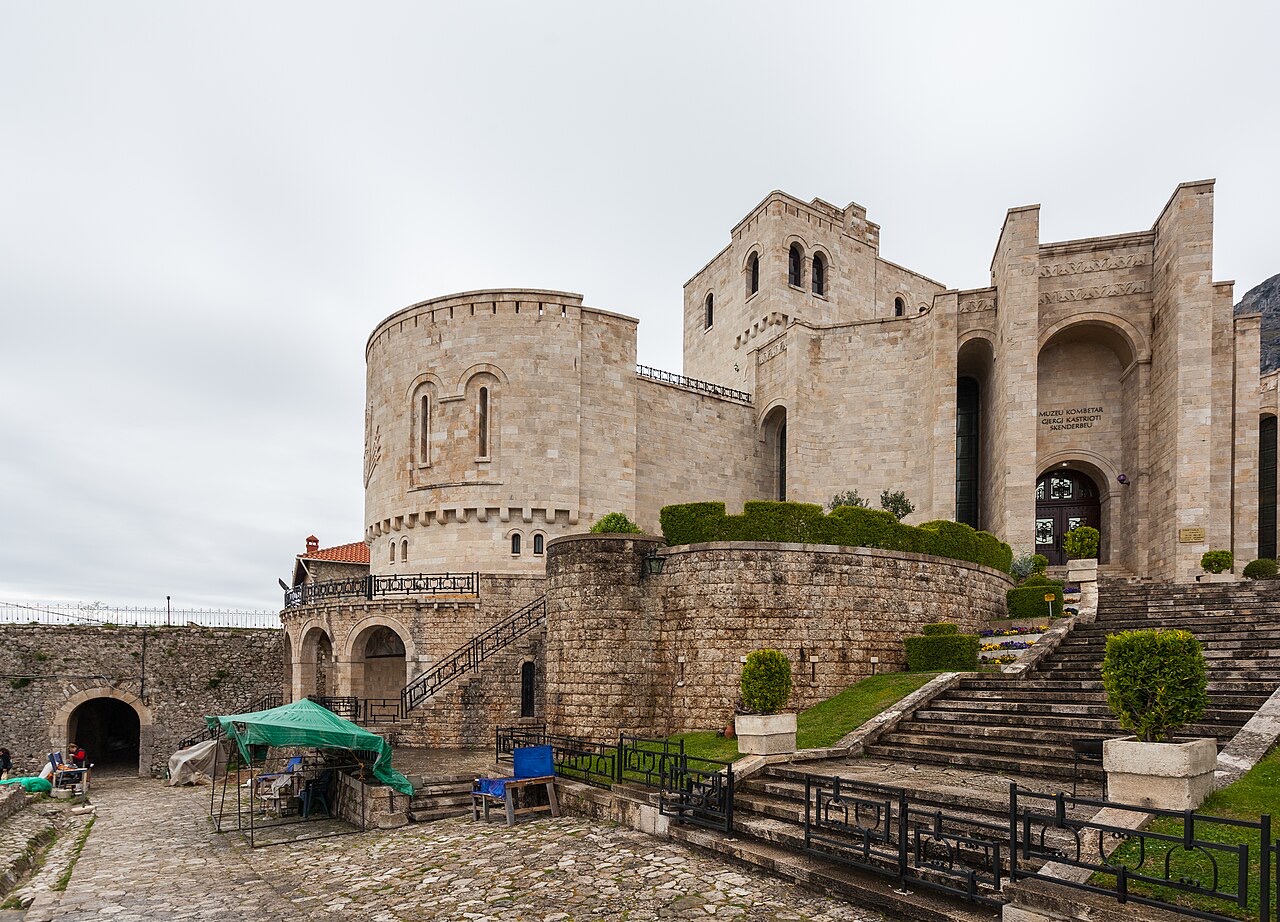
The museum's collection includes original bibliographic materials, documents, objects, and authenticated reproductions relating to the history of the Albanian people in the fifteenth century. The museum building has become a recognisable element of Krujë's skyline. It is described as one of the most visited attractions in Albania.
A second museum within the fortress complex is the Ethnographic Museum, situated on the south side of Krujë Castle. Its design is modelled on a typical 19th-century Albanian house.
The museum's displays cover domestic production methods of the period, including tools, food, drink, and furniture manufacture. The collection also includes objects made from wood and metal that illustrate household life within the fortress during that era.
The fortress contains the Teqe of Dollme, a place of worship belonging to the Bektashi order, an Islamic Sufi sect. This teqe operates within the castle precinct and represents the Bektashi presence in Krujë.
Also within the fortress are the remains of the Fatih Sultan Mehmed mosque, including its minaret. These remains date from the Ottoman period following the conquest of the castle in 1478 and stand as physical evidence of the post-conquest transformation of the site.
The fortress complex includes a hammam, a Turkish bathhouse. Its presence is consistent with the Ottoman-period infrastructure installed at significant Albanian fortresses following conquest and consolidation of control.
The hammam survives as part of the ensemble of structures within the fortress walls, alongside the mosque remains, the Bektashi teqe, and the two museums.
Krujë Castle is depicted on the reverse of two Albanian banknotes. The first is the 1000 lekë note issued between 1992 and 1996. The second is the 5000 lekë note, which has been issued since 1996.
The inclusion of the fortress on currency of two different denominations reflects its significance in Albanian national identity, directly linked to its role as the centre of Skanderbeg's resistance against the Ottoman Empire.
Krujë Castle is today described as a centre of tourism in Albania and a source of inspiration to Albanians. The fortress complex contains a range of structures from different periods: the early medieval defensive walls, Ottoman-era religious and bathing facilities, and two museums constructed in the modern era.
The site's significance derives directly from its military history between 1443 and 1478, a period during which it served as the operational base for the most sustained Albanian resistance to Ottoman expansion in the 15th century. Its physical setting at 557 metres above Krujë ensures its continued visual prominence over the surrounding landscape.
Tháng nóng nhất là August (nhiệt độ cao trung bình ngày 27°C), tháng lạnh nhất là January (nhiệt độ thấp trung bình ngày -0°C), và tháng mưa nhiều nhất là December (171 mm). Tổng lượng mưa hàng năm trung bình 1,422 mm.
| Tháng | Cao | Thấp | Mưa | Ngày mưa | Nắng/ngày |
|---|---|---|---|---|---|
| January | 8°C | -0°C | 145 mm | 12 | 7.1 h |
| February | 9°C | 0°C | 129 mm | 12 | 8.0 h |
| March | 12°C | 2°C | 133 mm | 12 | 9.5 h |
| April | 15°C | 6°C | 129 mm | 14 | 10.7 h |
| May | 20°C | 10°C | 113 mm | 12 | 12.1 h |
| June | 24°C | 14°C | 70 mm | 9 | 13.6 h |
| July | 27°C | 17°C | 44 mm | 6 | 13.7 h |
| August | 27°C | 17°C | 50 mm | 6 | 12.9 h |
| September | 23°C | 13°C | 131 mm | 10 | 10.7 h |
| October | 18°C | 9°C | 138 mm | 10 | 9.1 h |
| November | 14°C | 5°C | 170 mm | 12 | 7.3 h |
| December | 9°C | 1°C | 171 mm | 13 | 6.6 h |
Nguồn: ERA5 reanalysis via Open-Meteo, 1994–2023 · "Cao" và "Thấp" là nhiệt độ không khí tối đa và tối thiểu trung bình ngày. "Ngày mưa" tính những ngày có lượng mưa ít nhất 1 mm.
Thành phố · Durrës
Albania's principal port and its oldest continuously inhabited city, founded as Epidamnos in 627 BC.
Thị trấn · Durrës
Skanderbeg's mountain stronghold, an old bazaar street, and the national museum of the resistance.
Di tích lịch sử · Durrës
The museum of the 15th-century resistance, built inside Krujë Castle by Enver Hoxha's daughter and son-in-law.
Thành phố · Tiranë
The capital: a fast-changing city of painted blocks, Ottoman survivals and new towers, under Mount Dajti.
Nhân vật
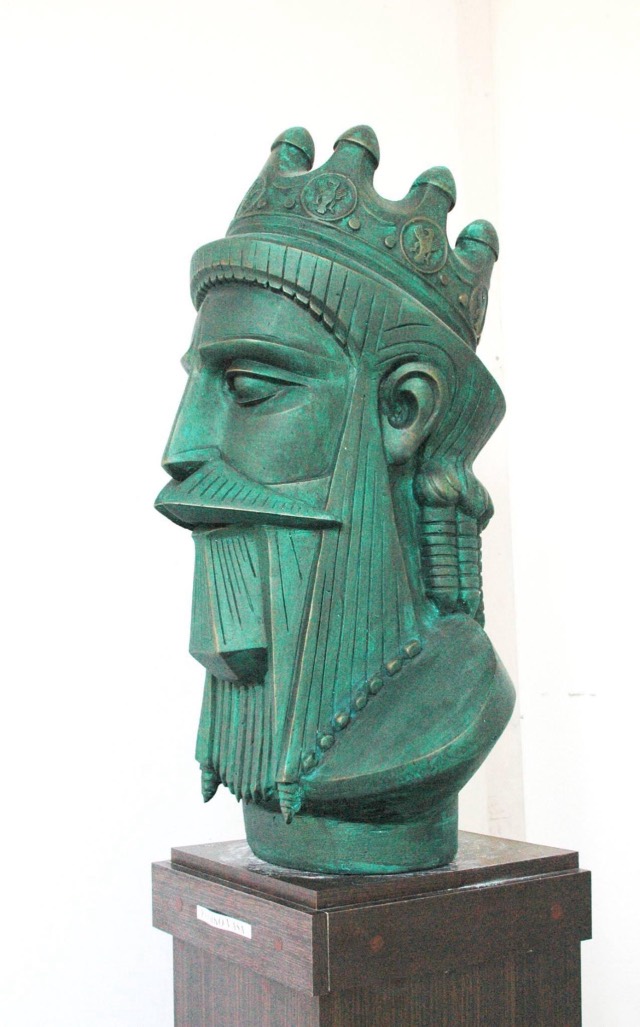
Gjergj Kastrioti: an Ottoman commander who changed sides and held Albania against the empire for twenty-five years.
Giai đoạn lịch sử
Twenty-five years in which a coalition of Albanian nobles held off the Ottoman Empire at its height.
Giai đoạn lịch sử
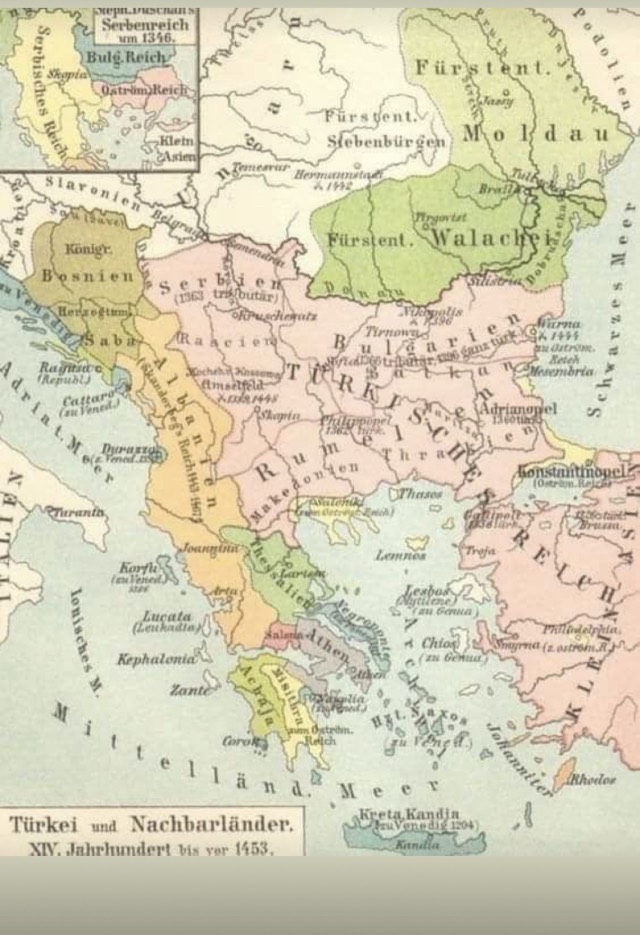
Arbanon, then the Angevin Kingdom of Albania, then the great noble houses — Thopia, Balsha, Kastrioti, Arianiti.
Có thông tin sai trên trang này? Chúng tôi hoan nghênh các đề nghị đính chính và sẽ đối chiếu với hồ sơ nguồn. Hãy cho chúng tôi biết điều gì sai và, nếu có thể, nguồn số liệu chính xác là ở đâu.