도시 · Tiranë
Tirana
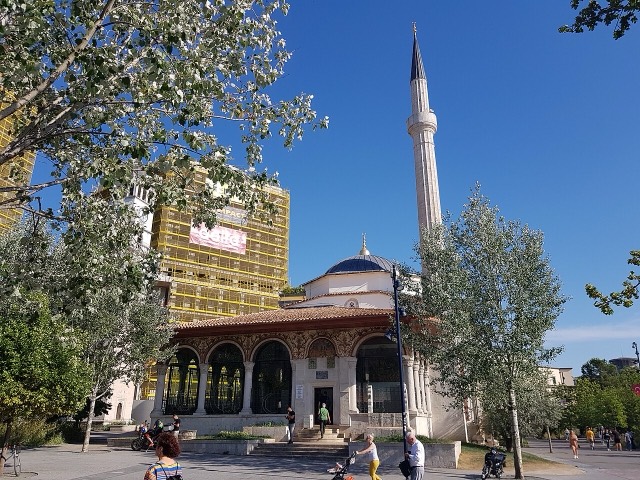
The capital: a fast-changing city of painted blocks, Ottoman survivals and new towers, under Mount Dajti.
모든 주, 모든 해안, 모든 세기
안내 보기
알바니아가 처음이신가요? 모든 페이지는 세부 내용이 시작되기 전에, 열 살짜리 아이도 이해할 수 있는 평이한 설명으로 시작됩니다.
전문가 보기
기본 내용은 이미 알고 계신가요? 간단한 설명은 숨기고 핵심 내용만 바로 확인하세요. 이것이 기본 설정입니다.
유적지 · Tiranë County
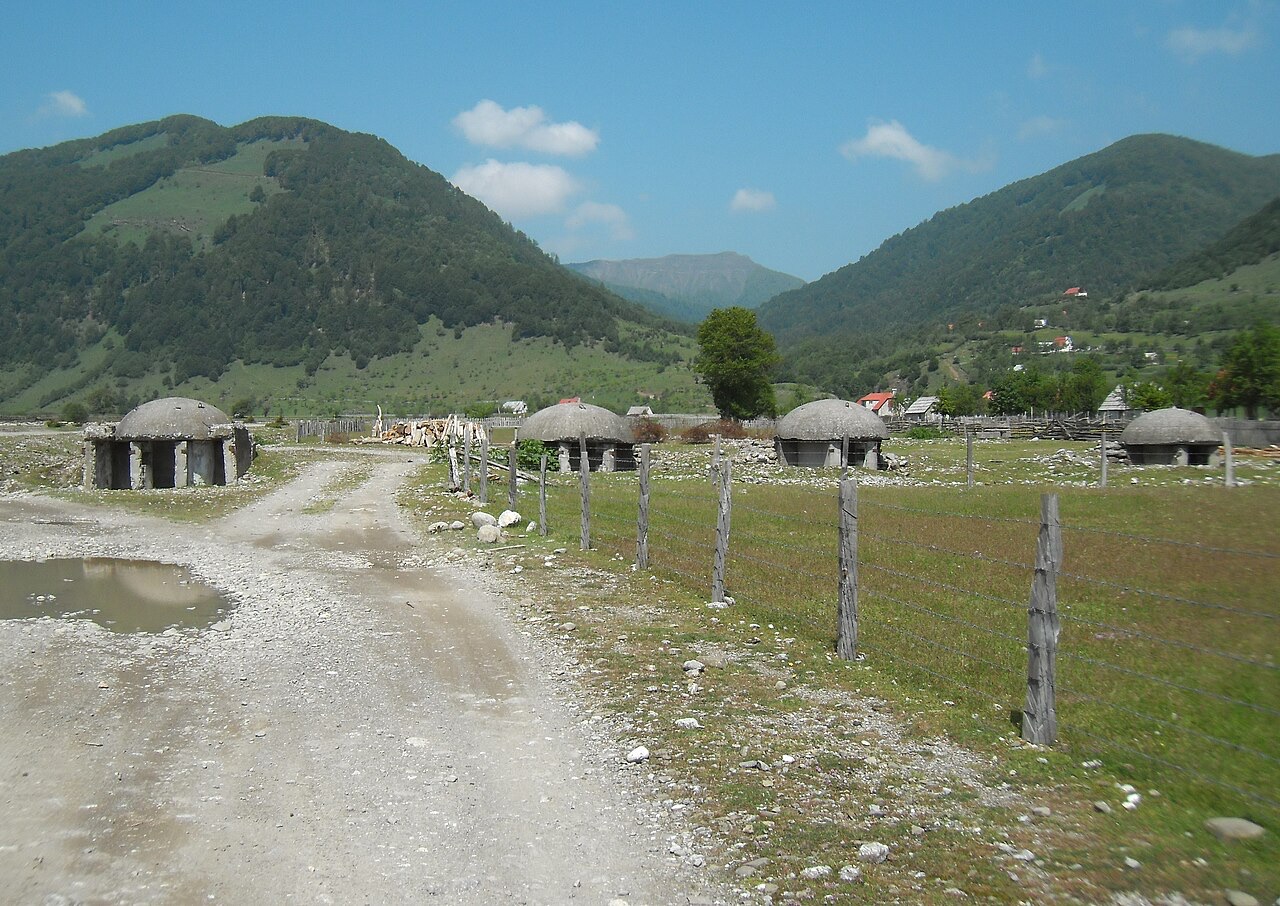
Roughly 170,000 concrete pillboxes built under Enver Hoxha — the most visible physical legacy of the communist state.
저장
Between the 1960s and 1980s Albania built about 170,000 small concrete bunkers all over the country, because its leader was afraid of invasion. They were never used in a war. Many are still there in fields, gardens and on beaches; a few are now cafés or museums.
Between the 1960s and 1980s Albania built about 170,000 small concrete bunkers all over the country, because its leader was afraid of invasion. They were never used in a war. Many are still there in fields, gardens and on beaches; a few are now cafés or museums.
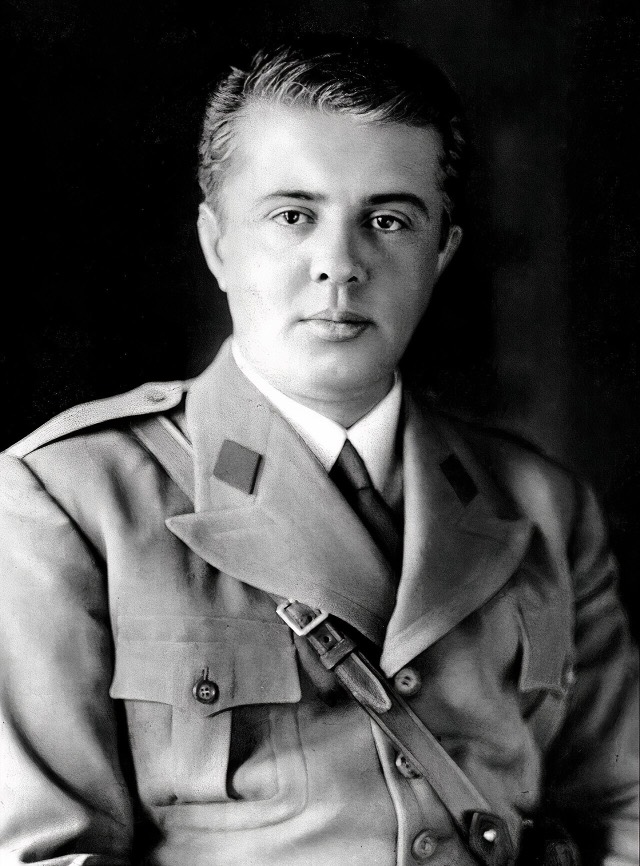
From the end of World War II until his death in April 1985, Enver Hoxha governed Albania according to hardline Stalinism combined with elements of Maoism. He broke with the Soviet Union after Nikita Khrushchev launched his reformist Khrushchev Thaw, withdrew Albania from the Warsaw Pact in 1968 in protest at the Warsaw Pact invasion of Czechoslovakia, and severed ties with China following U.S. President Richard Nixon's 1972 visit to Beijing. Each rupture pushed Albania further into a position of self-imposed diplomatic and economic isolation.
Relations with Albania's immediate neighbours were also hostile. Albania did not formally end its state of war with Greece — a leftover from World War II — until 1987, two years after Hoxha's death, owing to Greek territorial ambitions in southern Albania and Greece's membership of NATO. Hoxha accused Yugoslav leader Josip Broz Tito of planning to absorb Albania as a seventh Yugoslav republic and of pursuing 'a policy of extermination' against ethnic Albanians in Kosovo.
Some limited external contact persisted: Albania traded with neutral countries such as Austria and Sweden and maintained links across the Adriatic with Italy. A brief relaxation of domestic controls was reversed in 1973 by a fresh wave of purges targeting individuals, young people and military figures. A new constitution in 1976 entrenched the Labor Party's dominance, restricted private property and banned foreign loans. The country then entered a decade of deep economic stagnation and near-total external isolation.
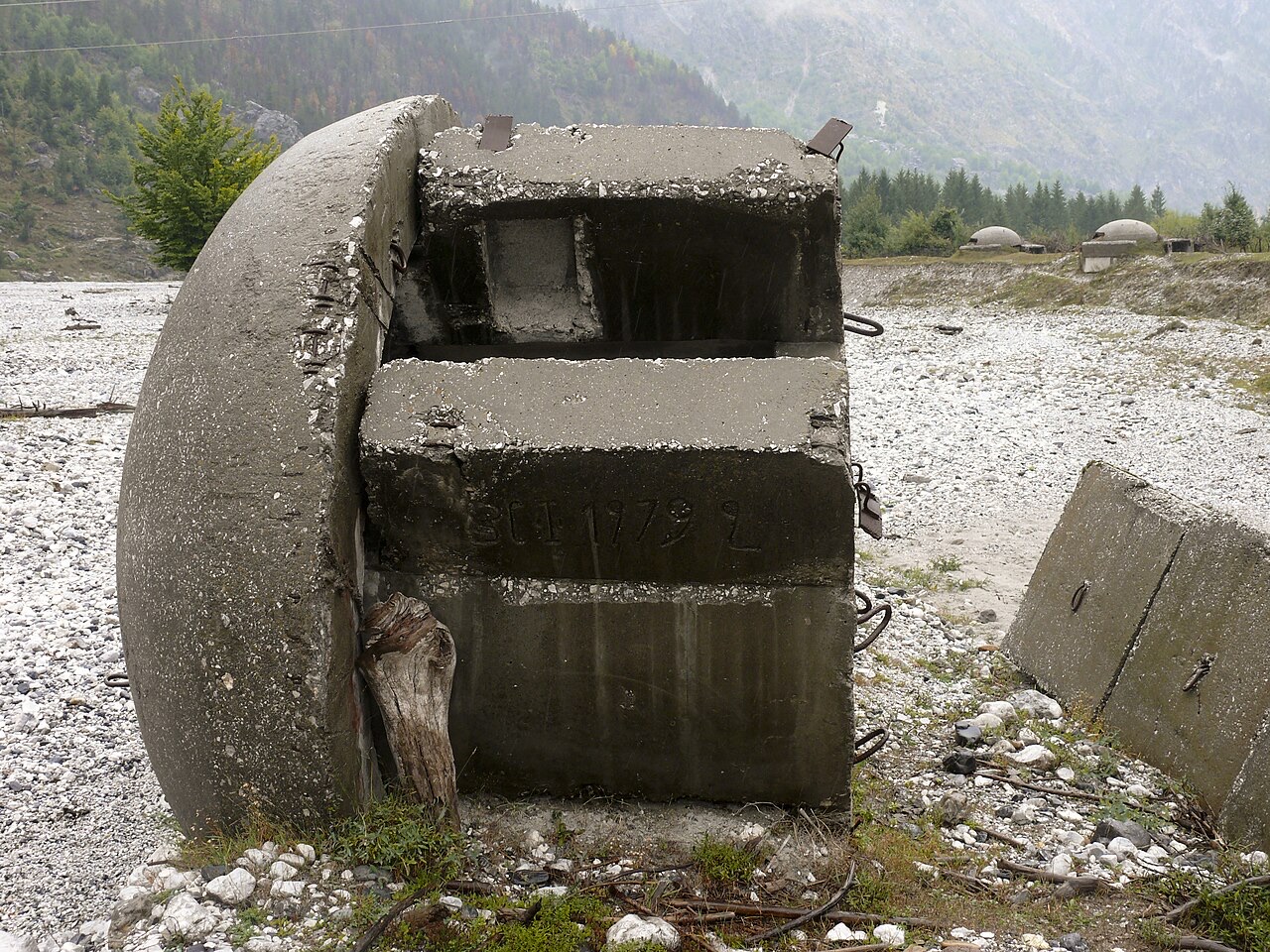
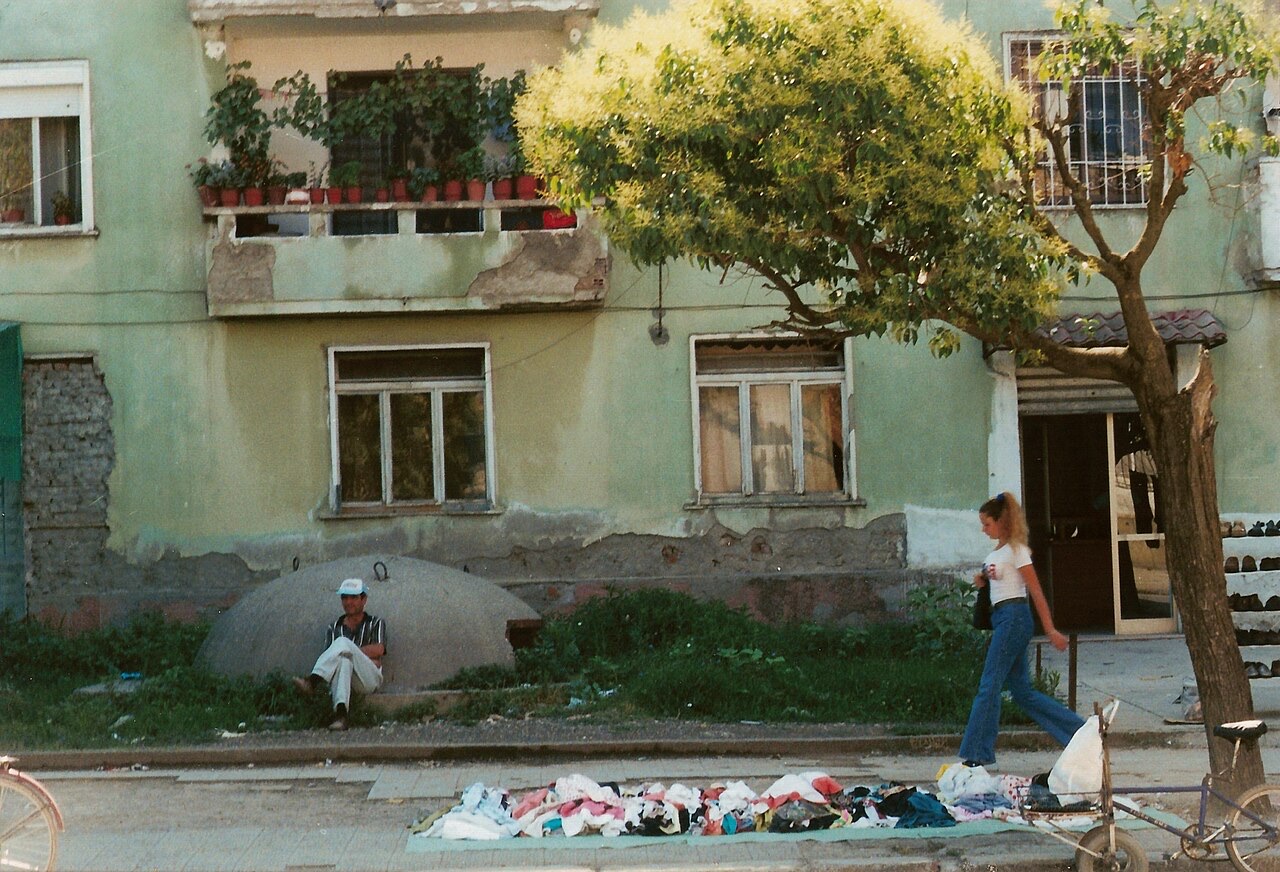
Beginning in 1967 and continuing until 1986, the Albanian government carried out a programme officially termed 'bunkerizimi' (bunkerisation), which resulted in the construction of more than 750,000 bunkers across the country. The density reached an average of 5.7 bunkers per square kilometre (14.7 per square mile). Bunkers were placed in every available location: beaches, mountain passes, vineyards, pastures, village streets and city centres, including the manicured lawns of Albania's leading hotel.
Hoxha's strategic rationale was that Albania faced the threat of a two-front war involving simultaneous incursions by up to eleven enemy airborne divisions, potentially launched by Yugoslavia, NATO or the Warsaw Pact. His military doctrine was built on the concept of 'people's war', drawing explicitly on the Albanian Partisan resistance of World War II — a resistance Hoxha himself had led. Unlike the Partisan model of mountain-based guerrilla warfare, Hoxha insisted on defending every part of Albanian territory, including the lowlands, which required fixed defensive positions distributed across the entire country.
To achieve this, the regime sought to militarise the civilian population on a large scale. Approximately 800,000 people out of a population of around three million served in some defence capacity, from the regular armed forces and reserves through to civil defence units and student armed youth groups. From the age of three, Albanians were taught vigilance against foreign and internal enemies, and civil defence drills lasting up to three days were held at least twice a month. Citizens were trained from age twelve to take up position in the nearest bunker to repel invaders, and local Party cells organised families to clean and maintain their allocated bunkers.
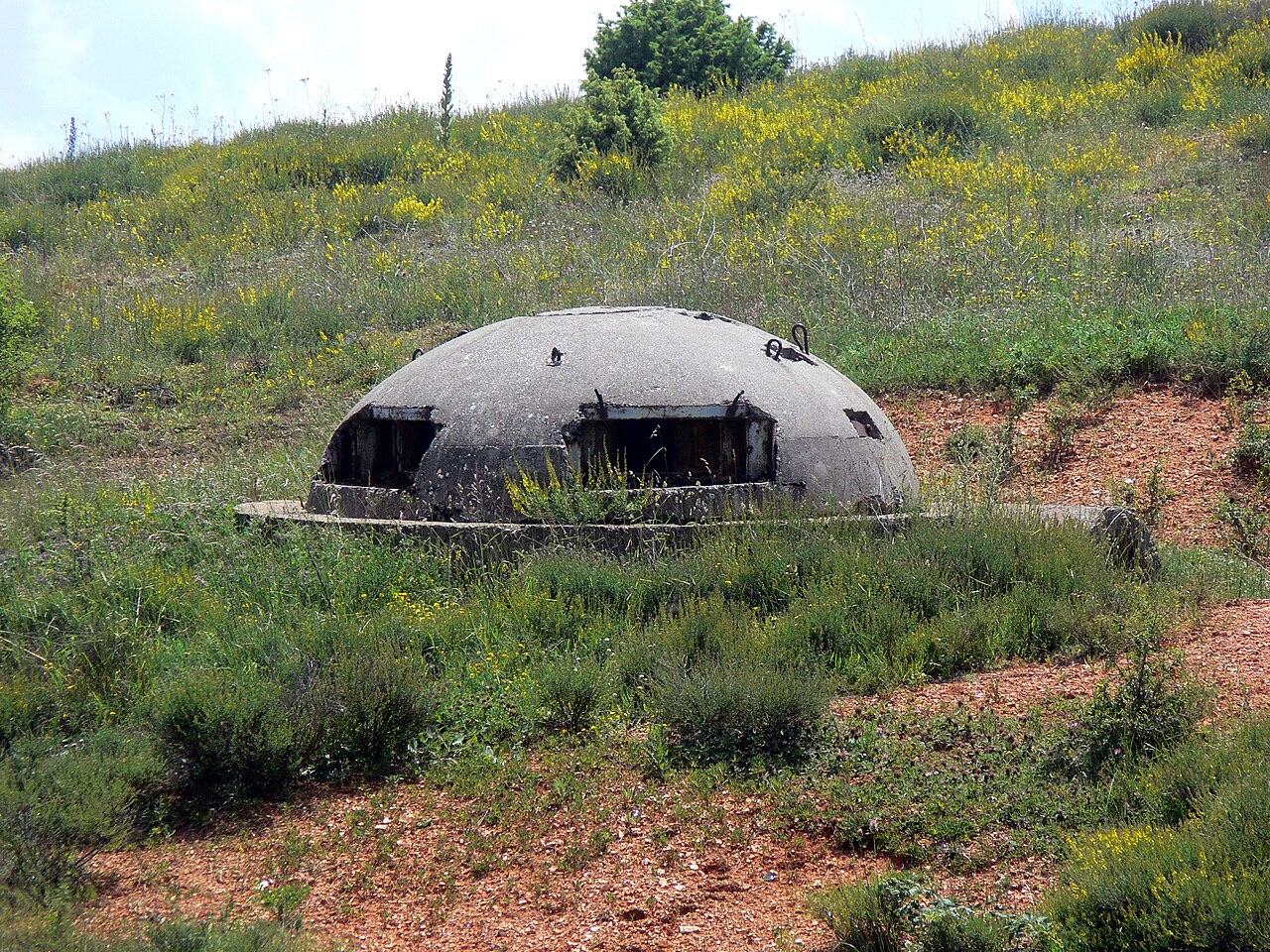
The most common structure in the bunker network is the Qender Zjarri ('firing position'), or QZ bunker — a small prefabricated concrete dome just large enough for one or two people to stand inside. It consists of three main components: a hemispherical concrete dome 3 metres (9.8 ft) in diameter with a firing slit, a hollow cylinder to support the dome, and an outer wall with a radius 60 centimetres (24 in) larger than the cylinder. The gap between the cylinder and outer wall is packed with earth. QZ bunkers were prefabricated, transported to their positions and assembled on site.
The QZ bunker was designed by military engineer Josif Zagali, who had served with the Partisans during World War II and subsequently trained in the Soviet Union. His key observation was that dome-shaped fortifications were highly resistant to artillery fire and bombs, which tended to ricochet off a curved surface rather than penetrating it. Hoxha initially welcomed the design enthusiastically and ordered many thousands to be built. Zagali was promoted to colonel and appointed chief engineer of the Albanian Ministry of Defence.
Along sections of the coastline, QZ bunkers were built in groups of three linked by prefabricated concrete tunnels. Elsewhere they were arranged around strategic points or laid out in lines across wide areas of territory. Tirana was given particularly dense coverage, with thousands of bunkers radiating outward in fifty concentric circles around the city. Smaller bunkers in the network were positioned within sight of a larger command bunker, which was permanently staffed; communication between levels relied on radio signals upward and visual signals through slits downward.
The command-and-control bunkers, designated Pike Zjarri ('firing point') or PZ bunkers, were substantially larger and heavier than the standard QZ pillbox. They measured 8 metres (26 ft) in diameter and were constructed from a series of concrete slices, each weighing eight or nine tons, which were concreted together on site to form an interlocking dome. A fully assembled PZ bunker weighed between 350 and 400 tons.
Like the smaller QZ units, PZ bunkers were prefabricated and assembled on location rather than cast in place. Their permanent staffing made them the hubs of the local defensive network, with commanders responsible for radio communication with superior command structures and for directing the occupants of surrounding smaller bunkers through visual signals.
Beyond the standardised QZ and PZ bunkers, a third category of large 'special structures' was built for strategic purposes. The most significant were bunker complexes tunnelled directly into mountains. At Linza, near Tirana, a tunnel network approximately 2 kilometres (1.2 mi) in length was built to shelter personnel from the Interior Ministry and the Sigurimi (the secret police) from nuclear attack.
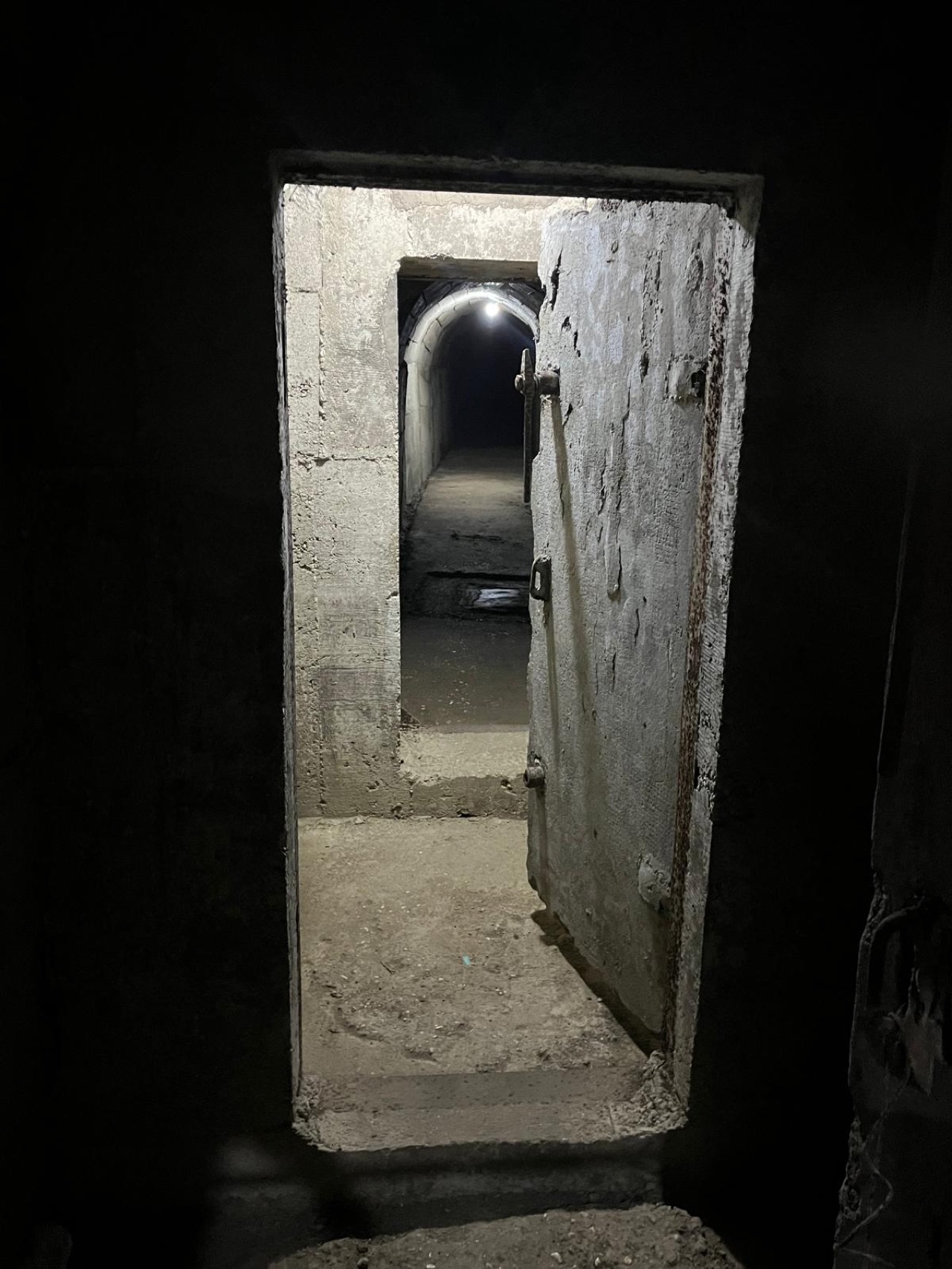
Elsewhere, thousands of kilometres of tunnels were constructed to protect political, military and industrial assets. Albania has been described as the most tunnelled country in the world after North Korea, though this claim is not independently verified in the article. Construction of these facilities was conducted under strict secrecy: engineering teams were rotated from site to site on a monthly basis to prevent any single team from acquiring full knowledge of the overall network.
The largest single bunker in the network was a five-storey nuclear shelter built near Tirana for Hoxha's personal use. After decades of disuse, it was opened in November 2014 as a tourist attraction and art exhibition space, containing a museum with exhibits from World War II and the Hoxhaist period.
The bunkerisation programme imposed a severe burden on Albania's already weak economy. The construction of prefabricated bunkers alone cost an estimated two percent of net material product. In total, the bunkers cost more than twice as much as France's Maginot Line and consumed three times as much concrete. The programme diverted resources that could otherwise have addressed the country's chronic shortage of housing and its poor road network.
According to Josif Zagali, the cost of building twenty QZ bunkers equalled the cost of constructing one kilometre of road. On average, each bunker was said to have cost the equivalent of a two-room apartment. The human toll was also significant: an estimated 70 to 100 people died each year during construction. The bunkers also occupied and obstructed a measurable area of arable land, compounding the economic damage.
Hoxha's purges of 1974 reached into the upper levels of the very defence establishment his bunkerisation programme had created. Josif Zagali, the engineer who designed the QZ bunker, was arrested on false charges of 'sabotage' as a 'foreign agent' and imprisoned for eight years. His wife suffered a mental breakdown, his family was ostracised by friends and acquaintances, and his daughter died of breast cancer. Zagali later described the outcome as 'a painful and tragic fate not only for me and my family but for thousands and thousands of such families in Albania who have experienced the dictatorship of Enver Hoxha.' His experiences formed the basis of the Albanian film Kolonel Bunker, directed by Kujtim Çashku.
General Beqir Balluku, the Defence Minister and Politburo member, was a more senior victim. In a 1974 speech, Balluku publicly criticised the bunker system and disputed Hoxha's assessment that Albania faced equal threats from the United States and the Soviet Union. He argued that what Albania required was a modern, well-equipped professional army rather than a poorly trained civilian militia. Hoxha responded by having Balluku arrested on charges of acting as a Chinese agent and plotting a military coup. Designated 'the arch-traitor Ballaku', he and his associates were tried and executed under 'the laws of the dictatorship of the proletariat'.
The 1976 constitution that followed sealed Hoxha's control of the military by formally appointing him Commander-in-Chief of the Albanian People's Army and Chairman of the Defence Council. The lesson drawn by the military establishment from the fate of both Zagali and Balluku was clear: public criticism of the bunker programme or of Hoxha's strategic judgements carried lethal consequences.
No foreign invasion materialised during the decades of the programme's operation, and the bunkers were never used in combat under Hoxha's rule. After the communist government dissolved in 1992, the bunkers were abandoned. The extreme secrecy of the Hoxha regime meant that subsequent governments lacked reliable information on how many bunkers had been built or how they had been used.
The bunkers did see limited use in the conflicts of the late 1990s. During the Albanian insurrection of 1997, townspeople in Sarandë in southern Albania took up positions in local bunkers as fighting broke out between government troops and armed rebels. When Serbian artillery based in Kosovo began shelling Albanian border villages during the Kosovo War of 1999, local residents used the bunkers for shelter. Kosovo Albanian refugees sheltered in bunkers temporarily before being moved to aid-agency tent camps. NATO troops stationed in Albania relocated dozens of bunkers to fortify their base at Kukës, and the Kosovo Liberation Army used them as defensive positions — though on at least one occasion, bunkers along the Albanian–Kosovo border were mistakenly bombed by NATO aircraft.
The programme's legacy also produced unexpected dangers. In 2004, Albanian officials discovered a forgotten stockpile of 16 tons of mustard gas and other chemical weapons in an unguarded bunker 40 kilometres (25 mi) from Tirana; the United States government provided Albania with $20 million to destroy the weapons. In 2008 alone, at least five holiday-makers drowned after being caught in whirlpools created by water currents around bunkers that had subsided into the sea. The Albanian army subsequently conducted removal operations along the coastline, extracting the structures using modified Type 59 tanks.
The physical durability of the bunkers has made wholesale removal difficult and expensive, so most — particularly in rural areas — have simply been left in place. Some have been demolished, particularly in urban centres, but in the countryside dereliction is the norm. A variety of informal uses have emerged: bunkers have served as animal shelters, storehouses, and temporary housing for the homeless.
An acute housing shortage following the fall of communism in 1992 led some Albanians to move into abandoned bunkers as residential accommodation. The absence of running water and sanitation meant that inhabited bunkers quickly generated unhealthy conditions in their immediate surroundings. More deliberate conversions have included a beachside bunker in Durrës transformed into the Restaurant Bunkeri, and a bunker in Gjirokastër turned into a café.
Proposals for large-scale adaptive reuse have ranged from pizza ovens, solar heaters and beehives to mushroom farms, projection rooms for drive-in cinemas, beach huts, flower planters, youth hostels and kiosks. The bunkers have also been noted, by a USAID official, as sites for sexual encounters, embedded in what she described as 'the Albanian psyche'. Pencil holders and ashtrays cast in the shape of bunkers have become among the country's most widely sold tourist souvenirs.
The bunkers were promoted by the Party as both a practical defence against foreign subjugation and a symbol of Albanian resilience. Critics and commentators have interpreted them differently. Albanian author Ismail Kadare used the bunkers in his 1996 novel The Pyramid as a symbol of the Hoxha regime's brutality and control. Director Kujtim Çashku, whose film Kolonel Bunker drew on Zagali's experience, characterised the bunkers as 'a symbol of totalitarianism' reflecting an 'isolation psychology'. Scholars have argued that the bunkerisation programme constituted a form of 'patterned large-scale construction' with 'a disciplinary potential as a means of familiarising a population with a given order of rule'.
Military analysts have been sceptical of the bunkers' actual defensive value. Critics noted that a single occupant per bunker could not sustain a prolonged defence, that resupply of individual bunkers was practically impossible, and that communication between bunkers was unreliable. The execution of General Balluku for raising precisely these objections demonstrated that the programme served political and ideological functions that its military rationale could not fully account for.
Since the end of the communist period the bunkers have been absorbed into Albanian national identity in an ambivalent way. They remain a prominent feature of the landscape — a BBC reporter in 1998 described them as ubiquitous on the road between Tirana and its airport, 'looking down from every hillside, sprouting out of every bank' — and have been repurposed as a source of ironic national iconography, from souvenir ashtrays to tourist attractions.
도시 · Tiranë
The capital: a fast-changing city of painted blocks, Ottoman survivals and new towers, under Mount Dajti.
유적지 · Tiranë
A five-storey anti-nuclear bunker built for the communist leadership, opened to the public in 2014.
역사적 시기
Forty-six years under Enver Hoxha and his successor: total collectivisation, the banning of religion, successive breaks with…
인물
The leader who took Albania out of the Soviet bloc, then out of the Chinese one, and banned religion outright.
제목
The Directorate of State Security: the secret police of communist Albania, and the institution the House of Leaves museum was…
해설
About 170,000 concrete domes, built by a state that had fallen out with every possible ally.
이 페이지에 오류가 있습니까? 수정 제안을 환영하며, 출처 기록과 대조하여 검토합니다. 잘못된 내용과 가능하다면 올바른 수치의 출처를 알려 주십시오.