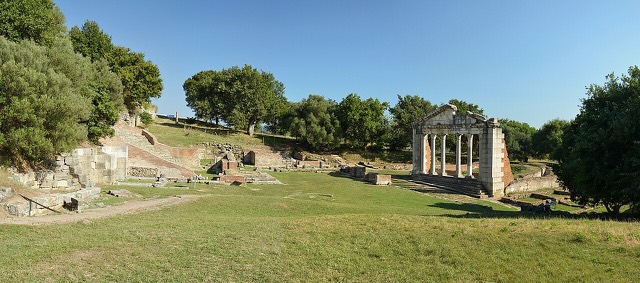
Tarihi alan · Fier
Apollonia
A Corinthian colony that became a Roman university town — Octavian was studying here when Caesar was killed.
Her il, her kıyı, her yüzyıl
Rehberli görünüm
Arnavutluk'a yeni misiniz? Her sayfa, ayrıntılara geçmeden önce on yaşında bir çocuğa okuyabileceğiniz sade bir açıklamayla başlar.
Uzman görünümü
Temel bilgileri zaten biliyorsunuz. Sade açıklamalar gizli, doğrudan özüne geçin. Bu varsayılan ayardır.
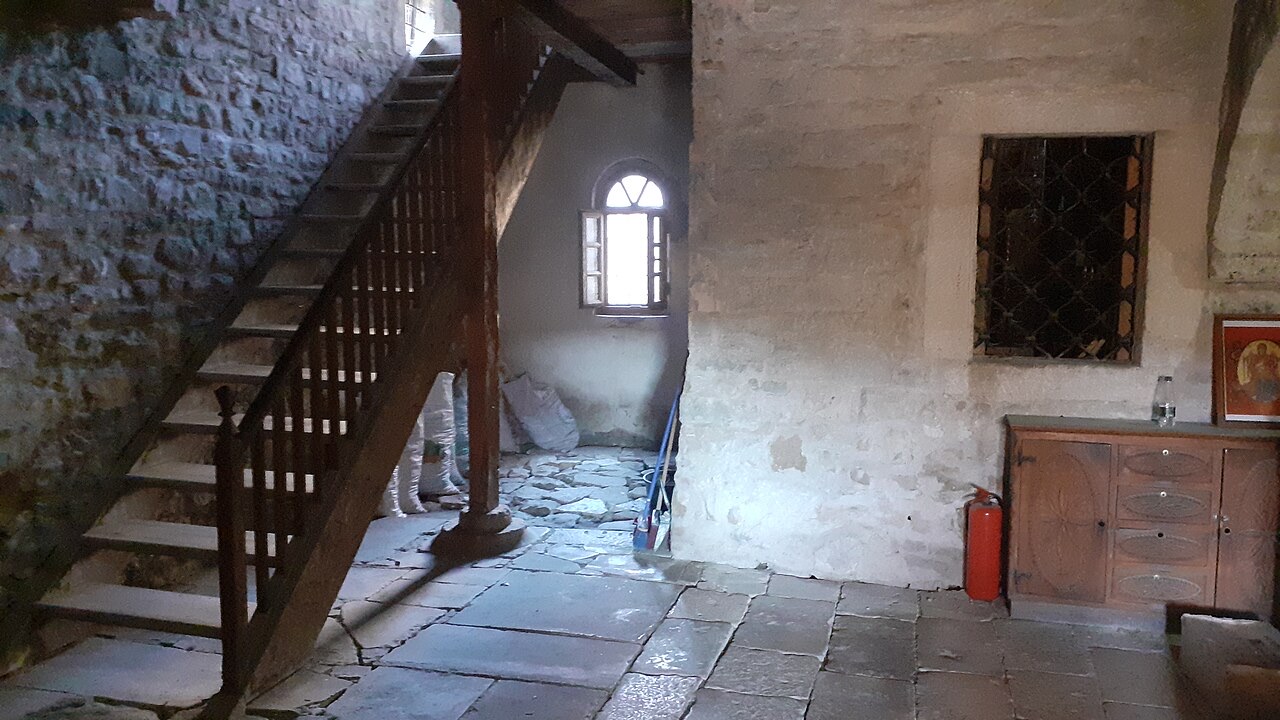
Tarihi alan · Fier County
A hilltop monastery on the Myzeqe plain where, by tradition, Skanderbeg was married in 1451.
Kaydet
Ardenica is a monastery on a low hill above the plain, built in 1282. People say Skanderbeg was married in its church. Inside are old wall paintings and a carved wooden screen.
Ardenica is a monastery on a low hill above the plain, built in 1282. People say Skanderbeg was married in its church. Inside are old wall paintings and a carved wooden screen.
Ardenica Monastery stands 18 kilometres south of Lushnjë, Albania, on the national road linking Lushnjë to Fier. Its full liturgical name is the Monastery of the Nativity of the Theotokos in Ardenica (Albanian: Manastiri Lindja e Hyjlindëses Mari). It belongs to the Albanian Orthodox Church and occupies a site in the hills of southern Myzeqe.
The site's history predates the monastery itself. A pagan temple dedicated to Artemis is believed to have occupied the ground before a Christian chapel existed there, and scholars consider the name Ardenica likely derived from Artemis. The chapel of the Holy Trinity was already standing on the site when the main monastery was founded, having been erected centuries earlier. The monastery lies approximately one kilometre from the Via Egnatia, the major Roman road built in the second century BC.
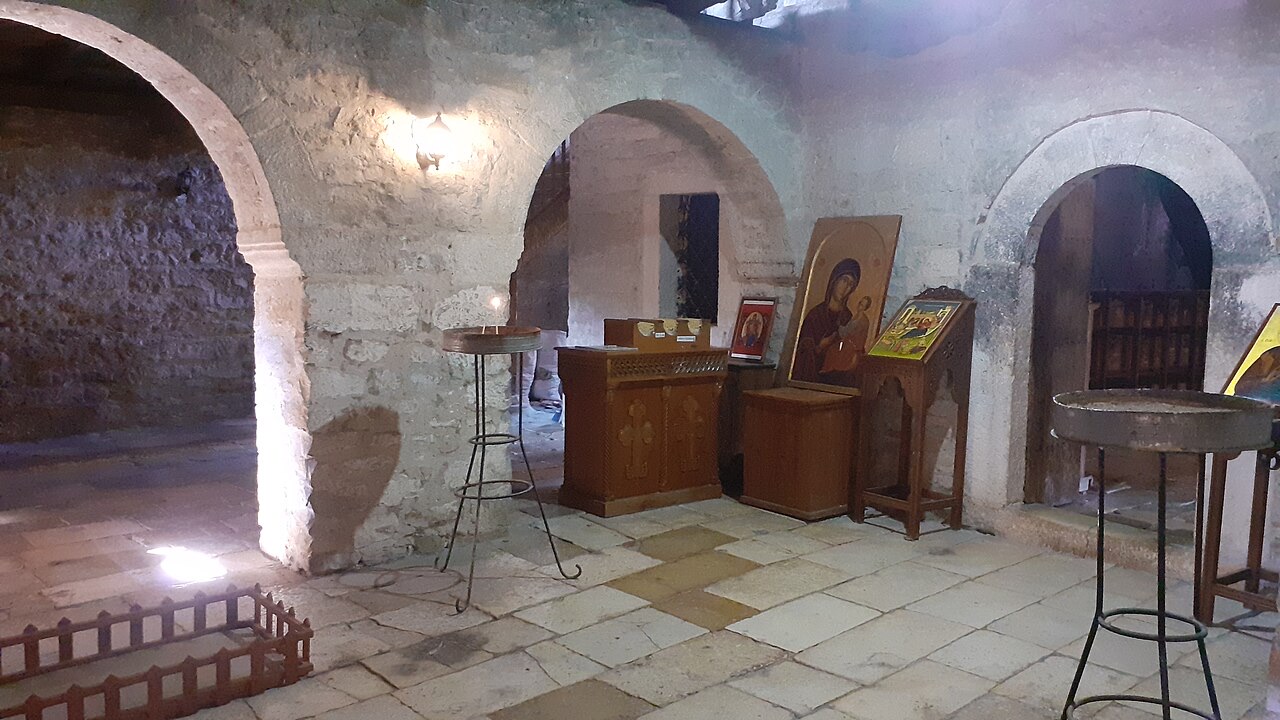
Scholars attribute the construction of the monastery to Byzantine Emperor Andronikos II Palaiologos, who began building it in 1282 following a Byzantine victory over the Angevins at the siege of Berat. The foundation was therefore a monument to a specific military and political event: the repulsion of the Angevin advance into Byzantine-held Albanian territory.
The monastery's architecture reflects its Byzantine origins while incorporating a number of Romanesque features. The complex covers a surface area of 2,500 square metres and consists of the Church of Saint Mary, the chapel of the Holy Trinity, a mill, and a barn.
On 21 April 1451, Ardenica Monastery was the setting for the marriage of George Kastrioti (Skanderbeg) and Andronika Arianiti. The ceremony was officiated by Felix, Archbishop of Kanina. The wedding was attended by Albanian princes who were members of the League of Lezhë, as well as ambassadors from the Kingdom of Naples, the Republic of Venice, and the Republic of Ragusa.
This event became the monastery's most celebrated historical association. When the communist authorities threatened the site with demolition during the 1967 atheist campaign, a local priest's invocation of the Skanderbeg marriage was reportedly instrumental in saving the buildings. The first recorded mention of the wedding having taken place at Ardenica appears in a 1940 text by A. Lorenzoni.
In 1731, Nektarios Terpos, a hieromonk from Moscopole and one of the most significant clerics associated with the monastery, wrote a short prayer in the form of a fresco inscription. The prayer appears in four languages: Latin, Greek, Aromanian, and Albanian. With the exception of the Latin portion, all languages were written using the Greek alphabet.
The Albanian text reads: Vigjin dhe mame e Perendis uro pren fajt orete. This inscription is regarded as the first text in Albanian written inside a Byzantine-era church. The Aromanian text, rendered in modern spelling as Viryiră, muma-al Dumnedză, oră tră noi pecătoshlji (meaning 'Virgin Mother of God, pray for us sinners'), is also classified as the oldest known written text in the Aromanian language and has been identified as belonging to a northern Aromanian dialect. The inscription ends with the signature: Hieromonk – Nektarios Terpos the monk.
In 1743, Archbishop Methodius of Berat, who was originally from Bubullimë, initiated a renovation of the monastery. The paintings produced during this period are the work of the Zografi brothers, Kostandin Zografi and Athanas Zografi, painters from Korçë who worked on the Church of Saint Mary in 1744.
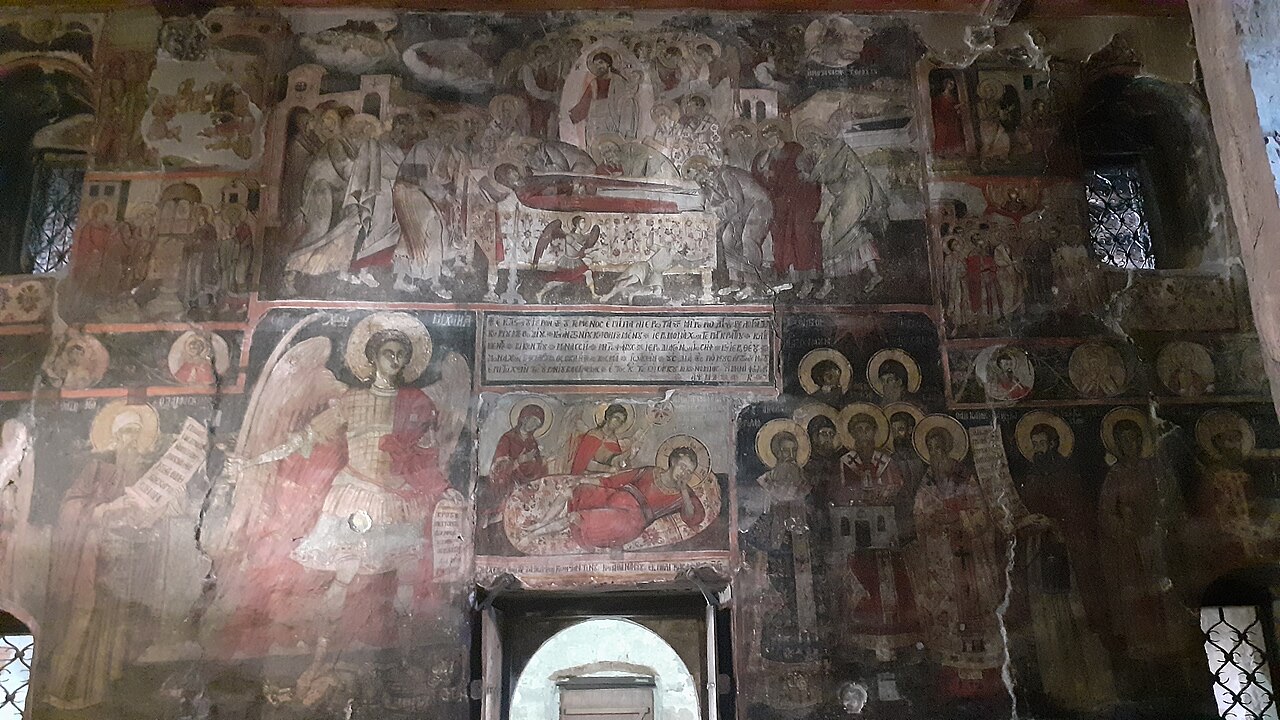
The fresco programme covers the Old Testament, the New Testament, Dogmatica, the Liturgy, and the Lives of Saints. Among the individual frescoes is one depicting Saint John Kukuzelis, identified in the article as having been born in Durrës. The narthex contains a Last Judgement fresco. The iconostasis, also completed in 1744 with the involvement of craftsmen from Moscopole, is wooden and gilded. Its icons were painted by the 18th-century artist Kostandin Shpataraku and include depictions of the Birth of Saint Mary, Christ on the Throne, Saint Mary and Christ, John the Baptist, the Meeting of the Archangels, and the Crucifixion.
Among the icons in the monastery, one depicting Saint Jovan Vladimir of Prespa also contains a representation of Karl Thopia, described in the article as an Albanian prince shown holding a sceptre and wearing a crown. The painter identifies him in the inscription as King of Albania.
This iconographic detail makes the image a notable historical document, preserving a visual and textual claim about Thopia's royal title within a religious context. The icon forms part of the broader 18th-century iconographic programme attributed to Kostandin Shpataraku.
The monastery's inscriptions and watermarks are predominantly in Greek. The oldest surviving watermark dates from 1477 and is located at the main entrance of the monastery. A second watermark, dated 1743–44, corresponds to the period of the Zografi brothers' painting campaign.
Two stone plates from the 17th century are also preserved in the monastery. One, dated 1754, is situated on the western side of the church; the other, dated 1770, is found in the arches of the stove. Dates also appear on the monastery's bells. The 1731 prayer by Nektarios Terpos constitutes the sole surviving inscription in Albanian among the watermarks.
From 1780 the monastery housed a school intended to prepare clerics in Greek Orthodoxy. In 1817 this institution was elevated to the status of a high school and gained a student residence. Notable graduates included Josif, later Bishop of Berat. During the period of the Albanian National Awakening, the school also became one of the venues where the Albanian language was taught.
The monastery possessed a library of 32,000 volumes, described as exceptional in scope. The entire collection was destroyed by a fire in 1932, representing a significant loss to Albanian and Orthodox ecclesiastical heritage.
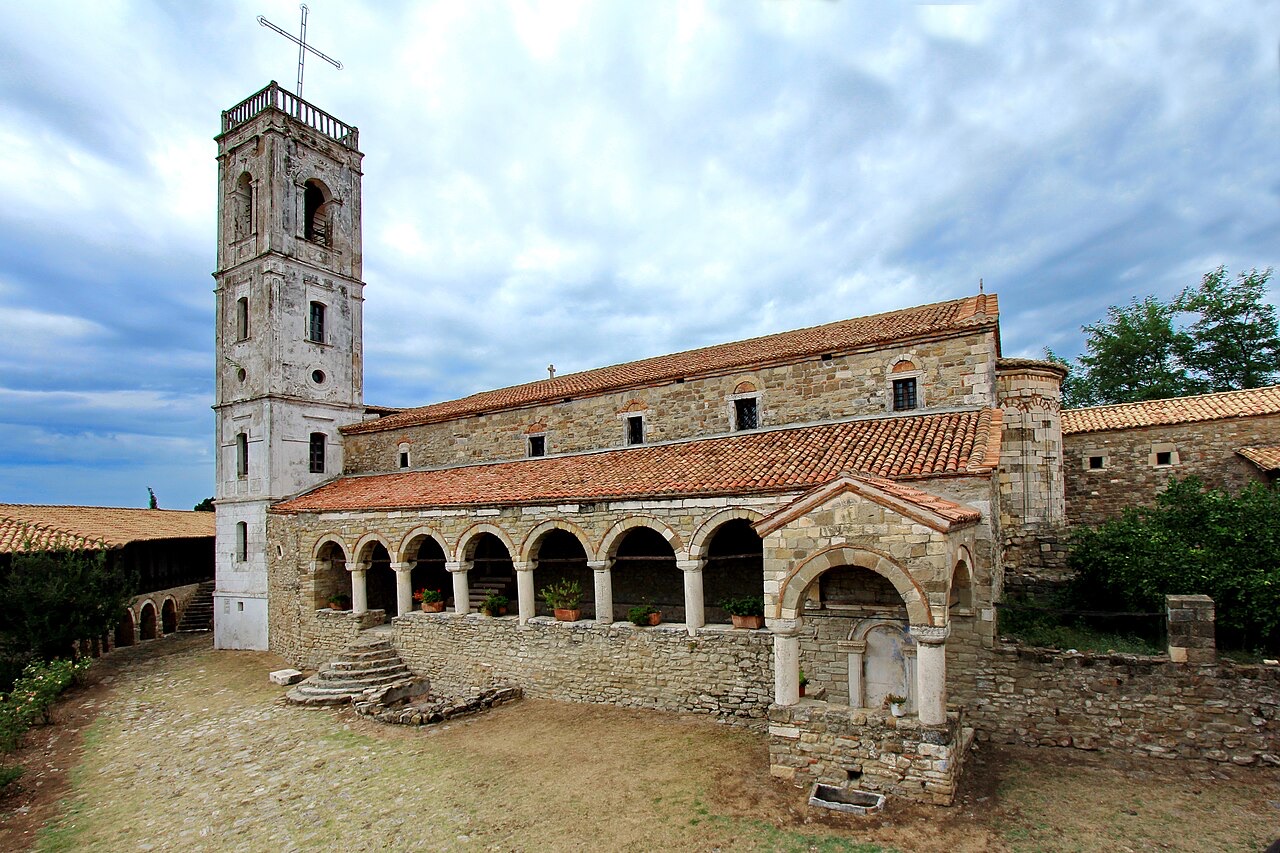
By the late 1960s, the former Primate of the Albanian Orthodox Church, Archbishop Irene Banushi, spent the final days of his life at the monastery. In 1967, during the Albanian state's campaign to establish the country as an atheist state, the monastery was threatened with demolition. A local priest's argument that Skanderbeg had been married there is credited with sparing it.
The monastery was formally closed to the public and to religious use in 1969 when the communist regime declared Albania an atheist state. The buildings and grounds fell into a prolonged state of decay. A partial reconstruction was carried out in 1988, undertaken for tourism purposes rather than religious ones. Following the fall of the communist regime, the Orthodox Autocephalous Church of Albania recovered possession of the monastery in 1992.
The monastery occupies an elevated position in the hills of southern Myzeqe. From this position, the article records that Krujë, Mount Dajti, Mount Tomorr, the Adriatic Sea, the Karavasta lagoon, and the Labëria mountains are all visible.
The site lies approximately one kilometre from the Via Egnatia, the ancient Roman road that once connected the Adriatic coast to Constantinople, a proximity that situates Ardenica within one of the historically significant communication corridors of the Balkans.
En sıcak ay August (günlük azami sıcaklık ortalaması 30°C), en soğuk ay ise January (günlük asgari sıcaklık ortalaması 2°C), ve en yağışlı ay November (117 mm). Yıllık toplam yağış ortalaması 907 mm.
| Ay | Azami | Asgari | Yağış | Yağışlı gün | Güneş/gün |
|---|---|---|---|---|---|
| January | 11°C | 2°C | 91 mm | 11 | 7.4 h |
| February | 12°C | 3°C | 82 mm | 10 | 8.3 h |
| March | 14°C | 4°C | 89 mm | 10 | 9.8 h |
| April | 18°C | 8°C | 73 mm | 11 | 11.0 h |
| May | 23°C | 12°C | 59 mm | 8 | 12.2 h |
| June | 27°C | 16°C | 41 mm | 6 | 13.6 h |
| July | 30°C | 19°C | 24 mm | 4 | 13.8 h |
| August | 30°C | 19°C | 30 mm | 5 | 12.9 h |
| September | 25°C | 16°C | 87 mm | 8 | 10.8 h |
| October | 21°C | 12°C | 102 mm | 9 | 9.3 h |
| November | 16°C | 8°C | 117 mm | 11 | 7.5 h |
| December | 12°C | 4°C | 111 mm | 12 | 6.8 h |
Kaynak: ERA5 reanalysis via Open-Meteo, 1994–2023 · "Azami" ve "Asgari", günlük ortalama maksimum ve minimum hava sıcaklıklarıdır. "Yağışlı gün", en az 1 mm yağış düşen günlerin sayısını ifade eder.
Tarihi alan · Fier
A Corinthian colony that became a Roman university town — Octavian was studying here when Caesar was killed.
İlçe · Fier
An agricultural centre on the Myzeqe plain, and the site of the 1920 congress that saved Albanian statehood.
Kişi
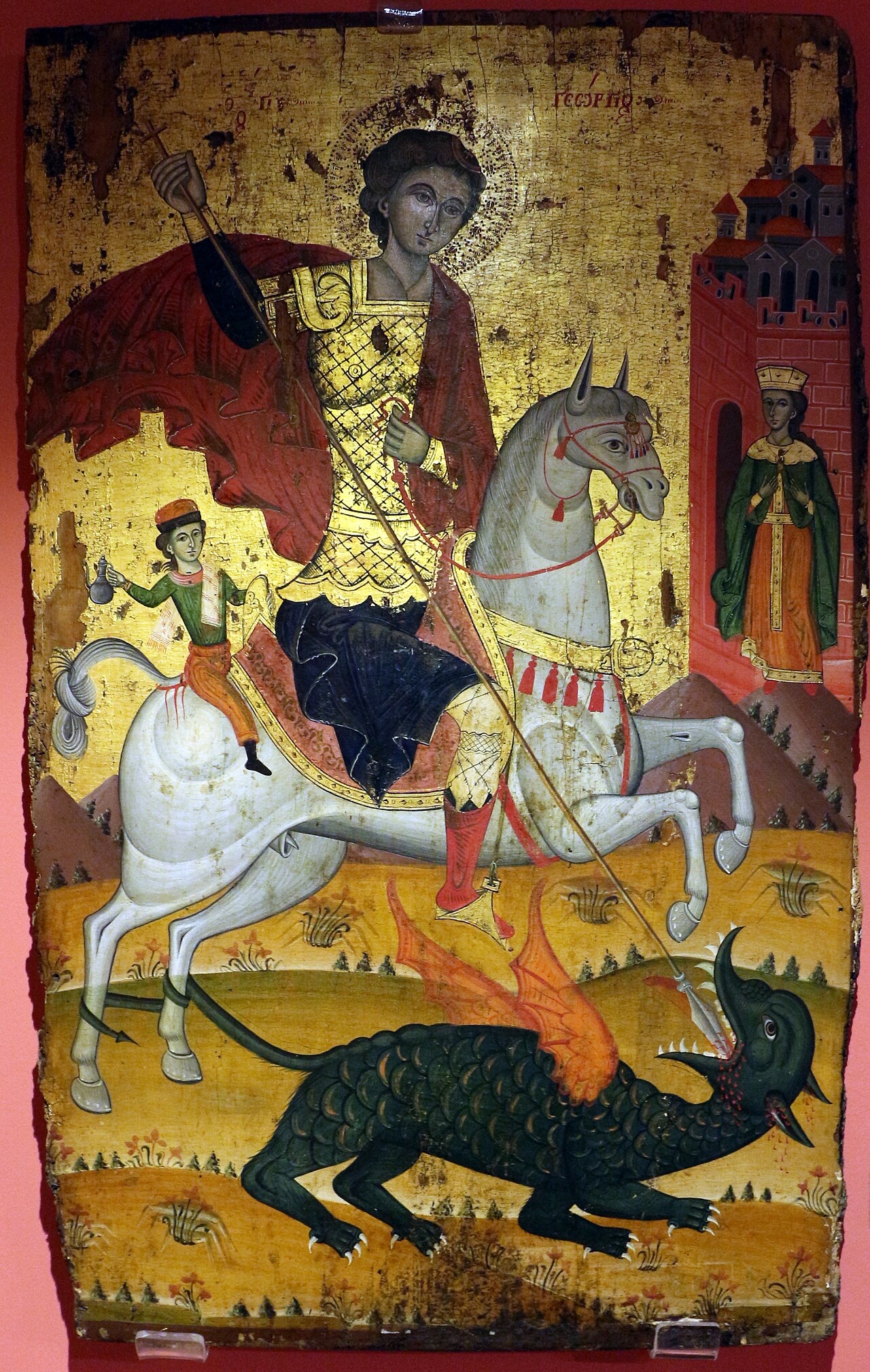
Gjergj Kastrioti: an Ottoman commander who changed sides and held Albania against the empire for twenty-five years.
Konu
An autocephalous church since 1937, rebuilt almost from nothing after 1991.
Bu sayfada bir hata mı var? Düzeltmeler memnuniyetle karşılanır ve kaynak kayıtla karşılaştırılarak kontrol edilir. Neyin yanlış olduğunu ve mümkünse doğru rakamın kaynağını bize bildirin.