Historische site · Fier
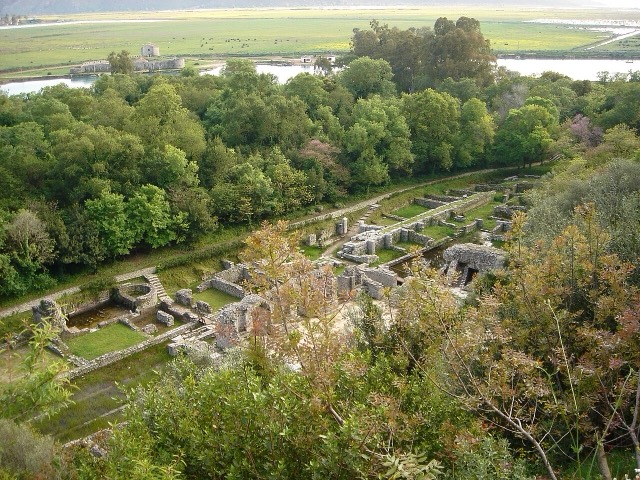
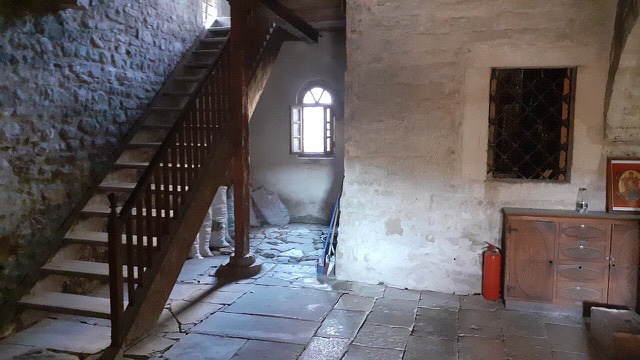
Ardenica Monastery
A hilltop monastery on the Myzeqe plain where, by tradition, Skanderbeg was married in 1451.
Elke provincie, elke kust, elke eeuw
Begeleidende weergave
Nieuw in Albanië? Elke pagina begint met een uitleg in eenvoudige taal die u aan een tienjarige zou kunnen voorlezen, voordat de details beginnen.
Expertweergave
U kent de basis al. Meteen naar de kern, met de eenvoudige uitleg verborgen. Dit is de standaardinstelling.
Historische site · Fier County
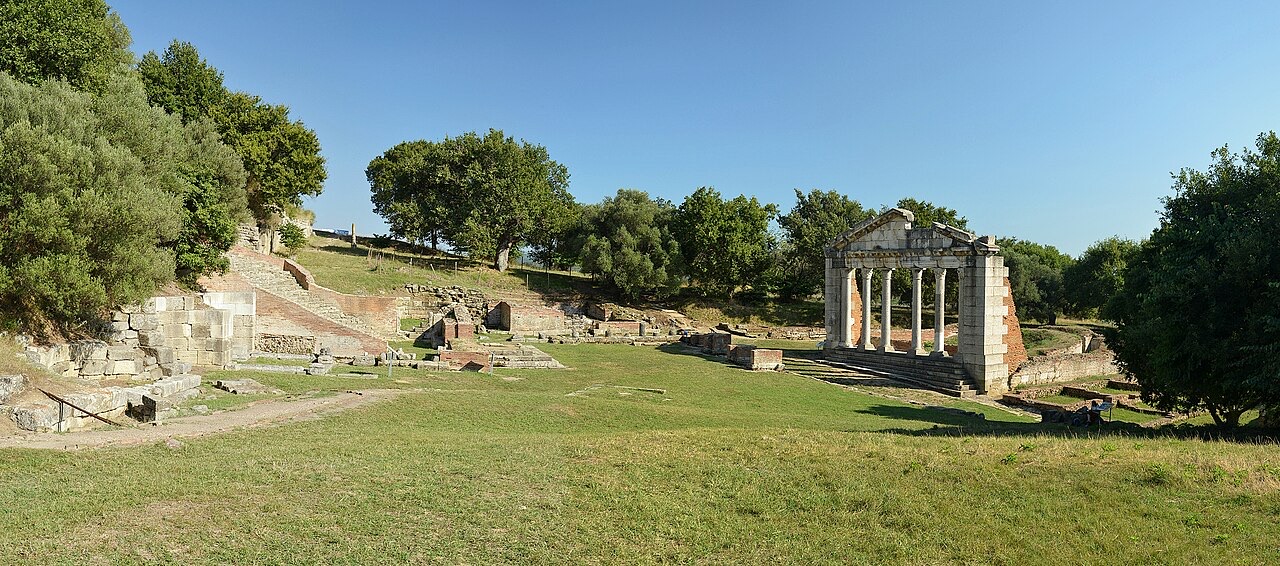
A Corinthian colony that became a Roman university town — Octavian was studying here when Caesar was killed.
Opslaan
Apollonia was a Greek city founded in 588 BC on a hill above the plain. Later the Romans made it a place to study. The young man who became the emperor Augustus was a student here when he heard that Julius Caesar had been murdered.
Apollonia was a Greek city founded in 588 BC on a hill above the plain. Later the Romans made it a place to study. The young man who became the emperor Augustus was a student here when he heard that Julius Caesar had been murdered.
The settlement was initially called Gylakeia, after its founder Gylax, a figure about whom only one inscription and a mention by Stephanus of Byzantium survive. Gylax may have been a tyrant linked to the ruling dynasty of the Corinthian tyrant Periander. The name change to Apollonia — a reference to the god Apollo — is possibly datable to the collapse of the Corinthian tyranny, when the settlement may have been refounded by a faction opposed to the Corinthian establishment. The name Apollonia appears in the record from 588 BC.
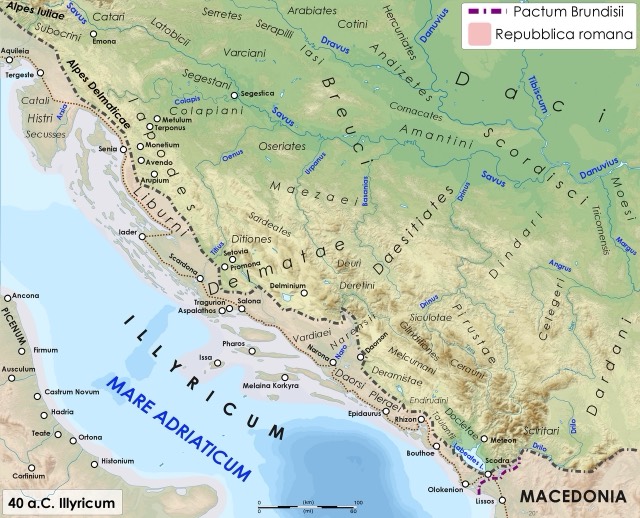
The colony was founded around 600 BC by a group of approximately 200 Corinthians led by the oikist Gylax, supplemented later by colonists from Corcyra. Ancient sources, as reported by J. J. Wilkes, indicate that Corinth responded to an Illyrian invitation. Several scholars, including N. G. L. Hammond, argue that the colonists established good relations with the local Illyrians and founded a joint settlement with a riverine harbour on the Aoos/Vjosë. Others, notably Stallo (2007), state that the Corinthians and Corcyreans were recruited specifically by the Illyrian Taulantii. The site was distinguished from the other 23 cities named Apollonia in the ancient Greek world by the designation Apollonia kat' Epidamnon, meaning 'Apollonia towards Epidamnos', in reference to the nearby colony of Epidamnos.
The placement was chosen for a combination of strategic reasons: it stood at the crossroads of north–south trade along the eastern Adriatic coast and east–west routes into the interior of Illyria and Macedonia; it was close to the Italian coast across the Straits of Otranto; it offered a riverine port on the Aoos; and the immediate hinterland had quality pastureland and a scarcity of indigenous settlements. Apollonia and Epidamnos appear to have been the only Greek colonies founded in the Adriatic during the Archaic era, and the only colonies established in Illyria by mainland Greeks. Apollonia was among the last colonies founded in the west by mainland Greeks during the Archaic colonisation period.
Human occupation of the region predates the Greek colony by millennia. Indigenous Illyrian human remains recovered from a burial mound in the necropolis of Apollonia indicate that habitation of the area began during the Early Bronze Age. The earliest Early Bronze Age tumulus at the site has been dated to 2679±174 calibrated BCE (range 2852–2505 calibrated BCE). These mounds belong to the southern expression of the Adriatic-Ljubljana culture, related to the Cetina culture, which moved southward along the Adriatic from the northern Balkans. Similar mounds built by the same community have been identified in Montenegro at Rakića Kuće and in northern Albania at Shtoj.
Grave finds from the Adriatic tumuli include locally produced violin idols influenced by trends in the Early Cycladic I (Grotta-Pelos) culture of southern Greece. Despite this early occupation, surface surveys suggest very limited general use of the area until the colonial establishment. The local population's density immediately before the Greek arrival is debated: the consensus is that few or no indigenous people inhabited the immediate vicinity at the time of colonisation, though an ancient tradition preserved by Stephanus of Byzantium holds that the site was first settled by Illyrians. Traces of Iron Age non-Greek ceramics from the pre-colonial period are very few, consistent with a landscape occupied only seasonally by tribal pastoralists.
The first post-Mycenaean Greek mariners in the Adriatic were the Euboeans. The earliest Greek pottery found in the hinterland of Apollonia dates from the mid-7th century BC and is solely Corinthian. A Corinthian Type A transport amphora dated to between the third and last quarter of the 7th century BC — before the colony's foundation — was discovered inside a tumulus, confirming pre-colonial contact. The prehistoric trade route on which the site sat linked the eastern Adriatic coast with the interior, and the northern Adriatic with the Aegean; it later became the Roman Via Egnatia.
Archaeo-demographic studies show that the population of Apollonia grouped more closely with the pre-colonial Illyrian population of Lofkënd than with ancient Greeks from Corinth. Approximately 90 percent of the population of Apollonia was phenotypically closer to Illyrians than to ancient Greek Corinthians. This indicates that pre-colonial Illyrians constitute a significant genetic contribution to the colonial population. Archaeological findings corroborate that Illyrian customs continued to be used at Apollonia after the colony's foundation, and that cultural fusion and intermarriage between Illyrians and Greeks took place at the site.
The low rate of skeletal trauma at Apollonia indicates that ethnic relations between the Corinthian settlers and the local Illyrian population were peaceful. Corinthian colonial policy appears to have been geared towards resource extraction rather than the violent expulsion or exploitation of Illyrians. One of the early actions of the settlers was to bring under their control a hill to the southeast of Apollonia, which Illyrian tribes had used as grazing grounds; the settlers then taxed the Illyrian pastoralists for its use. Although the colony brought health benefits to Corinth through improved resources, the health of Apollonia's own population deteriorated after the colonial establishment, attributed to urbanisation, poor sanitation, and exposure to new pathogens brought by increased contact with Mediterranean traders.
Aristotle described Apollonia's government as a narrow oligarchy in which power was held by citizens descended from the original Greek colonists — 'few out of the many' — over a population largely composed of local Illyrians. Whether local Illyrians were integrated as serfs or as slaves in the city's economy is unclear, though the former is considered more likely. Only direct descendants of the first Corinthian settlers had access to the politeia and therefore to magistracy. Aristotle uses the term eleutheroi, or freemen, for those citizens who enjoyed such rights. Epigraphic evidence shows that prytans maintained Greek names, indicating that the memory of the first colonists was preserved by the local aristocracy. This social system, which suggests strict endogamy, persisted for three centuries after the city's foundation.
Apollonia began minting its own coins in the 5th century BC. Its coinage showed a cow suckling her calf on the obverse and a double stellate pattern on the reverse; these coins have been found as far away as the basin of the Danube, indicating the extent of Apollonia's commercial reach. The city also benefited from local supplies of asphalt, a valuable commodity used in antiquity for purposes such as caulking ships. Apollonia grew to become one of the most important urban centres in the wider region and played a major role as a trade gateway to the central Balkans.
Around 450 BC, Apollonian territory expanded southward following a victory over the indigenous tribe of the Amantes at Thronion, on the borders of the Bay of Aulon. This conquest gave Apollonia control over the lower valley of the Shushicë river, a tributary of the Vjosë, and consolidated its hold over the sanctuary of Nymphaion and the area of the bitumen mines at present-day Selenicë. The spoils of Thronion were used to erect a monument at Olympia commemorating the victory. Apollonian land was bounded to the south-east by the territory of the Bylliones. The monument at Olympia, later described by Pausanias, depicted five Trojan and five Achaean heroes facing each other, observed by Zeus at the centre flanked by Eos and Thetis, with Apollo and other pro-Trojan deities placed to his right.
Apollonia, like Dyrrachium further north, functioned as an important port on the Illyrian coast and served as one of the western starting points of the Via Egnatia leading east to Thessaloniki and Byzantium in Thrace. It was the most convenient link between Brundusium and northern Greece. At its Hellenistic peak the city is estimated to have had approximately 60,000 inhabitants, though this is an estimate. Strabo in his Geographica described Apollonia as a well-governed, self-governing polis. During the 3rd century BC, material culture in the hinterland had become substantially hellenised, with products classified as Greek rather than indigenous.
In 229 BC Apollonia came under the control of the Roman Republic, to which it remained firmly loyal. In 148 BC it became part of the Roman province of Macedonia, specifically Epirus Nova. During the Fourth Macedonian War, the praetor Lucius Anicius Gallus, who led the Roman campaign to defeat the Illyrian ruler Gentius, was based at Apollonia with Roman troops and 2,000 infantry and 200 cavalry from the Illyrian tribe of the Parthini, led by tribal leaders Epicadus and Algalsus. Part of the captured fleet of Gentius was presented to the people of Apollonia after the war.
The city supported Julius Caesar in his civil war against Pompey but fell to Pompey's ally Marcus Junius Brutus in 48 BC. In 44 BC, Gaius Octavius — later known as Augustus — studied at Apollonia under the tutelage of Athenodorus of Tarsus. It was there that he received news of Caesar's murder. Augustus subsequently granted the city a series of privileges that reaffirmed its oligarchic institutions, which were viewed favourably by the emerging power structure in Rome.
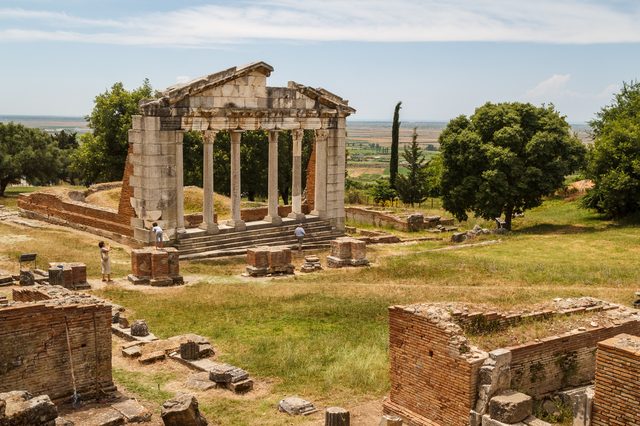
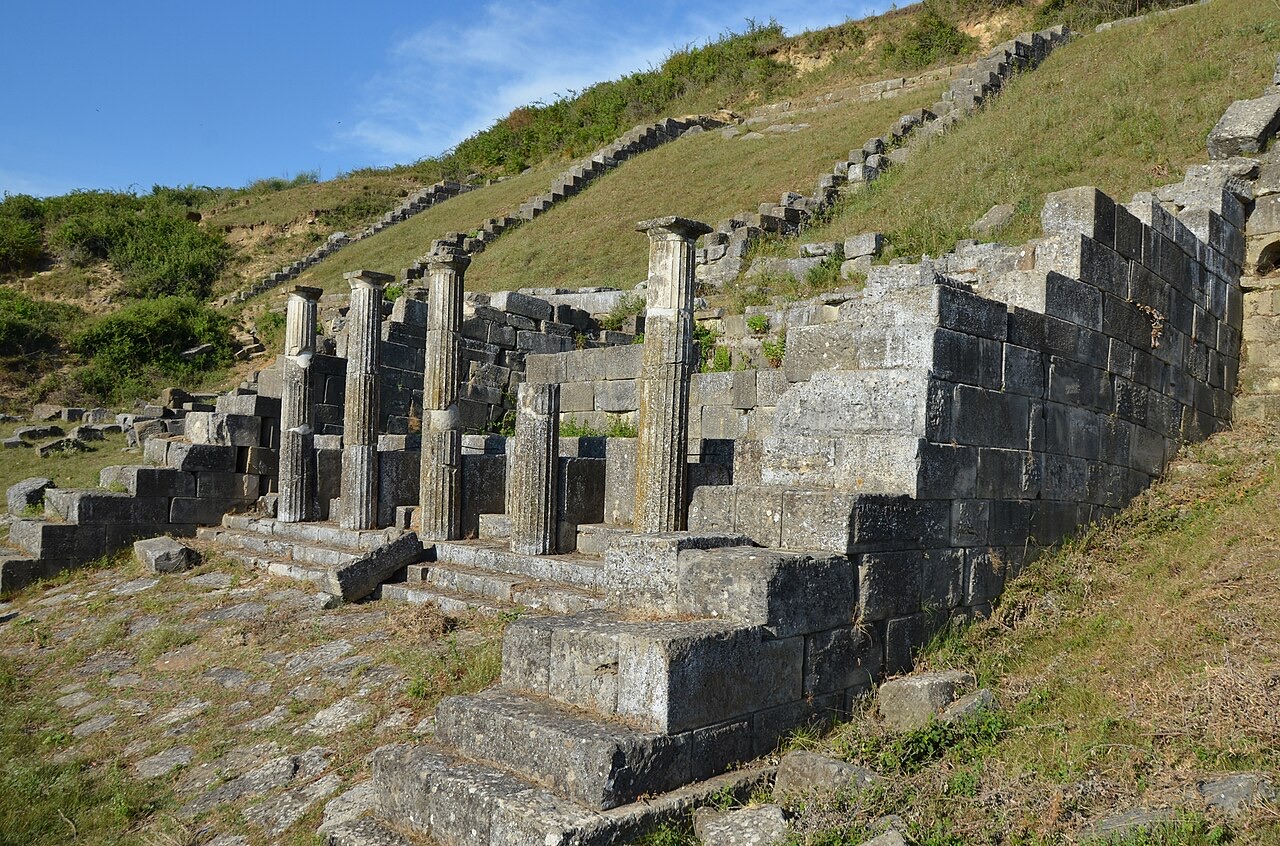
Apollonia flourished under Roman rule and was described by Cicero in his Philippicae as magna urbs et gravis — a great and important city. The city housed a renowned school of Greek philosophy, rhetoric, and military training that attracted students from across the empire. From the 2nd century BC Apollonia became a major centre of Greek learning and also a major centre for the study of astronomy. The building known as the Agonothetes monument, built in the 2nd century BC, had a ten-tier cavea and functioned as the city's municipal building for council meetings; its small capacity is taken as evidence that Apollonia's oligarchic political organisation was preserved into its early Roman era.
Apollonia's decline began in the 3rd century AD when an earthquake changed the course of the Aoös river, causing the harbour to silt up and the inland area to become a malaria-ridden swamp. As the swamp expanded the city became increasingly uninhabitable. The nearby settlement of Avlona — modern-day Vlorë — became dominant as Apollonia lost its viability as a port and urban centre.
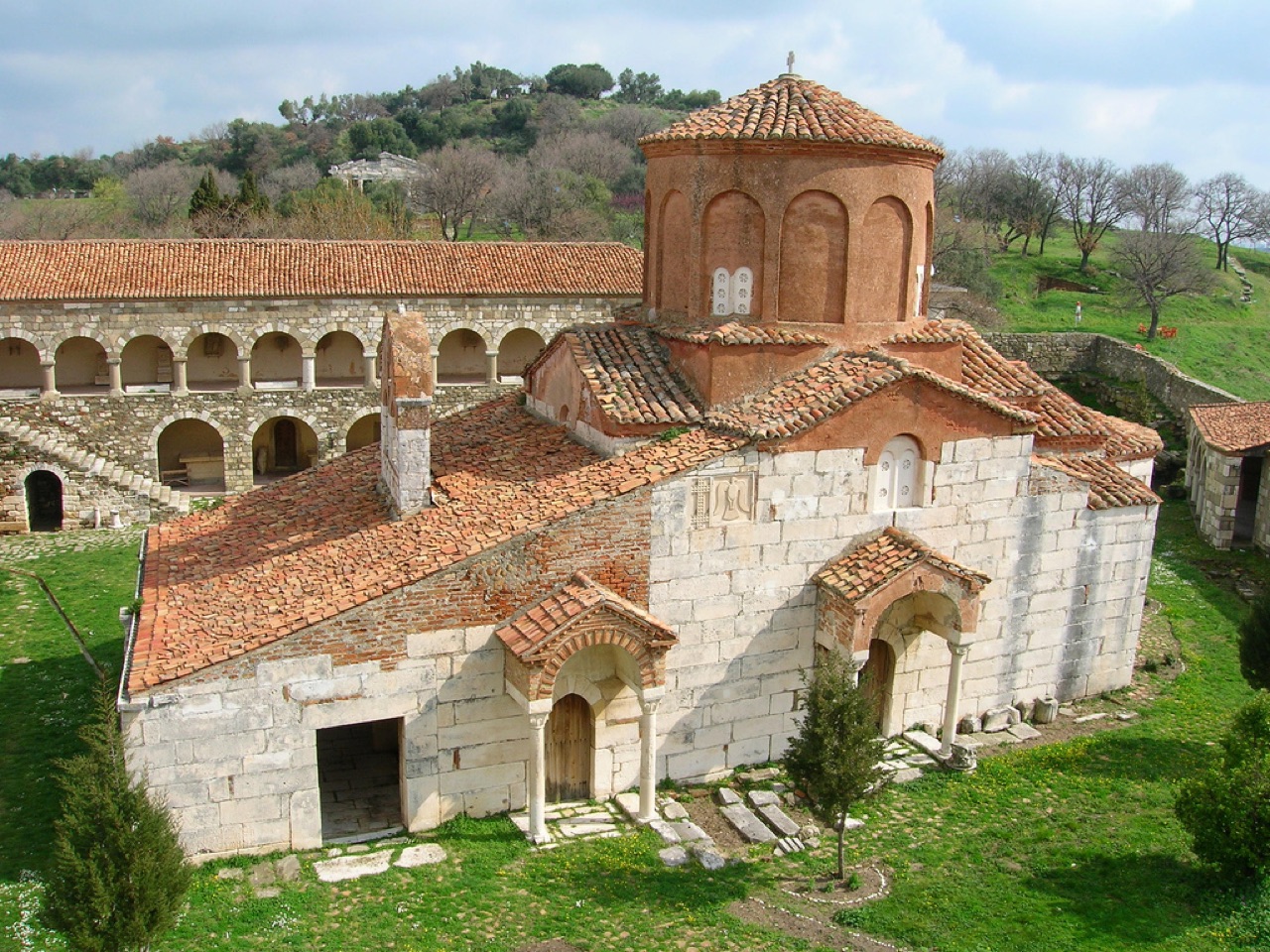
The city was abandoned in the 4th century AD. It has not been inhabited since, with the exception of a monastery. By the end of antiquity the city was largely depopulated, hosting only a small Christian community. This community built the Church of the Dormition of the Theotokos (Albanian: Shën Mëri) on a nearby hill, which became part of the Ardenica Monastery. A Greek-language school was operating at the monastery in 1684, providing what was then considered higher education; a school still existed there in 1880 but with a limited number of students.
Christianity had been established in Apollonia at an early stage. Bishops from the city were present at the First Council of Ephesus in 431 and at the Council of Chalcedon in 451. A bishopric was founded at Apollonia around 400 AD and suppressed around 599. The city is mentioned in the 6th-century Synecdemus of Hierocles among the 20 cities of the Illyrian provinces, as part of Epirus Nova. The name of Apollonia is retained among the modern bishoprics of the Orthodox Autocephalous Church of Albania (Apollonia and Fier), and Apollonia is also a titular see of the Latin Church.
The site was rediscovered by European classicists in the 18th century. Systematic archaeological investigation did not begin until the Austrian occupation of 1916–1918, when the site was first examined by archaeologists. A French team continued this work between 1924 and 1938. Parts of the site were damaged during the Second World War. After the war an Albanian team undertook further excavation from 1948 onwards. Much of the site remains unexcavated.
In 1958 the Archaeological Museum of Apollonia opened within the monastery at the site. Excavations carried out between 1958 and 1960 under Albanian scholar Selim Islami and Russian Professor Blavatski produced a series of full-body statues. In August 2010, a French-Albanian archaeological team unearthed a bust of a Roman soldier at the site, fifty years after those earlier discoveries. In 2006 archaeologists discovered a Greek temple dating to the 6th century BC just outside Apollonia; it was reported as only the fifth known stone temple found in present-day Albania. A German-Albanian team has been working on the Hellenistic theatre at the site, examining the development of Greek theatres and local variants.
In 1967 the archaeological site was seriously and, according to reports, irrevocably damaged by heavy machinery and the construction of approximately 400 concrete military bunkers at and near the ancient polis. During the anarchy that followed the collapse of the communist government in 1990, the archaeological collection was plundered and the museum was temporarily closed. The ruins were also frequently excavated illegally by individuals seeking relics to sell to collectors abroad.
In December 2011 a new museum opened under the directorship of Marin Haxhimihali, replacing an older museum dating from 1985. The new museum was funded by UNESCO's MDG-F Joint Programme 'Culture and Heritage for Social and Economic Development'. In June 2020 part of the site was vandalised by unknown individuals: two columns were knocked down but were subsequently re-erected. The site's director stated that the damage might be irreparable, and suggested it likely occurred during the COVID-19 lockdown. The incident was condemned by Albanian archaeologists and by the President of Albania, Ilir Meta.
Some archaeological discoveries from the site are on display in the museum within the monastery. Other artefacts from Apollonia are held in the capital, Tirana. The ruins were designated as an archaeological park on 7 April 2003 by the government of Albania.
A bishopric was established at Apollonia around 400 AD and was suppressed around 599. One of the participants at the Council of Ephesus in 431 was a bishop named Felix, who signed on one occasion as Bishop of Apollonia and Byllis and on another as Bishop of Apollonia alone. Whether the two towns formed a single episcopal see or whether Felix was strictly Bishop of Apollonia while temporarily administering Byllis as apostolic administrator during a vacancy is uncertain.
At a council held in Constantinople in 448, a participant signed as Paulus Episcopus Apolloniada al. Apolloniatarum, civitatis sanctae ecclesiae, though it is uncertain whether he was associated with this particular Apollonia. At the Council of Chalcedon in 451, a bishop named Eusebius subscribed simply as Bishop of Apollonia. In a letter from the bishops of Epirus Nova to the Byzantine Emperor Leo I in 458, a bishop named Philocharis subscribed as Bishop of a see which manuscript editors believe should be corrected to 'Byllis'; whether Philocharis is also to be considered Bishop of Apollonia depends on the interpretation of Felix's position in 431.
The Annuario Pontificio lists Apollonia as a titular see of the Latin Church, recognising that it was once a residential diocese and a suffragan of the archbishopric of Dyrrachium, and a metropolitan see of the Roman province of Epirus Novus. The name of Apollonia is also retained in the title of a bishopric of the Orthodox Autocephalous Church of Albania.
The ruins of Apollonia are located in the county of Fier, close to the village of Pojan, in Albania. The site occupies a position on the right bank of the Aoös/Vjosë river, approximately 10 km from the eastern coast of the Adriatic Sea. The archaeological park was formally designated by the Albanian government on 7 April 2003. The museum within the monastery, the Archaeological Museum of Apollonia, first opened in 1958. The 2011 replacement museum is the current primary display facility on site.
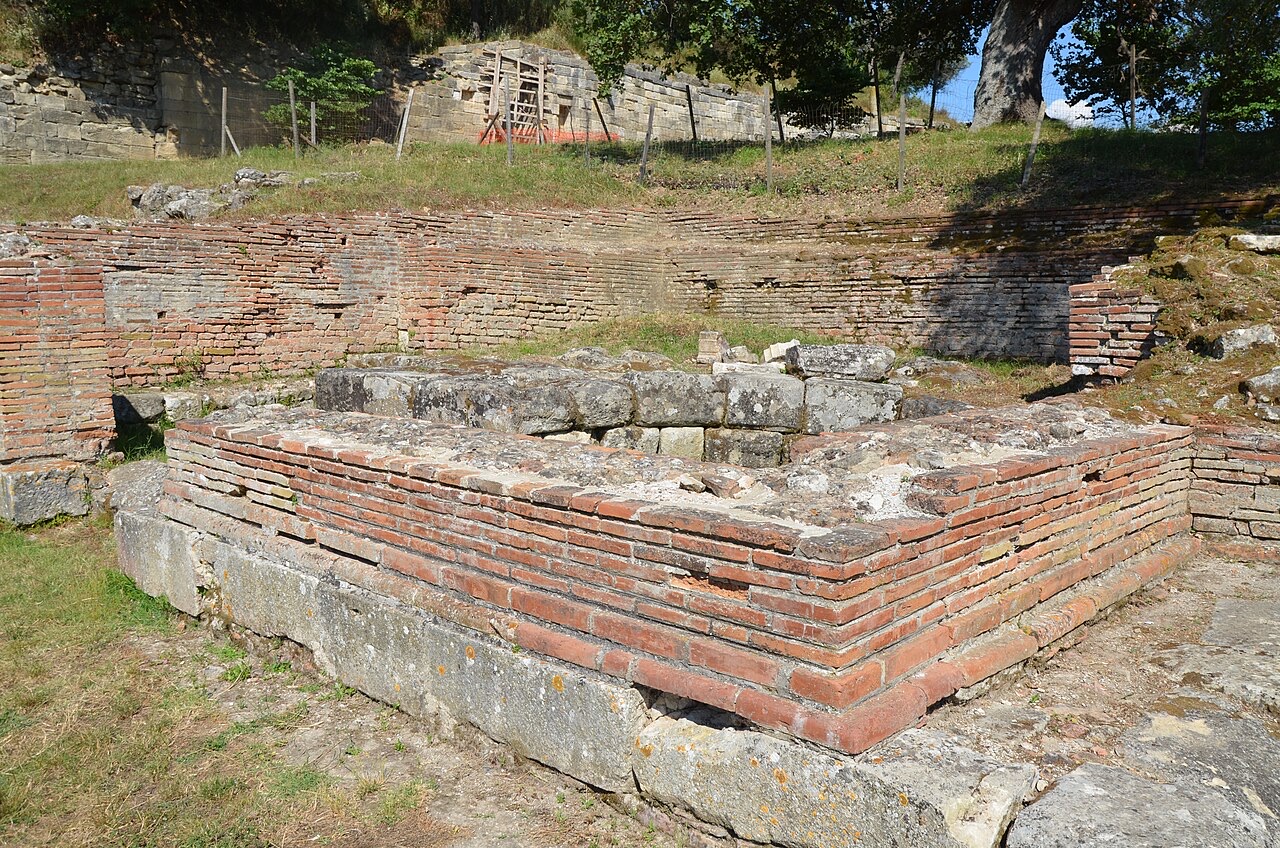
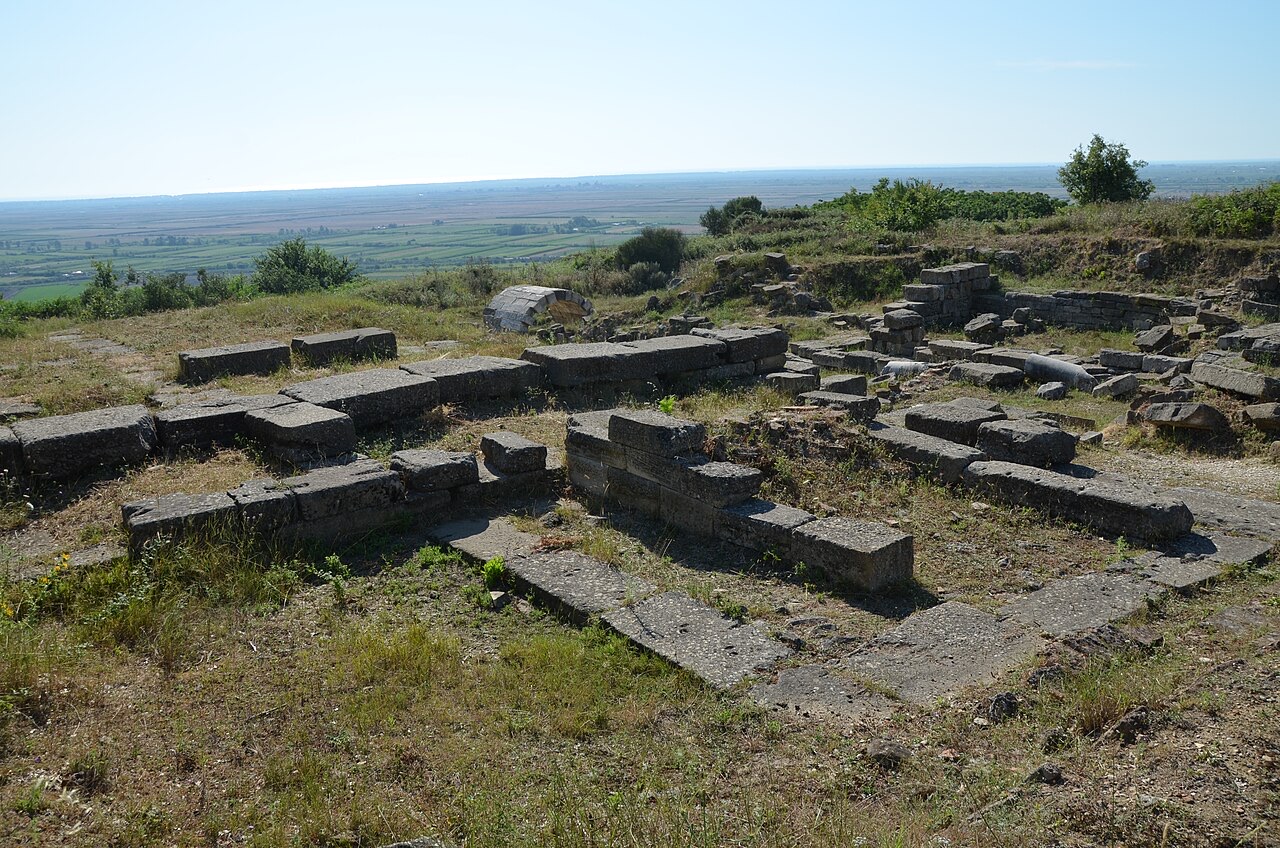
Visible remains at Apollonia include the Agonothetes monument, a 2nd-century BC structure with a ten-tier cavea that served as the city's municipal council building. A Hellenistic theatre is under study by a German-Albanian team. The monastery associated with the site, part of which incorporates the Church of the Dormition of the Theotokos, represents the only continuous post-antique occupation. Artefacts from the site are divided between the on-site museum and collections in Tirana. Much of the ancient city's area remains unexcavated.
De warmste maand is August (gemiddeld dagelijks maximum 31°C), de koudste is January (gemiddeld dagelijks minimum 4°C), en de natste is November (119 mm). De gemiddelde jaarlijkse neerslag bedraagt 916 mm.
| Maand | Maximum | Minimum | Neerslag | Natte dagen | Zon/dag |
|---|---|---|---|---|---|
| January | 12°C | 4°C | 91 mm | 11 | 7.4 h |
| February | 13°C | 4°C | 83 mm | 10 | 8.3 h |
| March | 15°C | 6°C | 89 mm | 10 | 9.8 h |
| April | 18°C | 9°C | 75 mm | 11 | 11.0 h |
| May | 23°C | 14°C | 61 mm | 8 | 12.2 h |
| June | 28°C | 18°C | 42 mm | 6 | 13.6 h |
| July | 31°C | 20°C | 25 mm | 4 | 13.8 h |
| August | 31°C | 21°C | 29 mm | 5 | 12.9 h |
| September | 26°C | 17°C | 88 mm | 9 | 10.8 h |
| October | 22°C | 13°C | 102 mm | 9 | 9.3 h |
| November | 17°C | 9°C | 119 mm | 11 | 7.5 h |
| December | 13°C | 5°C | 111 mm | 12 | 6.8 h |
Bron: ERA5 reanalysis via Open-Meteo, 1994–2023 · "Maximum" en "Minimum" zijn het gemiddelde dagelijkse maximum en minimum van de luchttemperatuur. "Natte dagen" telt dagen met ten minste 1 mm neerslag.
Historische site · Fier
A hilltop monastery on the Myzeqe plain where, by tradition, Skanderbeg was married in 1451.
Plaats · Fier
An agricultural centre on the Myzeqe plain, and the site of the 1920 congress that saved Albanian statehood.
Historische periode
The Via Egnatia crossed here, making the coast Rome's gateway to Greece and the East.
Historische periode
Corinthian and Corcyraean foundations at Epidamnos, Apollonia and Orikum along the coast.
Toelichting
Illyrians, Greek colonists and Rome, layered on the same coastline for a thousand years.
Gids
Butrint, Apollonia, Byllis, Antigonea and Amantia: five sites that cover 2,500 years between them.
Iets onjuist op deze pagina? Correcties zijn welkom en worden gecontroleerd aan de hand van de bronregistratie. Laat ons weten wat onjuist is en, indien mogelijk, waar het juiste cijfer vandaan komt.