Aeroporto · Tiranë
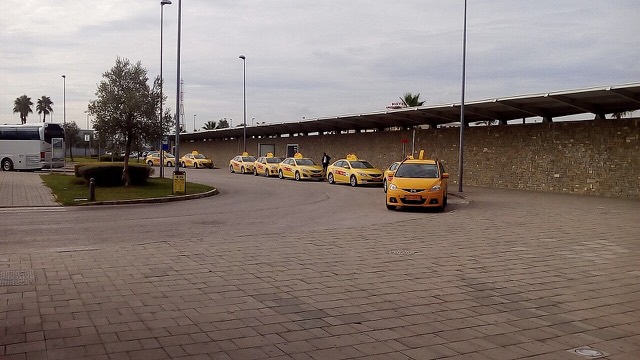
Tirana International Airport
Albania's principal airport, 17 km north-west of Tirana — for years the country's only functioning civil airport.
Ogni contea, ogni costa, ogni secolo
Vista guidata
Non conosci l'Albania? Ogni pagina si apre con una spiegazione in linguaggio semplice, comprensibile anche a un bambino di dieci anni, prima di entrare nei dettagli.
Vista per esperti
Conosci già le basi. Direttamente alla sostanza, con le spiegazioni elementari nascoste. Questa è l'impostazione predefinita.
Persona
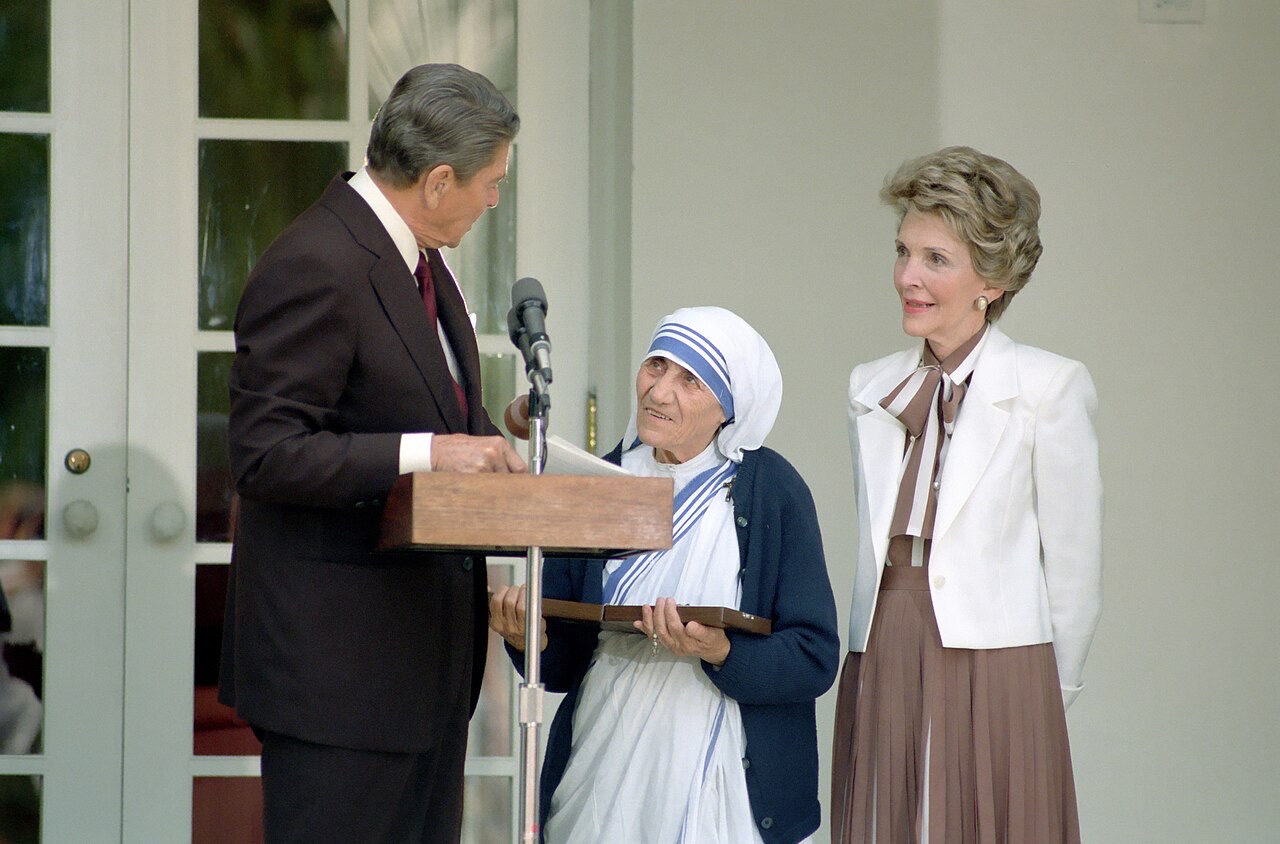
Born in Skopje to an Albanian family from Prizren and Shkodër; canonised in 2016 and now a national symbol.
Salva
Mother Teresa was born Anjezë Gonxhe Bojaxhiu in Skopje, into an Albanian family. She spent most of her life working with the poor in Calcutta. She won the Nobel Peace Prize in 1979 and was made a saint in 2016. Tirana's airport is named after her.
Mother Teresa was born Anjezë Gonxhe Bojaxhiu in Skopje, into an Albanian family. She spent most of her life working with the poor in Calcutta. She won the Nobel Peace Prize in 1979 and was made a saint in 2016. Tirana's airport is named after her.
Anjezë Gonxhe Bojaxhiu was born on 26 August 1910 into a Kosovar Albanian family in Skopje, then part of the Ottoman Empire and now the capital of North Macedonia. The name Anjezë is cognate with Agnes; Gonxhe means 'flower bud' in Albanian. She was baptised the following day, 27 August, which she later considered her 'true birthday'. She was the youngest child of Nikollë and Dranafile Bojaxhiu.
Her father, Nikollë, was involved in Albanian-community politics in Ottoman Macedonia. He was born in Prizren, in present-day Kosovo, though his family originated from Mirdita in present-day Albania. After attending a political meeting in Belgrade in 1919, he was probably poisoned — an act attributed to Serbian agents — when Anjezë was eight years old. Her mother, Dranafile, may have been from a village near Gjakova, believed by the family to be Bishtazhin.
According to a biography by Joan Graff Clucas, Anjezë became fascinated by stories of missionaries and their work in Bengal in her early years, and by age 12 was convinced she should commit herself to religious life. Her resolve strengthened on 15 August 1928 when she prayed at the shrine of the Black Madonna of Vitina-Letnice, a site she visited regularly on pilgrimage. The family lived in Skopje until 1934, when they moved to Tirana.
In 1928, at the age of 18, Anjezë left Skopje to join the Sisters of Loreto at Loreto Abbey in Rathfarnham, Ireland. Her purpose was to learn English, which was the language of instruction used by the Sisters of Loreto in India, in preparation for missionary work. She never saw her mother or sister again after her departure.
She arrived in India in 1929 and began her novitiate in Darjeeling, in the lower Himalayas, where she learned Bengali and taught at St. Teresa's School near her convent. She took her first religious vows on 24 May 1931. She chose to be named after Thérèse de Lisieux, the patron saint of missionaries; because another nun in the convent had already taken that name, she adopted the Spanish spelling, Teresa.
Teresa took her solemn vows on 14 May 1937 while teaching at the Loreto convent school in Entally, eastern Calcutta. Taking solemn vows entitled her to the title of 'Mother', following Loreto custom. She served at the school for nearly twenty years and was appointed its headmistress in 1944. The Bengal famine of 1943 and the Muslim-Hindu violence that followed the Direct Action Day of August 1946 deepened her awareness of the extreme poverty surrounding the school.
On 10 September 1946 — a date she later described as 'the call within the call' — Teresa was travelling by train from Calcutta to Darjeeling for her annual retreat when she experienced what she understood as a directive to leave the convent and serve the poor while living among them. She described it as an order, the failure of which would have meant breaking faith.
She began missionary work with the poor in 1948, replacing her Loreto habit with a simple white cotton sari with a blue border. She adopted Indian citizenship, spent several months in Patna receiving basic medical training at Holy Family Hospital, then entered the slums. She founded a school in Motijhil, Calcutta, before beginning broader work among the poor and hungry. Her diary recorded that the first year was marked by doubt, loneliness and the temptation to return to convent life; she survived on begged food and supplies.
On 7 October 1950, Mother Teresa received Vatican permission for the diocesan congregation that became the Missionaries of Charity. The congregation's declared purpose was to serve 'the hungry, the naked, the homeless, the crippled, the blind, the lepers' and all those 'shunned by everyone'. Members take vows of chastity, poverty and obedience, and a fourth vow to give 'wholehearted free service to the poorest of the poor'. In 1952 she opened her first hospice, converting an abandoned Hindu temple into the Kalighat Home for the Dying — renamed Kalighat, the Home of the Pure Heart (Nirmal Hriday) — offering free care and the opportunity to die with dignity in keeping with each resident's faith.
From its Calcutta base, the Missionaries of Charity expanded steadily. A hospice for people with leprosy, named Shanti Nagar (City of Peace), was established alongside leprosy-outreach clinics throughout Calcutta providing medication, dressings and food. In 1955 Mother Teresa opened Nirmala Shishu Bhavan, the Children's Home of the Immaculate Heart, as a refuge for orphans and homeless youth. By the 1960s the congregation had opened hospices, orphanages and leper houses throughout India.
International expansion began in 1965 with a house in Venezuela, staffed by five sisters. Houses followed in Italy (Rome), Tanzania and Austria in 1968, and during the 1970s the congregation opened in the United States and dozens of countries across Asia, Africa and Europe. The Missionaries of Charity Brothers was founded in 1963; a contemplative branch of the Sisters was established in 1976. In 1981 Mother Teresa founded the Corpus Christi Movement for Priests, and in 1984, with Joseph Langford, founded the Missionaries of Charity Fathers.
By 1997 the congregation comprised more than 4,000 sisters managing orphanages, AIDS hospices and charity centres worldwide. By 2007 the total numbered approximately 450 brothers and 5,000 sisters operating 600 missions, schools and shelters in 120 countries. The first Missionaries of Charity home in the United States was established in the South Bronx area of New York City; by 1984 the congregation operated 19 establishments across the country. By 1996 the order ran 517 missions in over 100 countries.
Mother Teresa was fluent in five languages — Bengali, Albanian, Serbo-Croatian, English and Hindi — and made periodic trips outside India for humanitarian purposes. In 1971 she visited Troubles-era Belfast with four of her sisters; the suggestion that conditions there justified an ongoing mission caused embarrassment, reportedly drawing pressure from senior clergy who believed 'the missionary traffic should be in other direction'. She and her sisters left the city abruptly in 1973 despite local support.
At the height of the Siege of Beirut in 1982, Mother Teresa brokered a temporary ceasefire between the Israeli army and Palestinian guerrillas, enabling her — accompanied by Red Cross workers — to travel through the war zone and evacuate 37 children trapped in a front-line hospital. She visited Armenia following the 1988 earthquake and met Soviet Premier Nikolai Ryzhkov. She also travelled to assist the hungry in Ethiopia and to assist radiation victims at Chernobyl. In 1991 she returned to Albania for the first time, opening a Missionaries of Charity Brothers home in Tirana.
Mother Teresa consistently and publicly opposed abortion and contraception, describing abortion as 'the greatest destroyer of peace today'. She reiterated this position at the Fourth World Conference on Women in Beijing. Abortion-rights groups criticised her stance, and critics including English journalist Christopher Hitchens argued in a 2003 article that she opposed 'the only known cure for poverty, which is the empowerment of women'. She responded to broader criticism of her views with the stated position: 'No matter who says what, you should accept it with a smile and do your own work.'
Mother Teresa received the Ramon Magsaysay Award for Peace and International Understanding in 1962, given for work in South or East Asia. Its citation recognised 'her merciful cognisance of the abject poor of a foreign land, in whose service she has led a new congregation'. In the same year she received India's Padma Shri. She received the Jawaharlal Nehru Award for International Understanding in 1969, the Balzan Prize in 1978, the Bharat Ratna — India's highest civilian award — in 1980, and the Order of Merit from the United Kingdom in 1983.
In 1979 she received the Nobel Peace Prize 'for work undertaken in the struggle to overcome poverty and distress, which also constitutes a threat to peace'. She refused the conventional ceremonial banquet for laureates, asking that its $192,000 cost be redirected to the poor in India. In her Nobel lecture she distinguished between material and what she termed 'spiritual' poverty, arguing that isolation and feeling unwanted constituted a more intractable form of deprivation than hunger.
Pope Paul VI awarded her the inaugural Pope John XXIII Peace Prize in 1971. She received the Pacem in Terris Award in 1976. She was appointed an honorary Companion of the Order of Australia in 1982 and received honorary United States citizenship on 16 November 1996. Albania awarded her the Golden Honour of the Nation in 1994. Her acceptance of the Haitian Legion of Honour was controversial, and she was criticised for implicitly supporting the Duvalier regime and for writing to the judge in Charles Keating's trial requesting clemency. In the annual Gallup most admired poll, she appeared in the top ten eighteen times during her lifetime, finishing first several times in the 1980s and 1990s, and in 1999 she headed Gallup's List of Most Widely Admired People of the 20th Century.
Despite the scale of the Missionaries of Charity's operations, the standard of care in its facilities drew sustained criticism. A paper by Canadian academics Serge Larivée, Geneviève Chénard and Carole Sénéchal argued that Mother Teresa's clinics received millions of dollars in donations but lacked medical care, systematic diagnosis, necessary nutrition and sufficient analgesics for those in pain. The authors contended that the money could have been used to create advanced palliative care facilities.
Aroup Chatterjee, a physician born and raised in Calcutta who worked as an activist in the city's slums around 1980, conducted research involving more than 100 interviews with volunteers, nuns and others connected with the Missionaries of Charity. His 2003 book criticised what he described as a 'cult of suffering', a distorted representation of Calcutta, exaggeration of the mission's work and misuse of funds. He stated that some hygiene problems, including the reuse of needles, improved after Mother Teresa's death in 1997.
Bikash Ranjan Bhattacharya, mayor of Calcutta from 2005 to 2010, said that she 'had no significant impact on the poor of this city' and accused her of glorifying illness rather than treating it. Christopher Hitchens was among her most prominent critics internationally, and both he and Chatterjee gave evidence to the Vatican tribunal convened during the beatification process; Vatican officials stated that the allegations raised were investigated by the Congregation for the Causes of Saints. Defenders, including her authorised biographer Navin Chawla and Sister Mary Prema Pierick, the former Superior General of the Missionaries of Charity, argued that the homes were never intended as hospitals but as places of comfort and dignity for those refused elsewhere.
Despite her public role as a symbol of religious devotion, Mother Teresa privately experienced decades of doubt about her faith. Her personal correspondence, compiled posthumously in Mother Teresa: Come Be My Light, reveals that she expressed grave doubts about God's existence and described a persistent inner emptiness: 'If there be God – please forgive me. When I try to raise my thoughts to Heaven, there is such convicting emptiness that those very thoughts return like sharp knives and hurt my very soul.' This state lasted for nearly fifty years, until the end of her life.
One brief interruption occurred after the death of Pope Pius XII in 1958. While praying for him at a requiem Mass, she was relieved of what she called 'the long darkness: that strange suffering.' The relief lasted approximately five weeks before the spiritual dryness returned. She wrote to her confessors and superiors over a 66-year period — most notably to Calcutta Archbishop Ferdinand Perier and Jesuit priest Celeste van Exem — and requested that the letters be destroyed, fearing that 'people will think more of me – less of Jesus.' The correspondence was not destroyed.
Pope John Paul II identified prayer and 'silent contemplation of Jesus Christ' as the source of her perseverance. Pope Benedict XVI cited her three times in his encyclical Deus caritas est, using her life to illustrate the relationship between contemplative prayer and active service. According to James Langford, the doubts she experienced were typical of certain mystical traditions and would not constitute an impediment to canonisation. Other saints, including Thérèse of Lisieux — whose name Teresa had taken — had described comparable experiences of spiritual aridity.
Following Mother Teresa's death on 5 September 1997 — after a period of declining health that included a heart attack in Rome in 1983, a second attack in 1989, a bout of pneumonia in Mexico in 1991, a broken collarbone and malaria in 1996, and heart failure — the Holy See opened the process towards canonisation. Brian Kolodiejchuk was appointed postulator by the Diocese of Calcutta. He submitted 76 documents totalling 35,000 pages, based on interviews with 113 witnesses who answered 263 questions. She was beatified on 19 October 2003.
The first miracle recognised by the Vatican involved the reported healing of Monica Besra, an Indian woman, after the application of a locket containing Teresa's picture in 2002. Besra reported that a beam of light from the picture cured a cancerous tumour in her abdomen; her husband and some of her medical staff said conventional treatment was responsible. A physician who told The New York Times he had treated Besra identified the cyst as caused by tuberculosis and said she had taken medicines for nine months to one year. The second miracle, recognised by Pope Francis on 17 December 2015, was attributed to the healing of a Brazilian man with multiple brain tumours in 2008.
Pope Francis canonised Mother Teresa on 4 September 2016 at a ceremony in St Peter's Square attended by tens of thousands of people, including 15 government delegations and 1,500 homeless people from across Italy. The feast day assigned to her is 5 September, the anniversary of her death. On 6 September 2017 she was formally named co-patron of the Roman Catholic Archdiocese of Calcutta alongside St Francis Xavier. In Albania, 5 September is observed as Mother Teresa Day (Dita e Nënë Terezës), a public holiday. Albania's international airport bears her name. At the time of her death, the Missionaries of Charity operated 610 missions in 123 countries, assisted by over one million co-workers.
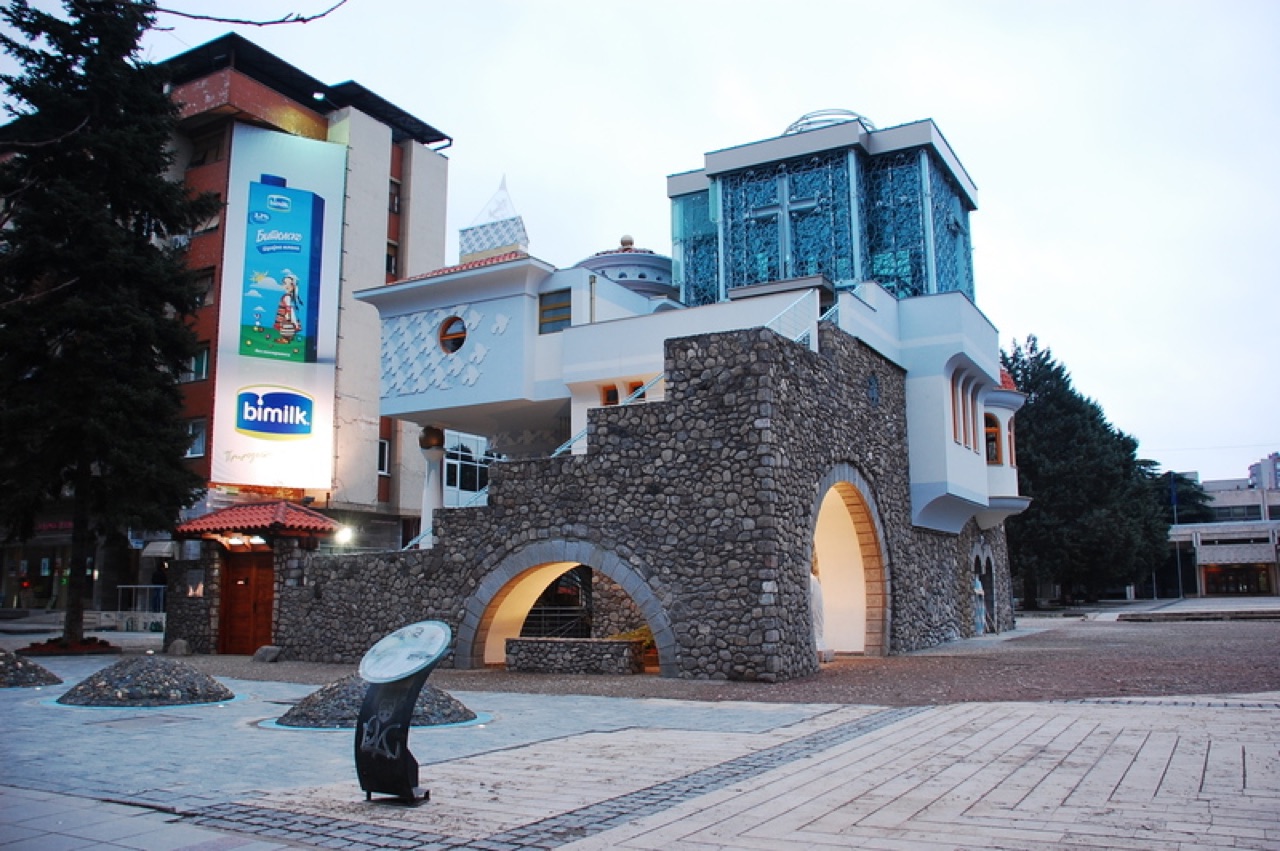
Aeroporto · Tiranë
Albania's principal airport, 17 km north-west of Tirana — for years the country's only functioning civil airport.
Oggetto
Four historic communities — Sunni, Bektashi, Orthodox and Catholic — and a state that banned all of them from 1967 to 1990.
Oggetto
More Albanians may live outside the country than in it — chiefly in Italy, Greece, Germany, Switzerland, the UK and the US.
Hai notato un errore in questa pagina? Le correzioni sono benvenute e vengono verificate rispetto al record di fonte. Indica cosa è sbagliato e, se possibile, da dove proviene il dato corretto.