City · Vlorë
Vlorë
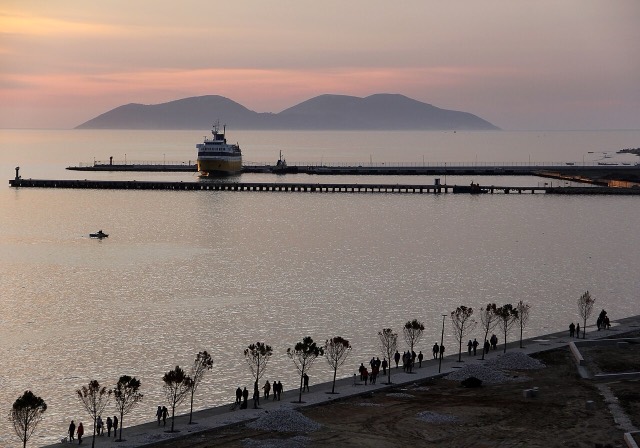
Where the Adriatic meets the Ionian, and where Albanian independence was declared in 1912.
Every county, coast and century
Guided view
New to Albania? Every page opens with a plain-language explanation you could read to a ten-year-old, before the detail begins.
Expert view
You already know the basics. Straight to the substance, with the simple explanations hidden. This is the default.
Person
The Ottoman statesman who raised the flag at Vlorë and led Albania's first provisional government.
Save
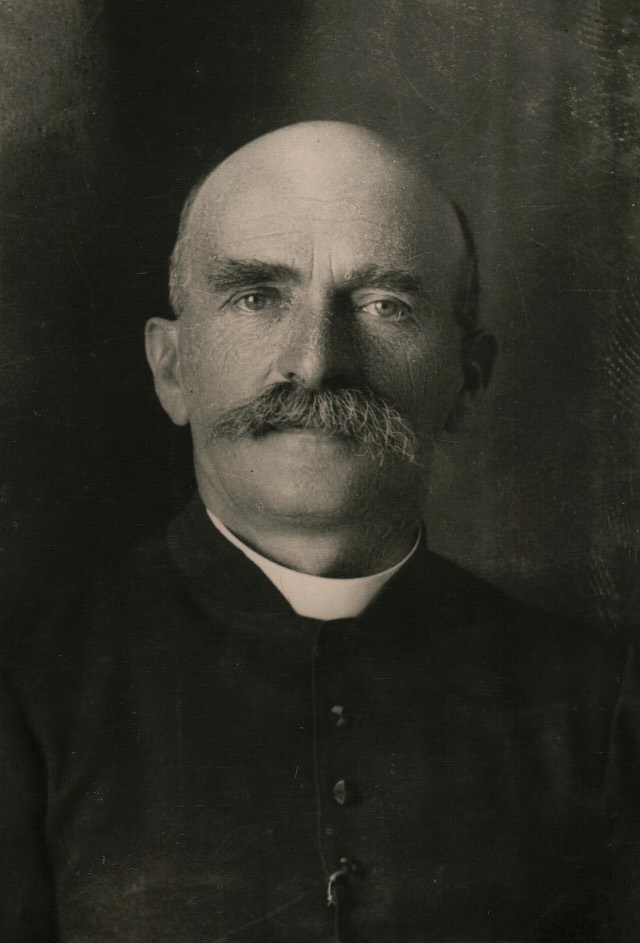
Ismail Qemali was a senior official in the Ottoman Empire who became the leader of Albania's independence movement. On 28 November 1912 he declared independence in Vlorë and became the first head of the Albanian government.
Ismail Qemali was a senior official in the Ottoman Empire who became the leader of Albania's independence movement. On 28 November 1912 he declared independence in Vlorë and became the first head of the Albanian government.
Ismail Qemali was born on 16 January 1844 in Vlorë, then a city of the Ottoman Empire, to an Albanian Muslim noble family. He completed his primary education in Vlorë before travelling to Ioannina to attend the Zosimaia School. He subsequently graduated from the Ottoman law school in Istanbul.
Qemali married a Greek woman, Kleoniki Sourmeli, and arranged for his children to be educated in Greece. This personal connection to Greek culture was a thread that ran through much of his later political thinking, including his consistent advocacy for Albanian-Greek cooperation against common geopolitical threats.
Qemali moved to Istanbul in May 1860 and embarked on a career as an Ottoman civil servant, rising to high government positions in both the European and Asian portions of the empire. He aligned himself with the reform wing associated with Midhat Pasha, the principal author of the Ottoman Constitution, and served as governor of several towns in the Balkans.
During this period Qemali also participated in efforts to standardise the Albanian alphabet, supporting the use of Latin characters, and worked toward establishing an Albanian cultural association. By 1877 he appeared close to significant functions within the Ottoman administration.
When Sultan Abdulhamid II dismissed Midhat Pasha as prime minister, Qemali was sent into internal exile in western Anatolia. The Sultan later recalled him and appointed him governor of Beirut. In 1892 Qemali presented the Sultan with a plan for a Balkan Confederation — an entente of Balkan states and the empire bound by mutual defence and economic agreements within a unified Great Eastern state centred on the Ottoman Empire. In that framework, Albania was not envisaged as a separate state. His continued liberal policy recommendations eventually caused him to fall out of favour again, and the Sultan appointed him governor (wali) of Tripoli, a post Qemali himself regarded as exile.
In May 1900 Qemali boarded the British ambassador's yacht, claimed asylum, and was conveyed out of the Ottoman Empire. He departed for Athens and issued proclamations explaining his departure from imperial service. His active interest in the Albanian national question had been limited before this point; Albanian circles, however, saw his participation as an asset that could bring prestige and draw Albanian Muslims toward the independence cause.
In Paris, Qemali met Faik Konica and the two collaborated briefly on Albanian issues through newspaper publications, with Qemali calling for Albanian unity, economic development and warning against subjugation by Balkan states. Their partnership broke down: Qemali found Konica difficult to work with, while Konica objected to what he saw as an overwhelming focus on politics and disapproved of Qemali's pro-Greek stance. Qemali went on to found the newspaper Selamet (Salvation), published in Ottoman Turkish, Albanian and Greek, arguing that Albanians and Greeks shared geopolitical interests. Some Albanian activists regarded these views as an instrument of Greek policy, which damaged his standing among parts of the national movement.
Qemali initially approached Austria-Hungary as the great power best placed to assist Albanians in developing national opinion, founding lay Albanian schools and obtaining autonomy. Over time he shifted his alignment toward Italy and Italian policy, seeking to counter Austro-Hungarian territorial ambitions in the Balkans. He also drew closer to Italo-Albanian communities. The Ottoman government meanwhile dismissed his son Mahmud, a Council of State official, as part of a broader crackdown on those associated with the Young Turk movement.
Qemali took part in the Congress of Ottoman Opposition held in Paris in 1902, organised by Prince Mehmed Sabahaddin. He backed Sabahaddin's faction, which called for reforms, minority rights, revolution and European intervention in the empire. The congress produced no organisations in the Balkans, and an unknown individual impersonated Qemali and travelled through Bulgarian cities deceiving Muslim communities. Its aftermath did produce a new central committee, of which Qemali was eventually installed as chairman, and he and Sabahaddin were given control of the official CUP newspaper Osmanli.
Between 1902 and 1903, the new committee developed a coup d'état plot to overthrow Abdulhamid II. Colonel Shevket Bey and Rexhep Pasha Mati were tasked with organising the military aspects; Qemali and Prince Sabahaddin were to obtain diplomatic and financial support and purchase two ships. Qemali travelled repeatedly to London, where he met British officials including Edmund Monson and Thomas Sanderson, and received responses from the Foreign Office. He subsequently exaggerated the degree of British support, which amounted only to moral encouragement. He also met Abbas II of Egypt secretly in an attempt to secure funds; the Khedive deposited £4,000 in an English bank for the plot before withdrawing support over misgivings about Qemali.
Qemali travelled to Athens with £4,000 to purchase two ships but was unable to find suitable vessels. Subsequent attempts to redirect the purchase to Naples were overruled when the other conspirators decided to abandon the plot. The failure was attributed differently by different participants: Qemali blamed prolonged negotiations over ships; Rexhep Pasha cited Qemali's lukewarm attitude; members of Sabahaddin's inner circle alleged that Qemali had diverted the money for personal gain. Haydar Midhat quit the new central committee after concluding that Qemali was on the Greek payroll and working for Greek interests in Albania. On 16 August 1903, Qemali gave an interview to an Italian newspaper in the role of an 'Albanian patriot', marking a turn toward Albanian affairs as his primary concern.
In January 1907 Qemali signed a secret agreement with the Greek government concerning a possible alliance against the Ottoman Empire. Details are sparse in the sources, but some accounts state that the two sides agreed the future Greek-Albanian boundary should lie along the Ceraunian Mountains, with no Albanian armed activity in that area in exchange for Greek backing of Albanian independence. The agreement was not widely accepted by Albanian nationalists, and the CUP severely criticised Qemali for it.
In Rome in July 1907, Qemali gave a lengthy interview to Italian media calling for cooperation among Balkan peoples, a 'Greco-Albanian entente', and asserting Albania's right to liberty and independence based on its distinct language, literature, history and traditions. He opposed Albanian cooperation with Bulgarian Macedonians, viewing their support for Albanian insurrectionists as self-serving. His reasoning for closer ties with Greece at this stage was to gain backing for Albanian independence while checking Bulgarian ambitions across the broader Balkans region and in northern Albania in Macedonia.
Throughout this period Qemali was not the recognised leader of the Albanian national movement, partly because of his openly pro-British and pro-Greek positions, which caused the CUP to shun him. He promoted a diplomatic rather than military path to Albanian independence, an approach rejected by factions that favoured guerrilla warfare against the empire. Over time, however, his position shifted, and by 1912 he would be the principal figure in declaring Albanian independence.
During the Young Turk Revolution of 1908, it was rumoured at the time that Sultan Abdulhamid II asked Qemali for assistance and that Qemali replied only the restoration of the Ottoman constitution would pacify the Albanians. After the revolution and constitutional restoration, Qemali returned from exile and was elected as a deputy representing Berat in the restored Ottoman Parliament. He contributed to the Young Turk newspaper Tanin, calling for government reforms, and became leader of the Albanian deputies in the parliament. He did not oppose the Austro-Hungarian annexation of Bosnia, but argued that recognition of the move should come with security guarantees for the empire in the event of war with Balkan states.
During the 31 March incident — the countercoup — the leadership of the Liberty Party (Ahrar), of which Qemali was a deputy, attempted to prevent the rebellion from taking a reactionary, pro-sultan and anti-constitutional course. Qemali managed to bring some parliamentarians to attend parliament; they accepted the mutineering troops' requests and issued an official announcement that the constitution and sharia would be maintained. Qemali was briefly made President of the Ottoman National Assembly and led it in recognising a new government under Abdulhamid II.
He wired his constituency in Vlorë telling them to acknowledge the new government, and Albanians from his hometown backed him, with some raiding an arms depot to support the sultan if the situation required it. Qemali left Istanbul before the CUP Action Army arrived to suppress the rebellion and fled to Greece. A subsequent government investigation cleared him of wrongdoing.
From 1909 onward, Qemali's political career focused solely on Albanian nationalism. In the summer of 1909 he came under Ottoman suspicion as guerrilla activity increased in southern Albania. After returning to Istanbul — following parliamentary clearance of his role in the countercoup — he led a group of 'modern liberals', former members of the Ahrar party. In 1910 he publicly criticised the Young Turk government to the Austro-Hungarian ambassador for elevating Turks above other nationalities and pursuing divide-and-rule policies toward Albanians.
During the Albanian revolt of 1911, Qemali travelled with Xhemal Bey of Tirana to a meeting of revolt leaders at Gerče, a village in Montenegro, on 23 June. There they drafted the 'Greçë Memorandum', calling for Albanian autonomy, schooling and language rights, recognition of Albanians, electoral freedoms, military service within Albania, and other measures addressed both to the Ottoman Empire and to European powers, particularly Britain.
In December 1911, Qemali and Hasan Prishtina convened secret meetings of Albanian political notables in Istanbul to plan a future Albanian uprising. Qemali was then assigned to travel to Europe to secure government support and funds for purchasing 15,000 guns. In Paris he told Austro-Hungarian officials that his earlier reservations about their empire had shifted and that he viewed Austria-Hungary as the only defender of Albanian interests. Together with Prishtina he took the initiative to organise the Taksim meeting that helped coordinate the Albanian revolt of 1912. During negotiations with the Ottomans over the revolt, Qemali led the faction advocating Albanian autonomy within the empire.
In September 1912, as the Balkan Wars began to end Ottoman rule in the region, Qemali travelled with Luigj Gurakuqi to Bucharest to consult with the Albanian community in Romania, then proceeded to Vienna where he stayed in contact with Austro-Hungarian officials by telegram. On 12 November he met with the Austro-Hungarian foreign ministry; Foreign Minister Leopold Berchtold expressed sympathy for the Albanian situation and placed a boat at Qemali's disposal.
From Trieste, Qemali sailed to Durrës by mid-November, but Ottoman authorities objected to his presence and Serbian forces were approaching the city, so he departed for Vlorë, arriving on 26 November. His son Ethem had already summoned Albanian representatives from across the country to the city.
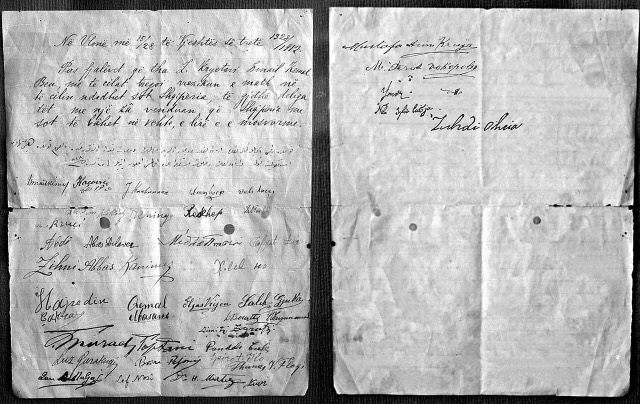
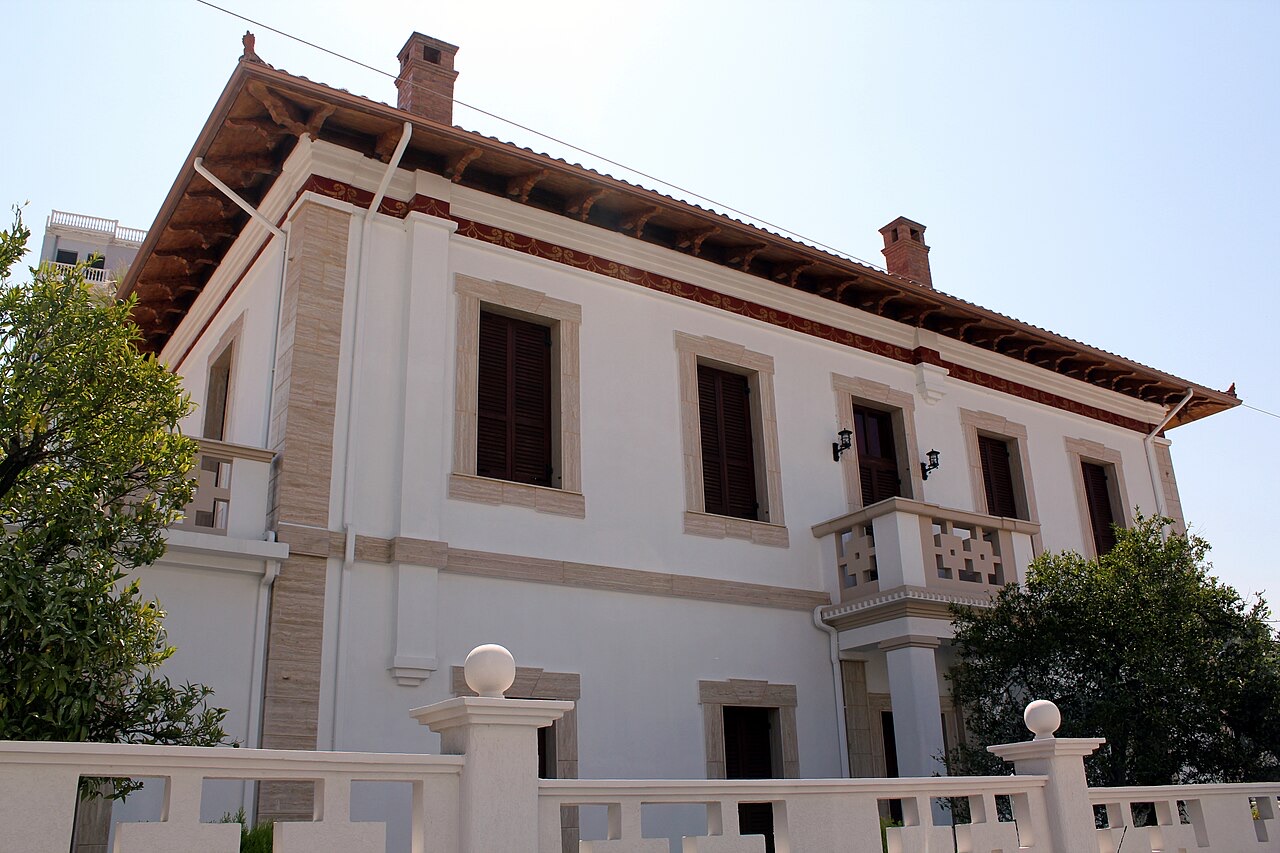
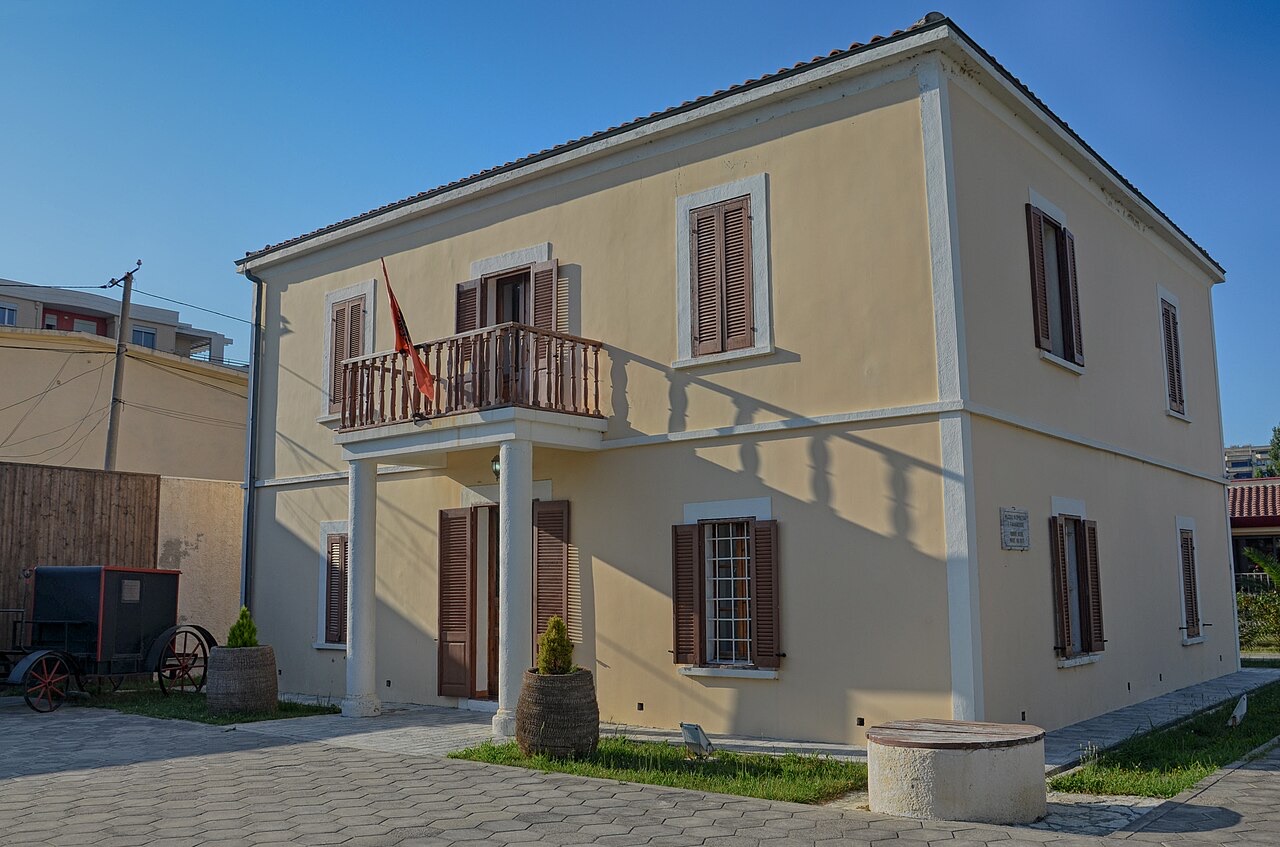
On 28 November 1912, Qemali was the principal figure in the declaration of Albanian independence from the Ottoman Empire and the formation of an independent Albanian state. The declaration signalled the end of more than 400 years of Ottoman rule in Albania. Qemali and Gurakuqi raised the Albanian flag on the balcony of the two-storey building in Vlorë where the Declaration of Independence had been signed. Qemali was subsequently elected leader of the Provisional Government of Albania by the All-Albanian Congress and became the country's first prime minister and foreign minister.
The formal establishment of the government was postponed to 4 December 1912, the fourth session of the Assembly of Vlorë, pending the arrival of representatives from all regions. The Ottoman Council of Ministers opposed Qemali's actions and preferred Albanian autonomy, requesting military assistance for the Ottoman Third Army, which was trapped in southern Albania. Qemali in turn appealed to the Great Powers to recognise and support an independent Albania.
In 1913 the CUP government sent Lieutenant Colonel Bekir Fikri to Albania to build support for Ahmed Izzet Pasha — an Albanian Ottoman officer and CUP member — as a candidate for the Albanian throne. Fikri presented Qemali with a plan for joint Ottoman, Albanian and Bulgarian military action against Greece and Serbia, with Kosovo and Chameria as Albania's reward. Qemali assured Fikri of his loyalty and supported the secret infiltration of Ottoman troops and weapons into the country for guerrilla operations. Serbian forces uncovered the plot and reported it to the International Control Commission (ICC), which was temporarily administering Albania on behalf of the Great Powers. Dutch officers serving in the Albanian Gendarmerie under the ICC declared a state of emergency; on 7–8 January 1914 they raided Vlorë, discovering more than 200 Ottoman troops, and arrested Fikri. An ICC military court under Colonel Willem de Veer condemned Fikri to death, a sentence later commuted to life imprisonment. Qemali and his cabinet resigned.
During the First World War Qemali lived in exile in Paris, where, short of funds, he collaborated with Somerville Story, the continental correspondent of the Daily Mail, to write his memoirs. His autobiography, published after his death, is described in the sources as the only memoir of a late Ottoman statesman written in English. In 1918 he travelled to Italy to promote support for his movement in Albania, but the Italian government prevented him from leaving the country. He was kept at a hotel in Perugia against his will, a situation the sources record he found deeply irritating. He died of an apparent heart attack on 26 January 1919. His body was subsequently brought to Vlorë and buried in the local tekke of the Bektashi Order.
City · Vlorë
Where the Adriatic meets the Ionian, and where Albanian independence was declared in 1912.
Historical period
The Rilindja: the League of Prizren, the fight for an alphabet, and the first Albanian-language school.
Historical period
Declared at Vlorë on 28 November 1912 as the Ottoman Empire collapsed in the Balkan Wars.
Something wrong on this page? Corrections are welcome and are checked against the source record. Tell us what is wrong and, if you can, where the right figure comes from.