都市 · Korçë
Korçë
The highland city of serenades, the first Albanian-language school, and the country's oldest brewery.
すべての県、すべての海岸、すべての世紀
ガイドビュー
アルバニアを初めて知る方へ。各ページは、詳細に入る前に、10歳の子どもにも読み聞かせられる平易な説明から始まります。
エキスパートビュー
基本知識はすでにお持ちの方向け。平易な説明を非表示にし、内容を直接表示します。これがデフォルトです。
人物
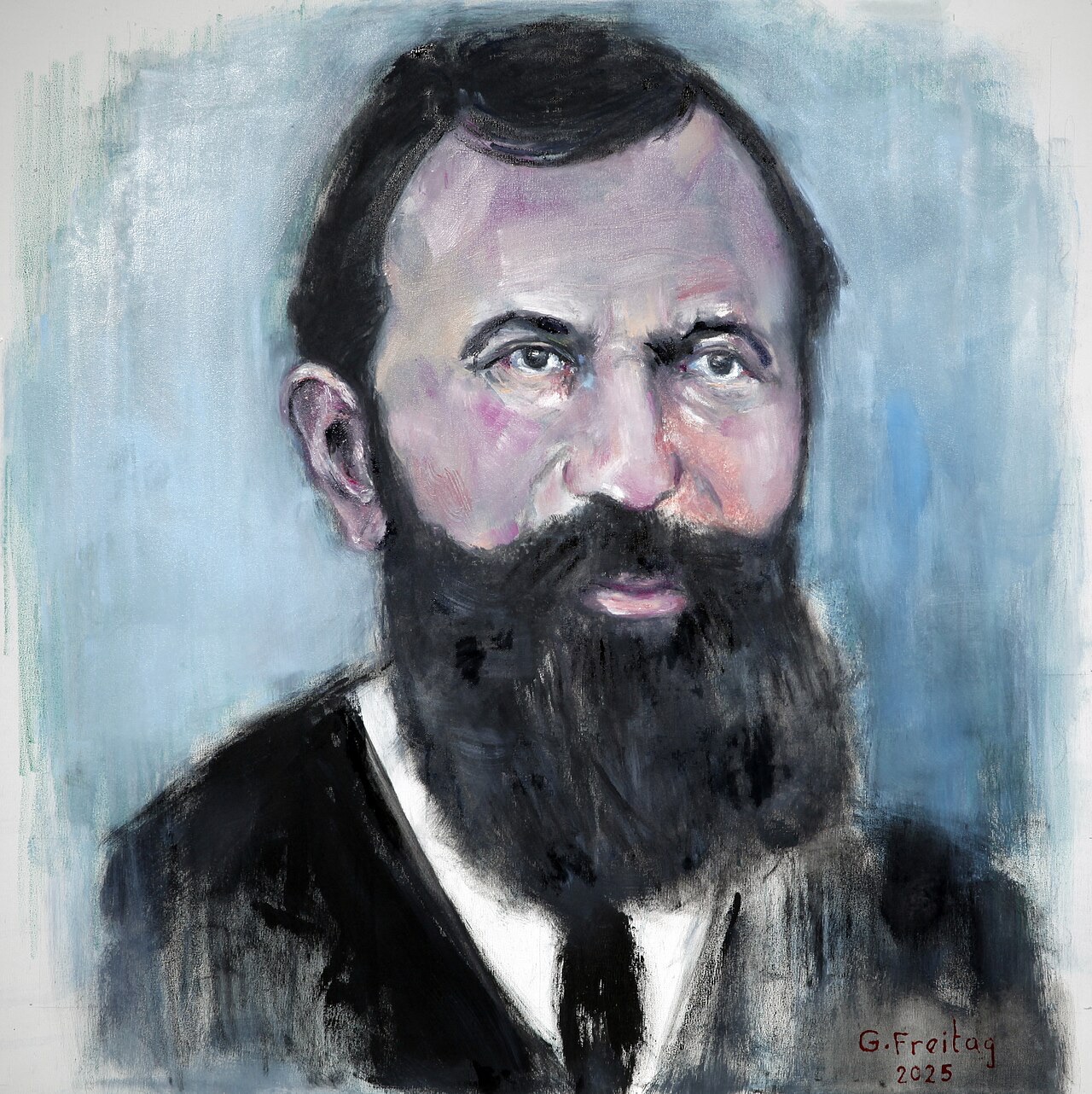
The Orthodox bishop who translated Shakespeare into Albanian and led a government for six months.
保存
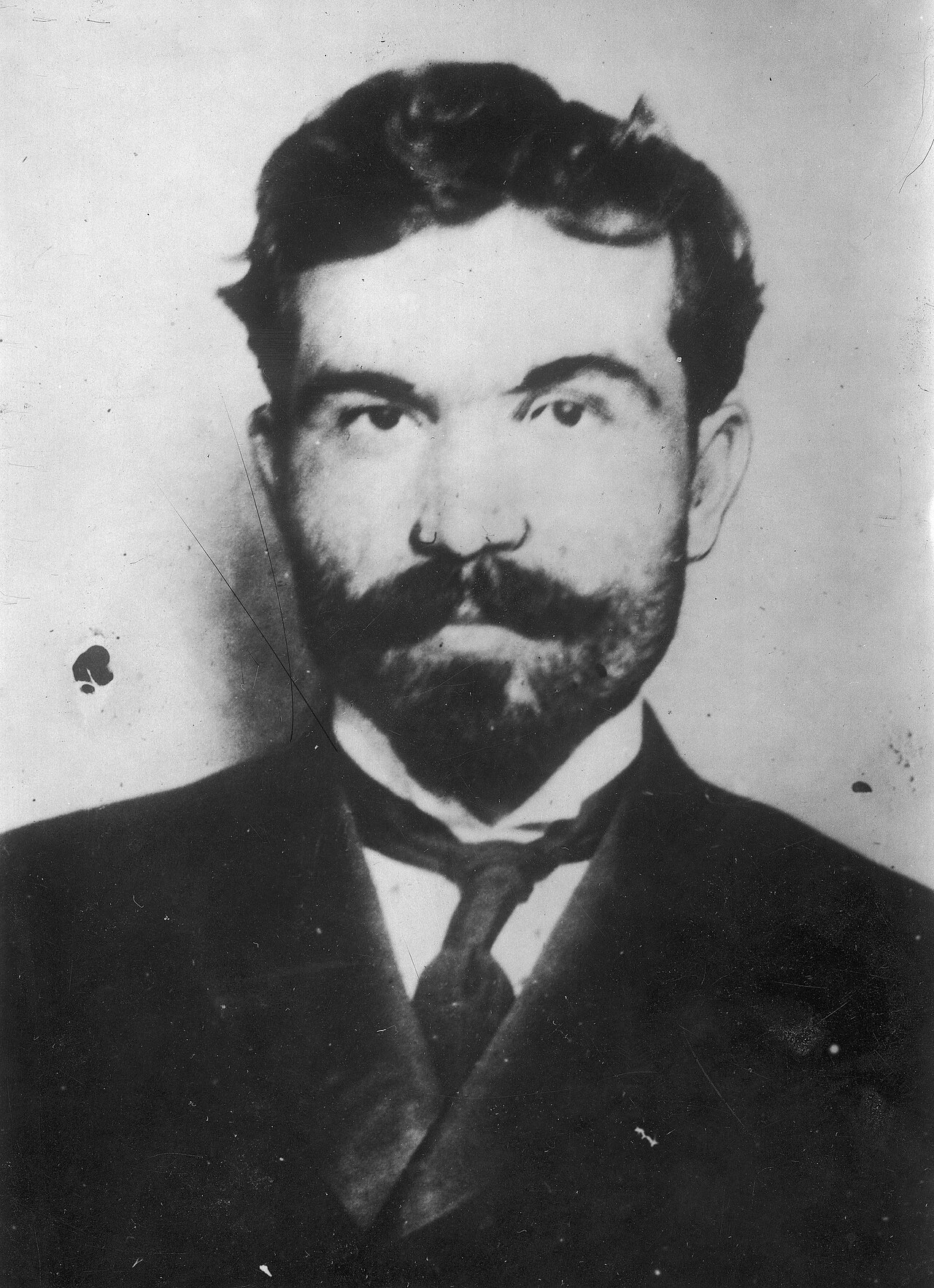
Fan Noli was a bishop, a writer and a politician. He founded the Albanian Orthodox Church in America, translated Shakespeare and Cervantes into Albanian, and was prime minister for six months in 1924 before Zogu drove him out.
Fan Noli was a bishop, a writer and a politician. He founded the Albanian Orthodox Church in America, translated Shakespeare and Cervantes into Albanian, and was prime minister for six months in 1924 before Zogu drove him out.
Fan Noli was born Theofanis Stylianos Mavromatis on 6 January 1882 in İbriktepe, a small village in the Thracian Ottoman Vilayet of Adrianople, in what is now Turkey. The village had been originally settled by Albanians from Qyteza, a village in the County of Kolonjë in southern Albania, and was known locally by that same name. Noli was a descendant of Orthodox Christian Albanian settlers who had fled southern Albania and resettled in Thrace after regional conflicts depopulated the area.
During his youth, Noli received his education in Greek elementary and secondary schools. As a young man he moved across the Mediterranean Basin, living in Athens, Alexandria, and Odessa, supporting himself as an actor and translator. He spoke Albanian, Greek, English, French, Turkish, and Arabic. In Athens he used the name Theofanis Mavromattis and sought work as a teacher. He subsequently worked as a teacher or theater member within the Albanian diaspora in Egypt, where he engaged with the Albanian national movement.
Through contacts with the Albanian expatriate movement, Noli became a committed supporter of Albanian nationalism and emigrated to the United States in 1906. He initially worked in a lumber mill in Buffalo, New York, then moved to Boston, Massachusetts, where he operated a machine that stamped labels on cans.
The earliest Orthodox Christian Albanian immigrants to Boston worshipped in Greek Orthodox churches, whose leadership was strongly opposed to the Albanian nationalist cause. The immediate catalyst for an independent Albanian Orthodox Church came when Kristaq Dishnica, a young factory worker who had died of influenza, was refused burial on the grounds that, as an Orthodox Christian who identified as Albanian, he was considered automatically excommunicated from the Greek Orthodox Church. This episode became known as the Hudson Incident.
In response, Noli and a group of Albanian émigrés in New England began organizing an independent, autocephalous Albanian Orthodox Church. Noli was ordained as its first clergyman — a priest — in 1908, by Archbishop Platon (Rozhdestvensky) of the Russian Church in the United States.
By securing Patriarchal recognition for the autocephaly of the Albanian Orthodox Church and translating the full Orthodox liturgy from the original Greek text into Tosk Albanian, Noli aimed to neutralize Greek irredentist ideology within the Orthodox Church and to assert the right of Orthodox Christian Albanians to practice their faith in their own language. He maintained that religious office should be held by clergy fluent in Albanian and holding Albanian citizenship, and was a firm advocate for the separation of religion from the state.
In 1908 Noli began studying at Harvard University, completing his Bachelor of Arts degree in 1912. In April 1912, the Albanian-American diaspora organisation Vatra (meaning 'Hearth') was founded, with Noli and Faik Konica serving as its leaders and advocating for Albanian sociopolitical self-determination within the Ottoman Empire.
Noli set foot in Albania for the first time in 1913, having returned to Europe to promote Albanian independence. During World War I he returned to the United States and led the Vatra organisation, effectively making him the leading figure of the Albanian diaspora. His diplomatic efforts in the United States and in Geneva secured the support of US President Woodrow Wilson for an independent Albania.
Although Albania had declared independence in 1912, it lacked full international recognition. In 1920, Noli's efforts resulted in Albania gaining membership in the League of Nations, providing the international recognition the country had until then been unable to obtain.
In 1921, Noli entered the Albanian Parliament as a representative of the liberal pro-British People's Party (Partia e Popullit), the chief liberal movement in the country. The other main parties were the conservative pro-Italian Progressive Party (Partia Përparimtare), founded by Mehdi Frashëri and led by Ahmet Zogu, and the Popular Party (Partia Popullore) of Xhafer Ypi. The conservatives under Zogu came to dominate the political scene.
A Congress of Berat in 1922 formally laid the foundations of an Albanian Orthodox Church and consecrated Fan Noli as Bishop of Korçë and primate of all Albania. The establishment of the church was considered important for Albanian national unity. Noli also served briefly as Foreign Minister in the government of Xhafer Ypi.
The period was one of intense political conflict between liberals and conservatives. After a failed assassination attempt against Zogu, conservatives responded by assassinating the prominent liberal politician Avni Rustemi. Noli delivered a funeral oration for Rustemi that proved so powerful that liberal supporters rose up against Zogu, forcing him to flee to Yugoslavia in March 1924. Zogu was succeeded briefly by his father-in-law Shefqet Vërlaci and then by the liberal politician Iliaz Vrioni.
Noli was named prime minister and regent on 16 June 1924, following the forced departure of Ahmet Zogu. His government emerged from the upheaval that came to be called the June Revolution, in which liberal forces had overthrown the conservative political establishment.
Noli introduced a 'Twenty Point Program' intended to reform the country, but the program proved unpopular. His government was unable to consolidate power and was overthrown by forces loyal to Zogu on Christmas Eve of 1924. Two weeks later, Zogu returned to Albania. Noli fled to Italy under sentence of death.
Following his flight from Albania, Noli founded the National Committee — known by its Albanian acronym KONARE (Komiteti Nacional Revolucionar) — in Vienna. The committee published a periodical called 'National Freedom' (Liria Kombëtare). Early Albanian communists including Halim Xhelo and Riza Cerova began their publishing activities through the committee. KONARE's stated objective was the overthrow of Zogu and the restoration of democracy, though its access and influence inside Albania remained limited.
Through the intervention of Kosta Boshnjaku, a communist and KONARE member, the organisation received unconditional financial support from the Comintern. Noli and Boshnjaku also arranged for exiled members of the Committee for the National Defence of Kosovo — which had been outlawed by Zogu — to receive the same financial support. In 1928, KONARE changed its name to the Committee of National Liberation (Komiteti i Çlirimit Kombëtar).
Meanwhile, in Albania, after three years of republican government, the National Council declared Albania a constitutional monarchy, and Ahmet Zogu became king. Zogu also took drastic steps to suppress opposition: by the end of winter following his return, two major opposition leaders, Bajram Curri and Luigj Gurakuqi, were assassinated, while others were imprisoned. Noli moved back to the United States in 1932, where he continued to organise republican opposition to Zogu, who had by then proclaimed himself King Zog I.
After returning to the United States, Noli continued his education, studying and later teaching Byzantine music. He pursued advanced academic work at Boston University, receiving a doctorate (Ph.D.) in history in 1945, with a dissertation on Skanderbeg. He also conducted research at the Boston University Music Department and published a biography of Ludwig van Beethoven. In 1947 he composed a one-movement symphony titled Scanderbeg.
Noli also earned a degree from the New England Conservatory of Music in 1938. He continued to develop and promote the autocephalous Albanian Orthodox Church he had helped found. In 1961 he published a translation of the New Testament into English, titled The New Testament of our Lord and Savior Jesus Christ from the approved Greek text of the Church of Constantinople and the Church of Greece.
After World War II, Noli established ties with the communist government of Enver Hoxha, which had seized power in 1944. He urged the US government to recognise the Hoxha regime, without success. Hoxha's increasing persecution of all religions prevented Noli's church from maintaining ties with the Orthodox hierarchy in Albania. Despite the regime's anticlerical policies, Noli's Albanian nationalism drew the attention of the US Federal Bureau of Investigation, whose Boston office kept him under investigation for more than a decade with no final outcome.
Noli was a prolific translator and writer in both Albanian and English. He played a significant role in consolidating Albanian as a national language through numerous translations of world literary works, and wrote extensively as a scholar and author on Skanderbeg, Shakespeare, Beethoven, and religious subjects. Enver Hoxha, writing in his diary two days after Noli's death, described his translations of Shakespeare, Omar Khayyám, and Blasco Ibáñez as 'immortal' and praised his anti-Zogu elegies and poems.
Noli's translation work extended into religious texts. By rendering the full Orthodox liturgy into Tosk Albanian, he elevated the Albanian language to ecclesiastic use. His 1961 English translation of the New Testament represented the culmination of decades of work as a religious scholar. He also wrote a series of scholarly publications on Skanderbeg and produced the biography of Beethoven during his time at Boston University.
Fan Noli spent the final years of his life in Fort Lauderdale, Florida, where he died on 13 March 1965. According to Enver Hoxha's diary entry written two days after his death, Noli died as a result of a cerebral hemorrhage following an operation the previous week, which he did not survive due to his age. He was 83.
Noli is interred in Forest Hills Cemetery, in the Jamaica Plain neighborhood of Boston. Fan S. Noli is depicted on the obverse of the Albanian 100 lekë banknote issued in 1996, which remained in circulation until 2008 when it was replaced by a coin.
The Albanian Orthodox Archdiocese in America that Noli founded went on to join the Orthodox Church in America, where it continues as the Albanian Archdiocese. The Autocephalous Orthodox Church of Albania, which Noli served in Albania, is headquartered in Tirana and is a member of the World Council of Churches. All Albanian Orthodox parishes are in full communion with one another and with the broader Orthodox Church, and are fully recognised by the Ecumenical Patriarchate of Constantinople.
都市 · Korçë
The highland city of serenades, the first Albanian-language school, and the country's oldest brewery.
件名
An autocephalous church since 1937, rebuilt almost from nothing after 1991.
このページに誤りがありますか? 修正は歓迎しており、原典記録と照合して確認します。何が誤っているか、また可能であれば正しい数値の出典をお知らせください。