موقع تاريخي · Tiranë
Albania's Bunkers
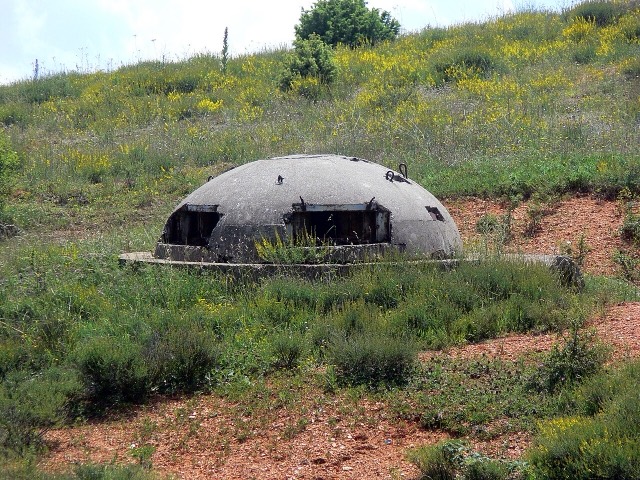
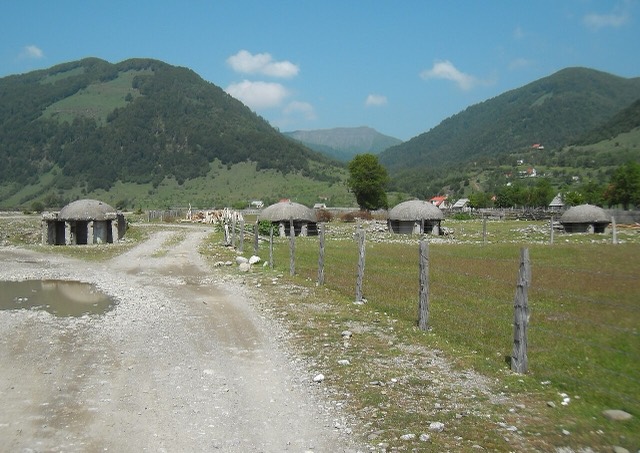
Roughly 170,000 concrete pillboxes built under Enver Hoxha — the most visible physical legacy of the communist state.
كل مقاطعة، كل ساحل، كل قرن
عرض إرشادي
هل أنت جديد على ألبانيا؟ تفتتح كل صفحة بشرح مبسّط يمكن قراءته لطفل في العاشرة من عمره، قبل أن تبدأ التفاصيل.
عرض للمتخصصين
أنت تعرف الأساسيات بالفعل. مباشرةً إلى الجوهر، مع إخفاء الشروح المبسّطة. هذا هو الوضع الافتراضي.
شخصية
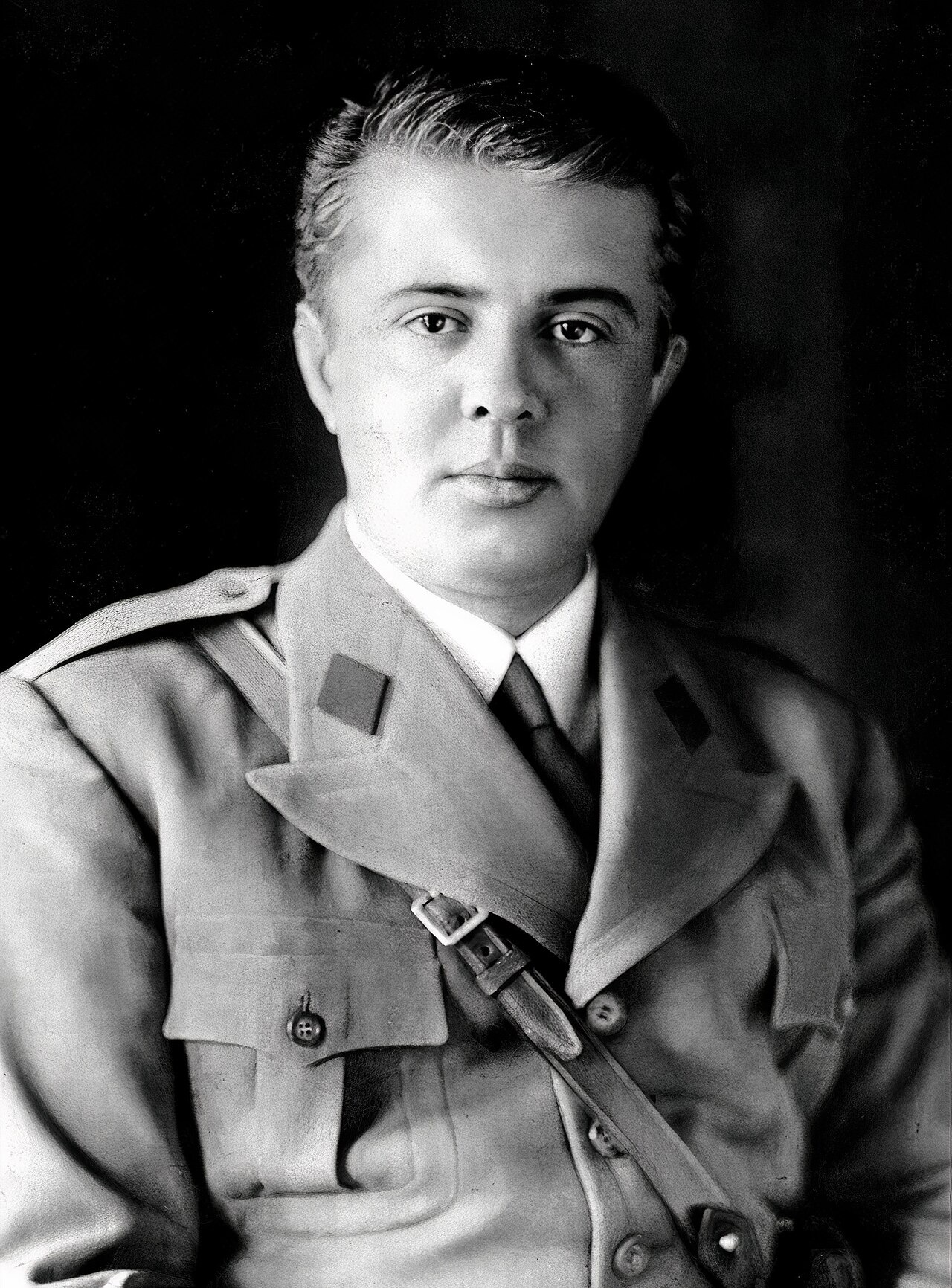
The leader who took Albania out of the Soviet bloc, then out of the Chinese one, and banned religion outright.
حفظ
Enver Hoxha ruled Albania for 41 years. He was born in Gjirokastër. Under him Albania broke with Yugoslavia, then the Soviet Union, then China, until it had almost no allies left. He banned religion in 1967 and ordered the building of about 170,000 bunkers. Tens of thousands of people were imprisoned, exiled or executed under his rule.
Enver Hoxha ruled Albania for 41 years. He was born in Gjirokastër. Under him Albania broke with Yugoslavia, then the Soviet Union, then China, until it had almost no allies left. He banned religion in 1967 and ordered the building of about 170,000 bunkers. Tens of thousands of people were imprisoned, exiled or executed under his rule.
Enver Halil Hoxha was born on 16 October 1908 in Gjirokastër, a city in southern Albania then under Ottoman rule. His father, Halil Hoxha, was a Shia Muslim cloth merchant who travelled widely across Europe and the United States; his mother was Gjylihan Hoxha (née Çuçi). The family belonged to the Bektashi Sufi order. Hoxha was named after Enver Pasha, a leading figure of the Young Turk Revolution. The surname Hoxha derives from the Albanian variant of the Turkish title hoca, reflecting ancestors who taught Albanians about Islam.
After elementary school, Hoxha attended the city senior high school 'Liria' and began studies at the Gjirokastër Lyceum in 1923. When that institution was closed following intervention by Ekrem Libohova, he was awarded a state scholarship to continue his education at the French-language Albanian National Lyceum in Korçë, where he studied until 1930. His uncle Hysen Hoxha was a militant who campaigned for Albanian independence, and his grandfather Beqir participated in the Gjirokastër section of the League of Prizren.
In 1930 Hoxha travelled to Montpellier, France, on a state scholarship to study botany at the University of Montpellier's faculty of natural science. According to his own memoirs, he had originally been awarded a scholarship for History and Geography, but it was revoked by the Ministry of Education and granted to a student with stronger family connections. He reluctantly accepted a botany scholarship, a subject for which he showed no aptitude. In Montpellier he attended law and history lectures instead and showed very little interest in the natural sciences. His scholarship was cancelled after he performed poorly in his botany examinations.
Hoxha subsequently moved to Paris, where he presented himself to anti-Zogist immigrants as the brother-in-law of Bahri Omari. His time in Paris was marked by prolonged unemployment and low-paying menial work. In 1935, through connections within the Albanian diaspora in Paris, he was offered the post of secretary at the Albanian consulate in Brussels. He lived comfortably in Belgium and attended law classes at the Free University of Brussels. He was dismissed approximately a year later after the consul discovered his communist sympathies. It was during his time in Montpellier that Hoxha made contact with the French Communist Party, though the extent of that relationship is disputed. Returning to Albania, he worked as a contract teacher in Tirana and then taught French and morals at the Korça Liceum from 1937 to 1939, also serving as caretaker of the school library.
On 7 April 1939, Italy invaded and occupied Albania, installing a puppet government under Shefqet Vërlaci. Hoxha was dismissed from his teaching post for refusing to join the Albanian Fascist Party. His friend Esat Dishnica helped him find shelter in Ibrahim Biçakçiu's tobacco factory 'Flora', and later in a shop of the same name opened by Dishnica. The tobacco store became the headquarters of a local communist cell.
The Communist Party of Albania was founded on 8 November 1941. Hoxha was selected from the 'Korça group' as a Muslim representative by two Yugoslav envoys and became one of seven members of the provisional Central Committee. In July 1942 he issued a 'Call to the Albanian Peasantry' urging support for the anti-fascist struggle. Following the September 1942 Conference at Pezë, the National Liberation Movement was established to unite Albanians of all classes and ideologies against the occupation. By March 1943, the first National Conference of the Communist Party formally elected Hoxha as First Secretary, at the age of 34.
In August 1943, a secret meeting at Mukje brought together the anti-communist Balli Kombëtar (National Front) and the Communist Party. An agreement was reached that included sections referring to Greater Albania, encompassing Kosovo and Chamëria. Yugoslav Communists objected to the Greater Albania provisions, and when the Albanian Communists repudiated the agreement, the Balli Kombëtar condemned them and eventually aligned with Nazi Germany, severely damaging its standing among those fighting the fascists. The Albanian National Liberation Army was organised into regular units in July 1943 and received military support from the British SOE. The Anti-Fascist Committee for National Liberation, chaired by Hoxha, became the Democratic Government of Albania on 22 October 1944 after a meeting in Berat, with Hoxha serving as interim Prime Minister.
Following Albania's liberation on 29 November 1944, Albanian partisan divisions crossed into German-occupied Yugoslavia and fought alongside Tito's partisans and the Soviet Red Army. The Democratic Front, dominated by the Albanian Communist Party, replaced the National Liberation Front in August 1945. Elections held on 2 December 1945 were contested only by the Front, which was the sole legal political organisation permitted to participate; the government reported a 93% vote in its favour. On 11 January 1946, King Zog I was formally deposed and the People's Republic of Albania was proclaimed, though the country had functioned as a communist state since liberation. As First Secretary, Hoxha was de facto head of state.
Relations between Albania and Yugoslavia deteriorated progressively. The Albanian lek was revalued against the Yugoslav dinar in 1946 as a customs union was formed, and Albanian economists later described the relationship as exploitative, characterising it as an attempt to make the Albanian economy an appendage of Yugoslavia's. Hoxha accused Yugoslavia of planning to prevent Albanian industrial development and of seeking to incorporate Albania outright, pointing to the Treaty of Friendship, Co-operation and Mutual Aid of 1946. When Yugoslavia broke publicly with the Soviet Union, Hoxha's position within the Party strengthened. On 1 July 1948, Tirana ordered all Yugoslav technical advisers to leave and declared all bilateral agreements null and void. Koçi Xoxe, who had supported Yugoslav influence, was expelled from the Party and executed by hanging on 13 June 1949.
After the break with Yugoslavia, Hoxha aligned Albania with the Soviet Union. Between 1948 and 1960, Albania received approximately $200 million in Soviet aid for technical and infrastructural development. Albania joined Comecon on 22 February 1949. A Soviet submarine base was constructed on the Albanian island of Sazan near Vlorë, representing a potential threat to the US Sixth Fleet in the Mediterranean. Following Stalin's death in March 1953, Albania declared fourteen days of national mourning — more than the Soviet Union itself observed.
Under Nikita Khrushchev, aid was reduced and Albania was encouraged to specialise in agricultural production to supply the Warsaw Pact, a policy Hoxha resisted because it would constrain Albanian industrial development. Khrushchev's 1956 denunciation of Stalin at the Twentieth Party Congress, his reconciliation with Yugoslavia, and his announcement of peaceful coexistence all angered Hoxha, who took an increasingly hardline anti-revisionist stance. At a delegate-meeting in Tirana in April 1956, 450 delegates criticised party conditions and leadership policy; Hoxha had all dissenting delegates expelled and imprisoned.
Relations collapsed entirely between 1960 and 1961. A July 1960 plot to overthrow the Albanian government, organised by Soviet-trained Rear Admiral Teme Sejko, was uncovered. In March 1961, Albania was excluded from a Warsaw Pact meeting; in April, all Soviet technicians were withdrawn; in May, nearly all Soviet troops left the submarine base. On 7 November 1961, Hoxha publicly labelled Khrushchev 'a revisionist, an anti-Marxist and a defeatist'. By 11 November, the USSR and all Warsaw Pact nations had broken diplomatic relations with Albania, and Albania was unofficially excluded from both the Warsaw Pact and Comecon.
Following the rupture with the Soviet Union, Hoxha turned to China. At the start of Albania's third five-year plan, China offered a loan of $125 million to fund twenty-five chemical, electrical and metallurgical plants. Financial aid from China was interest-free and required no repayment until Albania could afford it; Chinese technicians and Albanian workers were paid the same wages. Albania led the international campaign to secure China a seat on the UN Security Council. During this period Albania became the second largest producer of chromium in the world, which China considered strategically significant. Zhou Enlai visited Albania in January 1964, and on 9 January the Sino-Albanian Joint Statement was signed in Tirana.
Relations deteriorated from 15 July 1971, when US President Richard Nixon agreed to visit China to meet Zhou Enlai. Hoxha condemned the decision as a betrayal, and the Central Committee of the Party of Labour of Albania sent a letter to the Chinese Communist Party characterising the planned Nixon visit as 'incorrect and undesirable'. China responded by signalling that Albania could not expect an indefinite flow of aid. By 1972 Hoxha wrote in his diary Reflections on China that China was no longer a socialist state. Following Mao Zedong's death on 9 September 1976, new Chinese leader Hua Guofeng declared Mao's Three Worlds Theory official foreign policy in August 1977; Hoxha condemned this as a justification for China to treat the United States as a secondary rather than primary enemy. After Tito visited Beijing in August-September 1977 and was welcomed by the Chinese leadership, the Party of Labour declared China a revisionist state. On 13 July 1978, China announced it was cutting off all aid to Albania, leaving the country without a major ally or trading partner for the first time in its modern history.
In 1966 Hoxha launched the Cultural and Ideological Revolution, partly inspired by China's Cultural Revolution. During the 1967–1968 phase of this campaign, the military abandoned conventional communist army tactics in favour of the Maoist concept of people's war, including the abolition of military ranks, which were not fully restored until 1991. Women were encouraged to take up all employment including government posts; by 1985, women comprised 40.7% of the People's Councils and 30.4% of the People's Assembly, including two women on the Central Committee.
Starting on 6 February 1967, the party began systematically promoting secularism. Communist students and workers were encouraged to use forceful tactics against religious practice, and the result was the demolition or conversion of all 2,169 churches and mosques in Albania. Albania was declared the world's first atheist state. The Agrarian Reform Law of 1945 had already confiscated much church property; the Jesuit Order was banned in 1946 and the Franciscans in 1947. Religiously based personal names were made illegal; the Dictionary of People's Names published in 1982 contained 3,000 approved secular names. Town and city names with religious associations were replaced with secular ones. Mother Teresa, whose relatives lived in Albania during Hoxha's rule, was denied entry to visit them on the grounds that she was considered a Vatican agent; her mother and sister both died during the period of communist rule.
Hoxha also promoted Albanian ultranationalism to replace religious identity. He declared that 'the only religion of Albania is Albanianism', citing a line from the 19th-century poet Pashko Vasa. Archaeological and folkloric research was directed toward establishing an Illyrian-Albanian continuity that could support territorial claims in Kosovo and southern Albania. Under Hoxha, physical anthropologists attempted to demonstrate that Albanians were distinct from all other Indo-European populations, a theory described in the article as currently discredited. The Illyrian descent theory became a central element of state ideology.
Hoxha's security apparatus, the Sigurimi, employed methods comparable to those of the Soviet NKVD, MGB and KGB, and the East German Stasi. At one point, according to the article, every third Albanian had either been interrogated by the Sigurimi or imprisoned in a labour camp. Political executions were common; at least 5,000 people were killed by the regime, with estimates reaching as high as 25,000. In 1985 an estimated 32,000 people were imprisoned in Albania. During Hoxha's rule there were six institutions for political prisoners and fourteen labour camps where political prisoners and common criminals were held together.
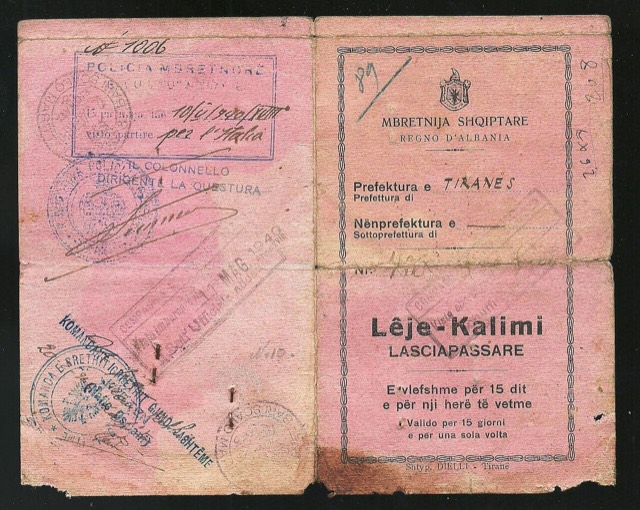
The 1976 constitution's Article 26 banned borrowing and foreign investment. Article 47 of the Albanian Criminal Code made unauthorised departure from the country an act of treason carrying a minimum sentence of ten years and a maximum sentence of death. The border was physically enforced by an electrified metal fence set 600 metres to one kilometre from the actual frontier, with guards stationed at approximately one-kilometre intervals, a cleared soil strip on both sides to detect footprints, and booby traps including tripwires and pressure-activated flares. After 1968, travel abroad was forbidden to all except those on official business.
Relatives of accused dissidents were regularly arrested, ostracised and labelled 'enemies of the people'. Torture was used to obtain confessions; documented testimonies describe prolonged binding, repeated beating sessions, solitary confinement, electric shocks, and extended underground detention. Show trials were common, with defendants denied meaningful participation in proceedings. Western cultural products were banned; beards were prohibited on ostensibly hygienic grounds that also served to limit the visible practice of Islam and Orthodox Christianity. Art was required to conform to socialist realism.
Hoxha suffered a myocardial infarction with arrhythmia in 1973 from which he never fully recovered. He had been diagnosed with diabetes in 1948 and with cerebral ischaemia in 1984. From the late 1970s onwards, in increasingly poor health, he handed most state functions to Ramiz Alia. On 9 April 1985 he suffered ventricular fibrillation; repeated episodes over the following 48 hours led to his death at 02:15 on 11 April 1985, aged 76. The Albanian government declared seven days of mourning with flags at half-mast and all entertainment cancelled.
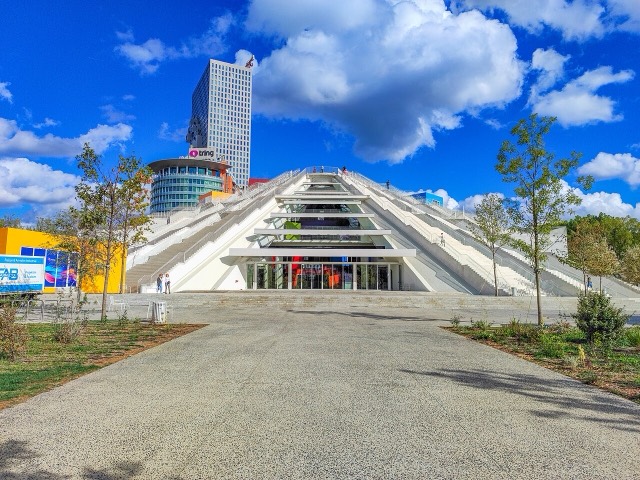
His body lay in state at the Presidium of the People's Assembly for three days before burial on 15 April 1985 following a memorial service on Skanderbeg Square. The government refused foreign delegations at the funeral and condemned the Soviet message of condolences as 'unacceptable'. Ramiz Alia succeeded him as head of state, taking formal control of the party's leadership two days after the funeral. Hoxha's daughter Pranvera, an architect, and her husband Klement Kolaneci designed the Enver Hoxha Museum in Tirana — a white-tiled pyramid described in some sources as the most expensive building ever constructed in Albanian history. It opened in 1988 and was converted into a conference and exhibition centre in 1991, when it was renamed the Pyramid of Tirana.
A 2016 survey by the Institute for Development Research and Alternatives found that 45% of Albanians believed Hoxha had a positive impact on the country's history, while 42% considered his impact negative. Younger respondents (aged 16–35) tended toward more negative assessments; older respondents (over 35) tended toward more positive ones. Respondents in southeastern and southwestern Albania were most favourable, at 50% and 55% respectively. His wife Nexhmije Hoxha continued to defend his legacy after the fall of communism, stating in 2008 that political repression had not originated from Hoxha personally. Albania was the poorest country in Europe for most of the Cold War, and Hoxha's rule left the country in a condition of deep isolation and economic stagnation at the time of his death.
موقع تاريخي · Tiranë
Roughly 170,000 concrete pillboxes built under Enver Hoxha — the most visible physical legacy of the communist state.
مدينة · Gjirokastër
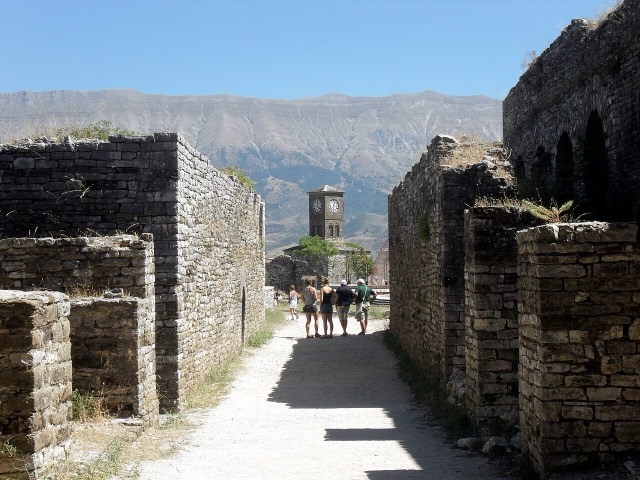
The 'stone city': slate-roofed tower houses on a steep slope beneath one of the Balkans' largest castles.
موقع تاريخي · Tiranë
Built as Enver Hoxha's mausoleum-museum, later a nightclub and NATO base, reopened in 2023 as a youth technology centre.
حقبة تاريخية
Forty-six years under Enver Hoxha and his successor: total collectivisation, the banning of religion, successive breaks with…
حقبة تاريخية
Occupation, a three-way resistance, and the sheltering of Jewish refugees under besa.
حقبة تاريخية
Italy invaded on 7 April 1939; Albania was annexed under the Italian crown until Italy's surrender.
الموضوع
The Directorate of State Security: the secret police of communist Albania, and the institution the House of Leaves museum was…
موقع تاريخي · Tiranë
A five-storey anti-nuclear bunker built for the communist leadership, opened to the public in 2014.
ثمة خطأ في هذه الصفحة؟ نرحب بالتصويبات وتُراجَع في مواجهة سجل المصدر. أخبرنا بما هو خاطئ، وإن أمكن، بالمكان الذي يأتي منه الرقم الصحيح.