Sitio histórico
Albania's Bunkers
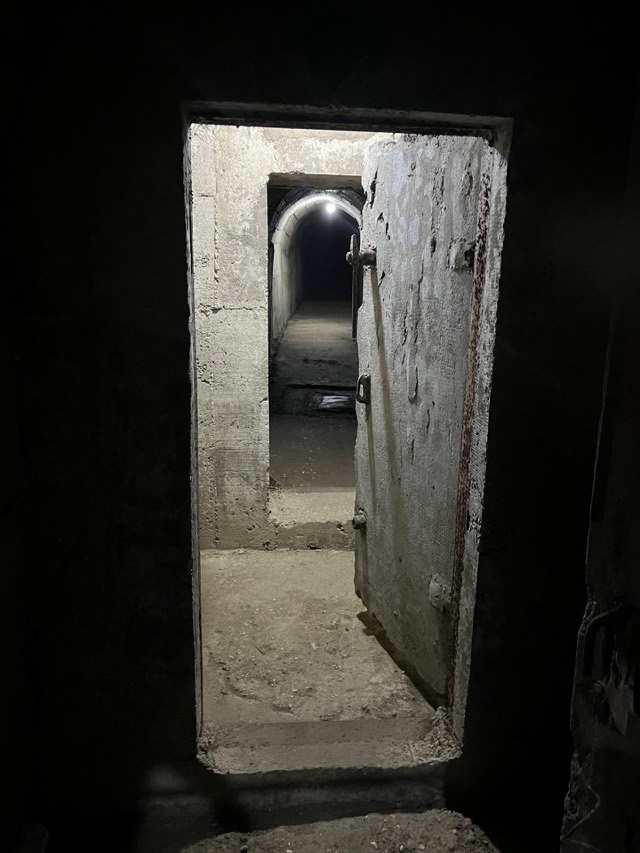
Roughly 170,000 concrete pillboxes built under Enver Hoxha — the most visible physical legacy of the communist state.
🧭 Vista guiada
¿Nuevo en Albania? Cada página comienza con una explicación en lenguaje sencillo que cualquiera podría entender, antes de entrar en los detalles.
⚡ Vista experta
Ya conoces los fundamentos. Directo al contenido, con las explicaciones básicas ocultas. Esta es la vista predeterminada.
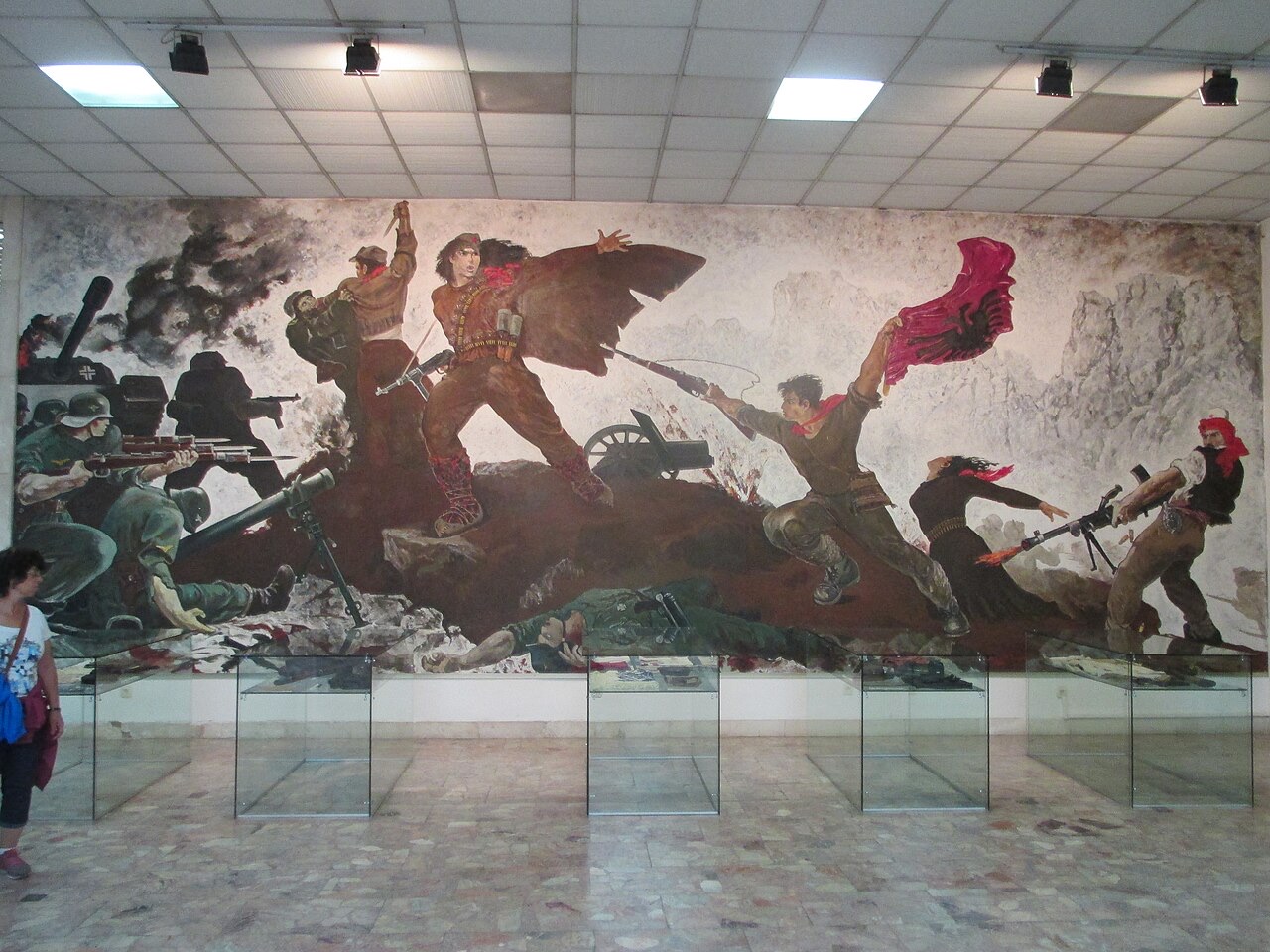
The mosaic on the National History Museum, Tirana · Avi1111 dr. avishai teicher · CC BY-SA 4.0 · Wikimedia Commons
Albania has tens of thousands of small concrete bunkers in fields, gardens and beaches. They were built between the 1960s and 1980s because the country's leader believed Albania would be invaded. No invasion came.
Albania has tens of thousands of small concrete bunkers in fields, gardens and beaches. They were built between the 1960s and 1980s because the country's leader believed Albania would be invaded. No invasion came.
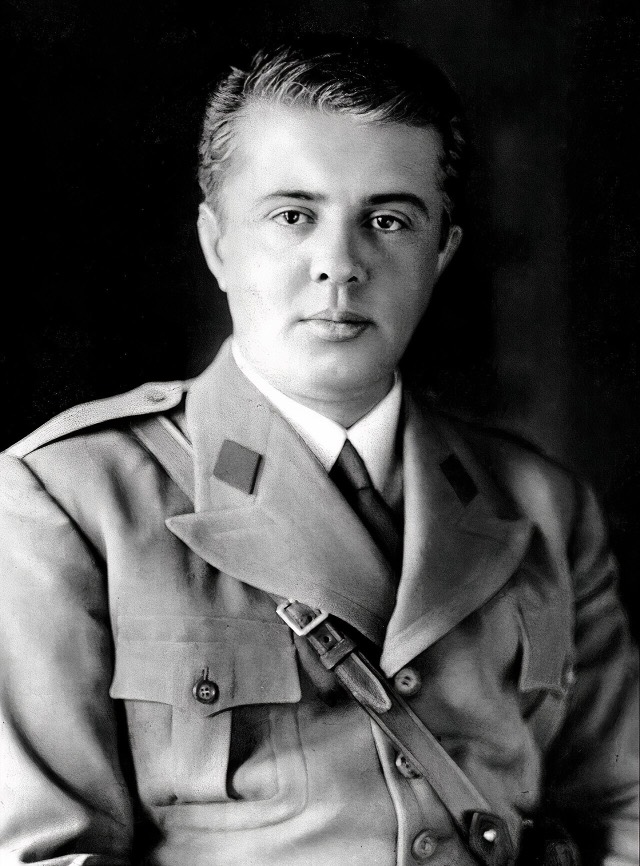
By the late 1960s communist Albania had broken with Yugoslavia (1948), the Soviet Union (1961) and was heading towards a break with China (1978). Enver Hoxha's government concluded that Albania could be attacked by any of them, or by NATO, and that defence had to be total and territorial.
The answer was 'bunkerisation': a programme of small concrete firing positions distributed across the entire country so that any invader would face resistance everywhere.
The figure most often cited is about 173,000. The true number is disputed and no fully reliable count exists. What is not disputed is the cost: the programme consumed enormous quantities of concrete and steel in a country that was short of both, at the expense of housing and infrastructure.
Most are still there — too solid and too numerous to remove economically. Some have been converted into cafés, storage, animal shelters and, in two cases, into the Bunk'Art museums in Tirana. Others sit on beaches and in fields exactly as they were left.
They have become the most recognisable physical symbol of the communist period, which is a kind of irony given they were built to be invisible.
Se trata de relaciones reales en el Atlas — lugares próximos a este y temas a los que pertenece genuinamente. Nada aquí es una recomendación genérica.
Roughly 170,000 concrete pillboxes built under Enver Hoxha — the most visible physical legacy of the communist state.
Forty-six years under Enver Hoxha and his successor: total collectivisation, the banning of religion, successive…
The leader who took Albania out of the Soviet bloc, then out of the Chinese one, and banned religion outright.
A five-storey anti-nuclear bunker built for the communist leadership, opened to the public in 2014.
Esta página se basa únicamente en el inventario curado; aún no se le ha asociado ninguna fuente externa.
¿Algo incorrecto en esta página? Las correcciones son bienvenidas y se contrastan con el registro fuente. Indíquenos qué es incorrecto y, si puede, de dónde procede el dato correcto.