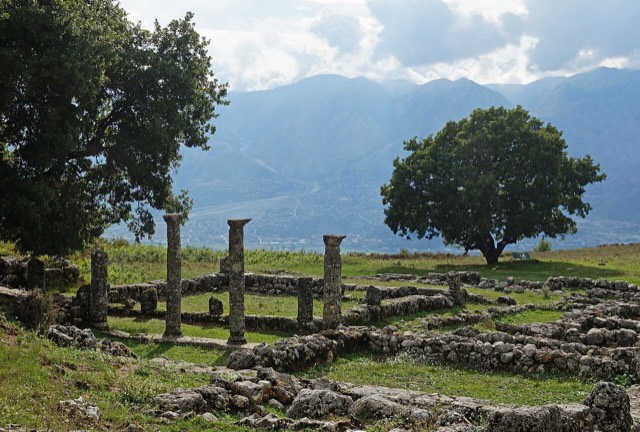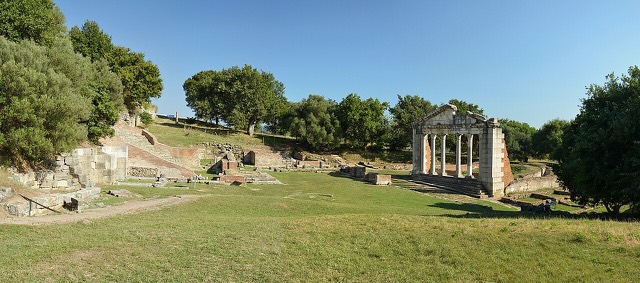
Sitio histórico · Fier
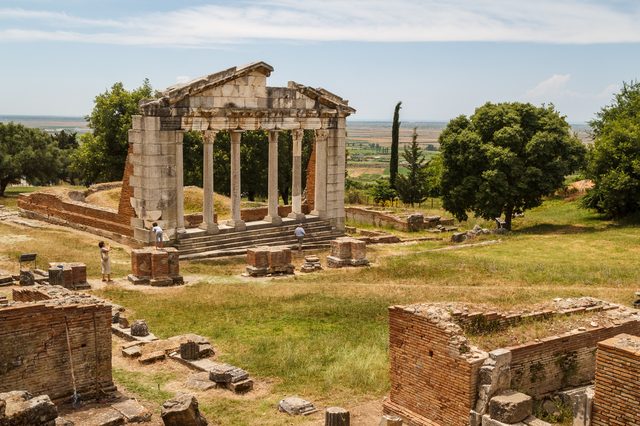
Apollonia
A Corinthian colony that became a Roman university town — Octavian was studying here when Caesar was killed.
Cada condado, cada costa, cada siglo
Vista guiada
¿Nuevo en Albania? Cada página comienza con una explicación en lenguaje sencillo que cualquiera podría entender, antes de entrar en los detalles.
Vista experta
Ya conoces los fundamentos. Directo al contenido, con las explicaciones básicas ocultas. Esta es la vista predeterminada.
Explicación
Illyrians, Greek colonists and Rome, layered on the same coastline for a thousand years.
Guardar
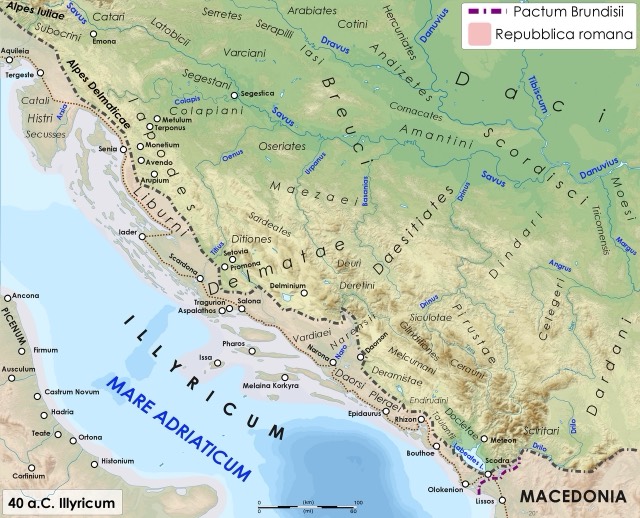
Three groups shaped ancient Albania: the Illyrians who lived here, the Greeks who built cities on the coast, and the Romans who took over and built the road east.
Three groups shaped ancient Albania: the Illyrians who lived here, the Greeks who built cities on the coast, and the Romans who took over and built the road east.
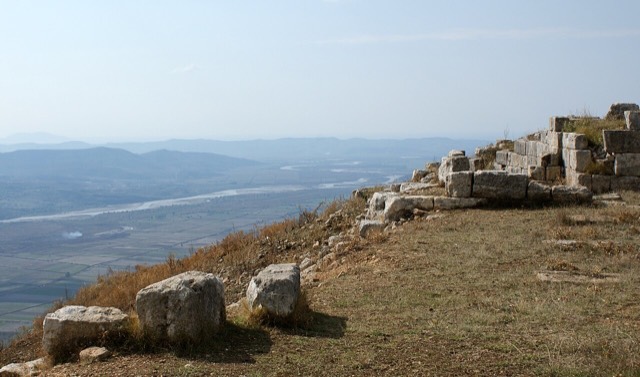
Groups of Indo-European-speaking peoples across the western Balkans from around 1100 BC. They had kingdoms, hill cities like Byllis and Amantia, and a maritime reputation that Rome described as piracy. Rome defeated King Gentius at Shkodra in 168 BC.
Whether modern Albanians descend from the Illyrians is a genuinely open scholarly question, widely asserted and not fully settled.
Corinth and Corcyra founded Epidamnos, now Durrës, in 627 BC, and Apollonia in 588 BC. These were substantial trading cities with theatres, temples and their own coinage. Butrint and Orikum were also Greek foundations.
After 168 BC the region became Roman Illyricum. Rome's decisive contribution was the Via Egnatia, the road that began at Durrës and Apollonia and ran east to Byzantium, making this coast the gateway between Italy and the eastern empire for a thousand years.
The amphitheatre at Durrës, the largest in the Balkans, dates from this period.
When the Roman Empire was divided in 395, this coast fell to the eastern half, and for most of the next eight centuries it was Byzantine territory — contested by Goths, then by Slavs and Bulgarians from the 6th century onward, and later by Normans from southern Italy, who besieged Durrës in 1081.
The name of the people appears in this period. Ptolemy's geography in the 2nd century AD already mentions a tribe called the Albanoi and a town, Albanopolis, in the hills east of Durrës, and Byzantine writers of the 11th century speak of the Arbanitai. The first Albanian state, the Principality of Arbanon around Krujë, emerged in 1190; in 1272 Charles of Anjou proclaimed a 'Kingdom of Albania' on the coast, and Serbian, Venetian and local lords fought over the land until the Ottoman conquest.
Systematic archaeology here began in the 1920s, with a French mission at Apollonia and an Italian one at Butrint. Under communism archaeology became a national project: the regime funded digs across the country and promoted the Illyrians as proof of an unbroken Albanian presence, an argument that still colours the debate. Since 1991 foreign teams have returned, often working alongside the Albanian Institute of Archaeology.
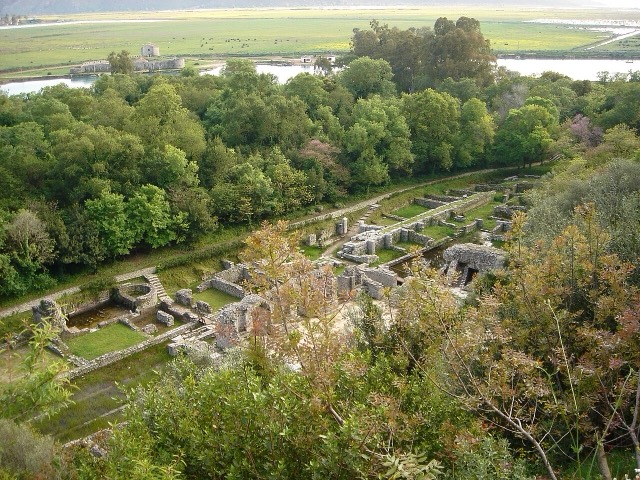
Butrint, Apollonia, Byllis, Antigonea, Amantia and the Durrës amphitheatre — all covered in detail on their own pages in this Atlas.
Sitio histórico · Fier
A Corinthian colony that became a Roman university town — Octavian was studying here when Caesar was killed.
Sitio histórico · Vlorë
A Greek, Roman, Byzantine, Venetian and Ottoman city layered on one wooded peninsula — Albania's first UNESCO site.
Período histórico
The Indo-European tribes of the western Balkans, and the ancestors most Albanians claim.
Período histórico
The Via Egnatia crossed here, making the coast Rome's gateway to Greece and the East.
Período histórico
Corinthian and Corcyraean foundations at Epidamnos, Apollonia and Orikum along the coast.
Guía
Butrint, Apollonia, Byllis, Antigonea and Amantia: five sites that cover 2,500 years between them.
¿Algo incorrecto en esta página? Las correcciones son bienvenidas y se contrastan con el registro fuente. Indíquenos qué es incorrecto y, si puede, de dónde procede el dato correcto.