Giai đoạn lịch sử
Modern Albania
NATO membership in 2009, EU candidate status in 2014, and tourism growing into a central industry.
Mọi hạt, mọi bờ biển, mọi thế kỷ
Chế độ hướng dẫn
Mới tìm hiểu về Albania? Mỗi trang mở đầu bằng một giải thích ngôn ngữ đơn giản mà bạn có thể đọc cho một đứa trẻ mười tuổi, trước khi đi vào chi tiết.
Chế độ chuyên gia
Bạn đã nắm được những điều cơ bản. Đi thẳng vào nội dung, với các giải thích đơn giản được ẩn đi. Đây là chế độ mặc định.
Công nghiệp
The fastest-growing part of the economy, concentrated on the southern coast and in a short summer season.
Lưu
Tourism has grown very fast in Albania since about 2015. Most visitors come in July and August and go to the coast. That makes the season short and the coast crowded, while mountain areas and cities see fewer people.
Tourism has grown very fast in Albania since about 2015. Most visitors come in July and August and go to the coast. That makes the season short and the coast crowded, while mountain areas and cities see fewer people.
Tourism is described as a key element of Albania's economic activity, though the sector is characterised as still underdeveloped relative to its potential. Albania recorded approximately 3.8 million visitors in one year, ranking it 25th among European countries by visitor numbers. According to the Albanian Institute of Statistics, around 4.73 million foreign citizens visited Albania in 2016, and foreign tourism increased sharply from 2019 onwards.
Albania has attracted coverage in international travel media: Lonely Planet ranked it the number-one destination to visit in 2011, and The New York Times placed it fourth among 52 destinations for 2014. A Huffington Post article in 2013 cited ten reasons to visit. The country's official tourism slogans have changed over time; the previous slogan was 'A New Mediterranean Love', replaced by 'Go Your Own Way'.
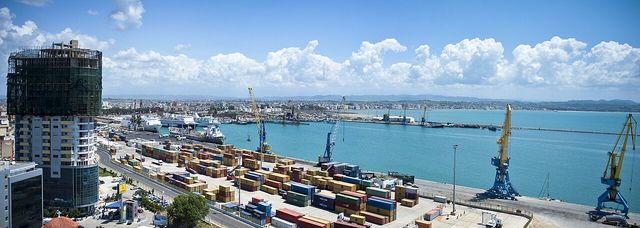
International hotel chains have entered the Albanian market, including Marriott, Hyatt, Maritim Plaza, Hilton Garden Inn, MK Hotels, and Best Western in Tirana, and Melia Hotels International in Durrës. Other chains were, at the time of writing, awaiting approval to begin operations, primarily in Tirana, the Albanian Alps, and along the Albanian Riviera.
Albania lies in southeastern Europe, bordered by Montenegro to the northwest, Kosovo to the northeast, North Macedonia to the east, and Greece to the south. Its entire western boundary is formed by the Adriatic and Ionian seas, which together make up the Mediterranean Sea coastline. That coastline measures approximately 481 km (299 mi) and comprises sandy and rocky beaches, bays, caves, cliffs, capes, and lagoons.
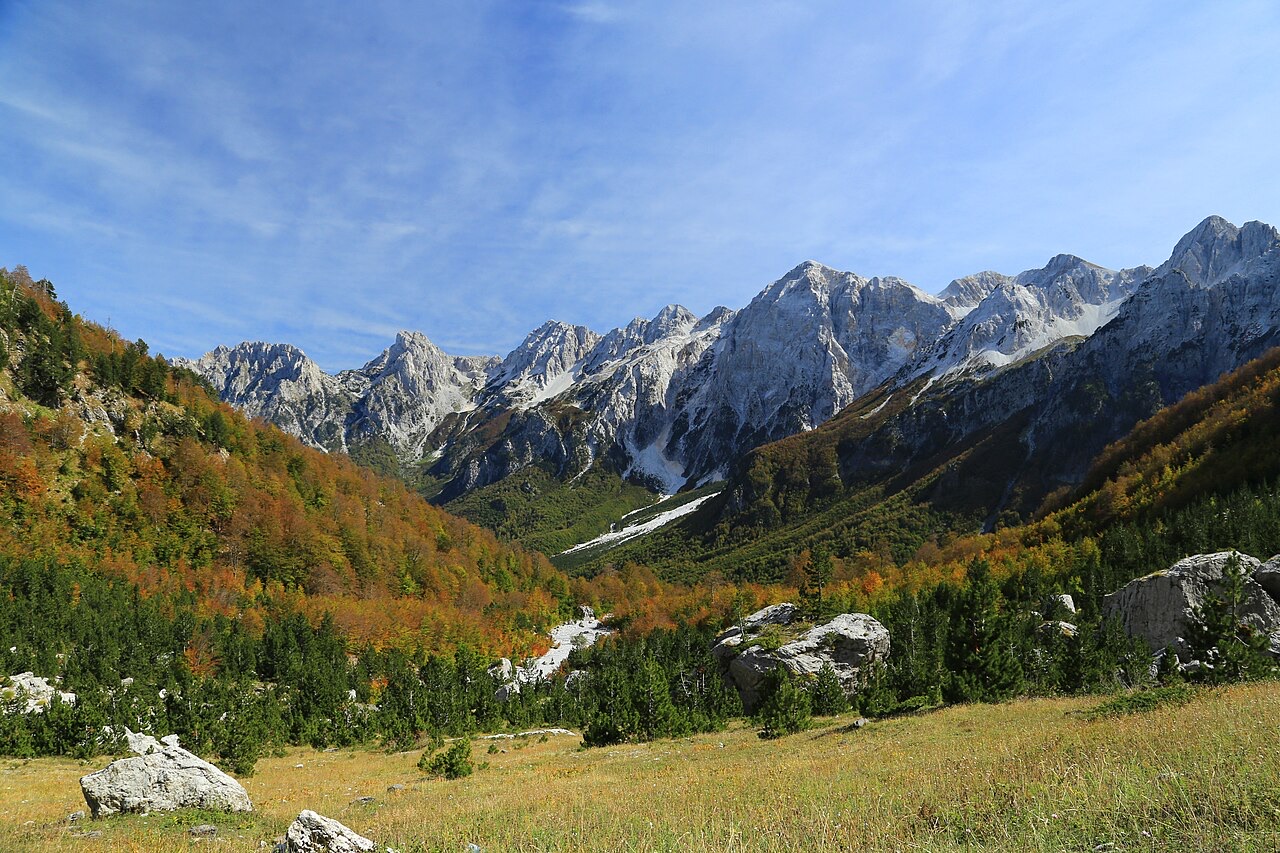
The country's interior ranges from the Albanian Alps, Sharr, Skanderbeg, Korab, Pindus, and Ceraunian mountain ranges to the lower coastal zones. The country has a predominantly Mediterranean climate, but a wide range of microclimates exists owing to differing soil types and topography. Coastal areas record the warmest temperatures, while the northern and eastern hinterlands experience snowy, forested conditions. This climatic and topographic variety shapes the distribution of tourism activity across the country.
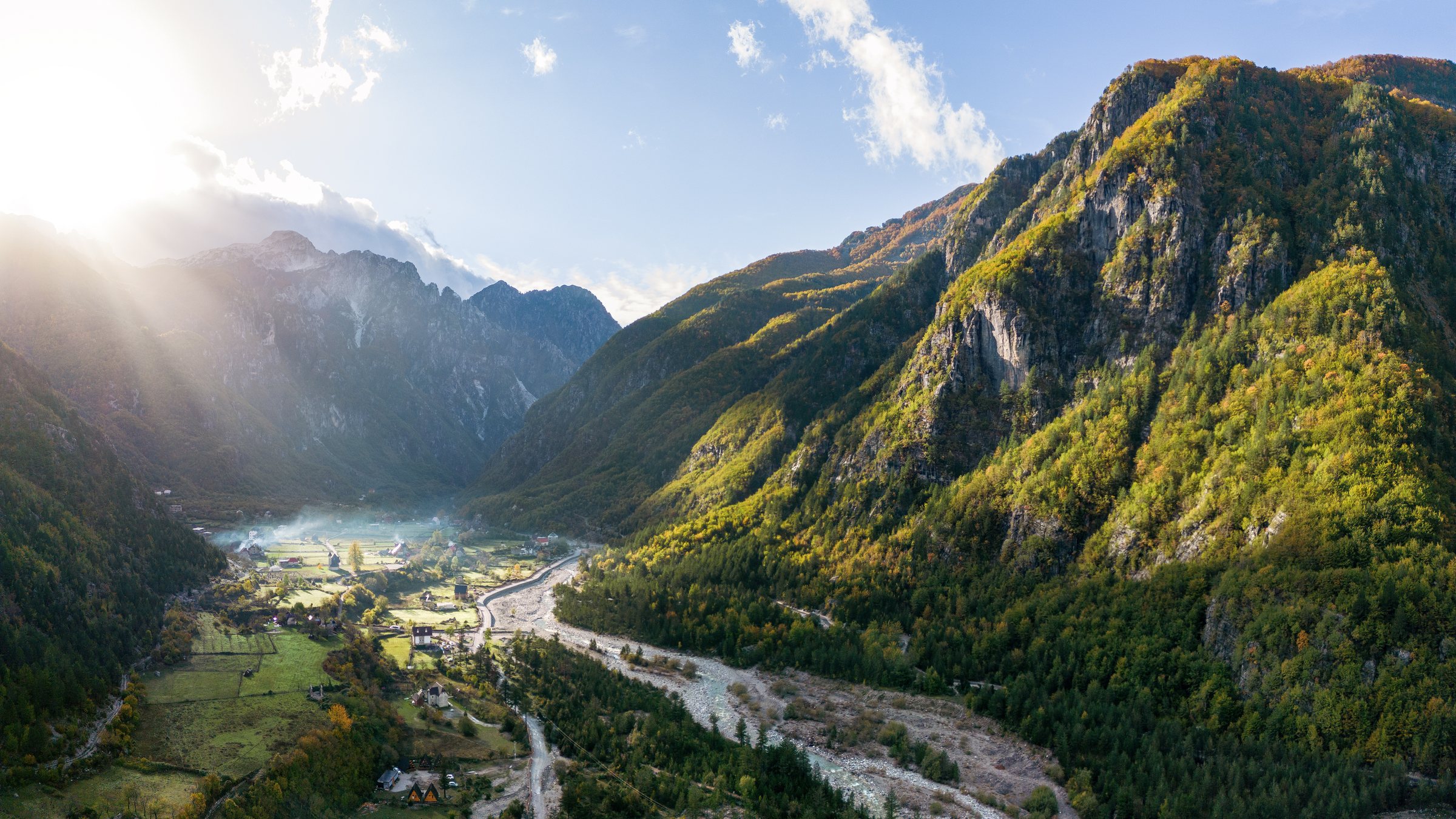
Northern Albania's tourism profile is defined by its alpine terrain, glacial lakes, and river valleys. The Albanian Alps contain Valbonë Valley National Park and Theth National Park, both offering fishing, mountaineering, and trekking. The two parks are separated by the Valbona Pass, which covers 1,795 ha (17.95 km²). The village of Theth is surrounded by peaks exceeding two thousand metres, including Radohima to the west, Arapi and Poplluka to the north, and Jezerca to the east, and is associated with Roman Catholic churches and folk traditions.
Gashi River and Rajcë hold status as a UNESCO World Heritage Site and Nature Reserve. The river originates in the Albanian Alps and flows north until it joins the Valbona River. Lake Koman, also within the Albanian Alps, is served by a ferry crossing considered one of the most popular in Southern Europe. Nikaj-Mërtur Regional Nature Park, in the Dukagjin highlands, borders Valbonë Valley National Park to the northeast and Theth National Park to the north and northeast, and features alpine landscapes, deep valleys, vertical cliffs, and dense forests.
Shkodër was founded in the 4th century BC by the Illyrian tribes of the Ardiaei and Labeates and retains a historic street pattern of narrow roads flanked by tall stone walls and gates. The Rozafa Castle, east of the city, is among the region's most prominent architectural features. Lake Shkodër, described as the largest lake in Southern Europe, draws visitors for sailing, fishing, and water sports. The northern coast's main seaside towns are Shëngjin, a port town that hosts the UNUM electronic music festival at the Rana e Hedhun sand dune, and Velipoja, known for its pine tree reserves and its reportedly therapeutic beach sand.
Central Albania covers primarily the counties of Durrës, Tirana, Fier, and Elbasan. The region's physical geography is dominated by the Myzeqe Plain in the west, the Skanderbeg range in the centre, and the Korab Mountains in the east. It alternates between archaeological sites, castles, long sandy beaches, and lagoons.
Tirana, officially designated 'The Place Beyond Belief' by local authorities, is noted for its cultural heritage, religious diversity, colourful buildings, and a mix of Italian and Socialist-era architecture. Dajti Mountain to the city's east is accessible by cable car and forms Dajti National Park; it is known locally as the Balcony of Tirana for its views over the city. Krujë, the medieval capital of the Principality of Arbër, is called the Adriatic Balcony by residents on account of its panoramic position.
Durrës is identified as one of the oldest cities in the world and contains the Durrës Amphitheatre, listed as among the largest in the Balkan Peninsula. Apollonia, one of the country's most visited archaeological sites, was inhabited by the Taulantii and Corinthians in antiquity; archaeological investigation began in 1916 and much of the site remains unexcavated. The Divjaka-Karavasta National Park contains the Karavasta Lagoon, the largest lagoon in Albania and one of the largest in the Adriatic Sea, separated from the sea by a narrow sand strip.
Several national parks lie within the central region. Lura-Dejes Mountain National Park is known for twelve glacial lakes formed during the Würm glacial period. Shebenik-Jabllanicë National Park, described as one of Albania's newest national parks, holds glacial lakes and several species considered rare in the Balkans. Korab-Koritnik Nature Park encompasses Mount Korab, the country's highest peak, shared with North Macedonia, and contains a karst and limestone terrain with valleys, rivers, glacial lakes, caves, and canyons. Lagoons including Patoku, Kunë-Vain, and Narta are noted for birdwatching.
Southern Albania's landscape is shaped principally by the Ceraunian and Pindus mountain ranges. The Albanian Riviera, running along the southwest coast, is a destination for beaches, nightlife, and music festivals including the Kala Festival. Towns and villages along the Riviera include Dhërmi, Lukovë, Palasë, Qeparo, and Borsh.
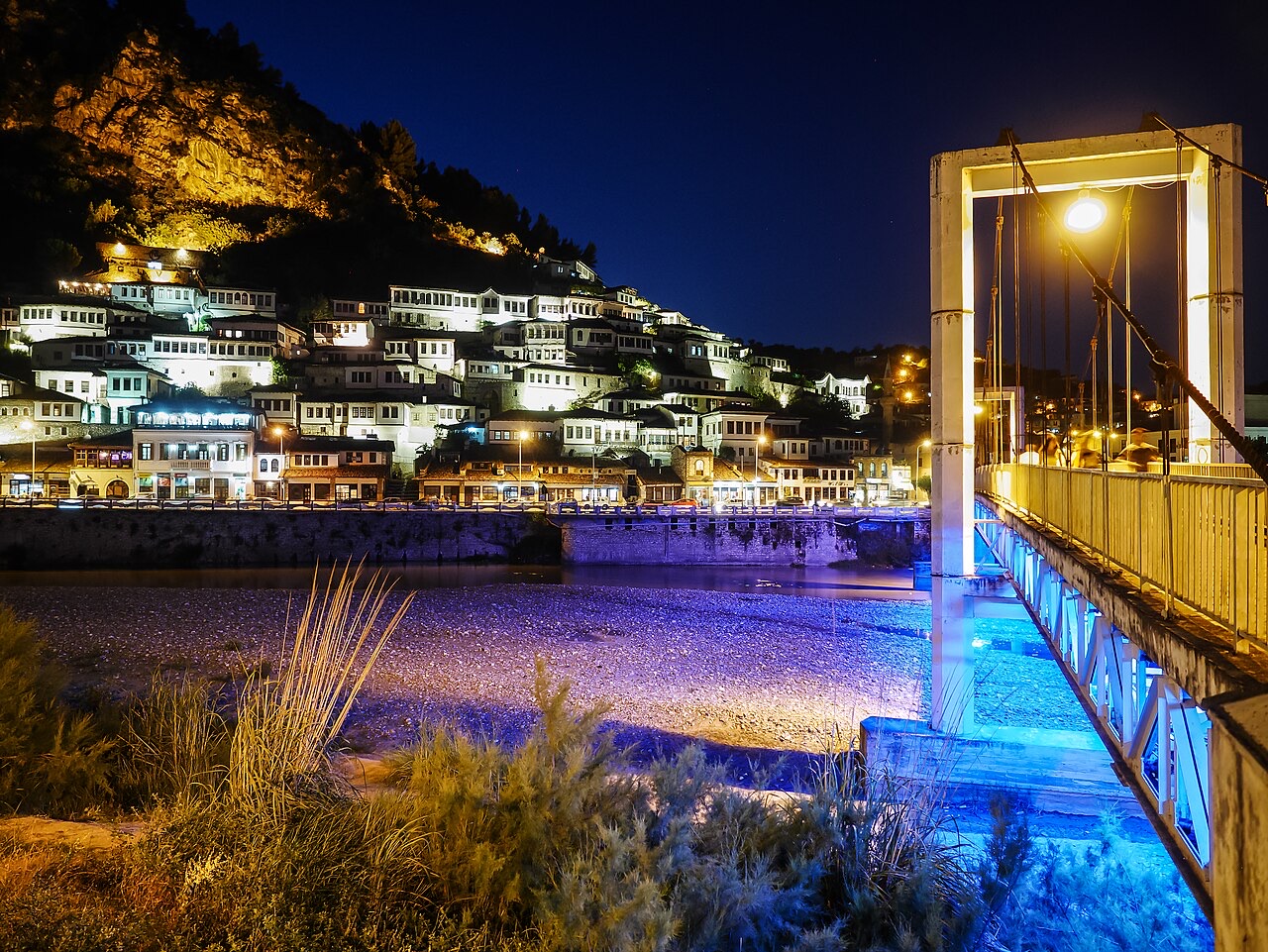
Butrint, a UNESCO World Heritage Site and national park in the south near Sarandë, was inhabited since prehistory and established as a Greek and Roman colony during the Bronze Age. Surviving monuments include ancient city walls, a baptistery, a basilica, a theatre, and castles, set within woodland adjoining Lake Butrint and the Mediterranean Sea. Gjirokastër and Berat are jointly listed as UNESCO World Heritage Sites. Berat, described as one of the world's oldest continuously inhabited cities, is known for its layered Illyrian, Roman, Greek, Byzantine, and Ottoman heritage, and for the architectural feature that gives it the informal designation 'city of a thousand windows'. Gjirokastër is described as a rare example of a well-preserved Ottoman town built by estate farmers, with stone houses reaching up to five storeys.
Sarandë is a coastal town on a horseshoe bay between mountains and hills. Its attractions include the Blue Eye Spring, the ancient city of Phoenice, ruins of a synagogue, a monastery, and castle remains. Llogara National Park, within the Ceraunian Mountains above the Riviera, is associated with ecotourism, hiking, and paragliding. Fir of Hotova-Dangëll National Park is the country's largest national park, extending through the remote mountains of Nemërçka and Tomorr between the Vjosa and Osum valleys; the Lengarica Canyon near Përmet and the thermal springs of Banjat e Bënjës are among its most visited features.
Korçë is noted for its diverse architectural styles—including Historicism, Art Nouveau, and Neoclassicism—and for hosting Albania's largest carnival, held before Orthodox Easter. Its heritage includes the Illyrian Kamenica Tumulus. Voskopojë, which reached its peak in the 18th century, is considered a significant site by local Orthodox Christians; its surviving churches are described as among the most representative examples of 18th-century ecclesiastical art in the Balkans. Prespa National Park straddles the border triangle of Albania, Greece, and North Macedonia and encompasses both Lake Prespa and Small Prespa Lake, along with the island of Maligrad, which contains a monastery and caves.
Albania's castles and fortifications span from early antiquity through the medieval period. Originally constructed from earth and wood, they were later built in stone, and the majority were modified through successive periods of occupation and changing military technology. The article identifies several as prominent tourist sites.
Rozafa Castle at Shkodër occupies a rocky hill enclosed on three sides by the Buna, Kir, and Drin rivers. Originally an Illyrian stronghold when Shkodër served as the royal capital of the Ardiaei and Labeates in the 4th century BC, it was captured by Rome in 167 BC. Its current name first appears in records from the early Middle Ages, and it was later converted into a mosque under Ottoman rule. The castle is associated with a legend about a woman buried in its foundations.
Rodoni Castle stands on the Cape of Rodon, adjacent to the Adriatic Sea. Construction began in 1450 on the orders of Skanderbeg following the First Siege of Krujë, when the League of Lezhë resolved to improve coastal fortifications against the Ottomans. The name derives from the Illyrian deity Rodon. Petrelë Castle, near Tirana, has a triangular structure with two observation towers; its earliest fortifications are believed to date from the 3rd century, with 9th-century expansion. It functioned as a base for Gjergj Kastrioti Skënderbeu during his revolt against the Ottoman Empire.
Prezë Castle, a small fortification whose construction began in the 14th century and was completed in the early 15th century, controlled the road between Durrës and Krujë and served as a communication relay between the castles of Petrelë and Krujë. Ali Pasha Castle sits on a small island at the mouth of the Vivari Channel within Butrint National Park; it is a rectangular structure with battered walls, two battered round towers carrying cannons on its seaward side, and two irregularly sized battered square towers with firing loops or windows. It is named after Ali Pasha of Ioannina.
Albania's variable elevation produces a range of notable road routes, from highland mountain passes to coastal roads running along the Adriatic and Ionian seas. The coastal roads are described as mostly new and in good condition.
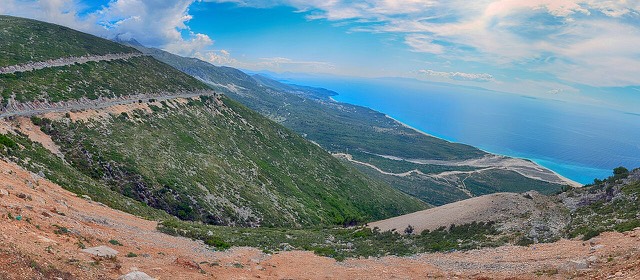
National Road 8 (SH8), running from Vlorë to Sarandë along the Albanian Riviera, passes through the Llogara Pass within Llogara National Park and runs alongside the Ceraunian Mountains. The section approaching the Llogara Pass is described as one of the most scenic routes in the Balkan Peninsula. The A1 Motorway, connecting Rrëshen to Kalimash, links Albania with Kosovo and provides views of the northern Albanian mountains along the Fan River Valley.
Other noted routes include SH78 from Jergucat to Delvinë, which crosses the Muzina Pass overlooking the Dropull Plain, and SH75 from Korçë to Ersekë and Përmet. The Via Egnatia, which historically connected the Adriatic coast with Byzantium, now runs along the route of modern National Road 3 (SH3).
Agritourism—combining agricultural activity with tourism in rural settings—is identified as a growing sector in Albania. The Albanian government has prioritised its development as a rural economic diversification strategy, embedding it within the country's '100+ Villages Programme'.
Emerging agritourism areas cited in the northern region include Pukë, the Ulëz reservoir, Vau i Dejës, the villages of Barbullush and Fishtë in Zadrima near Lezhë, Katund i Vjetër in the Mirdita region near Rubik, Shishtavec near Kukës, and the alpine area of Nikaj-Mërtur in the Lekbibaj region near Bajram Curri. Fishing villages along Lake Shkodër—Shirokë, Zogaj, and Grile or Omaraj—are also identified as emerging destinations. In the capital region, agritourism areas are noted in the southern and eastern outskirts of Tirana in the direction of Durrës, Elbasan, and Dajti.
Giai đoạn lịch sử
NATO membership in 2009, EU candidate status in 2014, and tourism growing into a central industry.
Chủ đề · Vlorë
The 120 km of Ionian coast between the Llogara pass and Sarandë, where the Ceraunian mountains fall straight into the sea.
Chủ đề
An upper-middle-income economy of roughly $30 billion, led by services and tourism, with remittances and construction close…
Sân bay · Fier
A new airport under construction on the Narta lagoon edge, intended to serve the southern coast.
Hướng dẫn
June and September give you the coast without the July–August crush; May and October are the best value; the mountains have a…
Hướng dẫn
A market driven by the diaspora, tourism and construction — and shaped by an unresolved post-communist title history.
Chủ đề
Population, GDP, inflation, wages, tourism, trade and energy — each with its observation period, its producer and a link to the…
Có thông tin sai trên trang này? Chúng tôi hoan nghênh các đề nghị đính chính và sẽ đối chiếu với hồ sơ nguồn. Hãy cho chúng tôi biết điều gì sai và, nếu có thể, nguồn số liệu chính xác là ở đâu.