Город · Tiranë
Tirana
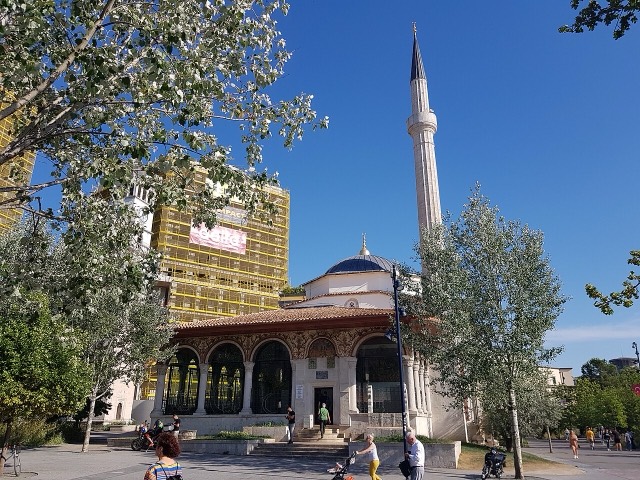
The capital: a fast-changing city of painted blocks, Ottoman survivals and new towers, under Mount Dajti.
Каждый округ, каждый берег, каждый век
Режим с пояснениями
Впервые об Албании? Каждая страница начинается с доступного объяснения, понятного даже десятилетнему ребёнку, и лишь затем переходит к подробностям.
Режим эксперта
Основы вам уже известны. Сразу к существу вопроса, без простых пояснений. Это режим по умолчанию.
Промышленность
Call centres and IT services for the Italian market, and a small but growing software sector.
Сохранить
Because many Albanians speak Italian, a lot of call centres serving Italian companies are based in Albania. There is also a growing number of software firms, mostly in Tirana.
Because many Albanians speak Italian, a lot of call centres serving Italian companies are based in Albania. There is also a growing number of software firms, mostly in Tirana.
Following the collapse of the communist regime in 1990, Albania experienced a mass exodus of refugees to Italy and Greece. Real GDP fell by more than 50% from its 1989 peak before reform efforts began in earnest in early 1993. The democratically elected government that took office in April 1992 launched a reform programme covering price and exchange-system liberalisation, fiscal consolidation, monetary restraint, and a firm income policy. Structural components included privatisation of agriculture, state housing, and small industry, followed by transport, services, and small and medium-sized enterprises. Large state enterprises began to be privatised from 1995.
The initial results were substantial. Real GDP grew by an estimated 111% in 1993, 89% in 1994, and more than 119% in 1995, with most growth concentrated in the private sector. Annual inflation fell from 25% in 1991 to zero, and the Albanian currency, the lek, stabilised. Progress stalled from 1995 onward, however, with negligible GDP growth in 1996 and a contraction of 59% in 1997. The collapse of financial pyramid schemes in early 1997—which had attracted deposits from a substantial portion of the population—triggered social unrest resulting in more than 1,500 deaths, widespread property destruction, and a further drop in GDP. The lek lost up to half its value during the crisis before rebounding to its January 1998 level. A new government installed in July 1997 moved to restore order and revive economic activity. By the end of the 1990s, GDP had approximately recovered to its 1989 level.
Albania's economy is classified as a developing mixed economy. Its three largest sectors by share of GDP are services (54.1%), industry (24.2%), and agriculture (21.7%). The country holds natural resources and its economic activity spans agriculture, food processing, lumber, oil, cement, chemicals, mining, basic metals, hydropower, tourism, textiles, and petroleum extraction. The strongest industries are identified as energy, mining, metallurgy, agriculture, and tourism. Primary industrial exports are clothing and chromium.
By standard Western European measures, Albania remains a low-income country. GDP per capita expressed in Purchasing Power Standards stood at 35% of the EU average in 2008, according to Eurostat. The unemployment rate was 12.4% in 2018 and 11.82% in 2021. GDP (PPP) reached an estimated $40.822 billion in 2021, with a real growth rate of 8.52% that year. Inflation was 2.04% in 2021. Foreign direct investment, according to Santander Bank, accounts for 50% of GDP. Remittances from Albanians working abroad represent approximately 15% of GDP, largely from residents in Greece and Italy, and help offset a large trade deficit.
The informal sector forms a portion of the economy, though its precise share is uncertain due to its nature. The European Commission estimated in 2016–2017 that the illegal drug trade accounted for approximately 2.6% of Albania's economy, a figure considerably higher than in Western European states such as France, Italy, Germany, and the United Kingdom, where the drug industry's share of national output ranges from roughly 0.07% to 0.19%.
Agriculture employs 47.8% of the Albanian population and contributes approximately 18.9% to GDP. Approximately 24.31% of the country's land area is used for agricultural purposes. During the communist period, agriculture was heavily centralised and state-run; most agricultural land was privatised in 1992, which substantially improved peasant incomes. Today, the sector consists primarily of small family operations and subsistence farming, constrained by a lack of modern equipment, unclear property rights, and fragmented, inefficient plots.
The main agricultural products include tobacco, fruits (oranges, lemons, figs, grapes), vegetables (olives, wheat, maize, potatoes), sugar beets, meat, honey, dairy products, and medicinal and aromatic plants. In 2018, production volumes included 391,000 tonnes of maize, 288,000 tonnes of tomatoes, 254,000 tonnes of potatoes, 240,000 tonnes of wheat, 239,000 tonnes of watermelons, 184,000 tonnes of grapes, 120,000 tonnes of cucumbers, 117,000 tonnes of olives, and 108,000 tonnes of apples, among others.
Albanian viticulture has a long recorded history. Ancient Roman writer Pliny described Illyrian wine as 'very sweet or luscious' and placed it third among all wines. The oldest vine seeds found in the region are estimated at 40,000 to 60,000 years old, dating to conditions when the vine grew naturally during the ice age. Albania produced an estimated 17,500 tonnes of wine in 2009. During the communist period, the production area expanded to approximately 20,000 hectares.
Tourism is one of Albania's fastest-growing sectors. By 2014, it directly contributed approximately 6% to GDP. International arrivals increased from roughly 500,000 in 2005 to more than 4.2 million by 2012—a rise of over 700% in seven years. Arrivals reached approximately 5.1 million in 2017, around 10 million in 2023, and, according to the article, exceeded 12 million in 2025, generating revenue in excess of $5.72 billion annually. Tourism's share of GDP rose from 20.6% in 2019 to 26.4% in more recent figures. A 2015 USAID report estimated tourism's total contribution—including investment, construction, and service-industry effects—at around 17% of GDP in 2013.
Coastal tourism dominates the sector. Albania's coastline stretches approximately 360 kilometres along the Adriatic and Ionian seas, encompassing sandy beaches, rocky coves, lagoons, capes, sheltered bays, gravel shores, and sea caves. The Ionian coast, commonly referred to as the Albanian Riviera, attracts the largest share of beach-oriented visitors. Several major cities—Durrës, Vlorë, and Sarandë—are located on these coastlines. Lake Komani in northern Albania is widely described as one of the most scenic ferry routes in Europe, often compared to Scandinavian fjords for its steep mountain slopes and narrow waterways.
Cultural and heritage tourism adds a further dimension, with ancient cities, Ottoman-era architecture, and UNESCO World Heritage Sites drawing visitors interested in historical sites. The majority of international tourists originate from neighbouring Balkan states and EU countries. Investment in road networks and airport connectivity has improved accessibility; most major European capitals are reachable within two to three hours by air. Albania plans to build two additional airports in the south, primarily to serve tourism demand.
Albania is one of only two countries in the world—the other being Paraguay—whose entire electricity production depends on hydroelectric power. In 2021, electricity consumption was 6.51 billion kWh, against domestic production of 5.31 billion kWh, with the remainder imported. Major hydroelectric stations include the Fierza, Koman, and Vau i Dejës plants on the Drin river, and the Banjë and Moglicë plants on the Devoll river; the latter two were projected to increase national electricity production by nearly 17%. Energy shortages caused by this heavy reliance on hydropower, combined with inadequate infrastructure, have constrained business investment.
In December 2023, construction began on a 400 kV interconnector between Albania and North Macedonia, intended to improve cross-border electricity connectivity and integrate Albania more fully into the regional network. Also in December 2023, a 140 MW solar park covering 200 hectares at Karavasta, operated by Voltalia SA, became operational. A 2023 auction awarded 222.48 MW of onshore wind capacity.
The Trans Adriatic Pipeline became operational in 2020. Its Albanian section runs approximately 215 kilometres onshore and 37 kilometres offshore in the Adriatic. The pipeline begins at Qendër Bilisht in the Korça region on the border with Greece and reaches the Adriatic coast 17 kilometres north-west of Fier. Infrastructure along the route included eight block valve stations, one landfall station, approximately 51 kilometres of new access roads, 42 refurbished bridges, and three new bridges. A compressor station is located near Fier, with an additional compressor planned near Bilisht if capacity is expanded to 20 billion cubic metres. A separately planned US$1.2 billion AMBO pipeline to carry crude oil between Burgas in Bulgaria and Vlora did not advance beyond planning.
Albania holds the second-largest oil deposits in the Balkan Peninsula and the largest onshore oil reserves in Europe. Oil exploitation began in 1928 at the Kuçovë oil field and expanded a year later to Patos, initially from sandstone reservoirs. During the periods 1929–1944 and 1945–1963, all production came from sandstone reservoirs; from 1963 onward, carbonate reservoirs also came into production. Up to 1963, sandstone formations had produced a total of 400,974,649 tonnes of oil.
Crude output in 2013 amounted to more than 1.2 million tonnes, of which Canada's Bankers Petroleum contributed 1.06 million tonnes, Canada's Stream Oil contributed 87,063 tonnes, and state company Albpetrol produced 37,406 tonnes independently, with the remainder from other foreign firms. Oil and gas reserves remain the property of the Albanian state, which grants rights for evaluation, exploration, production, refining, and transport to private partners. In March 2016, affiliates of China's Geo-Jade Petroleum purchased drilling rights to the Patos-Marinzë and Kuçovë oil fields from a Canadian company for €384.6 million. China became Albania's main trading partner by March 2016, accounting for 7.7% of total international trade—exceeding trade with Greece and Turkey.
Albania has faced sustained international scrutiny regarding money laundering and the penetration of organised-crime proceeds into its formal economy. The United States Department of State's 2025 International Narcotics Control Strategy Report identified criminal proceeds as being laundered through real estate purchases, construction projects, virtual assets, and business development. The 2025 Global Organized Crime Index described Albania as a prominent money-laundering destination, stating that criminal organisations exploit the real estate, tourism, and construction sectors to legitimise illicit profits. International assessments link the problem to organised crime, corruption, high informality, weaknesses in law enforcement, and the widespread use of cash.
Construction has been singled out as the most exposed sector. The Global Organized Crime Index stated that Albania's construction sector is heavily infiltrated by illicit funds, causing market distortions, while high economic informality makes detection difficult. Reuters reported in 2025 that experts consider Albania a hub for gangs laundering billions of euros from drug and weapons trafficking, associating the phenomenon with the prevalence of luxury vehicles and frequently empty new apartment blocks in Tirana.
The relationship between illicit finance and state institutions has become a source of political controversy. The Global Organized Crime Index reported that corruption within political and law-enforcement institutions continues to facilitate organised crime and creates unfair competition for legitimate businesses. Critics of Prime Minister Edi Rama have argued that public-private partnerships, strategic-investor status, public tenders, and weak regulatory safeguards have allowed politically connected interests and illicit capital to gain influence during his tenure. In 2026, Reuters reported a corruption investigation into Deputy Prime Minister Belinda Balluku concerning alleged interference in two construction contracts worth more than €200 million; Balluku denied wrongdoing. Earlier scrutiny had focused on the Albanian incinerators scandal, which prosecutors alleged involved illegal contract awards, corrupt payments, and fake invoices.
Albania was removed from the Financial Action Task Force grey list in 2023, and the Special Structure against Corruption and Organized Crime (SPAK) has seized assets in several cases. The government has pointed to these developments, along with justice reform and economic growth, as evidence of progress. However, international reports continue to describe money laundering, informal finance, corruption, and criminal influence over legitimate sectors as major structural vulnerabilities.
Albania's motorway network was extensively modernised during the 2000s and remained partly under construction as of the time of writing. Three major motorways—the A1, A2, and A3—are the primary routes; when all corridors are completed, the network is projected to total approximately 759 kilometres, linking Albania to all neighbouring countries. Tirana International Airport Nënë Tereza, named after the Albanian-born Catholic missionary Mother Teresa, is the principal air entry point and handled over 5.2 million passengers per year in recent figures. Kukës Airport in the north became operational in April 2021, initially serving only Istanbul and Zurich, with Vienna, Basel/Mulhouse, and Memmingen added in 2022. Two further airports in the south are planned, primarily for tourism.
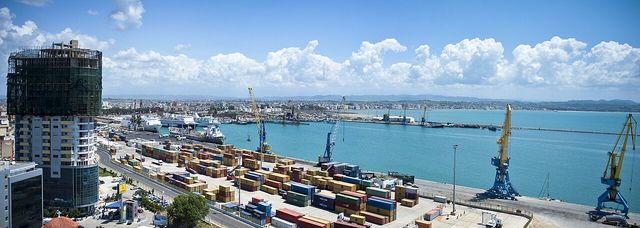
The largest seaport is the Port of Durrës, which ranked as one of the largest passenger ports on the Adriatic and Ionian Sea as of 2014, with an annual passenger volume of approximately 1.5 million. Other seaports include Vlorë, Sarandë, and Shëngjin. The national railway company, Hekurudha Shqiptare (HSH), administers the rail network; rail use declined significantly after 1990 as car ownership and bus travel increased. Poor road and rail conditions have been identified as a long-standing barrier to sustained economic growth, and EU funds have been directed toward improvements.
Albania applied for EU membership in 2009 and received official candidate status in 2014. Membership negotiations have been conditional on democratic and judicial reforms. The European Parliament warned in early 2017 that the 2017 parliamentary elections must be free and fair before negotiations could open, citing concerns about selective justice, corruption, the length of judicial proceedings, and political interference in investigations. In May 2019, European Commissioner Johannes Hahn recommended that the EU open membership talks with Albania. EU membership remains a stated priority, partly because it is expected to benefit the economy, though Albania's infrastructure and governance challenges remain outstanding conditions.
Город · Tiranë
The capital: a fast-changing city of painted blocks, Ottoman survivals and new towers, under Mount Dajti.
Тема
An upper-middle-income economy of roughly $30 billion, led by services and tourism, with remittances and construction close…
Руководство
A one-year permit route since 2022, cheap rent, fast urban internet, and a small but real community in Tirana.
Нашли ошибку на этой странице? Исправления приветствуются и проверяются по исходной записи. Сообщите нам, что именно неверно, и по возможности укажите, откуда взята правильная цифра.