Città · Tiranë
Tirana
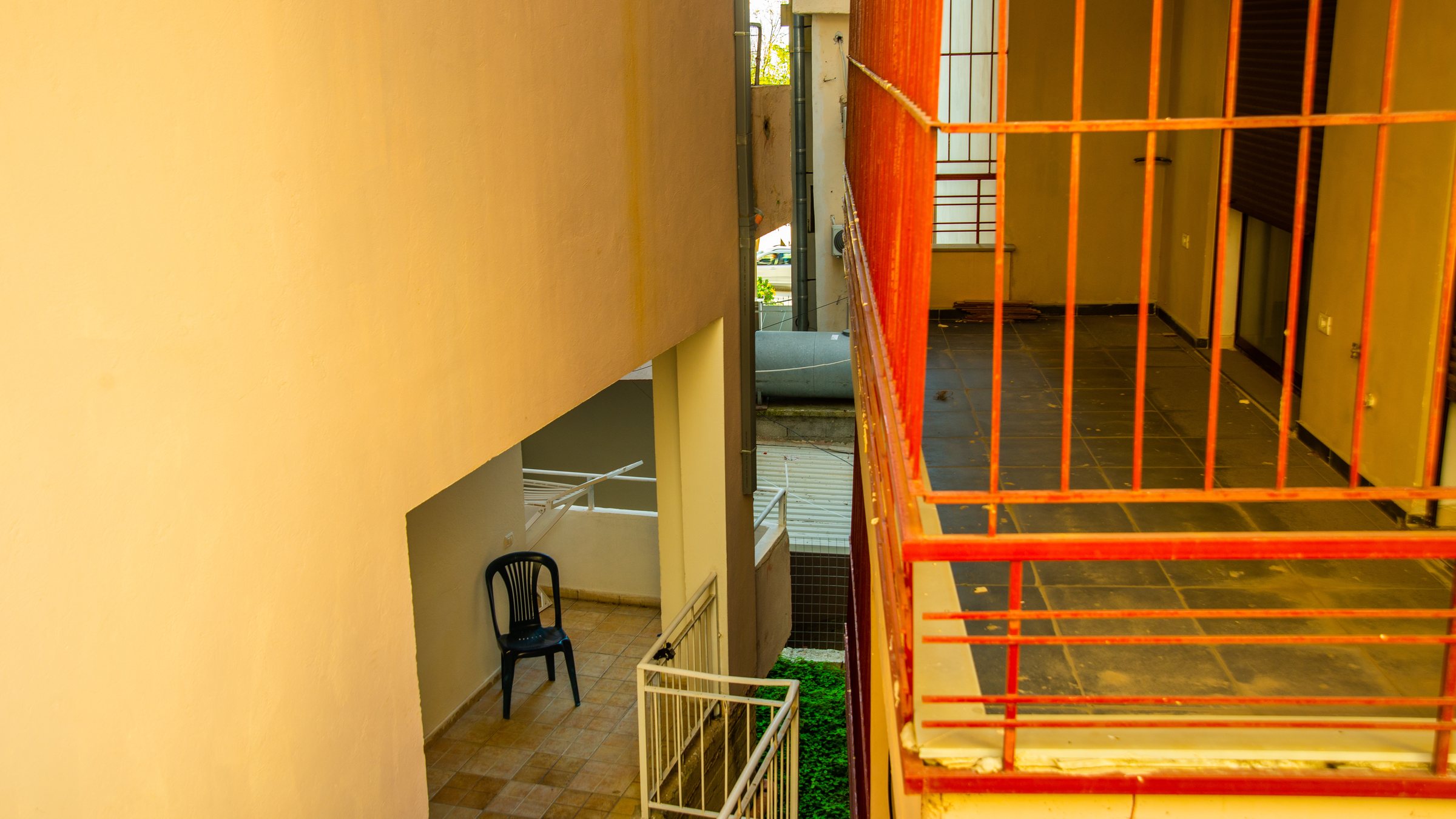
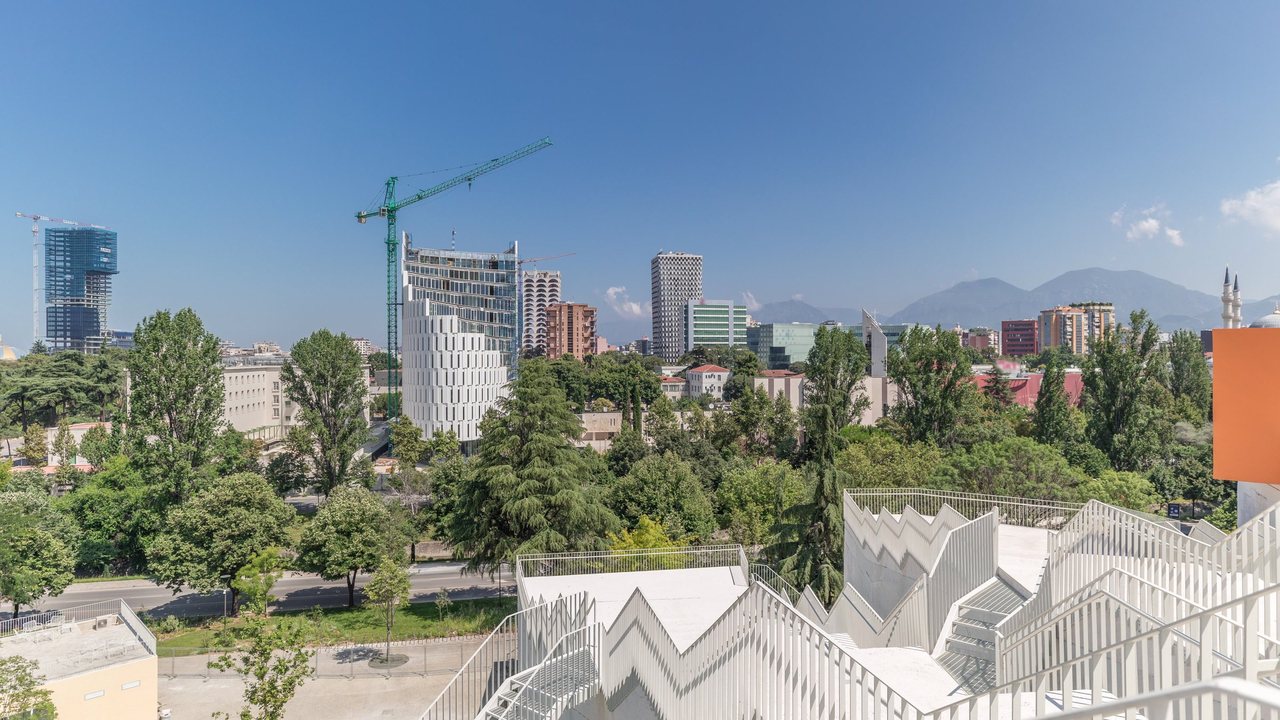
The capital: a fast-changing city of painted blocks, Ottoman survivals and new towers, under Mount Dajti.
Ogni contea, ogni costa, ogni secolo
Vista guidata
Non conosci l'Albania? Ogni pagina si apre con una spiegazione in linguaggio semplice, comprensibile anche a un bambino di dieci anni, prima di entrare nei dettagli.
Vista per esperti
Conosci già le basi. Direttamente alla sostanza, con le spiegazioni elementari nascoste. Questa è l'impostazione predefinita.
Industria
One of the largest contributors to growth, and the sector most exposed to tourism demand.
Salva
A lot of building work goes on in Albania, especially apartments in Tirana and on the coast. Construction is a big part of the economy. It has also raised questions about planning, water supply and where the money comes from.
A lot of building work goes on in Albania, especially apartments in Tirana and on the coast. Construction is a big part of the economy. It has also raised questions about planning, water supply and where the money comes from.
Construction and real estate form a significant component of Albania's mixed, developing economy, which transitioned from a centrally planned system following the collapse of the communist regime in 1990. The economy's largest sectors are services (54.1%), industry (24.2%), and agriculture (21.7%), with construction operating as a key driver of both the industrial and services components. Transport infrastructure commentary in the article notes that Albania's economy has, in the past decade, come to rely heavily on the construction industry, reflecting its central role in employment and capital formation.
The broader economic context for construction includes sustained inflows from remittances, estimated at approximately 15% of GDP, as well as foreign direct investment that the article states now accounts for 50% of GDP according to Santander Bank. Construction activity has expanded alongside growth in tourism and infrastructure development, making it one of the more visible faces of Albania's post-communist economic transformation. GDP (PPP) stood at $40.822 billion in 2021, with real growth of 8.52% that year.
The modern construction and real estate sector in Albania emerged directly from the privatisation policies of the early 1990s. The democratically elected government that assumed office in April 1992 launched an economic reform programme that included the privatisation of state housing, most agricultural land, and small industry. Most agricultural land was privatised in 1992, which substantially improved peasant incomes, while state housing passed into private hands as part of the same structural reform package.
Larger state enterprises began to be privatised from 1995 onward, and the privatisation of transport and services followed. These reforms created the legal and economic framework within which a private real estate market could develop. However, the collapse of financial pyramid schemes in early 1997 — which had attracted deposits from a substantial portion of Albania's population — caused severe social unrest, more than 1,500 deaths, widespread destruction of property, and a significant contraction in GDP. The disruption set back investment and property development during the late 1990s before recovery resumed.
Albania's motorway network underwent extensive modernisation during the 2000s, with construction on parts of the network still ongoing at the time the article was written. There are three major motorways: the A1, A2, and A3. When all corridors are completed, Albania is projected to have approximately 759 kilometres of highway linking the country with its neighbours. The construction of a motorway between Tirana and Durrës was specifically noted as having drawn significant traffic away from the railway network.
The Port of Durrës is Albania's busiest and largest seaport. As of 2014, it ranked among the largest passenger ports on the Adriatic and Ionian Sea, handling approximately 1.5 million passengers annually. Other operational seaports include Vlorë, Sarandë, and Shëngjin. Airport construction has also expanded: Kukës Airport became operational in April 2021, and Albania has plans to build two additional airports in the south, primarily to serve the tourism industry. Tirana International Airport Nënë Tereza currently handles over 5.2 million passengers per year.
The Trans Adriatic Pipeline, which became operational in 2020, involved substantial construction activity within Albania. Its Albanian section runs approximately 215 kilometres onshore and 37 kilometres offshore. Infrastructure built along its route included eight block valve stations, one landfall station, approximately 51 kilometres of new access roads, 42 refurbished bridges, and three new bridges. A compressor station was built near Fier, with an additional compressor planned near Bilisht if pipeline capacity is expanded.
Albania's electricity sector has required sustained construction investment given the country's complete dependence on hydroelectric power — one of only two countries in the world, alongside Paraguay, in this position. Existing hydroelectric installations include the Fierza, Koman, and Vau i Dejës plants on the Drin river, and the Banjë and Moglicë plants on the Devoll river. The Banjë and Moglicë plants were planned to increase Albania's electricity production by almost 17%.
Renewable energy construction has expanded beyond hydropower. In December 2023, a 140 MW solar park covering 200 hectares at Karavasta, operated by Voltalia SA, began operations. An auction in 2023 awarded 222.48 MW of onshore wind capacity. In the same month, work commenced on a new 400 kV interconnector between Albania and North Macedonia to enhance cross-border electricity connectivity. A planned thermal power plant near Vlorë was noted as helping to diversify generation capacity.
Nuclear power plant construction was discussed by the government in 2007, with Durrës proposed as a location. In April 2009, Albania and Croatia announced a joint plan to build a 1,500 MWe nuclear power plant on the shores of Lake Skadar near the Montenegro border. As of 2016, however, Albania had no plans to build any nuclear power plants in the foreseeable future. A separate US$1.2 billion AMBO pipeline was planned to begin construction in 2007 to connect the Bulgarian port of Burgas with Albania's port of Vlorë, but this project did not advance.
Tourism growth has been a primary driver of construction and real estate activity. International arrivals rose from approximately 500,000 in 2005 to more than 4.2 million by 2012 — growth of over 700% in seven years — and reached approximately 10 million in 2023. By 2025, tourism was generating revenue in excess of $5.72 billion annually. This expansion created sustained demand for hotel construction, residential development, and supporting infrastructure, particularly along the Adriatic and Ionian coasts.
Several major cities — Durrës, Vlorë, and Sarandë — are located on these coastlines, concentrating both tourist activity and real estate development in those areas. Albania also plans to build two additional airports in the south to serve tourism. The USAID 2015 report noted that tourism's total contribution to GDP, including wider economic effects from investment, construction, and service industries, was estimated at around 17% in 2013, a figure that accounts for the indirect role construction plays in supporting the tourism economy.
Tourism now represents 26.4% of GDP, up from 20.6% in 2019. This expansion has been accompanied by major investments in road networks and airport connectivity. Public-private partnerships and strategic-investor arrangements have been used to fund and deliver some of this development, though these mechanisms have also attracted scrutiny in relation to money laundering and governance concerns discussed separately below.
International assessments have identified Albania's construction and real estate sectors as among the most exposed to money laundering. The United States Department of State's 2025 International Narcotics Control Strategy Report stated that criminal proceeds in Albania are laundered through real estate purchases and construction projects, among other channels, and explicitly identified both sectors as susceptible to money laundering. The 2025 Global Organized Crime Index described Albania as a prominent destination for money laundering and stated that criminal organisations exploit the real estate, tourism, and construction sectors to legitimise illicit profits.
The Global Organized Crime Index further stated that Albania's construction sector is heavily infiltrated by illicit funds, causing market distortions, and that high levels of economic informality make detection difficult. Reuters reported in 2025 that experts consider Albania a hub for gangs seeking to launder billions of euros from drug and weapons trafficking, linking this to the prevalence of luxury vehicles and new but often empty apartment blocks in Tirana. The phenomenon of unoccupied new buildings is treated in that reporting as a structural indicator of investment driven by capital placement rather than end-user demand.
The article identifies several conditions that facilitate these risks: organised crime, corruption, high levels of informality, weaknesses in law enforcement, and heavy use of cash in major economic sectors. International assessments describe these as structural vulnerabilities rather than isolated incidents. The informal sector makes up a portion of the overall economy, though its share remains unclear due to its secretive nature, which compounds the difficulty of separating licit from illicit capital flows in construction and real estate.
The relationship between construction contracts, real estate development, and state institutions has been a persistent source of political controversy. Critics of Prime Minister Edi Rama's economic model have argued that rapid construction growth, luxury tourism projects, weak regulatory safeguards, public-private partnerships, strategic-investor status, public tenders, and politically connected business interests have enabled illicit capital to enter the formal economy. Rama and his government have rejected accusations of political protection for organised crime, pointing to economic growth, removal from the Financial Action Task Force grey list in 2023, justice reform, and investigations by the Special Structure against Corruption and Organized Crime (SPAK) as evidence of progress.
The Global Organized Crime Index reported that corruption within political and law-enforcement institutions continues to facilitate organised crime, and that legitimate businesses face unfair competition from criminal enterprises linked to corrupt government officials. In 2026, Reuters reported that a corruption investigation into Deputy Prime Minister Belinda Balluku — described as one of Rama's closest allies — concerned allegations of interference in two construction contracts worth more than €200 million. Balluku denied wrongdoing; Rama defended her and accused anti-corruption prosecutors of overreach.
Earlier scrutiny focused on the Albanian incinerators scandal, which prosecutors alleged involved illegal contract awards, corrupt payments, and fake invoices in the area of public concessions and procurement. These cases reinforced international concerns about the integrity of public procurement in construction and infrastructure. The article notes that Albania was removed from the FATF grey list in 2023 and that SPAK has seized assets in corruption and organised-crime cases, though international reports continue to describe money laundering and criminal influence over legitimate sectors — including construction and real estate — as major structural vulnerabilities.
Albania's anti-money-laundering framework has undergone formal strengthening in recent years. The country was removed from the Financial Action Task Force grey list in 2023, a significant marker of progress in meeting international standards. SPAK, the Special Structure against Corruption and Organized Crime, has conducted investigations and seized assets in cases involving both corruption and organised crime, including cases with construction and real estate dimensions.
The IMF's January 2017 report noted that the government's economic programme remained on track and that good progress had been made in implementing structural reforms. IMF inspectors recommended strengthening tax administration, broadening the tax base, and introducing a value-based property tax — measures directly relevant to the real estate sector — as well as improved public financial management to control arrears. These recommendations indicate that at the time of the report, property taxation and public financial controls in construction-related spending remained areas requiring development.
International organisations continue to describe remaining vulnerabilities. The 2025 US Department of State report and the 2025 Global Organized Crime Index both identify construction and real estate as sectors where money laundering risks persist despite formal regulatory progress. The article presents Albania's situation as one of formal institutional improvement alongside continuing structural weaknesses, without resolving the tension between these two characterisations.
Città · Tiranë
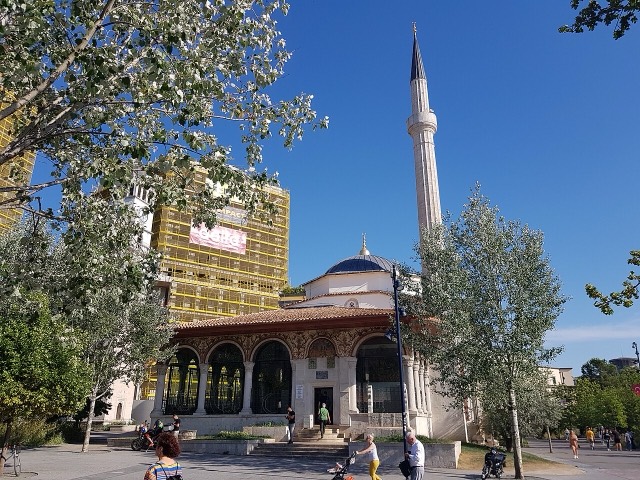
The capital: a fast-changing city of painted blocks, Ottoman survivals and new towers, under Mount Dajti.
Guida
Foreign buyers may generally purchase built property — the risk is not the rule, it is the title.
Azienda · Tiranë
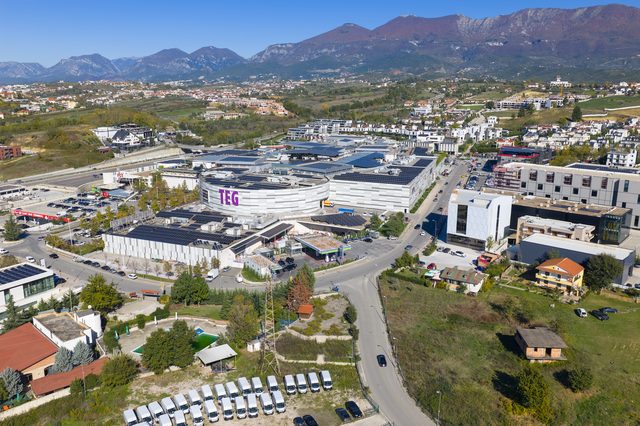
One of the largest private groups in the western Balkans, spanning shopping centres, retail and mining.
Azienda · Tiranë
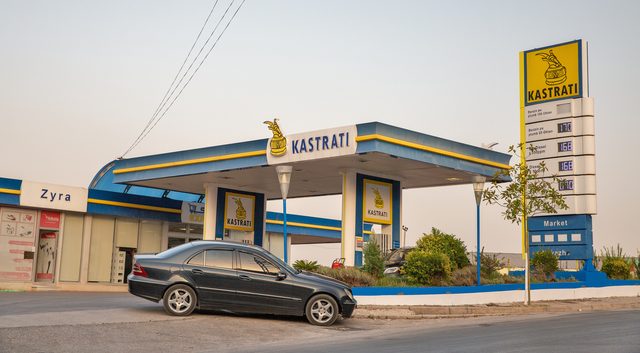
A fuel and logistics group that also holds an interest in Air Albania and in airport operations.
Guida
A market driven by the diaspora, tourism and construction — and shaped by an unresolved post-communist title history.
Azienda · Durrës
A large cement plant at Boka e Kuqe near Krujë, built by TITAN Cement.
Hai notato un errore in questa pagina? Le correzioni sono benvenute e vengono verificate rispetto al record di fonte. Indica cosa è sbagliato e, se possibile, da dove proviene il dato corretto.