Thành phố · Fier
Fier
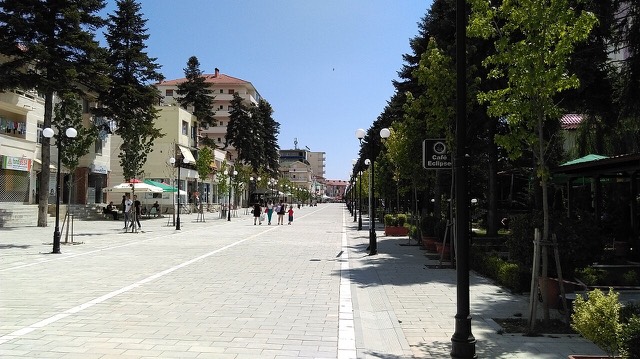
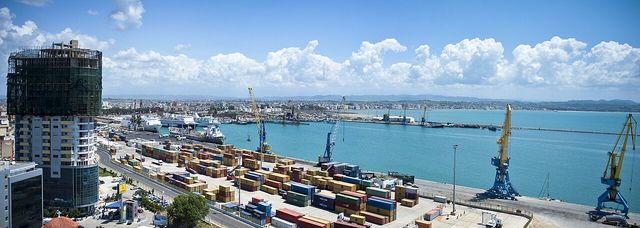
The service town of the oil and farming plain, next to the ruins of Apollonia.
Mọi hạt, mọi bờ biển, mọi thế kỷ
Chế độ hướng dẫn
Mới tìm hiểu về Albania? Mỗi trang mở đầu bằng một giải thích ngôn ngữ đơn giản mà bạn có thể đọc cho một đứa trẻ mười tuổi, trước khi đi vào chi tiết.
Chế độ chuyên gia
Bạn đã nắm được những điều cơ bản. Đi thẳng vào nội dung, với các giải thích đơn giản được ẩn đi. Đây là chế độ mặc định.
Công nghiệp
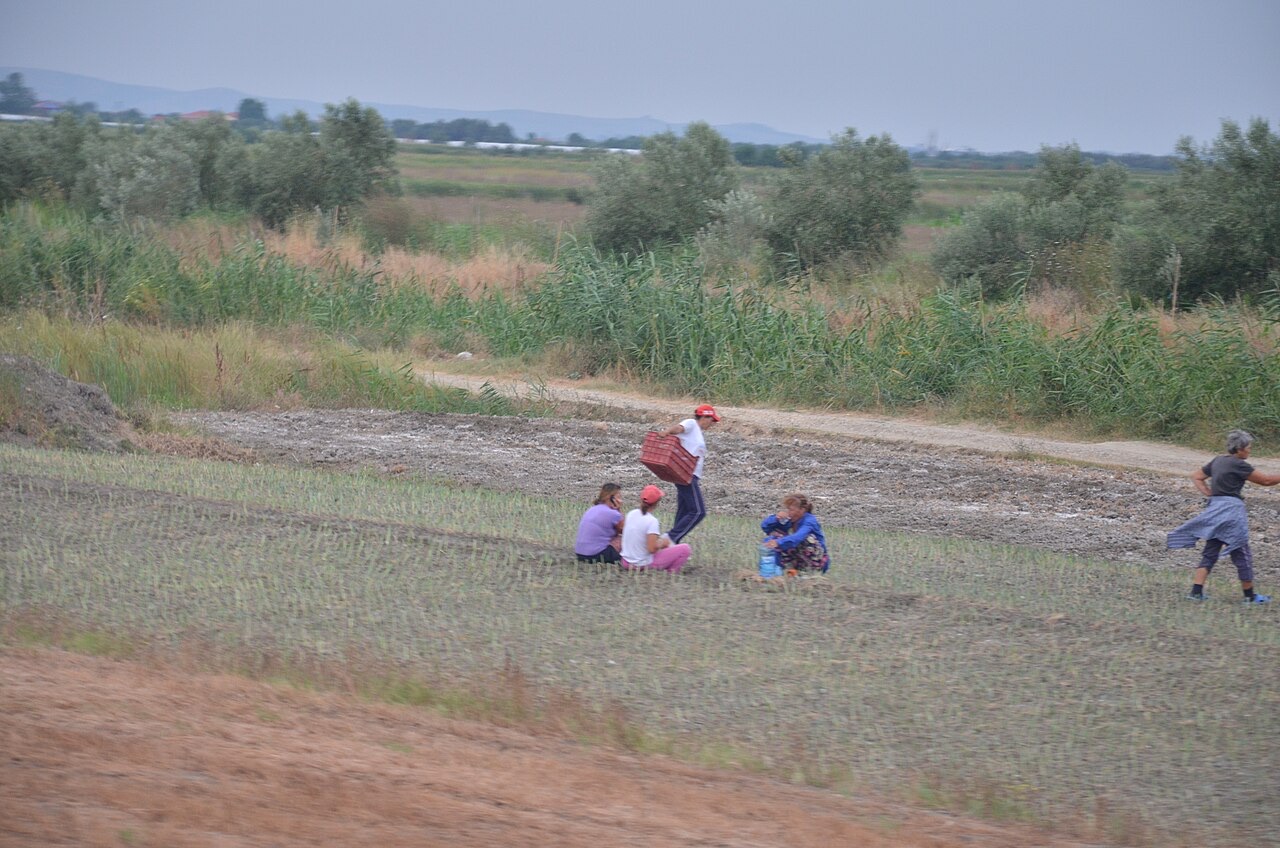
A large share of employment on very small holdings — the legacy of the 1991 land redistribution.
Lưu
Farming employs far more people in Albania than in most of Europe, but farms are very small. When communism ended the state farms were divided among families, so most plots are just a hectare or two. Olives, grapes, fruit, vegetables and dairy are the main products.
Farming employs far more people in Albania than in most of Europe, but farms are very small. When communism ended the state farms were divided among families, so most plots are just a hectare or two. Olives, grapes, fruit, vegetables and dairy are the main products.
Albania covers 28,748 square kilometres, of which 24% is classified as agricultural land, 36% as forest land, 15% as pasture and meadow, and 25% as urban areas, lakes, waterways, and unused rocky or mountain terrain. The country divides into three main agricultural zones: the lowland zone alongside the coastline, the hill zone in the lowland, and the mountain zone.
The country's terrain ranges from coastal plains in the west to the Albanian Alps in the north, with the Sharr Mountains in the northeast, Skanderbeg Mountains in the centre, Korab Mountains in the east, Pindus Mountains in the southeast, and Ceraunian Mountains in the southwest. The entire western border is formed by the Adriatic and Ionian seas, which are components of the Mediterranean Sea.
The climate is predominantly Mediterranean with continental influences, characterised by mild winters and hot, dry summers. The warmest areas lie along the western coast, where the sea exerts a strong moderating effect. The coldest parts of the country are in the north and east, where snowy forested conditions prevail. These climatic divisions directly shape what can be grown in each zone.
Agriculture contributes 22.5% of Albania's GDP by one measure and is recorded separately at 18.9% of GDP in another context within the same sources, reflecting the sector's continued central place in the national economy. Between 40% and 45% of the workforce is employed in the sector, making it the single largest employer in the country.
In 1990, domestic farm products accounted for 63% of household expenditures and 25% of exports. As part of Albania's pre-accession process toward European Union membership, farmers receive support through IPA funds aimed at improving Albanian agriculture to EU standards.
Despite its scale, the sector is constrained by structural problems. Production is limited primarily to small family operations and subsistence farming, owing to a lack of modern equipment, unclear property rights, and the prevalence of small, inefficient plots. Post-1990 land fragmentation, uncertain land ownership, the absence of adequate state registries, restricted access to bank credit, and high VAT rates all constitute obstacles to modernisation. A further concern recorded in the sources is that some Albanian agricultural products are being labelled as 'Product of Turkey' for international markets.
One of the earliest known farming sites in Europe has been found in southeastern Albania, placing the region among the oldest agricultural areas on the continent, though the article does not specify the site's name, date, or excavation details beyond this.
Many of Albania's historic forests were destroyed during the 1990s through inefficient timber operations and the expansion of agricultural land. By the time described in the sources, forests covered approximately one third of Albania's land area. A reforestation programme was underway under an agreement involving Italy and the World Bank.
The main agricultural products are tobacco, figs, olives, wheat, maize, potatoes, vegetables, fruits, sugar beets, grapes, meat, honey, dairy products, and medicinal and aromatic plants. Albania ranks as the 11th largest producer of olive oil in the world.
Recorded production figures for 2018 include: 391,000 tonnes of maize; 288,000 tonnes of tomato; 254,000 tonnes of potato; 240,000 tonnes of wheat; 239,000 tonnes of watermelon; 184,000 tonnes of grape; 120,000 tonnes of cucumber; 117,000 tonnes of olive; 108,000 tonnes of apple; and 100,000 tonnes of onion. Smaller volumes were produced of bell pepper (81,000 tonnes), melon (41,000 tonnes), plum (41,000 tonnes), oat (34,000 tonnes), sugar beet (27,000 tonnes), fig (24,000 tonnes), peach (19,000 tonnes), and pear (13,000 tonnes).
Medicinal and aromatic plants represent a significant export category. In 2020, exports of these products totalled 14,000 tonnes with a value of US$59 million. Cultivation of species including nettles, cowslip, lavender, and sage is estimated to employ approximately 100,000 Albanians, though this figure is not independently verified in the article.
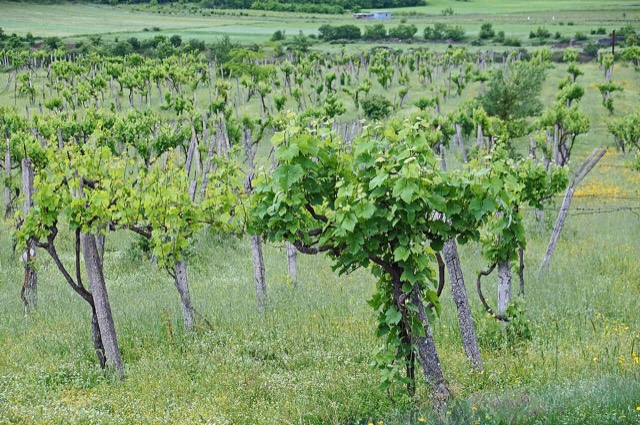
Albania is the 42nd largest producer of wine in the world and is described in the sources as having one of Europe's longest histories of viticulture, placing it among old-world wine-producing countries. The most important wine regions are located in the centre of the country and in mountainous areas in the north, east, and south.
The Albanian wine industry gained wide local popularity in 1912 but was nearly destroyed in 1933 by phylloxera. Significant recovery did not begin until after the Second World War, at the end of which vineyards covered only 2,737 hectares. The main producing region was Durrës County, where grapes were grown on communist state enterprises. The national vineyard acreage at that time was roughly equivalent to that under tobacco, but considerably smaller than the areas devoted to olives and fruit trees. Exported wine was consumed mainly in Western Europe, particularly Germany.
Wine exports declined continuously from 61,000 hectolitres in 1971 to 22,000 hectolitres in 1985. The sources attribute this fall to outdated production conditions and inadequate technical infrastructure, which made transport difficult and reduced quality. During the same period, exports of raisins rose continuously, reaching up to 3,500 tonnes per year, while exports of fresh grapes remained marginal. Following the end of communism in the 20th century, the wine industry's development was further shaped by the broader economic conditions of the transition period.
Salt-water fishing takes place in both the Adriatic and Ionian seas. Freshwater fishing occurs on Lake Butrint, Lake Shkodër, Lake Ohrid, and Lake Prespa, as well as in the Karavasta, Narta, and Patos lagoons. The coastline is estimated at 381 kilometres. The sources characterise the fishing industry as still in a transition process despite significant development and processing capacities inherited from the communist period.
Extensive marine fish cultivation was practised in the country from the 1950s. Marine finfish farming operates as both an inshore and offshore sea cage-farming sector. Trout farming is concentrated mainly in the southeast, southwest, and north, while carp production is centred in the centre and north. Species cultivated include rainbow trout, European bass, gilt-head bream, common carp, silver carp, bighead carp, grass carp, and Ohrid trout.
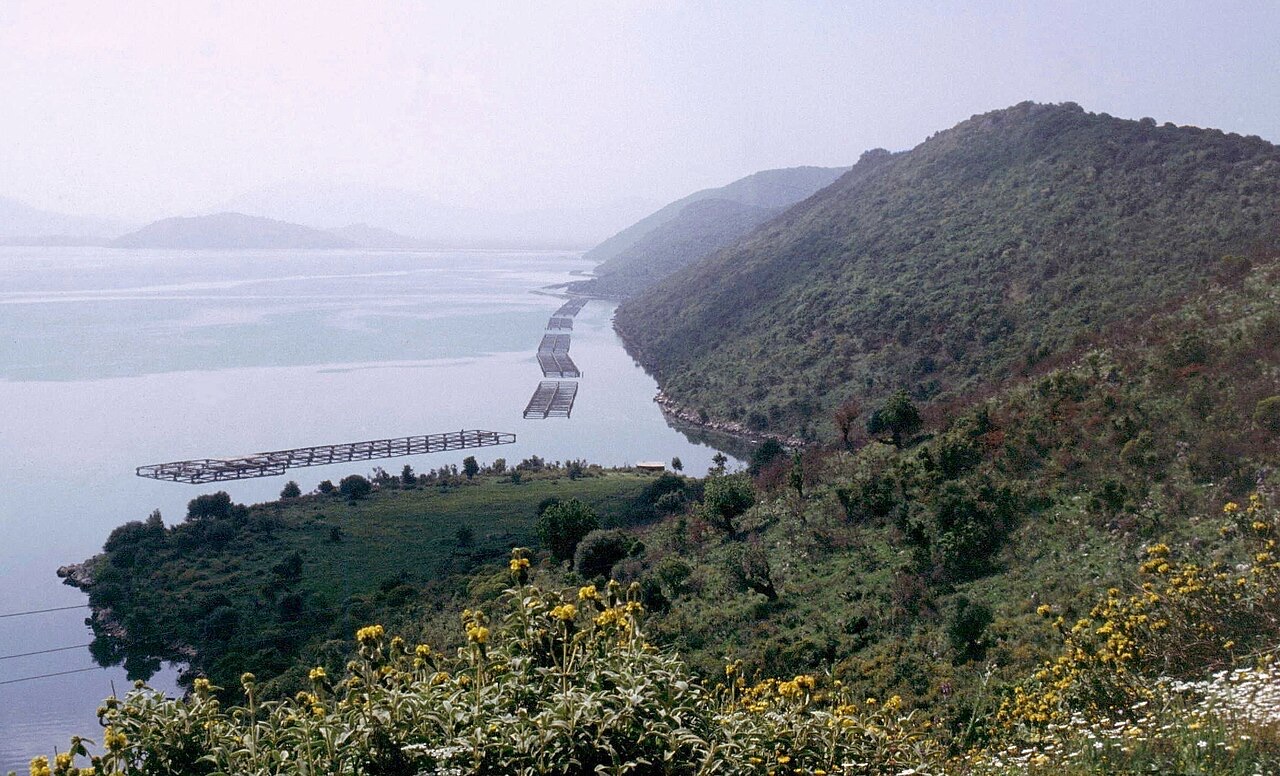
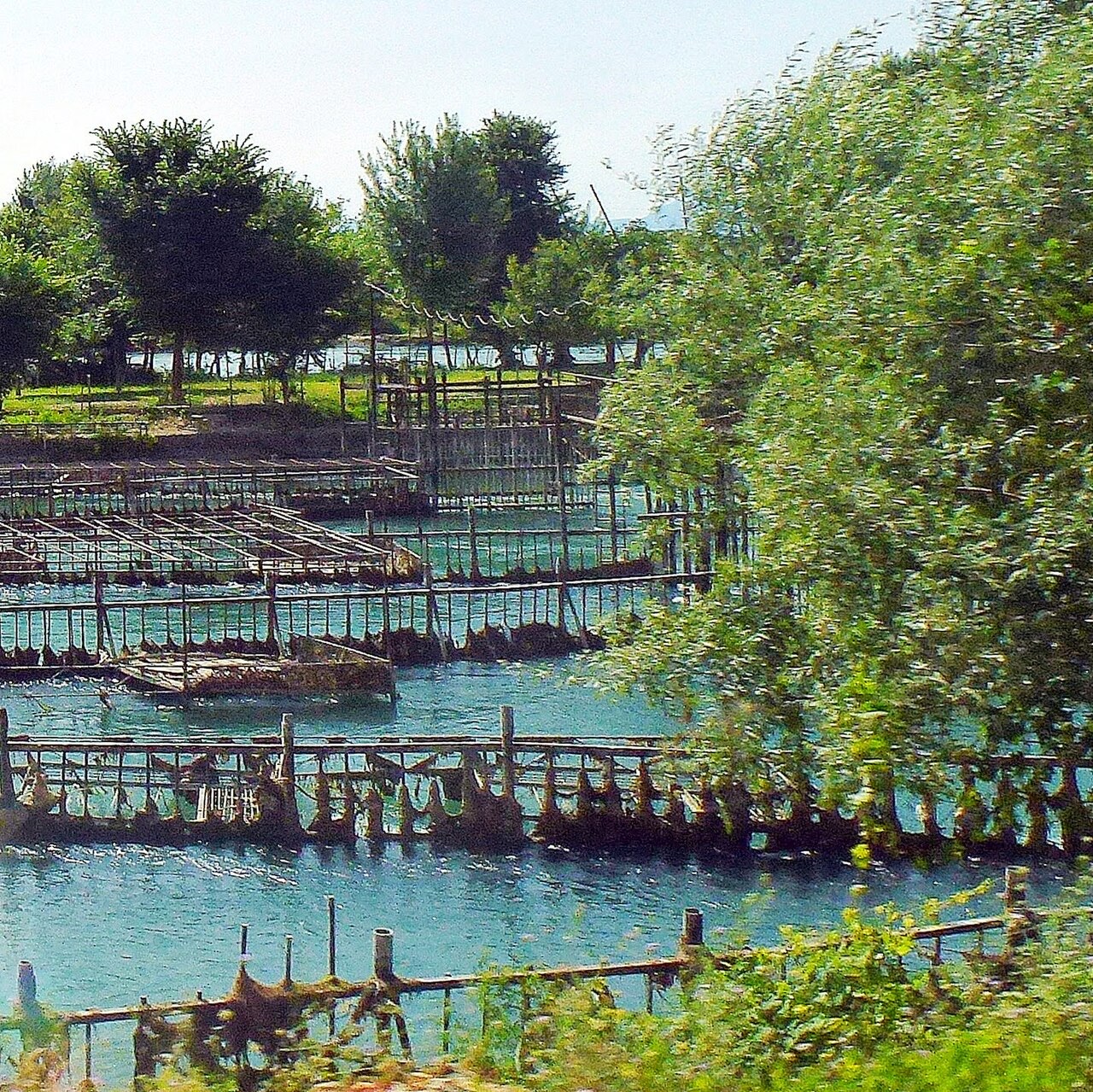
Mussel cultivation is widespread in the south of the country and particularly concentrated at Lake Butrint near the Ionian Sea. By 1980, approximately 80 mussel cultivation facilities had been constructed, producing an average of around 2,000 tonnes per year; by 1989 annual production had risen to 5,000 tonnes. A smaller facility of approximately 100 hectares operates at Shëngjin. Following the end of communism and an outbreak of cholera in 1990, production declined sharply; operations resumed in 2000.
Shrimp cultivation began around the end of the communist period. Albania's only extensive shrimp cultivation facility is located at Narta Lagoon, where the Vjosa River drains into the Adriatic Sea. Within the Karaburun-Sazan Marine Park, 50 species of crustaceans have been recorded, which the sources note indicates potential for future cultivation in that area.
The post-1990 transition from a centralised communist economy created lasting structural problems for Albanian agriculture. Land fragmentation, which accompanied the break-up of state farms, left the sector dominated by small plots that are inefficient to work mechanically and difficult to consolidate. Uncertain land ownership arising from incomplete or absent state registries compounds this problem by deterring investment and making it difficult for farmers to use land as collateral for bank credit.
High value-added tax rates are identified as a further obstacle. The combination of these factors means that much of Albanian agriculture remains at or near subsistence level rather than operating as a commercially integrated industry. The sources also record a specific concern about mislabelling: Albanian agricultural products are reportedly being stamped as 'Product of Turkey' for sale on international markets, which affects the commercial visibility of Albanian-origin produce.
EU pre-accession assistance through IPA funds is being directed at improving agricultural standards, and a reforestation programme supported by Italy and the World Bank is addressing the deforestation that accompanied agricultural expansion in the 1990s. The Ministry of Agriculture recorded that vegetable and fruit exports doubled in the first months of 2017, and that exports of fish, seafood, and marine products increased by 35% over the same period.
Albania held the position of 42nd largest wine producer and 11th largest olive oil producer in the world according to the rankings cited in the article. In 1990, farm products represented 25% of the country's total exports, illustrating the sector's historical weight in trade.
By 2020, medicinal and aromatic plant exports alone totalled 14,000 tonnes valued at US$59 million, with around 100,000 Albanians estimated to be employed in the cultivation of species such as nettles, cowslip, lavender, and sage. The Ministry of Agriculture reported in 2017 that vegetable and fruit exports had doubled year-on-year in the early months of that year, and that fish and seafood exports had grown by 35%. Despite these gains, the sector's export potential continues to be limited by the structural constraints described above, including small farm size, inadequate equipment, and unclear land tenure.
Thành phố · Fier
The service town of the oil and farming plain, next to the ruins of Apollonia.
Thị trấn · Korçë
The seat of Devoll municipality, on the Greek border in an apple-growing plain.
Chủ đề
An upper-middle-income economy of roughly $30 billion, led by services and tourism, with remittances and construction close…
Ẩm thực
Oil from Kalinjot, Kokërrmadh and other local varieties, chiefly from Vlorë, Fier and Berat.
Thị trấn · Fier
An agricultural centre on the Myzeqe plain, and the site of the 1920 congress that saved Albanian statehood.
Đồ uống
A wine culture running back to Illyrian times, rebuilt after 1990 around native grapes.
Trường đại học · Tiranë
The national centre for agronomy, veterinary medicine, forestry and food science.
Chủ đề
Population, GDP, inflation, wages, tourism, trade and energy — each with its observation period, its producer and a link to the…
Có thông tin sai trên trang này? Chúng tôi hoan nghênh các đề nghị đính chính và sẽ đối chiếu với hồ sơ nguồn. Hãy cho chúng tôi biết điều gì sai và, nếu có thể, nguồn số liệu chính xác là ở đâu.