Objet
Albanian Cuisine
Mediterranean at the coast, Balkan and Ottoman inland, dairy-heavy in the mountains.
Chaque comté, chaque côte, chaque siècle
Vue guidée
Nouveau en Albanie ? Chaque page s'ouvre sur une explication en langage clair, accessible à un enfant de dix ans, avant d'entrer dans le détail.
Vue expert
Vous connaissez déjà les bases. Directement à l'essentiel, les explications simples étant masquées. Il s'agit du réglage par défaut.
Gastronomie
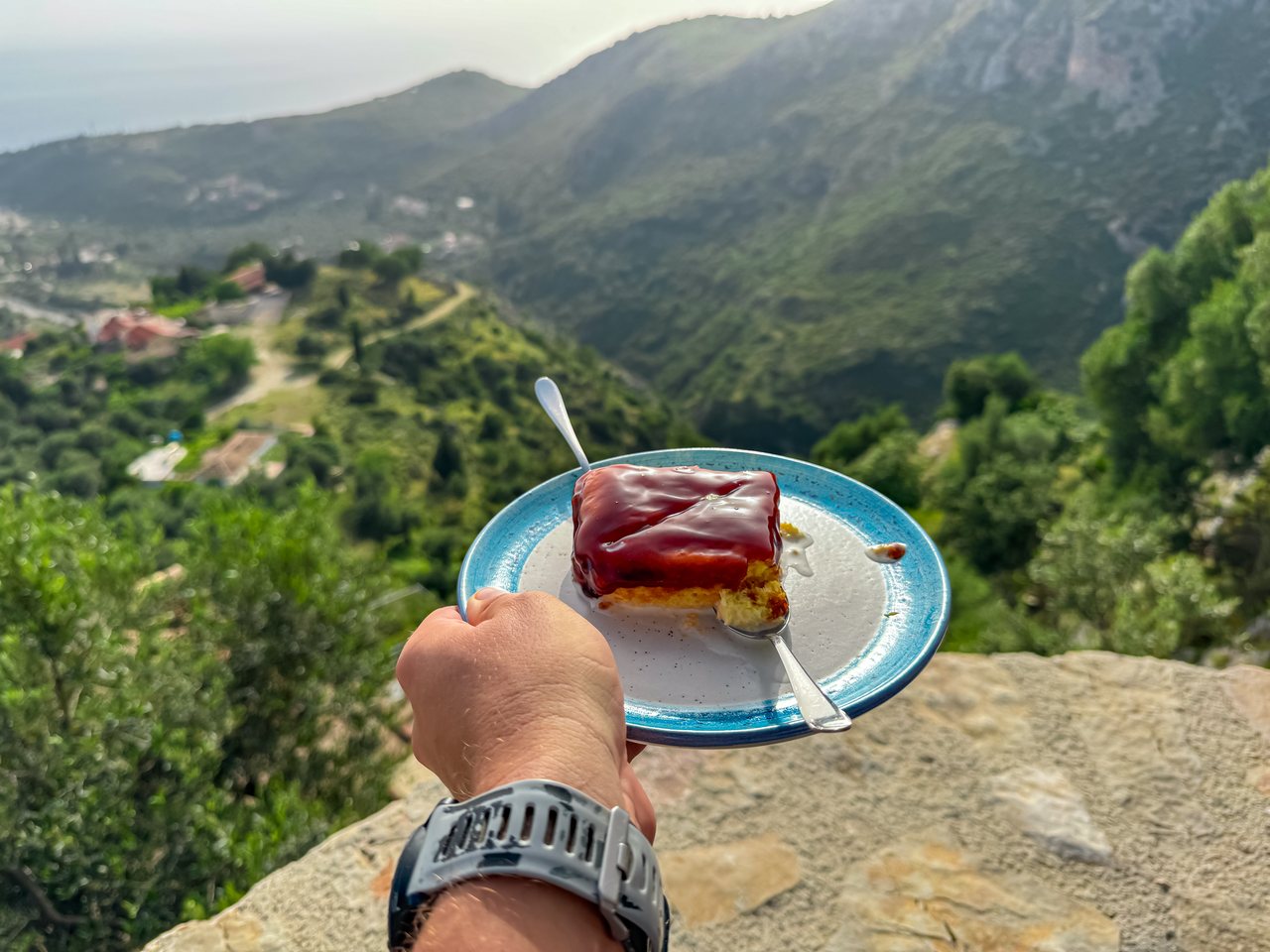
A sponge soaked in three milks under a caramel top — ubiquitous in Albanian cafés.
Enregistrer
Trileçe is a soft sponge cake soaked in three kinds of milk, with caramel poured over the top. It is on nearly every café menu in Albania.
Trileçe is a soft sponge cake soaked in three kinds of milk, with caramel poured over the top. It is on nearly every café menu in Albania.
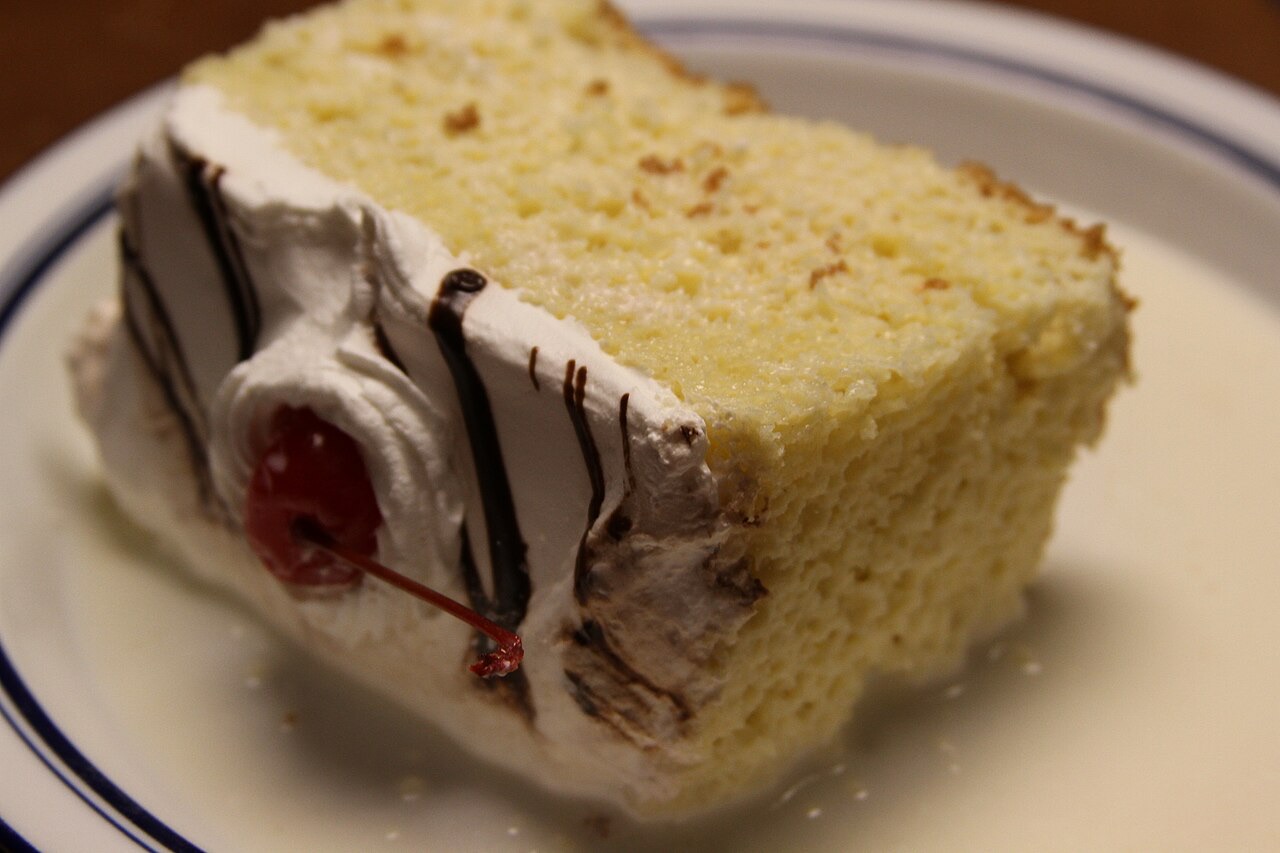
Trileçe is a milk-soaked sponge cake that represents a regional adaptation of the Latin American tres leches cake. The original tres leches — Spanish for 'three milks' — is a sponge cake soaked in a mixture of evaporated milk, condensed milk, and whole milk, then topped with whipped cream and often fruit and cinnamon. The cake's spongy, air-bubble-filled texture allows it to absorb the three-milk mixture without becoming soggy, giving it an almost pudding-like consistency.
The Balkan and Turkish adaptation is distinguished chiefly by its topping: where the Latin American original uses whipped cream and fruit, trileçe is finished with a caramel layer. The name trileçe (also spelled trileče or trileće depending on the language) is used across Albania, Bosnia and Herzegovina, and Turkey, and the dessert has spread more broadly to North Macedonia, Serbia, and other parts of Southeastern Europe.
The history of tres leches is debated. European countries — England, Italy, France, Portugal, and Spain — have long traditions of soaked cakes dating back to the Middle Ages, and this tradition is considered a likely influence on the development of tres leches in Latin America. Possible antecedents cited by the Austin Chronicle include English rum cake, trifle, fruitcake, and bread pudding, Italian zuppa inglese, and the medieval Portuguese sopa dorada.
Recipes for soaked-cake desserts appeared in some Latin American countries as early as the 19th century, including El Salvador, attributed to the large cross-cultural transfer between Europe and the Americas. In Tabasco, Mexico, a dessert called torta de leche consisted of sweetened scalded milk, baked and served floating in its own milk sauce. By 1896, the U.S. Department of Commerce was exporting condensed milk to Nicaragua, and in 1936 a trade agreement signed by President Franklin D. Roosevelt reduced Nicaraguan duties on dairy imports from Wisconsin, including evaporated, powdered, and condensed milk. Companies including Nestlé began printing tres leches recipes on their evaporated and condensed milk containers, and canned milk sales rose sharply in Nicaragua, in part because of food insecurity during the Great Depression.
Two competing theories exist about how the tres leches concept reached Albania, and neither is confirmed as definitive. The first holds that the popularity of Mexican soap operas in Albania led local chefs to reverse-engineer the dessert from what they saw on screen, after which the Albanian version spread to Turkey. The second credits Renata Casadei, described as an Italian chef working at a restaurant called Piazza in Tirana, who is said to have introduced the dessert to Albania after visiting a friend in the Dominican Republic.
Whichever route it took, the Albanian version developed its own character distinct from the Latin American original — most notably the substitution of a caramel topping for the whipped cream and fruit of tres leches. The dessert subsequently spread from Albania to western Turkey and across the wider Balkan region.
Like the Latin American original, trileçe is built on a sponge cake base that is soaked in a mixture of milks after baking. The standard tres leches formula uses evaporated milk, condensed milk, and whole milk. The Albanian version is sometimes made with a literal interpretation of three distinct milks — cow's milk, goat's milk, and water buffalo milk — though the article notes this is less common. More typically, the Albanian preparation uses a mixture of cow's milk and cream.
The defining difference in the Albanian variation is the caramel topping, which replaces the whipped cream and fruit used in the Latin American version. The caramel layer gives trileçe a richer, more intensely sweet finish and a visually distinct appearance.
In Turkish cuisine, trileçe follows the same milk-soaked sponge base but has a specific presentation convention. On top of the moist cake sits a layer of light, airy whipped cream, over which a layer of buttery caramel sauce is applied. Fine lines of the whipped cream mixture are then drawn across the caramel surface, and a toothpick or other pointed utensil is used to create the decorative pattern considered characteristic of the Turkish version.
The Turkish adaptation thus shares the caramel topping of the Albanian version while adding a more formalised decorative finish. The dessert has become particularly associated with western Turkey, alongside its stronghold in Albania and the broader Balkan region.
Tres leches in its original form is popular across Central America, North America, much of the Caribbean, the Canary Islands, and parts of Europe. In the United States, it became popular from the 1980s onward, beginning in Miami in connection with Nicaraguan immigration. The Joy of Cooking included a tres leches recipe in its 1997 edition. Since 2020 the cake has grown further in popularity, attributed in part to its reliance on shelf-stable canned milk and other pantry staples during the pandemic period.
The Balkan variant, trileçe, has become established specifically in Albania, Bosnia and Herzegovina, Turkey, North Macedonia, and Serbia. Albania appears to have been the point of entry into the region, with the dessert subsequently spreading to Turkey and neighbouring countries. The Albanian and Turkish versions are now sufficiently distinct from the Latin American original — chiefly through the caramel topping and, occasionally, the use of locally sourced milks — to be considered a recognisable regional adaptation.
Objet
Mediterranean at the coast, Balkan and Ottoman inland, dairy-heavy in the mountains.
Boissons
Albania has among the highest densities of coffee bars in Europe; the meeting is the point, not the drink.
Une erreur sur cette page ? Les corrections sont les bienvenues et sont vérifiées par rapport au document source. Indiquer ce qui est erroné et, si possible, d'où provient le chiffre correct.