Città · Elbasan
Elbasan
A central industrial city inside an Ottoman fortress wall, on the old Via Egnatia.
Ogni contea, ogni costa, ogni secolo
Vista guidata
Non conosci l'Albania? Ogni pagina si apre con una spiegazione in linguaggio semplice, comprensibile anche a un bambino di dieci anni, prima di entrare nei dettagli.
Vista per esperti
Conosci già le basi. Direttamente alla sostanza, con le spiegazioni elementari nascoste. Questa è l'impostazione predefinita.
Cibo
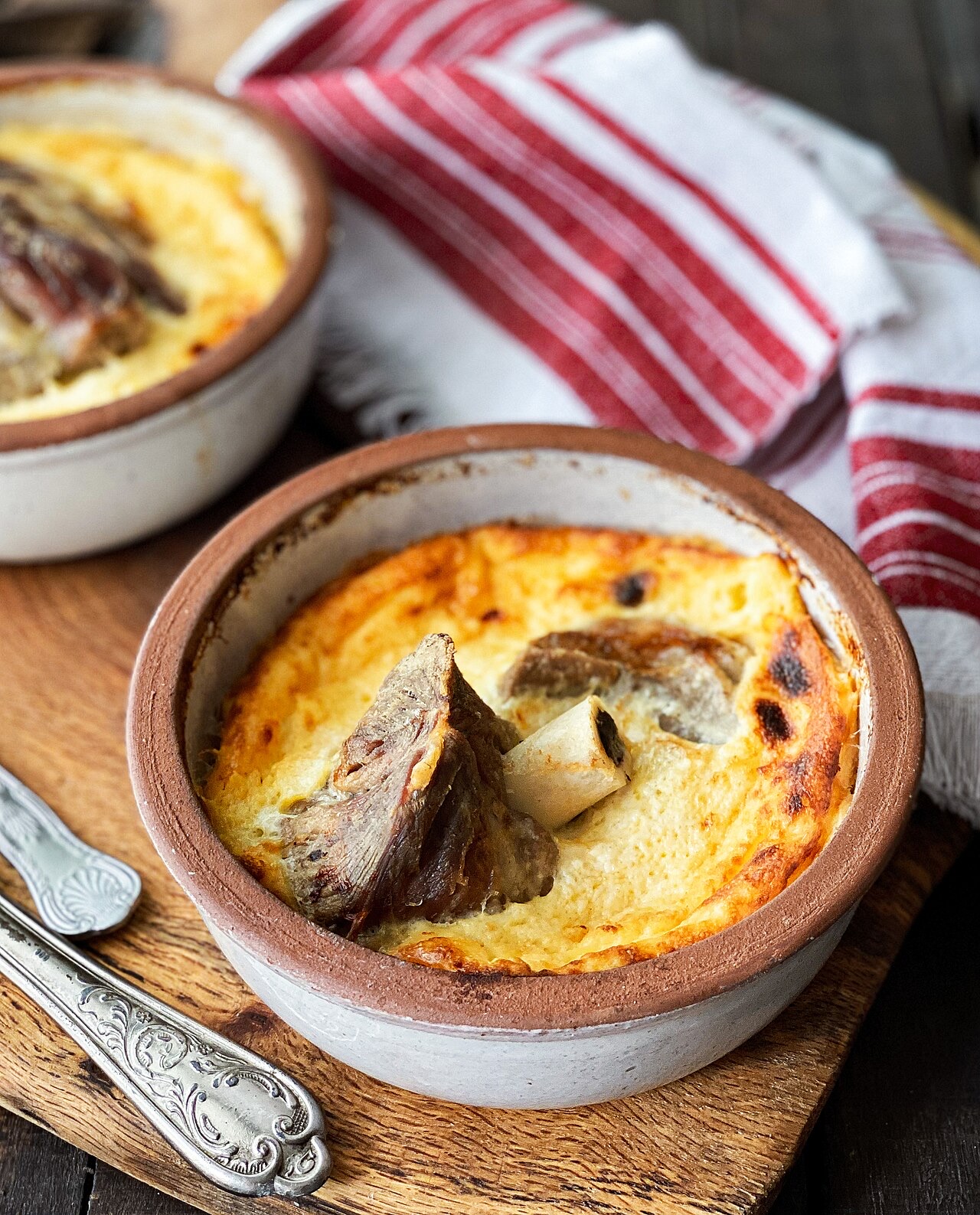
Lamb baked under a set custard of yoghurt, egg and a little flour — the dish most often named as Albania's national one.
Salva
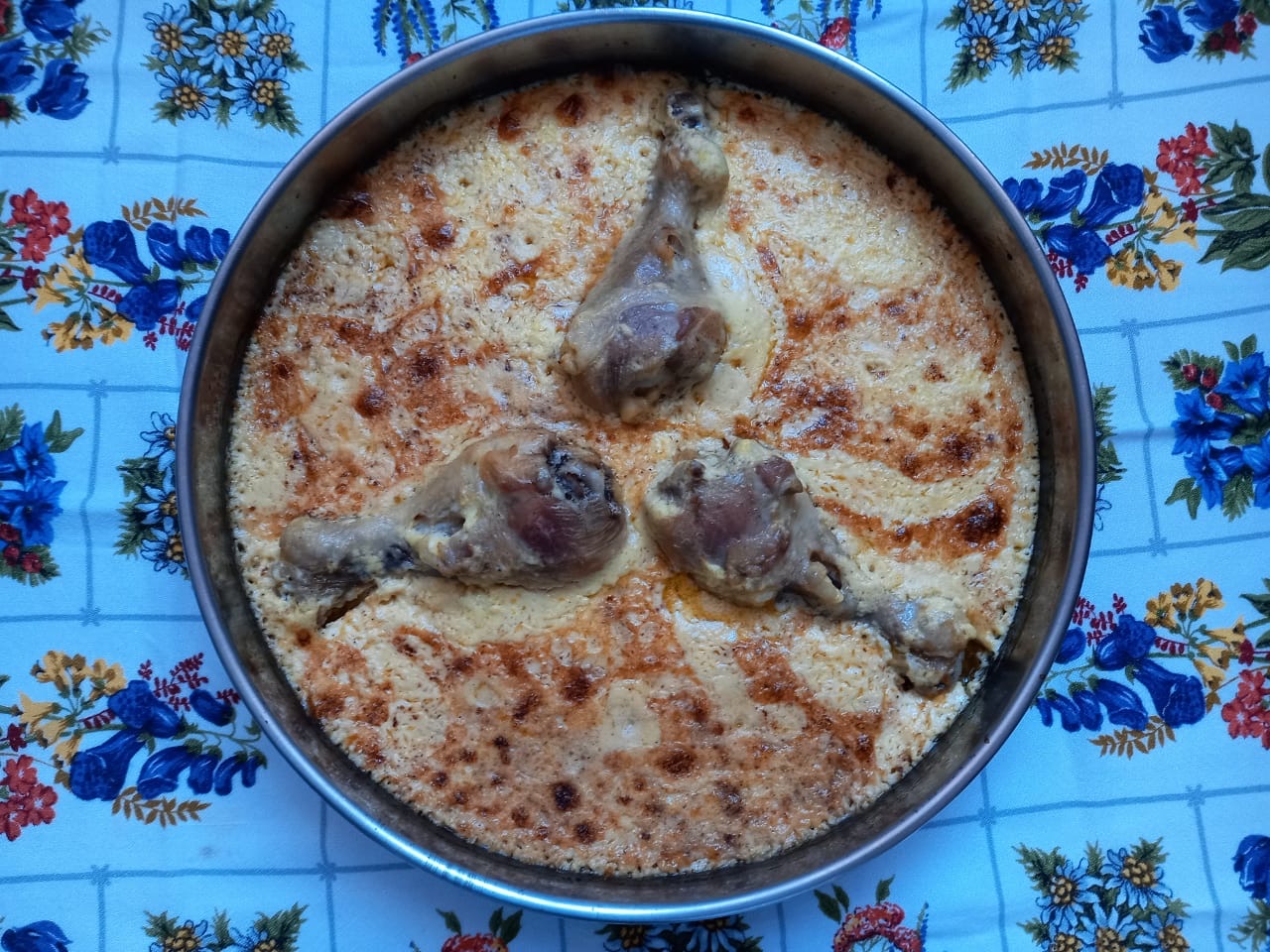
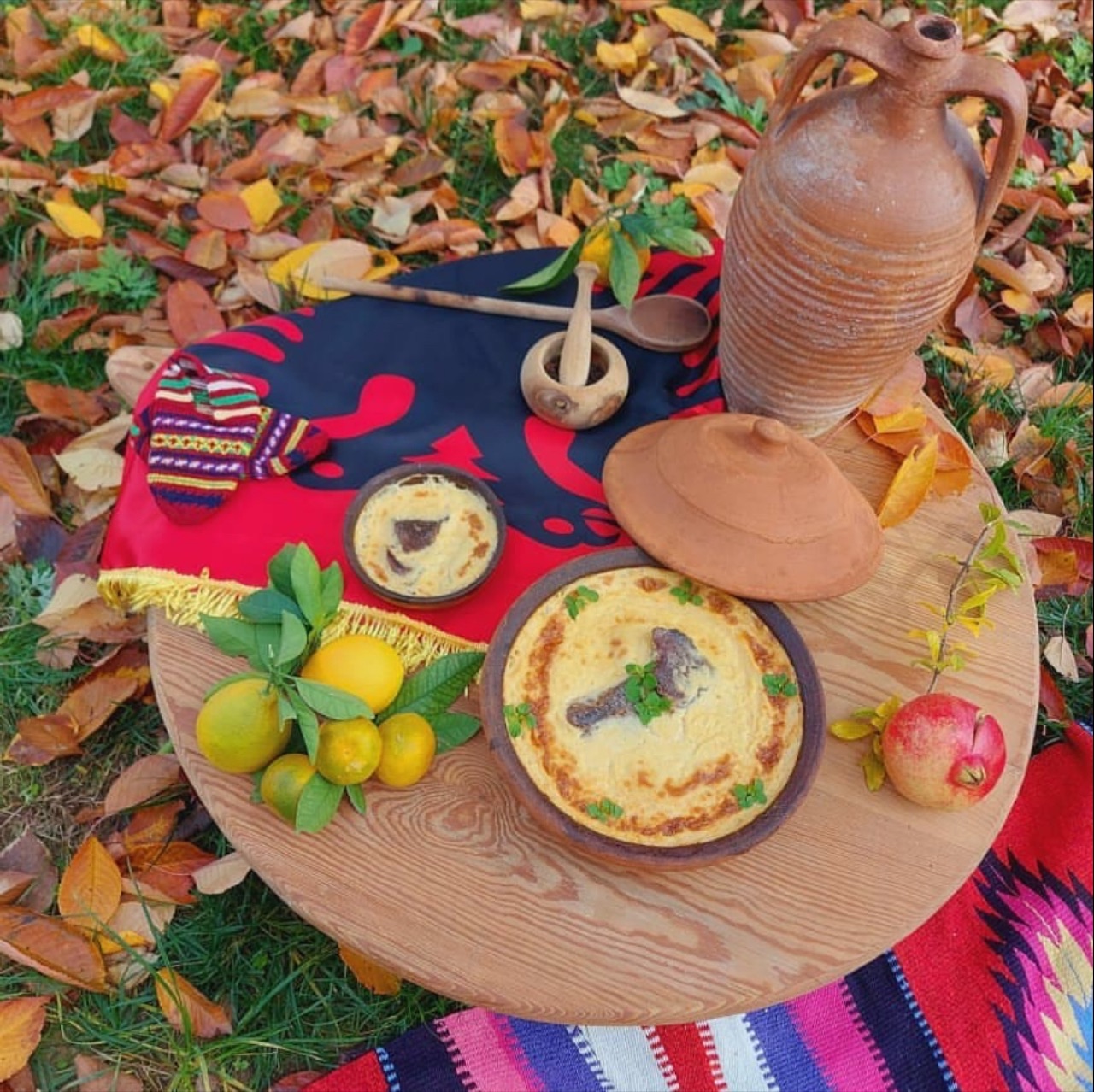
Tavë kosi is lamb baked in the oven under a thick topping of yoghurt and egg that sets like a soft custard. It comes out golden on top. Many people call it Albania's national dish.
Tavë kosi is lamb baked in the oven under a thick topping of yoghurt and egg that sets like a soft custard. It comes out golden on top. Many people call it Albania's national dish.
Tavë kosi is a traditional Albanian baked dish whose name translates directly as 'yogurt casserole'. Its core components are mutton and rice, covered before baking with a mixture of yogurt, eggs, butter and flour. The dish is commonly seasoned with salt, black pepper, garlic and oregano.
A chicken variant exists and carries its own name: tavë kosi me mish pule. In both versions the defining characteristic is the yogurt-based mixture poured over the meat and rice before the final stage of baking.
Tavë kosi is thought to originate from the city of Elbasan in central Albania, which gives rise to its alternative name, Tavë Elbasani. The dish is regarded as one of the national dishes of Albania.
Its regional identity is reflected in the name by which it is known abroad. In Greece, Kosovo, North Macedonia and Turkey, the dish is commonly called 'Elbasan tava', a name derived directly from the city of its reputed origin.
A standard preparation for four people requires 500 g of mutton or goat meat, one litre of yogurt, three eggs, 100 g of butter and two tablespoons of flour. Rice is added in a quantity of half a coffee cup, with salt and black pepper used to taste.
The yogurt forms the largest single component by volume, giving the dish its characteristic flavour and the pale, lightly golden surface that results from baking.
The meat is washed, dried and cut into serving-sized pieces, then placed in a baking dish, seasoned with salt and drizzled with oil. It is baked in a preheated oven at 180 °C (356 °F), with the cook periodically basting the meat with its own juices.
For a more tender result, the recipe allows for the meat to be boiled for approximately 30 minutes before it is transferred to the oven. Approximately 15 minutes before the meat is fully cooked, rice and about half a glass of hot meat broth are added to the baking dish. The dish is then removed from the oven and allowed to cool slightly before the yogurt mixture is applied.
The yogurt mixture is prepared separately by combining yogurt and salt, then adding three eggs one at a time with continuous stirring. Flour is incorporated gradually until a smooth consistency is reached, and the remaining butter is added last.
This mixture is poured over the partially cooked meat and rice and stirred gently to distribute it evenly across the dish. The dish is returned to the oven and baked for a further 15 minutes, or until the surface becomes lightly golden.
Beyond Albania, tavë kosi has become a recognised dish in several neighbouring countries: Greece, Kosovo, North Macedonia and Turkey. In each of these countries it is commonly identified by the name 'Elbasan tava', retaining the reference to its Albanian city of origin rather than adopting a locally derived name.
The dish's spread across national borders and its retention of a place-name identity in foreign-language contexts reflects a broader pattern of culinary exchange across the western Balkans and into Turkey.
Città · Elbasan
A central industrial city inside an Ottoman fortress wall, on the old Via Egnatia.
Oggetto
Mediterranean at the coast, Balkan and Ottoman inland, dairy-heavy in the mountains.
Guida
What to order, where the regional differences are, and what a meal actually costs.
Hai notato un errore in questa pagina? Le correzioni sono benvenute e vengono verificate rispetto al record di fonte. Indica cosa è sbagliato e, se possibile, da dove proviene il dato corretto.