Asunto
Albanian Cuisine
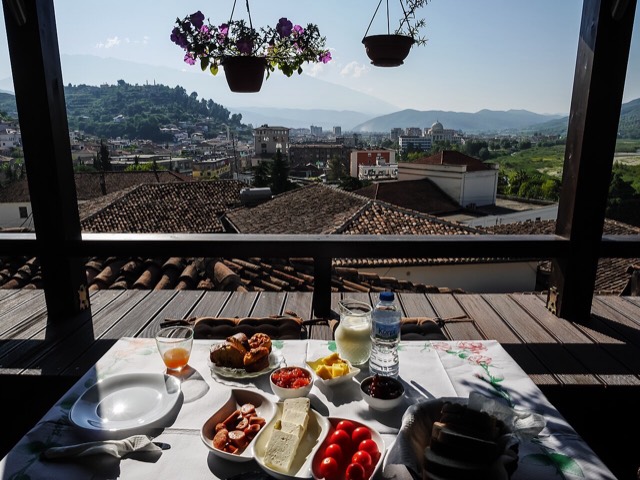
Mediterranean at the coast, Balkan and Ottoman inland, dairy-heavy in the mountains.
Cada condado, cada costa, cada siglo
Vista guiada
¿Nuevo en Albania? Cada página comienza con una explicación en lenguaje sencillo que cualquiera podría entender, antes de entrar en los detalles.
Vista experta
Ya conoces los fundamentos. Directo al contenido, con las explicaciones básicas ocultas. Esta es la vista predeterminada.
Gastronomía
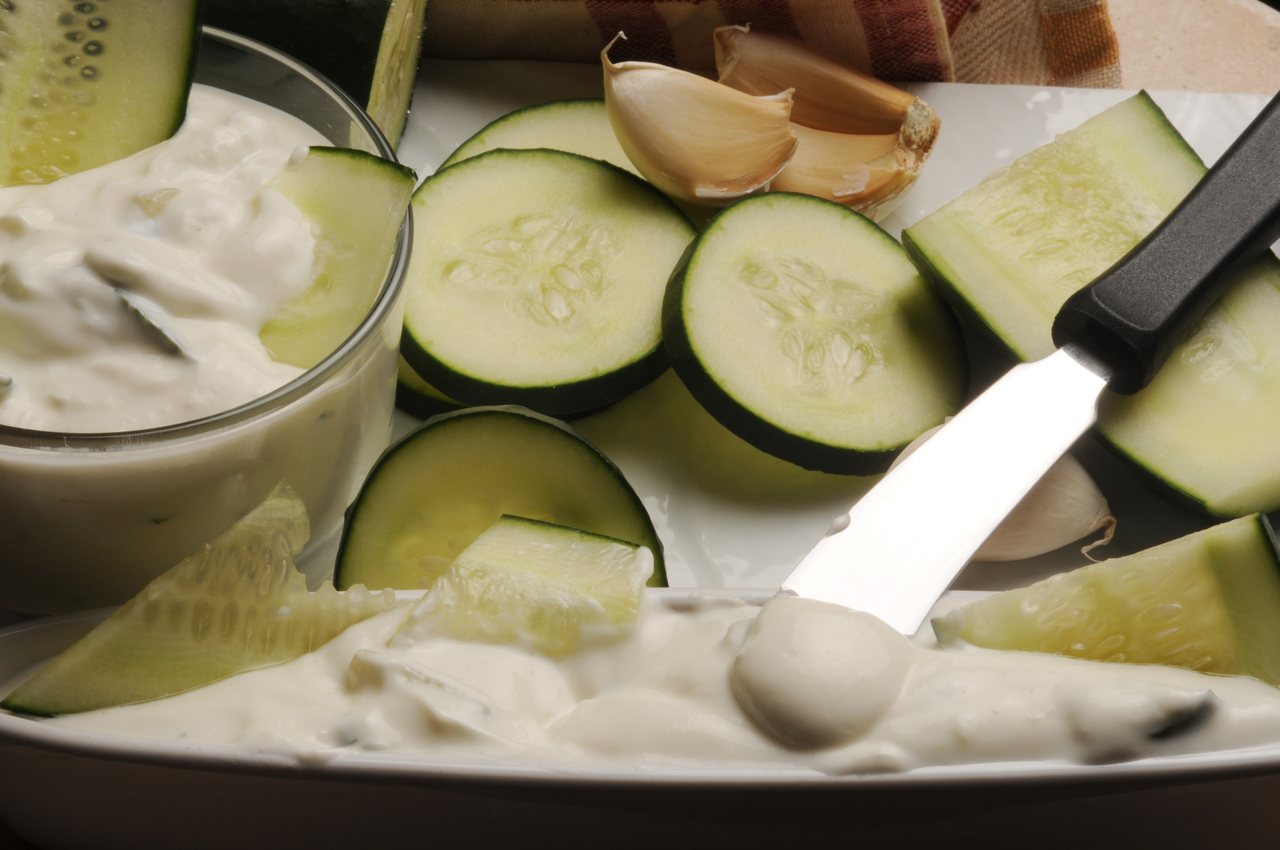
Chilled yoghurt with cucumber, garlic, walnut and dill — the standard Albanian summer starter.
Guardar
Tarator is a cold soup of yoghurt with cucumber, garlic and walnuts. It is eaten in summer because it is cooling.
Tarator is a cold soup of yoghurt with cucumber, garlic and walnuts. It is eaten in summer because it is cooling.
Tarator is a cold dish made from yogurt, cucumber, garlic, and herbs, with olive oil typically included. Its consistency is variable: depending on the type of yogurt used and the quantity of water added, it can range from a thin, soup-like preparation to a thicker dip. In Albania it is eaten as a summer dish, following the same broad pattern found across the Balkans.
Tarator belongs to a wider family of yogurt-and-cucumber preparations that includes the Greek tzatziki, the Turkish cacık, and several Levantine and Central Asian variants. All share a common structural logic — salted strained or diluted yogurt combined with cucumber and garlic — but differ in secondary ingredients, consistency, and cultural context. The name tarator is the form used across the Balkans and into the Levant, whereas tzatziki is the standard Greek term and cacık the Turkish one.
According to the Turkish etymologist Sevan Nişanyan, the word tarator entered Turkish directly from the Venetian word trattor, meaning 'cook'. From that origin it acquired, in Turkish usage, the meaning of a type of sauce. The word is considered to have been borrowed from Turkish into the other languages in which it appears, spreading from Anatolia into the Balkans and the Levant.
The first recorded use of tarator in the sense of a sauce appears in Evliya Çelebi's 1665 travelogue the Seyahatnâme. The word itself, and derivative forms of it, is now found across a range of countries from the Balkans to the Levant, though the dish it denotes differs in composition from place to place. The parallel term cacık was first recorded in print in 1844, in the Ottoman cookbook Melceü't-Tabbâhîn by Hoca Kâmil Pasha, where the basic description was given as 'yogurt with cucumber and garlic'.
The earliest known written recipes for a closely related preparation appear in Ibn Sayyar al-Warraq's 10th-century Arabic-language cookbook, where the food historian Nawal Nasrallah identifies three recipes for jājaq — described as yogurt salads — as ancestors of the modern cucumber-and-yogurt dish. Later references appear in Egyptian cookbooks of the 14th and 15th centuries.
During the Ottoman period, yogurt-and-garlic condiments became established within the meze tradition. The Seyahatnâme describes dishes made with yogurt and garlic as already having a settled place in Ottoman cuisine. Tarator in this context was prepared with yogurt, cucumber, and garlic, sometimes with the addition of walnuts. Greek culinary tradition also includes antecedents: oxygala, a yogurt-like condiment from antiquity, was combined with honey or with olive oil and herbs. Central Asian yogurt culture, carried into Anatolia and the Balkans through Turkic migrations, is considered a further formative influence.
Across the Balkans, tarator is most commonly served as a cold soup or liquid salad, particularly in summer. The standard Balkan version is made with yogurt, cucumbers, garlic, oil, and salt; dill and walnuts are common additions, and water may be added to achieve a thinner consistency. The dish is served chilled.
In the Levant, a preparation also called tarator is typically made with tahini rather than yogurt, representing a substantially different base ingredient. In Anatolia, the yogurt-and-cucumber version became known specifically as cacık and includes garlic, sometimes walnuts, and a wide range of possible secondary ingredients including mint, dill, radish, scallions, and vinegar. Bulgarian tarator is a well-established cold soup in that country's cuisine; a thicker Bulgarian variant, Snezhanka, uses strained yogurt with cucumber, garlic, dill, and oil, sometimes with walnuts.
In Albania, tarator is prepared from yogurt, cucumber, garlic, and herbs, with olive oil generally included. The dish is eaten cold and is associated specifically with summer. Its texture is not fixed: the use of unstrained yogurt and a greater addition of water produces a soup-like result, while strained yogurt with little or no added water gives a dip-like consistency.
No single Albanian recipe is standardised in the source material available, and the dish shares its basic structure with the wider Balkan form. The key distinguishing feature within the Balkan context is the combination of yogurt (rather than tahini), cucumber, and garlic, with dill, walnuts, and olive oil as frequent but not universal additions.
Several dishes in neighbouring cuisines share structural features with tarator. In Cyprus, the equivalent is called talattouri and is characterised by the use of mint and lemon juice, made from strained yogurt with sliced cucumbers, minced garlic, and dried herbs including oregano. In Greece, tzatziki is made from strained sheep or goat milk yogurt with cucumbers, garlic, olive oil, vinegar, and herbs; it is served as a meze with pita bread and accompanies dishes such as gyros and souvlaki.
Further afield, the Caucasian dish ovdukh uses kefir rather than yogurt and can be poured over vegetables, eggs, and ham. The South Asian raita is made with yogurt, cucumber, salt, and ground cumin, sometimes with onions. The Polish mizeria combines sliced cucumbers with sour cream or another fermented milk product and herbs. In Iraq, the equivalent dish, jajeek, is served as a meze and may accompany arak, an anise-based spirit.
Asunto
Mediterranean at the coast, Balkan and Ottoman inland, dairy-heavy in the mountains.
¿Algo incorrecto en esta página? Las correcciones son bienvenidas y se contrastan con el registro fuente. Indíquenos qué es incorrecto y, si puede, de dónde procede el dato correcto.