산업
Agriculture in Albania
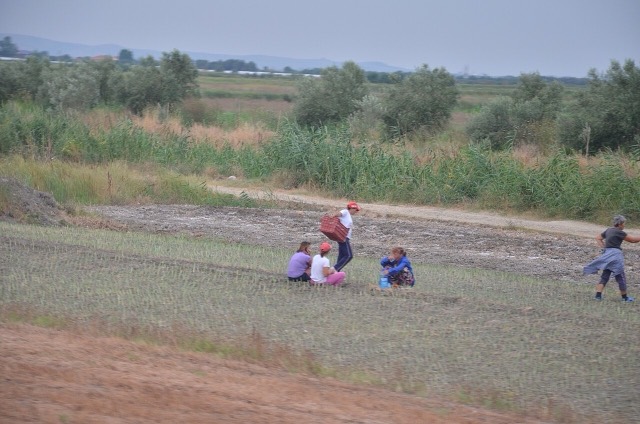
A large share of employment on very small holdings — the legacy of the 1991 land redistribution.
모든 주, 모든 해안, 모든 세기
안내 보기
알바니아가 처음이신가요? 모든 페이지는 세부 내용이 시작되기 전에, 열 살짜리 아이도 이해할 수 있는 평이한 설명으로 시작됩니다.
전문가 보기
기본 내용은 이미 알고 계신가요? 간단한 설명은 숨기고 핵심 내용만 바로 확인하세요. 이것이 기본 설정입니다.
음식
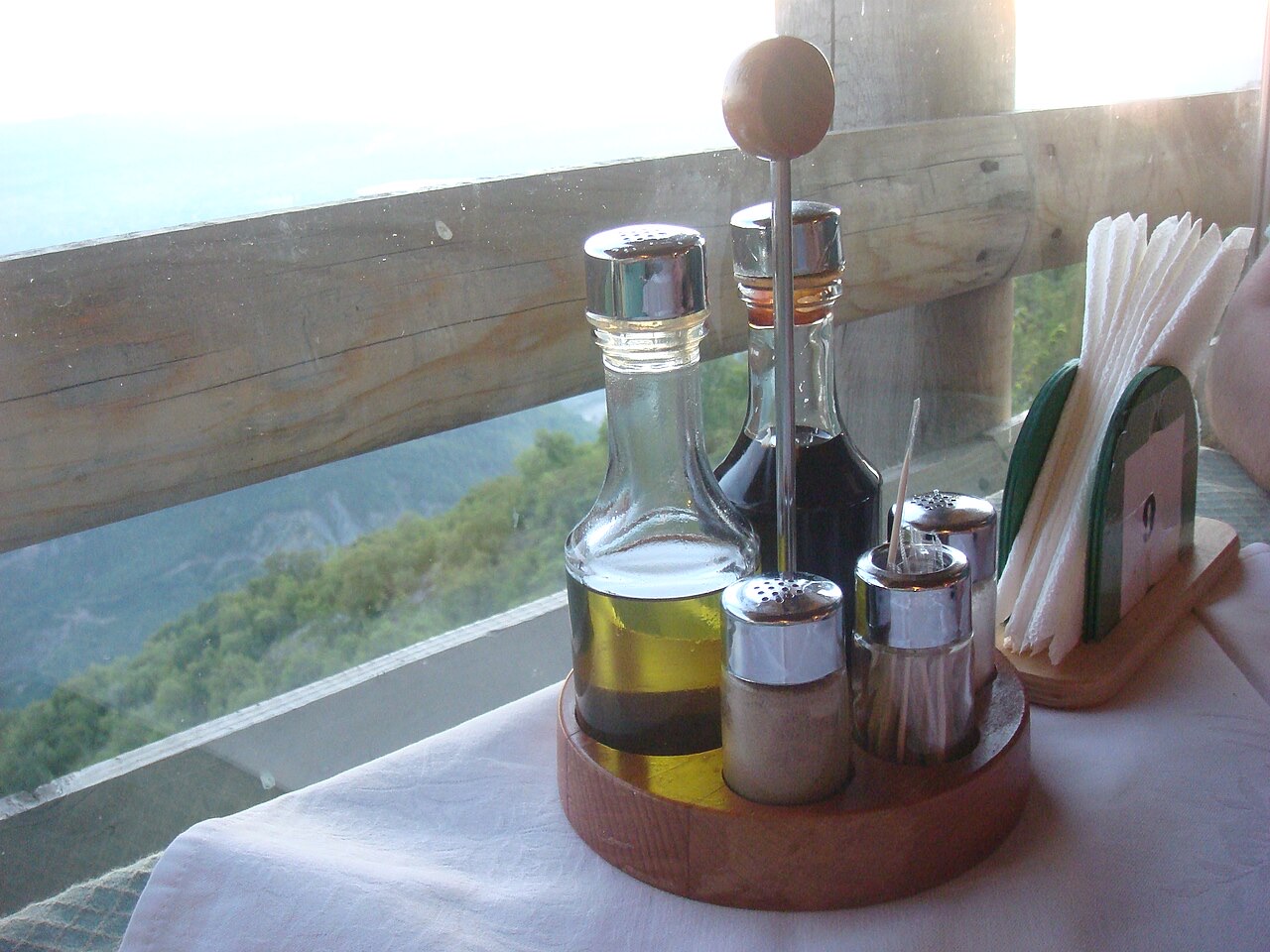
Oil from Kalinjot, Kokërrmadh and other local varieties, chiefly from Vlorë, Fier and Berat.
저장
Albania grows a lot of olives, especially in the south and along the coast. The oil is pressed locally and used in almost every dish. Borsh, on the Riviera, has one of the biggest olive groves in the country.
Albania grows a lot of olives, especially in the south and along the coast. The oil is pressed locally and used in almost every dish. Borsh, on the Riviera, has one of the biggest olive groves in the country.
Olive oil is extracted by pressing whole olives, the fruit of Olea europaea, a tree cultivated across the Mediterranean Basin since the 8th millennium BC. The oil consists mainly of oleic acid (up to 83%), with smaller amounts of linoleic acid (up to 21%) and palmitic acid (up to 20%). Its composition varies with the cultivar, the altitude at which the trees grow, the time of harvest, and the extraction process used.
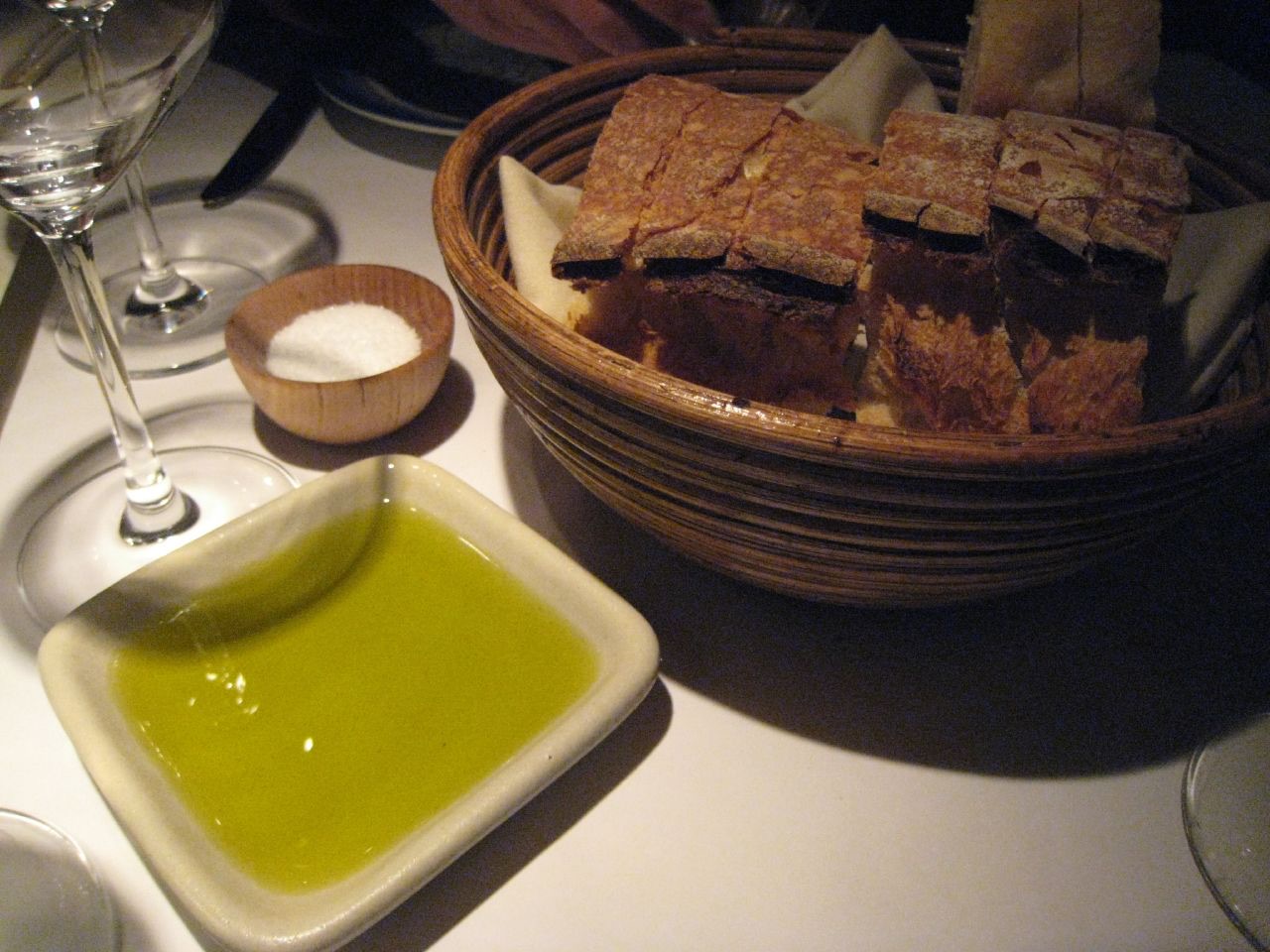
Olive oil is one of three core food plants in Mediterranean cuisine, alongside wheat and grapes. It is used in cooking, as a condiment, in salad dressings, in some cosmetics and pharmaceuticals, in soap-making, and as fuel for traditional oil lamps. In a reference amount of 100 grams, olive oil supplies 884 kilocalories and is a rich source of vitamin E (96% of the daily value) and vitamin K (50% of the daily value). It contains no carbohydrates, dietary fiber, protein, or water.
Extra virgin olive oil (EVOO) is defined by a free acidity of no more than 0.8% and by the absence of significant sensory defects. It is considered the highest commercial grade. When heated above 210–216 °C, the unrefined particles within extra virgin oil burn and the flavor deteriorates. Refined olive oils, with a smoke point up to 230 °C, are better suited to deep frying.
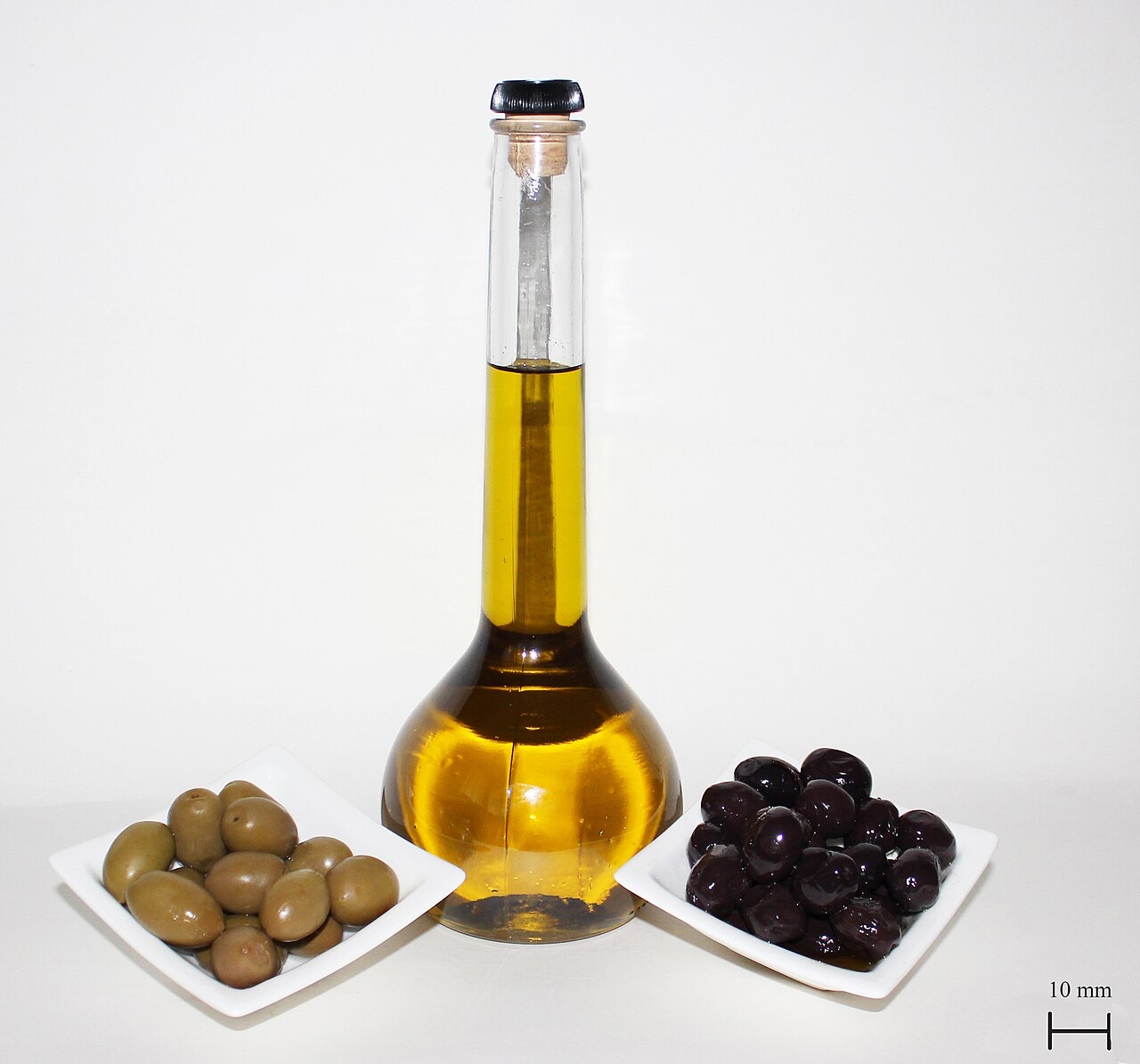
The exact date and location of olive tree domestication remain unclear. The modern olive tree may have originated in ancient Persia and Mesopotamia before spreading to the Levant and North Africa, though some scholars argue for an Egyptian origin. Wild olives were collected by Neolithic people as early as the 8th millennium BC. The earliest surviving olive oil amphorae date to 3500 BC, from the Early Minoan period, though production is assumed to have begun before 4000 BC.
The olive tree reached Greece, Carthage, and Libya around the 28th century BC, spread westward by the Phoenicians. Evidence suggests olives were cultivated in Crete as long ago as 2500 BC. Cultivation in Crete became particularly intense in the post-palatial period. Archaeological evidence from Galilee indicates olives were being pressed into oil by 6000 BC, and at a now-submerged settlement south of Haifa by 4500 BC.
As Greek colonies were established across the Mediterranean, olive farming spread to Spain and continued to expand throughout the Roman Empire. Olive trees were introduced to the Americas in the 16th century, when cultivation began in areas with climates similar to the Mediterranean, including Chile, Argentina, and California. Recent genetic studies suggest that modern cultivars descend from multiple wild populations, but the detailed history of domestication is not fully known.
Olive oil is produced by grinding ripe olives into a paste and then separating the oil by mechanical or chemical means. Underripe olives typically produce undesirably bitter oil; overripe olives can yield oil with fermentation defects. Traditionally, grinding was carried out by large millstones; modern mills use hammer, blade, or disk mills and reduce olives to paste in seconds. After grinding, the paste is malaxed—slowly stirred for 20 to 30 minutes—to allow microscopic oil droplets to aggregate into larger drops.
The paste is then spread on fiber disks, stacked and pressed to extract a liquid mixture of oil and water. Historically this separation was achieved slowly by gravity, since oil is less dense than water. Modern production uses centrifugation, which is considerably faster. The oil produced by mechanical means alone is classified as virgin oil. Extra virgin olive oil must also satisfy specific chemical criteria (free acidity no more than 0.8%) and organoleptic criteria (no defined sensory defects).
The semi-solid residue after pressing, called pomace, retains approximately 5–10% of oil that cannot be recovered by further pressing. This pomace oil can only be extracted using chemical solvents, a process carried out in specialized plants. Handling olive waste is an environmental challenge: the wastewater produced—running to millions of tonnes annually in the European Union—has low biodegradability, is toxic to plants, and cannot be processed through conventional water treatment systems.
Commercial grades of olive oil are defined principally by the degree of processing and the level of free acidity. Extra virgin olive oil, the highest grade, is produced by cold mechanical extraction without solvents, contains no more than 0.8% free acidity, and must have no defined sensory defects. Virgin olive oil permits free acidity up to 2.0%. Refined olive oil is produced from virgin oil using charcoal and other physical and chemical filters that remove color, odor, and flavor without altering the glyceridic structure; it must have free acidity of no more than 0.3%. Products labeled 'pure olive oil' or 'olive oil' are primarily refined oil with a small addition of virgin oil for taste.
The International Olive Council (IOC) is the main intergovernmental body governing olive oil standards and officially oversees 95% of international production. The United States is not a member of the IOC. On 25 October 2010, the U.S. Department of Agriculture adopted voluntary olive oil grading standards that closely parallel those of the IOC, with adjustments for characteristics of U.S.-grown olives. In 2014, California introduced mandatory grading standards for producers of more than 5,000 gallons of California olive oil.
Label wording can be misleading. Terms such as 'Pure', 'Classic', 'Light', and 'Extra-Light' were introduced by manufacturers in non-traditional consumer markets to indicate taste strength, not caloric content; contrary to a common assumption, these products do not contain fewer calories than extra virgin oil. 'Cold pressed' indicates the oil was not heated above 27 °C during processing. The U.S. Food and Drug Administration permits a qualified health claim on labels stating that eating approximately two tablespoons (23 g) of olive oil daily may reduce the risk of coronary heart disease, noting that the scientific evidence is limited and not conclusive.
In 2022, world production of olive oil reached 2.7 million tonnes. Spain was the largest producer, accounting for 24% of the total. Italy, Greece, Turkey, and Tunisia were the other major producers, collectively making up a large share of the global market. Within Spain, 75% of production derives from Andalucía, and Jaén province alone produces 70% of Spain's output. The world's largest olive oil mill, capable of processing 2,500 tonnes of olives per day, is located in Villacarrillo, Jaén.
Greece has the highest per capita consumption of olive oil worldwide, at approximately 24 litres per year. Spain follows at 15 litres per year and Italy at 13 litres per year. By comparison, Canada consumes approximately 1.5 litres per person per year and the United States approximately 1 litre. Italy imports about 65% of Spain's olive oil exports, making it a major transit and blending point for product ultimately sold under Italian branding.
Allegations of large-scale adulteration of olive oil have been extensively documented, particularly in Italy and Spain. Major shippers have been claimed to routinely adulterate oil, with estimates suggesting only about 40% of olive oil sold as extra virgin in Italy actually meets the specification. In some cases, rapeseed oil (colza oil) with added color and flavor has been labeled and sold as olive oil. In response, the Italian government in 2007 mandated a new labeling law requiring Italian olive oil bottles to declare the farm and press of production and display a precise breakdown of oils used for blends; EU officials challenged the law in February 2008, stating that under EU rules such labeling should be voluntary.
Law enforcement operations have addressed the problem repeatedly. In March 2008, Operation Golden Oil saw 400 Italian police officers arrest 23 people and confiscate 85 farms after a scheme was uncovered to relabel oils from other Mediterranean nations as Italian. In April 2008, a separate operation impounded seven olive oil plants and arrested 40 people across nine Italian provinces for adding chlorophyll to sunflower and soybean oil and selling the result as extra virgin olive oil; 25,000 litres were seized. In early 2017, the Carabinieri arrested 33 suspects linked to the Calabrian 'Ndrangheta for exporting olive pomace oil fraudulently labeled as extra virgin olive oil to the United States.
Journalist Tom Mueller investigated the sector in the article 'Slippery Business' published in The New Yorker and the 2011 book Extra Virginity. Mueller stated that the profit margin on adulterated olive oil was three times that on cocaine, and that over 50% of olive oil sold in Italy was adulterated, as was 75–80% of that sold in the United States. In July 2024, the European Commission's annual report on food fraud identified olive oil as one of the most frequently adulterated food products, with incidents reaching a record high that year.
산업
A large share of employment on very small holdings — the legacy of the 1991 land redistribution.
제목
Mediterranean at the coast, Balkan and Ottoman inland, dairy-heavy in the mountains.
해변 · Vlorë
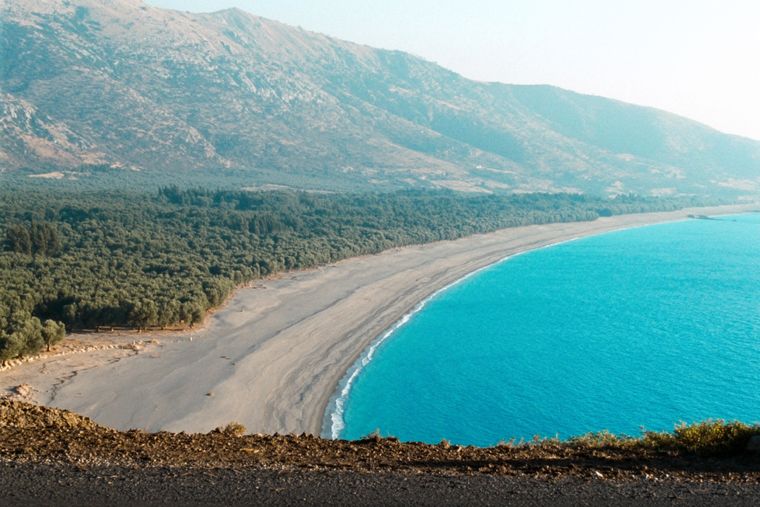
At roughly 7 km, the longest single beach on the Riviera, backed by one of Albania's largest olive groves.
소도시 · Elbasan
A hill town surrounded by more than eighty small lakes and extensive olive groves.
이 페이지에 오류가 있습니까? 수정 제안을 환영하며, 출처 기록과 대조하여 검토합니다. 잘못된 내용과 가능하다면 올바른 수치의 출처를 알려 주십시오.