Konu
Albanian Cuisine
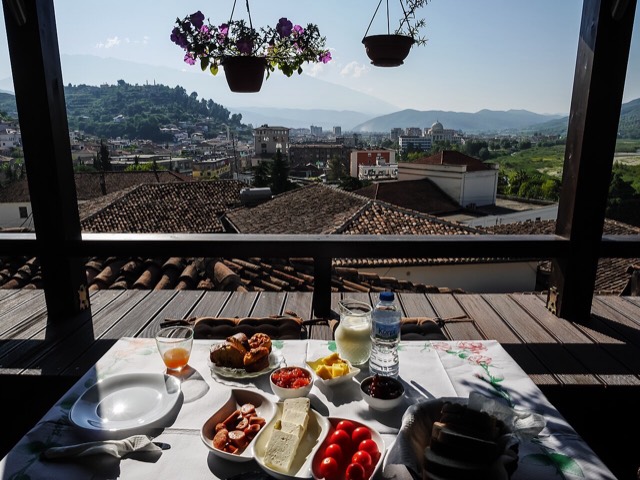
Mediterranean at the coast, Balkan and Ottoman inland, dairy-heavy in the mountains.
Her il, her kıyı, her yüzyıl
Rehberli görünüm
Arnavutluk'a yeni misiniz? Her sayfa, ayrıntılara geçmeden önce on yaşında bir çocuğa okuyabileceğiniz sade bir açıklamayla başlar.
Uzman görünümü
Temel bilgileri zaten biliyorsunuz. Sade açıklamalar gizli, doğrudan özüne geçin. Bu varsayılan ayardır.
Yemek
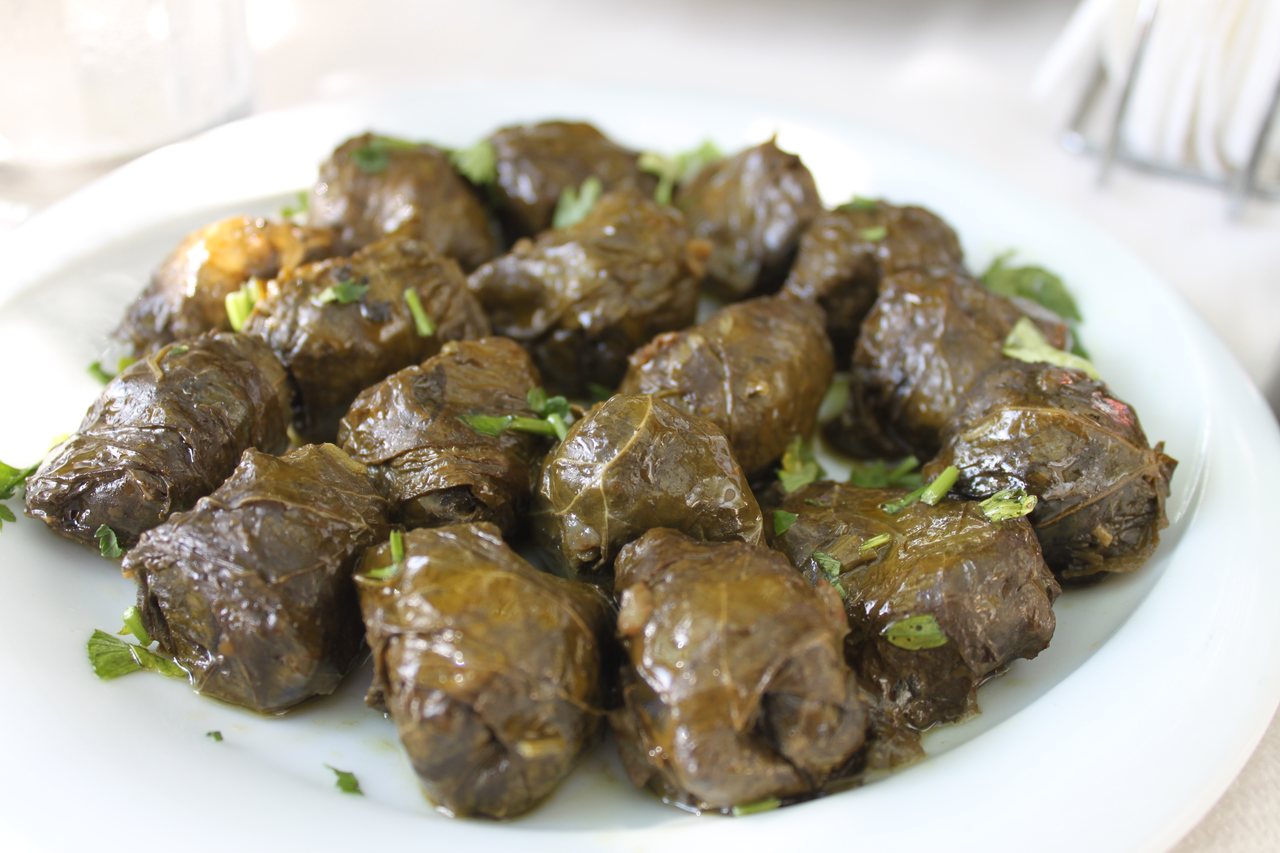
Vine leaves in summer, pickled cabbage in winter, rolled around rice and meat.
Kaydet
Japrak are little rolls made by wrapping rice and minced meat in vine leaves or cabbage leaves and cooking them slowly.
Japrak are little rolls made by wrapping rice and minced meat in vine leaves or cabbage leaves and cooking them slowly.
Japrak is an Albanian term for the leaf-wrapped variety of stuffed dish known more broadly across the former Ottoman world as dolma. The wider dolma family encompasses vegetables or leaves that are hollowed out or wrapped and then filled with mixtures typically containing rice, minced meat, herbs, and spices. In Turkish culinary terminology a formal distinction is drawn between dolma, meaning a hollowed vegetable filled with stuffing, and sarma, meaning filling wrapped in an edible leaf such as a vine or cabbage leaf. In Albanian, neither term is the standard native word: the language uses mbushur, meaning 'stuffed', as the native equivalent for the broader category.
The word dolma is of Turkish origin, derived from the verb dolmak ('to get filled or stuffed'), which itself traces to the Old Turkic tolmak. One of its earliest written attestations appears in Franciscus a Mesgnien Meninski's Thesaurus Linguarum Orientalium, Turcicæ, Arabicæ, Persicæ of 1680, where the Ottoman Turkish طولمه is given the Latin definition ripieno ('stuffed' or 'filled'). The first recorded English-language use appears in James William Redhouse's A Turkish and English Lexicon of 1890.
The concept of dolma is believed to have been developed in the Ottoman palace kitchens during the 15th century, though its exact origin is disputed. The Oxford Companion to Food argues that the distribution and name of the dish point to the court cuisine of the Ottoman Empire, where stuffed vegetables were first systematically treated as a regular culinary genre in Istanbul. The earliest known reference to dolma as a dish appears in the 16th-century Persian book Mâddet ol-Hayât, which records that cabbage dolmeh is 'commonly prepared in the land of the Rûm (Turkey) but not well known in Iran'.
Stuffed dishes have a longer pre-Ottoman history, but stuffed vegetables specifically appear only sporadically before the Ottoman period. Medieval Arabic cookbooks contained many recipes for stuffed dishes but rarely stuffed vegetables. The 13th-century Syrian cookbook Kitab al-Wuslah ila l-habib contains the earliest regional reference to stuffed vegetables, limited to eggplant and snake melon. The Ottoman period systematised and expanded the category: Ottoman records show stuffed onions and apples in the 15th century, vine leaves and cabbages in the 16th, fish varieties including mackerel and bonito in the 17th, and mussels and bell peppers appearing only in the 19th century.
By the 17th century Istanbul had fifty cookshops, known as dolmacı, specialising in stuffed vegetables. The establishment of the Ottoman palace kitchen, the Matbah-ı Âmire, created a competitive environment in which cooks experimented with fillings and techniques to impress the Sultan and his council. Food historians including Alan Davidson and Claudia Roden have associated the lengthy, skilled preparation of dolma with the resources of large palace kitchens, and note that the dish subsequently spread to poorer households, who simplified fillings while preserving the time-consuming wrapping technique.
The leaf-wrapped form of dolma — called sarma in Turkish and known by various names across the region — uses grape vine leaves, cabbage leaves, or other edible leaves as the outer wrapper rather than a hollowed vegetable. The origins of stuffed vine leaves are unknown. Meatless stuffed vine leaves, called yalanchi dolma in Turkish and Western Armenian, are served at room temperature. Meat-filled versions are typically served warm, often with tahini or avgolemono sauce.
Cabbage rolls form a distinct sub-category. In Armenia they are called Pasuts tolma, meaning Lenten dolma, and are made with seven different grains: chickpea, bean, lentil, cracked wheat, pea, rice, and maize. Armenian cooks sometimes flavour stuffed cabbage rolls with rose hip syrup. The dish is called lahana dolması in Turkey and kələm dolması in Azerbaijan. The meatless character of many cabbage roll preparations is directly connected to Christian fasting practice: the empire's Christian populations fasted for nearly 180 days a year for Lent under rules prohibiting animal products, which drove the development of meatless dolma varieties.
Sorrel leaves (called labada sarması or evelik dolması in Turkish, and avelukov tolma in Armenian) and mallow leaves are also used as wrappers in parts of the former Ottoman world, stuffed with lamb and rice or rice alone. Mallow dolma is described as particularly common in Kurdistan, Israel, Lebanon, Syria, Turkey, Palestine, and the Balkans.
Beyond leaf-wrapped forms, dolma encompasses a wide range of stuffed vegetables. Stuffed peppers are common across Armenia, Greece, and Turkey, with bell peppers hollowed and filled with rice, herbs, onions, and currants. Stuffed onions are a traditional dish in Turkey, Armenia, and Bosnia, where the outer layers of the onion bulb serve as containers for a meat and rice filling. Eggplant dolma is called Halep dolması in Turkey, named after Aleppo, and involves eggplants stuffed with a meat and rice filling flavoured with spices and sour plum syrup or lemon juice. A regional speciality from Mardin uses a sumac and Urfa pepper seasoned rice filling layered across onion, vine leaf, cabbage, eggplant, zucchini, and pepper forms, all cooked together in sumac-flavoured water.
Seafood varieties entered Ottoman records in the 17th century. Stuffed mussels (midye dolma in Turkish) are filled with rice, onion, black pepper, allspice, lemon juice, pine nuts, and salt. Stuffed mackerel (uskumru dolma) is regarded as a staple of both Armenian and Turkish cuisine; in the Armenian preparation the fish skin is carefully separated from the meat, the meat is sautéed with onions, dried fruits, multiple nuts, and spices, and the mixture is returned to the intact skin before grilling.
Fruit-based dolmas include stuffed quinces, apples, and melons. Stuffed melons were part of the Ottoman palace cuisine and the recipe survives in modern Turkish, Yemenite, Iranian, and Armenian cooking. The Armenian stuffed quince and stuffed apple preparations, both called Etchmiadzin Dolma, use minced meat, rice, multiple nuts, dried fruits, grape syrup, and a range of spices. Offal variants also exist: dalak dolması is spleen stuffed with rice, meat, and herbs, originating in Armenian cuisine and traditionally served as a New Year dish; mumbar dolması is intestine stuffed with ground meat, rice, pepper, cumin, and salt.
Albanian, like several other post-Ottoman languages, does not use dolma or sarma as its primary term for the dish category. The standard Albanian word is mbushur, meaning 'stuffed', which belongs to a group of native-language equivalents used across former Ottoman territories: gemista in Greek, maḥshī in Arabic, umpluți in Romanian, töltött in Hungarian, punjena in Serbo-Croatian, polneti in Macedonian, and pulneni in Bulgarian. Japrak functions as the specific Albanian term for the leaf-wrapped preparation.
The Balkans as a region received dolma during the Ottoman period, and mallow dolma is specifically noted as popular in the Balkans. The role of Christian fasting practice in shaping meatless dolma varieties is relevant to the Albanian context, as it was across the empire's Christian populations. Stuffed cabbage was a winter staple food for peasants in the Ottoman Empire and spread to the Balkans as part of that broader pattern.
In 2017, dolma-making in Azerbaijan was included in the UNESCO Intangible Cultural Heritage Lists. The culture of tolma preparation and consumption is included in the intangible cultural heritage list of Armenia. The origin of dolma is a subject of active dispute, particularly between Armenians and Azerbaijanis. In Armenia the dish is typically rolled into a tube; in Azerbaijan it is folded into a small parcel.
In 2011, Azerbaijani president Ilham Aliyev stated at the annual conference of the country's Academy of Sciences that dolma is a meaningless word in Armenian. In response, Armenia held its own dolma festival, using the term uduli — derived from the Urartian word for 'grape' or 'vine' — as the festival's name. The Armenian side cites the use of grape leaves as evidence of early agricultural development and points to archaeological evidence of viticulture in ancient Armenia. Azerbaijani sources point to the Turkic origin of the name dolma as support for their position. Historian William Pokhlebkin contends that Azerbaijani dolma was adopted from neighbouring Armenian cuisine, a claim that itself reflects the contested nature of the dish's history.
In Turkey, dolma carries social meaning beyond the kitchen. In many regions, a prospective bride's ability to wrap sarma — which must be rolled thin, small, and produced quickly — is used as a test by the groom's family. Perfectly wrapped leaves that remain intact through cooking are interpreted as evidence of competence and orderliness. Rich men and high-ranking Ottoman officials employed specialist dolma cooks, and the dish functioned as a marker of social status. Dolmabahçe Palace, according to a foreign suggestion recorded in the historical sources, may have taken its name from a garden associated with zucchini cultivation on the site.
Konu
Mediterranean at the coast, Balkan and Ottoman inland, dairy-heavy in the mountains.
Bu sayfada bir hata mı var? Düzeltmeler memnuniyetle karşılanır ve kaynak kayıtla karşılaştırılarak kontrol edilir. Neyin yanlış olduğunu ve mümkünse doğru rakamın kaynağını bize bildirin.